
Reviewed · PRIVATE
Private Half Day Tour Highlights of Pokhara by Car
Pokhara’s main sights are spread across the valley, and this private half-day car tour gives you a practical way to connect them without arranging separate taxis. You move from lakeside scenery to caves, temples, a museum, and a hilltop peace monument in one outing. I like the hotel or airport pickup and the included entrance fees, which remove two common hassles. I also like the flexible start time, from early morning to early afternoon.
The main caution is timing. The listed stops add up to about four hours and 25 minutes before you count driving between them, so the schedule can feel brisk. Guide quality and coordination also matter: one excellent report singles out Moti for his English and flexibility, while other accounts describe late pickup or an English-speaking mix-up that needed operator help.
Key points to know before booking
- Seven major stops in one private vehicle: The route covers Phewa Tal, Devi’s Fall, Gupteswar Gupha, Bindhyabasini Temple, Seti River Gorge, Pokhara Museum, and the Peace Pagoda.
- Pickup from your hotel or Pokhara Airport: You do not need to make your way to a meeting point, which is especially useful after a flight or when your hotel sits away from the central lake area.
- A guide who also drives: The English-speaking driver-guide explains the places as you go, though communication may vary by guide.
- Entrance fees and water are included: The $80 price covers admissions and bottled water, leaving personal spending and optional gratuities as extras.
- A flexible start from morning to early afternoon: You can choose a time that fits your arrival, breakfast, or other plans, rather than accepting one fixed departure.
- Private, not shared: Only your group participates, so the pace and some sightseeing choices can be more personal than on a large coach outing.
Why this route works for a short stay in Pokhara
Pokhara is easy to like, but its sights do not sit in one compact old quarter. Phewa Tal is tied to the city center, Devi’s Fall and Gupteswar Gupha are farther south, Bindhyabasini Temple lies in another part of town, and the Peace Pagoda requires a separate hilltop visit.
That geography is the reason I see value in using a private car. You are paying not just for admission, but for transport between scattered sights, pickup, a driver, and a guide. If you have only one full day in Pokhara, or a free half-day between flights and other plans, this format helps you get your bearings fast.
The price is listed at $80 per person. For one person, that is not a bargain compared with hiring local transport independently, but the calculation changes for a small private group because the vehicle and guide are shared among your party. With all entrance fees and bottled water included, the final cost is easier to predict.
You should also keep your expectations in check. This is a highlights tour, not a slow study of each place. Several stops are scheduled for 30 minutes, and even the longer one-hour Peace Pagoda visit leaves limited room for lingering. You get range rather than depth.
More days out in Pokhara:
- ZipFlyer Nepal – The World’s Steepest Zip-line
★ 5.0 · 608 reviews - Bungee Pokhara by HighGround Adventures
★ 5.0 · 366 reviews - From Pokhara: Sarangkot Sunrise Himalayas Tour
★ 4.7 · 218 reviews
Phewa Tal, Pokhara’s calm opening scene
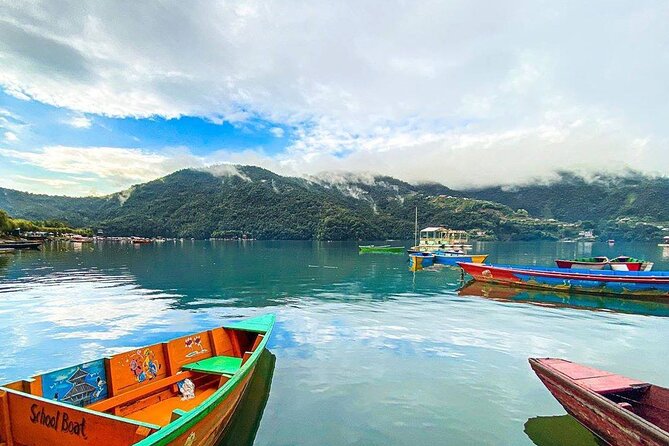
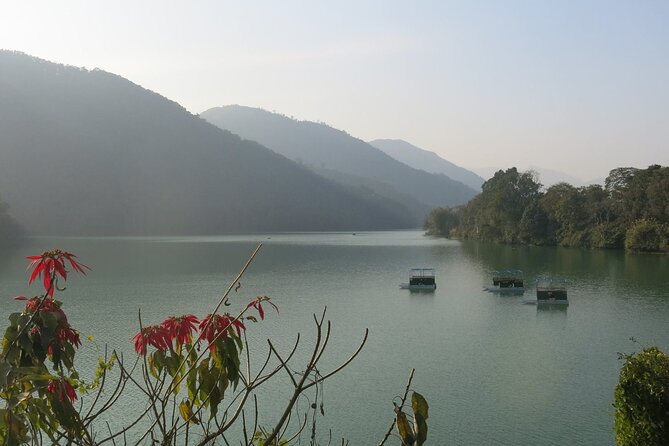
The tour begins at Phewa Tal, also called Phewa Lake or Fewa Lake. The stop is scheduled for 30 minutes, enough to see the water and take in one of Pokhara’s defining natural settings without giving the visit an entire morning.
I like starting here because the lake gives you an immediate sense of place. Pokhara’s identity is closely tied to water, mountain views, and outdoor activity, and Phewa Tal brings those ideas together. The stop is more about atmosphere and orientation than a long activity.
Do not expect a boat outing to be part of this tour. The details only promise a visit to the lake, with no separate boating time listed. If you want to spend longer by the shore, ask about the timing before departure. A private vehicle gives you a better chance of discussing small adjustments, but the route still has seven stops to fit in.
Devi’s Fall and the underground passage at Gupteswar Gupha
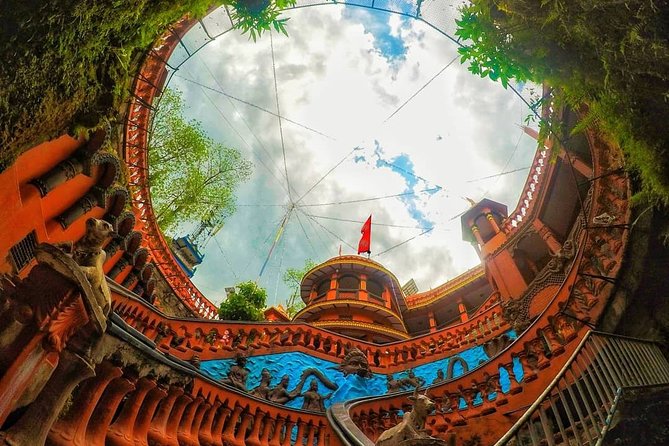
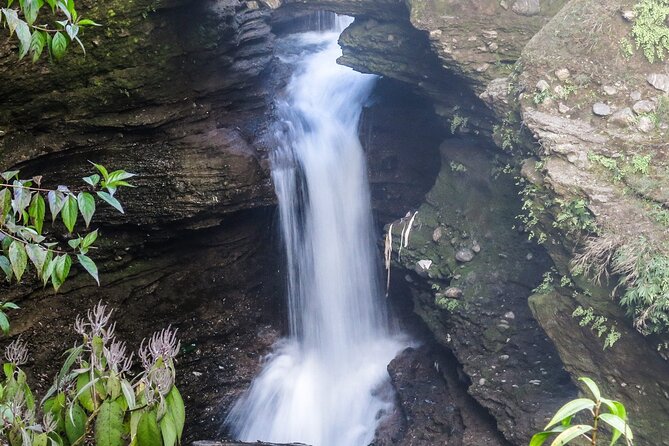
Devi’s Fall is scheduled for 30 minutes. Water drops into a channel and forms a tunnel after reaching the bottom. The tunnel is described as roughly 500 feet long and about 100 feet below the surface, giving this stop more than the usual viewpoint appeal.
The attraction is compact, so half an hour can be enough for a look and photographs. Conditions at a waterfall can affect what you see, and the short schedule leaves little time to wait around. Your guide can help explain the setting, but the experience depends on the flow of water and how busy the site is at your chosen time.
Gupteswar Gupha gets 45 minutes and sits opposite Devi’s Fall. The water from the falls passes through the cave, linking the two stops in a clear way. This is one of the more unusual pairings on the route: you first see the water above ground, then visit the cave connected to it.
The cave is also called Gupteshwor Mahadev Cave, and it has a religious character as well as a natural one. Wear shoes you can manage comfortably in an uneven cave setting, though the tour information does not specify the exact surface or conditions. The practical advantage of visiting both places together is that you avoid spending extra time arranging transport between them.
Bindhyabasini Temple and a glimpse of local worship
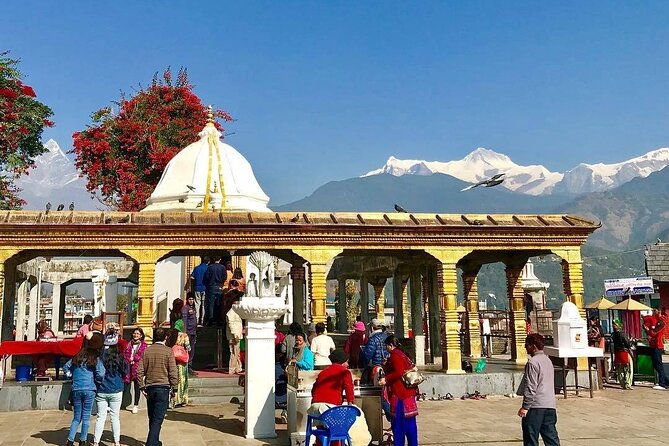
Bindhyabasini Temple is listed for 30 minutes. It is described as Pokhara’s oldest temple and sits in Ward No. 2, Miruwa. The temple is dedicated to the goddess Bindhyabasini and is an active religious place, not simply a monument for sightseeing.
That distinction matters. I would approach this stop with a little patience and respect for worshippers. Your driver-guide can provide context about the temple and local religious life, while you should follow any signs or requests about behavior and photography.
The short visit works well if you want a taste of Pokhara’s spiritual side without setting aside a whole morning. It may feel too brief if your main interest is religious architecture or daily worship. The private format helps here because you can ask questions directly rather than trying to keep up with a large group.
One positive account specifically praises Moti, a guide described as having perfect English, and says he adjusted the outing for a traveler who did not like heights. That is a useful clue about what the best version of this tour can offer: not a rigid script, but practical changes when the guide is attentive and communicates well. Still, you should confirm your guide and pickup details in advance rather than assume every departure will have the same person.
A few more Pokhara days to weigh up
- Pokhara: Full-Day Private Tour on 7 Iconic Destination
★ 4.8 · 108 reviews - The Best of Pokhara: Full-Day Private Tour with Sarangkot Sunrise
★ 5.0 · 66 reviews - Pokhara: 4-Day Private Trek Tour
★ 4.9 · 43 reviews - 2-Day Private Trekking Tour to Australian Camp & Dhampus
★ 5.0 · 42 reviews
Seti River Gorge, where the city opens below you
The Seti River Gorge receives another 30-minute stop. The Seti Gandaki River cuts through the Pokhara Valley, and its narrow channels are one of the area’s distinctive natural features.
This stop adds variety after the lake, waterfall, and cave. Instead of looking across open water, you look down toward a river confined within the rock. The visit is short, so think of it as a viewpoint and explanation stop rather than a walk along the river.
The gorge can also be one of the more height-sensitive parts of the route, depending on the viewing area. If you are uncomfortable with heights, say so before the day begins. The account involving Moti suggests that a good guide may be willing to modify the order or emphasis, but that flexibility should be treated as possible rather than guaranteed.
Pokhara Museum, the route’s cultural pause
The Pokhara Museum is scheduled for 40 minutes. Its purpose is to introduce Nepal’s nature, culture, and adventure traditions, making it the main indoor stop on the tour.
I value this part of the route because the outdoor sights can otherwise blur together. A waterfall, gorge, and lake show you the setting, but a museum can help connect that setting to the people and traditions of Nepal. Forty minutes is enough for a focused visit, though not enough to read every display at length.
This stop also gives you a break from moving between viewpoints. If rain affects the day, the museum provides some shelter, although the tour still depends on outdoor sites. Ask your guide to point out the displays most relevant to Pokhara if time is tight. A driver-guide with strong English can make a short museum stop far more useful than simply walking through it.
Peace Pagoda, the longest and most scenic stop
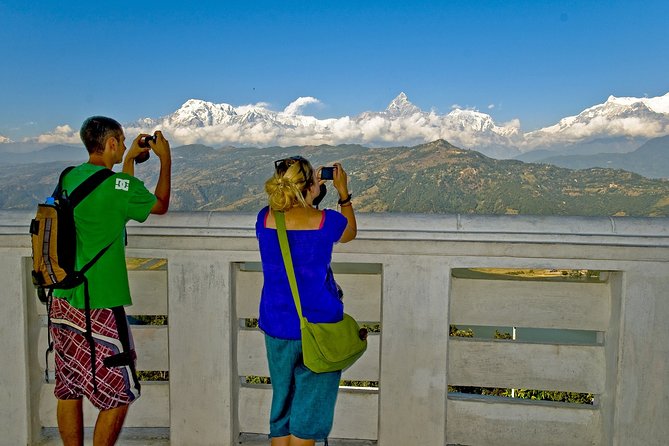
The World Peace Pagoda receives one hour, the longest scheduled visit. It is a pagoda-style Buddhist monument with views toward the mountains and lake, making it a natural final stop for the day.
I like that the tour gives this site more time than the smaller stops. You need a few minutes to take in the monument, views, and surroundings, and the extra half hour gives the visit room to breathe. It is also the place where the route’s different themes come together: religion, scenery, and Pokhara’s position in the valley.
The Peace Pagoda is reached in a hilltop setting, so this may not be the easiest stop for everyone. The tour is described as easy and suitable for most people, but the information does not spell out the exact walking distance or surface. If you have mobility concerns, ask the operator what the vehicle can access and how much walking is required.
The view is also weather-dependent. On a clear day, the lake and mountains should be the main reward. Under cloud, the monument still offers a cultural visit, but the wide panorama may be limited. A morning departure can give you a different light and weather pattern from an early afternoon one, but the best choice depends on your plans and conditions.
What the private car changes
A private tour gives you the entire vehicle and guide for your own group. That matters in Pokhara because the route includes several short stops, and waiting for a large party can eat into the limited schedule.
You can ask questions without competing for attention. You can also explain practical concerns, such as discomfort with heights, a need for a slower pace, or extra interest in temples and museums. The strongest account of the tour praises exactly this sort of adjustment.
There is a less pleasant side. A private tour is only as smooth as the person coordinating it. One low-rated experience describes a lack of advance contact and uncertainty about pickup, while another reports a late driver and an English problem that required the operator to send someone else who could communicate better.
I would treat those reports as a reason to confirm the essentials. Make sure the operator has your hotel or airport details, your preferred start time, and a clear way to contact you. The tour promises an English-speaking driver as a guide, but the reports show that this should be verified rather than left to chance.
Timing, comfort, and what to bring
The advertised duration is four to five hours. The individual stops total roughly four hours and 25 minutes, so driving time has to fit into the schedule. That makes the tour efficient, but it also means delays can shorten later visits.
A morning departure is likely the most useful choice if you want the full route with less pressure. An early afternoon start can suit a late arrival or a relaxed hotel morning, but it gives you less daylight and less room for delays. The start window runs from early morning to early afternoon, so you have meaningful choice.
Pickup and drop-off are included at your hotel or Pokhara Airport. Bottled water is included too, which is a small but welcome detail on a warm sightseeing circuit. Personal expenses and optional gratitude for the guide or driver are not included.
The tour is described as easy and suitable for most people. Even so, you will be getting in and out of a car, visiting a cave, and reaching a hilltop peace monument. Comfortable shoes and modest clothing for temple visits are sensible choices. The provided details do not state a specific dress code, so follow local instructions at each religious site.
Who should book this Pokhara tour
I would recommend it most strongly if you have limited time, want private transport, and prefer a broad introduction to Pokhara rather than one long visit to a single attraction. It is also useful if you have just arrived at Pokhara Airport and want to begin sightseeing without first arranging local transport.
It suits couples, families, and small groups who value a car and a flexible departure. The group discount feature may improve the value when several people share the booking. Since only your group participates, you have a better chance of discussing the pace and asking for explanations along the way.
I would hesitate if you want a slow day, extended time at Phewa Tal, or detailed museum and temple visits. I would also be cautious if you need tightly managed pickup arrangements or guaranteed guide quality. In that case, confirm the operator’s communication before you commit.
Should you book it?
Book this tour if your priority is seeing many of Pokhara’s headline sights in four to five hours with transport, admissions, and water handled for you. The route is well chosen: lake, waterfall, cave, temple, gorge, museum, and Peace Pagoda give you a useful first look at the city and valley.
The $80 price makes the most sense for a private group sharing the car, especially when you value airport pickup and a guide. Before booking, confirm the pickup time, request an English-speaking guide, and mention any concern about heights or walking. If those details are settled, this is a practical first-day introduction. If you want depth and quiet, choose fewer sights and spend longer at each one instead.
FAQ
How long does the private Pokhara tour last?
The tour lasts approximately four to five hours.
Where can pickup and drop-off take place?
Pickup and drop-off are offered from your hotel or Pokhara Airport.
Which sights are included?
The route includes Phewa Tal, Devi’s Fall, Gupteswar Gupha, Bindhyabasini Temple, Seti River Gorge, Pokhara Museum, and the Peace Pagoda.
Is the tour private?
Yes. Only your group participates in the activity.
Are entrance fees and bottled water included?
Yes. All entrance fees and bottled water are included. Personal expenses and optional gratitude are not included.
Can I choose the starting time?
Yes. The tour offers a flexible starting time from early morning to early afternoon.
Just added around Pokhara
- Pokhara: Pokhara Highlights Tour by Bus★ 3.6 · 10 reviews
- Discover Pokhara in Style: Private Vehicle Service with Driver★ 5.0 · 5 reviews
- Pokhara in 5 Hours: Lake, Museum, Cave, Falls & Pagoda Hill★ 4.5 · 16 reviews
- Beautiful Sarankot Sunrise with Full Day Sightseeing in Pokhara★ 4.5 · 3 reviews
- Sarangkot Sunrise Tour in Private Car★ 5.0 · 3 reviews
- Pokhara: Group Joining Sarangkot Sunrise Himalayas Tour★ 4.5 · 23 reviews
- Sarangkot Sunrise Tour from Pokhara★ 4.5 · 9 reviews
- Pokhara: Full-Day Sightseeing & Viewpoints Tour – Private/Group★ 5.0 · 4 reviews
Private, compared.
Private Kathmandu Sightseeing Tour | UNESCO World Heritage sites
Read our review →
Full Day 7 UNESCO Tour with Lunch – Private/Group
Read our review →
Private Bhaktapur and Nagarkot Day Tour From Kathmandu
Read our review →
Full Day Top 4 UNESCO Tour with Lunch – Private/Group
Read our review →Full-Day 7 UNESCO Tour with Lunch – Private/Group
Read our review →
Browse the lists this tour appears in