
Reviewed · CITY TOURS
Pokhara: City Sightseeing Group Budget Bus Tour
Pokhara’s best-value sightseeing comes in one long, busy day on this shared bus tour. You’ll reach the hilltop World Peace Pagoda and Pumdikot Shiva Statue, then visit caves, a waterfall, a river gorge, and one of the city’s important temples without arranging several separate rides.
I like the low $10 price and the useful route, especially if your time in Pokhara is short. I also like that pickup is included from hotels in the Lakeside area, with help available in Nepali, Hindi, and English. The trade-off is a basic, sometimes untidy mini-bus, and the day includes a lot of getting on and off.
Key points at a glance
- Hilltop views: Pumdikot and World Peace Pagoda give you broad views over Pokhara Valley, Phewa Lake, and the mountains.
- Eight major stops: The route combines religious sites, caves, a waterfall, a gorge, and Fewa Lake in one day.
- Strong budget value: The $10 price covers Lakeside pickup, shared transport, and local assistance, but not entrance fees.
- Expect a basic bus: One report noted a dirty vehicle and flies, so this is practical transport rather than a polished coach.
- Useful for a short stay: The organized schedule helps you see Pokhara’s main city sights without hiring a private vehicle.
- Bring walking gear: Comfortable shoes, water, sun protection, and around NPR 1,000 for entry fees will make the day easier.
Why this $10 Pokhara tour makes sense
Pokhara is spread between Phewa Lake, steep wooded hills, busy roads, and scattered sights. You can visit these places independently, but the transport adds up quickly. This tour puts the major stops into one shared route for $10 per person, making it particularly appealing if you are watching your spending.
The price does not include admission tickets, meals, or personal expenses. Plan on roughly NPR 1,000 per person for entrance fees. That changes the final cost, but the package still offers good value because hotel pickup and transport are included.
This is not a luxury sightseeing bus. It is a basic shared mini-bus with a local guide or helper rather than a professional specialist guide. That distinction matters. You should expect practical assistance, directions, and some explanation, but not a detailed lecture at every monument.
The strongest part of the day is the range of sights. You get hilltop views, Hindu religious sites, natural formations, and city scenery in a single circuit. The weakest part is the pace. Most stops last between 15 and 55 minutes, so you will often have enough time for a look and photos, but not a slow, private visit.
More City Tours in Pokhara
- Pokhara: Sarangkot Sunrise with Half or Full-Day City Tour
★ 4.8 · 100 reviews - Guided Tour to explore the entire Pokhara City
★ 5.0 · 51 reviews - Pokhara: City Sightseeing Group Bus Tour
★ 4.1 · 37 reviews
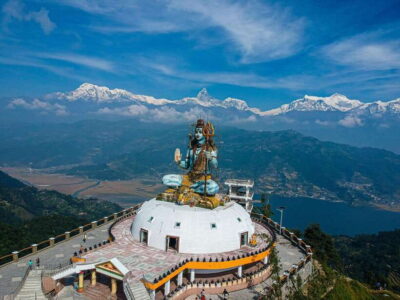
Pumdikot Shiva Statue starts the day above Pokhara
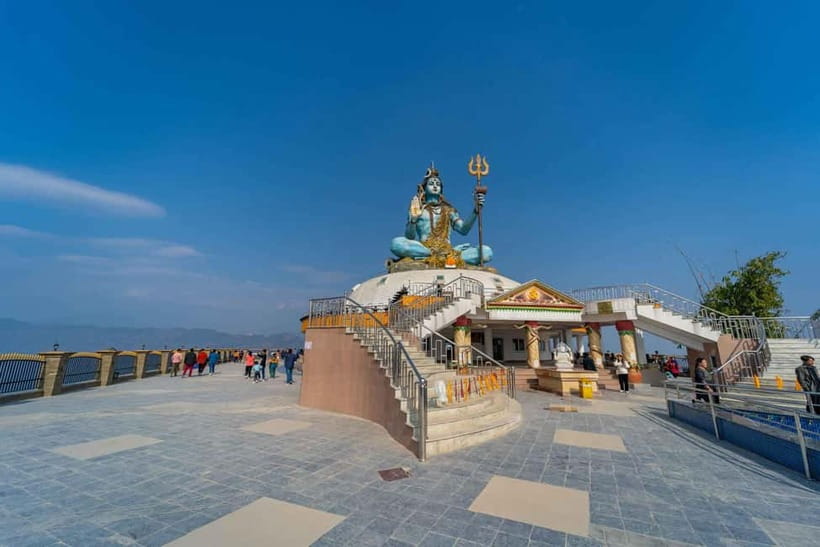
The first major stop is the Pumdikot Shiva Statue, reached after about 50 minutes by bus from pickup. You have one hour here, which gives you more breathing room than at several later stops.
Pumdikot is a good opening view stop. From this higher ground, you can look across the Pokhara area and take in the scale of the valley. The Shiva statue also gives the morning a clear religious and cultural focus rather than making the entire tour a parade of viewpoints.
Wear shoes with a firm sole. The tour is not suitable for wheelchair users, and people with back or heart problems are advised not to join. The combination of bus movement, steps, uneven ground, and walking at several stops can be tiring.
World Peace Pagoda brings the best panorama
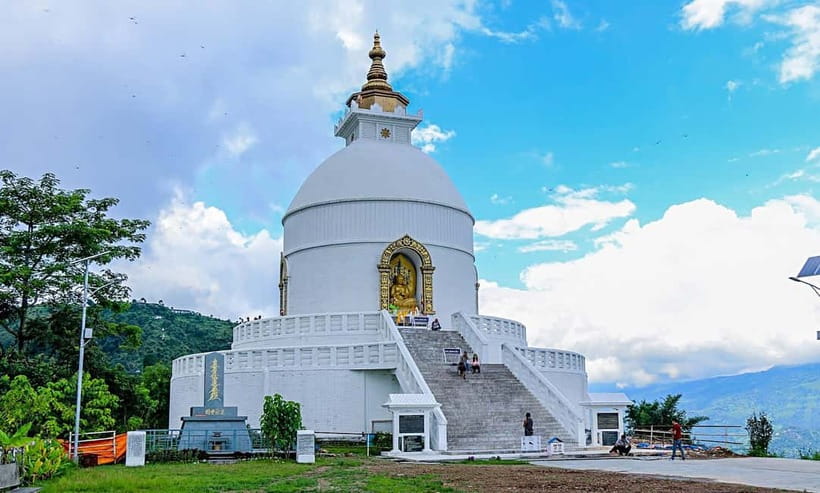
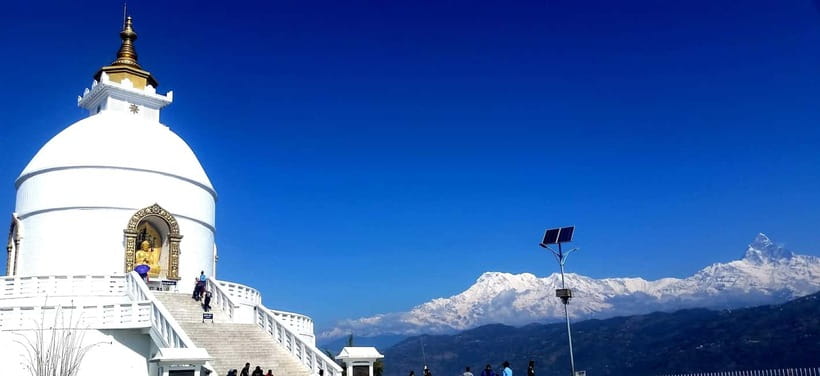
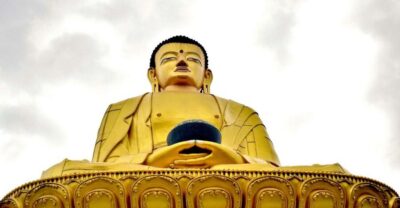
After about 25 minutes on the bus, you reach the World Peace Pagoda for around 55 minutes. This white stupa sits on a hill above Pokhara, with views toward Phewa Lake, the city, and the surrounding mountains.
This is one of the stops I would value most on the route. The setting gives you a clear sense of how Pokhara fits together. You are not simply looking at another monument. You are looking down over the lake and city from a hilltop that feels removed from the traffic below.
Sun protection is important here. Bring a hat, sunglasses, sunscreen, and water. The supplied advice is simple but useful: comfortable clothes and walking shoes matter more than dressing for a formal temple visit.
Your view can depend on the weather. The stop remains worthwhile for the stupa and hilltop setting, but mountain views are never guaranteed. Keep your camera ready, but do not let the photo stop replace the chance to pause and look around.
Gupteshwor Mahadev Cave and the sacred Shiva Lingam
The bus ride to Gupteshwor Mahadev Cave takes about 35 minutes. You have 40 minutes to explore the cave, followed by a short three-minute walk to the next attraction.
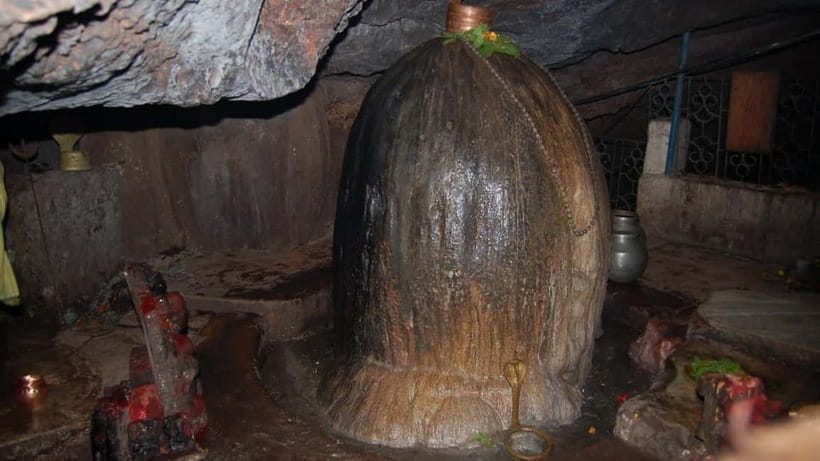
Gupteshwor is a natural limestone cave with stalactites and stalagmites. The sacred Shiva Lingam gives the site religious importance, so this is not just a geology stop. You will see a place where natural formations and Hindu worship meet.
The cave may feel cramped or uneven in sections. This is another reason to wear shoes that grip well and to avoid carrying more than you need. Keep your camera for personal use, but follow local rules inside religious spaces.
The 40-minute visit is enough for a compact exploration. It is not a long underground expedition, and you should not expect extended time to study every formation. Still, the cave adds a different texture to the day after the open hilltop views.
More Sightseeing Bus Tours in Pokhara
- Pokhara: Full-Day Sharing Bus Tour on 7 Iconic Destination
★ 4.1 · 179 reviews - Pokhara: Pokhara Highlights Tour by Bus
★ 3.6 · 10 reviews - Pokhara: Sightseeing tour (Unguided) in Sharing Bus
★ 4.5 · 10 reviews - Pokhara: Visit Best Seven Tourist Destination by Sharing Bus
★ 3.4 · 10 reviews
Davis Falls turns water into a local story
A three-minute walk takes you to the waterfall area, where you have about 25 minutes. The route details do not name this stop directly, but the tour description identifies it as Davis Falls, located beside Gupteshwor Cave.
Davis Falls drops into an underground passage, giving it a more unusual character than a simple open cascade. You can watch the water disappear below ground and hear the local legend connected with the falls. The stop is short, so use your time for the main viewpoint and a few photographs.
This is one place where your expectations should be realistic. The attraction is compact, not a long nature walk. Its appeal comes from the combination of rushing water, the underground channel, and the story attached to it.
Seti River Gorge offers a quick city-side contrast
After roughly 35 minutes on the bus, the route reaches Seti River Gorge for 15 minutes. This is the briefest stop, so think of it as a focused viewpoint rather than a full visit.
The gorge shows a different side of Pokhara. Instead of looking across a broad lake or valley, you see the Seti River cut through the ground below. The short stop works well for a quick look, but anyone wanting a long walk or extended photography session may find it rushed.
The bus returns to the road soon after. Keep your belongings close and be ready when the group is called back. On a tightly timed shared tour, a late return at one stop can reduce time at the next.
Mahendra Cave and Bat Cave keep the middle of the day underground
Mahendra Cave follows after about 35 minutes by bus. You have 20 minutes to visit this larger limestone cave, then another 10-minute ride to Bat Cave, where the planned visit lasts 25 minutes.
Mahendra Cave gives you another chance to see natural rock formations, but the short visit means you will make a quick circuit. It is useful to have already seen Gupteshwor, since the two cave visits are easier to compare when experienced on the same day.
Bat Cave is smaller and has a more specific focus: the bats that live inside. The stop is not likely to feel like a major monument, but it adds variety and gives the route a more local, natural-history angle.
Cave conditions can make walking awkward. Bring water, wear comfortable shoes, and avoid assuming that every surface will be smooth or brightly lit. The tour is not suited to people with mobility limitations, and the schedule does not leave much room for a slow pace.
Bindabasini Temple closes the sightseeing circuit
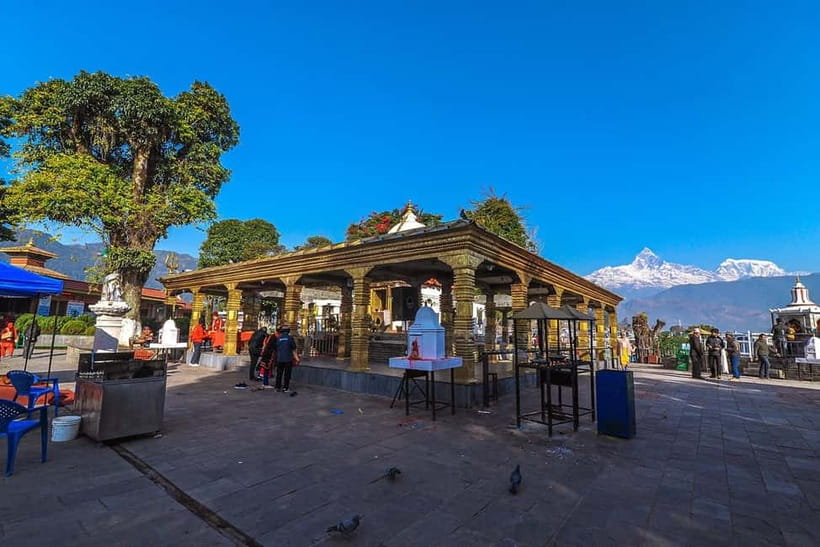
After 15 minutes on the bus, you reach Bindabasini Temple for about 45 minutes. This Hindu temple sits in Pokhara and gives the final sightseeing section a strong cultural focus.
The temple is a better closing stop than another viewpoint would be. After caves and natural sites, you finish with a living place of worship. Take your cues from local visitors, dress respectfully, and remember that the site matters first as a religious space, not only as a photo stop.
The tour then returns to Pokhara after about 35 minutes. The full route is close to a full day, and the exact starting and ending times depend on availability and local traffic.
Fewa Lake rounds out the Pokhara picture
The tour description also includes a final visit to Fewa Lake. The detailed route lists arrival back in Pokhara after Bindabasini Temple, so you should confirm with the local staff how the lake visit fits into the day.
Fewa Lake is central to the character of Pokhara. Even a short stop helps connect the city, the surrounding hills, and the earlier views from the Peace Pagoda. Do not assume the $10 price includes a boat ride, since no boat activity is listed.
What the shared mini-bus is really like
Transport is by shared basic mini-bus. That keeps the cost low, but comfort and cleanliness are not the main selling points. One person found the bus a little dirty and noticed flies when boarding, so you should set your expectations below those of a private sightseeing coach.
The upside is efficiency. You do not need to negotiate separate taxis for every cave, viewpoint, and temple. Pickup is included from any hotel within the Lakeside area, using your name on a card.
The day includes several bus stretches: around 50 minutes at the start, then rides of 25, 35, 35, 10, 15, and 35 minutes between stops. That is a lot of road time. If you get carsick, sit where the ride feels smoothest, carry water, and avoid bringing food onto the bus. Food and drinks are not allowed in the vehicle.
Local assistance is available in Nepali, Hindi, and English. English help can vary, so if detailed interpretation is important to you, this may feel light. The bilingual support has been especially useful for some people, while one person wanted more English explanation.
Guide support and the level of interpretation
The tour includes a local guide to assist you, but the service is described as local support rather than professional guiding. You will likely receive help with the order of visits, meeting points, and basic information about the attractions.
Coordination has been associated with Raj, who has been praised for organizing the day and supporting the group before, during, and after the tour. The driver has also received strong praise for handling the route, and the overall time management has been a repeated strength.
That combination matters on a budget tour. You are paying for access to the route and practical coordination, not a private historian. If you want detailed accounts of Nepalese religion, cave geology, or Pokhara’s development, you may need to do some reading before or after the trip.
Packing tips that will save you trouble
Bring comfortable walking shoes, water, sunscreen, sunglasses, a hat, and a camera. Comfortable clothing is more useful than formal wear because the day moves between hilltops, caves, streets, temple grounds, and the bus.
Carry cash for entrance fees, estimated at about NPR 1,000 per person. Meals are not included, and food and drinks are not allowed on the bus, so plan your eating around the schedule rather than expecting a meal break inside the vehicle.
Smoking is not allowed in the bus or indoors. Alcohol, drugs, and littering are also prohibited. These rules are basic, but following them helps keep a crowded shared vehicle tolerable for everyone.
Who should book this Pokhara day tour?
I would choose this tour if you have one free day, want to see Pokhara’s standard sights, and care more about coverage and price than comfort. It is also a sensible option if you are staying in Lakeside and do not want to arrange multiple taxis.
The route suits independent-minded people who can handle a little uncertainty and do not need constant detailed commentary. It works less well for anyone who wants a quiet day, a private schedule, polished transport, or plenty of time at each attraction.
The walking and cave sections make it unsuitable for wheelchair users. People with back or heart problems should also avoid it. The repeated bus rides and uneven surfaces can be demanding even for otherwise healthy people.
Cancellation is flexible up to 24 hours before departure for a full refund, and you can reserve now and pay later. Check the available starting time before booking, since the tour is listed as a full-day activity rather than a fixed departure with one universal schedule.
Should you book it?
Book this Pokhara bus tour if your priority is seeing many major sights for very little money. The combination of Pumdikot, World Peace Pagoda, Gupteshwor Cave, Davis Falls, Seti Gorge, Mahendra Cave, Bat Cave, Bindabasini Temple, and Fewa Lake gives you a broad first look at the city.
Skip it if you dislike shared transport, need strong English commentary, or want time to linger. For $10, the route is hard to argue with, but you are trading comfort and depth for convenience. Bring realistic expectations, cash for admissions, good shoes, and patience for a long day on a basic bus.
FAQ
How much does the Pokhara sightseeing bus tour cost?
The tour costs $10 per person. Entrance fees, meals, and personal expenses are not included. Entrance fees are estimated at about NPR 1,000 per person.
What is included in the tour?
The price includes hotel pickup within the Lakeside area of Pokhara, shared transport by basic mini-bus, and assistance from a local guide.
Which languages are available?
Assistance is available in Nepali, Hindi, and English.
How long does the tour last?
The experience is listed as a one-day tour. The route includes several bus rides and visits before returning to Pokhara.
Which places does the tour visit?
Stops include Pumdikot Shiva Statue, World Peace Pagoda, Gupteshwor Mahadev Cave, Davis Falls, Seti River Gorge, Mahendra Cave, Bat Cave, Bindabasini Temple, and Fewa Lake.
Is hotel pickup included?
Yes. Pickup is included from hotels within the Lakeside area of Pokhara, using a name card.
What should I bring?
Bring comfortable shoes, water, sunglasses, a sun hat, sunscreen, comfortable clothes, and a camera. You should also carry cash for entrance fees.
More Sightseeing Tours in Pokhara
- Best of Pokhara Must Visit 5 Himalayas viewpoints
★ 5.0 · 20 reviews - Pokhara: Full-Day Guided Sightseeing Tour
★ 4.4 · 11 reviews - Pokhara Day Bus Sightseeing 8 points
★ 3.5 · 9 reviews - Pokhara Sightseeing By Bus – Day Trip
★ 3.2 · 8 reviews
Just added around Pokhara
- Pokhara: Pokhara Highlights Tour by Bus★ 3.6 · 10 reviews
- Discover Pokhara in Style: Private Vehicle Service with Driver★ 5.0 · 5 reviews
- Pokhara in 5 Hours: Lake, Museum, Cave, Falls & Pagoda Hill★ 4.5 · 16 reviews
- Beautiful Sarankot Sunrise with Full Day Sightseeing in Pokhara★ 4.5 · 3 reviews
- Pokhara: Group Joining Sarangkot Sunrise Himalayas Tour★ 4.5 · 23 reviews
- Sarangkot Sunrise Tour in Private Car★ 5.0 · 3 reviews
- Sarangkot Sunrise Tour from Pokhara★ 4.5 · 9 reviews
- Pokhara: Full-Day Sightseeing & Viewpoints Tour – Private/Group★ 5.0 · 4 reviews
City Tours, compared.
Sarangkot Sunrise with Half or Full-Day City Tour
Read our review →
Full Day Kathmandu City Sightseeing Tour of UNESCO Heritage Sites
Read our review →
Browse the lists this tour appears in