
Reviewed · ANNAPURNA CIRCUIT TREKS
15-Day Private Annapurna Circuit Trek from Kathmandu
The big draw here is the full Annapurna Circuit in just 15 days, including the high point at Thorong La Pass, 5,416 meters above sea level, and a sunrise hike to Poon Hill. I like that this is a private trip rather than a fixed group trek, and I like the family-run approach, which includes help with simple Nepali phrases along the way.
The price also covers the guide, permits, transport, lodging, and all listed meals, making $995 a strong value for a Himalayan trek. The main caution is the schedule: several days are long, the highest section is demanding, and the published day-by-day plan has a few unclear labels that you should confirm before departure.
Key points to know before booking
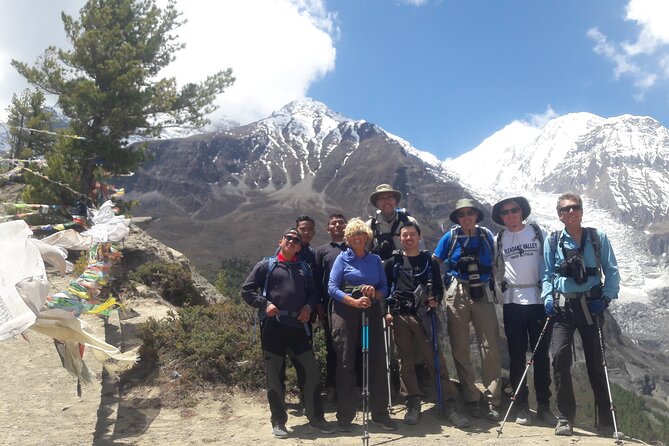
- Thorong La is the physical centerpiece: You climb to 5,416 meters, then descend toward Muktinath in one of the trek’s hardest days.
- The route mixes walking and road transport: You begin by local bus, use public transport near Muktinath and Tatopani, and finish with a car and tourist bus.
- A full acclimatization day is planned in Manang: This is essential before the high-altitude section, not wasted time.
- Poon Hill adds a second mountain highlight: The early sunrise walk offers views of Dhaulagiri, Tukuche Peak, Nilgiri, Annapurna South, and Himchuli.
- The company can arrange a porter: A porter is not included in the $995 price, so ask about the cost if you do not want to carry your main bag.
- Guide service is personal and family-run: The company teaches basic Nepali during the trek and has used guides including Pratap, Dinesh, Binoot, and Bashudev.
What the $995 package really gives you
At $995 per person, this trek is priced as a practical, full-service package rather than a luxury holiday. You get airport pickup and drop-off, transport from Kathmandu to the trailhead, normal lodge accommodation, an experienced guide, permits, TIMS registration, insurance and food for the guide, government taxes, and breakfast, lunch, and dinner listed for all 15 days.
That matters because small costs add up in Nepal. The Annapurna Conservation Area Permit and TIMS card are already handled, and you do not need to arrange the long first bus ride yourself. Guide wages, lodging, food, transport, equipment, and insurance for the guide are also included.
You should not expect high-end hotels in the mountains. The accommodation is described as normal lodge lodging, which means the emphasis is on location and basic shelter, not private luxury. Hot showers, battery charging, drinks, laundry, telephone use, and bottled water are personal costs.
A porter is not included. If you want one, the company says it can arrange one on request. I would settle that point before arrival, along with the porter’s daily rate, what weight is allowed, and whether you carry a daypack while the porter carries the rest.
The price is strongest for someone who wants one company to handle the difficult pieces. It is less attractive if you prefer to arrange buses and permits yourself, or if you plan to add several nights in Kathmandu and Pokhara, since those extra nights and meals are not covered.
More Annapurna Circuit itineraries:
- Annapurna Circuit Trek with Tilicho Lake
★ 5.0 · 368 reviews - Annapurna Circuit Trek
★ 5.0 · 94 reviews - Annapurna Circuit Trek
★ 5.0 · 35 reviews
Kathmandu to Bulbule: a long road into the hills
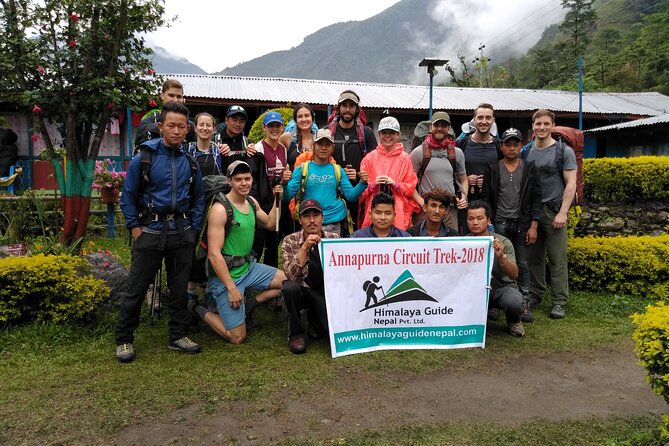
Day one begins at Tribhuvan Airport in Kathmandu, with the listed meeting time at 10:15 a.m. The first major transfer is a local bus toward Besisahar and Bulbule. The drive takes about six to seven hours, depending on the exact service and road conditions.
The route follows the Trisuli River and crosses it at Muglin before continuing toward the Marshyangdi River. This is not a glamorous start, but it gives you an immediate look at daily transport in Nepal. You are sharing the road with local passengers, and the journey is part of the experience.
The schedule refers to Lamjung and Besisahar, with the exact overnight point needing confirmation. Ask the company where you sleep on the first night and how much of the route is by bus. The trip is manageable, but you should not plan a busy Kathmandu activity for the same evening.
Village paths and river crossings near Ghermu
The second day moves into walking country. After breakfast, you pass villages and follow the east bank of the Marshyangdi River before reaching Ngadi and climbing toward Bahun Danda, a Brahmin settlement at about 1,270 meters.
The route mixes roads, village paths, uphill sections, and river views. Bahun Danda is a useful early introduction to the changing communities along the circuit. You are not yet at the high mountains, but the steady climbing begins here.
The listed walking day can last up to 12 hours. That is a serious first trekking day, especially after the long bus journey. Ask your guide about the planned walking time and the intended lodge in Ghermu. The package includes breakfast, lunch, and dinner, but drinks and bottled water are extra.
On day three, the trail descends toward Syange, crosses the Marshyangdi on a suspension bridge, and climbs again along a cliff section toward Chamje. This is a day of narrow paths, steep rises, and dramatic river scenery. The included ticket mentioned for Chamje is a small detail, but it suggests that a specific entry or transport charge is already covered there.
Dharapani, Bagarchhap, and the turn toward high country
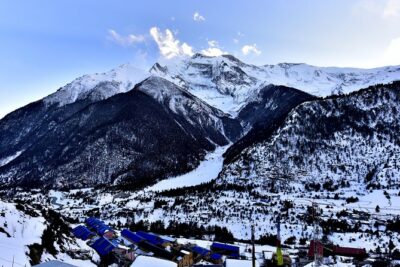
The fourth day crosses another suspension bridge toward Karte, then continues through Dharapani and Bagarchhap before reaching Danque and Chame. Bagarchhap sits at about 1,960 meters, while Danque is listed at about 2,300 meters.
This part of the trek begins to feel more distinctly Himalayan. Stone entrances, chortens, mountain villages, and forested slopes replace the warmer lower valleys. The circuit also starts to gain altitude at a pace that makes your guide’s judgment important.
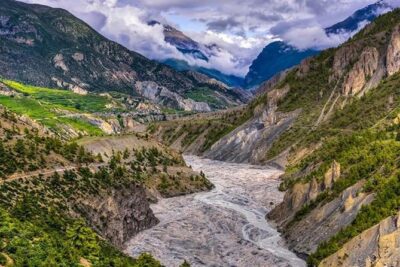
Day five brings a long walk through forest and a narrow valley. You cross to the south bank of the Marshyangdi Khola at about 3,038 meters and pass a striking curved rock face rising roughly 1,500 meters above the river. The route continues toward Manang.
This is one of the days when the trek’s scenery becomes the main reward, but the 12-hour estimate should be taken seriously. You will want good walking shoes, a light daypack, layers, and a steady pace. You do not need to race ahead. At altitude, arriving in good shape matters more than arriving early.
More trekking days out of Annapurna Region:
- Annapurna base camp trek 5 Days
★ 5.0 · 252 reviews - Poon hill Trek 3 days
★ 5.0 · 176 reviews - Trekking in Annapurna/Langtang/Everest/Upper Mustang regions
★ 5.0 · 161 reviews - Pokhara: 4-Day Ghorepani, Poonhill & Ghandruk Mountain Trek
★ 5.0 · 132 reviews
Pisang to Manang and a proper acclimatization day
The route from Pisang toward Manang offers two options. One follows the Marshyangdi Khola, while another passes through pine forest before the paths meet again near Mungji. The choice may depend on conditions, your pace, and the guide’s judgment.
This section is one of the reasons the private format helps. You can discuss how you are feeling and ask about the route instead of simply following a large group’s schedule. The description places you in Manang for days six, seven, and eight, but the exact overnight sequence should be confirmed.
Day seven is the key rest day. The plan specifically says to spend a day acclimatizing in Manang before going toward Thorong La. You may explore the village and visit a lama for a small donation of 100 rupees. This is a day for short walks and altitude adjustment, not for exhausting yourself.
I like that this rest day is built into the program. A fast schedule can look efficient on paper but becomes risky above 4,000 meters. You should use the day to ask about the next nights, check your clothing, and tell your guide immediately about headache, nausea, unusual fatigue, or breathing problems.
The upper valley and the approach to Thorong La
After Manang, the trail climbs toward Tanki and continues through Ghungsang. You leave the Marshyangdi valley and follow the Jar Sang Khola valley northward, passing pastures and scrub.
The surroundings become more open and spare as the route rises. The exact walking time is again listed at about 12 hours, so this is not a gentle stroll. Your guide’s job is particularly important here, both for pacing and for recognizing signs that you should stop or descend.
The schedule lists a day at Thorong La and then another day that describes Thorong Phedi and the pass crossing. The labels are not perfectly consistent, but the actual sequence appears to be an approach to the last camp, followed by an early start over the pass. Confirm the overnight location before setting out.
Thorong Phedi is described as the last camp before the crossing. The name means the foot of the hill, and the plan calls this the last hard working day as well as a long one. You start early because the pass crossing and the descent take much of the day.
Crossing Thorong La at 5,416 meters
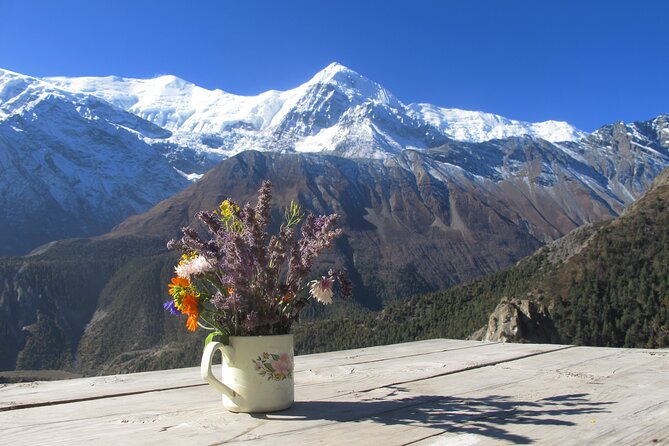
The Thorong La crossing is the test of the trek. You climb from the final camp to 5,416 meters, then descend toward Muktinath. The elevation, cold, early start, and long walking time make this day demanding even for a fit trekker.
This is where the acclimatization day in Manang earns its place. You should not treat the pass as a photo stop with a short approach. Your pace needs to remain controlled, and your guide should be watching how you respond to the height.
The route follows yak grazing ground and passes a tea shop near Durali before the final ascent. The included admission ticket for the Thorong La section means the stated fees are covered, but personal drinks and snacks remain your responsibility.
The descent toward Muktinath changes the character of the trek. The high pass gives way to a sacred place with a different cultural setting and access toward the Kali Gandaki valley. You should ask how much of the descent is on foot and where transport begins, since the later itinerary uses public transportation.
Muktinath, Jomsom, and the Kali Gandaki valley
Day 11 reaches Jomsom and presents several possible routes from Muktinath toward Tatopani or Pokhara. One option is a short flight from Jomsom to Pokhara. The included package, however, specifically lists public transportation from Muktinath to Tatopani, so you should confirm which route your booking uses and whether any flight cost is separate.
The route through Marpha, Ghasa, and Tatopani takes several days if done by foot. The plan here compresses that section with road transport. This saves time and makes a 15-day circuit possible, but it also means you will not walk every part of the classic route.
Day 12 includes time at a hot spring, followed by a trek down across a suspension bridge over the Kali Gandaki River. The path then follows the Burung Khola toward a junction. This offers a welcome change after the hard pass crossing, though public roads can make the day less predictable.
You should think of this section as a transition rather than a second major summit. It is useful because it links the high pass to the lower villages and allows the program to include Poon Hill without extending far beyond two weeks.
Shikha, Ghorepani, and the rhododendron forests
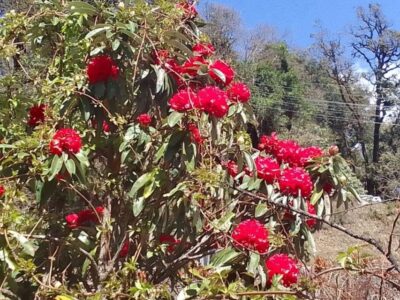
From Shikha, the route continues through Magar villages such as Phalate and Chitre. You walk beside terraced fields and enter rhododendron and pine forest before reaching Ghorepani.
The plan calls this a hard day. That makes sense after the pass, especially because the route includes repeated climbs through villages and forest. The reward is a more intimate section of the Annapurna region, with village life and forest paths replacing the dry high valley.
Ghorepani is the staging point for Poon Hill. You should expect an early morning rather than a relaxed breakfast. Pack a headlamp if you have one, and keep warm layers ready for the climb and the sunrise wait. The package covers meals, but hot drinks at the lodge are extra.
Poon Hill sunrise and the final ride to Pokhara
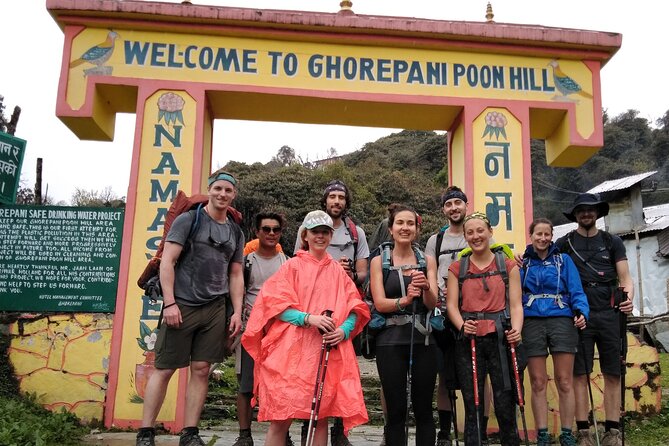
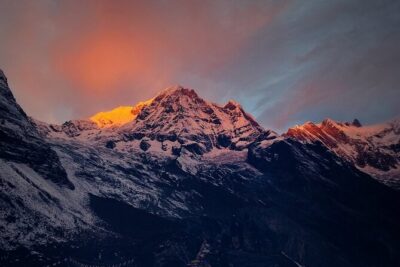
Day 14 begins with a 40 to 50 minute climb to Poon Hill at about 3,210 meters. From the viewpoint, the route promises views of Dhaulagiri, Tukuche Peak, Nilgiri, Annapurna South, and Himchuli.
This is a smart addition to the circuit. Thorong La gives you the high-altitude achievement, while Poon Hill provides a clear sunrise viewpoint with a shorter final climb. You get two very different mountain moments in one trip.
After Poon Hill, the trek continues toward the road and ends near Nayapul. A car takes you to Pokhara Lakeside. That transfer is included, as is the deluxe tourist bus from Pokhara to Kathmandu on day 15.
The final bus ride is listed at about 12 hours. It is a long finish, but it avoids another flight and gives you a ground-level view of Nepal’s hills and rivers. A farewell lunch or dinner is included at a suitable time, although the exact timing depends on your return to Kathmandu.
The family-run style and guide support
The company describes itself as a family-member team and offers basic Nepali language teaching during the trip. That is a small but appealing touch. Learning greetings and simple phrases can make lodge and village interactions easier, and it gives the trek a more personal feel.
Guide assignments can vary. The company has worked with guides named Pratap, Dinesh, Binoot, and Bashudev, among others. If you have heard about a particular guide, ask whether that person is available rather than assuming the name is guaranteed.
The strongest pattern in the supplied feedback is personal care, cheerful company, careful organization, and attention to safety. One guide, Pratap, is associated with the Tilicho Lake and Thorong La section, although Tilicho Lake is not part of the stated 15-day route. Dinesh and Binoot are also linked with smooth, friendly treks.
That gives you useful context, but you should focus on the actual guide assigned to your departure. Ask about language, first-aid training, emergency procedures, porter arrangements, and what happens if altitude or weather forces a change.
Who should book this Annapurna trek?
I would choose this trip if you want the main Annapurna Circuit landmarks but prefer a private arrangement and a fixed price. It suits someone with moderate fitness who is ready for long walking days, steep climbs, basic lodge accommodation, and a high pass crossing.
It is less suitable if you want a slow trek with short days, hotel comfort, or every section completed on foot. The local bus at the start, public transport after Muktinath, and long return bus ride are practical choices, not luxury ones.
You also need to be comfortable clarifying details. The plan contains inconsistent day labels around Thorong La and several route options after Muktinath. That does not automatically make the trek a poor choice, but you should get the final route, overnight stops, transport method, and porter cost in writing.
The tour offers free cancellation up to 24 hours before the start time. Changes or cancellations inside that window are not accepted for a refund, and a minimum group requirement applies even though the activity itself is private for your party.
Should you book it?
Book this trek if Thorong La, Manang, Muktinath, Jomsom, and Poon Hill all appeal to you and you want transport, permits, meals, and a private guide handled in one package. At $995, the inclusion list gives you solid value for a demanding Himalayan route.
Before paying, confirm the exact first and last overnight stops, the day of the Thorong La crossing, the Muktinath transport plan, and the porter price. If those details match your expectations, this is a practical way to see the Annapurna Circuit with personal support and a strong mix of mountain, village, and cultural stops.
FAQ
How long is the Annapurna Circuit experience?
The experience lasts approximately 15 days, beginning in Kathmandu and returning to Kathmandu after the trek and the bus ride from Pokhara.
What is the price?
The listed price is $995 per person.
Where does the tour start?
The listed starting point is Tribhuvan Airport in Kathmandu, Nepal, with a start time of 10:15 a.m.
Is airport pickup included?
Yes. International airport pickup and drop-off between the airport and hotel are included.
Is this a private tour?
Yes. Only your group participates in the private activity.
What meals are included?
The package lists 15 breakfasts, 15 lunches, and 15 dinners.
Is a guide included?
Yes. An experienced guide is included, along with the guide’s salary, equipment, insurance, transportation, lodging, and food.
Is a porter included?
No. A porter is not included, but the company can arrange one if requested.
What fitness level do I need?
You should have a moderate physical fitness level. The route includes long walking days, high altitude, and the climb across Thorong La at 5,416 meters.
Just added around Annapurna Region
- 4 Day Mardi Himal Base Camp Trek from Pokhara★ 5.0 · 18 reviews
- 7-Day Trek to Annapurna Base Camp from Pokhara★ 5.0 · 12 reviews
- Private 4 Day Poon Hill Trek from Pokhara★ 5.0 · 16 reviews
- Annapurna Base Camp Trek from Pokhara and Kathmandu★ 5.0 · 7 reviews
- 6 days Annapurna Basecamp Trek★ 5.0 · 16 reviews
- “Exclusive Round-Trip Transfer: Pokhara to Jomsom & Muktinath”★ 5.0 · 11 reviews
- Poon Hill Ghandruk Circuit Trek from Pokhara 4 Days★ 5.0 · 10 reviews
- Pokhara: Poon Hill Ghorepani Short Trek★ 5.0 · 6 reviews
Annapurna Circuit Treks, compared.
Annapurna Circuit Trek with Tilicho Lake (16 Days)
Read our review →Browse the lists this tour appears in