
Reviewed · ANNAPURNA CIRCUIT TREKS
Annapurna Circuit Trek with Tilicho Lake
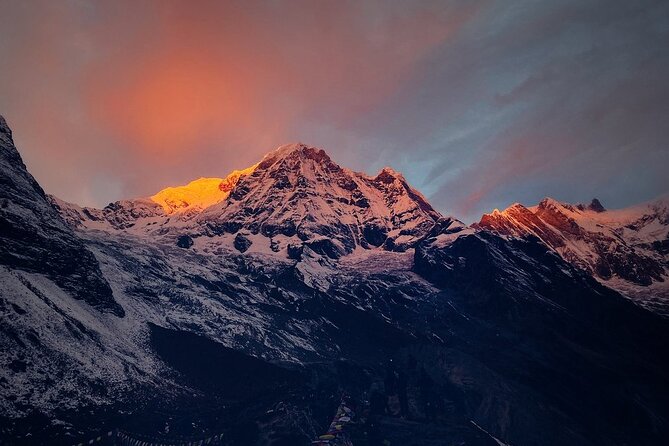
The big draw here is the full Annapurna Circuit with Tilicho Lake folded into one organized 16-day trip. You move from river valleys and pine forests to high Tibetan-style villages, then cross Thorong La before finishing with hot springs and a Poon Hill sunrise. It is a serious walk, not a sightseeing holiday with a few easy hikes attached.
I like two things in particular. The logistics are handled for you, including permits, teahouse meals, local rides, and guide and porter support. I also like the variety: Gangapurna Lake, ancient monasteries, Tilicho Lake, Muktinath, Tatopani, and Poon Hill each give the route a different flavor.
The catch is the pace and altitude. You reach Tilicho Lake and Thorong La in close succession, with long uphill days and an early start around 3 a.m. for the pass. You need solid fitness and a willingness to walk through cold, dry, windy conditions.
Key points to know before booking
- Tilicho Lake adds a high-altitude side trip to the classic Annapurna Circuit, with an early climb from base camp.
- Thorong La Pass is the physical high point, and the hardest day begins before dawn.
- Three meals a day and teahouse lodging are included, which removes much of the daily planning.
- Local road transport is part of the route, including the ride from Muktinath to Tatopani and the return to Kathmandu.
- A licensed guide and porters accompany the trek, with rescue assistance arranged if a serious health problem occurs.
- A maximum group size of 15 keeps this organized without making it a private trip.
What the $1,093 price really covers
At $1,093, this trip gives you a lot of moving parts for one price. The package includes accommodation in teahouses or lodges during the trek, breakfast, lunch, and dinner, the Annapurna Conservation Area Permit, the TIMS card, a licensed guide, porters, guide and porter expenses, local transportation, and government and local taxes.
You also get one night in a selected Pokhara hotel with breakfast, a farewell dinner, and a tourist bus from Pokhara to Kathmandu. The initial ride from Kathmandu toward Syange is included, as is public transportation from Muktinath to Tatopani. That matters because this route is not just a walking trip. Several sections now use roads, and arranging each transfer yourself would add time and uncertainty.
The value is strongest if you want a supported trek rather than a self-organized one. Your guide handles route choices, lodging arrangements, meal coordination, and the day’s practical details while you concentrate on walking. Guide and porter salaries, lodging, insurance, meals, and transport are also covered, which makes the price easier to compare with a self-planned trip.
The package does not include every possible cost. The terms say anything not listed as included is extra, and a return flight from Pokhara to Kathmandu is specifically not included. Ask for a clear explanation of other possible personal expenses before paying. The booking is non-refundable and cannot be changed for personal reasons, so this is a trip to book only after checking your schedule, fitness, and preferred season.
More Annapurna Circuit itineraries:
- Annapurna Circuit Trek
★ 5.0 · 94 reviews - Annapurna Circuit Trek
★ 5.0 · 35 reviews - Annapurna Circuit Trek
★ 5.0 · 34 reviews
Days 1 to 4: From Kathmandu to the first Annapurna views
The first day is mostly a road day. You drive for roughly six to seven hours from Kathmandu toward Besishar and Syange, passing villages, farms, rivers, and early views of the mountains. The air-conditioned vehicle is welcome, but mountain roads can make this a tiring beginning. You are not yet settling into a walking rhythm, so treat the day as part of the trek rather than wasted time.
On Day 2, the route reaches the Manang region near Tal. You cross a suspension bridge, climb steeply, and pass waterfalls, river beaches, and village scenery. This is a good first walking day because it gives you a clear sense of the route’s character: rough paths, water, steep slopes, and small communities.
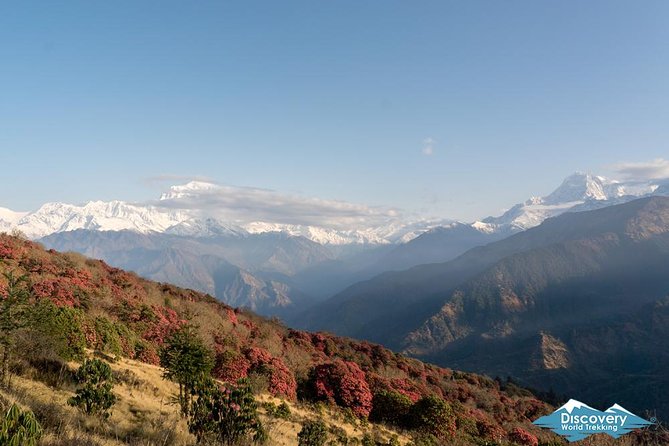
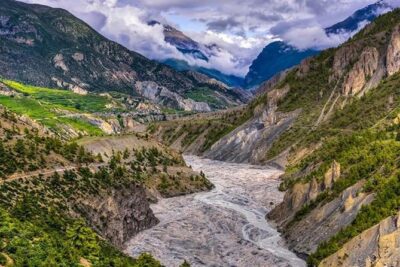
Day 3 follows a river through pine, fir, oak, and maple forest toward Chame, the administrative center of Manang District. The tree cover softens the walking, while views toward Lamjung and the Annapurna range begin to open. I like this gradual change in scenery. You do not go from city to high mountain in one leap; the route changes by degrees.
On Day 4, the valley tightens and the trail reaches the striking Paungda Danda rock face, a huge curved wall rising about 1,500 meters from the river. Annapurna II and Pisang Peak come into view. This is one of the first places where the scale of the mountains becomes hard to ignore.
Days 5 and 6: Upper Pisang, Manang, and acclimatization
Day 5 uses the upper route through Pisang and Geru. It is higher and more exposed than the lower route, but the reward is a broad view toward Annapurna II, Annapurna III, Annapurna IV, Gangapurna, Tilicho, and Pisang Peak. As you climb, the air becomes colder, drier, and thinner.
The route plan includes an acclimatization day around Manang on Day 6. You hike toward Gangapurna Lake and its base camp, then spend time around Manang village and a monastery. This is not a spare day. It gives your body time to adjust before the Tilicho section and the pass crossing.
I especially value this pause because high-altitude treks should not be judged only by the number of miles covered. A rest and exploration day can make the next stages more manageable. You still walk, but the effort is controlled, and you get time to look around Manang instead of rushing through it.
Days 7 to 9: The Tilicho Lake detour
Day 7 follows an upper route down toward a river, across conifer forest, and into the Tibetan-influenced settlement of Khangsar. The walk is described as easier than the previous days, though the high setting means easy is relative. From Khangsar, the route turns toward Tilicho Base Camp.
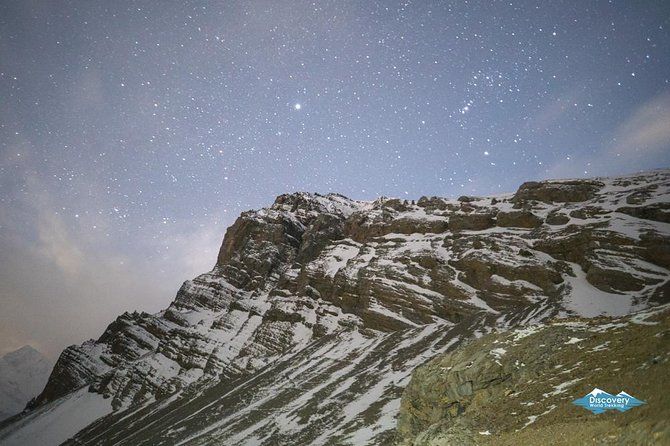
Day 8 passes through an area affected by landslides, with unusual rock formations along the way. The trail continues to Tilicho Base Camp, where you can see Tilicho Peak and other snow-covered mountains. This section deserves care. Landslide terrain and loose surfaces can slow you down, and the scenery does not remove the need to watch every step.
Day 9 is the major Tilicho day. You start early to avoid the stronger afternoon wind, then climb steadily for two to three hours toward the lake. Tilicho Lake is famous for its great height and its setting beneath snowy peaks. The walk is short on paper compared with the full circuit, but the altitude makes it demanding.
The early start is practical, not ceremonial. Wind and cold can make the return harder later in the day, so follow the guide’s timing. You should also expect the day to feel strenuous even if your sea-level fitness is good. This is one of the best reasons to have a guide who can set a sensible pace and judge conditions.
More trekking days out of Annapurna Region:
- Annapurna base camp trek 5 Days
★ 5.0 · 252 reviews - Poon hill Trek 3 days
★ 5.0 · 176 reviews - Trekking in Annapurna/Langtang/Everest/Upper Mustang regions
★ 5.0 · 161 reviews - Pokhara: 4-Day Ghorepani, Poonhill & Ghandruk Mountain Trek
★ 5.0 · 132 reviews
Days 10 to 12: Thorong Phedi and the pass
After Tilicho Lake, Day 10 brings you back through Khangsar and past Tare Gompa, described as a thousand-year-old monastery. The route follows a rock wall, crosses a bridge, and reaches the Thorong Khola valley before climbing toward Yak Kharka. This is a long transition day, linking the Tilicho detour with the main pass route.
Day 11 heads uphill to Thorong Phedi, a small settlement used by walkers preparing for the pass. Along the way, you get views of Mount Gundang, Mount Syagang, Thorung Peak, and Mount Khatungkan. Thorong Phedi is not presented as a luxury stop, and you should expect a basic mountain lodge setting.
Day 12 is the hardest day of the trip. You wake around 3 a.m. to cross Thorong La, one of the world’s highest mountain passes and the trek’s highest point. The climb demands patience, warm clothing, steady breathing, and a willingness to stop when needed.
The pass crossing is the day that separates a challenging trek from a casual walking tour. The route may be clear and the guide may be experienced, but altitude affects people differently. You need to take symptoms seriously and tell the guide if you feel unwell. The package includes help arranging a rescue operation for a complicated health condition, which is reassuring, but preparation and honest communication remain your responsibility.
After the pass, the route reaches Muktinath. The relief of finishing the crossing is part of the experience, but do not assume the day is easy once you reach the top. The descent can be hard on tired knees, and the total effort makes this a full mountain day.
Days 13 to 15: Muktinath, Tatopani, and Poon Hill
Day 13 begins with a visit to Muktinath Temple, an important pilgrimage site, followed by a vehicle ride to Tatopani. This sudden change from walking to road travel is useful after Thorong La. Tatopani is known for natural hot springs, giving you a chance to soak and rest.
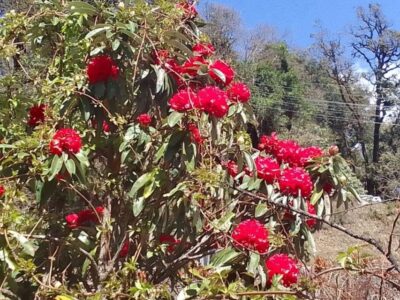
Day 14 returns to the trail. You climb through Sikha and Chitre, villages associated with the Thakali people, then continue through terraced farmland and forests of rhododendron, birch, and magnolia toward Ghorepani. The route feels greener than the high Manang and Mustang sections.
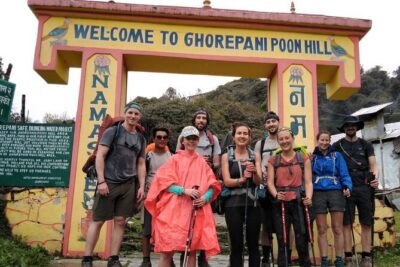
Ghorepani is the staging point for Poon Hill. On Day 15, you climb early to 3,210 meters for sunrise views across the Annapurna and Dhaulagiri massifs, including Machhapuchhre, Manaslu, and surrounding rice terraces. Poon Hill is a popular viewpoint, but it earns its place here. It gives you a final wide view after days of close mountain valleys and high passes.
The climb is short compared with the pass crossing, yet the early hour can be tough after two weeks of walking. Pack what you need the night before, follow the guide’s departure time, and keep expectations practical. Weather can change the view.
Day 16: Returning to Kathmandu
After breakfast, you take a tourist bus back to Kathmandu. The package also notes an optional 225-minute flight from Pokhara to Kathmandu, but that flight is not included. The bus keeps the listed price lower, though it makes the final day a road journey rather than a quick finish.
The trip ends in Kathmandu. Since the route includes both remote walking and road transfers, the final return can feel long. Still, ending by road gives the journey a clear sense of distance covered.
Guides, porters, and the human side of the trek
The strongest part of the support system is the attention from the guide and porter team. Past guide teams have included Hari Gurung, Dev, and Suresh, with porters such as Damar, Sangkar, Bikesh, Asis, Monis, Rupesh, and Surya. These names are not a promise about your exact crew, but they show the kind of personal service the operator has provided.
Useful details include guides explaining mountains, villages, and local culture while walking. Porter teams have also helped with small comforts, including preparing fruit plates in the evening. Those touches matter after a cold, tiring day.
You should still remember that a group of up to 15 is not the same as a private trek. Pace, room arrangements, and daily timing may need to suit the group. If you want a smaller private departure, ask before booking.
Who should book this trek?
I would choose this trip if you want the Annapurna Circuit’s major milestones but prefer not to manage permits, lodging, meals, navigation, and local rides yourself. It also suits people who want a guide for the high route to Tilicho Lake and Thorong La.
You should be fit enough for repeated full walking days, steep climbs, thin air, and an early pass crossing. The package says moderate physical fitness is required, but the itinerary itself makes the real demand clear: this is a strenuous mountain trek.
I would not choose it for a relaxed holiday, a first walking trip with no preparation, or anyone uncomfortable with basic teahouse lodging and long road transfers. The route is rewarding, but it asks for effort.
Should you book the Annapurna Circuit with Tilicho Lake?
Book it if you want one organized trip covering the circuit, Tilicho Lake, Thorong La, Muktinath, Tatopani, and Poon Hill. The $1,093 price is strong for the number of meals, permits, transport segments, lodging nights, guide services, porter support, and safety planning included.
Before paying, confirm the exact departure date, what personal costs remain outside the package, the guide and porter arrangement, and whether you want the bus or a separately purchased flight from Pokhara. If your health, schedule, and fitness are ready for a demanding high-altitude route, this is a practical way to experience a remarkable section of Nepal without carrying the full planning burden yourself.
FAQ
How long is the Annapurna Circuit with Tilicho Lake trek?
The trek lasts approximately 16 days, beginning and ending in Kathmandu.
What is the highest point of the trek?
Thorong La Pass is the highest point of the route and the most challenging day of the trip.
Is Tilicho Lake included?
Yes. The itinerary includes a trek to Tilicho Lake, with an overnight stop at Tilicho Base Camp before the early climb to the lake.
Are meals included?
Yes. Breakfast, lunch, and dinner are included during the trek, with 16 breakfasts, 16 lunches, and 16 dinners listed.
Is accommodation included?
Yes. Teahouse or lodge accommodation during the trek is included, along with one night in a selected Pokhara hotel with breakfast.
Are permits included?
Yes. The Annapurna Conservation Area Permit and Trekkers Information Management System card fee are included.
Is transportation included?
Yes. The package includes the drive from Kathmandu toward Syange, public transportation from Muktinath to Tatopani, and a tourist bus from Pokhara to Kathmandu.
Is a flight from Pokhara to Kathmandu included?
No. A 225-minute flight is offered as an alternative to the tourist bus, but it is not included in the package.
How large can the group be?
The maximum group size is 15 people.
Can I cancel for a refund?
The experience is non-refundable and cannot be changed for personal reasons. If poor weather or an insufficient minimum group causes the operator to cancel, you are offered another date or experience, or a full refund.
Just added around Annapurna Region
- 4 Day Mardi Himal Base Camp Trek from Pokhara★ 5.0 · 18 reviews
- 7-Day Trek to Annapurna Base Camp from Pokhara★ 5.0 · 12 reviews
- Private 4 Day Poon Hill Trek from Pokhara★ 5.0 · 16 reviews
- Annapurna Base Camp Trek from Pokhara and Kathmandu★ 5.0 · 7 reviews
- 6 days Annapurna Basecamp Trek★ 5.0 · 16 reviews
- “Exclusive Round-Trip Transfer: Pokhara to Jomsom & Muktinath”★ 5.0 · 11 reviews
- Pokhara: 4 Days Poon Hill and Ghandruk Trek★ 5.0 · 23 reviews
- Poon Hill Ghandruk Circuit Trek from Pokhara 4 Days★ 5.0 · 10 reviews
Annapurna Circuit Treks, compared.
15-Day Private Annapurna Circuit Trek from Kathmandu
Read our review →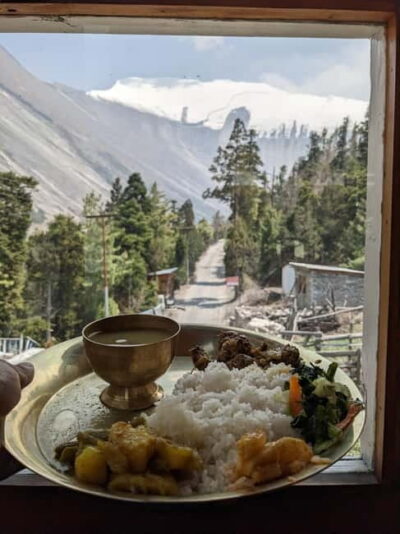
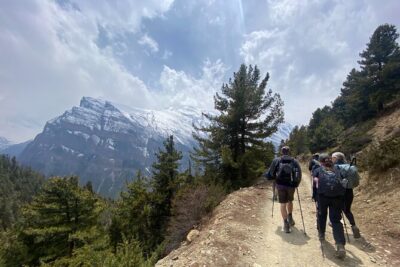
Annapurna Circuit Trek with Tilicho Lake (16 Days)
Read our review →Browse the lists this tour appears in