
Reviewed · TICKETS
Pokhara to Kathmandu Premium Sofa Bus Ticket
The best part of this Pokhara to Kathmandu bus ride is the chance to watch Nepal change outside your window while someone else handles the winding highway. The route follows river corridors, passes through changing mountain scenery, and may offer glimpses of rafting activity. At about $11, it is a sensible alternative to a private car or a more expensive tourist vehicle.
I like the reclining sofa seats and the included bottled water, both useful on a long road day. I also like the planned breakfast and lunch stops, especially Kurintar, where you can eat beside the river. The drawback is that timing and vehicle quality may not be fully predictable, so you should allow extra hours and confirm the bus and drop-off details before departure.
Key points to know before booking
- Early departure: Be ready at the meeting point by 6:45 am.
- Three planned stops: Breakfast is at Jamune for about 20 minutes, followed by lunch at Kurintar for about 30 minutes.
- Six to eight hours on the road: Smooth traffic can mean roughly six hours, but highway problems and construction can make the trip longer.
- Small group size: Each bus carries a maximum of 30 passengers.
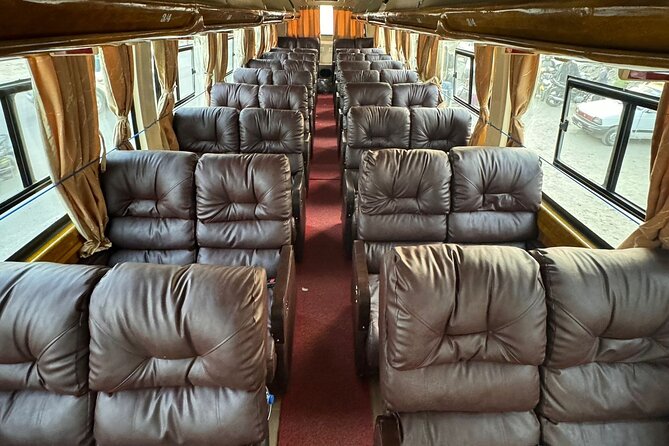
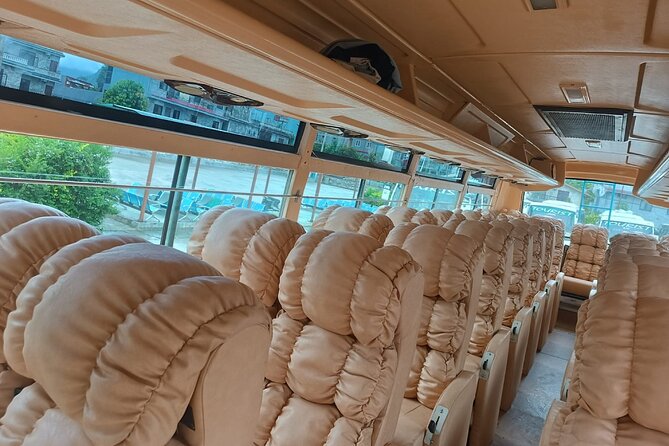
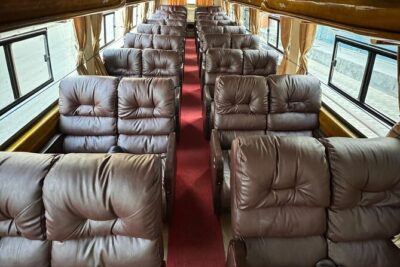
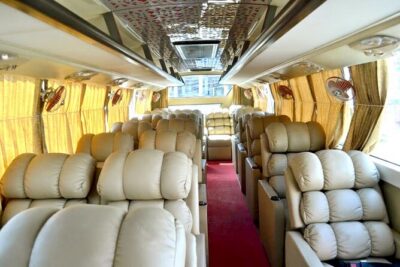
- Comfort-focused seating: The service is sold with reclining sofa-style seats and bottled water.
- Bring flexibility: Bus changes, delayed departures, seat reassignment, and an unexpected final drop-off have occurred on past journeys.
Leaving Pokhara at 6:45 am
Your day starts early. The stated departure time is 6:45 am, so I would arrive with enough time to find the meeting point, settle your luggage, and check that the bus matches your booking details. This matters because one delayed departure involved passengers waiting while the bus was still being prepared, followed by a vehicle change.
The early start is practical. It gives you the best chance of reaching Kathmandu during daylight and leaves room for the two meal breaks. Still, this is a highway service, not a train with a fixed timetable. I would not schedule a flight, important appointment, or prepaid evening activity immediately after the expected arrival.
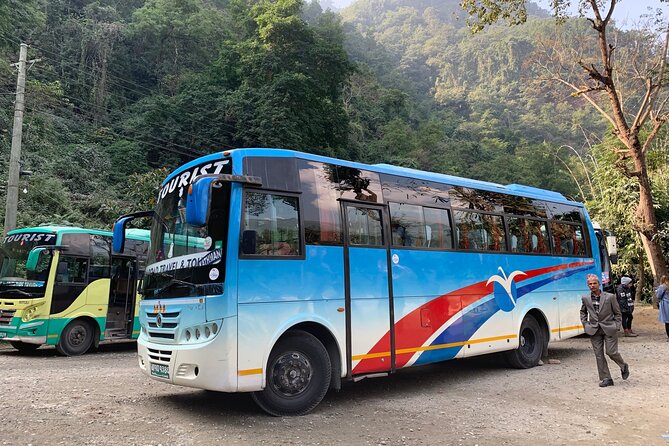
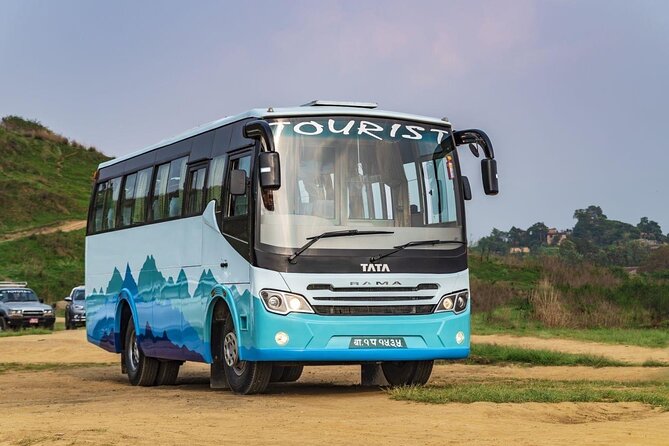
The bus is limited to 30 passengers, which is smaller than a large public coach. A smaller group can make boarding and meal breaks easier, though it does not guarantee that you will receive the exact seat shown in promotional photos. If a window seat matters to you, ask about seating before departure rather than assuming that arriving early will settle the question.
More Tourist Bus Tickets in Pokhara:
- Kathmandu to Pokhara Tourist Bus Tickets reservation
★ 4.0 · 25 reviews - Kathmandu to Pokhara Bus Ticket- Sofa
★ 4.0 · 24 reviews - Kathmandu to Pokhara VIP Sofa Bus Ticket
★ 4.5 · 19 reviews
The premium sofa bus: comfort with a few conditions
The main reason to pay for this service instead of choosing the cheapest local bus is the promise of a more comfortable seat. The reclining sofa-style seats are intended to let you rest during a long, winding ride. That can make a real difference on the Pokhara to Kathmandu road, where sitting upright for hours is tiring.
A bottle of water is provided. I like this small inclusion because it saves you from needing to find a shop immediately after boarding. You should still carry anything else you need for the morning, since the listed service includes the bus ticket and water, not meals, snacks, or other personal services.
The word premium should be treated as a comfort category, not a guarantee of luxury. Past departures have included a bus that did not match the advertised photographs and passengers being asked to change seats. The road is also under construction in places, which affects the ride no matter how soft the seat may be.
One particularly serious service concern has been an allegation that a driver drank at roadside stops. I cannot verify what happened, but it is not a minor complaint. If you see unsafe driving or believe a driver is unfit to drive, raise the matter immediately with the operator and do not ignore the concern.
What you see between Pokhara and Kathmandu
This is a useful route for seeing how quickly Nepal changes outside the two major tourist centers. You leave Pokhara and follow a road shaped by hills, rivers, settlements, and road work. The exact views depend on traffic, weather, construction, and your side of the bus, so I would think of the scenery as a pleasant part of the transfer rather than a sightseeing tour with guaranteed photo stops.
The river is one of the route’s main visual features. You may spot rafting activity in places, and the water gives the long drive a changing point of focus. The road also offers views of hills and roadside life, though much of the journey is simply time spent moving through Nepal’s busy highway system.
I recommend keeping your phone or camera handy, but do not expect long stops for photographs. The scheduled pauses are mainly for food and rest. If you want a trip designed around viewpoints, local villages, or guided sightseeing, this bus will not provide that. Its value is getting you from one city to the other while letting you look out as you go.
Jamune breakfast stop: a quick river-side break
The first planned stop is in the Jamune area for breakfast. You have about 20 minutes, which is enough for a quick meal and a stretch, but not enough for a leisurely café visit. Keep your order simple and watch the time. The bus is expected to continue after the scheduled break.
The food stops are described as hygienic, and the riverbank setting gives this pause more character than a generic fuel station. You can take in the water, eat, and get your legs moving after the first part of the drive.
I would not wander far from the bus. Twenty minutes disappears quickly once you leave your seat, find food, and use the facilities. Since meals are not included in the ticket price, bring cash or another accepted payment method for breakfast. The exact food selection and price are not specified, so do not count on a particular dish.
More days out in Pokhara:
- ZipFlyer Nepal – The World’s Steepest Zip-line
★ 5.0 · 608 reviews - Bungee Pokhara by HighGround Adventures
★ 5.0 · 366 reviews - From Pokhara: Sarangkot Sunrise Himalayas Tour
★ 4.7 · 218 reviews - ATV Adventure Tour in Pokhara, Nepal
★ 5.0 · 194 reviews
Kurintar lunch stop: more time to stretch
The second main pause is at Kurintar for lunch, with about 30 minutes available. This is the longer break and the better chance to step away from the seat, eat properly, and enjoy the riverbank view.
The setting is part of what makes the stop useful. You are not simply stopping for fuel and rushing back onto the highway. The water and surrounding scenery give you a brief sense of place, even though your visit is short.
Thirty minutes is still a firm limit. I would collect your food promptly and keep an eye on the bus. The stop is for you to manage yourself, so no guide is described as leading passengers around the area. If you explore nearby, stay close enough to return on time.
The two food stops also explain why the trip can feel longer than a direct drive. They add comfort and a little local atmosphere, but they do not remove the possibility of traffic delays. You are paying for a practical transfer with planned breaks, not the fastest possible journey.
Six hours, seven hours, or longer
The normal estimate is not perfectly consistent: the trip is described as taking six to seven hours in one place and seven to eight hours elsewhere. The most useful way to read this is to plan for a full day’s road transfer. If conditions are good, the journey may finish in about six hours. Highway incidents, construction, traffic, and other delays can push it well beyond that.
This uncertainty is the biggest practical issue. Nepal’s main roads can lose time quickly when there is a blockage or road work. A delay is not automatically a failure of the bus operator, but poor communication makes it much harder to manage.
I would keep your evening in Kathmandu open. Do not use this ride on a day when you must reach the airport at a fixed time or connect with a nonrefundable booking. If you need more control, a private vehicle may be worth the extra cost, though it will not remove every road delay.
The bus does not stop for local passengers waving along the highway. That is helpful because it keeps the service from turning into a constantly interrupted local bus route. It also means you should board at the stated meeting point and not expect to join the bus somewhere along the road.
Arrival and the importance of confirming the drop-off
The supplied details say the activity ends back at the meeting point, while the journey itself is described as Pokhara to Kathmandu. That wording is not clear enough for a traveler with a hotel, transfer, or appointment waiting in Kathmandu.
Past service problems have included passengers being left somewhere other than the promised location. For that reason, confirm the exact Kathmandu drop-off before you board. Ask where the bus will finish, not simply which city it is heading toward. Keep the operator’s contact information available in case the vehicle or arrival point changes.
This is also a good moment to confirm whether the bus you board is the premium sofa vehicle shown in the booking information. A last-minute vehicle change has occurred before. You should not assume that every departure will use an identical bus.
Who will get the best value from this ride?
At $11 per person, the fare is attractive. You get a direct intercity bus ticket, bottled water, reclining seating, and two organized meal breaks. Compared with arranging a private car, the price is very low. For a solo passenger or a couple watching costs, that makes the service easy to consider.
I think it suits you best if:
- You want the economical way between Pokhara and Kathmandu.
- You can accept a six to eight-hour journey.
- You like having planned meal breaks.
- You are comfortable with changing road conditions.
- You do not need a guaranteed arrival time.
- You are traveling with passengers aged 6 to 75.
It is less suitable if you need a specific seat, a guaranteed vehicle model, a precise drop-off, or strict control over arrival time. It is also not the best choice if the journey itself is your main sightseeing goal. You will see Nepal from the road, but the bus is transport first.
Service animals are allowed, the departure point is near public transport, and most people in the stated age range can take part. No separate guide is identified, and there is no listed tour leader for the meal breaks.
How this compares with a private car
The bus wins on price. At $11, it lets you reserve your budget for accommodation, meals, or activities in Kathmandu and Pokhara. It also removes the need for you to drive a difficult highway yourself.
A private car would offer more control over departure, stops, luggage handling, and final drop-off. You could also stop for photos or adjust the pace, though the price would be much higher and road delays would still be possible.
The real choice is not simply comfort versus cost. It is low fare and limited control versus higher cost and greater flexibility. If you can accept that trade, the bus is reasonable. If a late arrival would cause a serious problem, pay for the option that gives you more control.
Booking advice for a smoother morning
Because the ticket is nonrefundable and cannot be changed, check your dates carefully before paying. The booking confirmation is issued at the time of reservation, and the mobile ticket should be ready on your phone.
I would save a screenshot in case mobile service is weak at the departure point. Arrive before 6:45 am, keep your luggage clearly identified, and confirm the bus name and destination with staff. If you have a child, an older passenger, or anyone who needs a particular seat, raise that issue before boarding.
Pack a small day bag with water beyond the provided bottle, snacks, tissues, medication, and a light layer. The food stops are planned, but the road timing is not exact. Keeping essentials beside you is easier than opening the main luggage compartment during a short break.
Should you book the Pokhara to Kathmandu premium sofa bus?
Book it if your priority is an inexpensive city-to-city transfer with a reclining seat, bottled water, and two planned pauses. The river views and small bus capacity add value, and the $11 fare is hard to beat for a direct highway journey.
I would skip it if you need reliable timing, a guaranteed bus matching the photographs, a firmly assigned seat, or a precise Kathmandu drop-off. Past delays, vehicle changes, seat problems, and one serious safety allegation mean you should book with realistic expectations and confirm the practical details before departure.
For a flexible budget trip, it can work well. Treat the schedule as an estimate, keep your evening free, and confirm the final arrival point. That approach gives you the best chance of enjoying the scenery without letting the road’s uncertainty spoil your plans.
FAQ
What time does the bus leave Pokhara?
The stated start time is 6:45 am. You should arrive before that time so you can find the meeting point and board without rushing.
How long does the journey take?
The journey is described as taking about six to eight hours. In smooth conditions it may take around six hours, but highway incidents, traffic, and construction can make it longer.
How many stops does the bus make?
The Pokhara to Kathmandu service makes two planned meal stops, one for breakfast in the Jamune area and one for lunch in Kurintar. The service information also says the bus does not stop for local passengers waving along the highway.
How long are the meal breaks?
The breakfast stop lasts about 20 minutes. The lunch stop lasts about 30 minutes.
Is food included in the ticket?
No. The ticket includes the bus ride, and bottled water is provided. Breakfast and lunch are not listed as included services.
How many passengers can join the bus?
The maximum group size is 30 passengers per bus.
Can I cancel or change my booking?
No. The experience is nonrefundable and cannot be changed for any reason after booking.
Just added around Pokhara
- Pokhara: Pokhara Highlights Tour by Bus★ 3.6 · 10 reviews
- Discover Pokhara in Style: Private Vehicle Service with Driver★ 5.0 · 5 reviews
- Pokhara in 5 Hours: Lake, Museum, Cave, Falls & Pagoda Hill★ 4.5 · 16 reviews
- Beautiful Sarankot Sunrise with Full Day Sightseeing in Pokhara★ 4.5 · 3 reviews
- Sarangkot Sunrise Tour in Private Car★ 5.0 · 3 reviews
- Pokhara: Group Joining Sarangkot Sunrise Himalayas Tour★ 4.5 · 23 reviews
- Sarangkot Sunrise Tour from Pokhara★ 4.5 · 9 reviews
- Pokhara: Full-Day Sightseeing & Viewpoints Tour – Private/Group★ 5.0 · 4 reviews
Tickets, compared.
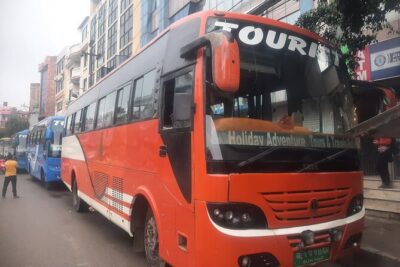
Kathmandu to Pokhara Tourist Bus Tickets reservation
Read our review →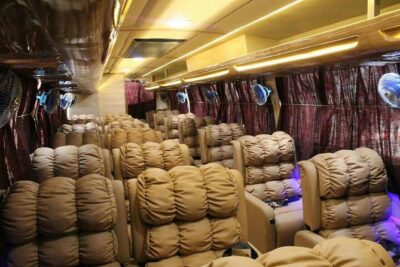
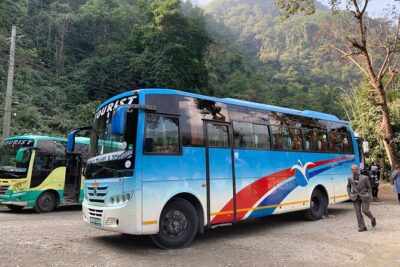
Kathmandu to Pokhara Luxury Bus Ticket – Easy & Reliable Booking
Read our review →
Tourist Bus Tickets: Kathmandu to Chitwan or Chitwan to KTM
Read our review →
Tourist Bus Tickets: Kathmandu to Pokhara or Pokhara to KTM
Read our review →Browse the lists this tour appears in