
Reviewed · POON HILL TREKS
Annapurna Poon Hill Trek Package in Nepal Himalayas
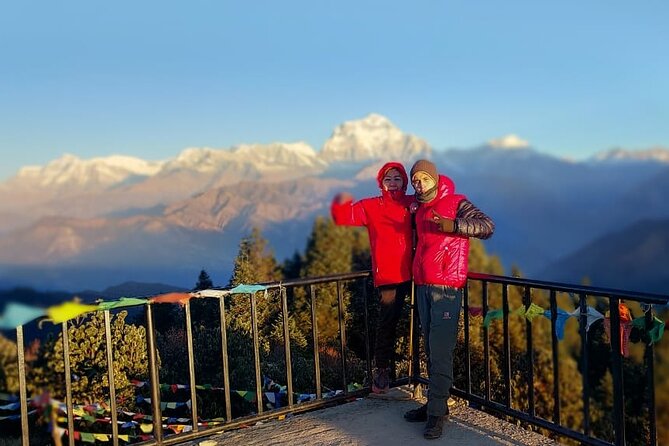
Poon Hill is one of Nepal’s most rewarding short treks: you climb through rhododendron forest and stone villages, then reach a sunrise viewpoint facing Annapurna and Machapuchare. The route packs serious mountain scenery into six days without requiring you to arrange every bed, meal, permit, and transfer yourself.
I like the private guide support, especially since the guide carries responsibility for route help, first aid, permits, and local arrangements. I also like the practical package: trekking poles, safety gear, meals, and tea-house rooms are covered. The tradeoff is the long bus ride between Kathmandu and Pokhara, plus steep daily climbs that can feel demanding at altitude.
Key points to know before booking
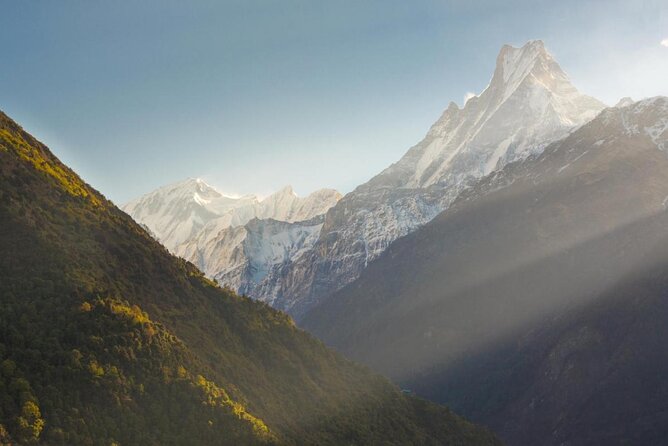
- Sunrise at 3,210 meters: Poon Hill is the trip’s main reward, with views toward Annapurna and Machapuchare.
- Four trekking days inside a six-day trip: The first and last days are mainly for transport between Kathmandu and Pokhara.
- Private licensed guide: Guide Santosh is one named guide associated with the experience, and guide costs include food, lodging, insurance, salary, equipment, transport, and local tax.
- Meals and permits are included: Breakfast, lunch, dinner, the Annapurna permit, and TIMS card are covered during the trek.
- Tea-house accommodation: You sleep in three nights of mountain guesthouses, with two additional nights in a three-star Pokhara hotel.
- Pack light: You are expected to carry your own luggage, with a suggested limit of 22 pounds, or 10 kilograms.
Why Poon Hill works as a first Himalayan trek
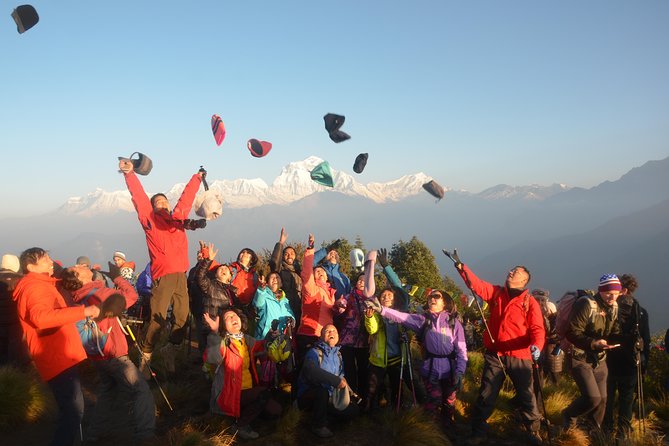
Poon Hill gives you a proper Himalayan walking trip without the length of a high-pass expedition. You pass through forests, villages, and mountain settlements, then finish at a viewpoint famous for early-morning mountain color.
The highest point is about 3,210 meters, or 10,530 feet. That is high enough for altitude effects, even for fit people, so you should not treat this as a casual hill walk. The itinerary includes steep ascents and descents, and the weather can change sharply.
I like the balance here. You get a remote-feeling route, but you also have pre-arranged accommodation, a guide, transport, food, and a first-aid kit. That removes much of the planning burden while keeping the walking at the center of the trip.
The route is private for your booking, with a maximum of 12 people per booking. This makes it easier to keep the pace suited to your group than on a large scheduled departure. It also means you should be clear about the difference between a private group and a private guide for every individual.
More Poon Hill and Ghorepani treks:
- Poon hill Trek 3 days
★ 5.0 · 176 reviews - Pokhara: 4-Day Ghorepani, Poonhill & Ghandruk Mountain Trek
★ 5.0 · 132 reviews - Ghorepani – Poon Hill Trek 3N-4D
★ 5.0 · 125 reviews
Day 1: Kathmandu to Pokhara and Phewa Tal
Your first day begins around 7:00 a.m. with pickup from your Kathmandu accommodation. The trip to Pokhara takes about six to seven hours by luxury tourist bus along the Prithvi Highway, although the full day is listed at roughly 12 hours once stops and local sightseeing are included.
This is not a short transfer. If you dislike long road journeys, set your expectations early. The value is that round-trip transport is arranged, and you do not have to manage the connection between Nepal’s capital and the main gateway for the trek.
The day includes time around Phewa Tal, Pokhara’s well-known lake, as well as Pokhara Lakeside and Begnas Lake. The schedule also refers to local village exploration, so you get an introduction to the Pokhara area before walking into the mountains.
Pokhara is a useful pause between Kathmandu and the trail. You sleep in a three-star hotel here, rather than beginning the trek immediately after arriving. The package includes two nights in Pokhara, one before the trek and one after it.
Day 2: Nayapul, Birethanti, and the climb to Ulleri
The next morning starts with about an hour of driving to Nayapul. Mountain views begin to appear as you leave the road behind and walk toward Birethanti, reached after roughly 20 minutes on foot.
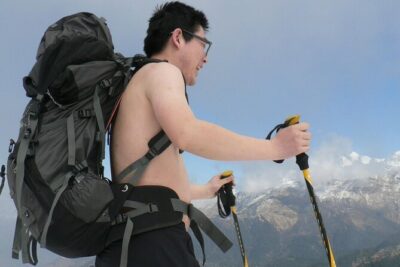
From there, the trail climbs toward Ulleri. This is where the trip becomes a real physical test. Stone steps and steady uphill walking set the tone, so trekking poles are more than a decorative extra. They can help with balance on steep sections and reduce strain on your knees.
The itinerary describes this as a full day, and that is a useful warning. You should expect a demanding route rather than a gentle stroll. The package provides breakfast, lunch, and dinner during the trek, so you do not need to search for food after a long climb.
Ulleri is a good first mountain overnight because it puts you into the rhythm of walking, eating, and sleeping in tea houses. Rooms in mountain lodges are practical rather than luxurious. The benefit is location and simplicity, not hotel-style comfort.
Day 3: Ulleri to Ghorepani through forest and mountain views
After breakfast around 8:00 a.m., you continue toward Ghorepani. The trail gains about 1,000 meters, with roughly three hours of hiking to Nangethanti before the route continues higher.
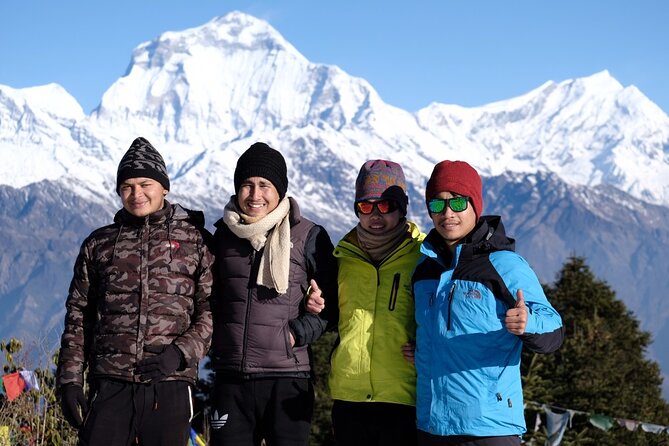
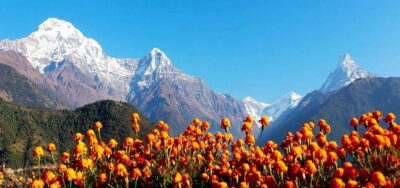
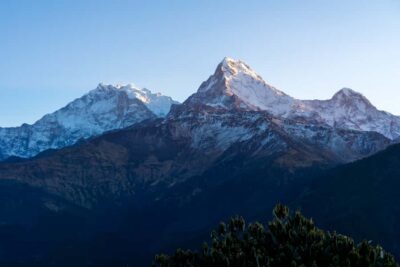
This section brings the forest scenery that makes the Poon Hill route so appealing. Rhododendrons are a major feature, and the woods provide a welcome change from exposed steps and open mountain views. In suitable conditions, you can also see the Annapurna Mountain Range and Machapuchare.
The route is still uphill, and altitude begins to matter more. Walk slowly, drink water, and tell your guide if you develop a headache, nausea, unusual tiredness, or breathing trouble. The tour requires medical travel insurance that includes emergency repatriation, and you should be ready to show proof to the guide on the first day.
Ghorepani is an important stop because it positions you for the early climb to Poon Hill. The village is also one of the more recognizable settlements on this route, with mountain lodges serving walkers who arrive for the same sunrise goal.
More trekking days out of Annapurna Region:
- Annapurna Circuit Trek with Tilicho Lake
★ 5.0 · 368 reviews - Annapurna base camp trek 5 Days
★ 5.0 · 252 reviews - Trekking in Annapurna/Langtang/Everest/Upper Mustang regions
★ 5.0 · 161 reviews - Annapurna Base Camp Trek
★ 5.0 · 111 reviews
Day 4: Poon Hill at sunrise, then on to Ghandruk
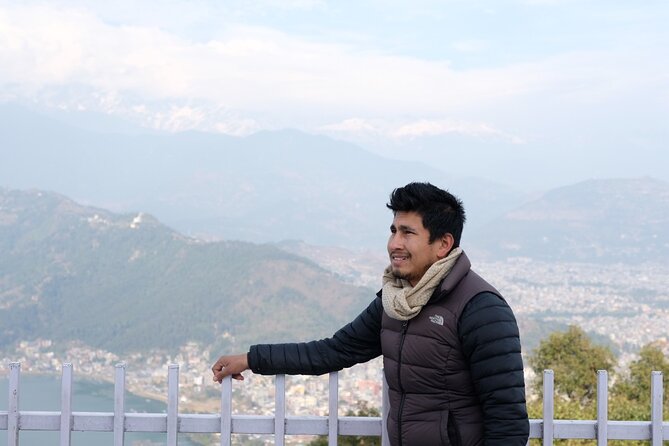
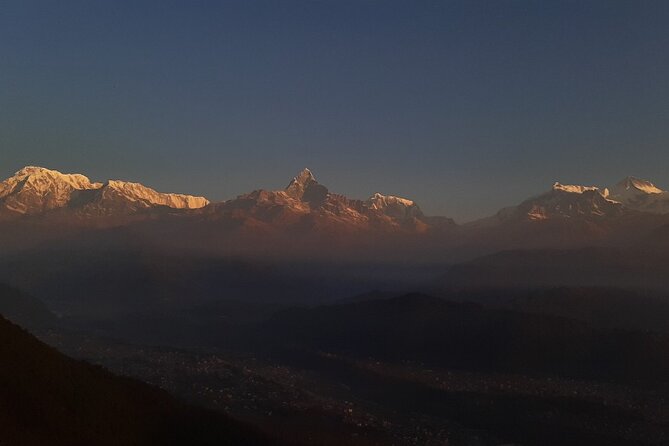
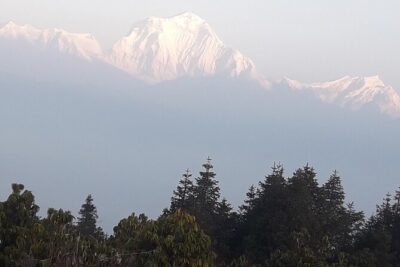
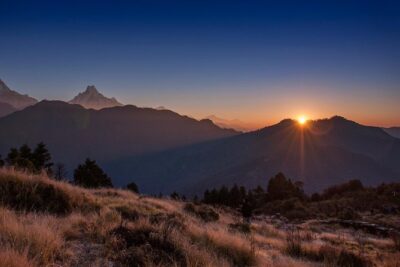
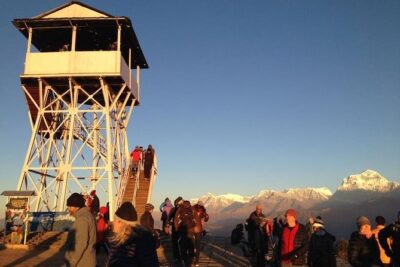
The most important morning begins before sunrise. You walk up to Poon Hill in time to see the first light on the Himalayan peaks. The viewpoint sits at about 3,210 meters and offers wide views toward the Annapurna chain and Machapuchare.
Early starts are part of the deal. You may be cold, sleepy, and walking in poor light, so bring warm layers and use the supplied safety equipment sensibly. Weather can obscure the mountains, and no itinerary can guarantee a clear sunrise. The viewpoint is still the trip’s central experience, but conditions decide how much you see.
After Poon Hill, the route continues toward Ghandruk. This is a long day, listed at about 12 hours, and the descent can be hard on the legs after the early climb. Ghandruk is a beautiful mountain village and the overnight stop gives you time to enjoy the settlement rather than treating it as a quick photo stop.
I like this day because it combines the trek’s biggest view with a genuine village stay. I would also take the timing seriously. If you are not used to long descents, the route may feel tougher than the uphill walking.
Day 5: Down to Nayapul and back to Pokhara
After breakfast, you begin the descent from Ghandruk. The walk to Nayapul takes about two hours according to the schedule, followed by a vehicle transfer to Pokhara.
Downhill walking often sounds easy on paper, but steep steps can be tiring, especially after several days on the trail. Trekking poles are useful again, and shoes with secure grip matter more than fashionable footwear.
Back in Pokhara, you return to a three-star hotel. This night is valuable because it gives you a proper bed and a chance to recover before the road journey to Kathmandu. It also separates the demanding mountain days from the final transfer.
Day 6: Return to Kathmandu
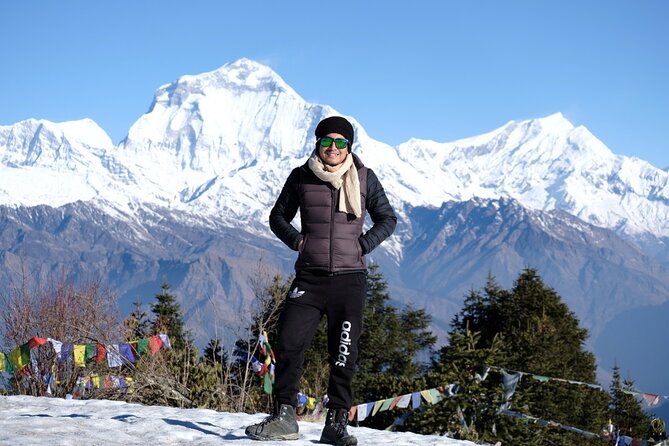
The final day takes you back to Kathmandu. The package includes the return transfer, and the trip ends with transfer to your accommodation.
An evening dinner with a cultural show is also mentioned in the schedule. The day includes references to a Buddhist site, an old royal place, and a peaceful site, though the details and exact timing are not fully specified. Treat these as possible Kathmandu sightseeing elements rather than guaranteed major stops with fixed visiting times.
You should not plan an important evening flight without confirming the return schedule. The road between Pokhara and Kathmandu can take most of a day, and the published itinerary describes a full final day.
What the $599 price really covers
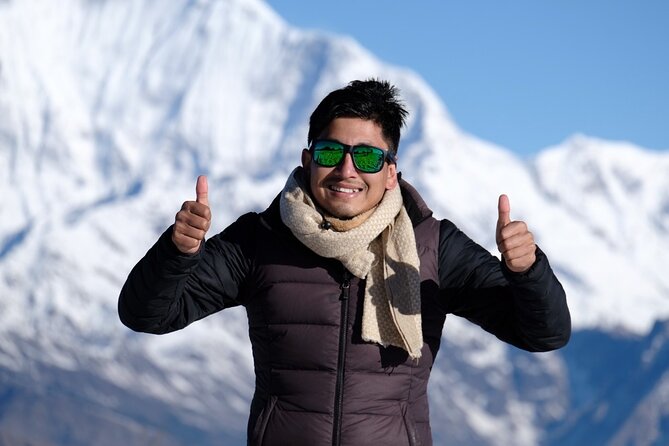
At $599 per person, the package offers useful coverage for a short Nepal trek. It includes the Kathmandu and Pokhara transfers by private car where specified, the Kathmandu to Pokhara and return journeys by luxury tourist bus, a private guided six-day trek, two Pokhara hotel nights, and three tea-house nights.
It also includes the Annapurna trekking permit and TIMS card, trekking poles, a first-aid kit, government taxes, VAT, and service charges. During the trekking portion, four lunches, five breakfasts, and four dinners are included.
The guide’s costs are covered too. That includes the guide’s food, drinks, accommodation, insurance, salary, equipment, transport, and local tax. This matters because guide fees can otherwise become an unpleasant surprise on a budget trek.
You still need to budget for lunch and dinner in Kathmandu and Pokhara, travel insurance, tips for the guide and driver, bar bills, laundry, shopping, and personal trekking equipment. The price is strongest if you value a ready-made arrangement and do not want to negotiate separate transport, permits, rooms, and guide services.
Tea houses, luggage, and daily comfort
The three trekking nights are in tea houses. These are mountain lodges designed for basic overnight stays, not resort comfort. Pre-booking gives you more certainty about where you will sleep, particularly during a popular trekking season.
Pack lightly. You are expected to carry your own luggage, and the suggested limit is 10 kilograms. Extra luggage can be left at a hotel in Kathmandu or Pokhara and collected when you return.
Bring personal layers, rain protection, suitable walking shoes, and any medication you need. The tour supplies poles and a first-aid kit, but it does not include your full personal trekking kit.
A private guide is especially useful for pace, route support, and basic safety. The guides have basic first-aid training and know the closest medical facilities. That is reassuring, but it does not replace insurance or a sensible approach to altitude.
Who should book this trek
I would recommend this trip to someone who wants a first Himalayan trek with a clear structure and limited planning work. It suits people who can manage long walking days, steep steps, early mornings, and changing weather.
The minimum age is five, and most people can participate, but the altitude and demanding climbs matter more than the age rule. Families should judge fitness carefully rather than assume that a child’s eligibility means the route will feel easy.
The trip also suits a private group that wants its own guide and a maximum of 12 people. An English-speaking guide is included. A different language costs an additional $100 per group.
This is not ideal if you want a slow, luxurious holiday or dislike long bus rides. It is also not the best fit if you expect every day to be flexible, since the sunrise start, pre-booked accommodation, and road transfers shape the schedule.
Booking advice and cancellation
Confirmation is provided at booking. Free cancellation is available if you cancel at least 24 hours before the experience begins. Cancellations within 24 hours are not refunded, and changes inside that period are not accepted.
Check Nepal visa rules before departure. Visas may be available from an embassy or on arrival at Tribhuvan International Airport, with passport photos and listed fees required for an airport application. You are responsible for meeting the entry rules that apply to you.
Should you book the Annapurna Poon Hill trek?
Book it if you want the classic Poon Hill sunrise, a private licensed guide, arranged permits, included meals, and a manageable six-day format. The strongest value comes from having the important moving parts handled for you while still walking through villages and forest instead of simply sightseeing from a vehicle.
Think twice if steep climbs, a 3,210-meter viewpoint, or long road transfers will spoil the trip for you. Ask yourself whether you can carry up to 10 kilograms, wake before sunrise, and handle a long descent after the viewpoint.
For the right walker, this is a practical introduction to Nepal’s mountain trails. Guide Santosh is one named guide connected with the experience, and the inclusion of equipment, meals, accommodation, and permits makes the $599 price easier to justify.
FAQ
How long is the Annapurna Poon Hill trek?
The experience lasts approximately six days. Four days are focused on trekking, while the first and final days include transport between Kathmandu and Pokhara.
What is the highest altitude reached?
Poon Hill is approximately 3,210 meters, or 10,530 feet, above sea level.
Is a guide included?
Yes. A private government-licensed trekking guide is included, along with the guide’s food, drinks, accommodation, insurance, salary, equipment, transport, and local tax.
Are meals included?
Breakfast, lunch, and dinner are included during the trekking section. Lunch and dinner in Kathmandu and Pokhara are not included.
What accommodation is provided?
The package includes two nights in a three-star hotel in Pokhara and three nights in tea houses during the trek.
Is transportation from Kathmandu included?
Yes. Transport from Kathmandu to Pokhara and back is included by luxury tourist bus. Private car transfers are also included where specified.
Are trekking permits included?
Yes. The Annapurna trekking permit and TIMS card are included.
Are trekking poles provided?
Yes. Trekking poles and a first-aid kit are included.
Do I need travel insurance?
Yes. Insurance covering medical expenses and emergency repatriation is required, and proof must be shown to the tour leader on the first day.
Can I leave extra luggage behind?
Yes. Extra luggage may be left at a hotel in Kathmandu or Pokhara and collected after the trek. You are advised to keep the luggage you carry under 10 kilograms.
Just added around Annapurna Region
- 4 Day Mardi Himal Base Camp Trek from Pokhara★ 5.0 · 18 reviews
- 7-Day Trek to Annapurna Base Camp from Pokhara★ 5.0 · 12 reviews
- Private 4 Day Poon Hill Trek from Pokhara★ 5.0 · 16 reviews
- Annapurna Base Camp Trek from Pokhara and Kathmandu★ 5.0 · 7 reviews
- 6 days Annapurna Basecamp Trek★ 5.0 · 16 reviews
- “Exclusive Round-Trip Transfer: Pokhara to Jomsom & Muktinath”★ 5.0 · 11 reviews
- Poon Hill Ghandruk Circuit Trek from Pokhara 4 Days★ 5.0 · 10 reviews
- Pokhara: Poon Hill Ghorepani Short Trek★ 5.0 · 6 reviews
Poon Hill Treks, compared.
4-Day Ghorepani, Poonhill & Ghandruk Mountain Trek
Read our review →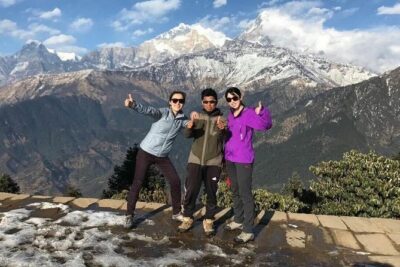
Browse the lists this tour appears in