
Reviewed · UPPER MUSTANG TOURS
Upper Mustang Trekking
Upper Mustang gives you a rare look at high desert Nepal, where red cliffs, old monasteries, walled villages, and Tibetan Buddhist traditions shape the journey. I especially like the full day in Lo Manthang and the chance to see daily life that has changed little, along with the long views toward Dhaulagiri and Annapurna. The main catch is the price, plus dusty trails, strong afternoon winds, and basic lodge accommodation.
I like that the trip handles the hard logistics: domestic flights, tourist buses, permits, hotels, a licensed guide, and porters are all arranged. I also like the private format, which lets the company adapt plans to your group, a useful advantage on a route with changing flight times and weather. You still need strong fitness, patience with rough transport, and comfort with a long trek in a remote area.
Key points to know before booking
- Lo Manthang gets a full exploration day: You have time for the monastery, King’s Palace, old streets, and surrounding village details instead of rushing through.
- The $500 special permit is included: Upper Mustang requires a restricted-area permit for 10 days, in addition to the Annapurna Conservation Area permit.
- The route combines flight, bus, and walking: You fly between Pokhara and Jomsom, then return by bus from Pokhara to Kathmandu.
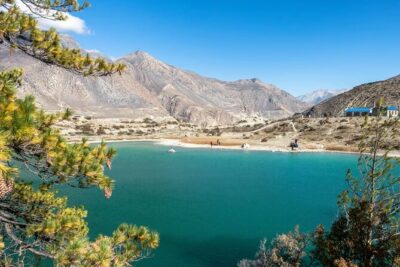
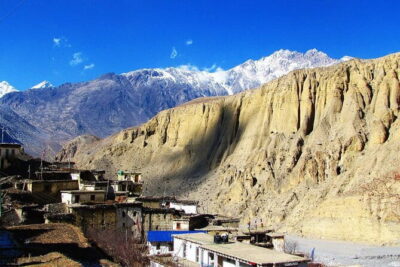
- The scenery is dry, dramatic, and often dusty: Expect high desert valleys, bare hills, apple gardens, river crossings, and Himalayan peaks in the distance.
- A licensed guide and shared porter service are provided: One porter is assigned for every two people, so pack with a shared load in mind.
- The private format helps with flexibility: The group travels alone, and the operator has adapted arrangements to individual requests in past bookings.
Why Upper Mustang feels different from other Nepal treks
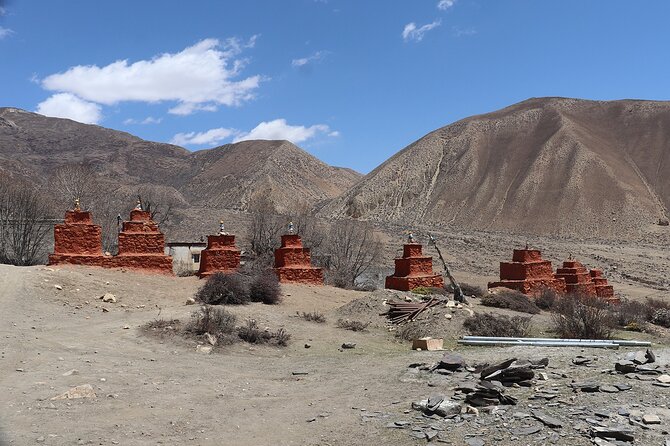
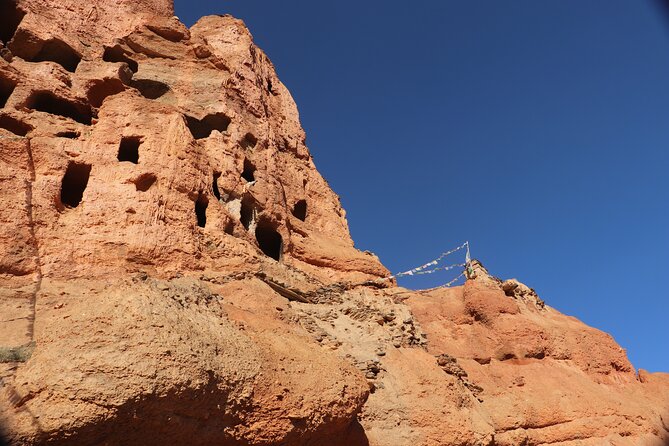
Upper Mustang is not a standard high-mountain walk. The route runs through a dry, wind-carved part of Nepal shaped by Tibetan culture, old trade routes, monasteries, and compact stone villages. You see snow peaks, but much of the walking takes place through ochre cliffs, bare ridges, dusty paths, and broad river valleys.
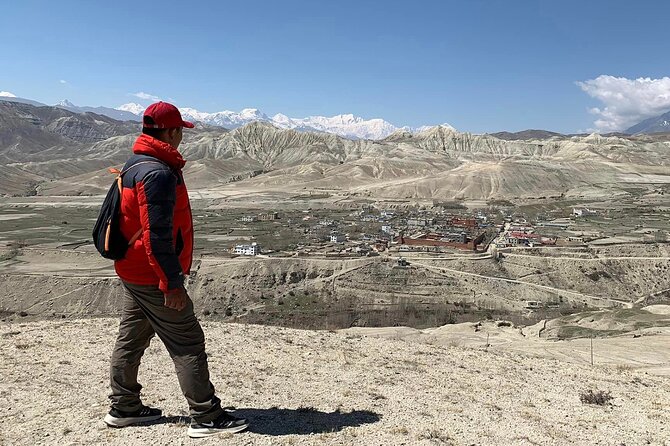
That contrast is the point. You may spend part of a day looking at Dhaulagiri and Annapurna, then turn into a village where apple trees, small farms, prayer walls, and old gompas sit close together. The setting can feel stark, but daily life provides the human detail.
The route also gives you a useful altitude profile. Jomsom sits at 2,715 meters, and the trip’s published information notes that the trek rarely exceeds 4,000 meters. That does not make it easy. Long walking days, uphill sections, dry air, wind, and rough ground still demand fitness.
The biggest practical attraction is the restricted character of the region. You cannot simply arrive and walk in independently on an ordinary permit. The special Upper Mustang permit costs $500 per person for 10 days and is included in this package. That fee makes the total price look high, but it covers one of the major costs of visiting this area.
More trips up to Mustang and Muktinath:
- Trekking in Annapurna/Langtang/Everest/Upper Mustang regions
★ 5.0 · 161 reviews - 2-Day Scenic Mustang Tour: Pokhara to Jomsom, Kagbeni & Muktinath
★ 5.0 · 23 reviews - 6 Days Muktinath Tour Package in Nepal
★ 5.0 · 20 reviews
Days 1 and 2: Kathmandu, permits, and a gentle start
Your first day begins at Tribhuvan International Airport, where a representative meets you and transfers you to your Kathmandu hotel. This is a simple arrival day, but it matters after international travel. You get a hotel base, airport transport, and time to settle before the trek begins.
On Day 2, the company can arrange sightseeing in the Kathmandu Valley if you are interested. You also need your original passport and a valid Nepal visa to obtain the Upper Mustang permit. The permit process takes the day, so do not plan this as a rushed travel morning.
The Kathmandu stay is three nights in a three-star hotel with breakfast. It is not a luxury package, but it gives you a proper bed, a place to sort your trekking gear, and a buffer for the permit work. If you want extra nights before or after the program, those cost more.
Day 3: The long road toward Pokhara
The next morning starts with a short walk of about 10 minutes to the tourist bus station. The bus leaves at 7:00 a.m. and follows the Prithvi Rajmarg highway toward Pokhara.
This is a practical transfer rather than a scenic highlight. Road conditions and traffic can make a seven-hour bus journey feel longer, so keep water, snacks, and anything needed during the ride close at hand. The benefit is cost control: the package uses tourist buses rather than private road transport for the Kathmandu to Pokhara connection.
You spend time in Pokhara before flying north. The package includes two nights with breakfast there, plus the return tourist bus to Kathmandu. That arrangement gives the trip room to handle the flight schedule and avoids forcing you straight from the trek into an international departure.
Day 4: Jomsom to Kagbeni, with the first real views
After breakfast, you transfer to the domestic airport and fly to Jomsom, at 2,715 meters. The flight itself is short, but it places you immediately in the Mustang region, with dry hills and major Himalayan peaks nearby.
From Jomsom, you walk for four to five hours to Kagbeni. This section follows the popular Jomsom to Muktinath route and introduces the lower Mustang scenery before you enter the restricted area. Kagbeni is an important stopping point, with its compact village form and position near the Kali Gandaki River.
The first day on foot is not merely a warm-up. You are already at altitude, and the combination of a flight, uneven trails, and dry air can feel tiring. Keep the pace steady and use this day to learn how your boots, daypack, and water system feel.
More trekking days out of Annapurna Region:
- Annapurna Circuit Trek with Tilicho Lake
★ 5.0 · 368 reviews - Annapurna base camp trek 5 Days
★ 5.0 · 252 reviews - Poon hill Trek 3 days
★ 5.0 · 176 reviews - Pokhara: 4-Day Ghorepani, Poonhill & Ghandruk Mountain Trek
★ 5.0 · 132 reviews
Days 5 to 7: Entering Upper Mustang through Chhusang and Syangboche
Day 5 takes you to Chhusang after leaving Kagbeni and passing through the permit checkpoint. This is the formal gateway to Upper Mustang. The special permit is checked here, so keep your passport and visa information accessible.
The route then turns more remote. From Chhusang toward Samar and Syangboche, you encounter a mix of flatter trail, steeper climbs, small villages, apple gardens, and open views. The walking day can run five to six hours, with the largest climb coming after Chele as you gain height toward Syangboche.
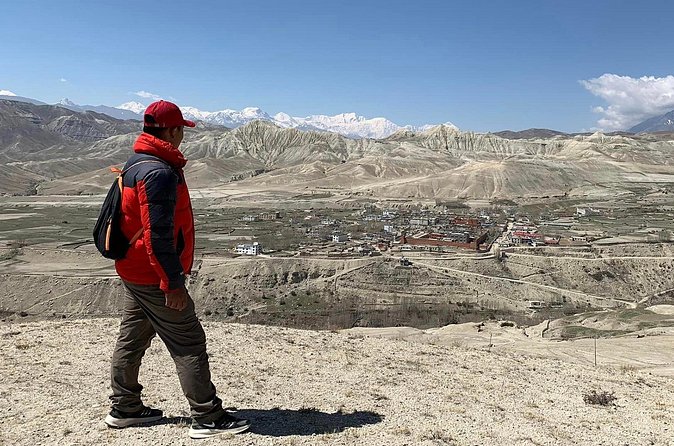
Day 7 continues with an uphill section to Syangboche, where you stop for lunch and rest. Clear weather can reveal Dhaulagiri, listed at 8,167 meters, and Annapurna I, listed at 8,097 meters. These peaks are not beside the trail, but their distant presence gives the dry terrain a powerful scale.
This section is a good test of the trip’s rhythm. You walk, stop for meals, climb, and sleep in simple lodges. The scenery is superb, but the trail can be dusty, and you should not expect the comforts of a city hotel. A face covering or buff can help in dry, windy stretches.
Days 8 and 9: Ghiling, Tsarang, and the approach to Lo Manthang
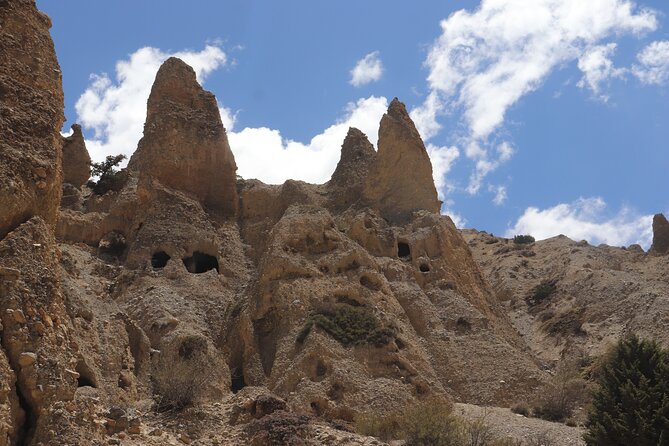
From Syangboche, the route continues toward Ghiling, a village with old monasteries and cultivated fields. The difference between the bare hills and the small areas of farming is striking. Apple gardens appear in places where the wider terrain looks almost entirely dry.
You then continue to Tsarang, described as one of the larger villages on the route. Its size gives you a stronger sense of settled community after several days of more scattered stops. Monasteries and village buildings make this more than a place to sleep.
Day 9 brings the walk to Lo Manthang, usually five to six hours. You cross rivers and bridges and pass through open, deserted-looking country before reaching the walled city. The approach builds anticipation without relying on a single dramatic viewpoint.
Lo Manthang is the cultural center of the trek. Its old walls, compact streets, monasteries, and palace connect the route’s scenery with the region’s long Tibetan Buddhist tradition. You will want time here, not just a quick photograph and a meal.
Day 10: A full day in Lo Manthang
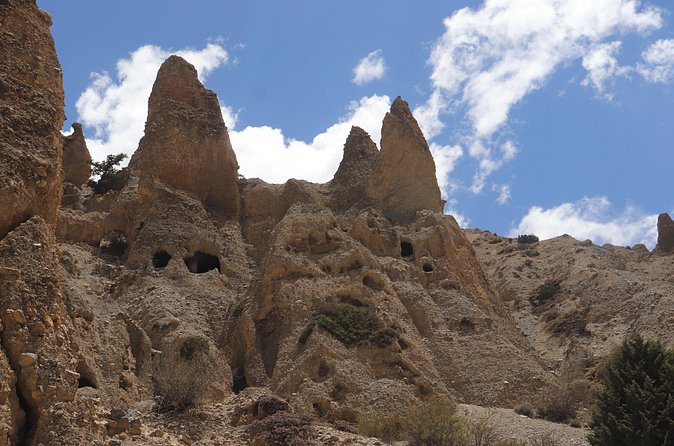
The free day in Lo Manthang is one of the strongest parts of this program. After breakfast, you visit monasteries and the King’s Palace, then have time to look closely at the city’s old buildings, decorated details, and village spaces.
A rest day also has practical value. By this point, you have spent several days walking at altitude. A slower day lets your legs recover while giving you the trip’s richest cultural stop. If you are choosing between a quick Upper Mustang route and this longer version, the extra Lo Manthang day is a good reason to choose the longer one.
Do not expect a polished museum experience. The appeal lies in the setting, the working village, the religious buildings, and the sense that this remains a lived-in place. The exact sightseeing pace depends on your guide, local access, and the conditions on the day.
Days 11 and 12: Dhakmar, Ghami, and monasteries
The return route begins with a walk from Lo Manthang toward Dhakmar. The first part is uphill to a gompa, followed by broad views across Upper Mustang. This is another day when the region’s religious sites are as important as the walking itself.
Day 12 continues from Dhakmar toward Ghami. Ghami is one of the larger villages and has a well-known monastery. You also pass farm products and apple gardens, reminders that people make a living here despite the dry climate.
These days offer a different mood from the approach to Lo Manthang. You are no longer walking toward a destination for the first time, so you can pay more attention to village layouts, cultivated patches, and details along the trail. The return route also helps spread the walking load across the 18-day schedule.
Days 13 to 15: Descending through Samar, Chele, and Kagbeni
Day 13 takes you from Syangboche down to Chhusang. The route passes Samar, Bhena, and Chele, with about 1,000 meters of descent toward the Kali Gandaki River. Downhill walking can be hard on knees, especially after several days on rough ground, so trekking poles may be useful.
The valley becomes windier as you approach the Kali Gandaki. Timing matters here. The schedule recommends an early start on Day 14 because strong winds often develop after noon between Chhusang and Kagbeni. This is exactly the kind of small operational detail that improves a trek: eat early, walk early, and avoid treating the morning as optional.
Day 15 is a shorter, easier walk to Jomsom. You check the flight schedule for the next day and have time to visit the town. Apple brandy and other apple products are available from local makers, according to the program details. Buy carefully and pack liquids securely if you plan to take anything home.
Days 16 to 18: Flight to Pokhara and the return home
The Jomsom to Pokhara flight depends on the day’s schedule and weather. You may have breakfast in Jomsom, or you may need to leave early for the airport. Once in Pokhara, you transfer to the hotel and have time to recover.
Day 17 uses the tourist bus for the roughly seven-hour journey from Pokhara back to Kathmandu. It is another long road day, but it keeps the package practical and economical. The final night in Kathmandu gives you a buffer before your international flight.
On Day 18, private transport takes you to Tribhuvan International Airport. The included airport transfers reduce one last bit of uncertainty, especially if you have an early departure.
What the $2,400 price covers
At $2,400 per person, this is a significant purchase. The value becomes clearer when you separate the individual costs. The package includes three Kathmandu hotel nights, two Pokhara hotel nights, breakfast, trekking lodge accommodation, the Kathmandu and Pokhara tourist buses, domestic flights between Pokhara and Jomsom, airport and hotel transfers, permits, a licensed guide, and porters at a ratio of one for two people.
It also includes 17 breakfasts and 16 lunches and dinners as specified. Personal expenses, extra hotel nights, and tips for the guide, porters, and driver are not included.
The permit alone is listed at $500 per person for 10 days. Add the flights, hotels, road transport, staff, food, and lodge nights, and the package is easier to justify than the headline price suggests. Still, it is not a bargain trek. You are paying for access to a restricted region and for a company to coordinate several moving parts.
Who should book this trek
I would choose this trip if you want culture, old villages, and unusual scenery more than a nonstop high-peak challenge. It suits people who can walk for several hours a day, manage uphill and downhill trails, and accept basic tea house accommodation.
You should also be comfortable with dust, wind, long bus rides, domestic flight changes, and a private group format. The experience requires strong physical fitness, so it is not a good match for someone seeking an easy sightseeing holiday.
The private setup is useful if you want the pace adjusted to your group. The company has handled special requests and the organization includes a guide and porter team, but the supplied information does not name the individual guide or porter. Ask for those names before booking if that matters to you.
The cancellation terms are fairly strict close to departure. You can receive a full refund by canceling at least six full days before the start time, 50 percent if canceling two to six full days before, and no refund within two days. The cut-off uses local time.
Should you book Upper Mustang Trekking?
Book it if you want a less crowded route with authentic village life, Tibetan Buddhist culture, and dramatic dry-country scenery. The strongest parts are the full day in Lo Manthang, the careful permit and transport planning, and the chance to see a part of Nepal that feels far removed from ordinary sightseeing.
Think twice if you dislike basic lodging, dusty trails, long bus journeys, or uncertain flight timing. At $2,400, the trek is best for someone who values access and organization over luxury. If that sounds like your kind of Nepal trip, this route gives you a memorable balance of walking, culture, and remote mountain country.
FAQ
How long is the Upper Mustang trekking experience?
The program lasts approximately 18 days, including arrival and departure days, Kathmandu and Pokhara stays, transport, flights, and the trek itself.
What is the price per person?
The listed price is $2,400 per person.
Is the Upper Mustang special permit included?
Yes. The package includes the special Upper Mustang permit, listed at $500 per person for 10 days, as well as the Annapurna Conservation Area Project permit.
Do I need a passport and Nepal visa for the permit?
Yes. You need your original passport with a Nepal visa when the Upper Mustang special permit is arranged.
What transport is included?
The package includes private airport, hotel, and airport transfers, tourist buses between Kathmandu and Pokhara, and domestic flights between Pokhara and Jomsom.
What accommodation is provided?
You receive three nights in a three-star Kathmandu hotel with breakfast, two nights in a Pokhara hotel with breakfast, and lodge or tea house accommodation during the trek.
Are a guide and porter included?
Yes. A government licensed trekking guide is included, along with one porter for every two people.
What fitness level is required?
The activity states that you should have a strong physical fitness level. The route includes several-hour walking days, uphill sections, steep descents, altitude, dust, and wind.
Just added around Annapurna Region
- 4 Day Mardi Himal Base Camp Trek from Pokhara★ 5.0 · 18 reviews
- 7-Day Trek to Annapurna Base Camp from Pokhara★ 5.0 · 12 reviews
- Private 4 Day Poon Hill Trek from Pokhara★ 5.0 · 16 reviews
- Annapurna Base Camp Trek from Pokhara and Kathmandu★ 5.0 · 7 reviews
- 6 days Annapurna Basecamp Trek★ 5.0 · 16 reviews
- “Exclusive Round-Trip Transfer: Pokhara to Jomsom & Muktinath”★ 5.0 · 11 reviews
- Poon Hill Ghandruk Circuit Trek from Pokhara 4 Days★ 5.0 · 10 reviews
- Pokhara: Poon Hill Ghorepani Short Trek★ 5.0 · 6 reviews
Upper Mustang Tours, compared.
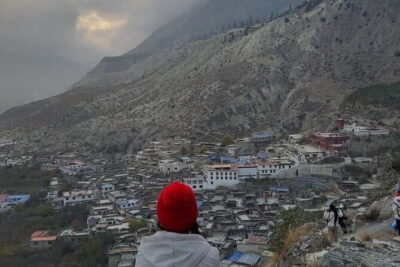
2-Day Scenic Mustang Tour: Pokhara to Jomsom, Kagbeni & Muktinath
Read our review →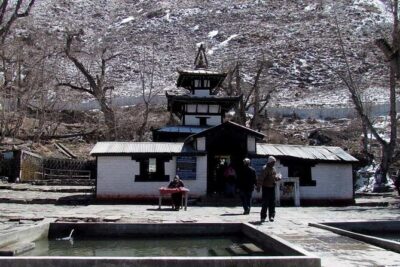
3 Day Lower Mustang Tour with 4WD Jeep from Pokhara
Read our review →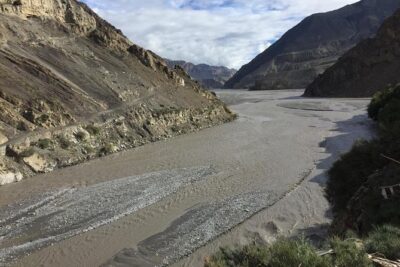
5 Days Adventures Lower Mustang Trip by 4WD Jeep
Read our review →
“Exclusive Round-Trip Transfer: Pokhara to Jomsom & Muktinath”
Read our review →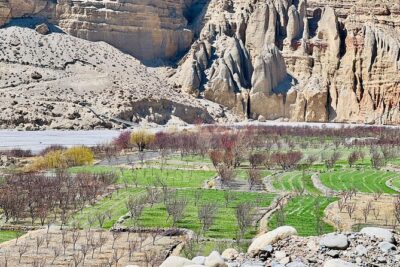
6 Day Upper Mustang Tour by 4WD Jeep from Pokhara
Read our review →
Browse the lists this tour appears in