
Reviewed · ANNAPURNA CIRCUIT TREKS
12 days Annapurna Circuit Trek
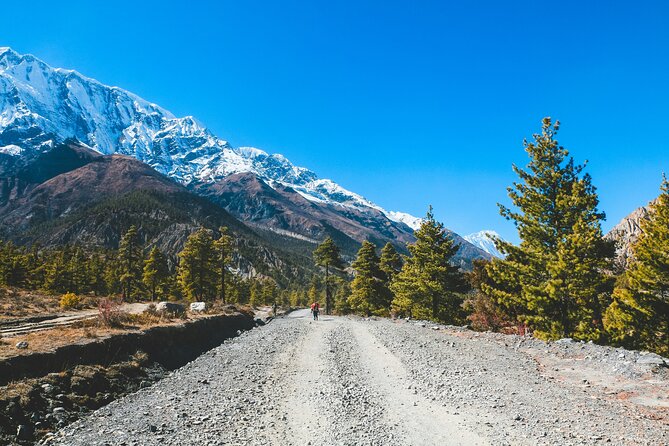
The big draw here is the full sweep of the Annapurna Circuit in 12 days, from river valleys and rhododendron forests to the stark high country around Thorong La. You get Manang, Muktinath, a hot spring stop, Ghorepani, and Poon Hill in one compact route.
I like the built-in acclimatization day in Manang and the fact that permits, lodge stays, meals, and major transport are covered. The main caution is the pace: long driving days, high altitude, and a pre-dawn start for Thorong La make this a serious trek, not a relaxed mountain holiday.
Key points before you book
- Thorong La at roughly 5,416 meters: The crossing is the physical heart of the trip and begins around 3 a.m.
- Manang acclimatization day: You have a full day to rest or walk toward Ice Lake before climbing higher.
- A rare route combination: The plan links the Annapurna Circuit with Muktinath, Tatopani hot springs, Ghorepani, and Poon Hill.
- Most major costs are bundled: Lodging, full-board meals during the trek, permits, guide costs, and listed transfers are included.
- Private group format: Only your group takes part, and the itinerary can be customized.
- Porters cost extra: A porter is available for $20 per day and carries up to 20 kilograms.
What $1,100 covers on the Annapurna Circuit
At $1,100 per person, this trek offers good value if you want the main expenses handled in advance. You receive tea house or lodge accommodation, breakfast, lunch, and dinner during the trekking days, plus one night in Pokhara with breakfast.
The package also includes an English-speaking, government-licensed guide. The company covers the guide’s meals, insurance, salary, lodging, and transportation, which means you are not asked to settle those costs along the way.
Permits are included too. That covers the Annapurna Conservation Area Permit and the Trekkers Information Management System card. Local and government taxes are included, as is a farewell dinner in Kathmandu.
Transport is more mixed than the phrase full service might suggest. Kathmandu to Dharapani uses public transportation, Muktinath to Tatopani is by jeep, Nayapul to Pokhara is covered, and Pokhara to Kathmandu is by tourist bus. You can replace the final bus with a 25-minute flight, but that costs extra.
You still need to budget for drinks, tips, laundry, phone use, camera or video fees, travel insurance, and a Nepal visa. Alcoholic and non-alcoholic beverages are not included. Porters are also separate, so ask about that before you arrive if you do not want to carry your own pack.
More Annapurna Circuit itineraries:
- Annapurna Circuit Trek with Tilicho Lake
★ 5.0 · 368 reviews - Annapurna Circuit Trek
★ 5.0 · 94 reviews - Annapurna Circuit Trek
★ 5.0 · 35 reviews
Day 1: Kathmandu to Dharapani by road
The first day is mostly a transport day. You travel from Kathmandu toward Besishar along the Trishuli River, then continue by jeep to Dharapani. The full journey can take about 12 hours.
That is a long start, and the public transportation portion may feel less polished than a private vehicle. In return, you move quickly toward the actual trekking route and sleep at Dharapani rather than spending another night lower down.
The listed start time is 12:15 a.m., which is unusually early. Confirm the exact pickup point and departure time before booking, especially if you have just arrived in Kathmandu. Pickup is offered, but the details should be settled in advance.
Days 2 and 3: Chame and Upper Pisang
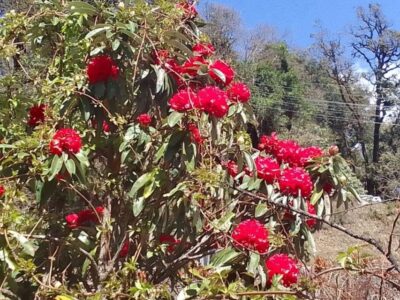
Day 2 takes you to Chame, the headquarters of Manang District. The route gains altitude through rhododendron forests, and the surroundings begin to shift from lower valley greenery toward a colder, drier mountain setting.
The day is listed at about 12 hours, so do not read this as an easy first walking day. You will want proper footwear, water, and a pack that does not feel heavy. Accommodation is in a tea house or lodge, with meals included.
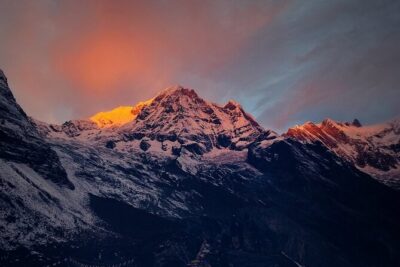
On Day 3, you continue to Upper Pisang at about 3,300 meters. The itinerary calls attention to Lamjung Himal, including the changing light on the peak in the morning. Upper Pisang is a good point to notice how much the route has changed since Kathmandu.
This is also where altitude begins to matter in a real way. You may feel fine, or you may notice that steep sections take more effort. Keep your pace steady and tell your guide if you feel unwell. The guide is there not just to lead the route but to help manage the climb.
Days 4 and 5: Manang and time to adjust
Day 4 passes through Upper Pisang toward Geru and Manang. The views open toward Annapurna II, Annapurna III and IV, Gangapurna, Tilicho, and Pisang Peak. The air becomes colder and drier as you climb.
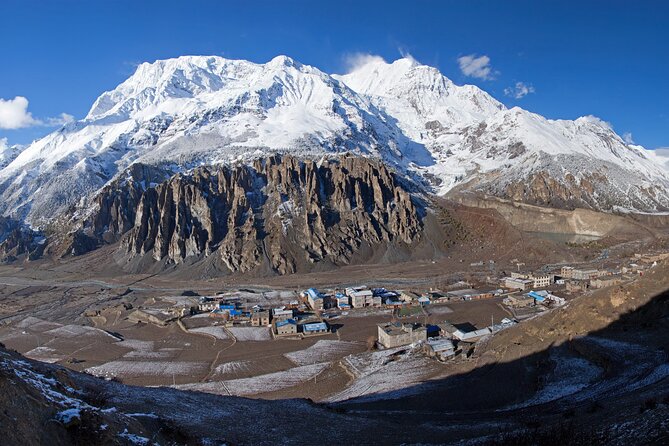
Manang is one of the most important stops on this route. It is not simply a place to sleep. It gives you a chance to adjust before the trail rises toward Yak Kharka, Thorung Phedi, and the pass.
Day 5 is an acclimatization day in Manang. You can rest, explore the village, or take a walk toward Ice Lake. The plan does not require you to complete a particular excursion, which is useful because your energy may vary.
I especially like this pause in the schedule. A 12-day version of the circuit is brisk, so a full day at altitude gives your body a better chance to catch up. Use it wisely rather than treating it as a spare day for a hard side hike.
More trekking days out of Annapurna Region:
- Annapurna base camp trek 5 Days
★ 5.0 · 252 reviews - Poon hill Trek 3 days
★ 5.0 · 176 reviews - Trekking in Annapurna/Langtang/Everest/Upper Mustang regions
★ 5.0 · 161 reviews - Pokhara: 4-Day Ghorepani, Poonhill & Ghandruk Mountain Trek
★ 5.0 · 132 reviews
Days 6 and 7: Yak Kharka and Thorung Phedi
On Day 6, you leave Manang and climb through Tenki village toward the Jarsang Khola valley. The route leaves the Marshyangdi Valley and continues toward Yak Kharka.
The terrain is now high and exposed compared with the forested sections near Chame. The day is again listed at about 12 hours, so the repeated long days are worth taking seriously. You need moderate physical fitness, and the schedule suits people who are comfortable walking for many hours.
Day 7 brings you to Thorung Phedi, at the foot of Thorong La. The route includes a descent, a crossing of the Marsyangdi River on a wooden bridge, and a climb toward the pass area.
Thorung Phedi is a staging point rather than a sightseeing stop. Your job here is to eat, rest, organize your clothing, and prepare for the early crossing. Keep your warm layers easy to reach, since the next morning starts before sunrise.
Day 8: Crossing Thorong La to Muktinath
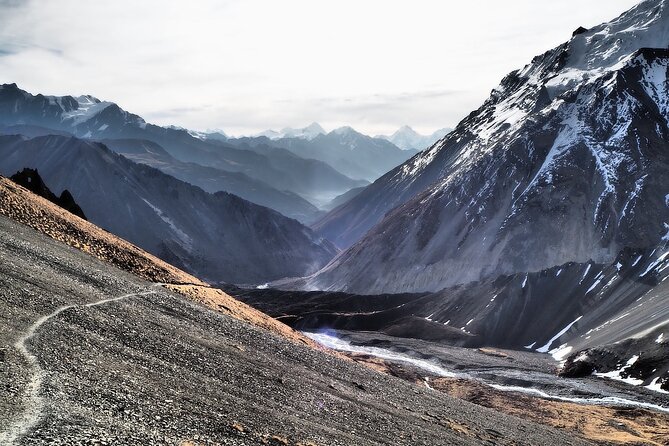
This is the hardest and most memorable day. You wake around 3 a.m. and begin the climb toward Thorong La, one of the world’s highest trekking passes. The itinerary places the crossing on Day 8, followed by the descent to Muktinath.
The early start is practical. It allows time for the climb and aims to get you across before conditions become more difficult later in the day. At the summit, the reward is a huge mountain setting and the knowledge that you have crossed the route’s highest point.
The descent to Muktinath can be demanding on tired legs. Poles may help, though they are not listed as included equipment. Carry water and snacks, and follow your guide’s advice about pace and rest.
Muktinath is a major cultural and religious destination, and it gives the route a different feel from the upper Manang section. You have moved from the Annapurna side of the pass into the Mustang region, with a noticeable change in climate and scenery.
Day 9: Jeep ride to Tatopani
After the strain of Thorong La, Day 9 is lighter on foot. You take a jeep for about three hours from Muktinath to Tatopani, then rest at the lodge or visit the hot springs.
This break is one of the smartest features of the schedule. The hot spring offers a chance to relax before another series of walking days. It also keeps the route moving without asking you to hike every kilometer between Muktinath and the lower valley.
The jeep ride may be rough, and road conditions can affect the experience. Still, it saves time and energy. If you prefer a longer, slower version of the circuit, ask about customization before booking.
Days 10 and 11: Ghorepani and Poon Hill
Day 10 leaves Tatopani and climbs through the Thakali settlements of Sikha and Chitre toward Ghorepani. You cross toward the east bank of the Kali Gandaki River and return to a more forested route.
This section feels different from the high pass. You see villages, cultivated slopes, and wooded trails rather than the dry upper valley. The climb to Ghorepani is still substantial, with another day listed at about 12 hours.
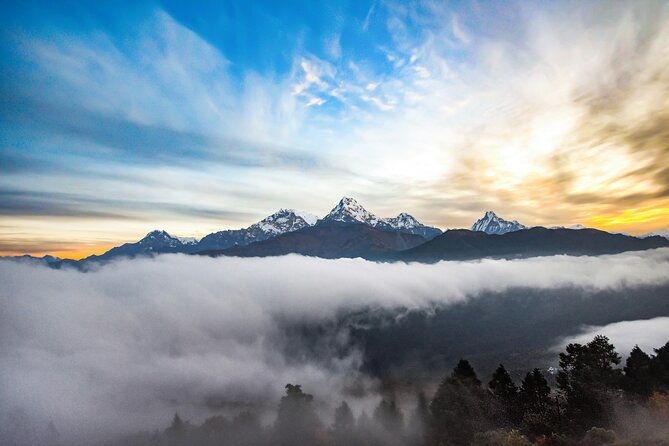
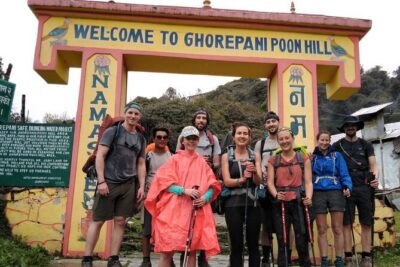
Day 11 begins before dawn with the climb to Poon Hill at 3,210 meters. The stated walking time for the viewpoint is about one hour. From the top, you look toward Dhaulagiri, Annapurna, Machhapuchhre, and the surrounding range as the sun comes up.
Poon Hill is a popular viewpoint, but it earns its place here. It gives you a final mountain panorama after the harder pass crossing, and the short ascent is manageable compared with Thorong La. Bring warm layers for the morning wait.
After Poon Hill, you return toward Ghorepani, trek down to Birethanti, and take a bus to Pokhara. The complete day is again listed at about 12 hours, so the sunrise stop does not mean an early finish.
Day 12: Pokhara to Kathmandu
The final day begins after breakfast in Pokhara. A tourist bus returns you to Kathmandu, or you can choose a 25-minute flight at additional cost.
The bus is included, but it takes much longer than the flight. The right choice depends on your onward plans and how much you value time after nearly two weeks on the route. The package includes one night in Pokhara with breakfast, which gives you a useful place to recover after reaching the city.
Pokhara adds a softer ending to a demanding trek. The trip does not include a large sightseeing program there, so do not expect a full city tour as part of the 12 days.
Guides, customization, and group setup
This is a private activity, so only your group participates. That gives you more control than a large fixed departure, especially if someone needs a slower pace or a short adjustment to the plan.
The company describes the trek as fully customizable. Ask specific questions rather than assuming every part can be changed without cost. The standard route has a tight rhythm, and adding Tilicho Lake, for example, extends the trip by three days in the experience described by the company.
Bhim Panta is associated with the company and has been involved in airport collection, Kathmandu arrangements, and wider Nepal itineraries. Manit is noted for answering detailed questions about equipment and itinerary planning, while Kumar is also named as part of the trekking support team. Confirm who will personally guide your departure.
A porter can be added for $20 per day, carrying up to 20 kilograms. That can make a major difference on the long climbs, but clarify whether the fee is per porter or shared among your group.
What you should pack and prepare for
The operator asks for moderate physical fitness, but the schedule demands more than casual walking. You should be ready for long days, steep climbs, high altitude, cold mornings, and a very early start at Thorong La.
Your insurance is not included. Arrange coverage that specifically addresses trekking at high altitude, since ordinary holiday insurance may not cover this type of trip.
Bring clothing that works in layers, reliable walking shoes, sun protection, personal toiletries, and any medication you need. Drinks are not included, so plan to pay for water and other beverages along the way.
The itinerary includes meals, but it does not promise a special diet. If you have dietary needs, discuss them before departure. Also ask about luggage storage, porter arrangements, and the exact meeting point in Kathmandu.
Who should book this trek?
I would recommend it to someone who wants the classic Annapurna Circuit but has limited time. The route includes the pass, Manang, Muktinath, Tatopani, Ghorepani, and Poon Hill without requiring you to arrange separate lodges, permits, and transfers.
It also suits private groups that want a local guide and some flexibility. The company’s repeated focus on personal planning, along with named contacts such as Bhim, Manit, and Kumar, may appeal if you want help before arrival.
I would be more cautious if you dislike long road transfers, basic lodge accommodation, or early mornings. The 12-day plan is efficient, but it is not leisurely. You should also think twice if you have no experience with sustained mountain walking or if you are unwilling to arrange your own insurance.
Final verdict: a strong value route with a demanding timetable
Book this trek if your priority is seeing the major Annapurna Circuit highlights with permits, meals, accommodation, a guide, and key transport bundled into one price. At $1,100, it is a practical package, especially for a private group.
Before paying, confirm the 12:15 a.m. start, the exact transport arrangements, porter costs, guide assignment, and the final Pokhara to Kathmandu plan. If you want more time for acclimatization or a side trip such as Tilicho Lake, ask for a revised itinerary.
The route gives you a remarkable range of Nepal in less than two weeks. Just understand the tradeoff: strong value and impressive variety come with long days, high altitude, and little spare time.
FAQ
How long is the Annapurna Circuit trek?
The advertised experience lasts approximately 12 days, from departure in Kathmandu through the return from Pokhara.
Is the trek private or shared with a large group?
It is a private activity, meaning only your group participates.
Are meals included?
Breakfast, lunch, and dinner are included during the trek. The package also includes breakfast at the Pokhara accommodation and a farewell dinner in Kathmandu. Beverages are not included.
Is accommodation included?
Yes. Tea house or lodge accommodation is included during the trek, along with one night in Pokhara with breakfast.
Are trekking permits included?
Yes. The Annapurna Conservation Area Permit and Trekkers Information Management System card are included.
Is a porter included?
No. Porters are available for $20 per day and can carry up to 20 kilograms.
Can I fly from Pokhara to Kathmandu?
Yes. A 25-minute flight is available as an alternative to the included tourist bus, but the flight costs extra.
Just added around Annapurna Region
- 4 Day Mardi Himal Base Camp Trek from Pokhara★ 5.0 · 18 reviews
- 7-Day Trek to Annapurna Base Camp from Pokhara★ 5.0 · 12 reviews
- Private 4 Day Poon Hill Trek from Pokhara★ 5.0 · 16 reviews
- Annapurna Base Camp Trek from Pokhara and Kathmandu★ 5.0 · 7 reviews
- 6 days Annapurna Basecamp Trek★ 5.0 · 16 reviews
- “Exclusive Round-Trip Transfer: Pokhara to Jomsom & Muktinath”★ 5.0 · 11 reviews
- Poon Hill Ghandruk Circuit Trek from Pokhara 4 Days★ 5.0 · 10 reviews
- Pokhara: Poon Hill Ghorepani Short Trek★ 5.0 · 6 reviews
Annapurna Circuit Treks, compared.
15-Day Private Annapurna Circuit Trek from Kathmandu
Read our review →
Browse the lists this tour appears in