
Reviewed · ANNAPURNA CIRCUIT TREKS
Annapurna Circuit Trek
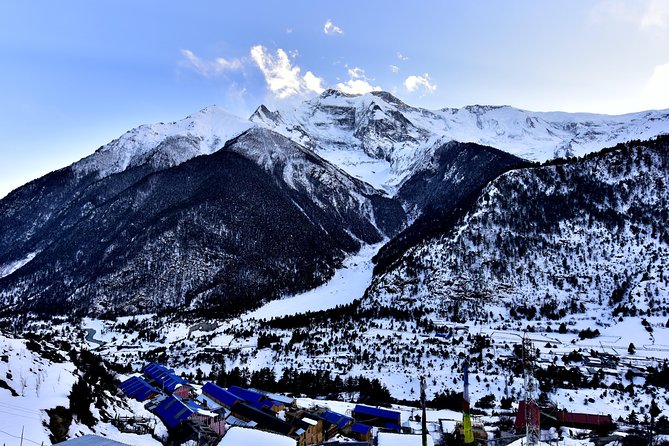
The Annapurna Circuit gives you Nepal in fast-changing chapters: rice fields and subtropical forest at lower elevations, Tibetan-style villages around Manang, icy high country at Thorong La Pass, and the dry valleys beyond it. You also get Muktinath, Marpha, Pokhara, and the chance to add Tilicho Lake, one of the trip’s great detours.
I like the strong range of scenery and the fact that permits, a registered guide, porter, mountain lodging, and trekking meals are included. I also like the small-group format, since this is a private trip rather than a large scheduled departure. The main caution is that the published plan is ambitious and contains a few moving parts: the 14 days include long road journeys, while Tilicho Lake, Tatopani, and Poon Hill appear as highlights but are not clearly assigned to individual days.
Key points before you book
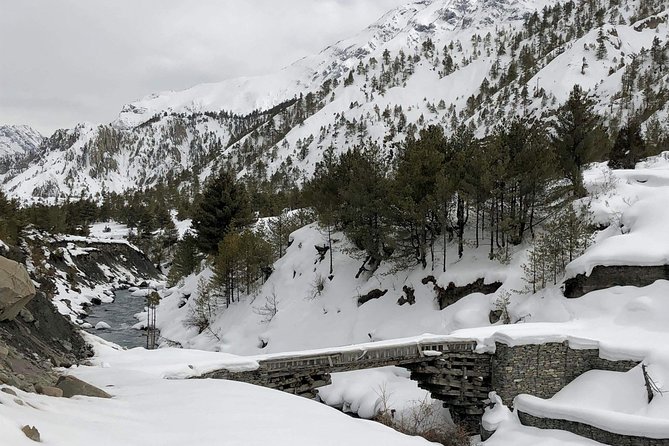
- Thorong La is the physical centerpiece: The pass reaches 5,416 meters, so this is a serious high-altitude trek, not a casual mountain walk.
- The route changes character every few days: Expect forests, farmland, Marsyangdi Valley villages, Tibetan Buddhist communities, dry cliffs, and broad Himalayan views.
- Manang is your acclimatization base: Day 8 is set aside to rest and explore Manang before you climb higher.
- A guide and porter are included: Nepal Trail Finder Treks & Expedition provides a government-registered guide, porter, permits, first-aid kit, insurance, equipment, and staff expenses.
- The road transfers are part of the bargain: You spend about nine hours reaching Jagat and later six to seven hours driving to Pokhara, followed by an eight-hour tourist bus to Kathmandu.
- Check the final route in writing: Tilicho Lake, Tatopani Hot Spring, Poon Hill, Ghorepani, and Gurunghe Hill are named stops, but the day-by-day schedule does not fully explain where they fit.
Why this route still earns its reputation
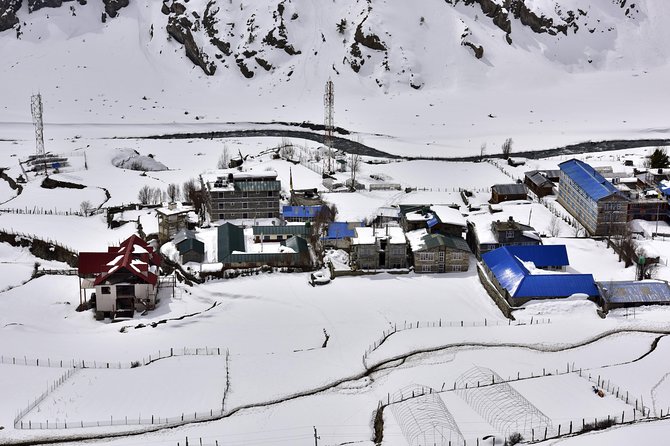
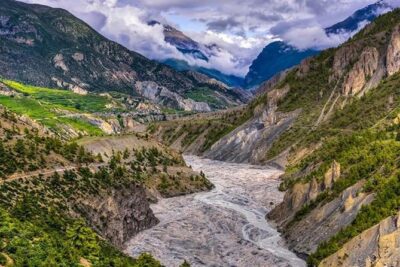
The Annapurna Circuit works because it keeps changing. You are not looking at the same type of mountain view for two weeks. The lower trail passes through paddy fields and forest. Higher up, the Marsyangdi Valley narrows and the air feels colder and thinner. Around Manang, villages and buildings show a clear Tibetan Buddhist influence. After Thorong La, the Kali Gandaki side feels much drier.
That variety is the real value of the route. You see how altitude, climate, religion, and farming change across one mountain crossing. The experience is not only about reaching a pass and taking a photograph. It is also about the gradual shift from subtropical Nepal to high Himalayan country and then down toward Mustang.
The trip costs $1,175 per person. That is a substantial amount, but it covers the guide, porter, permits, staff insurance, food and lodging for the trekking crew, mountain accommodation, breakfast, lunch, dinner, tea or coffee with meals, Kathmandu and Pokhara hotels on a bed-and-breakfast basis, transport listed in the plan, taxes, paperwork, a farewell dinner, and a souvenir.
You will still pay for international flights, your Nepal visa, insurance, meals in Kathmandu and Pokhara, drinks, snacks, WiFi, laundry, phone calls, battery charging, tips, and donations. The package is therefore not all-inclusive in the resort sense. Still, the main trekking costs are gathered into one price, which makes budgeting easier.
More Annapurna Circuit itineraries:
- Annapurna Circuit Trek with Tilicho Lake
★ 5.0 · 368 reviews - Annapurna Circuit Trek
★ 5.0 · 94 reviews - Annapurna Circuit Trek
★ 5.0 · 35 reviews
Kathmandu: two useful days before the trail
Day 1 is arrival in Kathmandu at about 1,350 meters. Pickup is offered, and the company says airport reception is available as part of its service. That matters after an international flight, especially if this is your first time in Nepal and you do not yet know the local transport system.
Day 2 is for Kathmandu sightseeing and trek preparation. The exact sightseeing stops are not specified, so ask what is included before you book. This is also the moment to confirm your gear, permits, route, sleeping arrangements, and the exact plan for Tilicho Lake.
The trip is private, meaning only your group participates. That gives you more room to discuss walking speed, rest stops, and practical concerns with the guide. A previous guest specifically praised a guide named Gyanu for warmth, patience, and dedication. You should not assume Gyanu will lead every departure, but asking if he is available is sensible if that style of guiding matters to you.
The advertised meeting time is 12:15 am. That is unusually early, so confirm whether it refers to airport pickup, a departure, or a system error. Do not leave this detail until the night before.
The long road to Jagat and the first walking days
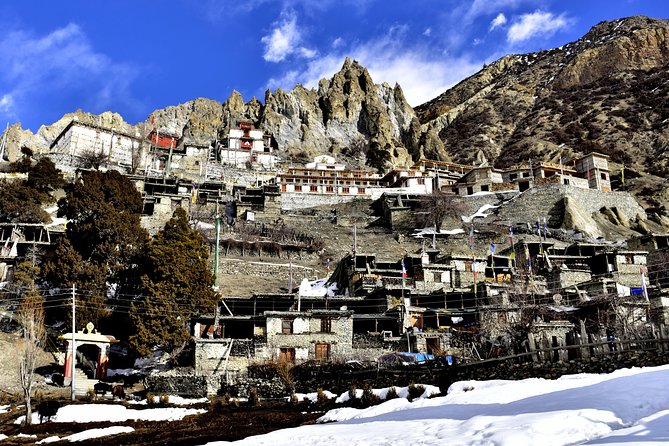
Day 3 involves an early morning drive from Kathmandu to Jagat by local transport, taking about nine hours. This is not a scenic luxury transfer in the usual sense. It is a long road day, and the use of local transport means you should expect a practical rather than polished start to the trek.
Jagat sits at about 1,300 meters. From here, the walking begins properly. Day 4 takes you toward Danakyu or Dharapani, with about five hours on foot and an overnight elevation near 2,300 meters.
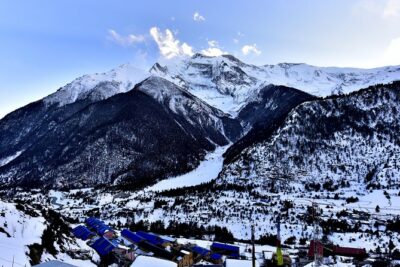
This section introduces the Marsyangdi Valley and the lower Himalayan setting. You will see forests, cultivated land, villages, and river scenery before the route moves into colder country. The five-hour walking days look manageable on paper, but the combination of uneven trails, altitude gain, and basic mountain lodging still requires steady fitness.
Day 5 continues to Chame at 2,670 meters, again with about five hours of walking. Chame is an important stop because the trail has now moved well above the lower valley. You should begin paying attention to how your body reacts to the altitude, even if you feel fine.
Pisang, Ghyaru, and the approach to Manang
Day 6 takes you to Upper Pisang at around 3,300 meters. The upper village route is especially worthwhile for its mountain setting and Tibetan Buddhist character. It also marks a clear change from the greener lower route.
Day 7 is one of the more interesting walking days. You climb toward Ghyaru village and then continue to Manang, reaching about 3,540 meters after roughly six hours. The ascent to Ghyaru adds effort, but it also gives you a different view over the Marsyangdi Valley and the surrounding peaks.
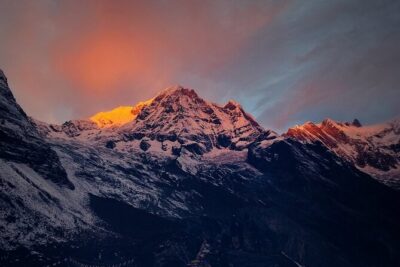
The route passes through communities where Buddhist traditions are more visible. The Annapurna Massif, Dhaulagiri, and Tilicho Peak become part of the mountain panorama as you move higher. The air is thinner here, and the walking pace should be calm. Your guide and porter are important at this point, not just for navigation, but for helping you manage the day sensibly.
Manang is one of the key stops on the whole circuit. It is not simply a place to sleep before the pass. It is where you pause, look around, and let your body adjust.
More trekking days out of Annapurna Region:
- Annapurna base camp trek 5 Days
★ 5.0 · 252 reviews - Poon hill Trek 3 days
★ 5.0 · 176 reviews - Trekking in Annapurna/Langtang/Everest/Upper Mustang regions
★ 5.0 · 161 reviews - Pokhara: 4-Day Ghorepani, Poonhill & Ghandruk Mountain Trek
★ 5.0 · 132 reviews
Manang rest day: the pause you should not skip
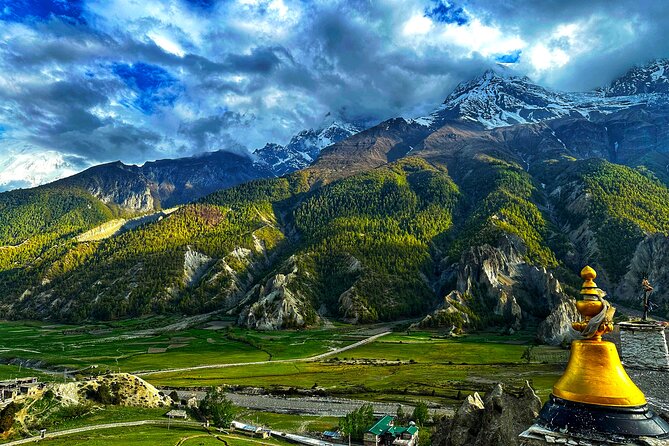
Day 8 is a rest day for exploring Manang. I consider this one of the most valuable parts of the schedule. The temptation on a trek is to treat rest days as wasted time, but that is poor mountain planning. After several days of climbing, a slower day gives you a chance to observe how you are handling the elevation before the route rises above 4,000 meters.
The itinerary does not specify a particular excursion in Manang, so keep the plan flexible. You can use the day to explore the village, review the next stages with your guide, organize your belongings, and rest.
This is also the best time to raise any concern about the high pass. Thorong La reaches 5,416 meters, and the following days are not gentle. A good guide should help you understand the timing, weather concerns, and pace without turning the day into a race.
Ledar and Thorong Phedi: high country begins
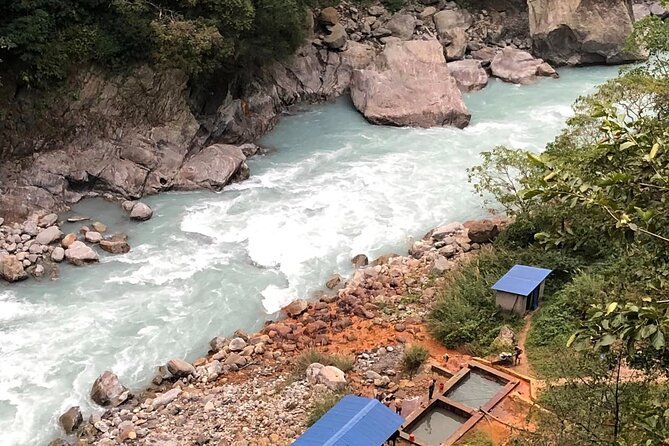
Day 9 climbs to Ledar at approximately 4,200 meters, taking around four hours. The walking time is shorter, but the elevation makes the day more demanding than a five-hour walk lower down. The route now feels much more exposed and alpine, with fewer trees and more open mountain country.
Day 10 continues to Thorong Phedi at about 4,450 meters in roughly three hours. This is a short day by distance, but it is a staging day for the pass. Do not judge it as easy simply because the walking time is brief. At this height, a slow pace and careful attention to your condition matter more than covering ground quickly.
The included first-aid kit is useful, but it does not replace travel insurance. Insurance is not included, and you should arrange coverage suitable for a high-altitude trek before departure. Check the terms carefully rather than assuming ordinary holiday coverage is enough.
Thorong La at 5,416 meters
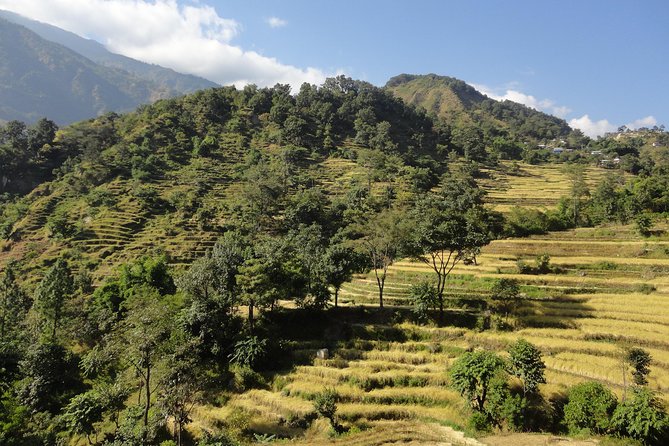
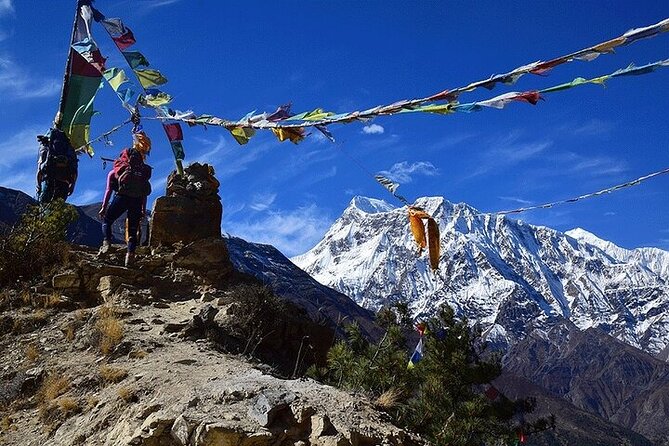
Day 11 is the defining challenge: about eight hours of walking over Thorong La and down to Muktinath. The pass is the highest point of the route, and reaching it requires an early, steady effort. Weather can affect this part of the trip, which is why the operator allows a different date or a full refund if poor weather forces cancellation before the experience begins.
At the top, the reward is the sense of crossing between two very different sides of the Annapurna region. You have climbed from the Marsyangdi Valley and now descend toward Mustang and the Kali Gandaki Valley. The mountain views include the Annapurna range, Dhaulagiri, and Tilicho Peak.
Muktinath is both a mountain settlement and a major Hindu pilgrimage site. That combination makes it more than a convenient overnight stop. The temple gives the route a strong cultural dimension after the physical effort of the pass.
You should take this day seriously. An eight-hour crossing at high altitude is not suitable for someone who only wants easy sightseeing. The tour requires moderate physical fitness, and in practice you should be comfortable with long walking days and steep altitude changes.
Tilicho Lake, Tatopani, and the route details to verify
Tilicho Lake is listed as a stop and is one of the most appealing additions to this region. The published day plan, however, does not show a separate Tilicho Lake day. One French-language account describes a route from Besishahar to Tatopani that included a detour to Tilicho Lake and crossed Thorong La. That confirms the operator has handled this version of the trek, but it does not confirm that every 14-day departure includes it.
Ask three direct questions before paying: Is Tilicho Lake included in the $1,175 price? How many extra walking days does it require? Which listed stop is removed or shortened to make room?
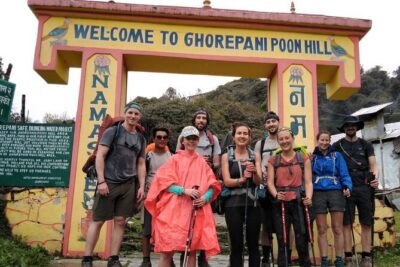
The same check applies to Tatopani Hot Spring, Poon Hill, Ghorepani, and Gurunghe Hill. They are named among the stops, yet the daily schedule ends with a drive to Pokhara after Muktinath. Those places may belong to an alternate route or an expanded itinerary.
Tatopani is attractive because a hot spring can feel like a fine reward after days on foot. Poon Hill is known here as a viewpoint for more than 20 mountains in the Annapurna and Dhaulagiri ranges. Ghorepani and Gurunghe Hill would add more walking and viewpoint time, but the supplied 14-day schedule does not explain how they fit.
This is not a reason to reject the trip. It is a reason to get the final route in writing. Good planning is especially important when a high pass, a lake detour, and several lower-altitude stops are all presented together.
The descent to Pokhara and the final bus ride
Day 12 is a six- to seven-hour drive to Pokhara. After the pass and the descent to Muktinath, this is a change from walking to road travel. The listed vehicle is air-conditioned, which may make the transfer more comfortable, though the exact vehicle and road conditions are not described.
Pokhara hotel accommodation is included on a bed-and-breakfast basis. Meals in Pokhara are not included, so budget separately for lunch and dinner. This gives you freedom to choose where you eat, but it also means the advertised package price does not cover every meal at the end of the trip.
Day 13 is an eight-hour tourist bus from Pokhara to Kathmandu. That is another long transport day, not a quick transfer. If you have an international flight immediately after the trek, leave a sensible buffer. The schedule lists departure from Tribhuvan International Airport on Day 14, but it does not give a flight time.
The trip includes a farewell dinner and souvenir, which provide a pleasant closing touch. They are small items compared with the trekking costs, but they help mark the end of a demanding route.
Food, rooms, staff, and what the price really covers
Breakfast, lunch, and dinner are included during the trekking portion, with a choice from the menu at each place. Tea or coffee is served with meals. Snacks, soft drinks, alcohol, and personal purchases are extra.
Mountain accommodation is described as private or shared, with single or double rooms available. Ask how room selection affects the price and where private rooms can actually be guaranteed. Kathmandu and Pokhara hotels are on a bed-and-breakfast basis, while mountain lodging follows the private or shared arrangement.
The staff package is one of the stronger parts of the deal. It includes a government-registered guide and porter, their salaries, food, lodging, equipment, and insurance. Permits and paperwork include the TIMS card and Annapurna Conservation Area permit. Those inclusions remove several tasks that can otherwise become confusing before a trek.
Tips and donations are not included. Carry some local currency for these, personal expenses, laundry, battery charging, and occasional snacks. WiFi on board is not included, and you should not count on continuous internet access during the route.
Who should book this trek?
I would recommend it to someone who wants a serious Himalayan trek with a broad mix of scenery and culture, not just a short mountain walk. It suits people who can handle moderate fitness demands, several five- to eight-hour walking days, a nine-hour approach drive, and the altitude of Thorong La.
It also suits you if you value having a guide and porter arranged in advance. The private format is useful for couples, families with suitable fitness, or friends who want to travel together without joining a large group.
I would hesitate to recommend it to anyone who dislikes basic mountain accommodation, long road transfers, or uncertain route details. I would also avoid booking until the Tilicho Lake and Poon Hill question is settled if those places are the main reason you are interested.
Free cancellation is available up to 24 hours before the start time for a full refund. Changes made within 24 hours are not accepted, and poor weather may lead to a new date or full refund. Since the operator requires suitable weather, keep your plans flexible.
Should you book the Annapurna Circuit Trek?
Book this trek if you want the classic Annapurna crossing, have the fitness for Thorong La, and value a package that includes permits, meals, mountain lodging, guide, porter, and major transport. The route offers a rare range of Nepal in one trip, from lower valley farms and forests to high pass country and pilgrimage villages.
Before booking, get the exact inclusion list for Tilicho Lake, Tatopani, Poon Hill, Ghorepani, and Gurunghe Hill. Also confirm the 12:15 am start time, room arrangements, transport type, and whether Gyanu is available as your guide. With those details clear, the $1,175 price can be good value for a private, supported trek. Without them, you may be buying a different route from the one you picture.
FAQ
How long is the Annapurna Circuit Trek?
The planned duration is approximately 14 days, including arrival and departure days, Kathmandu sightseeing, trekking, transfers to Pokhara, and the bus ride back to Kathmandu.
What is the highest point on the trek?
The highest point is Thorong La Pass at 5,416 meters.
Are a guide and porter included?
Yes. The package includes a government-registered guide and porter, along with their salaries, equipment, food, lodging, and insurance.
Are meals included?
Breakfast, lunch, dinner, and tea or coffee with meals are included during the trekking portion. Meals in Kathmandu and Pokhara are not included.
Is Tilicho Lake included in the itinerary?
Tilicho Lake is listed as a stop, but the daily schedule does not assign a separate day for it. Confirm with Nepal Trail Finder Treks & Expedition whether it is included in your specific departure.
Can I cancel for a full refund?
Yes, if you cancel at least 24 hours before the experience start time. Cancellations or changes made less than 24 hours before the start time are not eligible for a refund.
Just added around Annapurna Region
- 4 Day Mardi Himal Base Camp Trek from Pokhara★ 5.0 · 18 reviews
- 7-Day Trek to Annapurna Base Camp from Pokhara★ 5.0 · 12 reviews
- Private 4 Day Poon Hill Trek from Pokhara★ 5.0 · 16 reviews
- Annapurna Base Camp Trek from Pokhara and Kathmandu★ 5.0 · 7 reviews
- 6 days Annapurna Basecamp Trek★ 5.0 · 16 reviews
- “Exclusive Round-Trip Transfer: Pokhara to Jomsom & Muktinath”★ 5.0 · 11 reviews
- Pokhara: 4 Days Poon Hill and Ghandruk Trek★ 5.0 · 23 reviews
- Poon Hill Ghandruk Circuit Trek from Pokhara 4 Days★ 5.0 · 10 reviews
Annapurna Circuit Treks, compared.
15-Day Private Annapurna Circuit Trek from Kathmandu
Read our review →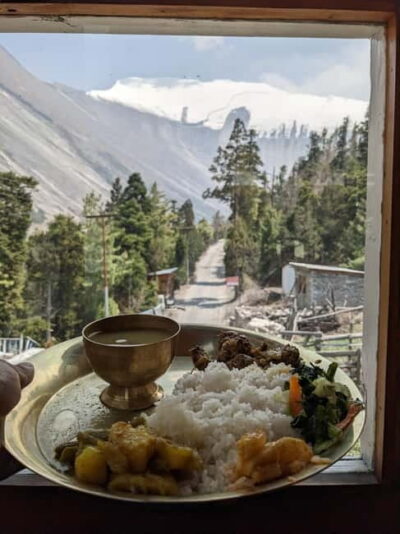
Browse the lists this tour appears in