
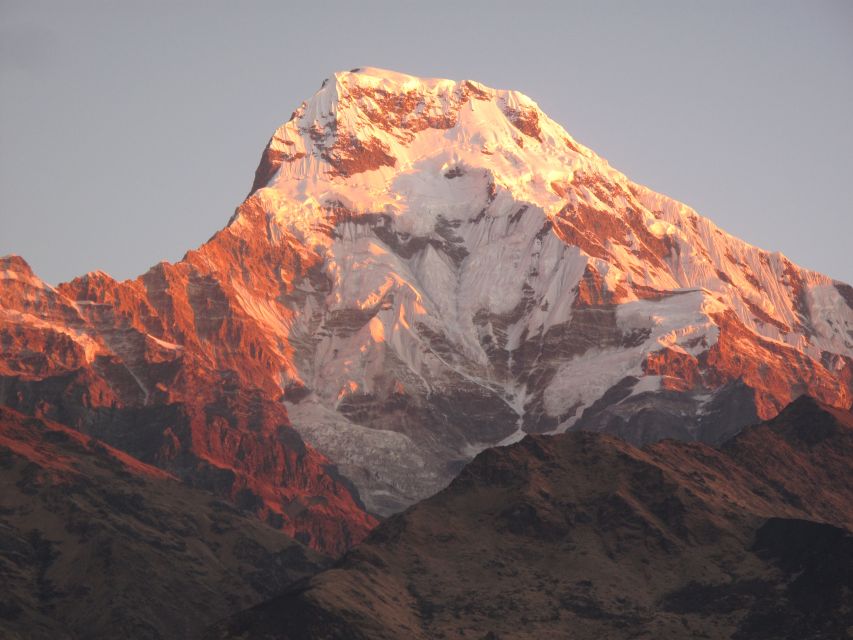
Reviewed · ANNAPURNA CIRCUIT TREKS
Annapurna Circuit Trekking 13 Days
The high point is literal: Thorong La Pass at 5,416 meters, a demanding crossing between Manang and Muktinath. The route also gives you a fine change of scenery, from the green Marshyangdi River Valley to dry Mustang, windy Kali Gandaki country and the sunrise view from Poon Hill.
I like the built-in acclimatization day in Manang, and I like that the $970 price covers permits, meals, basic tea-house lodging, a guide, gear loans and several transport links. The drawback is the pace: long walking days, basic rooms and high altitude leave little room for a slow, easy holiday.
Key points to know before you book
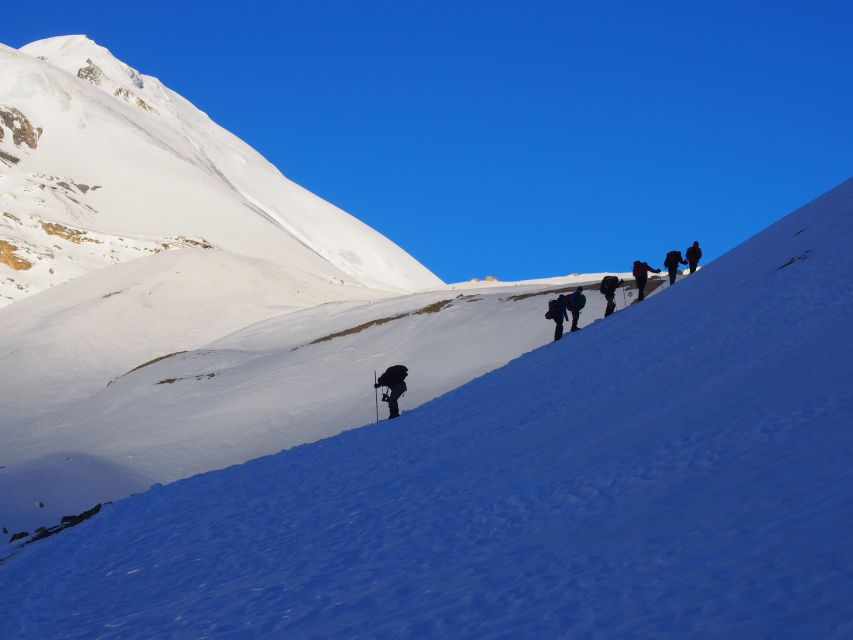
- Thorong La is the great test: The pass reaches 5,416 meters, with a 7 to 8 hour crossing day from Thorong Phedi to Muktinath.
- The scenery changes every few days: Expect river valleys, pine forests, Tibetan Buddhist villages, dry Mustang and the Kali Gandaki Valley.
- Manang gives you time to adjust: Day six is set aside for acclimatization before the trail climbs higher.
- Poon Hill adds a classic sunrise finish: The viewpoint sits at 3,210 meters, followed by a descent to Nayapul and a taxi to Pokhara.
- The price covers the main trekking costs: Meals, permits, 12 nights of tea-house lodging, a guide and selected transport are included.
- Solo walkers can join a small group: The maximum group size is 12, and guide Ganesh or Rabin may be requested.
From Kathmandu to the Marshyangdi River Valley
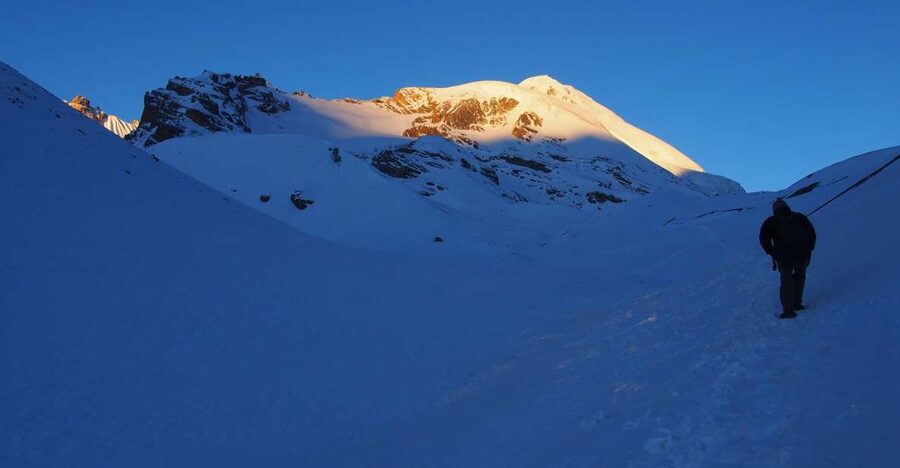
Your 13-day schedule begins with a long transfer toward Jagat, via Besisahar. The journey takes about 8 to 9 hours, so this is a road day rather than a gentle warm-up hike. The transport plan includes a taxi to Kathmandu’s bus station and public bus travel toward Bhulbhule, with the itinerary continuing to Jagat.
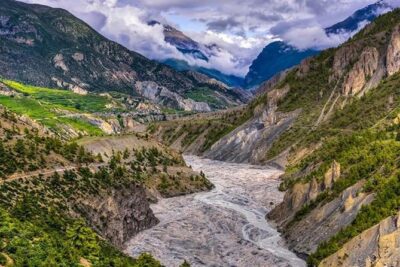
Jagat sits at about 1,100 meters and marks the start of the walking portion. On day two, you follow the Marshyangdi River toward Dharapani, gaining altitude while passing through green hills, waterfalls and local settlements. The 6 to 7 hour walk is a serious first hiking day, but it introduces the route’s best quality: the scenery keeps changing as you climb.
Dharapani, at 1,960 meters, is higher and cooler than Jagat. On day three, the trail continues to Chame at 2,710 meters, a 5 to 6 hour walk through forests and mountain country. Chame is the administrative center of Manang District, and it makes a useful overnight stop before the air becomes noticeably thinner.
I like this opening because you see the Annapurna region in layers. You do not begin among stark high-altitude slopes. You first pass through river country and forest, which gives the later dry valleys a stronger sense of change.
More Annapurna Circuit itineraries:
- Annapurna Circuit Trek with Tilicho Lake
★ 5.0 · 368 reviews - Annapurna Circuit Trek
★ 5.0 · 94 reviews - Annapurna Circuit Trek
★ 5.0 · 35 reviews
Pisang and the first views of Manang
Day four takes you from Chame to Pisang, at about 3,300 meters. The walk lasts 5 to 6 hours, and the higher you go, the more the route takes on a colder, drier feel. Pisang is one of the key settlements on the circuit, and it is a natural place to notice the shift toward Tibetan Buddhist culture.
On day five, you walk 6 to 7 hours from Pisang to Manang, reaching 3,540 meters. The village is one of the main stops on the circuit, not just for its setting but for its cultural character. You’ll encounter Buddhist traditions and settlements shaped by life on the high side of the Himalayas.
This is also where the trek starts to demand more from you. The schedule does not hide the altitude. Manang is high enough that your walking pace may need to slow, and the next day is wisely kept free of a major point-to-point hike.
Manang’s acclimatization day
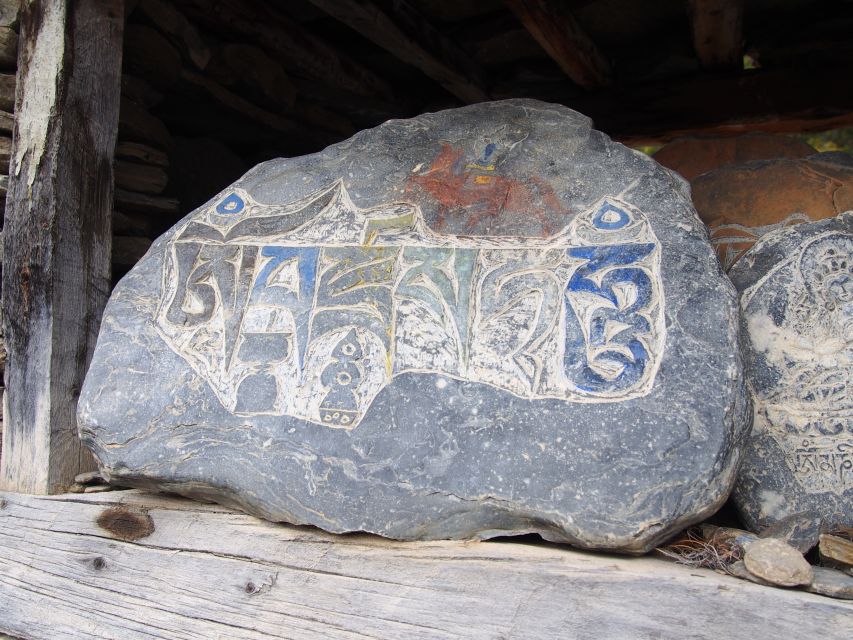
Day six is an acclimatization day in Manang. The supplied plan does not specify a particular side walk or excursion, so you should treat it as a chance to rest, adjust and spend time in the settlement rather than expect a fixed sightseeing program.
That pause matters. The following days take you above 4,000 meters, and the pass itself reaches 5,416 meters. You should use this day carefully, follow your guide’s advice and avoid treating Manang as just another overnight stop.
The guide is an important part of the experience here. English, Nepali and Hindi are spoken, and the company provides a government-licensed guide along with the guide’s food, accommodation, salary, equipment and insurance. If you are walking alone, ask in advance about guide availability. Ganesh received particularly strong praise for patience, careful attention and the ability to adapt to a solo trekker, while Rabin was singled out as a guide to request.
Yak Kharka and Thorong Phedi
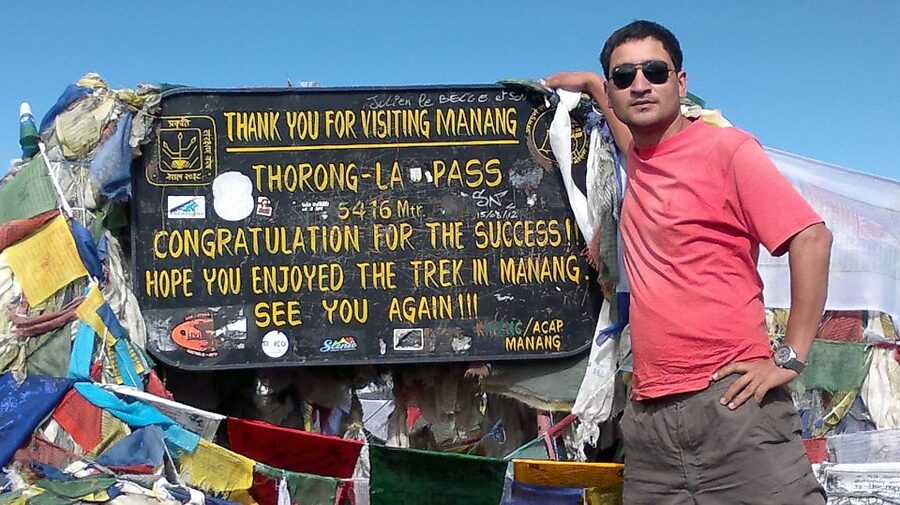
On day seven, the trail climbs from Manang to Yak Kharka at 4,120 meters. This 4 to 5 hour walk is shorter than the Manang day, but altitude makes distance a poor measure of effort. You are now well above the tree-lined parts of the route and moving toward the pass.
Day eight takes you from Yak Kharka to Thorong Phedi, at roughly 4,450 meters. Again, the walk is listed at 4 to 5 hours. Thorong Phedi is the staging point for the pass crossing, and the overnight stop gives you a clear sense of what comes next.
This is where I would be most cautious about the itinerary. You are not signing up for casual village walks. The route combines long days with a rapid gain in altitude, and the pass day is the hardest section. The tour includes a first aid box with normal medical supplies and an oximeter, but those items do not remove the need to take altitude seriously.
More trekking days out of Annapurna Region:
- Annapurna base camp trek 5 Days
★ 5.0 · 252 reviews - Poon hill Trek 3 days
★ 5.0 · 176 reviews - Trekking in Annapurna/Langtang/Everest/Upper Mustang regions
★ 5.0 · 161 reviews - Pokhara: 4-Day Ghorepani, Poonhill & Ghandruk Mountain Trek
★ 5.0 · 132 reviews
Crossing Thorong La at 5,416 meters
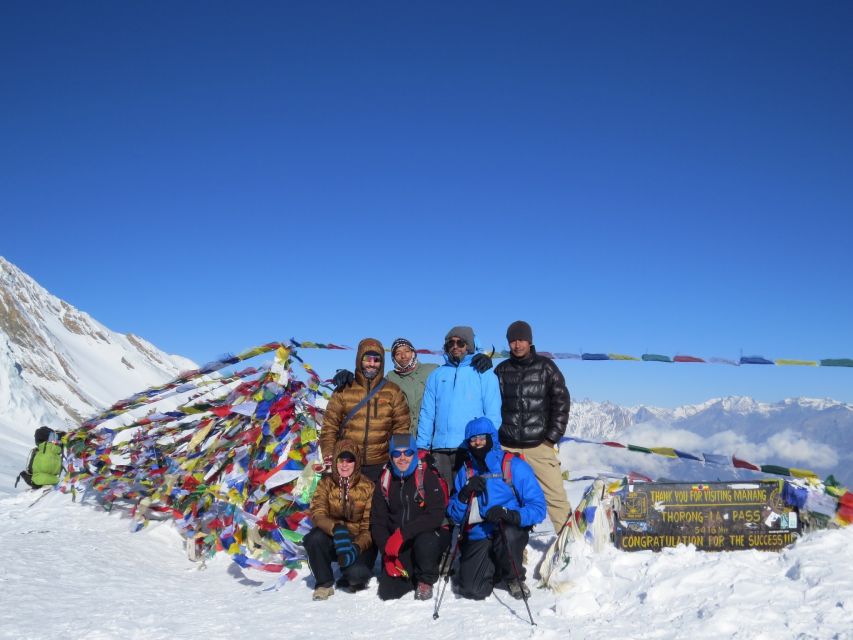
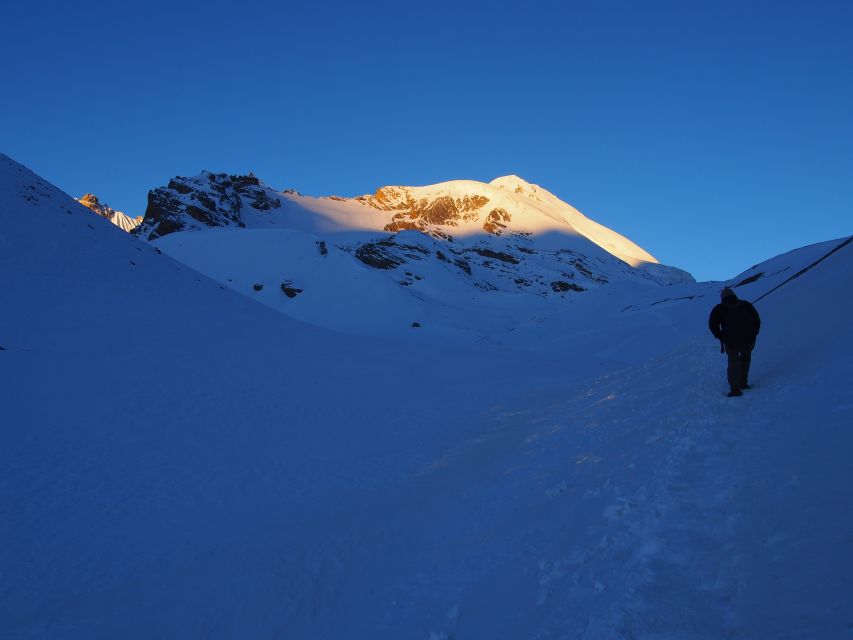
Day nine is the trek’s central challenge: from Thorong Phedi over Thorong La Pass and down to Muktinath. The listed walking time is 7 to 8 hours, and the pass reaches 5,416 meters, or about 17,769 feet.
The word technical appears in the description, so do not read this as a simple high viewpoint walk. The route is a major mountain crossing, and the combination of altitude, cold and duration can make the day feel much longer than the clock suggests. Your guide’s pacing and judgment are especially important here.
The reward comes in the broad views of the Annapurna peaks and the terrain around the pass. After the high point, you descend to Muktinath at 3,802 meters. That loss of altitude is welcome, and Muktinath adds a spiritual dimension to the journey after the physical effort of the crossing.
Muktinath is one of the route’s most important pilgrimage centers. The plan does not promise a formal religious tour, but you will have time in a place known as a spiritual center. Keep expectations practical: the day is already long, and the pass crossing comes first.
Muktinath, Kagbeni and the Kali Gandaki Valley
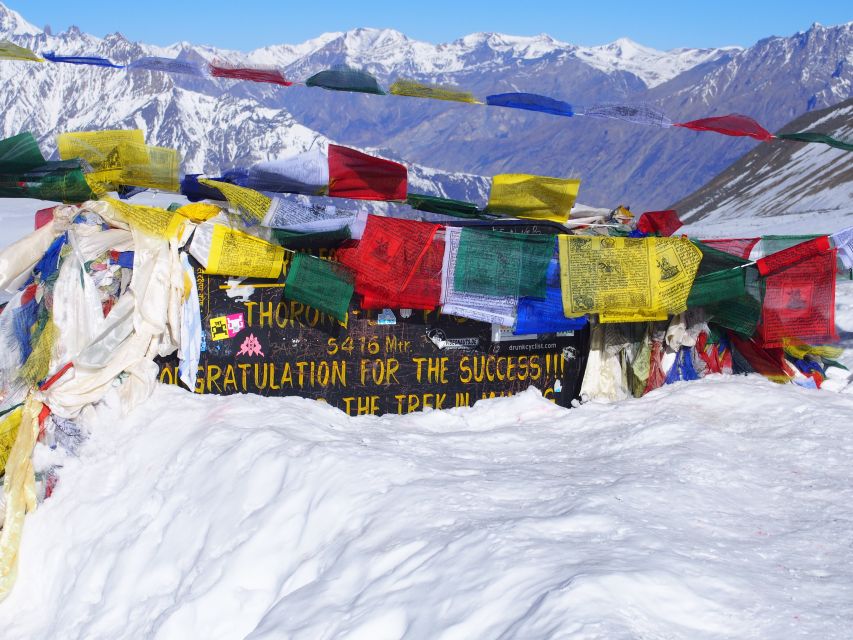
Day ten takes you from Muktinath to Jomsom, at 2,743 meters, in about 5 to 6 hours. This is the start of the Lower Mustang section, where the scenery becomes much drier than the river valleys near Jagat.
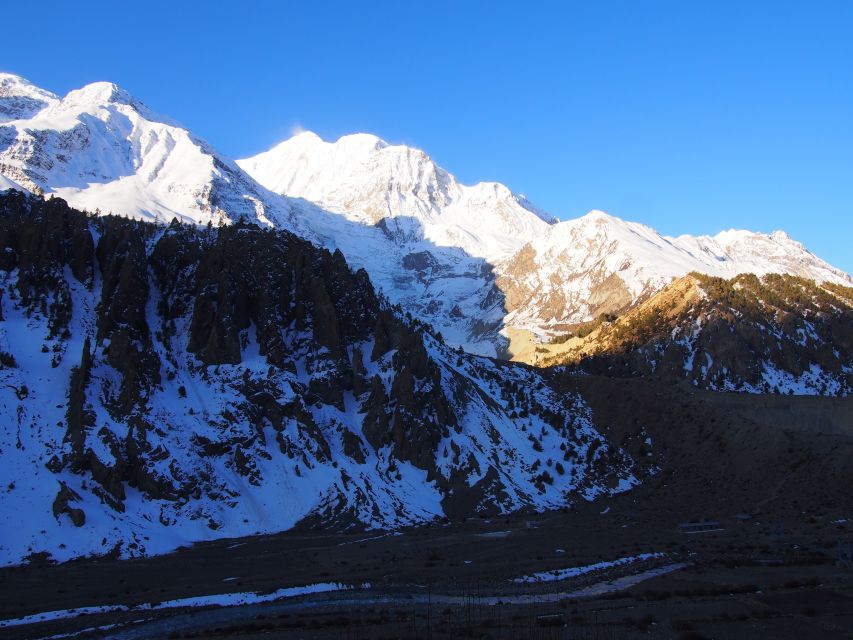
The itinerary also highlights Kagbeni and the windy Kali Gandaki Valley. These places help explain why the Annapurna Circuit feels like several treks joined together. The route moves from lush lower valleys to high Buddhist settlements, then into dry Mustang with strong winds and open mountain views.
Jomsom is also where the walking and road sections connect. On day eleven, you drive from Jomsom to Tatopani, a journey listed at 4 to 5 hours. Public transport is included for this part, rather than private transport, so allow for a more basic and less controlled road experience.
Tatopani is known for its natural hot spring. After the high pass and several demanding days, this stop gives the itinerary a warmer, more relaxed break. The road transfer also saves you from walking every section of the circuit, which is useful in a 13-day schedule.
Tatopani to Ghorepani and the Poon Hill finish
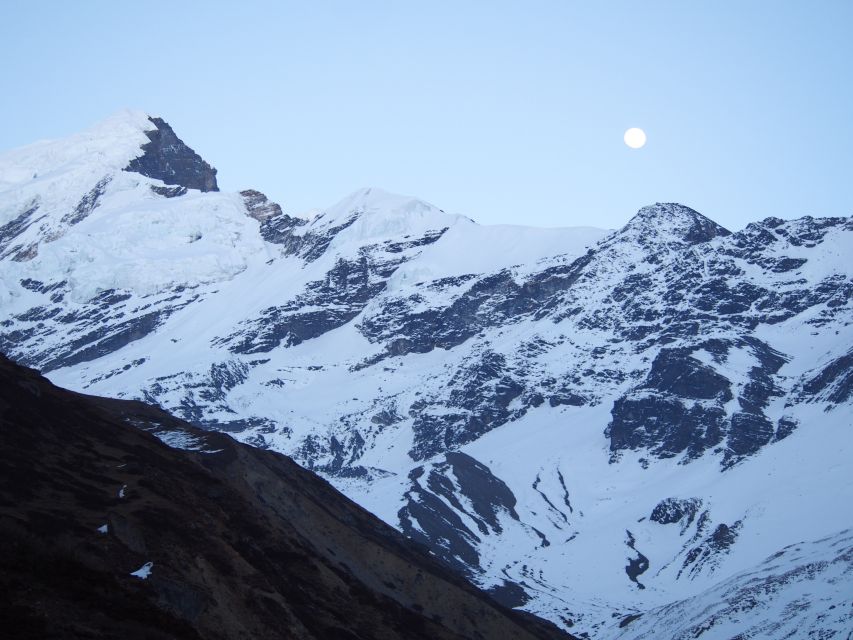
Day twelve returns to the trail. You climb from Tatopani at 1,290 meters to Ghorepani at about 2,750 meters. The walk is listed at 7 to 8 hours, so the lower altitude does not make this an easy day.
This section joins the Lower Annapurna route and passes through Sikha before reaching Ghorepani. The climb gives you another clear change in scenery and prepares you for the early start on the final morning.
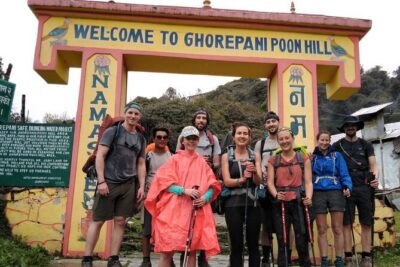
Day thirteen begins with an early hike to Poon Hill, at 3,210 meters. The viewpoint is one of the best-known mountain outlooks in the region, and the early timing is meant for sunrise views over the Annapurna area. Afterward, you trek down to Nayapul, then take a taxi to Pokhara. The full day is listed at 7 to 8 hours.
The finish is well chosen. Instead of ending with a final road transfer from a remote point, you get one last viewpoint and a descent into the Pokhara area. It does make the final morning busy, so pack what you need for the viewpoint where it is easy to reach.
What the $970 price really covers
At $970 per person, the package is strongest when you use the included items. It covers 12 nights in basic tea houses with twin-sharing rooms, three meals a day during the trek, Annapurna Circuit permits and a licensed guide.
You also receive airport pickup on arrival, a taxi to the Kathmandu bus station, public bus transport toward the trail, public transport from Jomsom to Tatopani, a taxi from the trek’s ending point to Pokhara and a tourist bus from Pokhara to Kathmandu. One night of hotel accommodation with breakfast in Pokhara is included as well.
The company provides a sleeping bag, down jacket and duffel bag if needed, plus luggage storage during the trek. A first aid box with an oximeter and an Annapurna Circuit map are also included. These extras reduce the amount of specialist gear you need to bring or rent.
The main extra cost is a porter, listed at $250 if you want one. International flights, the Nepal entry visa, Kathmandu lodging, city meals, drinks, private transport and personal expenses are not included. You should also remember that basic tea-house lodging means this is a practical mountain trip, not a hotel-based holiday.
How the guiding and group setup affect the trip
The maximum group size is 12, which is small enough for a guide to keep track of the group without turning the trail into a large procession. A solo trekker can be paired with a guide, as happened with Ganesh, and the arrangement can feel more personal than joining a very large departure.
The strongest personal praise attached to this company concerns organization and care before and during the trek. Laxman, the owner, was described as proactive with questions and formalities, while Ganesh was praised for listening, patience and attention to detail. Rabin was also recommended as a guide to request.
You can ask for an English, Nepali or Hindi-speaking guide. Still, guide requests should be made before booking, since the data does not promise a particular person on every departure.
Spring and autumn are the recommended seasons. Those periods are generally presented as the best time for this trek, but the route remains a high-altitude undertaking. Build your plans around the full 13 days, not just the walking hours, because road transfers and early starts are part of the experience.
Who should book this trek?
I would choose this trip if you want the classic Annapurna route in a tight schedule, with major costs bundled into one price. It suits you if you value changing scenery, local settlements, Buddhist culture and a major mountain crossing more than comfort or spare time.
It is also a good fit for a solo walker who wants a guide and a small group rather than a completely independent trek. The included gear loans, meals, permits and luggage storage make the planning easier, especially if you do not already own a sleeping bag or down jacket.
I would think twice if you dislike basic accommodation, public transport or long walking days. The 5,416-meter pass is not a minor add-on, and the final Poon Hill section still requires a 7 to 8 hour day. A porter costs extra, so budget for that if you do not want to carry your own pack.
Free cancellation up to 24 hours before the experience and reserve-now, pay-later booking give you useful flexibility. The more important decision, though, is physical: you need to be comfortable with a demanding high-altitude itinerary.
Should you book the Annapurna Circuit in 13 days?
Book it if you want a well-priced, guided route with the Annapurna Circuit’s biggest moments: Manang, Thorong La, Muktinath, the Kali Gandaki Valley and Poon Hill. The strong points are the included meals and permits, the acclimatization day, the small group size and the chance to work with guides such as Ganesh or Rabin.
Skip it if you want a leisurely schedule or upgraded lodging. For the right person, $970 offers a lot: a guide, transport links, equipment loans, 12 tea-house nights, meals and a full crossing of one of Nepal’s best-known high passes.
FAQ
How long is the Annapurna Circuit trekking experience?
The experience lasts 13 days, including road transfers, trekking days, the acclimatization day in Manang and one hotel night in Pokhara.
How high is Thorong La Pass?
Thorong La Pass reaches 5,416 meters, or about 17,769 feet.
Is an acclimatization day included?
Yes. Day six is an acclimatization day in Manang.
What languages can the guide speak?
Guides are available in English, Nepali and Hindi.
How large is the group?
The group is limited to 12 participants.
Are meals included during the trek?
Yes. Breakfast, lunch and dinner are included during the trekking portion.
Is accommodation included?
Yes. The package includes 12 nights in basic tea houses with twin-sharing rooms, plus one hotel night with breakfast in Pokhara.
Is a porter included?
No. A porter is available for an additional $250.
Is transportation included?
Yes. The package includes airport pickup, a taxi to the Kathmandu bus station, public bus transport toward the trek, transport from Jomsom to Tatopani, a taxi to Pokhara and a tourist bus from Pokhara to Kathmandu.
What is the best season for this trek?
Spring and autumn are listed as the best seasons for the Annapurna Circuit.
Just added around Annapurna Region
- 4 Day Mardi Himal Base Camp Trek from Pokhara★ 5.0 · 18 reviews
- 7-Day Trek to Annapurna Base Camp from Pokhara★ 5.0 · 12 reviews
- Private 4 Day Poon Hill Trek from Pokhara★ 5.0 · 16 reviews
- Annapurna Base Camp Trek from Pokhara and Kathmandu★ 5.0 · 7 reviews
- 6 days Annapurna Basecamp Trek★ 5.0 · 16 reviews
- “Exclusive Round-Trip Transfer: Pokhara to Jomsom & Muktinath”★ 5.0 · 11 reviews
- Poon Hill Ghandruk Circuit Trek from Pokhara 4 Days★ 5.0 · 10 reviews
- Pokhara: Poon Hill Ghorepani Short Trek★ 5.0 · 6 reviews
Annapurna Circuit Treks, compared.
15-Day Private Annapurna Circuit Trek from Kathmandu
Read our review →
Browse the lists this tour appears in