
Reviewed · POON HILL TREKS
Ghorepani Poonhill Trek 5 Days from Pokhara
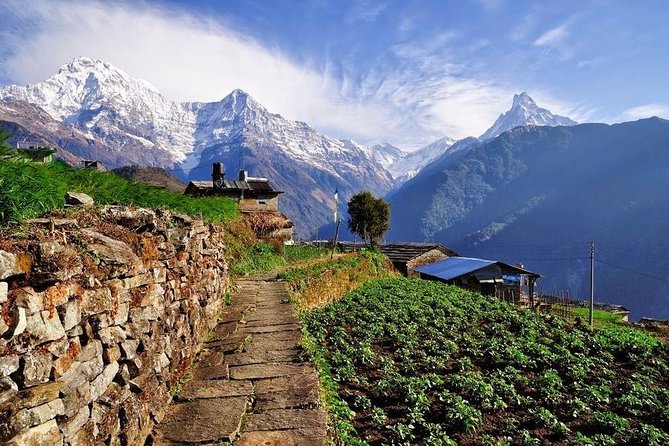
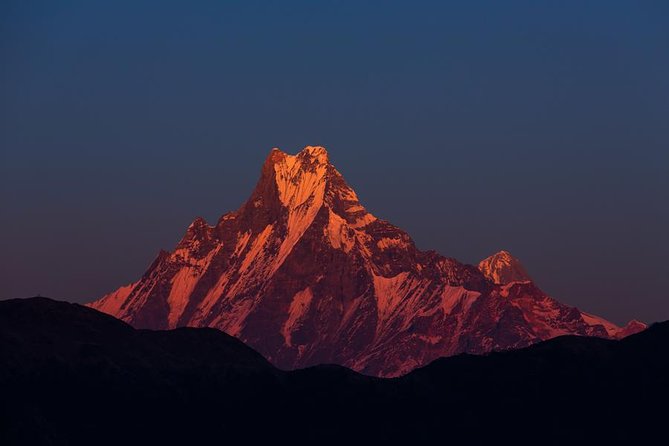
Poon Hill earns its fame with a simple promise: walk uphill before dawn, then watch the sun touch the Annapurna, Dhaulagiri, Machhapuchhre, and Himchuli ranges. This five-day route also gives you a good taste of Nepalese trekking, moving from stone steps and forest trails to Gurung villages and teahouses.
I like the small group size, capped at nine, because you can ask questions without shouting across a crowd. I also like the practical package: meals, guesthouses, permits, private transport, and porters are included. The main consideration is that this is still a mountain trek, with long walking days and many steps, not a gentle sightseeing tour.
Key points
- Sunrise at Poon Hill: Reach the viewpoint early for views of Annapurna, Dhaulagiri, Machhapuchhre, and Himchuli.
- A varied five-day route: Walk through woodland, villages, small roads, and long stone stairways rather than repeating one type of trail.
- Small-group format: The group has a maximum of nine people, leaving room for questions and a more personal pace.
- Ghandruk village: Spend time in a Gurung settlement connected by steps between guesthouses and teahouses.
- Useful inclusions: A certified guide, one porter for every two trekkers, permits, a first aid kit, meals, and accommodation are covered.
- A strong first Himalayan trek: The route offers mountain scenery and village life without requiring a long expedition.
What the five-day Poon Hill route gives you
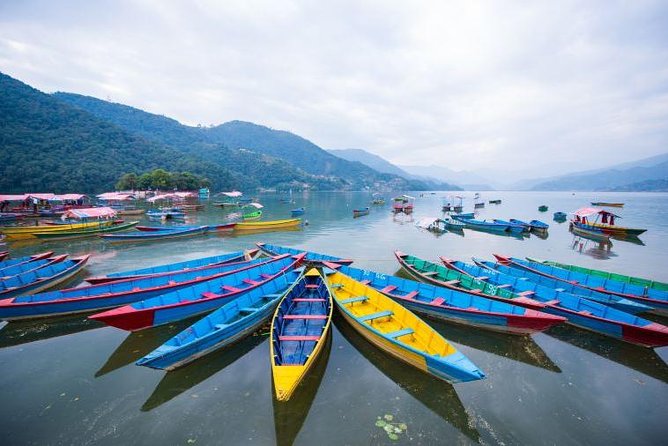
This trek begins and ends in Pokhara, one of Nepal’s main bases for mountain trips. You leave town by private vehicle, then walk through the foothills toward Ulleri, Ghorepani, Poon Hill, and Ghandruk.
The route is appealing because it changes character every day. You start with a road transfer and a long walking day, then move through oak and rhododendron woodland, rise to the famous sunrise point, visit a Gurung village, and descend back toward Pokhara.
The tour costs $450 per person. That price makes the most sense if you want one organized booking to handle the major practical pieces. You are paying not only for guiding, but also for permits, transport, guesthouses, meals, porter support, and one night in Pokhara. You still need to cover tips, Nepal entry visa fees, personal trekking gear, international flights, insurance, and unexpected costs caused by accidents or natural events.
For a first trek in Nepal, that arrangement can save you a great deal of planning. You are not left to arrange each guesthouse, permit, meal, and transfer separately. The tradeoff is less independence than traveling alone, and your daily pace will be shaped by the group.
More Poon Hill and Ghorepani treks:
- Poon hill Trek 3 days
★ 5.0 · 176 reviews - Pokhara: 4-Day Ghorepani, Poonhill & Ghandruk Mountain Trek
★ 5.0 · 132 reviews - Ghorepani – Poon Hill Trek 3N-4D
★ 5.0 · 125 reviews
Day 1: Pokhara to Nayapul and uphill to Ulleri
The first morning begins with transport from Pokhara after breakfast. The stated meeting point is Temple Himalaya Hotel and Spa on Street No. 13, with an 8:00 am start. From there, a private vehicle takes you toward Nayapul through the foothills.
Nayapul is where the walking begins. The day takes about seven hours, so do not treat this as a short warm-up. You make your way toward Ulleri through a mix of trail and small road, with stone steps becoming an important part of the route.
Ulleri is a useful first night because it places you inside the trekking area rather than spending the evening back in Pokhara. Your accommodation is in a teahouse or guesthouse, with dinner included. Expect a simple mountain stay rather than hotel comforts.
The long first day is the main physical hurdle for some people. If you have not been walking regularly, take the morning slowly and use the guide’s pacing. The porter arrangement also matters here. One porter is assigned for every two trekkers, carrying personal gear and group equipment, but you should still keep your daypack light and carry anything you need during the walk.
Day 2: Forest trails from Ulleri to Ghorepani
The second day takes about six hours and leads toward Ghorepani. The route passes through oak and rhododendron woodland, with a gradual ascent and plenty of steps.
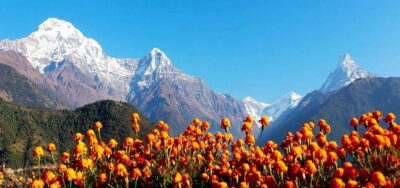
The trees are one of the most appealing parts of this section. In season, rhododendron blossoms add color to the route, while the forest gives you shade during parts of the climb. You are not walking through the same setting all day. The path shifts between woodland, village areas, and mountain tracks.
Ghorepani is an important stop because it positions you for the early walk to Poon Hill. The overnight stay also breaks up the climb, giving you time to rest before the pre-sunrise start.
Breakfast, lunch, and dinner are included during the trek. That is convenient, but you should still be prepared for basic guesthouse dining. The meal plan covers the listed daily meals, while personal snacks and other extras are your responsibility.
Ghorepani can feel like a busy stop on the route because it is closely linked to Poon Hill, but the small group limit helps keep your own experience more personal. Your guide can explain what you are seeing and help you manage the timing for the next morning.
Day 3: The pre-dawn climb to Poon Hill
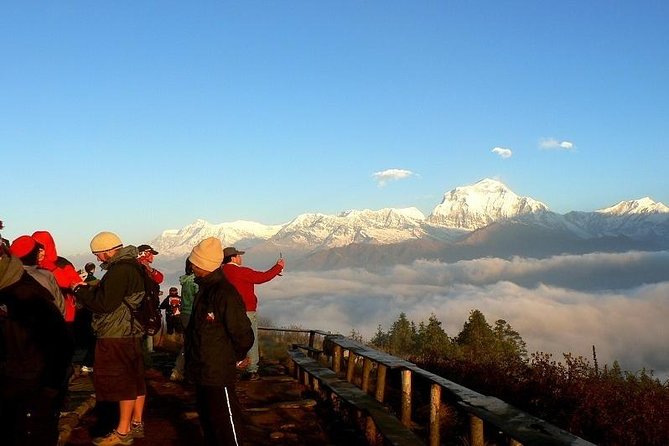
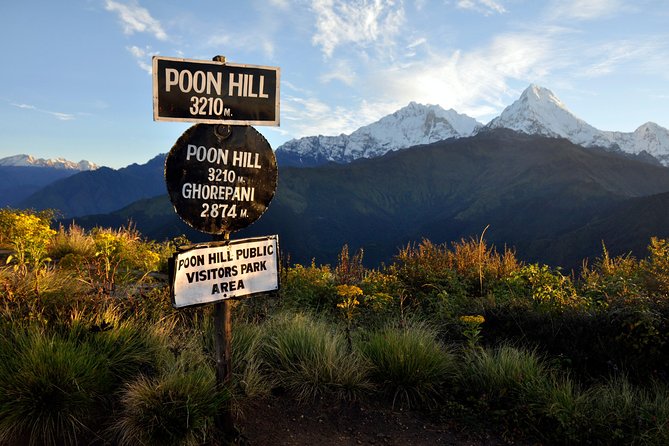
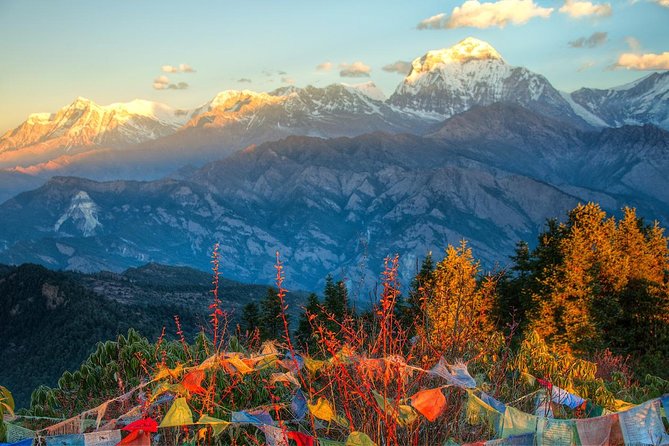
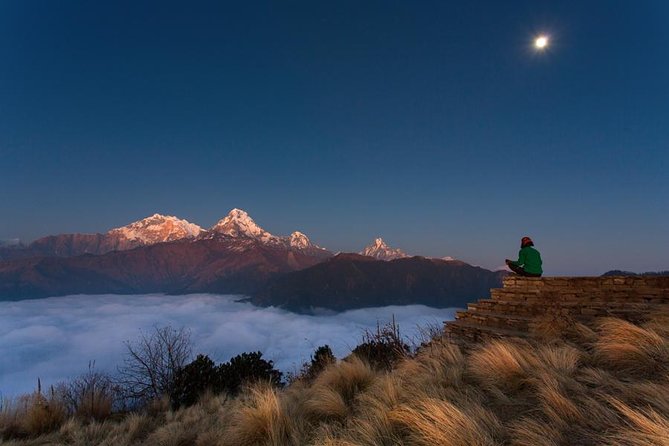
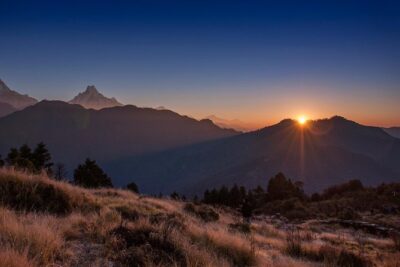
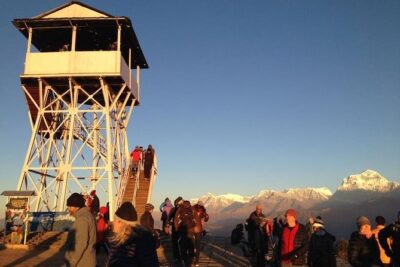
Day three is the centerpiece. You leave early and walk for about an hour to reach Poon Hill in time for sunrise. The climb is short compared with the full trekking days, but the early start and uphill steps make it feel more demanding than the distance suggests.
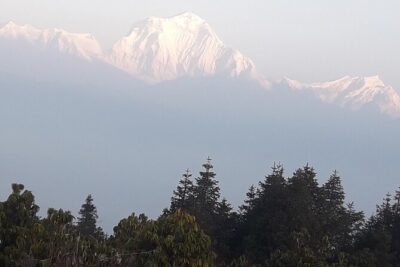
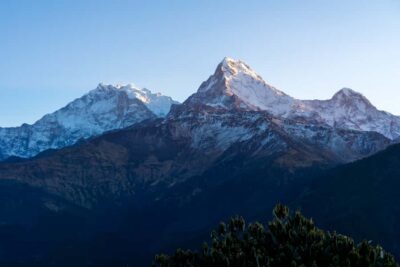
At the viewpoint, the reward is a broad Himalayan panorama. The route description identifies views of Annapurna, Dhaulagiri, Machhapuchhre, and Himchuli. The morning light changes quickly, so this is the point where an early start matters.
Poon Hill is not just a photo stop. It gives you a clear reason for the effort of the previous two days and a memorable high point for the trip. If mountain scenery is your main reason for booking, this morning will likely be the deciding factor.
Dress for the timing rather than only for the daytime forecast. The supplied information does not specify temperatures or provide a gear list, so you should ask the operator what clothing and equipment are recommended before departure. A headlamp or other suitable light may also be worth confirming, since the walk begins before sunrise.
After Poon Hill, the day continues for roughly six hours. The trail then takes you onward through the route toward Ghandruk. This makes day three a full trekking day, not simply a sunrise excursion followed by leisure.
A few more Annapurna Region days to weigh up
- Annapurna base camp trek 5 Days
★ 5.0 · 252 reviews - Kathmandu to Annapurna Base Camp (ABC) 5-Day Trek
★ 5.0 · 102 reviews - Kathmandu/Pokhara: 5-Day Annapurna Base Camp (ABC) Trek
★ 4.9 · 72 reviews - From Pokhara: 5-Day Annapurna Basecamp Trek with Hot Springs
★ 4.9 · 26 reviews
Day 4: Gurung culture and the steps of Ghandruk
The fourth day is shorter, at about four hours, and brings you to Ghandruk. This village is associated with the Gurung communities and is known for its traditional Nepalese homes, guesthouses, and teahouses linked by small stairways.
Ghandruk gives the trek a cultural center. The earlier days focus heavily on forests, climbing, and mountain views. Here, you get a closer look at village life and the built environment of the foothills.
The many steps are practical and scenic, but they can also make short distances feel longer. You will continue to move up and down between buildings, so do not assume that a four-hour day means no exertion.
This is a good day to ask your guide questions. The group limit of nine is especially useful in a village setting, where you may want context about the Gurung community, local homes, or the way guesthouses support the walking route. The tour promises guided commentary, but no individual guide names are provided, so you should confirm your guide’s name and language before departure if that matters to you.
Day 5: Descending from Ghandruk to Pokhara
The final day begins after breakfast at the teahouse. You descend toward Nayapul, passing through familiar scenery and the numerous stone steps at the gateway to Ghandruk.
The walking time is about six hours. Descending can be harder on the legs than climbing, particularly on long stone stairways, so trekking poles may be useful if you already use them. The tour information does not confirm that poles are supplied, so check before leaving Pokhara.
From Nayapul, transport returns you to Pokhara. The activity ends back at the meeting point, and accommodation includes one night in Pokhara. That final night is a useful buffer after the trek and means you do not need to arrange a same-day departure from the region.
The return day is not merely a transfer. It gives you one last section of walking before the trip shifts back to road travel. If you are connecting to another tour or flight, allow extra time rather than assuming the return will run to the minute.
Guesthouses, meals, and porter support
The overnight stays are in teahouses along the route. These are part of the trekking experience, but you should expect practical simplicity. The package also includes one night in Pokhara, though the specific hotel details are not provided.
Five breakfasts, four lunches, and four dinners are included. That matches the five-day plan, with meals arranged around the nights and walking days. Water, snacks, personal drinks, and other extras are not listed as included, so ask what you should budget for.
Porter support is included at a ratio of one porter for two trekkers. This is a valuable part of the price, especially on a route with repeated climbs and descents. Still, pack responsibly and avoid bringing more than you need. The package does not include a personal trekking porter beyond the stated arrangement, nor does it include personal gear.
A first aid kit is included. That is useful basic support, but it is not a substitute for travel and medical insurance. Insurance is specifically not included, and you are responsible for costs tied to emergencies, accidents, and natural events.
What the $450 price really covers
At $450, the tour is best judged as a bundle rather than as a simple five-day walk. You receive:
- Private transport from Pokhara and back
- A certified professional guide
- Annapurna Conservation Area Permit and TIMS
- Teahouse accommodation during the trek
- One night in Pokhara
- Porters for personal and group gear
- Breakfast, lunch, and dinner as specified
- A first aid kit and trekking map
The permits are an important detail. Handling the Annapurna Conservation Area Permit and TIMS yourself would add planning and paperwork, while the private vehicle reduces the need to arrange local transfers separately.
The value is strongest for you if you want a supported trek with predictable basics. It is less compelling if you already have a guide, porter, permits, transport, and accommodation arranged, or if you prefer to choose each guesthouse and meal on your own.
Tips and gratuities are not included. Nepal entry visa fees, insurance, international flights, personal trekking gear, and unforeseen costs are also outside the price. Put those items into your budget before deciding.
Who will enjoy this trek most
I would recommend this route to someone who wants a first taste of Himalayan trekking without committing to a long expedition. The five-day length works well if you have limited time in Nepal but still want mountain views, village stays, and several days on foot.
It also suits people who value organization. The small group, private transport, guide, permits, meals, and porter support remove many practical tasks.
You should be comfortable with long walking days. The schedule includes days of about six or seven hours, repeated stone steps, gradual climbs, and a pre-dawn uphill walk. The tour information says most people can participate, but it does not remove the need for basic fitness or preparation.
This is not the right choice if you want luxury lodging, a private group of only your own companions, or a completely flexible route. The group can include up to nine people, and the daily plan follows a fixed five-day structure.
Practical details before you book
You need to provide a valid passport name, number, expiry date, and country for every participant at booking. Nepal visa fees are paid directly by you.
The tour accepts mobile tickets, and confirmation is provided at booking. Public transportation is nearby, but the included transfer is by private vehicle from the stated meeting point.
Free cancellation is available if you cancel at least 24 hours before the local start time. Cancellations or changes made inside that window are not accepted for a refund.
Ask about the current weather, recommended clothing, personal gear, porter limits, and the exact Pokhara hotel before departure. Those details are not fully specified, and getting clear answers will help you pack sensibly.
Should you book the Ghorepani Poon Hill trek?
Book it if you want a well-organized introduction to Nepal trekking, especially if sunrise mountain views and village life matter more to you than luxury. The varied route is its strongest feature: you walk through woodland, over stone steps, past small settlements, up to Poon Hill, and on to Ghandruk.
The package is also a good value when you count the guide, porters, permits, transport, accommodation, and meals. I would hesitate only if you dislike early mornings, long descents, basic guesthouses, or fixed group schedules.
For an active five-day trip from Pokhara, this is a practical choice with a clear payoff at Poon Hill. Prepare for the steps, pack lightly, confirm the gear details, and you will be set up to enjoy the route rather than worry about its logistics.
FAQ
How long is the Ghorepani Poon Hill trek?
The experience lasts approximately five days, beginning and ending in Pokhara.
Where does the trek start?
The meeting point is Temple Himalaya Hotel and Spa on Street No. 13 in Pokhara, Nepal. The stated start time is 8:00 am.
What is the maximum group size?
The group has a maximum of nine participants.
Is transportation included?
Yes. Transport by private vehicle is included for the route between Pokhara and the trekking area.
Are meals included?
Yes. The package includes five breakfasts, four lunches, and four dinners.
Where do you stay during the trek?
You stay in teahouses or guesthouses along the route. The package also includes one night in Pokhara.
Is a guide included?
Yes. A certified professional guide is included, along with guided commentary about the area.
Are trekking permits included?
Yes. The Annapurna Conservation Area Permit and TIMS are included.
Is travel insurance included?
No. Travel and medical insurance are not included, and you are responsible for expenses related to emergencies, accidents, or natural events.
Just added around Annapurna Region
- 4 Day Mardi Himal Base Camp Trek from Pokhara★ 5.0 · 18 reviews
- 7-Day Trek to Annapurna Base Camp from Pokhara★ 5.0 · 12 reviews
- Private 4 Day Poon Hill Trek from Pokhara★ 5.0 · 16 reviews
- Annapurna Base Camp Trek from Pokhara and Kathmandu★ 5.0 · 7 reviews
- 6 days Annapurna Basecamp Trek★ 5.0 · 16 reviews
- “Exclusive Round-Trip Transfer: Pokhara to Jomsom & Muktinath”★ 5.0 · 11 reviews
- Poon Hill Ghandruk Circuit Trek from Pokhara 4 Days★ 5.0 · 10 reviews
- Pokhara: Poon Hill Ghorepani Short Trek★ 5.0 · 6 reviews
Poon Hill Treks, compared.
4-Day Ghorepani, Poonhill & Ghandruk Mountain Trek
Read our review →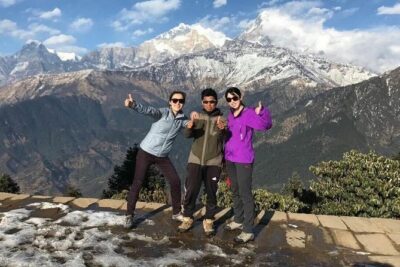
Browse the lists this tour appears in