
Reviewed · ANNAPURNA BASE CAMP TREKS
Kathmandu/Pokhara: 5-Day Annapurna Base Camp (ABC) Trek
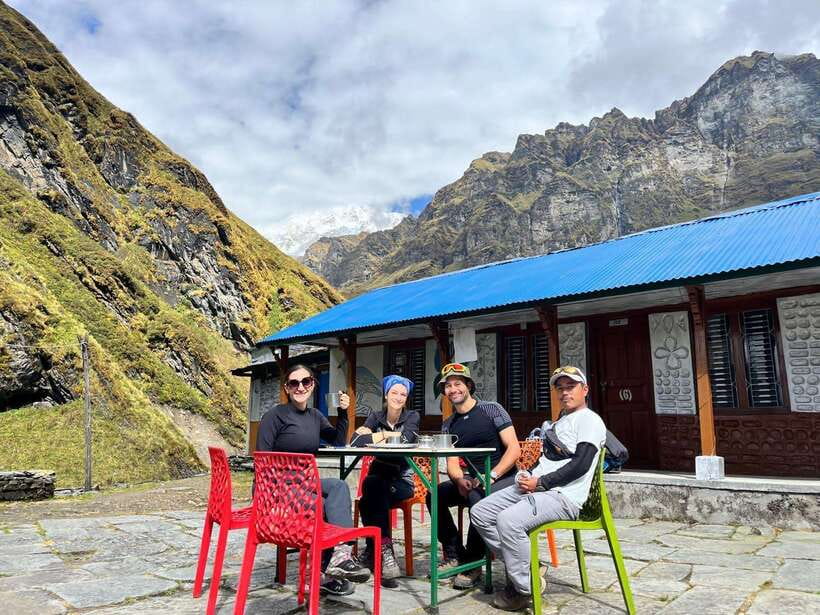
Annapurna Base Camp is the prize here: a high bowl ringed by immense Himalayan peaks, reached on foot through forests, waterfalls, stone steps, and mountain villages. I like the route’s variety and the fact that the trip includes both ABC at 4,130 meters and the hot springs at Jhinu Danda. I also like the personal care built into the guiding, with names such as Raju, Pratip, Smile, and Anil appearing often in the company’s guiding team.
The catch is simple: this is a hard five-day trek, not a scenic stroll. Day three reaches high altitude, day four is long on tired legs, and tea houses charge extra for hot showers, Wi-Fi, charging, and drinks. Monsoon conditions can bring mud and wet clothes, while winter can mean temperatures as low as minus 10°C.
Key points to know before you book
- Reach 4,130 meters in three trekking days: The climb from Sinuwa to Deurali and then ABC is quick and physically demanding.
- Sleep in mountain tea houses: Four nights are spent in basic guest houses, with comfort varying and some rooms shared.
- Guide support is a major strength: Guides such as Raju, Pratip, Anil, Smile, and Oham are praised for pacing, safety checks, local stories, and practical help.
- Jhinu Danda adds a welcome recovery stop: The natural hot springs are planned for the final trekking day, though weather, timing, and fitness can affect whether you reach them.
- The $96 price needs careful reading: Transport, permits, guide, lodging, and borrowed gear are included, but meals, porter service, flights, and some transfers depend on the booking option.
- You finish with a long return: The final trek to Simrung is followed by a two to three-hour shared jeep ride to Pokhara.
Why this short ABC trek works
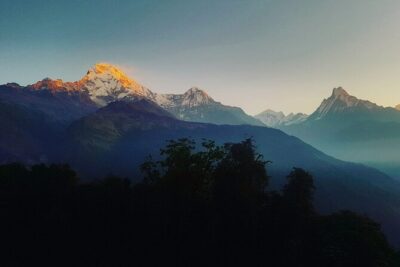
The Annapurna Base Camp route gives you a lot in a small number of days. You begin among subtropical forest and village farmland, then move through bamboo valleys and colder upper country before reaching the sanctuary. That change in plant life and weather is one of the best parts of the walk.
You also get a useful balance of effort and reward. The first two days build the route gradually, day three delivers the main goal, and day four starts with sunrise at ABC before the long descent. The hot springs at Jhinu Danda give the final day a pleasant finish, though you should not picture the whole trip as leisurely.
I like the private-guide feel of this experience. Your guide handles permits, accommodation, navigation, and basic first aid, while also adjusting breaks and pace. Several guides are praised for checking on tired walkers, helping with illness, and finding practical solutions when weather or transport goes wrong.
The five-day schedule is tight. If you are not used to long hikes, you may find the ascent and descent harder than expected. One traveler with little hiking experience finished successfully, but described it as one of the hardest things they had done. That is a useful warning, not a reason to stay home.
More Annapurna Base Camp treks:
- Annapurna base camp trek 5 Days
★ 5.0 · 252 reviews - Annapurna Base Camp Trek
★ 5.0 · 111 reviews - Kathmandu to Annapurna Base Camp (ABC) 5-Day Trek
★ 5.0 · 102 reviews
Day one: Pokhara to Simrung, then Sinuwa
The trip begins with hotel pickup in Pokhara. If you start in Kathmandu, the Kathmandu to Pokhara flight option takes about 30 minutes, depending on the selected package and schedule. From Pokhara, a shared jeep drives two to three hours through Nayapul toward Simrung.
The road transfer is part of the adventure, but it is not a luxury ride. Shared jeep travel can be slow and cramped, and several hours on mountain roads is tiring before the actual walking begins. In the low season, arranging shared transport can take extra coordination, so keep your morning flexible.
From Simrung, you walk 10 to 11 kilometers to Sinuwa. The stated walking time is five to six hours. Expect forest, rivers, village sections, and plenty of uphill and downhill steps rather than one smooth climb.
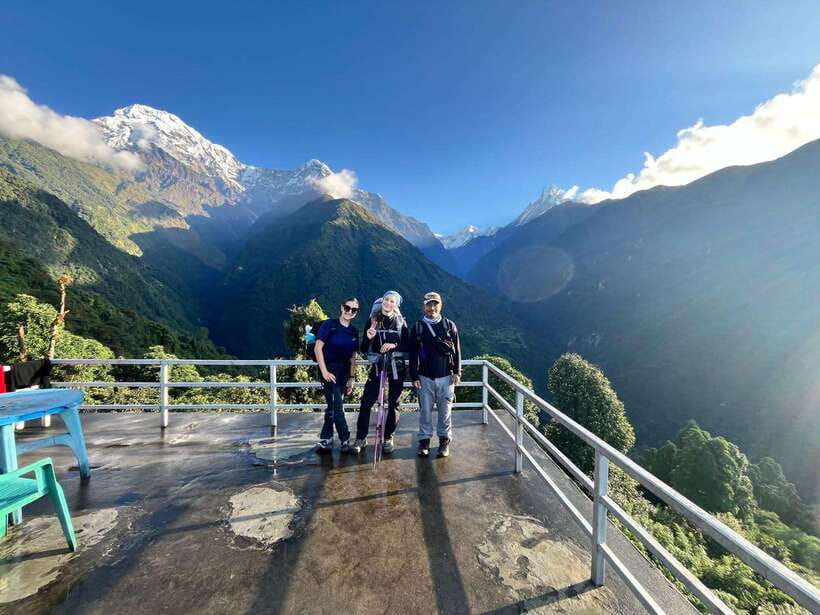
Sinuwa is your first night at a mountain guest house, at about 2,340 meters. This is a sensible point to stop because you have gained height but are not yet near the highest section. Your guide should help settle you into the lodge and explain the following day.
Day two: Sinuwa through waterfalls to Deurali
The second day covers another 10 to 11 kilometers, usually in five to six hours, ending at Deurali at around 3,230 meters. The route passes through dense forest and the small settlement of Himalaya, where tea houses provide a natural rest point.
This is where the scenery begins to feel more enclosed and dramatic. Bamboo and forest line sections of the trail, while waterfalls and rushing water add sound to the walk. The trees provide shade, but the many steps still make this a serious day.
You are gaining altitude at a useful rate, but the schedule remains brisk. Take the breaks your body needs rather than trying to match your guide’s walking speed. Guides including Pratip and Laxman have been praised for adjusting the pace, finding rest stops, and checking that people are eating and drinking.
Deurali is basic mountain accommodation. Hot showers, Wi-Fi, charging, and drinks cost extra, and you should not assume that every comfort is included. A sleeping bag is available to borrow, which matters because nights become cold as you climb.
Day three: MBC and Annapurna Base Camp
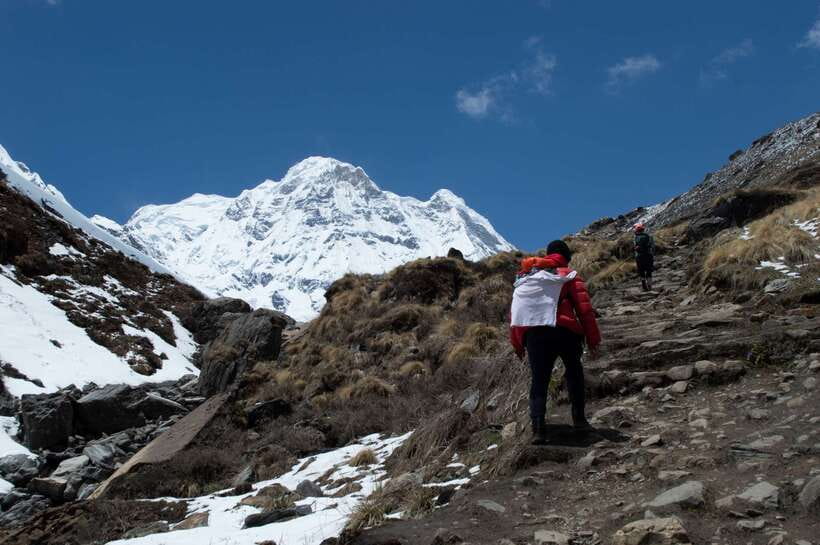
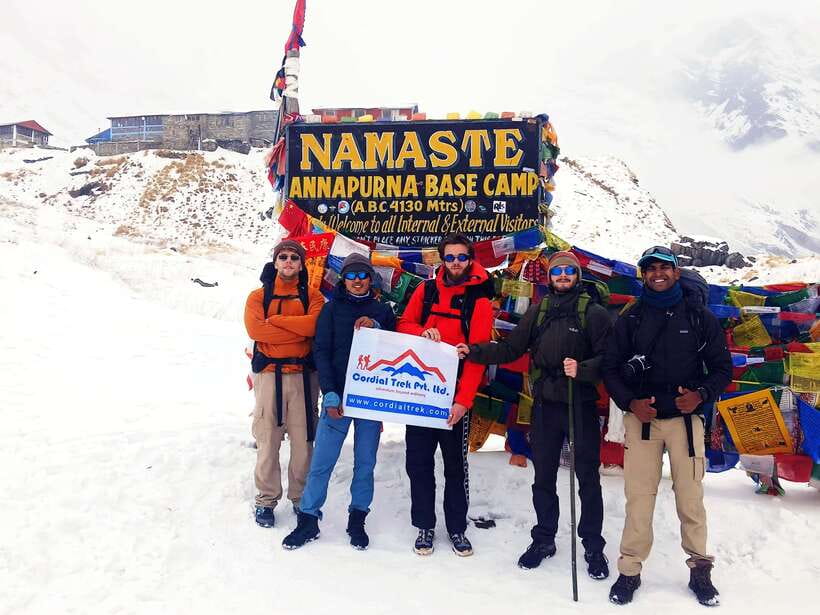
Day three is the emotional center of the trip. You walk from Deurali to Annapurna Base Camp, passing through Machhapuchhre Base Camp, commonly called MBC. The distance is again about 10 to 11 kilometers, with five to six hours listed for the walk.
The surroundings change quickly. The forest thins, the air feels colder, and the route enters the high mountain bowl of the Annapurna Sanctuary. From MBC, the trail continues toward ABC at 4,130 meters.
This is a large altitude gain over only three trekking days, so do not underestimate it. You may feel fine at the start and slow down later. Tell your guide early if you develop a headache, nausea, unusual tiredness, or trouble keeping food down. Guides are there to help manage the day, not simply to push you to the finish.
The reward is the setting at ABC. Annapurna I rises to 8,091 meters and is one of the world’s highest peaks. The base camp sits among enormous summits and icy ridges, with the sanctuary forming a powerful natural amphitheater around you.
The overnight stay is in a tea house at ABC. Accommodation at this height is functional rather than cozy. Bring warm layers, a beanie, gloves, thermal clothing, and a good sleeping bag. Phone charging and hot showers, when available, cost extra.
A few more Annapurna Region days to weigh up
- From Pokhara: 5-Day Annapurna Basecamp Trek with Hot Springs
★ 4.9 · 26 reviews - 5 Day Private Guided Trekking in Annapurna Base Camp
★ 5.0 · 25 reviews - Ghorepani Poonhill Trek 5 Days from Pokhara
★ 5.0 · 14 reviews - 5 Days Adventures Lower Mustang Trip by 4WD Jeep
★ 5.0 · 12 reviews
Sunrise at 4,130 meters
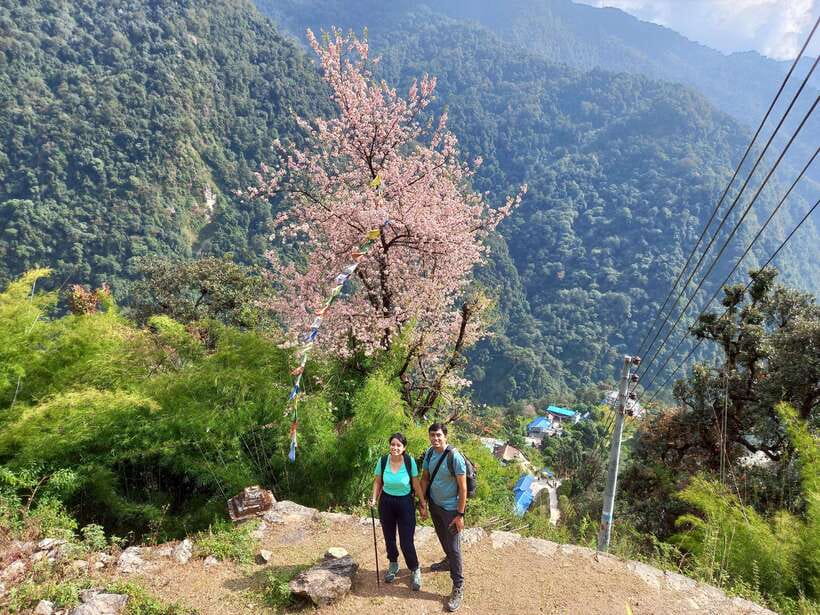
The next morning, you have a chance to watch sunrise from ABC before beginning the descent. This is one of the strongest reasons to spend the night at the base camp instead of treating it only as a daytime target.
Clear weather gives you the best chance of seeing the peaks glow as the light changes. Still, mountain weather is not a promise. During monsoon, mist can hide the mountains for hours, then clear for a few minutes. That kind of brief view can be memorable, but you should book this trek for the whole mountain experience, not a guaranteed postcard scene.
The sunrise start also means a cold morning and an early wake-up. Keep your camera, gloves, and warm jacket close by rather than buried in your bag. You will want to return indoors quickly after the viewing, eat breakfast, and begin the long descent.
Day four: the long descent through Deurali and Dobhan
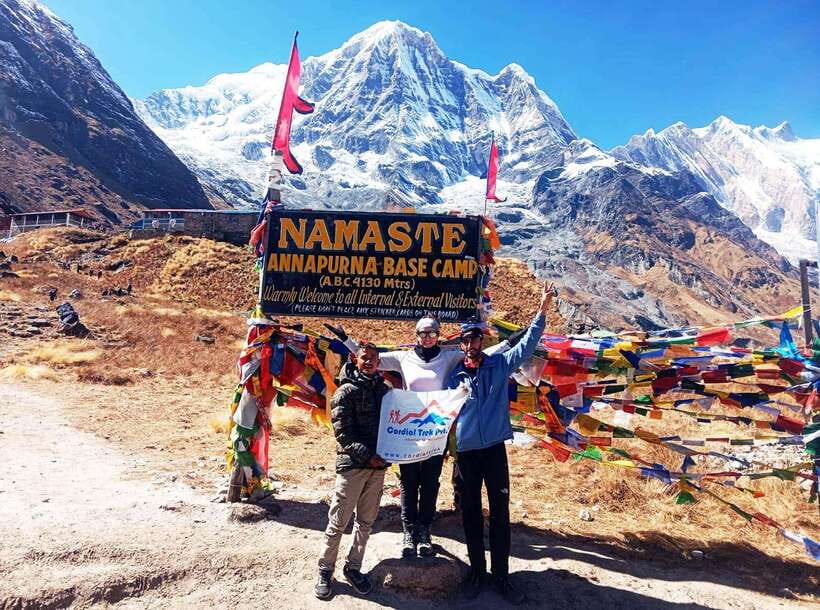
Day four covers 12 to 14 kilometers and takes seven to eight hours. You return through Deurali, Himalaya, and Dobhan before reaching Bamboo or Sinuwa for the night.
This day can be harder than expected. Descending is easier on your lungs than climbing, but it is demanding on knees, ankles, and tired feet. Stone steps become less charming when you have already spent several days walking, so trekking poles are genuinely useful here.
The return route gives you a second look at the forest and waterfalls from a different direction. The vegetation feels fuller as you lose altitude, and the trail becomes warmer. Your guide can help set a steady pace and plan pauses, but you still need to manage your own energy.
The overnight stop is lower, around 2,340 meters. That drop should feel welcome, but do not expect a full rest day. You have another walk and a road journey still to come.
Day five: Jhinu Danda hot springs and the road to Pokhara
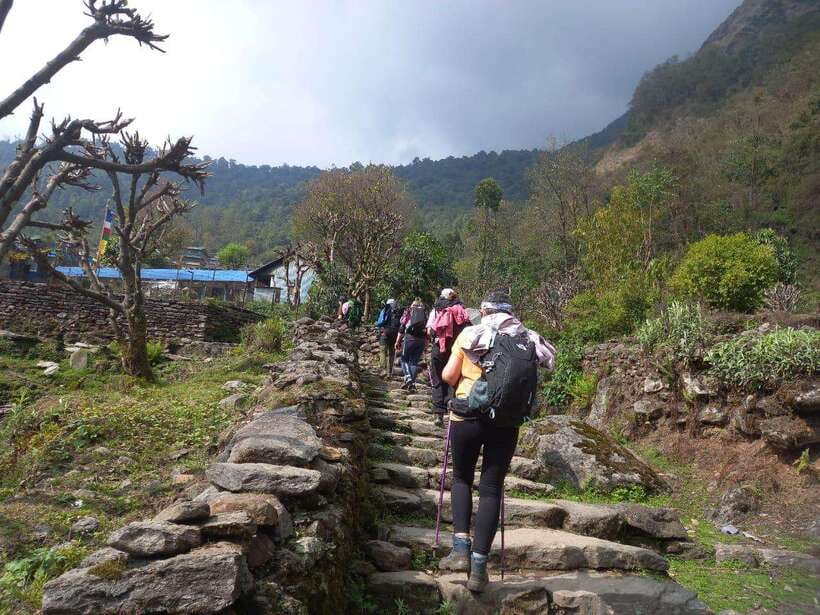
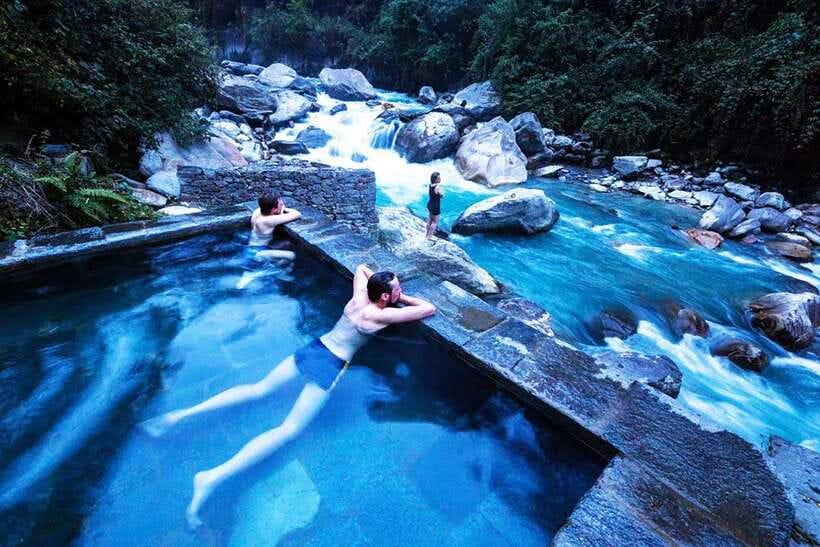
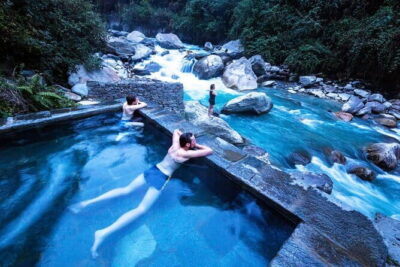
The final trekking day covers seven to eight kilometers and takes about four to five hours. You walk toward Simrung via Jhinu Danda, where natural hot springs offer a chance to soak and relax.
Jhinu is one of the route’s best finishing touches. After several days of cold mornings, steep steps, and tired muscles, warm water feels deserved. The hot springs are not a substitute for recovery, however. You still need to complete the trail to Simrung and board the shared jeep.
The drive back to Pokhara takes two to three hours. The planned drop-off is no later than 17:00 in Pokhara. If you select the return flight option, the company can take you to Pokhara Airport, with arrival in Kathmandu planned no later than 19:30.
Do not book an important international connection too tightly after this return. Road delays, weather, and mountain transport can affect timing. One solo trekker needed urgent airport help, and the guide and porter rearranged the jeep transfer quickly. That kind of flexibility is useful, but it is wiser to leave a buffer than depend on an emergency rescue of your schedule.
Guides, porters, and the human side of the trek
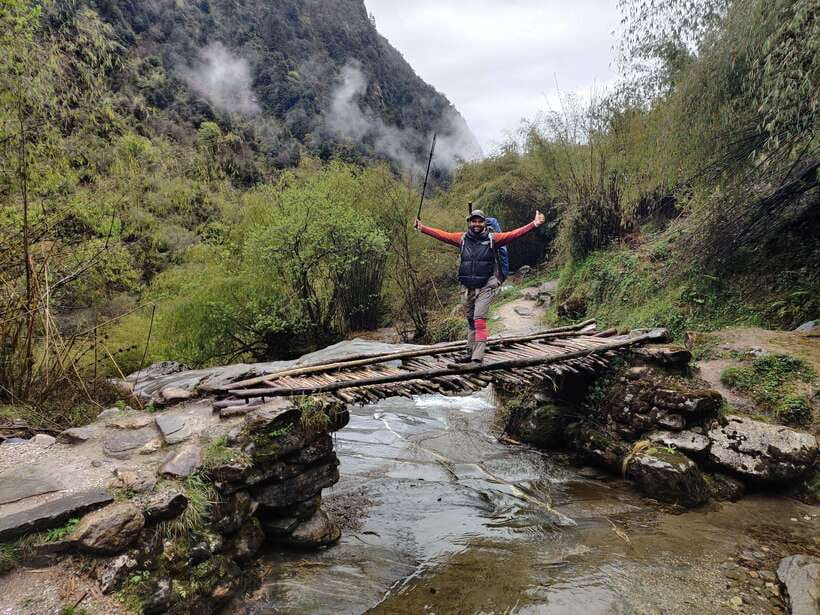
The strongest part of this experience is the guide service. Guides are licensed and speak English or Hindi. Their duties include route finding, trekking permits, lodge arrangements, first aid, and helping you judge the day’s pace.
Specific guides praised for warmth and care include Raju, Pratip, Smile, Anil Sherpa, Oham Raj Tamang, Om, Terence Tamang, and Laxman. You may not be assigned the person you request, but you can ask at the time of booking. Guides have helped with food poisoning, poor weather, missing gear, slow walking speeds, airport changes, and difficult trail conditions.
The social side can also make the long days easier. Guides have shared local plant knowledge, Nepali culture, mountain stories, music, card games, and jokes. One guide even helped a group forage Himalayan fruit along the route. Those details turn a demanding walk into a more personal encounter with Nepal.
Porter service depends on the package. It is included with the all-inclusive option and available as an add-on with budget or one-way flight bookings. A duffel bag can be borrowed when porter service is selected. You can also borrow a down jacket, sleeping bag, and trekking poles at no extra charge.
A tip is not included in the listed price. Budget for one if your guide and porter take good care of you. The guiding work is physical and continuous, and the staff often carry much of the practical burden of the trip.
What the $96 price really covers
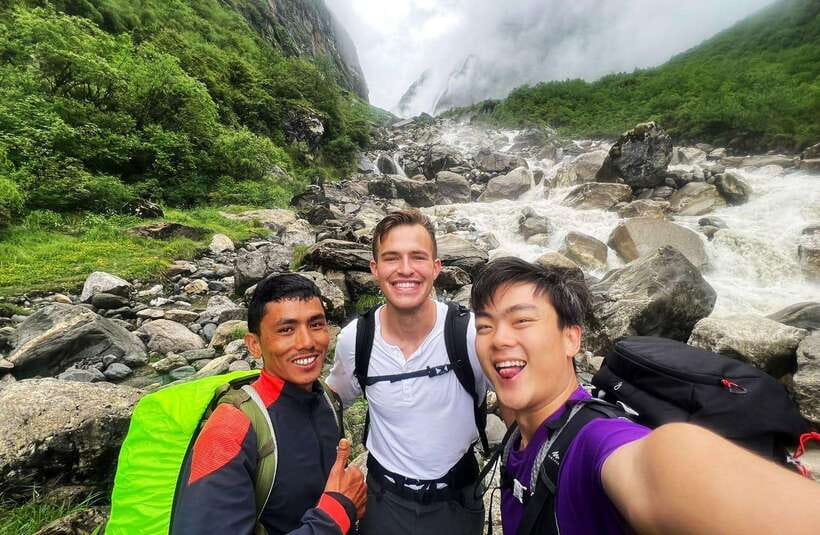
The advertised $96 per person is attractive, but you need to check which version you are booking. Included features vary between budget, one-way flight, and all-inclusive Kathmandu options.
The core package includes hotel pickup and drop-off in Pokhara, the Pokhara to Simrung and return transfer by shared jeep, four nights in mountain guest houses, a licensed guide, permits, first aid, water purification tablets when needed, and use of selected equipment.
Meals are included in the all-inclusive option or when added separately. That package covers four breakfasts, five lunches, and four dinners. Budget and some Kathmandu one-way flight options do not include meals unless you select the add-on.
Porter service, flights, and some return arrangements also depend on your chosen package. Hot and cold drinks, alcohol, snacks, showers, Wi-Fi, battery charging, travel insurance, and personal costs are extra.
For the right booking option, the price offers strong value. You are not simply paying for transport and a route map. You are paying for permits, mountain lodging, a guide, safety support, borrowed equipment, and organized transfers. Compare the final package total rather than judging the base figure alone.
Gear, weather, and comfort
Pack warm clothing even if Pokhara feels hot. The checklist calls for thermal layers, trekking trousers, long or short-sleeve shirts suited to conditions, a down or puffer jacket, beanie, gloves, neck gaiter, warm socks, and waterproof high-ankle boots.
A daypack, water bottle or CamelBak, sunscreen, sunglasses, toiletries, towel, camera, cash, and travel insurance are also useful. Crampons may be needed in snowy conditions. Trekking poles and sleeping bags can be borrowed, which saves space and money.
Spring and autumn, March to May and September to November, usually offer lows from minus 3°C to 3°C and highs from 2°C to 20°C. Summer monsoon, June to August, ranges from about 0°C to 5°C at night and 5°C to 22°C during the day. Winter, December to February, can fall to minus 10°C, with daytime highs listed from minus 5°C to 15°C.
Monsoon is possible, but expect wet feet, slippery paths, clouds, and clothes that may not dry overnight. Winter needs stronger cold-weather preparation. Spring and autumn are the easiest seasons for clear mountain views, but no season removes the physical challenge.
You must provide a passport copy and recent passport-sized photograph at least one day before departure so trekking permits can be arranged. A passport or accepted copy and a passport-sized photo are also listed among the items to bring.
Who should book this trek?
You should consider it if you want a short but serious Himalayan walk, enjoy basic tea-house accommodation, and can handle five to eight hours of walking on several days. It suits solo visitors, couples, and small groups who want a guide to manage the route and practical details.
It is less suitable if you dislike shared transport, simple lodging, paid extras, cold nights, or long descents. It is not suitable for people with mobility impairments, and the stated age limit excludes people over 95.
You do not need years of trekking experience, but you do need a realistic attitude. A first-time hiker completed the route with guide and porter support, while other walkers described the effort as mentally and physically tough. Training with long walks, stairs, and a loaded daypack will help.
Should you book the five-day ABC trek?
Book it if reaching Annapurna Base Camp is your main goal and you want a tightly organized route from Pokhara. The mix of forest, waterfalls, Gurung villages, high mountain views, sunrise at 4,130 meters, and Jhinu hot springs gives you a lot in five days.
I would choose the all-inclusive option if you want fewer daily decisions and would rather have meals and porter service arranged. If keeping the price low matters most, check every exclusion carefully and expect to pay for food, drinks, charging, showers, and possibly transport or porter service.
This is a good-value adventure with strong guide support, but it is not an easy holiday. Go prepared, leave room for transport delays, and accept that the mountain may offer mist instead of clear peaks. If you can handle the effort and basic comforts, the route gives you a genuine taste of the Annapurna Sanctuary without committing to a much longer trek.
FAQ
How high is Annapurna Base Camp?
Annapurna Base Camp is at 4,130 meters. The route reaches this height on day three after passing through Machhapuchhre Base Camp.
How long do I walk each day?
The daily walking times range from four to eight hours. The longest day is day four, when you descend 12 to 14 kilometers from ABC toward Bamboo or Sinuwa.
Is transport from Kathmandu included?
Kathmandu pickup and flights depend on the package you select. A one-way Kathmandu to Pokhara flight or a Kathmandu to Pokhara and return flight can be included in the relevant options. The standard trekking transfer from Pokhara to Simrung and back is by shared jeep.
Are meals included?
Meals are included with the all-inclusive option or when you purchase the meal add-on. That meal plan covers four breakfasts, five lunches, and four dinners. Meals are not included in some budget or Kathmandu one-way flight options.
Can I borrow trekking equipment?
You can borrow a down jacket, sleeping bag, and trekking poles at no additional cost. Crampons may be needed in snowy conditions, and the listing recommends waterproof high-ankle trekking boots.
Is a porter included?
A porter is included with the all-inclusive option. For budget and Kathmandu one-way flight options, porter service is available as an add-on. A duffel bag can be borrowed when porter service is selected.
What happens if I need to cancel?
You can cancel up to 24 hours before departure for a full refund. The activity also offers reserve now and pay later booking.
Just added around Annapurna Region
- 4 Day Mardi Himal Base Camp Trek from Pokhara★ 5.0 · 18 reviews
- 7-Day Trek to Annapurna Base Camp from Pokhara★ 5.0 · 12 reviews
- Private 4 Day Poon Hill Trek from Pokhara★ 5.0 · 16 reviews
- Annapurna Base Camp Trek from Pokhara and Kathmandu★ 5.0 · 7 reviews
- 6 days Annapurna Basecamp Trek★ 5.0 · 16 reviews
- “Exclusive Round-Trip Transfer: Pokhara to Jomsom & Muktinath”★ 5.0 · 11 reviews
- Pokhara: Poon Hill Ghorepani Short Trek★ 5.0 · 6 reviews
- Pokhara: 4 Days Poon Hill and Ghandruk Trek★ 5.0 · 23 reviews
Annapurna Base Camp Treks, compared.
Kathmandu to Annapurna Base Camp (ABC) 5-Day Trek
Read our review →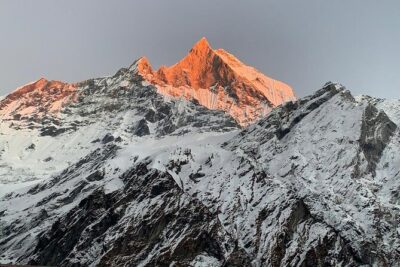
11-Day Hike Tour to Annapurna Base Camp Bliss in Kathmandu
Read our review →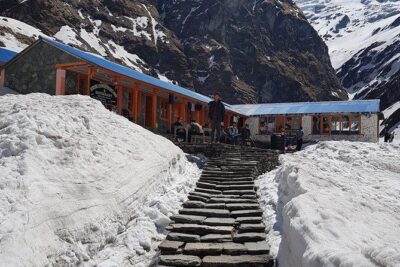
Browse the lists this tour appears in