
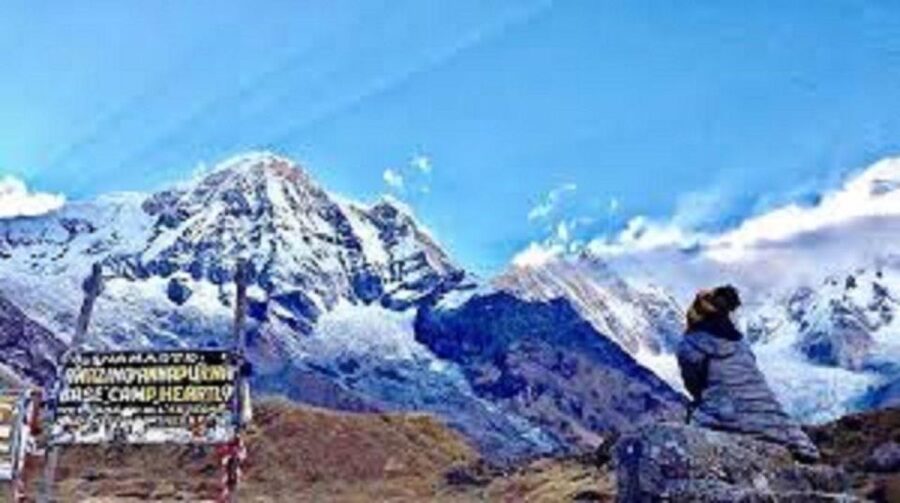
Reviewed · HIKING & TREKKING
From Pokhara: 5-Day Annapurna Basecamp Trek with Hot Springs
Annapurna Base Camp is the prize here, but the hot springs at Jhinu Danda are the clever finish. After several hard days on foot, you descend to warm water before the drive back to Pokhara. That simple pairing of high mountain effort and lowland relief gives this five-day trip a satisfying shape.
I like the direct route from Pokhara, the chance to walk through rhododendron, oak, and bamboo forest, and the steady contact with Gurung, Magar, and Tibetan communities. I also like that the trip is private, so your guide can adjust the pace. The catch is the schedule: reaching 4,130 meters in only three days makes this a demanding trek, not a gentle introduction to the Himalayas.
Key points before you book
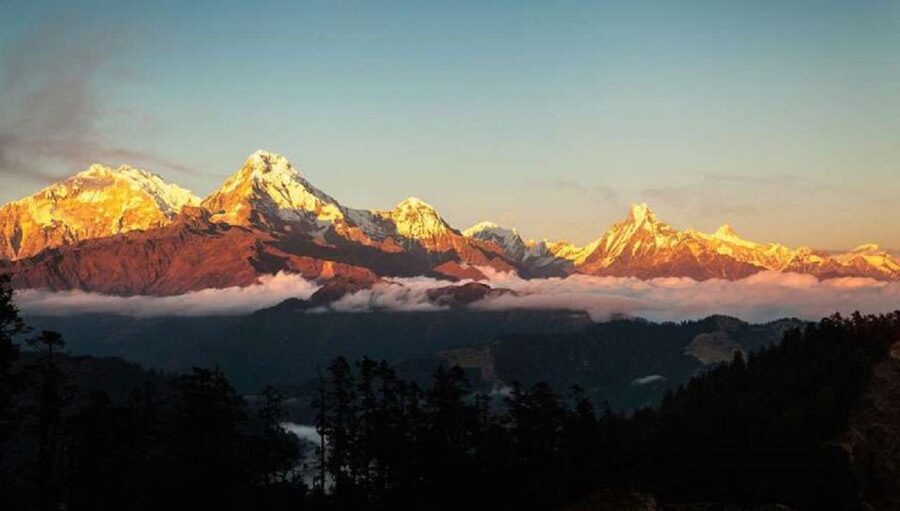
- Annapurna Base Camp at 4,130 meters: The high point is a demanding walk to the amphitheater of peaks around Annapurna, with Machhapuchhre, Annapurna South, Annapurna I, and Hiunchuli in view.
- A five-day out-and-back route: You reach the base camp on day three, then retrace the trail through Bamboo and Jhinu Danda rather than taking a longer circuit.
- Hot springs at the finish: Jhinu Danda gives you a chance to soak after the trek, with the entry fee included.
- Private guiding: You can trek with an English, Hindi, or Nepali-speaking guide, including guides such as Anil, Santosh, Uttam, Bishnu, and Sun Bahadur.
- Basic mountain lodging: Tea houses and lodges provide a bed and meals depending on your selected option, but this is practical mountain accommodation, not a resort stay.
- Good value at $155: Permits, transport, guide costs, accommodation, a first-aid kit, luggage storage, and hot-spring entry are included, though insurance and a porter cost extra.
Why this five-day Annapurna trek works
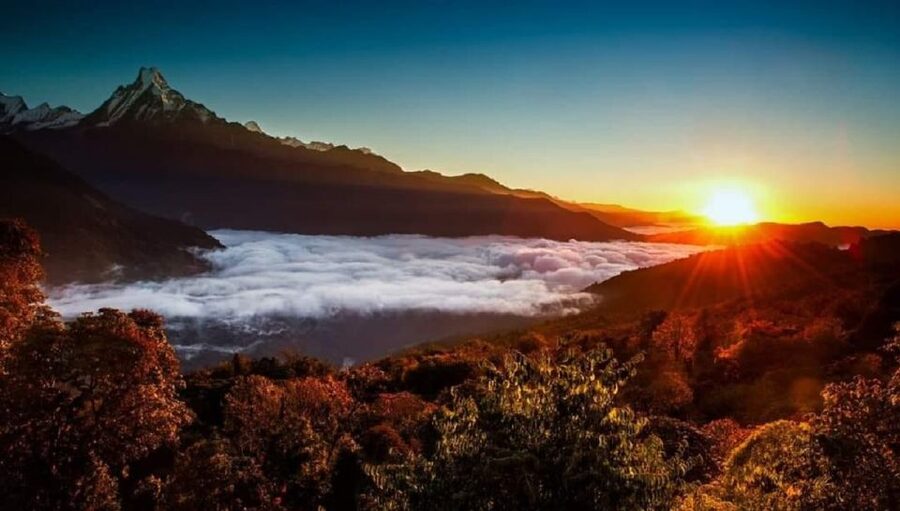
The Annapurna Base Camp route gives you a lot of Nepal in a short period. You begin with a road journey from Pokhara, then walk through forest and terraced hills, pass small mountain settlements, and finish among snow-covered peaks. The scenery changes quickly, which keeps the route interesting even when your legs are tired.
The route is especially good for anyone staying in Pokhara who wants a serious Himalayan experience without committing to a week or more on the trail. You get the big reward, Annapurna Base Camp, but you pay for the shorter schedule with long walking days and limited time to adjust to altitude.
This is a private group experience, not a large organized march. That matters on steep sections. Your guide can slow down, add rests, and keep an eye on how you are handling the climb. Guides named by past customers include Anil, Santosh, Uttam, Bishnu, Candra, Sanik, Santos, Milo, and Sun Bahadur. The repeated praise centers on patience, encouragement, safety, and practical care.
Still, a helpful guide cannot remove the physical demands. You should arrive in good health with a reasonable level of fitness. The trail includes steep ascents, steep descents, and long days of five to seven hours. At Base Camp, cold and altitude add another layer of difficulty.
More Spa & Hot Spring Days in the Annapurna Region
- Pokhara: 7-Day Annapurna Base Camp Trek & Natural Hot Spring
★ 5.0 · 11 reviews - Pokhara: 7-Day Annapurna Base Camp Via PoonHill & Hot Spring
★ 5.0 · 6 reviews - Pkr/Kathmandu: 5-Day Annapurna Base Camp & Hot spring Trek
★ 5.0 · 6 reviews
From Pokhara to Jhinu Danda and Sinuwa
Your trip begins with pickup from Pokhara, Pokhara Lakeside, Sarangkot, selected resorts, or Pokhara International Airport. The road transfer is split between a jeep or SUV and a bus or coach, with about three hours listed for each portion. The exact road sequence can vary, so confirm the pickup time and vehicle plan after booking.
The first important stop is Jhinu Danda, at about 1,780 meters. It is known for its hot springs, but on this route it also marks the start or end of the walking section depending on the day’s road arrangements. You will have a short stop here, then continue toward Sinuwa.
The walk to Sinuwa takes about five hours in the supplied schedule. It is not merely a warm-up. The trail includes uphill and downhill sections, and the early part of the trek can feel harder than expected because you are carrying day gear and adjusting to the rhythm of mountain walking.
Sinuwa sits at about 2,340 meters and is your first overnight point on the detailed route. The village setting gives you your first real sense of tea-house trekking. Expect basic accommodation and simple meals, with the focus on rest rather than comfort.
This is a good place to settle into a routine: drink plenty of water, keep your warm layer handy, and organize your bag before breakfast. You will be glad not to search for socks or rain gear after dark.
Forest trails from Sinuwa to Deurali
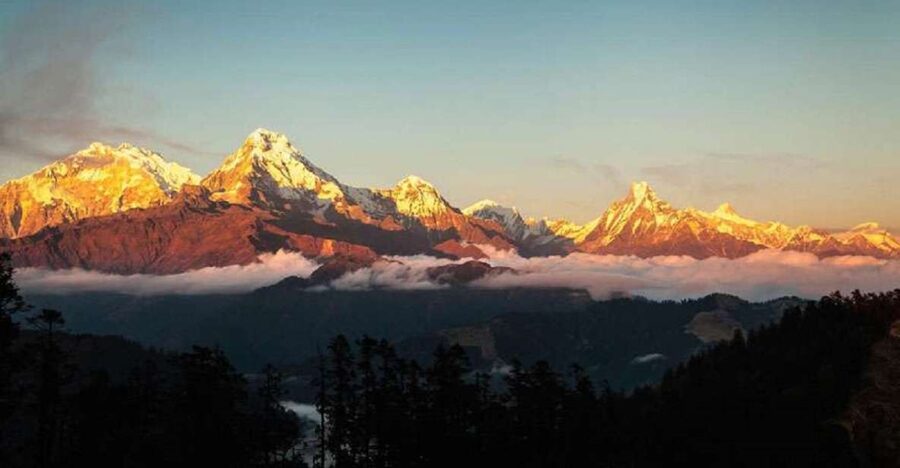
Day two takes you from Sinuwa toward Deurali, listed at about 2,900 meters. The walking time is around six hours. This section passes through dense stands of rhododendron, oak, and bamboo, so the scenery is less about wide mountain views and more about changing forest, stone paths, and steep trail work.
The route gains height through a series of climbs and descents. That up-and-down pattern can be more tiring than a steady slope. You may feel that you are losing progress on a descent, but the trail is following the contours of the valley rather than moving in a straight line.
Deurali is an important overnight stop because it places you near the final climb to Base Camp. The settlement is practical and mountain-focused. You will have a chance to eat, rest, and prepare for the coldest and highest portion of the route.
The forest also gives you a closer look at local life. The route passes traditional villages and terraced fields, and your guide can explain details about Gurung, Magar, and Tibetan communities. This cultural context adds value to the walk. You are not simply moving between photo stops; you are crossing a lived-in mountain region.
Keep your expectations realistic about the tea houses. Accommodation is described as basic, and higher sections can be cold. Bring a sleeping layer suitable for low temperatures, along with a hat, gloves, rain gear, and clothing that can be adjusted as conditions change.
The climb to Annapurna Base Camp at 4,130 meters
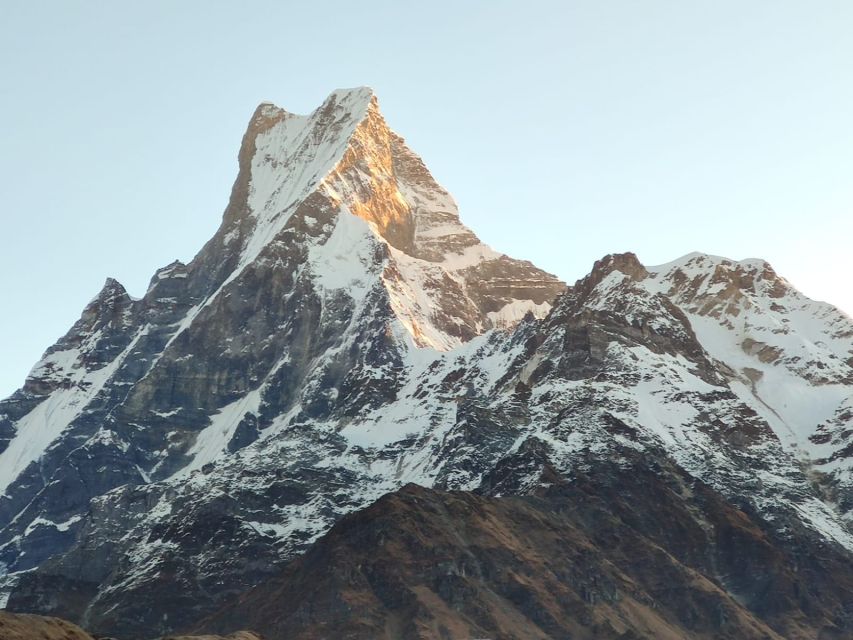
The third day is the main event. From Deurali, you walk to Annapurna Base Camp, passing Machhapuchhre Base Camp on the way. The scheduled walking time is about four hours, though the conditions and your pace will determine how long the day feels.
Machhapuchhre, also called Fishtail, is one of the route’s defining peaks. Its distinctive shape makes it easy to recognize, and the mountain is closely tied to the identity of the Annapurna region. From this upper section, the trail opens into a much broader mountain setting.
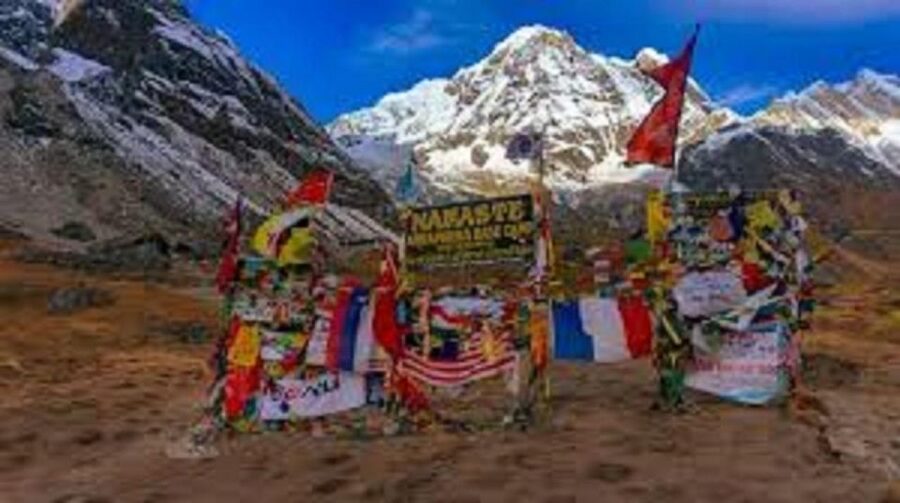
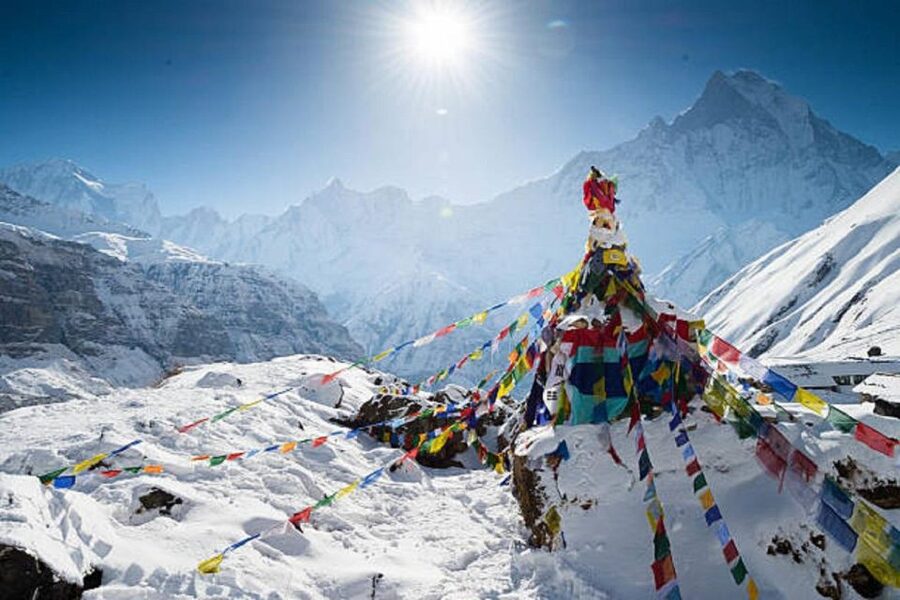
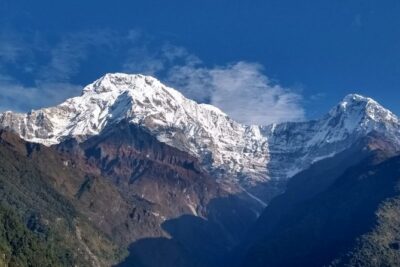
At Annapurna Base Camp, you reach 4,130 meters, or about 13,550 feet. The reward is a close view of the Annapurna massif, including Annapurna South, Annapurna I, Hiunchuli, and Machhapuchhre. The mountains rise around the basin, creating the kind of setting that makes the hard walking feel worthwhile.
This is also the point where altitude deserves your full attention. A short schedule means you have less time for gradual adjustment. Tell your guide promptly if you develop a headache, unusual tiredness, nausea, or other symptoms that concern you. The guide is there to monitor your well-being, not just to lead the way.
You will have time for photographs and sightseeing, but do not treat the summit stop as a race. The cold can be serious at this height, and the weather can alter the plan. One party had to change its schedule because of weather, with the company and guide adjusting the arrangements. That flexibility matters in the mountains.
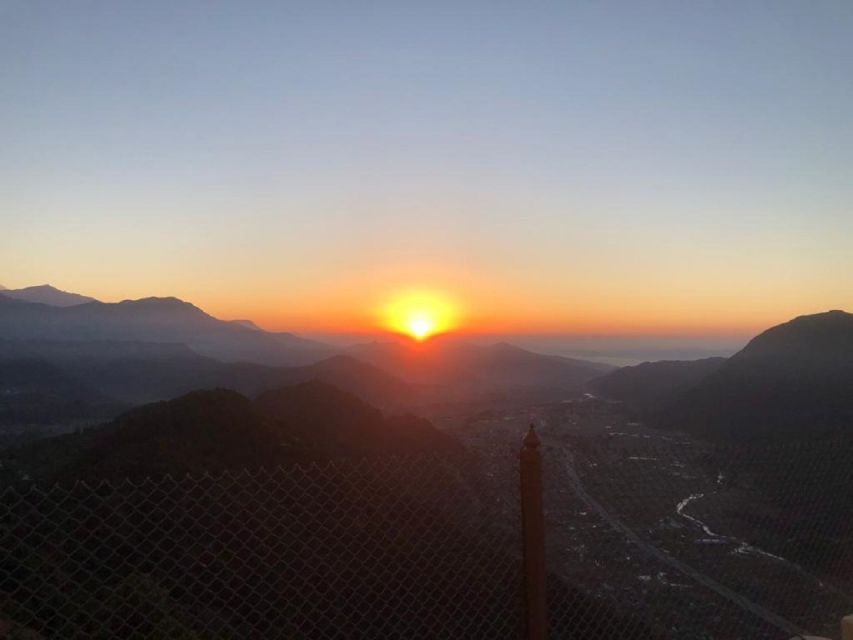
The overnight stay at Base Camp gives you an early chance to see the surrounding peaks in changing light. Sunrise and sunset are both listed as possible parts of the stay, but mountain weather controls the view. Even if clouds move in, reaching this point remains the central achievement of the trip.
A completely different kind of day, same corner of Nepal:
- Annapurna Circuit Trek with Tilicho Lake
★ 5.0 · 368 reviews - Annapurna base camp trek 5 Days
★ 5.0 · 252 reviews - Poon hill Trek 3 days
★ 5.0 · 176 reviews - Trekking in Annapurna/Langtang/Everest/Upper Mustang regions
★ 5.0 · 161 reviews
The long descent through Bamboo
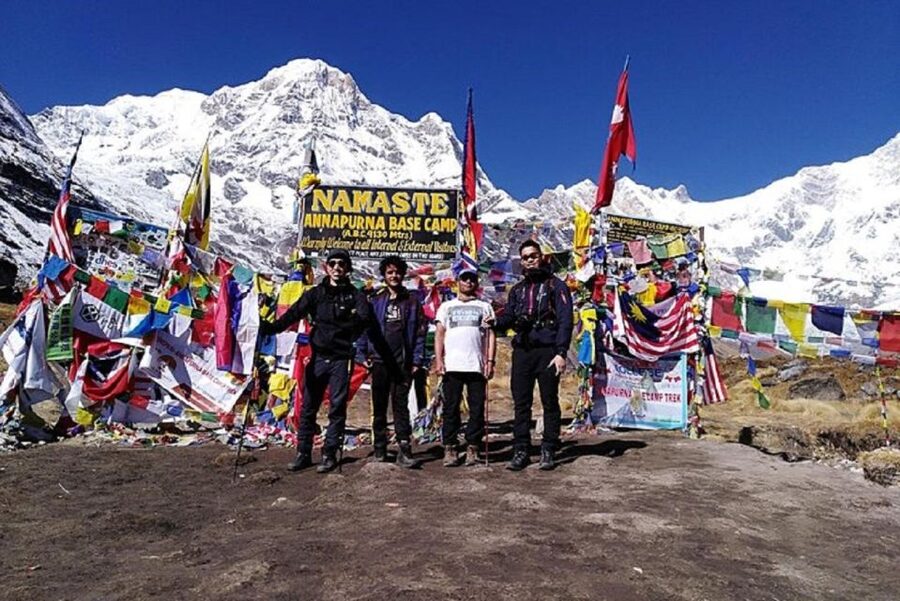
Day four reverses the route, taking you from Base Camp to Bamboo at about 2,340 meters. The walk is listed at six hours and is mostly downhill, but do not mistake downhill for easy.
Steep descents can be hard on knees and ankles, especially after the high-altitude day. Trekking poles are included if required, and you should use them if you are more comfortable with extra balance. Keep your pace controlled rather than rushing toward the lower elevation.
The scenery changes again as you lose height. The open mountain setting gives way to forest, and the air should feel less severe as you descend. Bamboo is a useful overnight stop because it breaks up the return journey and gives your body time to recover before the final walk to Jhinu Danda.
This is where the private format can be particularly useful. A guide who checks your pace and encourages you to rest can help prevent small problems from becoming bigger ones. Direct guidance and good spirits were a major part of the experience for people who walked with Anil, Santosh, Uttam, and Sun Bahadur.
The basic lodging may feel more welcome than luxurious by this stage. You are paying for a bed, food, and a practical place to recover, not for a polished hotel. Bring cash for personal snacks and drinks, since those are not included.
Jhinu Danda hot springs and the return to Pokhara
The final walking day takes you from Bamboo to Jhinu Danda, with about seven hours on the detailed schedule. This is another long day, although you are now descending toward a lower elevation and the hardest altitude work is behind you.
Jhinu Danda is the emotional payoff after Base Camp. The hot-spring entry fee is included, and soaking in natural warm water gives tired legs a welcome break. It is a simple pleasure, but it changes the mood of the final day from endurance to recovery.
After the hot-spring stop, you return to Pokhara by road. The drive is listed at about three hours by jeep or SUV and another three hours by bus or coach in the transport details. Since road conditions and vehicle arrangements can affect timing, keep your evening plans flexible.
Drop-off is available at Pokhara, Pokhara Lakeside, Sarangkot, the airport, and several named hotels and resorts. Luggage storage in Pokhara is included, which is useful if you are staying in the city before and after the trek and do not want to carry your full suitcase into the mountains.
What the $155 price really covers
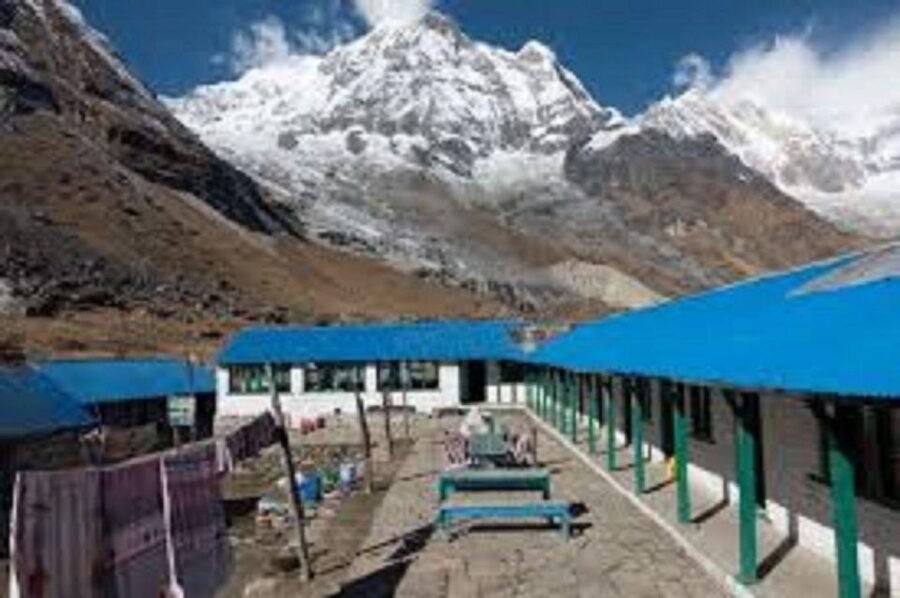
At $155 per person, this trek offers strong value if your selected meal option and transport arrangements match your needs. The price includes the Annapurna Conservation Area permit, round-trip transport connected with the trek, basic tea-house or lodge accommodation, a government-registered English-speaking guide, a first-aid kit, luggage storage, and hot-spring entry.
The guide package also covers the guide’s food, accommodation, insurance, salary, transport, and equipment. That is important because guide costs can otherwise appear low at the booking stage and grow through daily additions.
The price does not include travel insurance, personal snacks and drinks, emergency rescue costs, or a porter. A porter is listed at $20 per day if you want help with a heavier bag. For a short, high-altitude trek, I would consider the porter option if you are not accustomed to carrying luggage for six or seven hours.
Meals are included depending on the option selected, so check the exact booking choice rather than assuming every meal is covered. You should also carry cash for items outside the package.
Free cancellation up to 24 hours before departure and reserve-now, pay-later terms add flexibility. They do not remove the need to send a passport copy at least one day before the trek, since the permit must be arranged with the Government of Nepal.
Guides, pacing, and the human side of the trek
The operator’s strongest asset is the guide service. Anil is repeatedly described as patient, funny, supportive, and good at explaining local culture. Uttam is noted for careful attention to food, accommodation, safety, and general comfort. Santosh is praised for checking when it was time to rest and for helping with guesthouse arrangements.
Bishnu is another name worth noting if you have a choice of guide. He is described as friendly, understanding, and encouraging, with a calm manner that helped make a difficult route feel manageable. Sun Bahadur is also praised for positive energy and for helping explain Nepali food and culture.
You cannot assume a particular guide will be available, so request a preferred name but confirm the assignment. The important point is the guiding approach: this trip works best when you communicate openly about your pace, sleep, appetite, and symptoms.
The language options are English, Hindi, and Nepali. The private group format gives you more control than a large group, though the basic route and five-day timing still set limits.
Who should book this trek
I would recommend it to you if you have limited time in Nepal, want a clear high point at Annapurna Base Camp, and are comfortable with long walking days. It also suits first-time high-altitude trekkers who are fit, prepared, and willing to listen to their guide.
You should think twice if you want a relaxed schedule, hotel comfort, or several spare days for altitude adjustment. The route is called moderately challenging, but the combination of long days, steep sections, cold, and 4,130-meter altitude can feel tough.
Pack hiking shoes, comfortable clothing, hiking pants, rain gear, warm layers, a hat, cash, a camera, and a passport or accepted copy. Travel insurance is mandatory, and emergency rescue is available if needed, but rescue costs are not included.
Should you book the five-day Annapurna Base Camp trek?
Book it if the appeal of reaching Annapurna Base Camp quickly outweighs the comfort of a slower schedule. You receive a permit, transport, guide, accommodation, luggage storage, first-aid support, and a hot-spring finish for $155, which is a solid package for a private trek.
I would choose this trip with a few conditions: confirm the meal plan, ask about the exact transport arrangement, request a guide such as Anil or Santosh if possible, and make sure your insurance covers trekking and rescue. If you are fit and accept basic lodging, the route gives you mountain scale, village life, forest walking, and a memorable soak at the end without taking a full week from your Nepal plans.
FAQ
How long is the Annapurna Base Camp trek?
The experience lasts five days, including transport from Pokhara, walking to Annapurna Base Camp, the return trek, and the drive back to Pokhara.
How high is Annapurna Base Camp?
Annapurna Base Camp is at 4,130 meters, or approximately 13,550 feet.
What kind of accommodation is provided?
Accommodation is in basic tea houses or lodges during the trek.
Is transportation from Pokhara included?
Yes. Pickup and return transportation are included for Pokhara hotels, Pokhara Lakeside, Sarangkot, Pokhara International Airport, and several named resorts.
Are meals included?
Meals are included depending on the option selected when booking.
Is a guide included?
Yes. An English-speaking government-registered trekking guide is included. Hindi and Nepali language support is also available.
Is a porter included?
No. A porter is optional and is listed at $20 per day.
Is travel insurance included?
No. Travel insurance is mandatory, and emergency rescue services are available if needed but are not included in the price.
What should I bring?
Bring comfortable and hiking shoes, hiking pants, rain gear, warm clothing, a hat, a camera, cash, a passport or accepted copy, a change of clothes, and other suitable trekking gear.
More 5-Day Experiences in Annapurna Region
- Kathmandu to Annapurna Base Camp (ABC) 5-Day Trek
★ 5.0 · 102 reviews - Kathmandu/Pokhara: 5-Day Annapurna Base Camp (ABC) Trek
★ 4.9 · 72 reviews - 5 Day Private Guided Trekking in Annapurna Base Camp
★ 5.0 · 25 reviews - Ghorepani Poonhill Trek 5 Days from Pokhara
★ 5.0 · 14 reviews
Just added around Annapurna Region
- 4 Day Mardi Himal Base Camp Trek from Pokhara★ 5.0 · 18 reviews
- 7-Day Trek to Annapurna Base Camp from Pokhara★ 5.0 · 12 reviews
- Private 4 Day Poon Hill Trek from Pokhara★ 5.0 · 16 reviews
- Annapurna Base Camp Trek from Pokhara and Kathmandu★ 5.0 · 7 reviews
- 6 days Annapurna Basecamp Trek★ 5.0 · 16 reviews
- “Exclusive Round-Trip Transfer: Pokhara to Jomsom & Muktinath”★ 5.0 · 11 reviews
- Poon Hill Ghandruk Circuit Trek from Pokhara 4 Days★ 5.0 · 10 reviews
- Pokhara: Poon Hill Ghorepani Short Trek★ 5.0 · 6 reviews
Hiking & Trekking, compared.
Nagarkot Sunrise View and Day Hiking from Kathmandu
Read our review →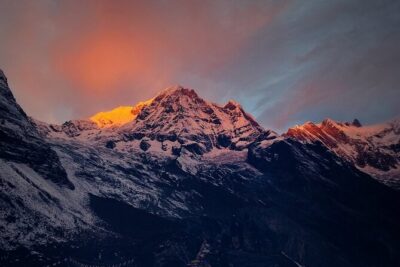
Browse the lists this tour appears in