
Reviewed · UNESCO WORLD HERITAGE TOURS
UNESCO Five World Heritage Tour in Kathmandu
Kathmandu’s major sacred and royal sites are spread across a busy valley, and this private tour connects five UNESCO-listed highlights in one long day. You’ll climb to Swayambhunath, walk through two old royal squares, visit the Hindu center of Pashupatinath, and finish at Boudhanath’s great Buddhist stupa.
I like the private car and hotel transfers, which remove the need to bargain with taxis or figure out several cross-town rides. I also like the access to guides such as Shanti, Sarita, Tej, and Rabina, who explain how Hindu and Buddhist beliefs share space in Nepal.
The tradeoff is pace. With so many temples, courtyards, shrines, and museums packed into 7 to 8 hours, you’ll see a lot but may want longer at Patan or Kathmandu Durbar Square. Food is not included, and traffic can stretch an already full day.
Key points to know before booking
- Five major UNESCO sites in one day: Swayambhunath, Kathmandu Durbar Square, Patan Durbar Square, Pashupatinath, and Boudhanath.
- Private transport matters: A car and driver make it practical to cross the Kathmandu Valley without arranging separate taxis.
- Strong guide element: Shanti, Sarita, Tej, and Rabina are named guides praised for clear explanations and flexible service.
- Entry fees are included: You do not need to pay separately at each heritage stop.
- Expect a fast cultural survey: The schedule gives you broad coverage, with short visits to many smaller temples and monuments.
- Pickup has a boundary: Hotel transfers are included within the Ring Road area, including the Boudha area.
What this Kathmandu heritage day really covers
This is not a gentle stroll through one historic quarter. It is a full valley circuit, moving between hilltop Buddhism, royal Newari architecture, Hindu worship, and the Tibetan Buddhist world around Boudhanath.
The day begins at 9:00 a.m. and lasts about 7 to 8 hours, though the timetable can stretch. The tour is private, so only your group takes part. That makes a real difference when you need a pause, want a question answered, or decide to spend less time at one stop and more at another.
The price is $130 per person. That includes a private car, a professional guide, hotel pickup and drop-off inside the Ring Road, and entrance fees to the heritage sites. I consider that a fair convenience price for a solo visitor or small group, especially if you would otherwise pay for several taxis and separate admissions. For a larger party, group discounts may improve the value further.
The schedule is packed. You will not get a slow, scholarly study of every temple. Instead, you get a useful first look at Kathmandu’s main cultural sights, with the option to return later to the places that catch you.
More UNESCO Heritage Tours in Kathmandu:
- Private Kathmandu Sightseeing Tour | UNESCO World Heritage sites
★ 5.0 · 756 reviews - Kathmandu: Full Day 7 UNESCO Tour with Lunch – Private/Group
★ 5.0 · 415 reviews - Kathmandu: Full Day Top 4 UNESCO Tour with Lunch – Private/Group
★ 5.0 · 269 reviews
Swayambhunath, the hilltop beginning
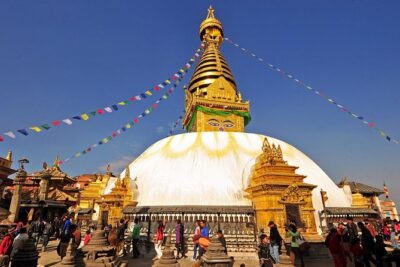
Swayambhunath is one of the best first stops because it gives you an immediate sense of Nepal’s mixed religious culture. The stupa is important to both Buddhist and Hindu communities, and the hilltop setting makes the visit feel distinct from the city streets below.
Allow about an hour here. You can expect time to look at the stupa, religious structures, and surrounding details while your guide explains the beliefs connected with the site. The visit is not only about taking in a famous monument. It shows how sacred places in Kathmandu often serve more than one tradition.
Near the hill is Amideva Buddha Park, a small stop lasting about 15 minutes. The park has three large statues of Shakyamuni Buddha and offers a quieter pause beside the main temple area. It is brief, but it adds another visual layer to the morning.
Swayambhunath can be a demanding start if walking or steps are difficult. The tour description says most people can participate, but it does not promise step-free access. Ask about the route when booking if mobility is a concern.
Kathmandu Durbar Square and the old royal center
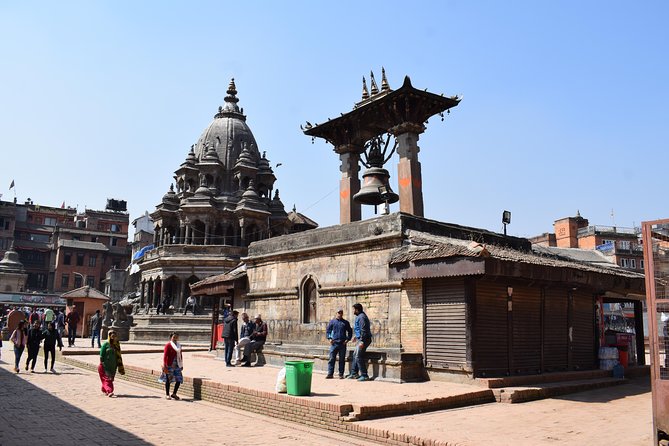
Kathmandu Durbar Square takes you into the old royal heart of the city. Plan on about an hour in the square, followed by several short visits to specific monuments.
The area includes historic temples, courtyards, and buildings that show the skill of Newari woodcarvers and builders. Some structures are still being rebuilt, so you should expect a working heritage site rather than a perfectly restored museum district.
The itinerary breaks this area into several small stops:
- Basantapur Tower, about 30 minutes
- Degu Taleju Temple, about 10 minutes
- Kumari Chowk, about 10 minutes
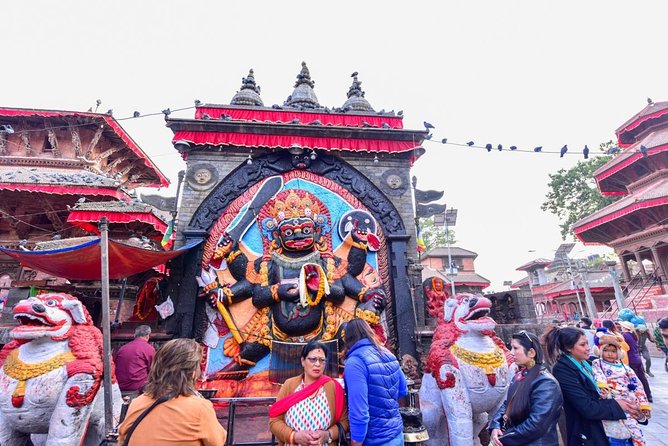
- Kaal Bhairab, about 5 minutes
Basantapur Tower is one of the square’s most attractive points and gives you time to focus on the royal architecture. Degu Taleju Temple dates to 1564, adding a clear historical anchor to the visit.
Kumari Chowk is especially distinctive. This red-brick, three-level courtyard was once home to the Kumari, a girl chosen as Kathmandu’s living goddess until puberty. Seeing the courtyard helps explain how royal power, religion, and local tradition have long been tied together.
Kaal Bhairab is a short stop at a large statue of Bhairav, a fierce form associated with Shiva. Five minutes may sound brief, but a good guide can use the moment to explain why this image matters instead of leaving you to guess.
One useful warning: Kathmandu Durbar Square can deliver a lot of information in a small area. I recommend keeping your attention on the guide’s main points rather than trying to memorize every temple name. You can always return on your own if the square grabs you.
Patan, where the architecture becomes the main event
Patan, also known as Lalitpur, is one of the strongest parts of the day. The old royal center is known for Newari architecture, carved details, temples, and courtyards. You have about an hour at the Patan Royal Palace area and another 45 minutes at Patan Durbar Square.
The palace zone includes Krishna Temple, Tulaja Devi Temple, Patan Museum, and the Golden Temple area. This is where a guide’s explanation earns its keep. Without context, the carved windows, bronze figures, and layered pagoda roofs can blur together. With help, you begin to see differences in purpose, style, and religious use.
Patan Durbar Square is an old royal courtyard filled with temples and artistic work by the Newar community. The short 45-minute visit is enough for a strong introduction, but not enough for a leisurely look at every façade. If architecture is your main reason for coming to Kathmandu, you may wish to return here later.
Several smaller stops follow:
- Taleju Mandir Temple, about 15 minutes
- Patan Museum, about 15 minutes
- Golden Temple, about 10 minutes
- Vishwanath Mandir Temple, about 5 minutes
- Bhimsen Temple, about 15 minutes
Taleju Mandir was rebuilt by Srinivasa Malla after a fire in 1676. Patan Museum offers an indoor break and contains old statues, carved windows, and wooden pillars. The museum visit is short, but it helps you look at the outdoor architecture with more care.
The Golden Temple, or Hiranya Varna Mahavihar, dates to the 12th century. It is a pagoda-style temple with bronze statues and silver and gold decoration. Vishwanath Mandir is dedicated to Shiva and was built during the reign of Siddhi Narsingh Malla.
Bhimsen Temple, built in 1680 by Srinivasa Malla, is linked to the Newar community’s worship of Bhimsen as a god of business and trade. These short stops make Patan feel like more than a palace square. You get a glance at the religious and commercial life that shaped the old city.
More heritage days around Kathmandu:
- UNESCO Seven World Heritage Tour in Kathmandu
★ 5.0 · 253 reviews - Kathmandu Private Sightseeing Tour | UNESCO World Heritage Sites
★ 5.0 · 109 reviews - Kathmandu: Full Day Private Top 4 UNESCO Heritage Tour W/Lunch.
★ 5.0 · 86 reviews - Kathmandu World Heritage Tour
★ 5.0 · 74 reviews
Pashupatinath, Kathmandu’s most important Hindu complex
Pashupatinath receives about an hour and brings a major change in tone. This Hindu temple complex contains more than 500 shrines and temples and is dedicated chiefly to Shiva.
You should expect a sacred religious setting rather than a standard sightseeing attraction. The guide can explain the meaning of the pagoda structures and the role of the complex for Shiva devotees. The visit gives you a clearer picture of Hindu practice in Nepal after the earlier Buddhist and royal sites.
The tour information does not say that every part of the complex is accessible to every visitor, so follow local instructions and your guide’s advice. This is a place where respectful behavior matters. Dress and act with care, and remember that active religious sites are not simply backdrops for photographs.
The one-hour allocation is useful, but Pashupatinath is large. Your experience will depend on traffic, the day’s schedule, and how much time is needed to move through the complex. The private format helps because your guide can explain what you are seeing instead of leaving you to find the main areas alone.
Boudhanath, a strong finish to the day
Boudhanath closes the itinerary with another hour. This large Buddhist stupa is about 36 meters high and is surrounded by prayer wheels and images connected with Buddhist worship.
The scale is the point. After the detailed courtyards of Patan and the many shrines at Pashupatinath, Boudhanath gives you a broad, open sacred center. Your guide can help you understand the stupa’s design and the place of Buddhism in Nepal.
The Boudha area is also included in the hotel pickup and drop-off zone, which is useful if you are staying nearby. The itinerary does not include food or drinks, so plan ahead for meals. Since this is the last major stop, ask your guide how much time remains if you want to sit quietly, walk around the stupa, or browse nearby shops.
Ending here works well. The final stop is visually strong and less fragmented than the short temple visits earlier in the day. You can finish with a clearer sense of the Buddhist side of Kathmandu’s religious life.
The guides are a major part of the value
The strongest praise attached to this experience centers on the guides rather than the vehicle or the sightseeing checklist. Shanti is repeatedly singled out for being professional, attentive, flexible, and clear. One visitor was especially pleased that she allowed time for shopping and did not make the day feel rushed, even when it ran later than expected.
Sarita is described as a scholar of Nepali history who could answer detailed questions while keeping the mood friendly. Tej is praised for showing how learning from a guide differs from simply reading about religion and culture. Rabina is associated with a well-organized day covering Patan and Bhaktapur, though this specific itinerary lists Patan rather than Bhaktapur.
That range matters. This is not just a driver dropping you at famous sites. The guide is expected to connect the monuments to Nepal’s religious traditions, royal families, architecture, and local customs. Ask questions as you go. The day includes too many names and dates to absorb passively.
The guide can also help with the practical side of the day: where to focus, how long to stay, and how to behave at religious sites. If you are interested in culture rather than quick photographs, this is where the experience earns its price.
Timing, transport, and the real pace of the day
The private car is one of the tour’s most useful features. Kathmandu’s five headline sites do not form one compact walking route. A car saves energy and eliminates the need to negotiate with taxi drivers between Swayambhunath, the two Durbar Squares, Pashupatinath, and Boudhanath.
The tour begins at 9:00 a.m. and runs for roughly 7 to 8 hours. Traffic may affect the rhythm, and the schedule already includes many stops. I would not book this if you want a slow day with long café breaks and extended museum visits.
You should wear comfortable shoes and carry water, though food and drinks are not included. Keep some flexibility in your expectations. The listed stop times range from five minutes at Kaal Bhairab and Vishwanath Mandir to one hour at the major complexes.
The private format is a good match for solo visitors, couples, families, or small groups who want a personal explanation without being tied to strangers. Group discounts may help larger parties. Hotel pickup is included within the Ring Road area, including Boudha, but confirm the exact pickup location before booking if you are staying farther out.
Who should book this tour
I would choose this experience if you have one full day in Kathmandu and want a broad introduction to the valley’s sacred and royal sites. It is especially useful for first-time visitors, solo visitors who do not want to arrange several taxi rides, and anyone who wants cultural context at each stop.
It also suits people who care about architecture. Patan, Kathmandu Durbar Square, the Golden Temple, Basantapur Tower, and the smaller shrines offer plenty to study.
I would think twice if you dislike full schedules or prefer to explore one neighborhood slowly. You may also want a separate day for Bhaktapur or a longer return visit to Patan, since this itinerary focuses on coverage rather than lingering.
The cancellation terms are simple: cancel at least 24 hours before the start time for a full refund. Changes or cancellations within 24 hours are not refunded.
Should you book the UNESCO Five World Heritage Tour?
Book it if you want to see Kathmandu’s major cultural sights in one organized day, with a private car, included admissions, and a guide who can explain the link between Hindu and Buddhist Nepal. The best reason to choose it is not the number of stops alone. It is the way the day places royal squares, living temples, Buddhist stupas, and local traditions in one connected picture.
Do not book it expecting a slow, detailed study of every monument. The pace is brisk, and the day can feel full. For a short stay, though, $130 per person is a sensible price for the transport, admissions, and personal guidance. If you have only one open day in Kathmandu, this tour gives you an efficient and meaningful first look.
FAQ
How long does the UNESCO Five World Heritage Tour last?
The tour lasts approximately 7 to 8 hours.
What time does the tour begin?
The scheduled start time is 9:00 a.m.
Is hotel pickup included?
Yes. Hotel pickup and drop-off are included within Kathmandu’s Ring Road area, including the Boudha area.
Which main UNESCO sites does the tour visit?
The main sites are Swayambhunath, Kathmandu Durbar Square, Patan Durbar Square, Pashupatinath Temple, and Boudhanath Stupa.
Is this a private tour?
Yes. Only your group participates in the private activity.
Are entrance fees included?
Yes. Entry fees for the heritage sites are included.
Is transportation included?
Yes. Transport by private car is included.
Are food and drinks included?
No. Food and drinks are not included in the tour price.
What is the cancellation policy?
You can cancel at least 24 hours before the start time for a full refund. Cancellations or changes made less than 24 hours before the start time are not refunded.
Just added around Kathmandu
- Traditional Momo Making Class★ 5.0 · 10 reviews
- Women Empowerment Project(Nepali cooking class & jewelry workshop★ 5.0 · 15 reviews
- Manthali Airport (Ramechhap) To Kathmandu – Transport Service★ 4.5 · 11 reviews
- Amazing 1 Day Trekking Experience in Kathmandu Nepal★ 5.0 · 24 reviews
- Walking tour of Kathmandu with awesome local guides★ 5.0 · 4 reviews
- Walking tour of real Kathmandu through back streets.★ 5.0 · 3 reviews
- Kathmandu Street Food Walking Tour – Eat Like a Local★ 5.0 · 3 reviews
- Private Manaslu Circuit Trek at Himalayas★ 5.0 · 3 reviews
UNESCO World Heritage Tours, compared.
Private Kathmandu Sightseeing Tour | UNESCO World Heritage sites
Read our review →
Full Day 7 UNESCO Tour with Lunch – Private/Group
Read our review →
Full Day Top 4 UNESCO Tour with Lunch – Private/Group
Read our review →
Full-Day 7 UNESCO Tour with Lunch – Private/Group
Read our review →
Kathmandu Private Sightseeing Tour | UNESCO World Heritage Sites
Read our review →Browse the lists this tour appears in