
Reviewed · WALKING TOURS
Walking tour of real Kathmandu through back streets.
Kathmandu reveals itself best on foot, and this tour takes you straight into Ason bazaar, the city’s old open-air supermarket. I like the mix of daily life and major sights: you can watch the market trade before moving on to Kumari Temple and Hanuman Dhoka Palace. I also like the private format, which gives your group room to ask questions. The main drawback is that entrance fees are not included, and the busy streets may feel intense if you prefer quiet sightseeing.
Guide Anil Manandhar leads the walk, and his stated 32 years of guiding experience is a useful asset in a city where a good explanation can make a crowded courtyard or temple doorway far more meaningful. This is a three to four-hour outing with no transport, so wear comfortable shoes and expect a steady walk through active city streets.
Key points of the Kathmandu back-street walk
- Ason bazaar: See Kathmandu’s old market district, with vegetable and grocery stalls serving everyday needs.
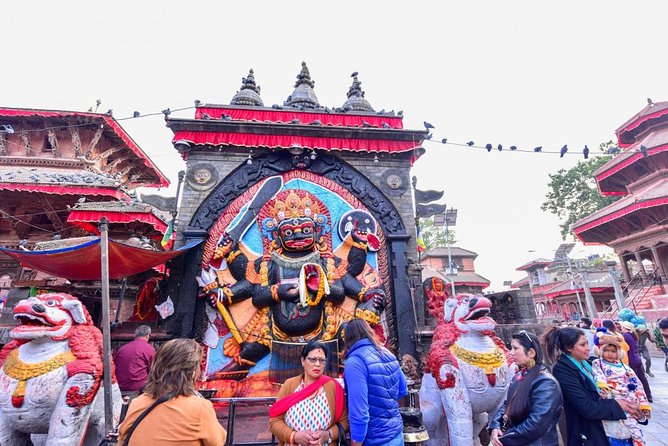
- Kathmandu Durbar Square: Visit the central palace and temple area, including Hanuman Dhoka Palace and Kumari Temple.
- Back-street perspective: Move beyond the main monuments into public courtyards, local lanes, and ordinary city life.
- Private group format: The $68 price covers up to 10 people, not each person individually.
- Licensed guide: Anil Manandhar leads the walk and has 32 years of experience as a Nepal guide.
- Simple logistics: Meet at the Garden of Dreams at 9:15 AM and return there after roughly three hours.
Why Ason bazaar is the heart of this walk
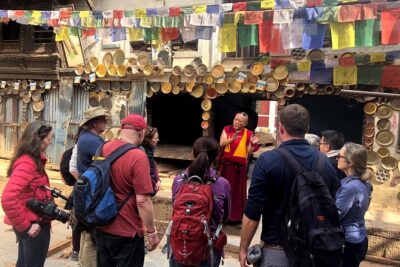
Ason bazaar gives this experience its strongest sense of place. It is not presented as a polished market built for sightseeing. It is an old trading area where vegetables and groceries are bought for daily life, which makes it a useful window into how Kathmandu functions.
You may find the lanes crowded with shoppers, goods, and movement. That is part of the point, but it also means you should stay close to your guide and keep your belongings secure. This is a working market, not a staged cultural display.
I like the way Ason changes the rhythm of the tour. You begin with ordinary commerce before reaching the grander monuments. A temple or palace can feel distant when you only see it as a photo stop. After walking through the market, you have a better sense of the city around it.
The market is also a good place to ask practical questions. Your guide can explain what you are seeing, how the stalls fit into local life, and why this part of Kathmandu remains important. The supplied tour details do not promise food tastings or shopping time, so you should think of Ason as a place to observe and understand rather than as a dedicated shopping trip.
More Walking Tours in Kathmandu
- Kathmandu Food and Drink Walking Tour
★ 5.0 · 266 reviews - Kathmandu: Food and Drink Walking Tour
★ 4.9 · 119 reviews - Walking Street Food Tour in Kathmandu
★ 5.0 · 111 reviews
From Indra Chowk into old Kathmandu
The route also includes Indra Chowk, another important city stop. The tour description places it alongside Ason, the palace area, and the back streets, giving you a connected walk through central Kathmandu rather than a series of isolated attractions.
Indra Chowk helps bridge the gap between market life and religious architecture. As you move through the area, you may notice how commerce, worship, and public space sit close together. That mixture is one of the most useful things to understand about Kathmandu. The city does not always separate its historic monuments from its working neighborhoods.
I would not expect a calm, carefully paced museum visit here. The appeal is the street setting, and street settings bring noise, crowds, uneven walking surfaces, and distractions. If you want every detail explained at length inside each monument, the three-hour schedule may feel tight. If you want an active introduction to central Kathmandu, the pace should work well.
Kathmandu Durbar Square and Hanuman Dhoka Palace
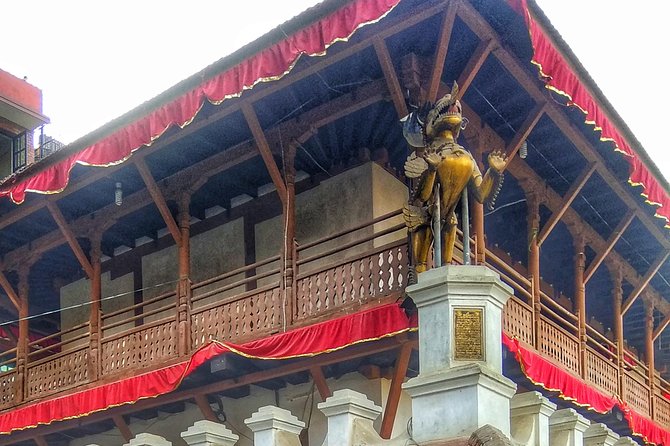
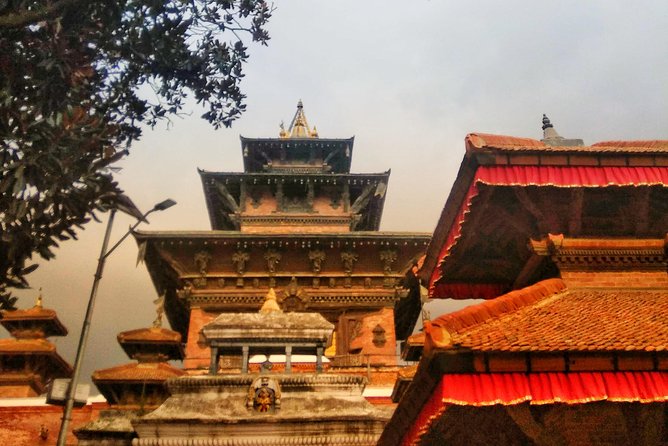
Kathmandu Durbar Square is the main sightseeing anchor of the walk. The area includes temples, public courtyards, Kumari Temple, and Hanuman Dhoka Palace. With a guide, you can connect the buildings to the city’s religious and royal traditions instead of simply moving from one photo point to another.
Hanuman Dhoka Palace gives the route a more formal architectural focus after the market streets. The palace complex is one of the places where Kathmandu’s political and ceremonial past becomes visible. The tour information does not specify which rooms or palace buildings you will enter, so you should view the visit as a guided look at the square and palace area, not as a guaranteed full interior tour.
The itinerary also refers to a Buddhist stupa and a Hindu temple. Specific names are not provided, so the exact stops may depend on the route and timing. That variety matters. In a short walk, you can see how Buddhist and Hindu places of worship share the same city environment.
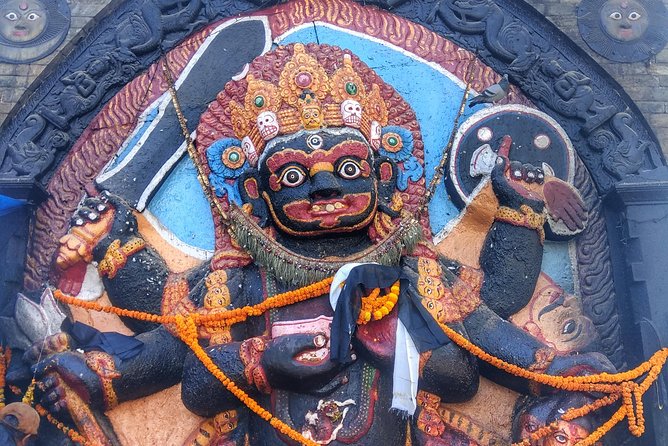
One unusual detail connected with the palace area is the possibility of seeing a Pachali Bhairav dance. This was a highlight on one visit, but it should not be treated as a regular part of every departure. Cultural events can depend on the date and local calendar. If you see one, consider it an unexpected bonus rather than something included by guarantee.
Kumari Temple and the living side of culture
Kumari Temple is one of the most distinctive stops in Kathmandu Durbar Square. The tour includes the temple, but the supplied details do not promise a meeting with the Kumari or a particular viewing opportunity. That is worth keeping in mind when setting expectations.
The value here is not only the building itself. The temple sits within a public square, and the surrounding courtyards show how sacred places remain part of the city’s daily setting. Your guide can help you understand what you are looking at and how the temple fits into local belief.
I like that this stop is paired with the market and public lanes. On a monument-only tour, Kumari Temple might feel like a quick architectural visit. On this walk, it forms part of a larger picture that includes shopping, worship, palace space, and neighborhood life.
Please follow local instructions around the temple and avoid assuming that every doorway or courtyard is open to the public. The tour includes a licensed guide, but entrance charges are separate, and access can vary by site.
A completely different kind of day, same corner of Nepal:
- Private Kathmandu Sightseeing Tour | UNESCO World Heritage sites
★ 5.0 · 756 reviews - Half day cooking class in Thamel kathmandu
★ 5.0 · 607 reviews - Nagarkot Sunrise View and Day Hiking from Kathmandu
★ 5.0 · 471 reviews - Kathmandu: Full Day 7 UNESCO Tour with Lunch – Private/Group
★ 5.0 · 415 reviews
Freak Street and the city’s changing identity
Freak Street is another named stop. The street is associated with an older side of Kathmandu’s visitor culture, and its inclusion adds a different note to the walk after the market and palace district.
The information provided does not promise particular shops, performances, or businesses along Freak Street. I would treat it as a chance to see a recognizable part of central Kathmandu and hear how the area fits into the city’s changing identity. Your guide may add useful local context, but the tour is not advertised as a nightlife outing or a food tour.
This stop also shows why the walk works better as a city introduction than as a checklist of monuments. You get several different faces of Kathmandu in one outing: the grocery market, the palace square, religious courtyards, and a street known for a different chapter of the city’s public life.
What the three-hour format really gives you
The listed duration is about three hours, with the overall estimate given as three to four hours. That is enough time for a solid introduction, but not enough for a slow examination of every building in the central city.
The route is entirely on foot. There is no vehicle transfer included, which is good for seeing small lanes and ordinary street activity that a car would miss. It also means the quality of the experience depends partly on your comfort with walking, crowds, and changing street conditions.
The advertised operating window is 9:15 AM to 2:15 PM, Monday through Sunday. The meeting point is the Garden of Dreams on Tridevi Sadak, and the activity ends back at that same location. Confirm your start time when booking, since the published opening window covers several possible departure times rather than identifying one single departure for every date.
I would allow extra time before the start so you can find the Garden of Dreams without rushing. Since the walk returns there, it is easy to pair with another central Kathmandu activity afterward, provided you leave enough time for the tour to run beyond three hours.
Is $68 good value for your group?
The price is $68 per group of up to 10 people. That is an important detail. A full group would pay less per person than a couple, while a solo participant would effectively pay the full private-tour rate.
For a group of 10, the value is very good if you want a private guide for a city walk. For two or three people, the price is less of a bargain, but you are paying for privacy, flexibility in questions, and a licensed guide rather than a seat on a large group outing.
Entrance fees are not included, so add those to your budget. The tour details do not state the exact admission amount or which sites require payment. Ask about expected fees before the walk if you want a precise total.
The strongest value comes from the route and interpretation. You could walk through some of these areas alone, but you would have less help making sense of the market, courtyards, temples, and palace complex. Anil Manandhar’s reported 32 years of guiding experience is especially relevant here. Kathmandu has many details that are easy to miss when you are focused on traffic or taking photographs.
The guide and the private format
Anil Manandhar is the named experience provider and guide. The tour includes licensed guide service, and the private format means only your group participates.
That setup suits you if you want to ask questions without worrying about slowing down a larger group. It also works well for families or friends with different interests. You can spend more time on a market explanation or move along when a particular building is less important to you.
The available feedback presents Anil as an experienced guide with a long career and an ability to share useful information. One separate outing with him involved Pashupatinath Temple on Mahashivratri, and another visitor specifically praised his 32 years as a Nepal guide. Those comments relate to his wider guiding work, not a guarantee about every moment of this walk, but they support the idea that his main strength is explanation and local context.
The guide cannot remove every practical challenge. This remains a walking tour in a busy city. If you need a very quiet, highly predictable route, this may not be the right choice. If you value direct contact with the city, the private arrangement is a real advantage.
Who will enjoy this Kathmandu walk most
I would recommend this tour to someone visiting Kathmandu for the first time who wants a broad introduction in a few hours. You will see major landmarks, but you will also spend time in places that function as part of the city rather than as isolated attractions.
It is especially well suited to:
- First-time visitors who want help finding their bearings in central Kathmandu.
- Small groups that can share the $68 fee and enjoy a private guide.
- Culture-focused walkers who prefer markets, courtyards, and street life to a bus tour.
- Photographers who want changing scenes, from produce stalls to palace architecture.
- History and religion enthusiasts who want Buddhist and Hindu sites explained together.
I would be more cautious if your main goal is a long, quiet visit inside the palace or a guaranteed cultural performance. The tour covers several places in one outing, and admission is extra. You should also be comfortable walking for about three hours.
Most people can participate, according to the provided information. Still, the route’s street conditions are not described in detail, so ask the provider if you have specific mobility concerns.
Booking, weather, and cancellation details
You receive confirmation at the time of booking. The experience requires good weather. If poor weather causes a cancellation, you are offered another date or a full refund.
You can cancel for a full refund up to 24 hours before the start time. Changes or cancellations made less than 24 hours before the start are not accepted for a refund. The cut-off follows local Kathmandu time.
These rules are fairly simple, but the weather condition matters for a walking tour. If rain is likely, check the forecast before your cancellation deadline and ask the provider about suitable clothing if you decide to go ahead.
Should you book this back-street Kathmandu tour?
Book it if you want a private, guide-led introduction that combines Ason bazaar, Indra Chowk, Kathmandu Durbar Square, Kumari Temple, Hanuman Dhoka Palace, public courtyards, and Freak Street in one walk. The route gives you both famous sights and ordinary city scenes, which is its main strength.
I would choose it for a small group that wants local explanation without arranging several separate visits. The price makes the most sense when shared among several people. Before booking, confirm the start time, ask about expected entrance fees, and remember that a possible Pachali Bhairav dance is not guaranteed.
Skip it if you want transportation, a slow museum-style visit, or a tour with all admissions included. For an active first look at central Kathmandu, though, this is a practical and well-focused choice.
FAQ
Where does the tour start?
It starts at the Garden of Dreams on Tridevi Sadak in Kathmandu.
Where does the tour end?
The activity ends back at the Garden of Dreams, the starting meeting point.
How long does the walking tour last?
The tour lasts approximately three to four hours, with the main itinerary described as three hours.
What places are included?
The route includes Ason bazaar, Indra Chowk, Kathmandu Durbar Square, Kumari Temple, Hanuman Dhoka Palace, Freak Street, a Buddhist stupa, a Hindu temple, and public courtyards.
Are entrance fees included?
No. Entrance fees are not included in the tour price.
How many people can join?
The private tour is priced for a group of up to 10 people. Only your group participates.
Can I cancel for a full refund?
Yes. You can cancel at least 24 hours before the experience start time for a full refund. If poor weather cancels the tour, you are offered another date or a full refund.
Just added around Kathmandu
- Women Empowerment Project(Nepali cooking class & jewelry workshop★ 5.0 · 15 reviews
- Manthali Airport (Ramechhap) To Kathmandu – Transport Service★ 4.5 · 11 reviews
- Amazing 1 Day Trekking Experience in Kathmandu Nepal★ 5.0 · 24 reviews
- Walking tour of Kathmandu with awesome local guides★ 5.0 · 4 reviews
- Private Manaslu Circuit Trek at Himalayas★ 5.0 · 3 reviews
- Walking Street Food Tour in Kathmandu★ 5.0 · 111 reviews
- Kathmandu Street Food Walking Tour – Eat Like a Local★ 5.0 · 3 reviews
- Visit Swayambhunath and Bauddhanath Stupa with Guide★ 5.0 · 5 reviews
Walking Tours, compared.
Walking Food Tour in Hidden Local Eateries of Kathmandu
Read our review →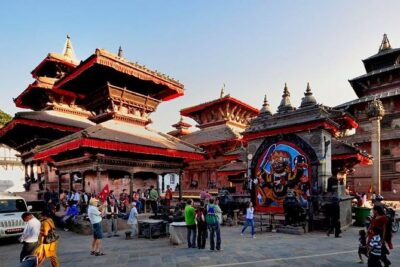
Old Kathmandu Walking Tour, Historic World Heritage Durbar Square
Read our review →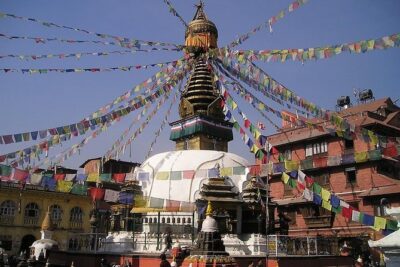
Browse the lists this tour appears in