
Reviewed · SPIRITUAL EXPERIENCES IN KATHMANDU
Buddhist Pilgrimage Tour In Nepal
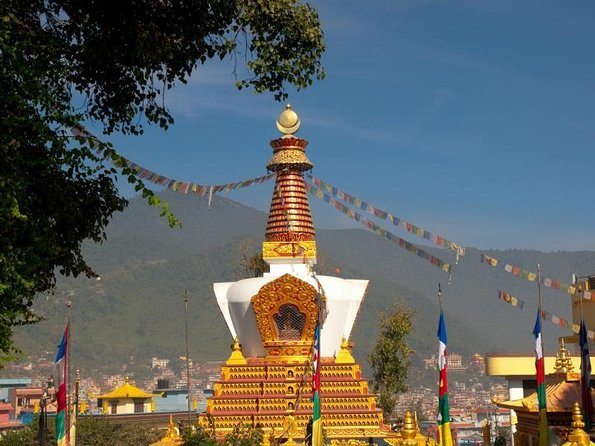
Kathmandu’s Buddhist pilgrimage circuit brings together three very different places of worship in one manageable day. You’ll see the immense Boudhanath Stupa, visit peaceful Kopan Monastery, and continue to Swayambhunath, the hilltop temple widely known as the Monkey Temple.
I like the small group limit of 10 and the fact that ground transport, admission fees, and an English-speaking guide are included. The main drawback is the pace: one day gives you a useful introduction, but not much quiet time at each site, especially when Kathmandu traffic slows the drive.
Key points to know before booking
- Three major Buddhist sites in one day: Visit Boudhanath Stupa, Kopan Monastery, and Swayambhunath in a single Kathmandu Valley outing.
- A compact group: The tour accepts a maximum of 10 people, making questions and conversation with the guide easier.
- Private ground transport: Hotel pickup and transport between stops are provided in a comfortable private vehicle.
- A useful introduction to Nepalese Buddhism: The route shows how Buddhist and Hindu traditions share space in Kathmandu.
- Lunch is planned in Thamel: A table is reserved at The Ship Restaurant for traditional Nepalese dal-bhat, though meals are not included in the price.
- Flexible booking protection: You can cancel for a full refund up to 24 hours before the start time.
Why this Buddhist pilgrimage makes sense in Kathmandu
Nepal is closely tied to Buddhist tradition. Siddhartha Gautama, the Buddha, was born in Nepal, while Kathmandu Valley has long been a meeting place for Hindu and Buddhist customs. This tour gives you a clear way to see that connection without trying to arrange several distant religious sites on your own.
The day starts at 9:15 a.m. with pickup from your hotel or the stated meeting point in Kathmandu. From there, your guide and driver take you between the three main stops. That matters in Kathmandu, where roads can be slow and unfamiliar routes can eat up a good part of your day.
I like the focus of the route. This is not a general city tour with a Buddhist stop added at the end. The whole day is built around Buddhist practice, sacred architecture, and the role these sites play in Nepalese culture.
You should also set your expectations correctly. The tour lasts about one day, but the listed visits are fairly short, with about an hour at Boudhanath and about an hour at Kopan Monastery. Swayambhunath is included in the route, yet the supplied schedule gives little detail about the length of that visit. If you want long periods for meditation, photography, or independent exploration, a private custom tour with more time may suit you better.
More Spiritual Experiences in Kathmandu
- Kathmandu Spiritual Sites: Bodhnath & Pashupatinath Tour
★ 5.0 · 185 reviews - From Kathmandu: 2 Stupas and Kopan Monastery Spiritual Tour
★ 4.8 · 115 reviews - Shirodhara and Sound Healing Spa Experience in Kathmandu
★ 5.0 · 52 reviews
Boudhanath Stupa, the day’s powerful opening
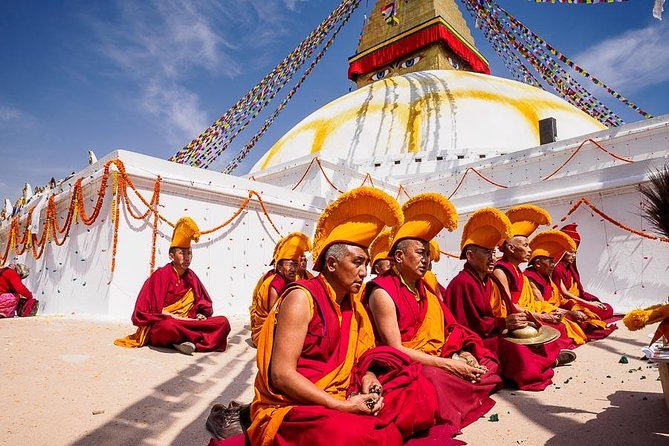
Boudhanath Stupa is about four miles from central Kathmandu and is one of the largest stupas in the world. It is also one of the city’s main Buddhist centers, so it gives you the strongest first look at the religious focus of the day.
The stupa is more than an impressive structure. It is a place where Buddhist belief is expressed through a physical route, symbolic design, and daily worship. Your guide can help explain the basic ideas behind the site and show how it fits into Nepal’s wider mix of religions.
The visit is scheduled for about one hour, and admission is included. That keeps the stop simple: you do not need to calculate another entrance fee or find transport across the city. I would use this first hour to listen carefully to the guide, take in the scale of the stupa, and leave enough time for photographs without turning the visit into a rushed stop.
Boudhanath is likely to be the busiest part of the pilgrimage day. The tour description presents it as a major spiritual center, not a quiet retreat. You might find the setting active and full of movement, so anyone hoping for complete silence should prepare for a public religious site rather than a secluded meditation hall.
Still, it is a strong choice for the first stop. The size of the stupa gives you an immediate sense of why Buddhism remains so visible in Kathmandu. It also sets up the contrast with Kopan Monastery, which offers a more monastic setting.
Kopan Monastery and the monastic side of the route
After Boudhanath, the group heads toward Kopan Monastery through Kathmandu’s daytime traffic. The drive itself is an important practical detail. Even short distances in the valley can take time, and using a driver means you do not have to work out the route or manage local transport between religious sites.
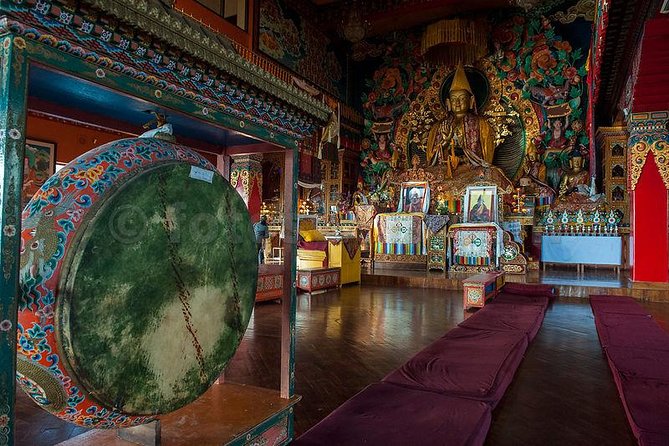
Kopan Monastery follows the Gelug tradition of Tibetan Mahayana Buddhism. The one-hour visit gives you a chance to see a different side of the Buddhist world from the large public stupa at Boudhanath.
The tour description connects the experience with spiritual reflection and chanting alongside monks. You should treat this as an opportunity to understand the setting and its practices, not as a guaranteed private ceremony or formal meditation class. The exact daily activity at the monastery can vary, and the supplied details do not promise a particular teaching session.
This is where the guide can add real value. One published rating describes the guide as able to answer questions about both Nepalese culture and Buddhism. No guide name is provided, so you should not expect a particular named guide, but the tour does include a trained English-speaking professional.
I like the order of these first two stops. Boudhanath introduces you to Buddhism through a major public monument. Kopan then shifts the focus toward monastic life and Tibetan Buddhist tradition. That comparison is more useful than seeing several similar-looking temples in quick succession.
There is one thing to keep in mind. A one-hour monastery visit can feel brief if you want to understand the Gelug tradition in depth. The tour is best for a clear first introduction, not for detailed study or an extended retreat.
Swayambhunath, the hilltop temple known as the Monkey Temple
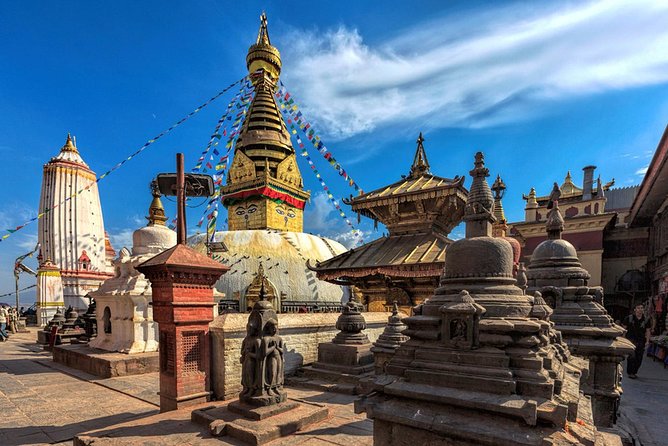
The third Buddhist pilgrimage site is Swayambhunath, popularly called the Monkey Temple. The tour overview describes it as a place with remarkable structures, and its inclusion gives the day a different visual and cultural finish after the stupa and monastery.
The supplied schedule is slightly unclear here. It lists Swayambhunath as the third stop, but the accompanying description mainly explains the plan to head to Thamel for lunch at The Ship Restaurant. Because of that, you should confirm the exact amount of time allocated at Swayambhunath when you book or when the operator contacts you.
That small uncertainty is worth noting, but it does not erase the value of the stop. Swayambhunath is one of Kathmandu’s best-known Buddhist pilgrimage sites, and visiting it helps complete the picture of Buddhism in the valley. The tour overview also presents it as one of the places where you can see Nepal’s mix of religion and culture.
I would keep your schedule flexible after the morning visits. Kathmandu traffic can affect the timing, and the published plan does not give a full minute-by-minute breakdown. The day ends back at the meeting point, so you should avoid booking an important evening activity too close to the expected finish.
A completely different kind of day, same corner of Nepal:
- Private Kathmandu Sightseeing Tour | UNESCO World Heritage sites
★ 5.0 · 756 reviews - Half day cooking class in Thamel kathmandu
★ 5.0 · 607 reviews - Nagarkot Sunrise View and Day Hiking from Kathmandu
★ 5.0 · 471 reviews - Kathmandu: Full Day 7 UNESCO Tour with Lunch – Private/Group
★ 5.0 · 415 reviews
Lunch in Thamel at The Ship Restaurant
After Kopan Monastery, the group is scheduled to go to Thamel for lunch. A table is reserved at The Ship Restaurant and bar, where traditional Nepalese dal-bhat is planned.
Dal-bhat is a practical meal for this kind of day. It is a familiar Nepalese combination built around lentils and rice, with accompanying dishes. The plan gives you a chance to try a local staple rather than simply grabbing a quick snack between stops.
Lunch is not included in the $150 price, along with accommodation and optional activities. That distinction matters. The reserved table makes the meal easier, but you should budget separately for what you order.
The lunch stop also breaks up the religious visits. After several hours of sightseeing and road travel, a proper meal can make the afternoon more comfortable. At the same time, anyone looking for a strictly spiritual pilgrimage may see a restaurant and bar in Thamel as a less focused part of the day.
What the $150 price includes
The tour costs $150 per person. That is not a bargain-basement price for a Kathmandu sightseeing day, but the value depends on what you would otherwise need to arrange yourself.
The price includes:
- Ground transport in private, comfortable vehicles
- A trained English-speaking professional guide
- Staff salary and insurance
- Government and local taxes
- Admission tickets for the included sites
You are paying for a guided, organized day rather than simply buying entrance tickets. Transport between three sites is particularly useful here. Kathmandu Valley traffic can be tiring, and a driver who already knows the route saves you from arranging separate taxis or negotiating each transfer.
The maximum group size is 10. That is small enough for a guide to handle questions without the feel of a large coach tour. It also supports the educational side of the day, since Buddhism and Nepalese religious customs are easier to understand when you can ask about what you are seeing.
The value is weaker if you only want transportation. You would need to compare the price with arranging your own car and guide, but the supplied information does not give a self-guided transport price. For many visitors, the main benefit is having one person manage the route while explaining the cultural setting.
Remember the extra costs. Your Nepal visa is not included, and the instructions say to bring accurate US dollar cash and two passport photographs for the visa process. Meals, accommodation, tips, and services not listed as included are also separate.
How the group size and guide affect the day
This activity accepts a maximum of 10 people, and that is one of its strongest practical features. A small group usually makes it easier to hear the guide, ask about Buddhist customs, and keep the day moving between sites.
The tour includes a professional English-speaking guide, but no individual guide name is supplied. The most useful quality to look for is the ability to explain both Buddhism and Nepalese culture in plain language. One published rating gives particular emphasis to the guide’s ability to answer questions on both subjects, which matches the purpose of this tour.
You are not simply being driven to three photo stops. The stated aim is to help you understand the basics of Buddhism in Nepal and the way Hindu and Buddhist traditions coexist in the country. That educational purpose is what separates this experience from an ordinary temple transfer.
The vehicle is described as private and comfortable, while the group itself can include up to 10 people. In practical terms, that means you should ask how the vehicle is arranged if the tour fills to its limit. The provided details do not specify the exact vehicle model or seating layout.
Timing, comfort, and who will enjoy it most
The start time is 9:15 a.m., with the tour ending back at the meeting point. The activity is near public transportation, and most people can participate. Those details make it fairly approachable for visitors who want a guided day without a demanding physical itinerary.
The schedule involves road travel and visits to religious sites. The information does not provide a full accessibility assessment, so anyone with specific mobility needs should confirm the details directly with Third Rock Adventures before booking.
I would recommend this day to you if you:
- Have limited time in Kathmandu
- Want Buddhist sites explained rather than visited on your own
- Prefer a small group over a large bus
- Value included transport and entrance fees
- Want to compare a major stupa, a monastery, and a hilltop temple
I would be more cautious if you want a long meditation session, a silent retreat, or a highly detailed study of Tibetan Buddhist philosophy. The tour offers an introduction across several sites, not an extended monastic program.
It is also a good fit for first-time visitors who may find Kathmandu’s religious customs unfamiliar. The guide can provide context, and the private vehicle keeps the day from becoming a puzzle of directions and fares.
Booking details and the cancellation window
Confirmation is provided when you book. The experience is commonly reserved about 18 days ahead, so booking early may help if your Kathmandu dates are fixed, particularly if you want a small group and a specific start day.
You can cancel for a full refund up to 24 hours before the local start time. Cancellations or changes made less than 24 hours before the experience are not accepted for a refund.
That policy is fairly useful for a one-day activity, but it does not protect you from last-minute changes inside the 24-hour window. Keep your arrival plans settled before that deadline.
Should you book this Buddhist pilgrimage tour?
I would book this tour if I had one open day in Kathmandu and wanted a guided introduction to Buddhist Nepal. The route covers three important sites, transport is arranged, admission is included, and the group limit of 10 keeps the experience personal enough for questions.
The strongest reason to choose it is the combination of places. Boudhanath shows you a major Buddhist center, Kopan offers a monastic setting tied to the Gelug tradition, and Swayambhunath adds another famous Kathmandu pilgrimage site. You get breadth without spending several days arranging separate visits.
I would hesitate only if you need a slow, contemplative schedule or clear detail about the Swayambhunath timing before you commit. For most visitors, though, the $150 cost is reasonable for a full day of private ground transport, a guide, site admissions, and cultural explanation. The 5 out of 5 rating from 27 ratings and a 100 percent recommendation support the tour’s strongest point: a good guide can turn a string of temples into a meaningful lesson about Nepal.
FAQ
How long is the Buddhist Pilgrimage Tour in Nepal?
The tour lasts approximately one day. It begins at 9:15 a.m. and ends back at the meeting point in Kathmandu.
Which Buddhist sites are included?
The route includes Boudhanath Stupa, Kopan Monastery, and Swayambhunath, also known as the Monkey Temple.
Is transportation included?
Yes. Ground transportation in private comfortable vehicles is included, with pickup by the guide and driver from the stated Kathmandu meeting point.
Is lunch included in the $150 price?
No. Lunch is not included. A table is planned at The Ship Restaurant in Thamel, where you can order traditional Nepalese dal-bhat.
What is the maximum group size?
The activity accepts a maximum of 10 people.
Can I cancel for a full refund?
Yes. You can cancel at least 24 hours before the local start time for a full refund. Cancellations or changes made less than 24 hours before the start time are not accepted for a refund.
Just added around Kathmandu
- Traditional Momo Making Class★ 5.0 · 10 reviews
- Women Empowerment Project(Nepali cooking class & jewelry workshop★ 5.0 · 15 reviews
- Manthali Airport (Ramechhap) To Kathmandu – Transport Service★ 4.5 · 11 reviews
- Amazing 1 Day Trekking Experience in Kathmandu Nepal★ 5.0 · 24 reviews
- Walking tour of Kathmandu with awesome local guides★ 5.0 · 4 reviews
- Walking tour of real Kathmandu through back streets.★ 5.0 · 3 reviews
- Kathmandu Street Food Walking Tour – Eat Like a Local★ 5.0 · 3 reviews
- Private Manaslu Circuit Trek at Himalayas★ 5.0 · 3 reviews
Spiritual Experiences in Kathmandu, compared.
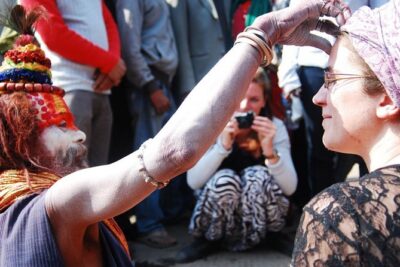
Kathmandu Spiritual Sites: Bodhnath & Pashupatinath Tour
Read our review →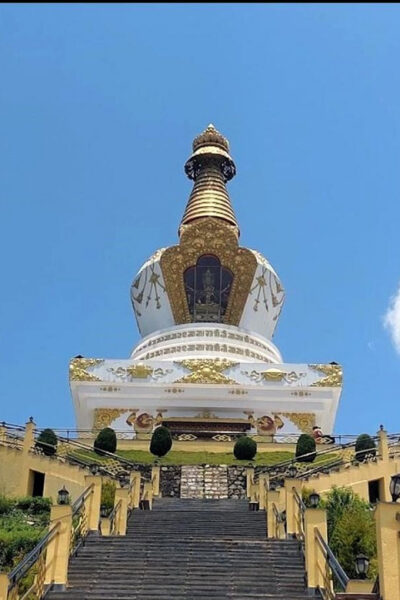
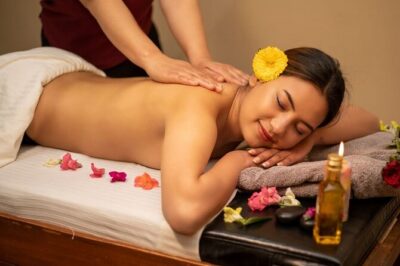
Shirodhara and Sound Healing Spa Experience in Kathmandu
Read our review →
Spiritual Nepal: Expert insight into Multifaith Journey
Read our review →
Sound Bath (Sound Healing Session Every Evening) in Nepal
Read our review →
Browse the lists this tour appears in