
Reviewed · UNESCO WORLD HERITAGE TOURS
Kathmandu UNESCO World Heritage Tour
Kathmandu packs an astonishing amount of sacred art and royal history into a compact valley. This full-day tour links seven UNESCO-listed sites, from Kathmandu Durbar Square to the hilltop Swayambhunath, so you can see the city’s major landmarks without arranging separate taxis and guides.
I like two things right away: you get both Hindu and Buddhist sites in one day, and the guide is meant to explain rituals and symbols rather than simply point at buildings. Deepak organizes the experience, and guides such as Rabina have led the route in the past. The main drawback is its ambitious pace. Seven stops in roughly nine hours means a lot of time in the vehicle and about an hour at each place.
Key points to know
- Seven major sites in one day: The route covers Kathmandu Durbar Square, Patan, Bhaktapur, Changu Narayan, Pashupatinath, Boudhanath, and Swayambhunath.
- A guide adds real value: Deepak and Rabina are named guides associated with the experience, with attention given to Nepal’s rituals, architecture, and customs.
- The contrasts are the point: You move from royal courtyards and medieval brickwork to Hindu cremation ghats and Buddhist prayer circles.
- Admission fees are extra: Every listed stop says entrance is not included, so budget for several separate tickets.
- The day begins and ends centrally: Meet at Kaiser Library on Kanti Path, with the activity returning to that meeting point.
- The tour is best for first-time visitors: It gives you a broad cultural picture quickly, though independent explorers may prefer more time at fewer sites.
Seven UNESCO sites, one demanding Kathmandu day
This is not a slow neighborhood walk. It is a broad survey of Kathmandu Valley’s most important monuments, with each stop offering a different view of Nepalese culture.
The route is especially useful if you have limited time in Kathmandu. Instead of working out transport between three cities and several major temples, you have one guide and one planned day. I also like the balance of famous sights and less commonly visited places, especially Changu Narayan.
The advertised duration is about nine hours. Each stop is listed at approximately one hour, leaving the rest of the day for driving between sites, collecting tickets, and moving through the city. That timing is practical, but tight. If you want long photo sessions, quiet contemplation, or detailed museum visits, you may feel rushed.
The maximum group size is listed as 100 people, which is a large possible range for a tour promising personal attention. Ask about the expected group size when booking if one-on-one questions matter to you. The guide is the heart of this experience, and a smaller group would make it easier to hear explanations and stay together.
More UNESCO Heritage Tours in Kathmandu:
- Private Kathmandu Sightseeing Tour | UNESCO World Heritage sites
★ 5.0 · 756 reviews - Kathmandu: Full Day 7 UNESCO Tour with Lunch – Private/Group
★ 5.0 · 415 reviews - Kathmandu: Full Day Top 4 UNESCO Tour with Lunch – Private/Group
★ 5.0 · 269 reviews
Kathmandu Durbar Square: royal courtyards in the city center
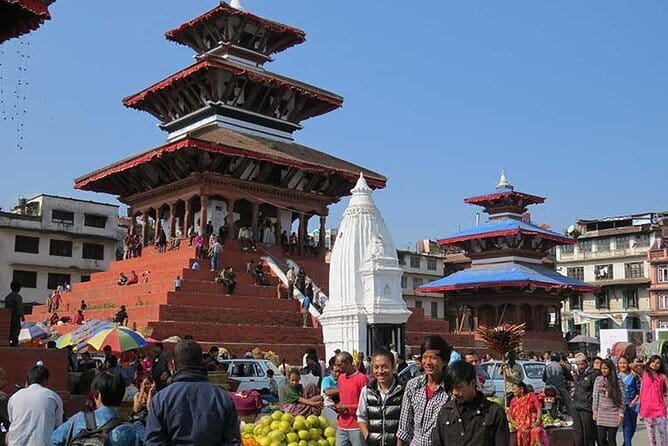
The day begins with Kathmandu Durbar Square, an old royal complex filled with temples, courtyards, carved wood, and layers of political and religious history.
Give this stop your full attention. The square can look like a collection of pagoda roofs and ornate windows at first, but a guide can help explain how the palaces, shrines, and public spaces fit together. This is where an expert guide earns the fee, particularly if you want to understand why certain figures appear on temple struts or why a courtyard remains important to local worshippers.
The planned visit is about one hour, and admission is not included. That is enough for an introduction and the main sights, but not enough for every corner. If this square is your main interest, return later on your own for a quieter look.
Patan Durbar Square: the best stop for detailed artistry
Patan, also known as Lalitpur, brings the emphasis to craftsmanship. Its royal square is known for temples, courtyards, palace buildings, and finely worked metal and stone details.
I would pay close attention here to the small things: carved doorways, temple guardians, roof supports, and the repeated patterns that can blur together after several stops. The Mahabouddha Temple is specifically included in the description of this visit, adding a different religious and architectural note to the royal complex.
One hour gives you a useful orientation, especially with a guide who can connect the buildings to Nepal’s artistic traditions. The limitation is that Patan rewards slow looking. You may want more time to examine details or explore nearby streets, but the schedule moves on.
Admission is extra, as it is at every stop on this route. Keep some local currency available for entrance fees and personal purchases, though the tour price itself does not specify the total cost of those tickets.
Bhaktapur Durbar Square: medieval charm with a price in time
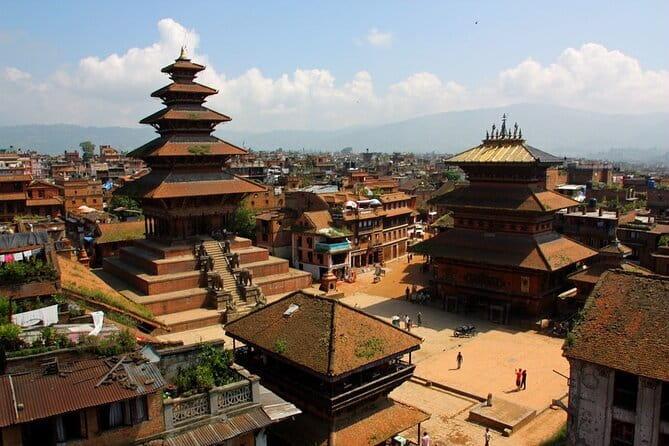
Bhaktapur is often the most visually striking of the three royal squares. Its brick lanes, carved windows, temples, and open courtyards give it a strong medieval character.
The itinerary calls attention to the Vatsala Temple and other statues and temples in the square. This is a place where your guide can help you read the architecture rather than simply photograph it. The arrangement of the square, the scale of the buildings, and the surviving traditional details make the visit feel different from Kathmandu and Patan.
Bhaktapur is also farther from central Kathmandu than the first two squares, so the driving time matters. On a nine-hour tour, this stop contributes to the day’s packed rhythm. You will see the principal sights, but you should not expect a leisurely exploration of the entire town.
The one-hour visit works well if your priority is seeing the square and learning its main stories. If you want to shop, linger over every carved facade, or explore beyond the central area, plan a separate return visit.
More heritage days around Kathmandu:
- UNESCO Seven World Heritage Tour in Kathmandu
★ 5.0 · 253 reviews - Kathmandu Private Sightseeing Tour | UNESCO World Heritage Sites
★ 5.0 · 109 reviews - Kathmandu: Full Day Private Top 4 UNESCO Heritage Tour W/Lunch.
★ 5.0 · 86 reviews - Kathmandu World Heritage Tour
★ 5.0 · 74 reviews
Changu Narayan: an older, quieter temple setting
Changu Narayan offers a change of pace. The temple is described as Nepal’s oldest Hindu temple and is known for ancient architecture and inscriptions.
After the larger royal squares, this stop can feel more focused. It gives the guide room to explain the religious importance of the site and the details that make its art different from the palaces and urban courtyards. The location also adds variety to the day, rather than giving you four similar city-center monuments in a row.
The stop is scheduled for about an hour, with admission extra. The practical concern is time: Changu Narayan is one of the places where you may wish to linger, yet the overall route has six other major sites. If ancient temple architecture interests you most, ask the guide how much time is realistically available here.
Pashupatinath: sacred ritual along the river
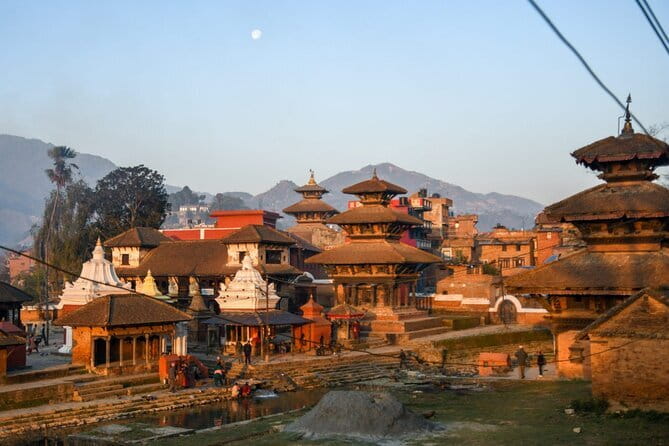
Pashupatinath is one of Nepal’s most important Hindu temples and one of the most spiritually charged stops on the route. The complex is known for religious ceremonies and riverside cremation ghats.
This is not just another monument to photograph. You are entering an active place of worship, so respectful behavior matters. A good guide can explain what you are seeing, when photography is appropriate, and how to observe ceremonies without treating them as a performance.
The tour description specifically highlights traditional rituals here. That makes the guide especially important. The right explanation helps you understand the difference between a temple complex, a ceremonial space, and a historic building.
You should also know that access rules can vary within sacred sites. The tour includes a guided visit to Pashupatinath, but the information provided does not promise entry into every building. Stay with the guide’s instructions and dress and act with care.
Boudhanath: prayer circles and Buddhist symbolism
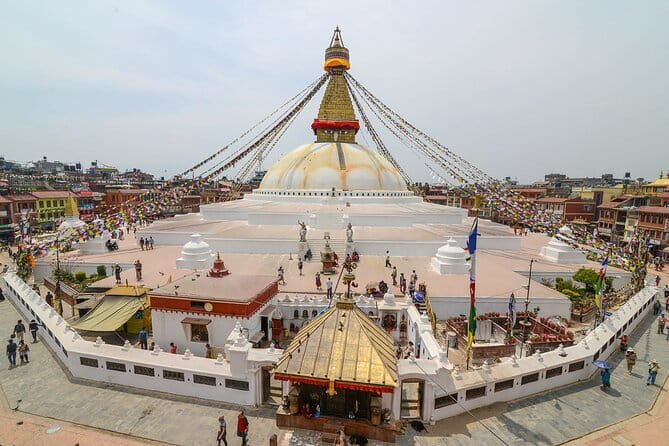
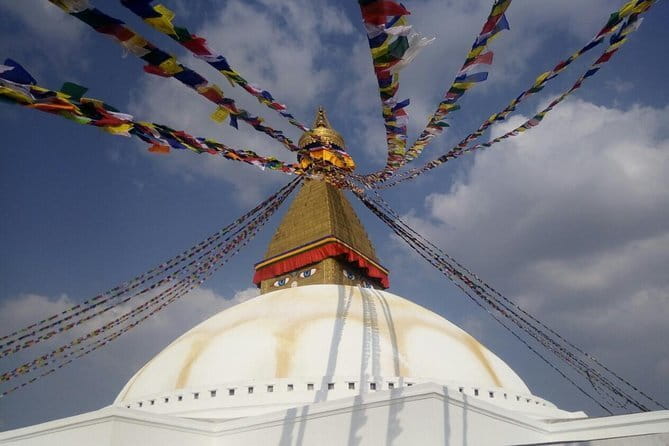
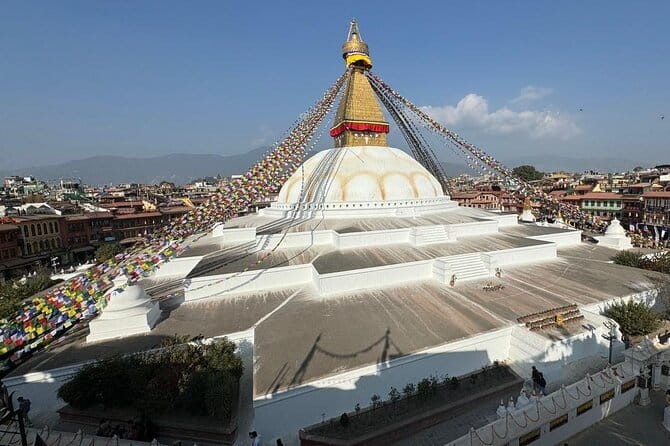
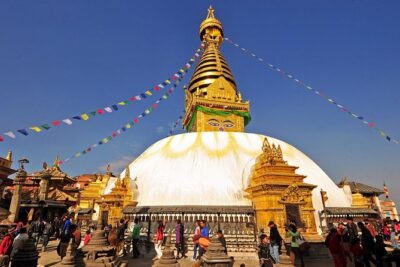
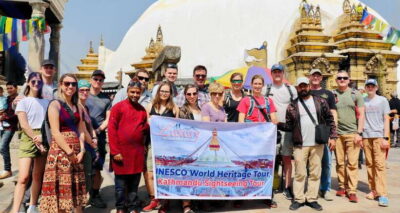
Boudhanath Stupa shifts the mood again. Its huge white dome and watchful eyes form one of Kathmandu’s best-known Buddhist landmarks.
The natural way to experience the stupa is by walking around it, following the direction of local worshippers and observing the prayer wheels, monasteries, shops, and daily religious life around the central monument. Your guide can explain the symbolism and customs that make the stupa more than a photo stop.
I like this part of the route because it shows how a major heritage site remains part of everyday devotion. The experience is not limited to a grand entrance or a palace courtyard. It is about watching how people use the space.
Again, the schedule allows about one hour. That is enough to circle the stupa and receive an introduction, but not enough to explore every nearby monastery. If you want a more reflective visit, you may prefer to return independently at another time.
Swayambhunath: Kathmandu from the hilltop
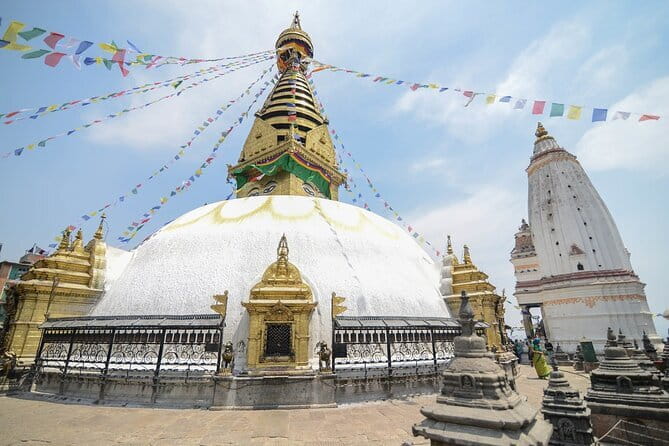
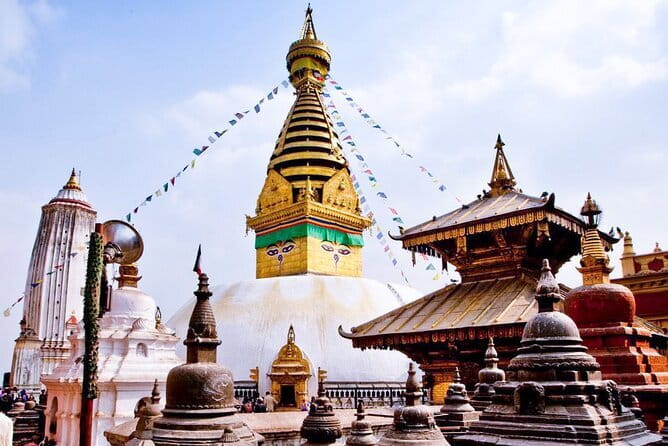
The final listed stop is Swayambhunath Mahachaitya, the hilltop stupa often called the Monkey Temple. Its position above Kathmandu gives you a broad city view along with a major Buddhist shrine.
The panorama is the reward here, but the religious setting is just as important. The guide can connect the stupa’s design, history, and ritual use, helping you see more than the familiar eyes painted on the monument.
The hilltop setting may require walking and, depending on the approach used, stairs. The supplied information says most people can participate, but it does not give a detailed accessibility description. If stairs or uneven surfaces are a concern, ask before booking.
Ending at Swayambhunath makes sense from a visual point of view. After a day of courtyards and temple facades, you finish with a high view over Kathmandu. It is also a busy final hour for the mind, so do not be surprised if the last stop feels more like a satisfying overview than a long study session.
What the guide adds to the day
The strongest reason to book this tour is the guide rather than the transport. Deepak is the named provider, and the experience uses multilingual male and female guides. Rabina is specifically associated with the tour and is described as a female guide with strong knowledge of Nepalese history.
That choice matters in Kathmandu. The sites are visually impressive, but the meaning is not always obvious. A guide can explain Hindu and Buddhist practices, royal traditions, temple design, and local etiquette in a way that turns a string of monuments into a connected story.
The guide also appears to allow some free time at the sites, though the fixed schedule limits how much flexibility is possible. Ask questions early in the day. If you are especially interested in architecture, religion, or modern restoration, tell your guide before the route gets moving.
The experience is listed with a possible maximum of 100 people. That is worth clarifying because the phrase personalized attention suggests something more intimate, while a group of that size would feel very different. The guide’s quality may still be excellent, but hearing and pacing become more important in a large group.
Is $99 a fair price?
At $99 per person, the value depends on what you want from the day. You are paying for a guide and a planned route through seven major sites, not for entrance tickets, meals, tips, personal expenses, or an air-conditioned vehicle.
For a first visit, the price can make sense. Coordinating transport to Kathmandu, Patan, Bhaktapur, Changu Narayan, Pashupatinath, Boudhanath, and Swayambhunath would take time and local planning. The guide’s explanations are also more useful at religious sites than a quick stop with a driver.
The value is weaker if you already know Kathmandu well, prefer public transportation, or want to spend half a day at one square. You may see more of the city with this tour, but you will have less control over the pace.
Lunch and dinner are not included. With a nine-hour schedule, plan for food separately and ask how much time is available for a meal. Since admission is also extra at every stop, check the likely ticket total before you finalize your budget.
Meeting point, timing, and practical matters
The stated meeting point is Kaiser Library on Kanti Path in central Kathmandu. The activity ends back at that meeting point, rather than at a separate hotel drop-off location.
Pickup is offered, but the provided details do not explain the pickup area, timing, or whether an additional charge applies. Confirm those points before booking if you do not plan to meet at Kaiser Library.
Mobile tickets are supported, and confirmation is provided at booking. Public transportation is nearby, and most people can participate. The tour does not include an air-conditioned vehicle, so ask what transport will be used, particularly if the weather is hot or you are sensitive to road conditions.
You can cancel for a full refund up to 24 hours before the start time. Cancellations or changes made within 24 hours are not refunded or accepted. The cut-off follows local Kathmandu time.
Who should book this Kathmandu tour?
I would choose this experience if you are visiting Kathmandu for the first time and want a strong overview in one day. It is also a good fit if you care about religious customs and architectural detail but do not want to research seven sites on your own.
It suits independent-minded people who still want help with context. You can ask questions, take photographs, and enjoy free time at each location, while the guide handles the broad structure of the day.
I would hesitate if you dislike long touring days, need a slow pace, or want to spend serious time at every square. The route is ambitious, and the one-hour stops are best treated as introductions.
Should you book it?
Book this tour if you want to see Kathmandu Valley’s principal UNESCO sites efficiently and you value a guide who can explain rituals, art, and history. Deepak’s role and the option of guides such as Rabina add a personal element that a simple taxi circuit cannot provide.
Skip it if your priority is complete freedom, extended photography, or a small-group guarantee. Before paying, confirm the expected group size, pickup details, transportation, and total admission costs.
For most first-time visitors with only a short stay, I see the appeal. You will cover a lot of ground, encounter both Hindu and Buddhist traditions, and finish with a city view from Swayambhunath. Just bring patience, comfortable footwear, and realistic expectations about the pace.
FAQ
How long does the Kathmandu UNESCO World Heritage Tour last?
The tour lasts approximately nine hours.
Where does the tour start?
The stated meeting point is Kaiser Library, P878+H4G, Kanti Path, Kathmandu 44600, Nepal.
Where does the tour end?
The activity ends back at the meeting point.
Which UNESCO sites are included?
The route includes Kathmandu Durbar Square, Patan Durbar Square, Bhaktapur Durbar Square, Changu Narayan Temple, Pashupatinath Temple, Boudhanath Stupa, and Swayambhunath.
Are entrance tickets included?
No. Admission tickets are not included at the listed stops.
Is a guide included?
Yes. A multilingual male or female guide is included. Deepak Kushwaha is the experience provider, and Rabina is one of the named female guides associated with the tour.
Are meals included?
No. Lunch and dinner are not included.
Is transportation included?
Pickup is offered, but an air-conditioned vehicle is not included. The provided information does not specify the exact transportation arrangement.
What is the cancellation policy?
You can cancel at least 24 hours before the start time for a full refund. Cancellations or changes made less than 24 hours before the start time are not accepted, and the amount paid is not refunded.
Just added around Kathmandu
- Manthali Airport (Ramechhap) To Kathmandu – Transport Service★ 4.5 · 11 reviews
- Women Empowerment Project(Nepali cooking class & jewelry workshop★ 5.0 · 15 reviews
- Amazing 1 Day Trekking Experience in Kathmandu Nepal★ 5.0 · 24 reviews
- Walking tour of Kathmandu with awesome local guides★ 5.0 · 4 reviews
- Walking tour of real Kathmandu through back streets.★ 5.0 · 3 reviews
- Private Manaslu Circuit Trek at Himalayas★ 5.0 · 3 reviews
- Walking Street Food Tour in Kathmandu★ 5.0 · 111 reviews
- Kathmandu Street Food Walking Tour – Eat Like a Local★ 5.0 · 3 reviews
UNESCO World Heritage Tours, compared.
Private Kathmandu Sightseeing Tour | UNESCO World Heritage sites
Read our review →
Full Day 7 UNESCO Tour with Lunch – Private/Group
Read our review →
Full Day Top 4 UNESCO Tour with Lunch – Private/Group
Read our review →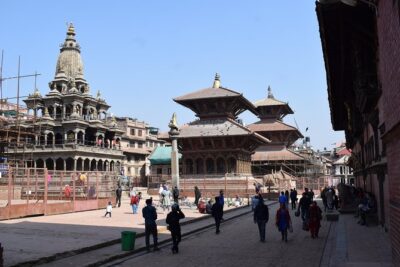
Full-Day 7 UNESCO Tour with Lunch – Private/Group
Read our review →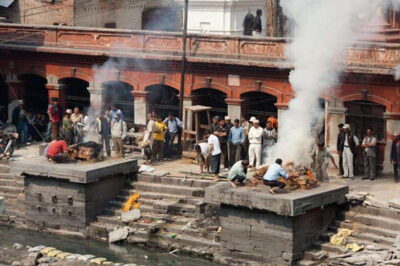
Kathmandu Private Sightseeing Tour | UNESCO World Heritage Sites
Read our review →Browse the lists this tour appears in