
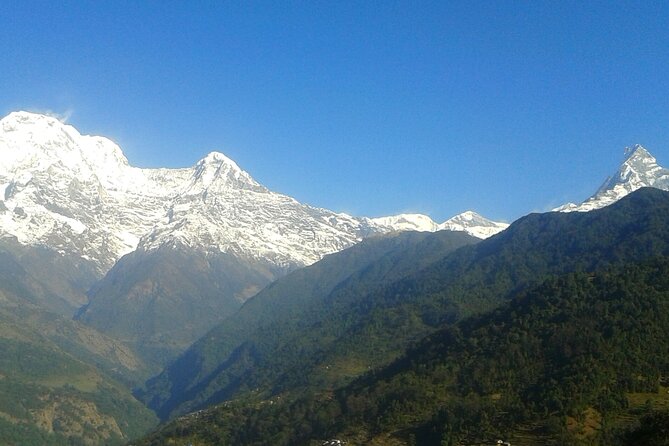
Reviewed · MARDI HIMAL TREKS
4 Days Mardi Himal Base Camp Trekking in Pokhara
Mardi Himal Base Camp gives you a compact Himalayan trek with a real sense of progress. In four days, you leave Pokhara by car, walk through Australian Camp and Forest Camp, climb toward High Camp, reach the base camp early on day three, then descend through Siding Village.
I like the private group format, which keeps the pace and daily decisions focused on your own party. I also like the practical package: permits, TIMS, guesthouse accommodation, hotel pickup, and transport back to Pokhara are included. The main drawback is the demanding schedule, especially the eight-hour base camp day and the nine-hour final day.
Key points to know before booking
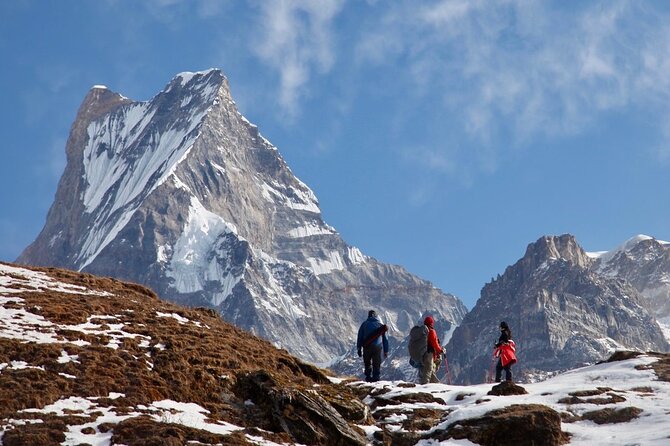
- Four days from Pokhara: The route begins with a private ride to Kande and ends with transport from Siding Village back to Pokhara.
- Base camp on day three: You start early from High Camp, walk to Mardi Himal Base Camp, enjoy the mountain views, and return toward Low Camp.
- Private trekking group: Only your party takes part, with an English-speaking local guide leading the way.
- Guesthouse stays: Accommodation is included, but all meals are extra and cost about 3,500 NPR per person per day.
- Moderate fitness required: The days run about six, six, eight, and nine hours, so this is not a casual sightseeing walk.
- Free cancellation up to 24 hours ahead: Cancel at least 24 hours before the start time for a full refund.
Why this four-day route works from Pokhara
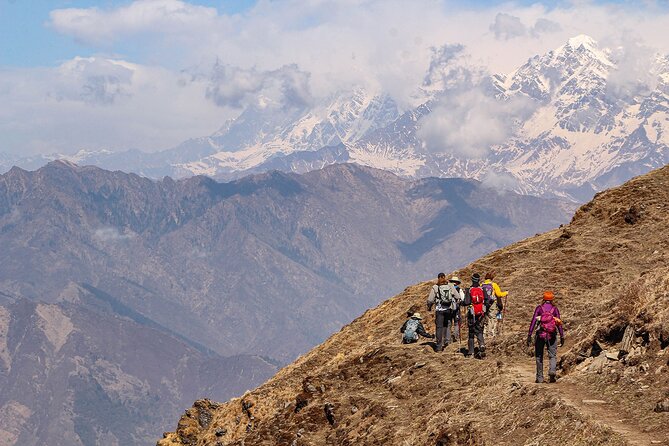
Mardi Himal is a useful choice if you want a Himalayan trek without committing to a long expedition. The route gets you out of Pokhara quickly, then builds from woodland paths to higher mountain viewpoints over several walking days.
The route has a clear rhythm. Day one takes you from Kande to Forest Camp. Day two gains more height and reaches High Camp. Day three is the big prize, with an early walk to Mardi Himal Base Camp. Day four brings a long descent to Siding Village and a shared Jeep back to Pokhara.
That structure makes the trip easy to understand. You are not spending several days on approach roads or repeating the same section of trail. Each day changes the setting, from the Australian Camp area to rhododendron forest, then to open Himalayan views.
The tradeoff is that four days leaves little room for a slow pace. You will need to be ready for long walking days, and there is no spare day listed for delays or rest. I would choose this trek when I have limited time and a reasonable level of fitness.
More Mardi Himal treks:
- Pokhara: 4-Day Mardi Himal Trek
★ 4.9 · 59 reviews - Private Mardi Himal Trek
★ 5.0 · 42 reviews - Mardi Himal Trek
★ 5.0 · 41 reviews
Day one: Kande, Australian Camp, and Forest Camp
Your day begins with pickup from your Pokhara hotel. A private car takes you to Kande, where the walking starts. That private transfer is a small but useful part of the package. You avoid arranging a separate ride and can begin the trek with your guide and your own group.
The trail passes through Australian Camp before continuing toward Forest Camp. Australian Camp is an important early stop because it gives the first broad mountain setting of the trek, while the path beyond moves into more wooded surroundings.
The full walking day is listed at about six hours. That is a proper trekking day, not a short warm-up. You will want sturdy walking shoes, water, sun protection, and a small day bag that keeps essentials close.
The shift into forest is part of the route’s appeal. Instead of putting you straight onto an exposed ridge, the first day lets you settle into a steady walking pattern. Your guide can help with navigation, timing, and the practical details of moving through the route.
Forest Camp is your overnight area. Accommodation is in a guesthouse, which gives you a simple base for the night rather than a resort-style stay. The package includes the room, but meals do not come with the tour price.
Day two: Six hours through rhododendron forest to High Camp
Day two starts early from Forest Camp and heads toward High Camp. The route passes through rhododendron forest, with quieter wooded sections and mountain views appearing along the way.
An early start matters here because the day is again about six hours. It also prepares you for the next morning, when you will leave early for the base camp. The schedule is built around reaching the higher overnight point before the main base camp walk.
High Camp is more than a place to sleep. It positions you for the trek’s main viewing day and cuts down the distance you need to cover before reaching Mardi Himal Base Camp. If the route were arranged with a lower overnight stop, day three would be even more taxing.
You should still keep expectations practical. This is guesthouse trekking, not a polished hotel stay. The tour provides accommodation, but it does not list meals as included. The stated food estimate is about 3,500 NPR per person per day, so budget for roughly 14,000 NPR across four days if you use that guide figure for the full trip.
The day’s forest scenery is a good counterpoint to the open views higher up. You get changing surroundings rather than four days of the same type of path. I would also treat the tree cover as a useful reminder that this route is a trek first, and a viewpoint tour second.
Day three: Mardi Himal Base Camp and the longest mountain day
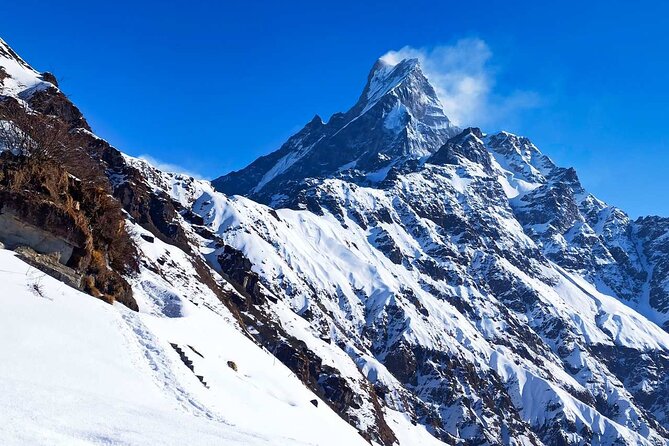
Day three is the heart of the experience. You start early from High Camp and walk toward Mardi Himal Base Camp, with about eight hours of trekking listed for the day.
The early start is practical. It gives you more time at the base camp and allows you to enjoy the mountain views before returning toward Low Camp. The route is designed for the base camp to be a proper destination, not a rushed photo stop squeezed into a downhill day.
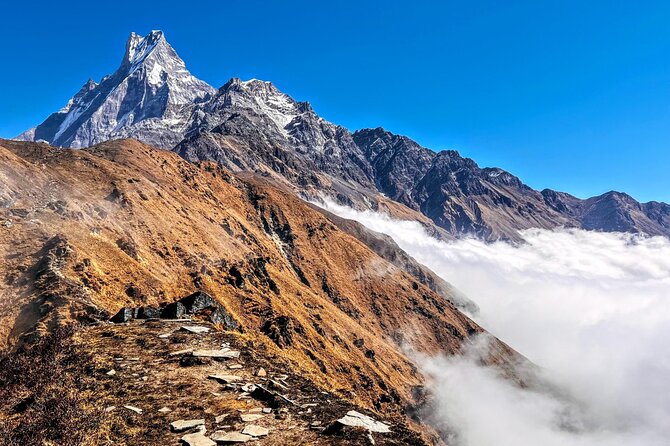
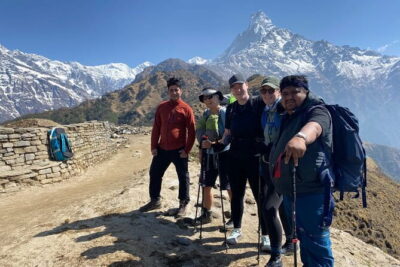
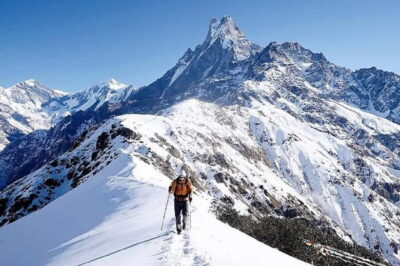
At Mardi Himal Base Camp, the attraction is the broad Himalayan panorama and the sense of reaching a clear goal. After two days of walking through forest and gaining height, the scenery opens into a larger mountain setting. This is the point where the route pays off.
The return toward Low Camp means day three is not finished when you reach the base camp. You still have to walk back after spending time at the viewpoint. Eight hours is the longest stated trekking day, so I would keep the morning simple, carry only what you need, and follow your guide’s advice about pace and breaks.
This is also the day to be honest about your fitness. The tour calls for moderate physical fitness, but the word moderate should not be mistaken for easy. An eight-hour mountain day can feel much harder than a similar amount of walking on flat city streets.
You may find that the private setup helps here. Your guide is working with your group alone, rather than trying to keep a large mixed party together. That can make it easier to discuss pace and rest stops, though the published details do not promise a custom itinerary.
A few more Annapurna Region days to weigh up
- Pokhara: 4-Day Ghorepani, Poonhill & Ghandruk Mountain Trek
★ 5.0 · 132 reviews - 4 Days Poon Hill Trek
★ 5.0 · 94 reviews - 4-day Poon Hill Trek
★ 5.0 · 74 reviews - 4-Day Private Poon Hill Trekking Tour
★ 5.0 · 58 reviews
Day four: A long descent through Siding Village
The final day takes you downhill to Siding Village, then continues by shared Jeep to Pokhara. The full day is listed at about nine hours, making it the longest day on the schedule by total duration.
The walking portion passes through lush forest and a quieter setting before reaching Siding. Descending can sound easy, but long downhill sections can be tiring, especially after the base camp day. Trekking poles may be useful, though the tour information does not list equipment rentals or gear provision.
Siding Village is the handoff point between trail and road. From there, a sharing Jeep brings you back to Pokhara. Shared transport keeps the return practical and is part of the value of the package, but it may not offer the same privacy as the private car used from Pokhara to Kande.
The day ends in Pokhara Lakeside. That is a convenient finish if you want to continue with the city’s restaurants, hotels, and lakefront atmosphere. Keep in mind that the nine-hour estimate includes the return portion of the day, so your arrival time can depend on the pace of the descent and the road journey.
What the $245 price really covers
At $245 per person, the tour includes several costs that can add up quickly if arranged separately. You receive hotel pickup and drop-off, the private Pokhara to Kande transfer, the shared Jeep from Siding to Pokhara, trekking permits, TIMS, an English-speaking trekking guide, and guesthouse accommodation.
You also get a private trip, meaning only your own party participates. That is useful for couples, families, and small friend groups who prefer not to be tied to an unknown group’s pace. Group discounts are offered, so larger private parties should ask how the price changes before booking.
The largest extra cost is food. Meals are available for purchase, with an estimate of about 3,500 NPR per person per day. Gratitude for the guide and other service staff is also not included, so plan for that separately.
The value is strongest if you want a ready-made trekking arrangement rather than a bare route plan. The permits, transport, guide, and accommodation are handled together. The price is less attractive if you already have your own guide, permits, and transport arranged, or if you are looking for a luxury stay.
The guide and private-group advantage
The tour uses an English-speaking local trekking guide familiar with the route, local culture, and mountain viewpoints. No guide name is provided, so you should ask for your guide’s name and experience before departure if that matters to you.
The private format deserves special attention. A solo woman who booked the trip wanted a reputable guide because she was unsure about hiking for several days in a foreign country alone. That makes the guide relationship one of the key reasons to consider this option, especially if you want company and route support without joining a large group.
At the same time, a guide cannot remove every challenge from a mountain trek. You still need to manage your own fitness, clothing, water, and personal comfort. I would use the guide for pacing and route decisions, while treating the trip as an active outdoor commitment rather than a guided walk in town.
The cultural side is also part of the experience. The route allows contact with local communities and passes through villages such as Siding. The details of village visits are not fixed, so you should not book this expecting a formal cultural program. The benefit is the chance to see how the trail connects forest, mountain settlements, and Pokhara.
What to pack and what to clarify
The supplied details do not include a packing list, equipment list, altitude figures, or a stated room arrangement. That means you should ask a few direct questions before paying.
Confirm what guesthouse accommodation means for your group, what bedding is provided, and how meals are purchased along the route. Ask about water access, luggage handling, and the expected size of your day pack. These points can affect comfort more than the headline price.
For the walking itself, plan for four long days. Bring broken-in footwear, warm layers, rain protection, sun protection, personal medication, and enough small essentials for a full day outside. The route includes forest, higher mountain sections, and a long descent, so conditions can change during the day.
You should also confirm the pickup point and the expected return timing to Pokhara. The first transfer is private, while the Jeep from Siding is shared. That distinction matters if you value privacy or need to coordinate onward plans.
Who should book this Mardi Himal trek
I would recommend this trip to someone who wants a short, structured Himalayan trek from Pokhara and prefers having a guide, permits, accommodation, and transport arranged together.
It suits you best if:
- You have four days available and want a focused mountain route.
- You have moderate fitness and are comfortable with six to nine-hour days.
- You prefer a private group rather than a large scheduled party.
- You want local guide support, especially as a solo trekker.
- You are happy with guesthouse accommodation and meals purchased separately.
- You value mountain views and forest walking more than luxury facilities.
I would look for another option if you want a relaxed schedule, a rest day, included meals, or a high level of accommodation. I would also hesitate if you have not done long walking days before, since the base camp and return days are substantial.
The tour has a 4.8 rating from six reviews, including strong praise from a solo woman who chose a guide for added confidence on a multi-day trek. That is a small sample, so I would treat it as encouraging rather than conclusive. The practical facts of the route matter more: long days, basic accommodation, paid meals, and a clear early start for base camp.
Should you book this four-day trek?
Book it if you want a good amount of mountain scenery in a short window and appreciate having the main logistics bundled into one private trip. The route has a satisfying shape, with Australian Camp, rhododendron forest, High Camp, Mardi Himal Base Camp, and Siding Village each marking a different stage.
Before booking, make sure the four walking days match your fitness and ask the provider for the details that are not stated, especially the guide’s name, guesthouse arrangements, meals, and expected return time. If those answers suit you, $245 offers useful value for a guided trek with permits and transport included.
Free cancellation is available when you cancel at least 24 hours before the start time. Inside that window, the payment is not refunded and changes are not accepted.
FAQ
How long is the Mardi Himal Base Camp trek?
The experience lasts approximately four days.
Where does the trek begin?
After hotel pickup in Pokhara, you travel by private car to Kande, where the trek begins.
Which places are visited during the trek?
The route includes Australian Camp, Forest Camp, High Camp, Mardi Himal Base Camp, Low Camp, and Siding Village before returning to Pokhara.
Is a guide included?
Yes. An English-speaking trekking guide is included.
Is this a private tour?
Yes. Only your own group participates in the activity.
Are permits and TIMS included?
Yes. The trekking permit and TIMS are included.
Are meals included in the price?
No. Meals are available for purchase and are estimated at about 3,500 NPR per person per day.
What fitness level is required?
A moderate level of physical fitness is required. The listed days involve approximately six, six, eight, and nine hours of trekking or travel.
Just added around Annapurna Region
- 4 Day Mardi Himal Base Camp Trek from Pokhara★ 5.0 · 18 reviews
- 7-Day Trek to Annapurna Base Camp from Pokhara★ 5.0 · 12 reviews
- Private 4 Day Poon Hill Trek from Pokhara★ 5.0 · 16 reviews
- Annapurna Base Camp Trek from Pokhara and Kathmandu★ 5.0 · 7 reviews
- 6 days Annapurna Basecamp Trek★ 5.0 · 16 reviews
- “Exclusive Round-Trip Transfer: Pokhara to Jomsom & Muktinath”★ 5.0 · 11 reviews
- Poon Hill Ghandruk Circuit Trek from Pokhara 4 Days★ 5.0 · 10 reviews
- Pokhara: Poon Hill Ghorepani Short Trek★ 5.0 · 6 reviews
Mardi Himal Treks, compared.


Browse the lists this tour appears in