
Reviewed · MARDI HIMAL TREKS
From Pokhara: 4-Day Mardi Himal Base Camp Trek
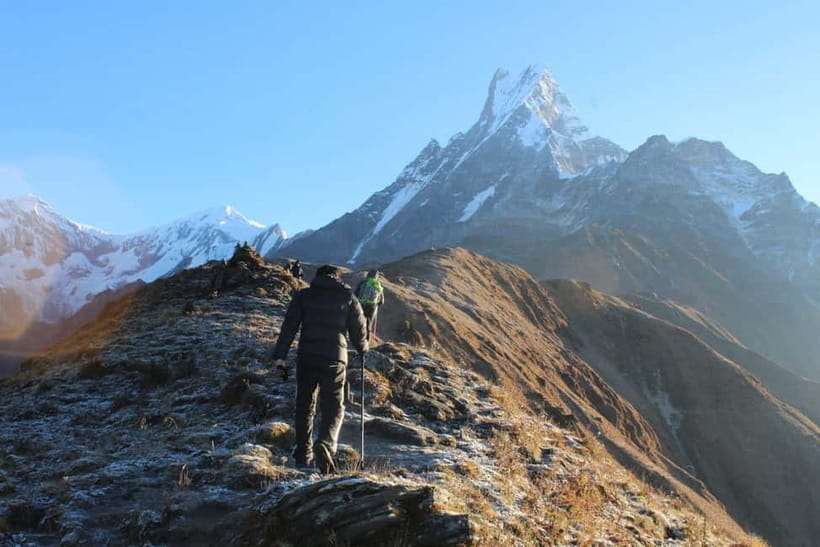
Mardi Himal gives you a big Himalayan payoff in just four days. You walk from Pokhara into rhododendron and oak forest, climb to High Camp, then rise before dawn for views of Machapuchhare and Annapurna South. The trail feels quieter than the better-known routes in the Annapurna region, though quiet does not mean easy.
I like the way this trip changes scenery so quickly, from village paths to forest shade to open alpine slopes. I also like the private format. Guides such as Anil, Santosh, Bala, and Chandra have adjusted the pace for first-time hikers, solo women, and people recovering from illness. The main catch is the schedule: Base Camp is optional, and some people reach only the viewpoint because four days leave little room for slow walking or poor weather.
Key points
- Sunrise at around 4,200 meters: The early hike from High Camp leads to a viewpoint facing the Annapurna range and Machapuchhare.
- A genuine four-day mountain route: You spend three nights in simple teahouses at Forest Camp, High Camp, and Low Camp.
- Private guiding: Your English, Hindi, or Nepali-speaking guide can adjust the pace and help with steep stairs, changing weather, and altitude.
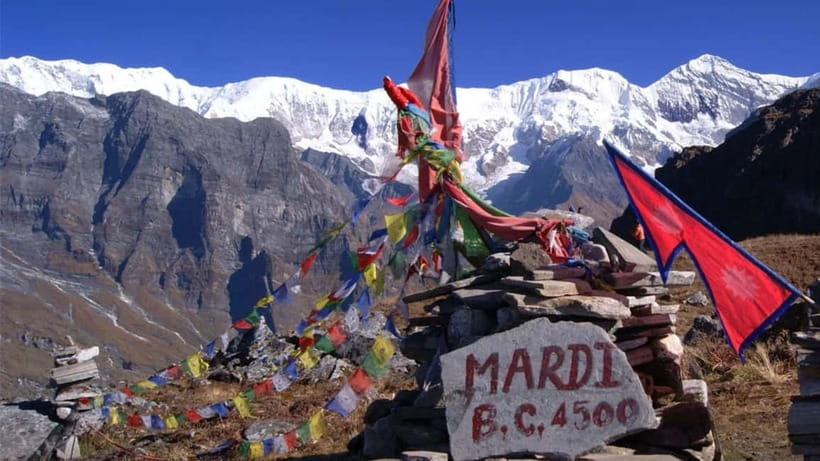
- Base Camp is not guaranteed: The optional extension reaches roughly 4,500 meters, but time and fitness decide how far you go.
- Strong overall value at $138: Transport, permits, guide costs, gear such as a trekking stick or sleeping bag when needed, and lodging are covered, with meal and porter options requiring careful checking.
- A useful warning about meals: One detailed account found the prepaid meal option much more expensive than ordering directly at the teahouses.
Why the Mardi Himal route works in four days
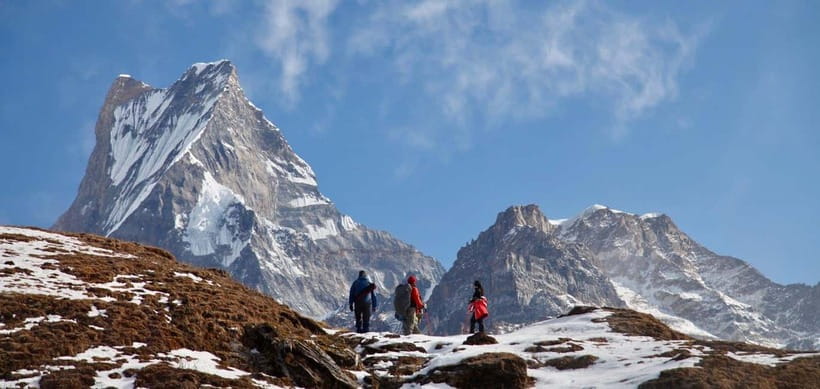
Mardi Himal is a good choice if you want a short Himalayan trek without committing to a week or more on the trail. You leave Pokhara by road, then walk uphill through forest and mountain villages before reaching open high ground. The return route uses a different side of the ridge, finishing through Siding and Lumre.
That variety matters. You are not walking the same path up and down, and the views keep changing. Early sections offer shade and bird-filled forest, while the upper trail gives you wider views of snow-covered peaks. The final day brings village life back into focus.
The route is also private rather than a fixed large-group departure. That gives you more control over breaks and walking speed. If your legs are strong, you can keep moving. If the stairs begin to wear you down, your guide can slow the day and help you decide whether the optional Base Camp section makes sense.
Still, four days is compact. The schedule includes several long walking days, with roughly five to seven hours on the first two days. Add steep steps, thin air, and cold temperatures, and this is not a casual stroll from Pokhara.
More Mardi Himal treks:
- Pokhara: 4-Day Mardi Himal Trek
★ 4.9 · 59 reviews - Private Mardi Himal Trek
★ 5.0 · 42 reviews - Mardi Himal Trek
★ 5.0 · 41 reviews
Day 1: Kande to Forest Camp through Australian Camp
Your pickup can be arranged from a hotel in Pokhara Lakeside, the Sarangkot area, or Pokhara International Airport. The drive to Kande takes about an hour. From there, the trail heads toward Australian Camp and Pothana before continuing through forest to Forest Camp at about 2,550 meters.
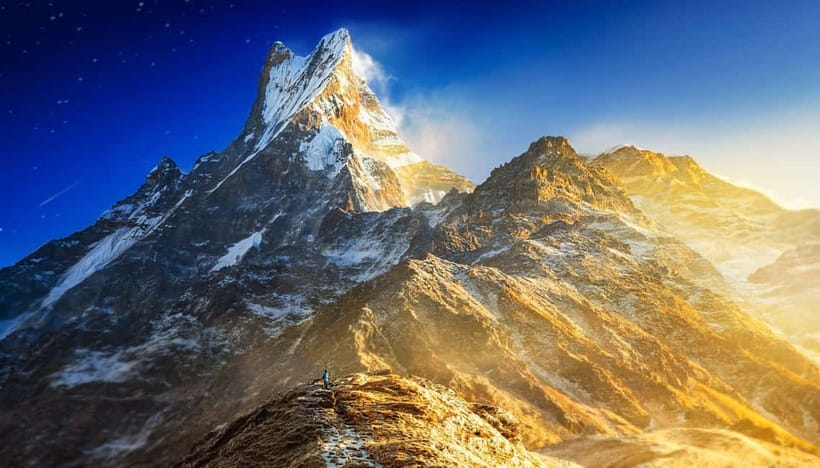
This opening day sets the tone. You get mountain views early, then spend much of the route on wooded paths. Rhododendron and oak provide welcome shade, but the trail also includes uphill sections that test your legs before you have settled into the rhythm of the trek.
The listed walking time is about five to six hours. You sleep in a simple teahouse in Forest Camp, where the emphasis is on warmth, food, and rest rather than comfort. Bring cash for personal spending, since personal expenses are not covered.
Rain is possible on this day, and one account describes trekking through rain while still enjoying the mountain views. A waterproof jacket, dry change of clothes, and protection for your camera are not optional luxuries here. They are sensible packing choices.
Day 2: The long climb to High Camp
Day two is the hardest sustained climb for many people. You walk for roughly six to seven hours through dense rhododendron and oak forest, gaining height toward High Camp at about 3,580 meters.
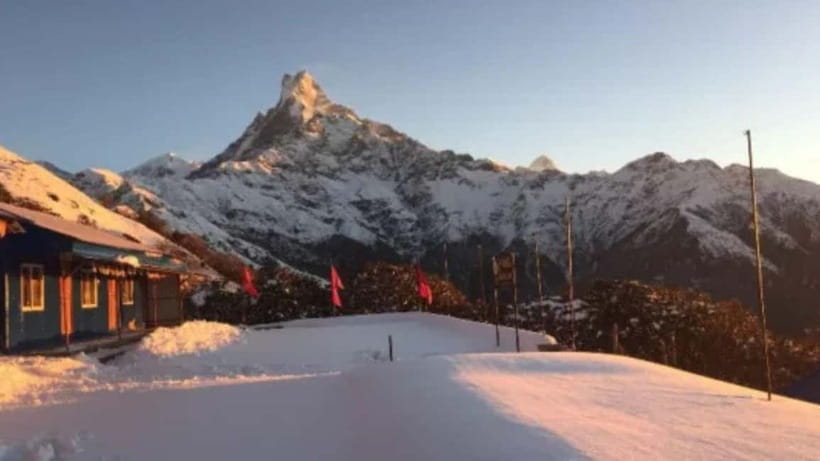
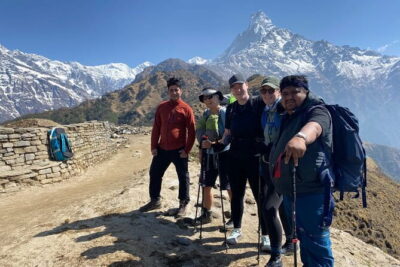
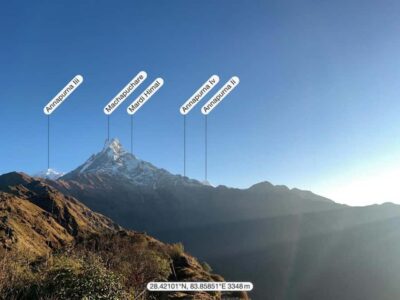
The trees gradually thin as the trail reaches more open ground. At High Camp, the reward is a clear view toward Machapuchhare and Annapurna South. This is the point where the trek feels properly Himalayan, with cold air, exposed slopes, and a much bigger view than on day one.
The altitude deserves respect. Temperatures can change sharply, and higher areas are often very cold. Pack warm layers, gloves, and a hat, even if Pokhara feels mild when you leave. Your guide can help monitor how you are coping, but you still need to speak up if you feel unwell.
High Camp is also the practical base for the sunrise walk. Try to keep your evening simple: eat, organize your daypack, prepare warm clothing, and get as much sleep as the early start allows. The teahouse is basic, so do not expect hotel-style facilities.
Day 3: Sunrise, the viewpoint, and the Base Camp decision
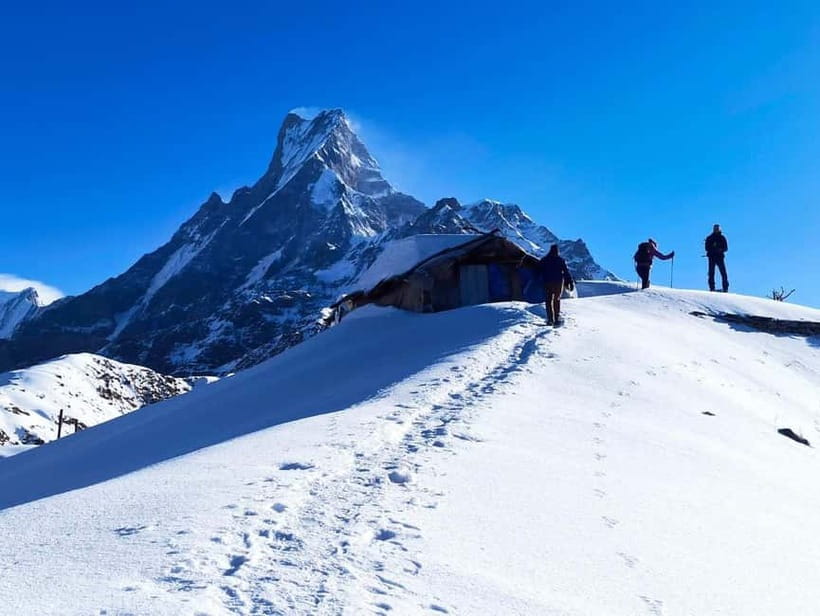
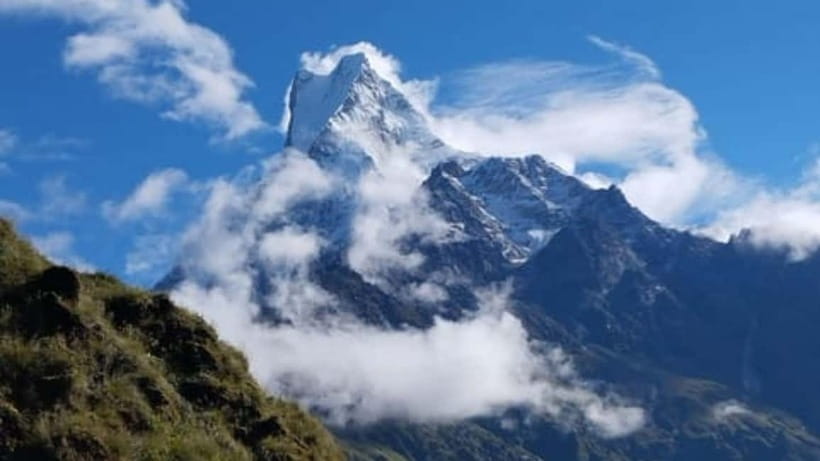
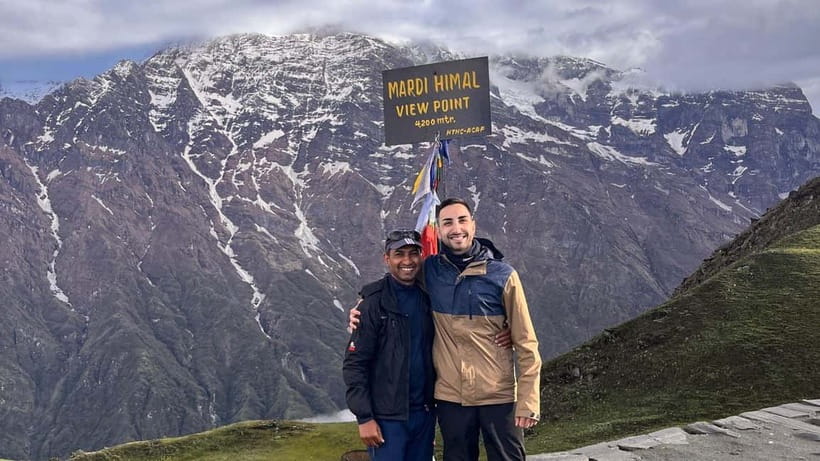
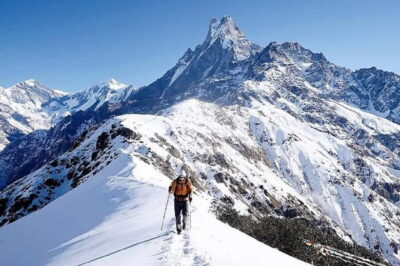
The early morning climb from High Camp is the trip’s main event. The hike to Mardi Himal Viewpoint takes about three to four hours and reaches approximately 4,200 meters. From there, you can watch light spread over the Annapurna range and Machapuchhare.
The sunrise depends on the weather. Cloud can block the first light, as happened on one April outing, but mountain views can still appear later. This is a good reason to carry patience along with your camera. The setting is impressive even when the sky does not cooperate perfectly.
The optional walk to Mardi Himal Base Camp reaches around 4,500 meters. This extra section is for people who still feel strong after the climb to the viewpoint. It is not a box to tick at any cost. If you are moving slowly, feeling sick, or losing time, stopping at the viewpoint is the sensible call.
This timing explains one of the main limitations of the four-day plan. A participant with limited time did not reach Base Camp but still found the viewpoint scenery worthwhile. You should book this trip for the route and views, not only for a photograph at a particular sign.
After the morning high point, you descend to Low Camp at approximately 2,970 meters. The descent takes another three to four hours. Going down is easier on your breathing but can be hard on knees and thighs, especially after the early climb.
A few more Annapurna Region days to weigh up
- Pokhara: 4-Day Ghorepani, Poonhill & Ghandruk Mountain Trek
★ 5.0 · 132 reviews - 4 Days Poon Hill Trek
★ 5.0 · 94 reviews - 4-day Poon Hill Trek
★ 5.0 · 74 reviews - 4-Day Private Poon Hill Trekking Tour
★ 5.0 · 58 reviews
Day 4: Down through Siding and Lumre
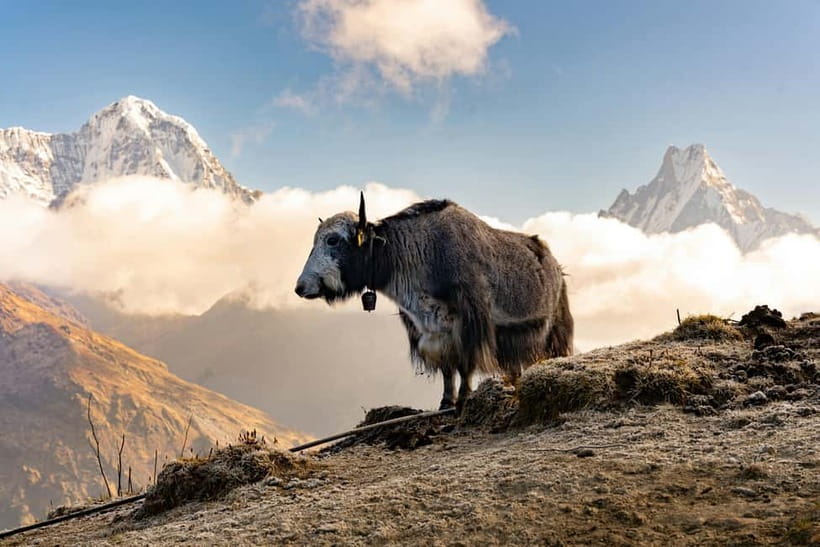
The final day leaves the high ridge behind. You walk downhill for about four to five hours to Siding Village, then continue for roughly an hour toward Lumre.
This section offers a different reward from the high mountain views. Villages, local paths, and the slower pace of rural Nepal replace the exposed upper trail. Several guides, including Tanka and Bishnu, have added cultural and nature explanations along the way, which can turn a long descent into a more meaningful walk.
From Lumre, a roughly one-hour drive returns you to Pokhara. The tour can drop you at your Lakeside hotel or Pokhara International Airport, making it useful if you are connecting to another part of Nepal. Confirm the timing with your guide, especially if you have a flight.
What the private guide adds
The guide is one of the strongest reasons to choose this arrangement. The company assigns English, Hindi, or Nepali-speaking government-certified guides, and names that appear with past departures include Anil, Tanka, Dhanapati, Santosh, Bala, Chandra, Bishnu, Jeet Bhadur, and Golman.
The practical value is not just navigation. A guide can adjust the pace, suggest breaks, help with luggage when stairs become tiring, arrange teahouse stays, and explain local customs, plants, mountains, and beliefs. Anil has been praised for patient pacing and photography, while guides such as Bala and Chandra have helped less experienced hikers manage difficult sections.
The private format is especially useful for solo hikers. One solo woman found the arrangement comfortable, and several first-time trekkers received close support when they were tired or unwell. You should still be honest about your fitness before starting. A flexible guide cannot remove the steep climbs.
A porter is available if that option is selected. If you use one, pack a small daypack with water, warm layers, rain protection, snacks, and personal medicine. Keep essentials with you rather than burying them in larger luggage.
Teahouses, meals, and what $138 really covers
At $138 per person, this is a strong-value short trek if you use the included services. The package covers round-trip transport, permits, paperwork, TIMS fees, teahouse accommodation, guide costs, government and local taxes, and a first aid kit. Guide expenses include salary, meals, accommodation, transport, insurance, and equipment.
A trekking stick or sleeping bag can be supplied when needed, and luggage storage in Pokhara is included. Those details save both money and hassle, especially if you are carrying a larger suitcase for time in Nepal.
Food needs closer attention. Breakfast, lunch, and dinner are included only if you select the meal option. One detailed account found that this option cost far more than ordering meals directly at the teahouses, while drinks and extras were still separate. Before paying, compare the meal supplement with the likely menu prices and ask the operator exactly what the option covers.
The teahouses are simple lodges, not luxury accommodation. You should expect basic rooms and communal mountain facilities rather than polished hotel service. Their real value is location: they let you sleep along the route and start the sunrise walk from High Camp instead of making a punishing approach from lower down.
Fitness, weather, and packing
You need a reasonable level of fitness and good general health. The trip includes long uphill days, steep stair sections, a climb to about 4,500 meters if you continue to Base Camp, and a substantial descent on day three.
Pack for two climates. Pokhara may be warm, while High Camp can be very cold. Bring hiking shoes, comfortable clothes, hiking pants, warm layers, rain protection, a change of clothes, and a camera protected from wet weather. Hand sanitizer or tissues are also listed as useful items.
Travel insurance is mandatory, and emergency rescue services are available if needed. Carry your passport or ID card and cash for personal costs. You must send a passport copy at least one day before departure so the required Nepal permits can be arranged.
The route can be wet, cloudy, or clear. You may not get the perfect sunrise, so keep your expectations flexible. The forest, villages, and mountain views still make the walk worthwhile when the sky changes.
Who should book this trek
I would choose this trip if you want a private, guided introduction to Himalayan trekking from Pokhara and have only four days available. It suits active first-time hikers who want support, solo walkers who prefer company, and people who value a flexible walking pace.
It is also a good fit if you want a route with fewer crowds than Nepal’s most famous trekking corridors. You get forests, alpine ground, mountain viewpoints, villages, and teahouse stays without needing a long expedition.
I would hesitate if you dislike steep stairs, cold nights, simple lodging, or early starts. I would also think twice if reaching Mardi Himal Base Camp is your sole aim. The viewpoint is the more reliable target on this timetable, and bad weather or a slow pace can make the final section impractical.
The high rating makes sense because the guides receive the strongest praise, especially for patience, safety, cultural explanations, and help on hard climbs. The meal supplement is the main value issue to settle before booking.
Should you book the Mardi Himal trek?
Book it if you want a compact mountain route with excellent scenery, private guiding, and most major trekking costs arranged in advance. At $138, the package is particularly appealing when you need transport, permits, lodging, guide support, and luggage storage.
Go in with realistic expectations. Four days can take you to the viewpoint and may take you to Base Camp, but the latter depends on fitness, weather, and timing. Select the porter and meal options only after checking their prices, and prepare for steep trails rather than a gentle holiday walk.
For a first Himalayan trek, this is a sensible choice. You get strong mountain views, real village and teahouse contact, and a guide who can help turn a demanding route into a manageable one.
FAQ
How long is the Mardi Himal trek from Pokhara?
The activity lasts four days, including transport from Pokhara, three overnight stays, the trek to High Camp and the viewpoint or Base Camp, and the return to Pokhara.
Is Mardi Himal Base Camp guaranteed?
No. The walk to Base Camp is optional and depends on your fitness, health, weather, and available time. The viewpoint at about 4,200 meters is the main high point in the schedule, while Base Camp is around 4,500 meters.
Where does the trek start?
You drive from Pokhara to Kande, which takes about one hour. The walking route then passes through Australian Camp and Pothana before reaching Forest Camp.
Where do you sleep during the trek?
You stay in simple tea houses or lodges at Forest Camp, High Camp, and Low Camp.
Are meals included?
Breakfast, lunch, and dinner are included if you choose the meal option. Personal expenses, including extra purchases, are not included. Check the cost of the meal option carefully before selecting it.
Is a porter included?
A porter is available if that option is selected. The guide is included, along with the guide’s meals, accommodation, insurance, salary, transport, and equipment.
What languages can the guide speak?
Live guiding is available in English, Hindi, and Nepali.
Do I need travel insurance?
Yes. Travel insurance is mandatory, and emergency rescue services are available if required.
Can I cancel the booking?
You can cancel up to 24 hours in advance for a full refund. You can also reserve now and pay later, according to the activity terms.
Just added around Annapurna Region
- 4 Day Mardi Himal Base Camp Trek from Pokhara★ 5.0 · 18 reviews
- 7-Day Trek to Annapurna Base Camp from Pokhara★ 5.0 · 12 reviews
- Private 4 Day Poon Hill Trek from Pokhara★ 5.0 · 16 reviews
- Annapurna Base Camp Trek from Pokhara and Kathmandu★ 5.0 · 7 reviews
- 6 days Annapurna Basecamp Trek★ 5.0 · 16 reviews
- “Exclusive Round-Trip Transfer: Pokhara to Jomsom & Muktinath”★ 5.0 · 11 reviews
- Poon Hill Ghandruk Circuit Trek from Pokhara 4 Days★ 5.0 · 10 reviews
- Pokhara: Poon Hill Ghorepani Short Trek★ 5.0 · 6 reviews
Mardi Himal Treks, compared.

Browse the lists this tour appears in