
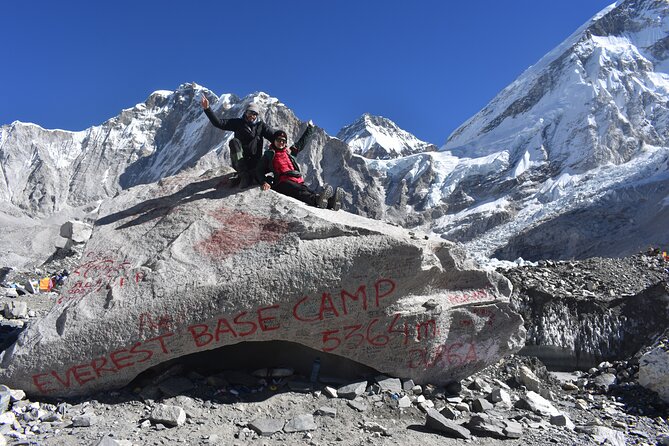
Reviewed · HIKING & TREKKING
Everest Basecamp Trek: 14 days
Everest Base Camp is not a quick mountain outing. It is a 14-day high-altitude trek through Sherpa villages, suspension bridges, Buddhist monasteries, and some of the world’s most striking Himalayan views. The big rewards are clear: you reach Everest Base Camp and climb Kala Patthar for the closest viewpoint of Mount Everest on this route.
I like the sensible acclimatization stops in Namche Bazaar and Dingboche, plus the practical package of permits, flights, porters, meals, and accommodation. The main caution is the altitude and the physical demand. The itinerary also compresses a few daily transitions, so you should confirm the exact overnight villages before departure.
Key points to know before you book
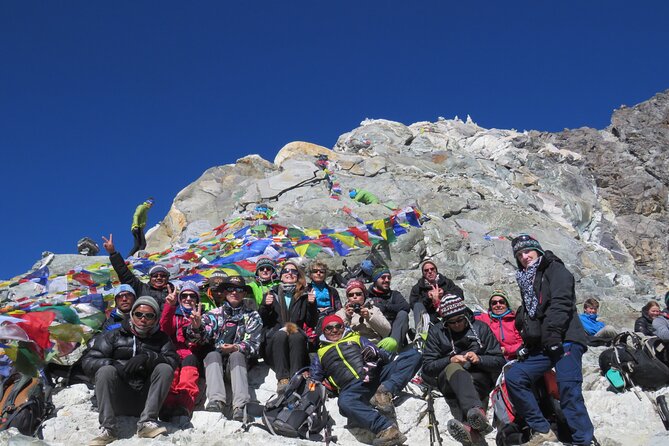
- Kala Patthar is the visual high point: The pre-sunrise climb gives you the nearest stated viewpoint of Mount Everest on the trek.
- Namche gets a full acclimatization day: You can hike toward Syangboche instead of simply sitting in the lodge.
- The trip uses Lukla flights: Round-trip airfare is included, but mountain flight schedules can affect the plan.
- You trek with a licensed guide and porters: One porter is provided for every two clients, with an English-speaking, first-aid-trained guide.
- The private format keeps the group personal: Only your own booked group participates in the activity.
- The price covers a useful core package: At $1,650 per person, permits, domestic flights, accommodation, breakfasts, lunches, dinners, and transfers are included.
Reaching the Khumbu from Kathmandu
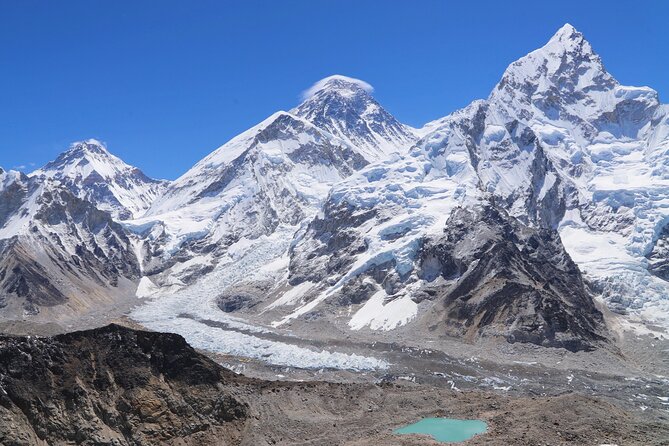
Your trip begins with an airport pickup at Tribhuvan International Airport. A representative from Iconic Holiday Nepal meets you in the terminal and takes you to your Kathmandu hotel. Two nights of tourist-standard hotel accommodation with breakfast are included, and the airport transfers use a private tourist vehicle.
Your first afternoon is based in Thamel, Kathmandu’s main visitor district. This is where you can handle last-minute shopping, eat at a wide range of restaurants, and get used to the city before heading into the mountains. The supplied schedule allows about four hours here, though the exact shape of that time depends on your arrival.
Thamel is useful rather than peaceful. It is full of travel companies, hotels, restaurants, nightclubs, and shops. You can find trekking supplies here, but do not assume every item you need will be available in your preferred size or quality. If you arrive late or your luggage is delayed, the included airport pickup takes some pressure off the first day.
The next morning, you fly to Lukla. Depending on flight conditions and current airport operations, the departure may be from Kathmandu or from Manthali Airport. The flight itself lasts about 30 minutes, with a second short period at Lukla Airport for arrival procedures and orientation.
Lukla is the gateway for many treks in the Everest region. Its airport is busy during the trekking season, and the mountain setting makes the arrival memorable. It also makes the schedule less predictable. Flights can be affected by weather and operating conditions, so keep your international flight connections separate from the return to Kathmandu and allow room for changes.
More trekking days out of Annapurna Region:
- Annapurna Circuit Trek with Tilicho Lake
★ 5.0 · 368 reviews - Annapurna base camp trek 5 Days
★ 5.0 · 252 reviews - Poon hill Trek 3 days
★ 5.0 · 176 reviews
The first hard walk to Namche Bazaar
The route toward Namche begins after the Lukla flight, with the trek through Phakding and onward to Namche Bazaar. The day from Phakding to Namche is described as a tough one, and you should take that seriously. The trail climbs, crosses several suspension bridges, and passes through small settlements and mountain scenery.
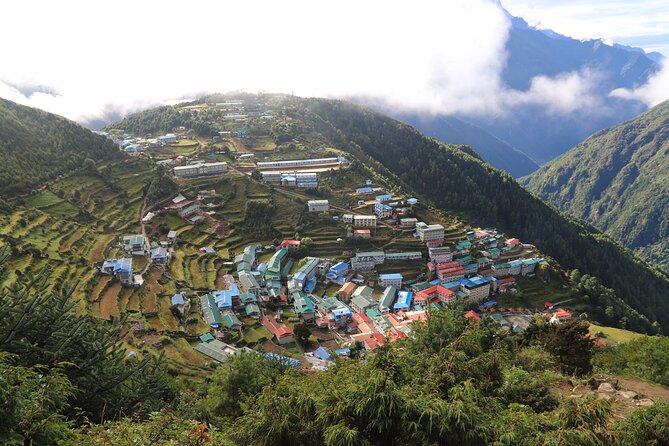
Namche Bazaar is more than a place to sleep. It is a developed high-altitude stop with hotels, restaurants, and tea houses. That gives you a better chance to rest properly before the trail becomes more demanding. The itinerary includes two days here, which is one of its strongest features.
Your acclimatization day includes an early hike toward Syangboche. This is a good use of time because you gain elevation during the day and return to Namche to sleep. You also get a closer look at the surrounding Khumbu area without carrying your full trekking load.
The exact walking distances and overnight arrangements are not provided, so ask for those details before you leave. The day-by-day outline also moves quickly from Lukla to the Phakding and Namche section. Your guide should explain where you spend the night after the Lukla arrival and how the walking hours are divided.
Tengboche brings monasteries and mountain views
From Namche, the trail descends toward the Dudh Kosi Valley before climbing again toward Tengboche. You pass Phungi Thanka, follow the Imja Khola, and continue uphill to the village. This is a varied day, with a downhill start followed by a sustained climb.
Tengboche is known for its monastery, and the schedule gives you time to visit Tengboche Gompa the following morning. That visit adds cultural meaning to the trek. You are not simply moving from lodge to lodge; you are passing through a region where Buddhist practice is part of daily life.
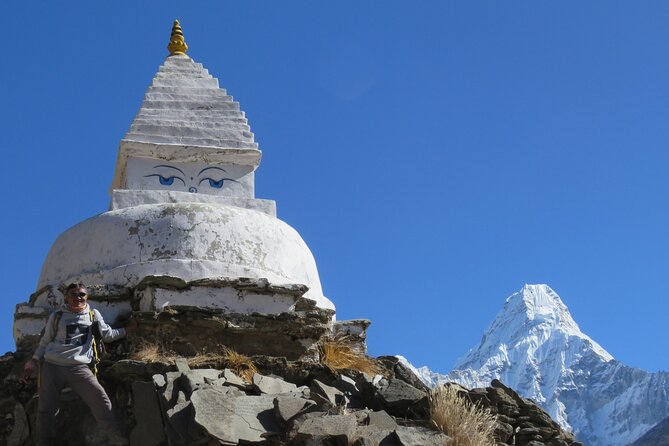
After Tengboche, the path descends to the Imja River and continues through Pangboche. Prayer flags and mountain villages become recurring features of the walk. The trail then leads toward Dingboche, where the air is thinner and the surroundings become more open and rocky.
The itinerary allows about two hours for the monastery stop. That is enough for a visit, but the timing may vary according to the monastery schedule, weather, and the pace of your group. Your guide can help you understand what is appropriate during the visit.
Dingboche and Nangkartshang: acclimatization with a purpose
Dingboche is another important rest point. The program includes a day focused on acclimatization and a climb toward Nangkartshang Peak. The stated walking time for the peak visit is about one hour, so this is not presented as a full-day summit attempt.
The purpose is to help your body adjust as the route climbs higher. The trek is becoming more demanding here, and a rest day is not wasted time. It gives you a chance to walk without your full forward schedule, then return to Dingboche before the next push toward the glacier and Base Camp.
You should still expect cold, thin air, and a slower pace at this stage. The tour is rated for people with moderate physical fitness, but that phrase should not be mistaken for easy. You need to be comfortable walking uphill for several hours and continuing on uneven mountain trails day after day.
The inclusion of acclimatization days is a practical strength. It does not remove the risk of altitude sickness, and the package does not include travel insurance or high-altitude emergency evacuation coverage. You must arrange that protection yourself.
More to do in the Annapurna Region:
- Trekking in Annapurna/Langtang/Everest/Upper Mustang regions
★ 5.0 · 161 reviews - Pokhara: 4-Day Ghorepani, Poonhill & Ghandruk Mountain Trek
★ 5.0 · 132 reviews - Ghorepani – Poon Hill Trek 3N-4D
★ 5.0 · 125 reviews - Annapurna Base Camp Trek
★ 5.0 · 111 reviews
The final approach through Dughla and Lobuche
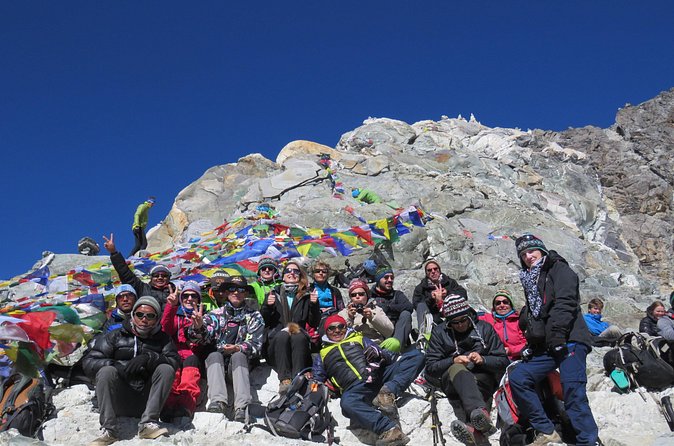
Leaving Dingboche, you cross more exposed ground and pass bare fields. The path gradually becomes steeper before reaching Dughla and the glacial route. From there, the trail continues toward Lobuche.
This section marks a change in feel. Earlier villages have more vegetation and settlement activity, while the upper route is more open and severe. You are walking close to the Khumbu glacier, with the altitude affecting every step.
The schedule divides the upper route between the approach to Lobuche, the Base Camp day, and the Kala Patthar morning. That division helps keep the biggest days manageable, though exact walking hours are not stated for every segment.
Accommodation during the trek is in twin-sharing guesthouses for 11 nights. These are described as tourist-standard guesthouses, not luxury lodges. You should expect basic mountain accommodation and shared arrangements rather than hotel-style comfort. The benefit is that lodging, meals, guides, and porters are organized in advance.
Everest Base Camp and the Khumbu Glacier
From Lobuche, the trail climbs along the Khumbu Glacier to Gorak Shep. Gorak Shep once served as the Everest Base Camp area, and from here you continue to the current Base Camp site. The program gives you about two hours at Everest Base Camp.
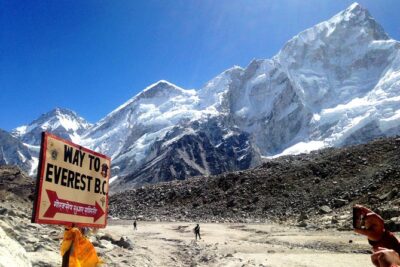
Reaching Base Camp is the emotional center of the trip. You are not climbing Mount Everest, and you do not reach the summit. You are standing at the staging area used by Everest expeditions, surrounded by glacier terrain and immense peaks.
The approach can feel more tiring than the distance suggests. The air is thin, the trail is uneven, and the route may involve loose rock and glacial ground. Your guide sets the pace, but you need to pay attention to your own condition and communicate clearly if you feel unwell.
Base Camp itself may look different from photographs depending on the season and expedition activity. The value is in the journey through the Khumbu and the physical sense of arriving at the foot of the world’s highest mountain, not in expecting a permanent village or museum at the destination.
Kala Patthar is the day for the view
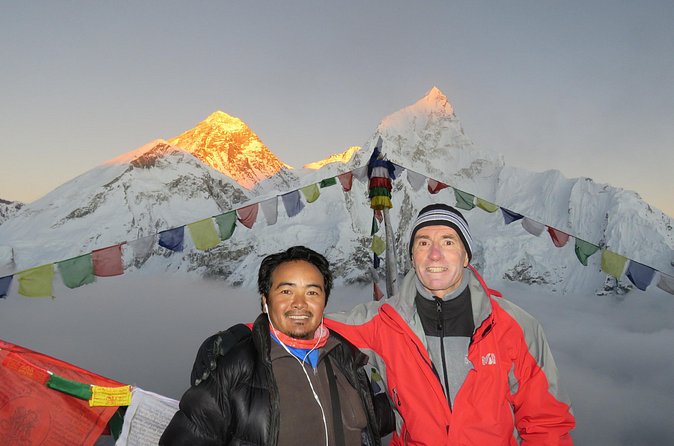
The next morning begins before sunrise with the climb to Kala Patthar above Gorak Shep. The stated walking time is about two hours. This is the best-known viewpoint on the route for a close view of Mount Everest, and the early start is designed to catch the mountain panorama in morning light.
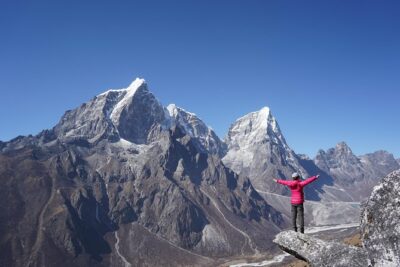
For many people, this is the visual highlight of the trek. You can see Mount Everest from a closer angle than at Base Camp, along with the surrounding Himalayan peaks. The climb is short compared with the full journey, but it is physically demanding because of the altitude and the early hour.
You return for breakfast before beginning the descent. This is a good example of why the itinerary needs reasonable fitness rather than simple sightseeing stamina. You may be tired by this point, yet the route still requires steady walking.
The program then turns back toward Namche Bazaar, retracing much of the earlier trail through Pangboche and Tengboche. Going downhill is usually easier on the lungs, but it can be hard on knees and ankles. Trekking poles would be a sensible personal item, though they are not listed among the inclusions.
Returning through Namche and Lukla
After the high-altitude section, the route continues back to Namche Bazaar. From there, you descend steeply along the hillside, enter forested sections, and cross the Dudh Kosi River several times on suspension bridges. Small settlements break up the walking day.
The return route offers a different experience from the climb in. You know the villages now, but the change in direction gives you fresh views. Descending through lower areas also brings back more vegetation and a less severe feel to the trail.
The final mountain flight takes you back to Kathmandu early in the morning. The aerial views are part of the appeal, but again, flight timing depends on conditions. On arrival, the local team transfers you to your hotel, where you have time to rest before departure.
The last day is an airport transfer timed to your onward flight. The package includes international and domestic airport transfers, but your international airfare and departure tax are not included.
What $1,650 includes, and what it does not
At $1,650 per person, the price has real value if you want the main logistics handled. It includes:
- Round-trip airfare between Kathmandu and Lukla
- Permits
- Two Kathmandu hotel nights with breakfast
- Eleven nights in twin-sharing guesthouses in the Everest region
- Airport transfers and private transportation
- A government-licensed, English-speaking guide with first-aid training
- Porters, at a ratio of one porter for every two clients
- Fourteen breakfasts
- Eleven lunches
- Eleven dinners
That is a broad package for a two-week Himalayan trek. The domestic flights alone are an important part of the cost, and arranging permits, lodging, porters, and meals separately would take time and coordination.
You still need to budget for lunch and dinner in Kathmandu, drinks, bottled or boiled water, international flights, travel insurance, emergency evacuation coverage, and tips for the trekking staff and driver. Water costs can add up over 14 days, so plan for that rather than treating it as a minor extra.
The private format is another value point. Only your group participates, so the pace and decisions are not tied to a large mixed party. Group discounts are offered, but the exact discount is not stated. Ask for the final price for your party before booking.
Who should choose this trek
This trek suits you if you want a structured route to Everest Base Camp with a licensed guide, porters, included meals, and domestic flights arranged. It is especially useful if you prefer a private group instead of joining a large shared departure.
You should be comfortable with extended uphill walking and basic guesthouse accommodation. Moderate physical fitness is required, and the altitude makes this much more serious than a standard walking holiday.
It may not suit you if you need flexible hotel comfort, dislike shared twin rooms, or have no cover for high-altitude evacuation. The route includes acclimatization days, but no itinerary can guarantee that your body will adjust well.
There are only four published ratings, all at the top score. That is a positive signal, but it is a small sample, so I would place more weight on the clear inclusions, private setup, and safety preparation than on the rating alone.
Final call: a strong package with one important check
I would choose this trek if I wanted a fairly direct Everest Base Camp plan with the costly essentials already bundled. The licensed guide, porter support, acclimatization days, permits, meals, and Lukla flights make the $1,650 price easy to understand.
Before paying, I would ask for the precise overnight schedule around Lukla and Phakding, the expected daily walking hours, the accommodation names, and the plan if a flight is delayed. I would also buy travel insurance that specifically covers high-altitude emergency evacuation.
Book it if you are ready for demanding walking, basic lodging, and changing mountain logistics. Skip it if you want a relaxed holiday or a fixed timetable. For a prepared hiker seeking Everest Base Camp without arranging every moving part alone, this is a practical and well-supported choice.
FAQ
Where does the Everest Base Camp trek begin?
The trip begins with pickup at Tribhuvan International Airport in Kathmandu, Nepal. The return airport transfer is also included.
Are flights between Kathmandu and Lukla included?
Yes. Round-trip airfare between Kathmandu and Lukla is included. The flight may operate from Kathmandu or Manthali Airport, depending on flight conditions and operations.
How many nights are included in Kathmandu?
Two nights in a tourist-standard Kathmandu hotel are included, with breakfast.
What accommodation is used during the trek?
The trek includes 11 nights in twin-sharing guesthouses in the Everest region.
Are meals included?
Fourteen breakfasts, 11 lunches, and 11 dinners are included. Lunch and dinner in Kathmandu are not included, and beverages, bottled water, and boiled water are also excluded.
Is travel insurance included?
No. You must arrange your own travel insurance, including high-altitude emergency evacuation coverage.
Just added around Annapurna Region
- 4 Day Mardi Himal Base Camp Trek from Pokhara★ 5.0 · 18 reviews
- 7-Day Trek to Annapurna Base Camp from Pokhara★ 5.0 · 12 reviews
- Private 4 Day Poon Hill Trek from Pokhara★ 5.0 · 16 reviews
- Annapurna Base Camp Trek from Pokhara and Kathmandu★ 5.0 · 7 reviews
- 6 days Annapurna Basecamp Trek★ 5.0 · 16 reviews
- “Exclusive Round-Trip Transfer: Pokhara to Jomsom & Muktinath”★ 5.0 · 11 reviews
- Poon Hill Ghandruk Circuit Trek from Pokhara 4 Days★ 5.0 · 10 reviews
- Pokhara: Poon Hill Ghorepani Short Trek★ 5.0 · 6 reviews
Hiking & Trekking, compared.
Nagarkot Sunrise View and Day Hiking from Kathmandu
Read our review →
Browse the lists this tour appears in