
Reviewed · EVEREST BASE CAMP TREKS
Everest Base Camp Trekking
The big prize here is not simply reaching Everest Base Camp. It is the gradual change from Kathmandu streets to pine forest, Buddhist villages, high yak country, glacier valleys, and finally the stark world around Everest. The 14-day route gives you time to adjust to altitude instead of racing uphill.
I like the small maximum group of 10, which should make it easier to ask questions and get help when you need it. I also like that the price includes teahouse accommodation, meals, and local transportation, so you can focus on walking rather than arranging each night and transfer. The main caution is simple: this is a serious high-altitude trek, not a sightseeing stroll. You need strong physical fitness, patience, and flexibility for mountain weather.
Key points to know before booking
- Fly to Lukla, then walk for nine trekking days: The route begins with a mountain flight and ends at Everest Base Camp and Kala Patthar before returning by the same general route.
- Acclimatization is built into the schedule: A rest day in Namche Bazaar and a slower rise through Phorse and Dingboche help break up the climb.
- Expect teahouse lodging: This is a practical mountain trip, not a hotel-based holiday. Meals and local transportation are included.
- The group is capped at 10 people: That is small enough for more personal attention without requiring a private trek.
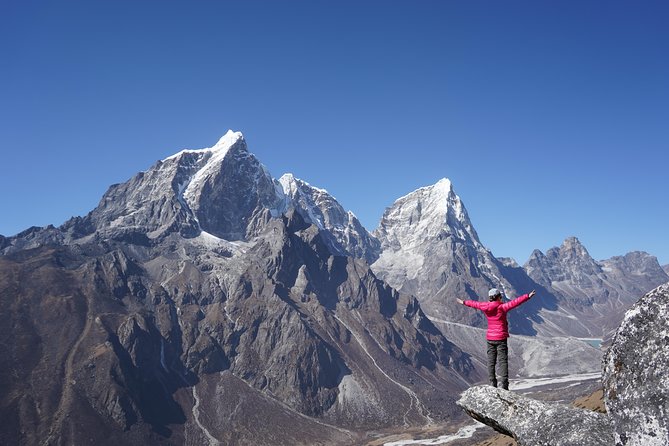
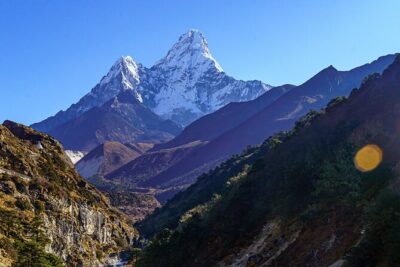
- The views keep improving: Thamserku, Ama Dablam, Khumbu Glacier, Everest, and the surrounding peaks appear at different points along the route.
- Guides matter here: Guides named Biru, Ambar, and Ramesh have been praised for safety, kindness, and help when altitude or illness became a problem.
From Kathmandu to the Lukla runway
Your trip begins at Tribhuvan International Airport, where an airport representative meets you and takes you to your hotel by private tourist vehicle. Day one is intentionally light. You can rest, or visit the company office to go over the trek and its details.
That arrival service is useful after a long international flight. Kathmandu can feel noisy and confusing at first, so having someone meet you at the airport removes one early chore. The plan also leaves room to recover before the real walking begins.
On day two, you take an early flight from Kathmandu to Lukla. The flight offers morning views of snowy peaks, and the landing at Tenzing-Hillary Airport is part of the adventure. Lukla is the gateway to the Khumbu region, and the change is immediate: the city disappears, the air feels different, and the route becomes a footpath.
Mountain flights are weather-sensitive. The program operates in all weather conditions, but that does not mean the flight schedule is immune to delays or changes. Keep your first day flexible and do not plan an important same-day connection after the trek unless you have allowed plenty of extra time.
More Everest Base Camp treks:
- Everest Base Camp Trek – 14 Days
★ 5.0 · 1,499 reviews - Everest Base Camp Trekking – 13 Day
★ 5.0 · 365 reviews - Everest Base Camp Trek -14 Days
★ 5.0 · 321 reviews
Lukla, pine forests, and Sagarmatha National Park
The first full walking day follows the Dudh Koshi River through pine forest. You pass small settlements and catch views of Mount Thamserku before reaching the entrance checkpoint for Sagarmatha National Park.
This is a fine opening stage because it gives you a taste of the Khumbu without throwing you straight into the highest elevations. The trail is scenic, but you should not mistake the lower altitude for an easy day. You are still walking on mountain paths, and the steady rhythm matters more than speed.
A guide is especially useful during this part of the route. The trail passes through settlements, forest, bridges, and river valleys, and a local guide handles the direction while explaining the people and customs of the area. You can give more attention to the scenery instead of constantly checking where the route goes next.
Namche Bazaar gives you time to adjust
Namche Bazaar is the largest settlement in the Khumbu region and an important stop on the trek. You will find ATMs, restaurants, bakeries, and internet cafes here, which makes Namche feel surprisingly well supplied after the first days on foot.
Day four is set aside for acclimatization, but it is not a day of doing nothing. The plan includes a short hike to a nearby viewpoint. This is a smart arrangement: you gain altitude during the day, then return to Namche to sleep lower than your highest point.
I like this pause because it gives you time to judge how your body is responding. High altitude affects people differently, and the guide can help you handle the pace. The program is not designed for rushing, and that matters more than shaving a day from the itinerary.
Namche is also one of the better places to sort out small needs. You may find internet access, food choices, and basic cash services here, but availability can vary. Use the stop to prepare for the more remote sections ahead rather than assuming every convenience will continue.
Phorse and Dingboche bring the serious mountain views
From Namche, the route continues toward Phorse. You pass Mugla Pass and get views of Ama Dablam, Mount Khumbu, and Thamserku before descending toward the Dudh Koshi and crossing the river.
This section offers a good balance of scenery and village life. The route moves beyond Namche’s larger facilities and into a quieter setting. You will still encounter settlements, but the trip begins to feel more remote and more focused on the mountains.
The next stage leads from Phorse to Dingboche. Along the way, the route visits the largest Buddhist monastery in the region, then continues through alpine forest toward Pangboche and other upper villages.
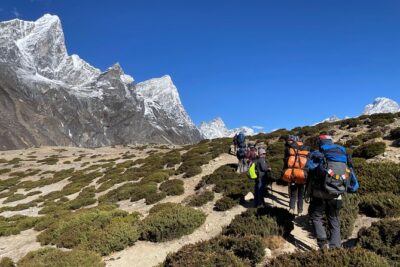
Pangboche and Dingboche mark a noticeable change. The trees thin, the air gets colder, and the trail feels more exposed. The monastery visit adds cultural interest without turning the trek into a separate sightseeing program. You are seeing places that belong to the daily life of the Khumbu, not just stopping at scenic viewpoints.
Dingboche is another important altitude stop. The itinerary does not describe a separate full rest day here, so take the walking pace seriously. If you feel unwell, tell your guide early. One useful feature of a small group is that the guide can pay closer attention to individual needs than on a large departure.
More trekking days out of Everest Region:
- Everest Base Camp Trekking – 2025/2026
★ 5.0 · 199 reviews - Everest Base Camp Trek
★ 5.0 · 193 reviews - Everest Base Camp Trek with Helicopter Return from Gorakshep to Lukla
★ 5.0 · 161 reviews - Everest Base Camp Trekking
★ 5.0 · 146 reviews
Duglha and the stories around the glacier
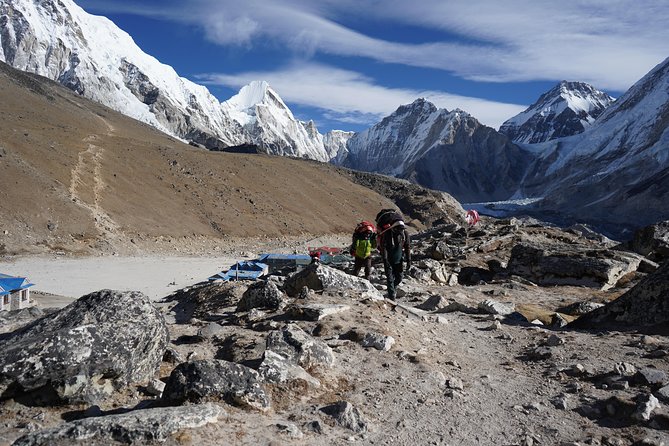
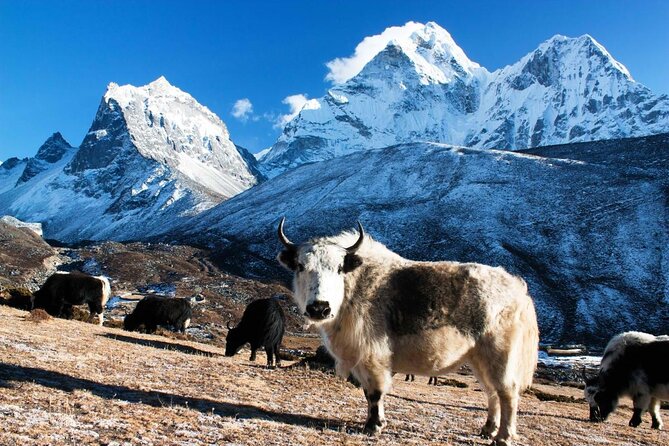
The route then climbs from Duglha through the Khumbu Khola valley. You pass Dusa, associated with yak herders, and Phulong Karp, identified in the itinerary as the camp of the first successful Everest expedition in 1953. Chola Lake is also included in this high mountain section.
These details give the walk more meaning than a simple peak-counting exercise. The trail connects present-day mountain communities with the history of early Everest expeditions. You see the practical world of yak herding alongside the route used by climbers and trekkers.
The altitude is now a real concern. The itinerary includes steep climbs and glacier terrain, and your energy may drop even if you are physically fit. Walk slowly, drink what you are advised to drink, and do not hide symptoms from the guide to keep up with the group.
The following day takes you over the steep terminal moraine of the Khumbu Glacier toward Chupki Lhara. You pass boulder slopes and collections of stones decorated with prayer flags. These memorial areas make the route quiet and reflective, even when other groups are nearby.
The moraine is not a smooth path. You should expect uneven, rocky ground and a controlled pace. Good footwear and careful footing matter here, but the provided information does not specify equipment, so confirm what you need before departure.
Everest Base Camp is the goal, but not the best view of Everest
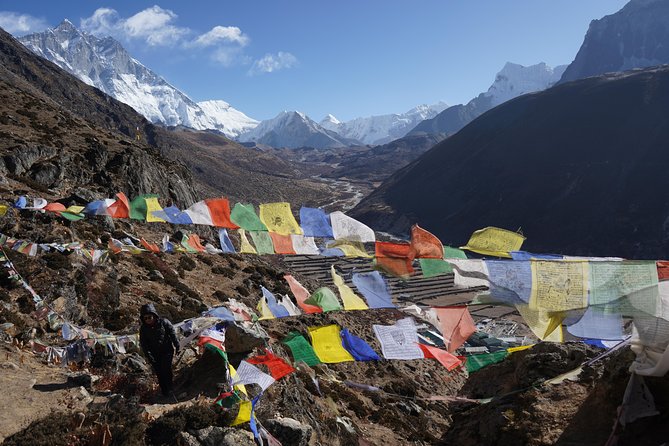
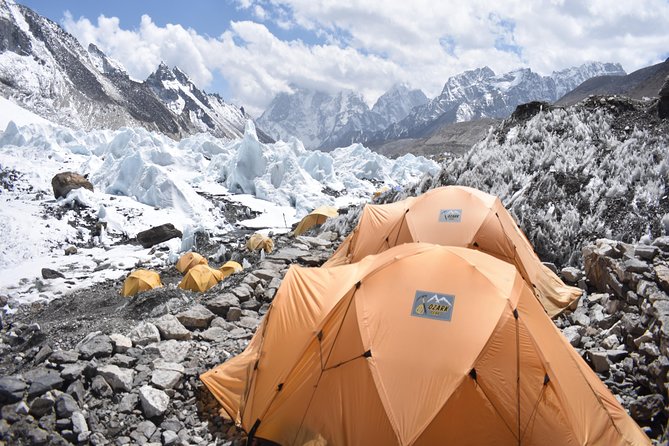
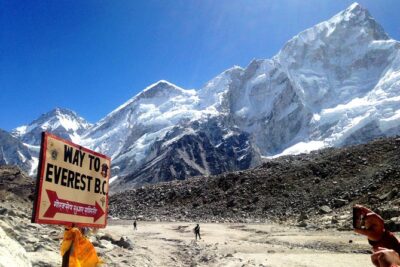
Day nine is the main approach to Everest Base Camp. At Thangma Riju, the route offers a 360-degree view of snow-covered mountains. There is an important catch: Mount Everest is not visible from this point.
That may sound surprising, but it is useful to know before you go. Everest Base Camp is an important destination, yet the best direct view of Everest comes on the next morning from Kala Patthar. Base Camp itself is about reaching the foot of the world’s highest mountain and experiencing the high glacier setting around it.
The listed stop at Everest Base Camp allows about 30 minutes, with admission included. Treat that time as a landmark stop rather than a long rest. You will want photographs, but you will also be at high altitude and should conserve energy.
The approach can feel like the climax of the trek because every earlier stage has led here. Still, the program sensibly saves its most famous view for day ten.
Kala Patthar sunrise is the visual high point
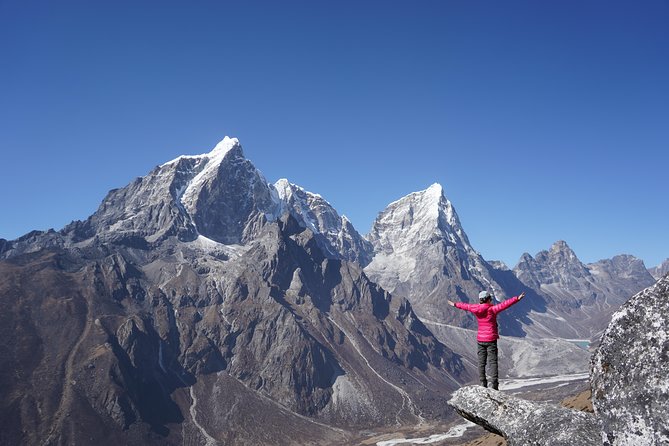
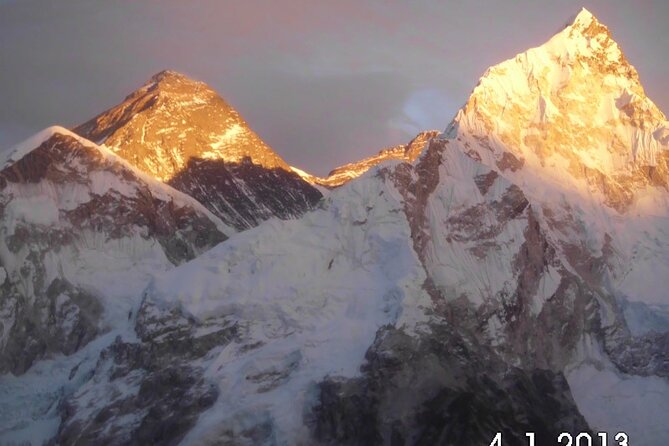
On day ten, you start very early for Kala Patthar. The purpose is to catch Everest as darkness changes into morning light. The stop is listed for about 30 minutes, and admission is included.
This early start is demanding, especially after the previous day at Base Camp. It is also why you should not judge the trek only by the destination on the sign. Kala Patthar provides the sunrise view that many people imagine when they picture an Everest trek.
The itinerary also points out views toward peaks including Lingtr… The supplied details cut off the full name, but the wider point is clear: this is a panoramic high-altitude viewpoint, not merely a short walk to a marker.
Expect cold conditions at this hour. The tour specifically advises dressing appropriately for all weather, and this is the moment when warm layers matter most. You will be tired, so move carefully and follow the guide’s timing.
The return route is easier on the lungs, harder on the knees
After Kala Patthar, the route descends through Pheriche, Orsho, and Shomare before reaching Pangboche. You then continue toward lower villages and the Dudh Koshi River.
Descending is usually welcome because the air becomes thicker and your body can recover. But it is not effortless. Rocky, steep trails can be harder on knees and ankles than the climb, especially after several days of exertion. Keep your pace controlled rather than hurrying simply because the altitude is lower.
The program notes that you can explore the old area around Pangboche, though the supplied details do not specify exactly what is included there. Ask your guide what time allows. This is a good place to pay attention to village life and Buddhist culture rather than treating the return as dead time.
The final trekking day continues downhill over steep terrain. You cross a suspension bridge over the Dudh Koshi and pass through the forest and settlements on the way back toward Lukla.
This is where balance matters. The trail may feel familiar, but fatigue can make a simple descent awkward. Slow, deliberate steps are better than trying to finish quickly.
Kathmandu closes the trip with room to breathe
Day thirteen brings the mountain flight from Lukla back to Kathmandu. Once you arrive, you have time for shopping and walking around the city, followed by an evening celebration for completing the trek.
The return flight can be as weather-sensitive as the outbound flight, so the schedule should be treated as a plan rather than a guarantee. The extra day in Kathmandu is useful because it gives you a little room to recover and enjoy the city after the mountain section.
Day fourteen is set aside for more shopping and sightseeing around Kathmandu Valley before your scheduled departure from Tribhuvan International Airport. That final day makes the program feel less rushed than a trek that sends you directly from the trail to an international flight.
What the $1,350 price really buys you
At $1,350 per person, the value depends on how much planning and support you want to hand over. The stated inclusions cover teahouse accommodation, meals, and local transportation, along with the guided trek and airport pickup. For a route involving flights, remote lodging, altitude planning, and multiple villages, those inclusions remove a lot of separate arrangements.
You are not paying for luxury. Teahouses are practical mountain accommodation, and conditions can be basic. The price makes the most sense if you value a guide, a set route, meal arrangements, and help with the local transport rather than trying to assemble each piece yourself.
The maximum group size of 10 is another part of the value. It is not a private trek, but it is small enough for personal attention. Several guides associated with the company, including Biru, Ambar, and Ramesh, have been praised for helping with safety, illness, logistics, and morale. That kind of support matters more than fancy extras when you are tired or feeling the altitude.
The published rating is 5 from 485 reviews, with 99 percent recommending the experience. That is strong evidence of broad satisfaction, especially around guide care and organization. Still, those figures cannot remove the physical demands or guarantee the same guide for every departure.
Who should book this Everest Base Camp trek?
You should consider it if you are active, comfortable walking for many days, and want a guided route rather than an independent trek. The experience is also a good fit if you want mountain scenery, local villages, Buddhist culture, and a clear goal at Everest Base Camp.
It is less suitable if you want flexible hotel comfort, low-altitude sightseeing, or a relaxed holiday with short walks. The program requires strong physical fitness, and you need to accept cold weather, steep paths, basic teahouse accommodation, and possible flight changes.
A current valid passport is required on the day of travel. At booking, you must provide each participant’s passport name, number, expiry date, and country. Pickup is offered from Tribhuvan International Airport, and the tour operates in all weather conditions, so pack for changing conditions.
The cancellation terms are friendly if your plans change early: you can cancel at least 24 hours before the start time for a full refund. Cancellations or changes made inside that window are not accepted for a refund.
Should you book it?
I would book this trek if you want a structured Everest Base Camp experience with a small group, included meals and lodging, and guide support from airport arrival through the return to Kathmandu. The itinerary gives you the essential route, includes time to adjust at Namche, and adds the crucial Kala Patthar sunrise.
I would pause before booking if your fitness is uncertain or if you need a highly predictable schedule. The mountain flights, altitude, steep paths, and weather all require flexibility. For the right person, the $1,350 cost offers a practical way to reach one of the world’s great trekking destinations without carrying the full planning burden yourself.
FAQ
Where does the Everest Base Camp trek begin?
The experience begins at Tribhuvan International Airport in Kathmandu, where an airport representative meets you and arranges transport to the hotel.
How long does the trek last?
The full program lasts approximately 14 days, including arrival and departure days in Kathmandu, the flight to Lukla, the trek, the return flight, and time in Kathmandu.
How large is the group?
The tour has a maximum of 10 participants.
What is included in the price?
Teahouse accommodation, meals, local transportation, and airport pickup are included in the stated experience. The supplied information does not list every possible inclusion, so check the final booking details before departure.
Do I need to be physically fit?
Yes. The tour states that you should have a strong physical fitness level. It is best suited to active people who can manage a demanding, high-altitude trek.
Is Everest visible from Everest Base Camp?
The itinerary specifically notes that Everest is not visible from the Thangma Riju viewpoint. The day ten Kala Patthar sunrise is scheduled for views of Mount Everest.
Can I cancel for a full refund?
Yes, if you cancel at least 24 hours before the experience start time. Cancellations or changes made less than 24 hours before the start time are not accepted for a refund.
Just added around Everest Region
- Day Tour to Everest Base Camp By Helicopter★ 5.0 · 16 reviews
- Kathmandu To Lukla By Helicopter Flight★ 5.0 · 6 reviews
- Luxury Everest Base Camp Trek – 11 Days★ 5.0 · 9 reviews
- Everest Base Camp Tour & View Point by Helicopter from Katmandu★ 5.0 · 3 reviews
- Everest base camp helicopter tour with Guarenteed Landing★ 4.0 · 7 reviews
- Everest base camp flight over by Helicopter from Kathmandu★ 5.0 · 10 reviews
- Everest Base Camp Helicopter Tour Stop at Hotel Everest View.★ 5.0 · 17 reviews
- Everest Base Camp Helicopter Tour★ 5.0 · 24 reviews
Everest Base Camp Treks, compared.
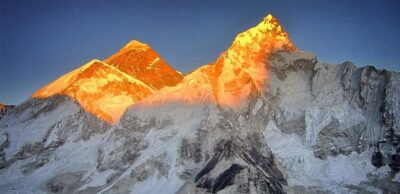
Everest Base Camp Trek with Helicopter Return from Gorakshep to Lukla
Read our review →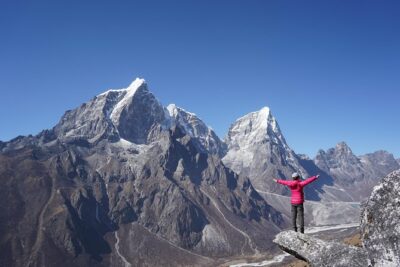
Browse the lists this tour appears in