
Reviewed · EVEREST BASE CAMP TREKS
Everest Base Camp Trekking – 13 Day
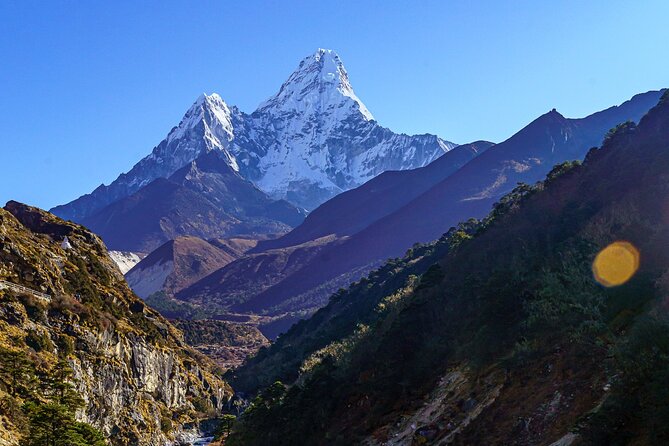
Reaching Everest Base Camp means walking through the Khumbu rather than simply arriving at a viewpoint. This 13-day trek takes you from Kathmandu to Lukla, along the Dudh Koshi River, through Namche Bazaar and Tengboche, and onward to Base Camp and Kala Patthar.
I like that Kathmandu to Lukla flights, lodges, meals, permits, and airport transfers are handled for you. I also like the two acclimatization days in Namche Bazaar and Dingboche, plus the chance to use a private guide and adjust the pace to your group.
The main caution is the altitude. This is not a sightseeing tour with a little walking added. You need moderate fitness, patience with basic mountain accommodation, and proper insurance that covers trekking and possible helicopter evacuation.
Key points to know before booking
- The high point is Kala Patthar: You rise before dawn for one of the trek’s best views, then descend to lower ground.
- Lukla flights are included: This saves time, but the route depends on weather and operating conditions.
- Two acclimatization days matter: Namche Bazaar and Dingboche give your body time to adjust.
- Lodges are practical, not luxurious: You sleep in trailside accommodation and eat included meals, while personal drinks and extras cost more.
- Guides handle the daily details: Past guide assignments have included Dibash, Achyut, Milan, Ratna, Anil, Dipak, and Prokhas.
- The $1,399 price covers key costs: Flights, permits, meals on the trek, accommodation, taxes, and airport departure tax are included, but insurance and Kathmandu meals are not.
Kathmandu to Lukla, the real beginning of the trek
Your first day is mainly about arrival. A representative meets you at Tribhuwan International Airport, helps with the initial arrangements, and takes you to your Kathmandu hotel.
That first night is useful even if you are eager to get moving. You need to organize your trekking equipment, check your day pack, and prepare for an early departure. Passport details are required for every participant at booking, and you should raise any dietary needs before leaving Kathmandu.
Day 2 brings the flight to Lukla, the gateway to the Everest region. The flight is included in the package, along with the airport departure tax. From Lukla, you begin walking with your guide rather than spending days on a road transfer.
I like this setup because it puts you quickly into the Khumbu. The trade-off is that air travel in mountain regions can be affected by weather, so you should avoid arranging a tight connection immediately after the trek.
More Everest Base Camp treks:
- Everest Base Camp Trek – 14 Days
★ 5.0 · 1,499 reviews - Everest Base Camp Trekking
★ 5.0 · 485 reviews - Everest Base Camp Trek -14 Days
★ 5.0 · 321 reviews
Day 3: following the Dudh Koshi to Namche Bazaar
The route from the Lukla area follows the Dudh Koshi River toward Namche Bazaar. The trail crosses suspension bridges and passes through forest, with early views toward Kongde Ri Peak.
This is an important first full day on foot. The trail is not simply flat walking along a river. You gain height, and the approach to Namche includes a demanding climb. Your guide’s pacing matters here, particularly if you are still adjusting to the altitude and the physical effort.
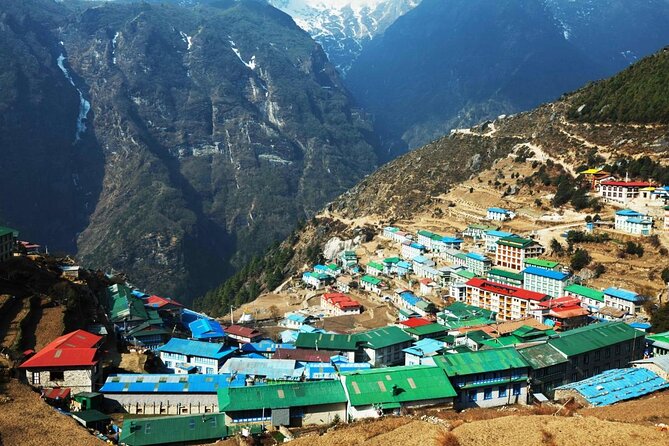
Namche Bazaar is more than a place to sleep. It is the main trading and service center in the Khumbu, with shops and a Saturday market. You may find it livelier than the smaller villages farther up, although the town’s facilities remain basic compared with Kathmandu.
Day 4: acclimatizing around Namche Bazaar
Day 4 is set aside for acclimatization, not idleness. The plan uses short walks and time at a higher point before returning to Namche, helping your body adjust before the trail climbs farther.
This is one of the strongest parts of the schedule. A rushed trek can leave you trying to recover while still gaining altitude. Here, you get a breathing space in the program.
Your guide should explain the following day’s distance, walking time, and elevation changes. That kind of briefing is particularly useful on a private trek. Milan, one guide assigned on this route, was praised for explaining the next day clearly and estimating walking time based on ability. That is the sort of practical help you want, since the same distance feels very different after a night at altitude.
Day 5: forests, Sanasa, and the approach to Tengboche
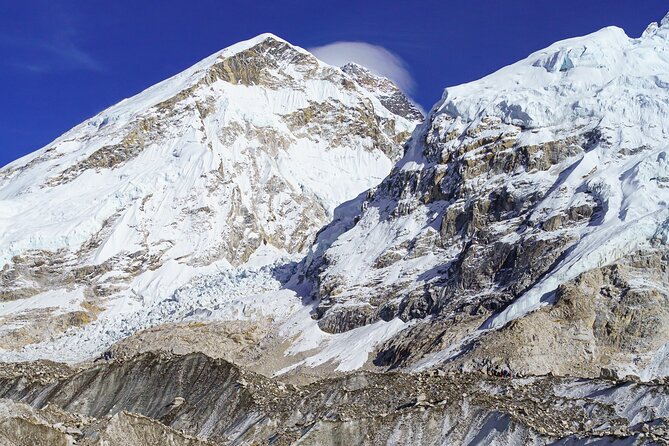
After a short but steep climb out of Namche, the trail becomes more even as it passes toward Kenjoma and Sanasa. Forest sections provide shade and a change from exposed mountain paths.
The route then continues toward Tengboche, known for its monastery and mountain setting. This is a day when the cultural side of the trek becomes more noticeable. Chortens, Mani walls, and monastery buildings give the walk a clear connection to local Buddhist traditions.
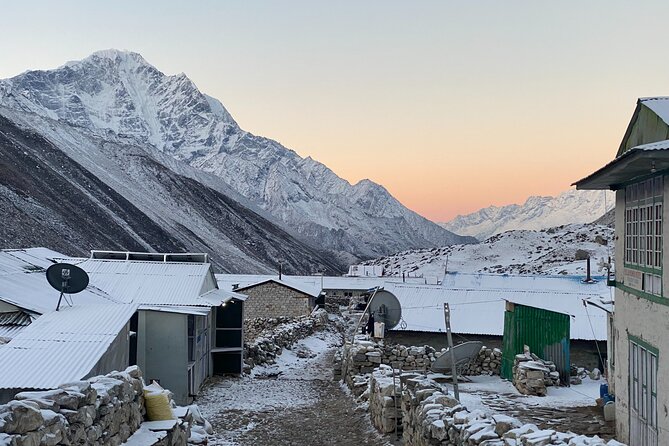
Tengboche is also a good place to slow down and look around. The accommodation is a trailside lodge, so do not expect hotel comforts. The appeal is the setting and the sense of being well inside the high mountain region, not private bathrooms or a wide range of facilities.
More trekking days out of Everest Region:
- Everest Base Camp Trekking – 2025/2026
★ 5.0 · 199 reviews - Everest Base Camp Trek
★ 5.0 · 193 reviews - Everest Base Camp Trek with Helicopter Return from Gorakshep to Lukla
★ 5.0 · 161 reviews - Everest Base Camp Trekking
★ 5.0 · 146 reviews
Day 6: from Tengboche toward Dingboche
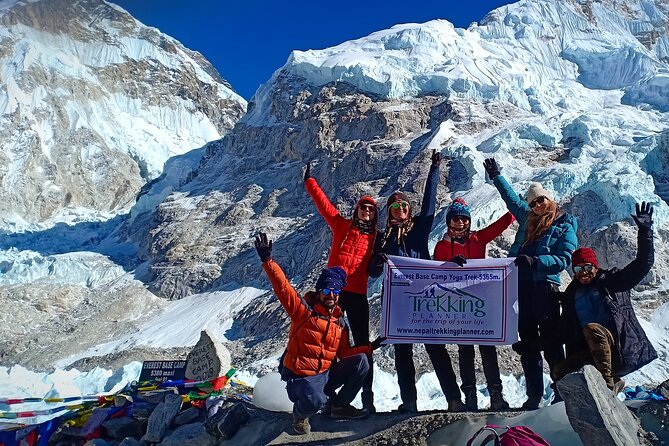
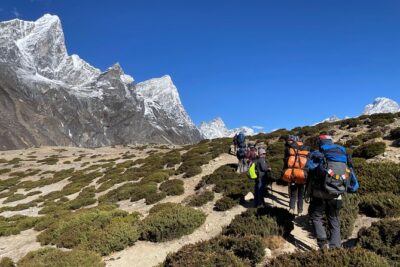
The trail descends through forest toward Deboche before continuing toward Dingboche. The route includes mountain views, open grazing areas, chortens, and Mani walls.
The movement from forest into more open, higher ground is one of the noticeable changes on this trek. You also begin to feel the altitude more clearly. Even if the walking distance seems manageable on paper, you should keep a steady pace and drink regularly.
The schedule places you in Dingboche for the next acclimatization break. That timing is sensible because the route is now moving into a much higher section of the Khumbu. The guide’s role becomes less about simply showing the way and more about watching your condition, keeping the group together, and adjusting the day when needed.
Day 7: a second acclimatization day in Dingboche
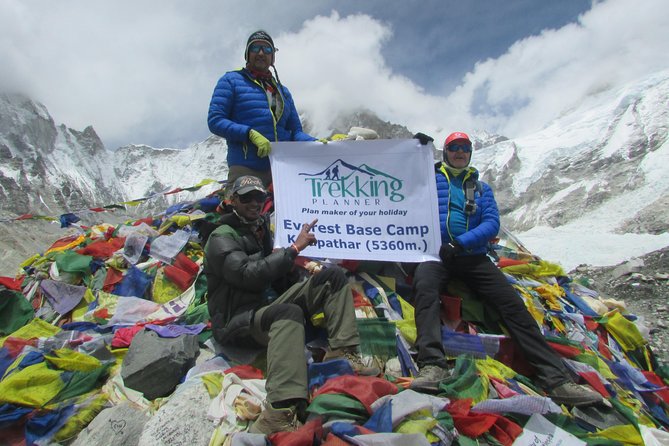
Dingboche provides another rest and acclimatization day before the final push toward Base Camp. The plan uses short hikes to higher ground, followed by a return to the village.
This is not a spare day that weakens the trip. It is one of the reasons the schedule can work in 13 days. You are preparing for the long days at Lobuche, Everest Base Camp, and Kala Patthar, where the air is thin and the trail can feel slow.
You should use this day wisely. Rest, eat, check your clothing, and make sure your headlamp, water bottles, gloves, and waterproof layer are ready. A complimentary Trekking Planner duffel bag is provided for the trek and must be returned after the trip. You carry a separate day pack of about 25 to 40 liters.
Day 8: higher ground toward Lobuche
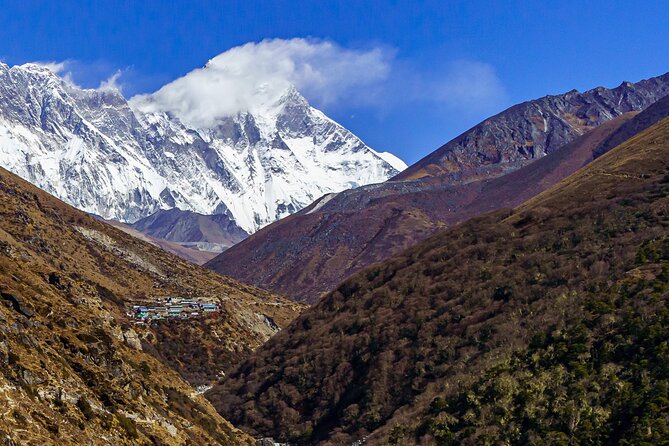
From Dingboche, the trail climbs gradually through grazing areas and open mountain country. Chortens and Mani walls continue to mark the route, while the views become broader as trees thin out.
This section can feel quiet and stark compared with the lower forested trail. You are now walking toward the heart of the Everest region, and the simple rhythm of uphill walking, pauses, meals, and lodge arrival becomes central to the experience.
Lobuche is a practical overnight stop before Base Camp. Lodge accommodation is included, but conditions are basic and nights can be cold. Bring warm layers, a fleece or insulated jacket, a wool hat, gloves, and a waterproof outer layer. A small towel and personal toilet paper are also on the suggested packing list.
Day 9: the long walk to Everest Base Camp
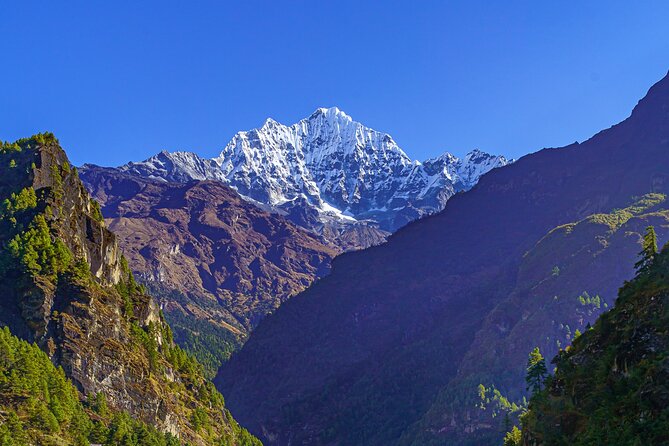
This is the day most people have in mind when they book. From Lobuche, you walk toward Everest Base Camp, with the route passing through the high Khumbu terrain before reaching the destination.
The day starts early and demands care. Acute mountain sickness is a real concern at this elevation, so you should tell your guide immediately if you feel unwell. Do not treat a headache, dizziness, nausea, or unusual weakness as something to hide in order to reach the goal.
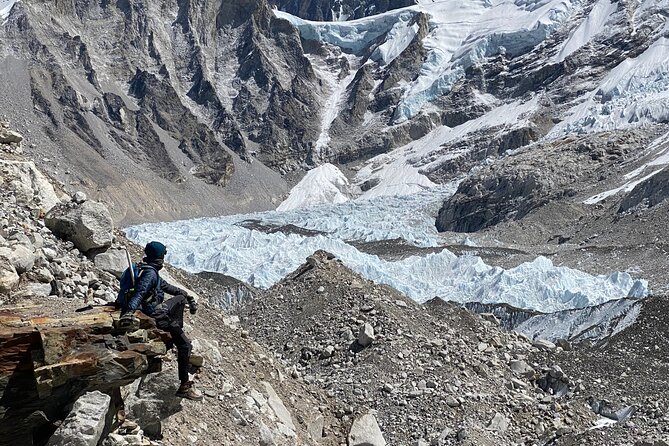
Base Camp itself is not a comfortable resort or a permanent town. Its character depends on the season and activity in the area. The value lies in reaching the place used as a major staging point for Everest expeditions and understanding, through your own feet, how remote it is.
The day can be tiring, and the trail may take longer than expected. Your guide should keep the pace sensible rather than chasing a clock. Dibash and Achyut are among the guides praised for caring for the group, solving problems, and keeping the walking day organized. Guide assignments can vary, so you should confirm your guide before departure if that matters to you.
Day 10: sunrise at Kala Patthar
The next morning begins before sunrise for the walk to Kala Patthar. This early start is worthwhile because the viewpoint is one of the best places on the route for broad views toward Everest and the surrounding peaks.
After Kala Patthar, you return to lower altitude. That descent is welcome. Even if the climb up feels slow and cold, losing elevation can make the rest of the day more comfortable.
You need warm clothing for this morning: hat, gloves, insulated jacket, and suitable shoes. A camera and spare batteries are sensible, but do not let photography distract you from staying warm and moving at the pace set by your guide.
The itinerary also requires good time management. One guide, Milan, was specifically praised for estimating walking times and sunset conditions, while a separate 13-day Gokyo and Base Camp program received praise for careful timing. That matters because daylight, fatigue, and mountain weather all affect the day.
Days 11 and 12: returning through Pheriche and Namche
Day 11 takes you from the vicinity of Pheriche back toward Namche Bazaar. Much of the route is downhill, and the Dudh Koshi River returns as a familiar companion.
Downhill does not always mean easy. Tired legs, uneven stones, and repeated descents can be hard on knees. Trekking poles may help, although they are not specifically included, so bring your own if you use them.
Day 12 is the final trekking day. You descend steeply from Namche toward the riverbed and the confluence of the Dudh Koshi streams before continuing toward the Lukla area.
This last walking day can feel satisfying and tiring at once. You have completed the highest sections, but the trail still requires attention. Keep your shoes secure, protect your knees, and avoid treating the final descent as a casual stroll.
Day 13: flying back to Kathmandu
The final day is the return flight from the Everest region to Kathmandu. The departure is scheduled early because weather can affect flights, and mountain air operations often work best earlier in the day.
Once back in Kathmandu, the organized trek is complete. Meals in Kathmandu are not included, and the package does not cover personal phone use, battery charging, bar bills, drinks, Nepal visa fees, or other personal expenses.
That makes budgeting simple if you separate the trip into two parts. The package covers the main trekking costs, but you should carry money for Kathmandu meals and personal purchases, as well as drinks and charging along the route.
What the $1,399 price really covers
At $1,399 per person, the package offers solid value for someone who wants the major arrangements made in advance. It includes:
- Kathmandu to Lukla and return flights
- Airport departure tax
- Trailside accommodation during the trek
- Trekking meals, including 12 breakfasts, 12 dinners, and 11 lunches
- National Park entrance fee
- TIMS card
- Government and local taxes
- Airport pickup and hotel transfer on arrival
The price needs a careful reading. Alcoholic drinks, meals in Kathmandu, personal purchases, phone calls, battery charging, bar and beverage bills, Nepal visa fees, and insurance are extra.
Travel and health insurance are particularly important. The package does not include personal insurance or helicopter evacuation insurance. You should arrange cover that applies to trekking at the altitudes on this route.
The advertised price can also change depending on group size, departure date, or shared accommodation. A single surcharge of $150 may apply if you want a solo departure rather than joining an existing group. Ask for the exact total before you commit.
Guides, private groups, and the human side of the trek
This is described as a private activity, so only your group participates. That can make a real difference on a high-altitude route. You can discuss walking speed, rest stops, dietary requirements, and daily preferences more directly than you might in a large group.
The experience depends heavily on the guide. Names connected with recent departures include Dibash, Achyut Mishra, Milan, Ratna, Anil, Dipak, and Prokhas. You should not assume a particular person will lead your departure, but you can ask which guide is assigned.
The strongest pattern in the guide feedback is practical care: explaining the next day, managing time, pacing the group, carrying out logistics, and finding solutions when conditions become difficult. That is more valuable here than a guide who simply knows the names of peaks.
Packing for cold, basic mountain conditions
You need to keep your kit light but useful. The operator provides one duffel bag, which must be returned, while you carry a 25 to 40 liter day pack.
The suggested essentials include trekking shoes, sports shoes or sandals, sun protection, warm headwear, gloves, waterproof clothing, fleece or insulated layers, trekking trousers, shirts, underwear, socks, two one-liter water bottles, a torch, camera batteries, toiletries, a small towel, and toilet paper.
The clothing list reflects changing conditions. Lower sections can feel warmer, while exposed high areas can be cold, especially before sunrise. The trek operates in all weather, so a waterproof outer layer is not optional decoration.
Tell the operator about dietary requirements at booking. Meals are provided during the trekking days, but personal drinks and alcoholic drinks are not included.
Who should book this Everest Base Camp trek?
I would choose this trip if you want the classic Everest Base Camp route and prefer to have the major logistics arranged. It suits someone who values a private group, a guide-led pace, included meals, and support with flights and permits.
It is also a good match for families, couples, honeymooners, and groups because discounts may be available and the private format allows more personal planning. The route still demands moderate fitness, so a private group does not turn it into an easy walk.
I would be cautious if you dislike basic accommodation, early starts, steep paths, uncertain flight timing, or cold conditions. You also need enough flexibility to respond to altitude symptoms and weather changes.
Should you book it?
Book this trek if the price fits your budget and you want the Everest Base Camp route without arranging every permit, flight, lodge, meal, and guide yourself. The two acclimatization days, included Lukla flights, and private group format give the plan a sensible structure.
Before paying, confirm the final price, the single supplement rules, the assigned guide, what accommodation is shared, and the insurance requirements. Pack for real mountain weather, not just sunny photographs.
If you accept the physical work and the simple lodges, this is a well-organized way to reach Base Camp and add the sunrise climb to Kala Patthar. The main reward is not comfort. It is the steady change from river valleys and forest to the high, open Khumbu, one demanding day at a time.
FAQ
Is the Everest Base Camp trek 13 days long?
Yes. The program lasts approximately 13 days, beginning with airport pickup in Kathmandu and ending with the flight back from the Everest region.
Are flights from Kathmandu to Lukla included?
Yes. The package includes the Kathmandu to Lukla and Lukla to Kathmandu flights, along with the airport departure tax.
Are meals included during the trek?
Yes. The package includes 12 breakfasts, 11 lunches, and 12 dinners. Meals in Kathmandu and drinks unless specified are not included.
Is accommodation included?
Yes. Nightly accommodation in trailside lodges is included during the trekking program. The provided details do not specify the exact room type or bathroom arrangements.
Are permits included?
Yes. The National Park entrance fee and Trekkers’ Information Management System card are included, along with applicable government and local taxes.
Is this a private trek?
Yes. The activity is described as private, meaning only your group participates. The price and single supplement can depend on whether you join an existing group or request a solo departure.
Is there a single supplement?
A $150 single surcharge may apply if you want a solo departure rather than joining an existing group. The final amount can also depend on group size, departure date, and shared accommodation.
What fitness level is required?
You should have a moderate level of physical fitness. The trek includes steep climbs, high-altitude walking, early starts, and long descents.
Is travel insurance included?
No. Personal travel and health insurance are not included, and helicopter evacuation insurance is also excluded. You should arrange suitable cover before departure.
Can I cancel for a full refund?
You can cancel at least 24 hours before the experience start time for a full refund. Cancellations or changes made less than 24 hours before the start are not accepted for a refund, based on local time.
Just added around Everest Region
- Day Tour to Everest Base Camp By Helicopter★ 5.0 · 16 reviews
- Kathmandu To Lukla By Helicopter Flight★ 5.0 · 6 reviews
- Luxury Everest Base Camp Trek – 11 Days★ 5.0 · 9 reviews
- Everest Base Camp Tour & View Point by Helicopter from Katmandu★ 5.0 · 3 reviews
- Everest base camp helicopter tour with Guarenteed Landing★ 4.0 · 7 reviews
- Everest base camp flight over by Helicopter from Kathmandu★ 5.0 · 10 reviews
- Everest Base Camp Helicopter Tour Stop at Hotel Everest View.★ 5.0 · 17 reviews
- Everest Base Camp Helicopter Tour★ 5.0 · 24 reviews
Everest Base Camp Treks, compared.
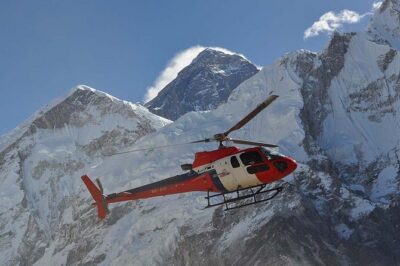
Everest Base Camp Trek with Helicopter Return from Gorakshep to Lukla
Read our review →Browse the lists this tour appears in