
Reviewed · TEMPLE & MONASTERY TOURS
Kathmandu: Kopan Monastery and Boudhanath Stupa Day Tour
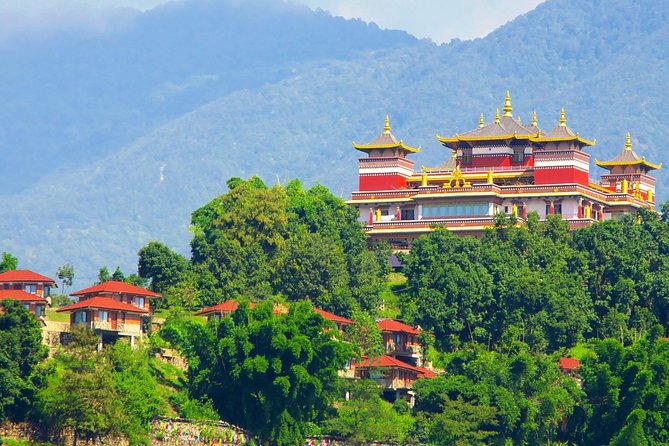
Kopan Monastery gives you a quiet hilltop break from Kathmandu, then Boudhanath brings you into one of Nepal’s major Buddhist pilgrimage centers. I like the private format and the easy hotel pickup, since both make a short city outing feel simple and personal.
I also like the chance to connect the two sites: Kopan offers calm, open views and Buddhist teaching, while Boudhanath shows living devotion around a great stupa. The main caution is that the published timing is unclear, with one section saying three to four hours and another describing a six-hour tour.
Key points to know before booking
- Kopan comes first: Visit a peaceful monastery on a hill above Kathmandu, with time to look around and hear about Tibetan Mahayana Buddhism.
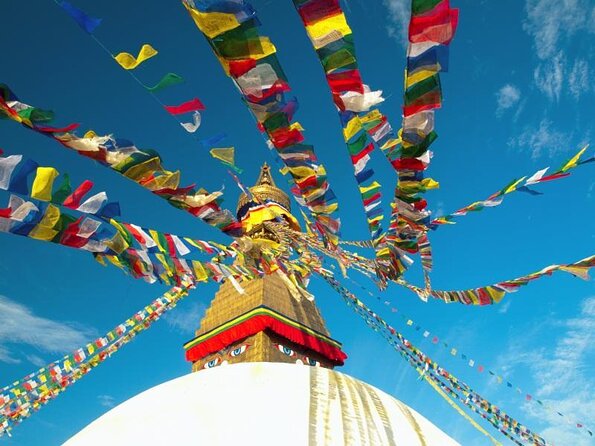
- Boudhanath adds the big pilgrimage site: Walk around one of the Kathmandu Valley’s most important Buddhist monuments, listed by UNESCO.
- Private transport keeps the day easy: Hotel pickup and drop-off come in an air-conditioned vehicle for your group alone.
- A guide can make the difference: Shankar Bhattarai is one named guide connected with the tour and is praised for clear explanations of Buddhism and Nepalese history.
- Budget for a short, focused outing: The price is $80 per person, with water, taxes, transport, guiding, and monument fees included.
- Check the schedule before paying: The supplied details give both a three to four hour duration and a six-hour description.
Two Buddhist landmarks with very different moods
This tour works because Kopan Monastery and Boudhanath Stupa offer two sides of Buddhist life in Kathmandu. At Kopan, you get a quieter setting above the city and a chance to hear about Tibetan Mahayana practice. At Boudhanath, you see a major public pilgrimage site where the focus is the stupa itself and the movement around it.
I find that pairing more useful than visiting either place alone. Kopan gives you background and breathing room. Boudhanath gives that background a physical setting filled with ritual, art, and daily activity.
The tour is private, so your guide can adjust explanations to your interests. If you already know something about Buddhism, you can ask for more detail. If the subject is new to you, you can stop for basic context without worrying about holding up a larger group.
The experience is sold for $80 per person. That is not the cheapest way to reach these sites, but the price covers a private air-conditioned vehicle, hotel pickup and drop-off, an English-speaking city guide, local and government taxes, a bottle of mineral water, and monument entrance fees. For a small group, that bundle can be good value, especially if you prefer not to arrange transport yourself.
More Temple & Monastery Tours in Kathmandu:
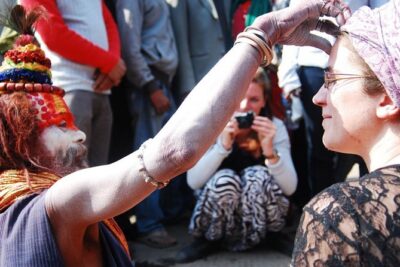
- Kathmandu Spiritual Sites: Bodhnath & Pashupatinath Tour
★ 5.0 · 185 reviews - Kathmandu: Nagarkot Sunrise and Hike Tour to Changu Narayan
★ 4.7 · 151 reviews - Kathmandu: Chandragiri Cable Car and Monkey Temple Tour
★ 4.8 · 139 reviews
Starting at Kopan Monastery above Kathmandu
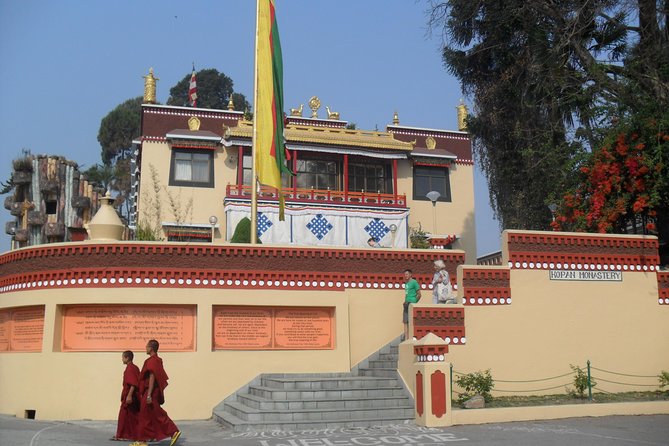
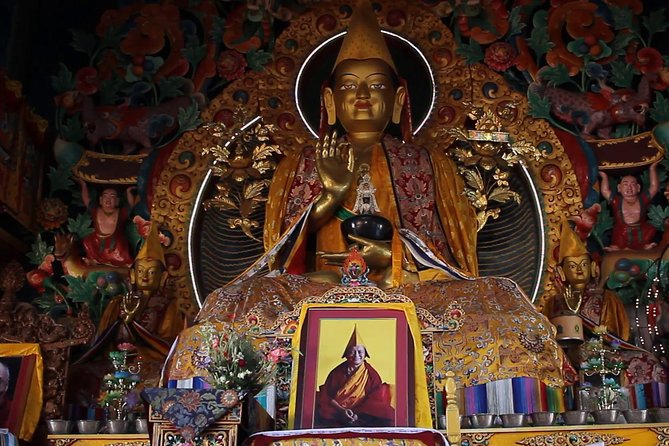
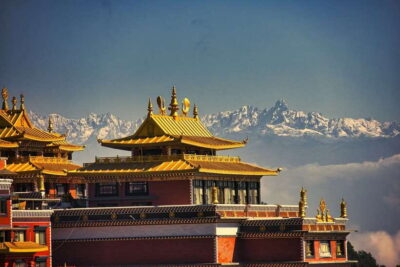
Kopan Monastery is located in the Boudhanath area, on a hill overlooking Kathmandu. The setting is the reason to begin here. You get some distance from the city’s traffic and crowds, with a more peaceful place for learning and observation.
The visit is scheduled for about an hour. That is enough for a useful introduction, but not enough for an unhurried study of every corner. You should think of Kopan as a focused stop rather than a full retreat or extended monastery program.
The main subject is Tibetan Mahayana Buddhism. A good guide can explain the basic ideas, the purpose of the monastery, and how the site fits into Nepal’s wider Buddhist tradition. Shankar Bhattarai is one guide associated with this experience. He is described as punctual, professional, friendly, and especially strong at explaining Buddhism and Nepalese history. Guide assignments can vary, so you should not assume he will lead every departure.
The monastery stop suits you best if you want more than photographs. The value comes from having someone explain what you are seeing and why the place matters. Without that context, a monastery visit can become a quick walk through a quiet compound. With a guide, the hour has a clearer purpose.
There are a few practical limits. Admission is described inconsistently in the supplied details: one section says the ticket is not included, while the inclusions list says monument entrance fees are covered. Since the inclusions list specifically names entrance fees, that appears to be the stronger indication, but I would confirm this before departure.
A small amount of walking is involved. You do not need to plan for a demanding hike based on the information provided, but comfortable shoes are still sensible. Kathmandu can also be dusty, and a dust mask is recommended.
Moving on to Boudhanath Stupa
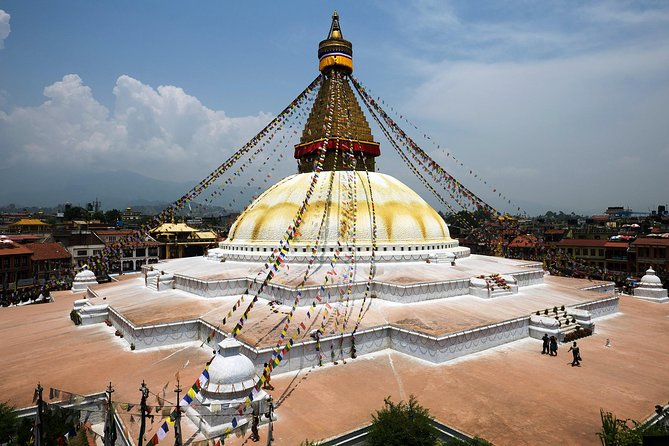
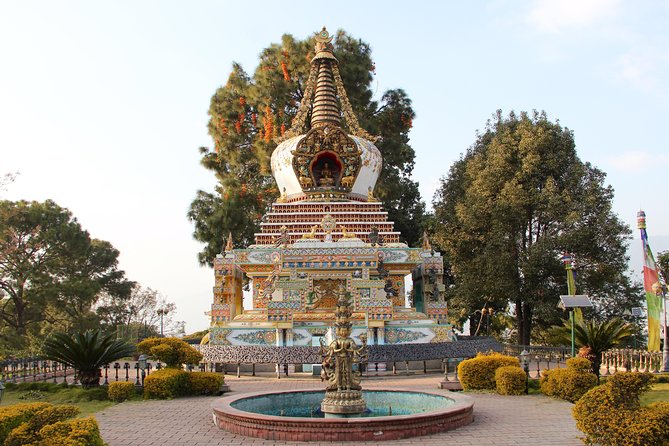
The second stop is Boudhanath Stupa, described as the largest Buddhist stupa inside the Kathmandu Valley. It is also a UNESCO World Heritage Site and an important pilgrimage destination for people from around the world.
The planned visit lasts about an hour. That gives you time to see the stupa, walk in the surrounding area, and listen to an explanation of its religious importance. The stop is short enough to fit a tight Kathmandu schedule, though you may wish for longer if you want to linger, take photographs, or explore every nearby shop and shrine.
Boudhanath is a useful contrast with Kopan. At the monastery, the setting is quiet and removed from the city. At Boudhanath, the religious site is more public and central to the rhythm of the surrounding neighborhood. You can better understand the difference between a monastic center and a pilgrimage monument by visiting both on the same outing.
Your guide matters here. The stupa is visually striking, but the meaning of its design and use may not be obvious at first glance. An English-speaking guide can point out details and explain the Buddhist traditions connected with the site. The tour description does not promise a religious ceremony or a special audience, so you should book it as a guided visit rather than a formal spiritual program.
The location is near Pashupatinath Temple and public transportation, but this tour uses private transport. That is useful after spending time on foot, and it avoids the need to work out local connections between the two stops.
What the private vehicle adds
The private format is one of the strongest reasons to choose this outing. You get hotel pickup and drop-off in an air-conditioned private vehicle, and only your group participates.
That matters in Kathmandu, where traffic can make a short distance feel like a long one. You do not need to find the meeting point, negotiate a taxi, or keep checking the time for a larger departure group. The driver and guide handle the basic movement between your hotel, Kopan, and Boudhanath.
A private tour also gives you some control over the pace. The listed stops are about one hour each, but your guide may be able to spend more time explaining a subject that interests you. The exact flexibility is not stated, so do not assume you can redesign the whole day, but a private booking is still more personal than a fixed group outing.
The vehicle is air-conditioned, which can be welcome in Kathmandu’s traffic and dust. A bottle of water is provided for each person. Meals and other drinks are not included, so plan to eat before or after the tour rather than expecting a meal stop.
More days out in Kathmandu:
- Private Kathmandu Sightseeing Tour | UNESCO World Heritage sites
★ 5.0 · 756 reviews - Half day cooking class in Thamel kathmandu
★ 5.0 · 607 reviews - Nagarkot Sunrise View and Day Hiking from Kathmandu
★ 5.0 · 471 reviews - Kathmandu: Full Day 7 UNESCO Tour with Lunch – Private/Group
★ 5.0 · 415 reviews
How long does the tour really take?
The timing needs clarification. The overview describes a private six-hour tour, while the stated duration is approximately three to four hours. The listed stops total about two hours, leaving time for hotel pickup, driving, and traffic.
This difference could be a simple wording problem, but it affects your plans. If you are fitting the outing between flights, a museum visit, or another booked activity, ask the operator for the expected door-to-door schedule. Do not rely on the six-hour or three-to-four-hour figure without checking.
The short stop times make this suitable for a compact introduction. You get the main idea of each place without giving up a full day. If you want long periods for photography, quiet reflection, or independent exploration, the schedule may feel brisk.
I would allow extra time around the stated duration. Kathmandu traffic is unpredictable, and the tour includes hotel pickup and drop-off. Even when the formal sightseeing time is short, the full outing can take longer than the time spent inside the two sites.
Price, inclusions, and practical value
At $80 per person, the tour is easiest to justify for couples, families, or small groups who value convenience and a private guide. The cost includes:
- Professional English-speaking city guide
- Air-conditioned private vehicle
- Hotel pickup and drop-off
- Local and government taxes
- One bottle of water per person
- Monument entrance fees, according to the inclusions list
Meals, drinks beyond the provided water, personal expenses, and tips for the guide and driver are not included. Tips are expected, so add that to your working budget.
For one person, $80 may feel high for two one-hour sightseeing stops. For a private group, the value improves because transport and guiding are shared without adding strangers. You are paying for ease, explanation, and time saved, not just access to the monuments.
The tour also suits people who want a first introduction to Buddhist Kathmandu. You will not get an extended course in religion or a long monastery stay, but you will see two major sites with a guide who can connect them.
Who should book this experience?
I would recommend it to you if you want a simple private outing from Kathmandu and have limited time. It is especially useful if you want hotel pickup, air-conditioned transport, and an English-speaking guide rather than arranging each detail yourself.
It is a good match for first-time visitors who want cultural context. The guide’s role is important here, and the strongest account connected with the experience praises Shankar Bhattarai for his explanations of Buddhism and Nepalese history.
Families and older visitors may also appreciate the private vehicle and modest amount of walking. The information says most people can participate, but it does not provide specific accessibility details. If you have mobility concerns, ask the operator about surfaces, steps, and how close the vehicle can get to each site.
You may want something else if you prefer independent exploration, long visits, or a full-day religious study. The schedule is compact, and the duration needs confirmation. Also, the experience requires good weather and a minimum number of travelers. If it is canceled for either reason, you are offered another date, another experience, or a full refund.
Free cancellation is available when you cancel at least 24 hours before the start time. Changes or cancellations inside that window are not accepted for a refund.
Should you book the Kopan and Boudhanath tour?
Book it if you want an efficient, private introduction to two major Buddhist sites and value a guide’s explanation more than a long, independent visit. The combination of quiet Kopan Monastery and grand Boudhanath Stupa gives you a useful range of experiences in one outing.
The strongest reasons to choose it are the private transport, hotel service, and the chance to learn from a guide such as Shankar Bhattarai. The main reasons to pause are the unclear duration and the conflicting information about entrance fees. Confirm those points before booking.
For a short Kathmandu cultural visit, I think the tour offers solid value, especially for two or more people sharing the private vehicle. Just allow extra time for traffic, bring a dust mask if you need one, and do not expect the relaxed pace of a full-day monastery retreat.
FAQ
Where does the tour go?
The tour visits Kopan Monastery and Boudhanath Stupa in the Kathmandu area.
How long does the experience last?
The published information gives an approximate duration of three to four hours, while another description calls it a six-hour tour. Confirm the expected schedule with the provider before booking.
Is hotel pickup included?
Yes. Hotel pickup and drop-off are provided by private vehicle.
Is the tour private?
Yes. Only your group participates in this private activity.
Is transportation included?
Yes. Transportation is provided in an air-conditioned private vehicle.
Are monument entrance fees included?
The inclusions list says monument entrance fees are included, although the stop details say admission is not included. Confirm this point with the provider before the tour.
What happens if I need to cancel?
You can receive a full refund if you cancel at least 24 hours before the experience start time. Cancellations or changes made less than 24 hours ahead are not accepted for a refund.
Just added around Kathmandu
- Traditional Momo Making Class★ 5.0 · 10 reviews
- Women Empowerment Project(Nepali cooking class & jewelry workshop★ 5.0 · 15 reviews
- Manthali Airport (Ramechhap) To Kathmandu – Transport Service★ 4.5 · 11 reviews
- Amazing 1 Day Trekking Experience in Kathmandu Nepal★ 5.0 · 24 reviews
- Walking tour of Kathmandu with awesome local guides★ 5.0 · 4 reviews
- Walking tour of real Kathmandu through back streets.★ 5.0 · 3 reviews
- Private Manaslu Circuit Trek at Himalayas★ 5.0 · 3 reviews
- Walking Street Food Tour in Kathmandu★ 5.0 · 111 reviews
Temple & Monastery Tours, compared.
Kathmandu Spiritual Sites: Bodhnath & Pashupatinath Tour
Read our review →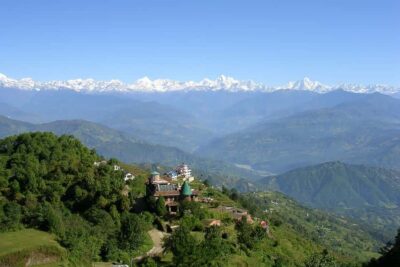
Nagarkot Sunrise and Hike Tour to Changu Narayan
Read our review →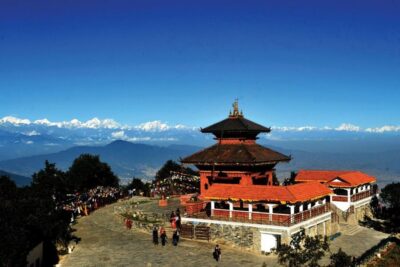
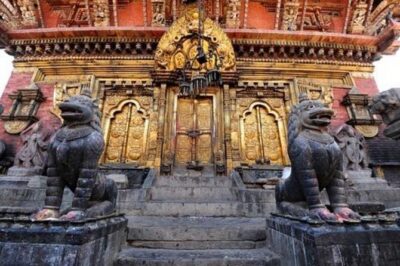
Nagarkot Sunrise & Hike to Changu Narayan Day Tour from Kathmandu
Read our review →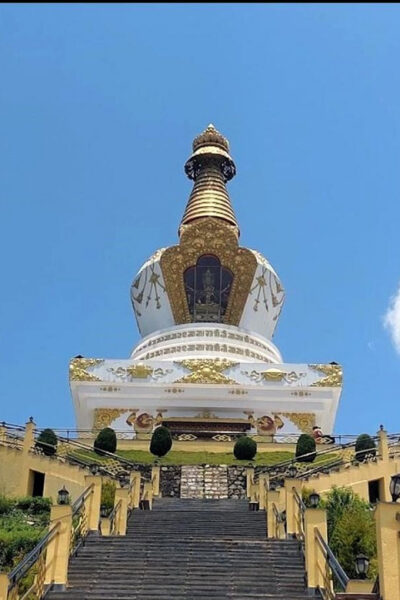
Monkey Temple – Swayambhunath Tour – Private/Small Group
Read our review →Browse the lists this tour appears in