
Reviewed · UNESCO WORLD HERITAGE TOURS
Kathmandu Bhaktapur Patan Authentic Local Tour +7 UNESCO WH Sites
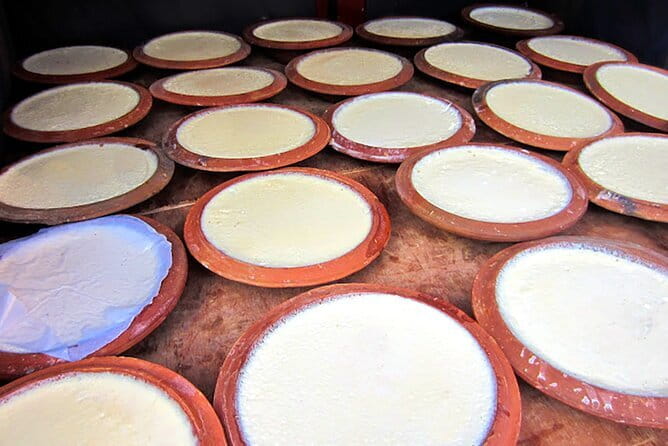
Bhaktapur’s famous Juju Dhau, a creamy yogurt made in traditional clay pots, sets the tone for this three-day tour. You do not simply walk past temples. You watch local food being made, see pottery and woodwork in progress, and enter old courtyards with a native guide such as Nirajan, who comes from Bhaktapur.
I especially like the hands-on Newari experiences and the way the tour reaches quiet corners of Patan and Bhaktapur that a quick sightseeing loop would miss. Private transport, entry fees, and a certified local guide also make the $385 price easier to understand. The main caution is the packed schedule, and the claim of seven UNESCO sites needs checking because the listed route clearly includes six UNESCO locations, not Changu Narayan.
Key points to know before booking
- Juju Dhau in Bhaktapur: Watch a local preparation session before exploring the old city.
- Pottery and traditional craft: Pottery Square, Patan woodwork, and Patan idol carving add human detail to the monuments.
- Three historic cities: The route covers Bhaktapur, Patan, and Kathmandu rather than treating the valley as one interchangeable place.
- Private touring: Your group travels in a private, air-conditioned vehicle with a local leader.
- Long final evening: Thamel nightlife is an optional five-hour add-on and does not include food or drinks.
- Check the UNESCO count: The route names six UNESCO sites. Ask if Changu Narayan will be added before you book.
Why this tour feels different from a standard city outing
Many Kathmandu Valley sightseeing programs concentrate on the big squares, take a few photographs, and move on. This experience gives each old city more time and adds working traditions to the monuments.
In Bhaktapur, you begin with Juju Dhau before visiting ponds, temples, palace courtyards, and pottery workshops. In Patan, you move through Buddhist monasteries, water fountains, metalwork, and old residential lanes. Kathmandu brings the major market streets, the hilltop stupa at Swayambhunath, Boudhanath, and Pashupatinath.
That mix matters. You get architecture, religion, food, shopping, and craft rather than a parade of stone buildings. I also like that the guides are drawn from Newar communities in Kathmandu, Bhaktapur, or Patan. The operator names Nirajan, Kamal, Manoj, and other local leaders in its service information, but guide assignment is not guaranteed. If you want Nirajan, particularly because he is from Bhaktapur, request him when booking.
The tour is private, so your pace and questions should be easier to manage than on a large coach outing. Still, three full days cover a lot. Expect plenty of walking on uneven lanes, repeated temple visits, and traffic between the cities.
More days out in Bhaktapur:
- Private Bhaktapur and Nagarkot Day Tour From Kathmandu
★ 5.0 · 305 reviews - Day Trip to Bhaktapur and Panauti from Kathmandu
★ 5.0 · 184 reviews - Bhaktapur & Patan Durbar Square Day Tours
★ 5.0 · 122 reviews
Day one: Juju Dhau, pottery, and Bhaktapur’s old quarters
The first day focuses on Bhaktapur, one of the valley’s best-preserved historic cities. It begins with a live demonstration of Juju Dhau, Bhaktapur’s well-known yogurt. This is a useful first stop because food explains the city in a way a guidebook cannot. You see the preparation, learn about a local specialty, and can usually choose to taste it.
From there, the route reaches Siddha Pokhari, a historic pond near the entrance to Bhaktapur Durbar Square. It is a calm opening before the denser lanes and temples ahead. You then walk toward Pottery Square, passing Barahi Agam Ghar.
Pottery Square is one of the day’s strongest stops. Local potters work in a public setting, so you can see the craft as part of ordinary town life rather than as a staged museum display. The schedule allows about an hour, enough to watch the process and ask questions. If you want to buy pottery, ask the guide about safe packing and transport.
Bhaktapur Durbar Square follows. The square contains palace buildings, temples, and carved details from the city’s royal past. It is also an active public place, not a sealed archaeological site. Give yourself time to look above eye level, where roof struts, windows, and temple carvings often reward slow walking.
The route then reaches Chandeshwori Temple in Tibukchhen Tole, a three-story pagoda shrine. Afterward, you can try Newari food in the neighborhood. Food is optional and not included in the tour price, so ask your guide what is available and what each dish contains before ordering.
Newari cuisine is a major reason to keep this tour distinct from a normal monument circuit. The information provided does not promise a fixed meal, and the menu can vary, but the guide is expected to advise you. If you have dietary restrictions, explain them early.
The Dattatreya Temple comes next, reached through the Khacha Pokhari area. Its traditional setting and old temple form a useful contrast with the larger Durbar Square. The day finishes at the Navadurga temple area on the edge of Bhaktapur. Navadurga shrines are linked to the protection of the city, and the order of visiting them carries meaning in local tradition.
One practical point: the first day contains many short stops. That is good for variety, but it can feel brisk if you want long periods for photography or quiet observation. Ask the guide when you can pause. The tour is private, so there is more room for adjustment than on a fixed group schedule.
Day two: Patan’s courtyards, monasteries, and artisans
Patan, also called Lalitpur, deserves a full day. The route starts at Patan Dhoka, the old gateway into the city. Patan was a major Newar center and served as a Malla capital until 1768. The opening walk helps you notice the city’s street pattern before reaching the main square.
Pimbahal Stupa is next, near Jagamadu Pond. This Buddhist site is important to local pilgrims and gives you a quieter start than Patan Durbar Square. The pond and stupa also show how religious spaces are woven into residential neighborhoods.
At Nagbahal Hiti, you see an old stone water fountain, believed to date to the eighth century. Traditional hitis were practical water sources as well as gathering places. This stop is especially useful if you want to understand how older cities functioned, not just how their temples looked.
The Golden Temple, or Hiranya Varna Mahavihar, is a Newar Buddhist monastery dating to 1409. The name can mislead you: it is not made entirely of gold. The attraction is the monastery’s ornament, courtyards, and religious atmosphere. Allow about an hour, and dress in a way that respects active religious sites.
Kumbheshwor Temple follows. It is associated with late fourteenth-century history and has a tall, traditional temple form. Since the day already includes Buddhist and Hindu places, you get a clear sense of Patan’s shared religious life rather than a single-faith route.
Patan Durbar Square is the central stop. The royal palace complex is surrounded by temples and carved architectural details packed into a fairly small area. This density is wonderful for close looking, but it can also feel crowded and visually busy. I recommend resisting the urge to rush from one shrine to the next. Let the guide explain what is original, what has been repaired, and which details deserve your attention.
After the square, the route includes the Golden Fountain. Its metalwork and religious imagery reward a slower look. Then you visit Mahaboudha Temple, a fourteenth-century Buddhist structure made with clay bricks and covered in terra-cotta decoration. It has a different appearance from the pagoda temples, and its detailed surface is easy to miss if you only stop for a quick photograph.
Rudravarna Mahavihar, also called Oku Bahal, brings you into another Newar Buddhist monastery. Its three courtyards each have their own character. Courtyard monasteries are one of Patan’s great strengths, since they can appear suddenly behind narrow entrances and ordinary street walls.
The final part of the day explores Patan’s old lanes and the work of Shilpakar families, known for wood carving. This is where the tour’s local focus pays off most clearly. You are not only looking at finished carvings in a square. You are seeing the neighborhood and craft traditions connected to them.
Patan’s walking route is rewarding but demanding. The lanes are narrow, and the tour allows about an hour for some individual areas. Wear shoes that handle uneven paving, and keep your day bag small.
Day three: Markets, stupas, and Kathmandu’s major shrines
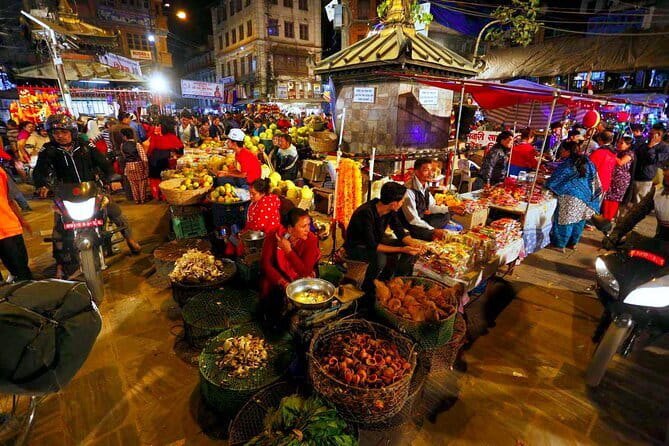
The final day starts on foot through Thamel and Asan Tole, a long-established shopping district. Asan is useful for seeing Kathmandu in everyday motion, with small shops, local goods, and narrow streets leading toward New Road and Kathmandu Durbar Square.
Kathmandu Durbar Square is the first major monument stop. The former royal center contains palace buildings, temples, and public spaces. The walk through Asan makes the arrival more meaningful because you approach the square from the commercial city rather than being dropped directly at a tourist entrance.
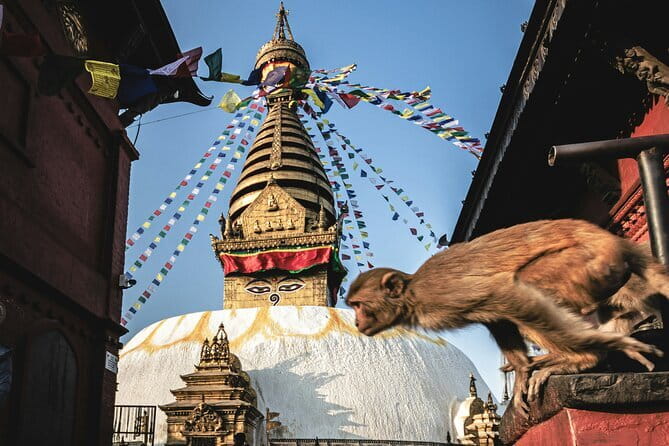
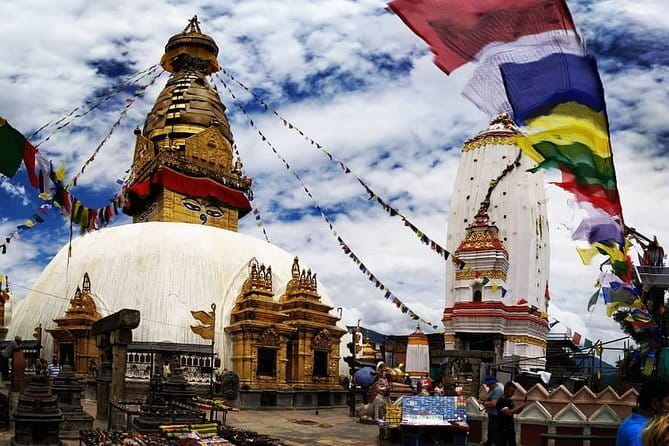
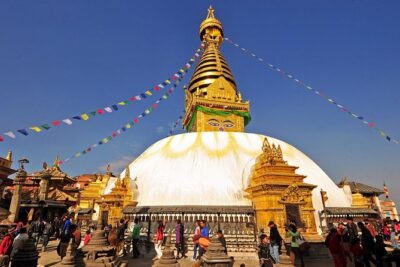
Swayambhunath follows. Often called the Monkey Temple, it sits above Kathmandu and is one of the valley’s best-known Buddhist sites. The route allows about an hour. Expect religious activity, architecture, and views across the city, although the amount of visible cityscape depends on conditions.
The tour then moves to Budhanilkanth Temple, also called Jal Narayan. This is a Hindu shrine centered on a large reclining Vishnu image placed in water. It is not one of the seven UNESCO World Heritage sites, but it adds a different religious setting to the day.
Next comes Boudhanath, listed here as Buddha Stupa. The great stupa is one of the strongest stops on the whole route. Its broad circular form, prayer activity, and Tibetan Buddhist connections give it a scale and mood unlike the palace squares. The schedule allows about two hours, which is sensible. Walk around the stupa, look at the surrounding buildings, and leave time to sit quietly.
Pashupatinath Temple is the final major heritage stop. Set beside the Bagmati River, it is one of Nepal’s most important Hindu pilgrimage sites. Access to inner areas can be restricted according to religious rules, so your experience depends on which spaces are open to non-Hindu visitors. The wider temple complex and river setting remain significant even when you cannot enter every shrine.
The optional evening in Thamel and Jhamsikhel can last up to five hours. The tour offers escorted access through restaurants, pubs, clubs, and streets, but food, drinks, and nightlife costs are not included. This is best treated as an optional extension, not part of the core heritage program.
More days out in Patan:
- Kathmandu: Private Patan and Bhaktapur Sightseeing Tour
★ 4.7 · 64 reviews - Patan and Bhaktapur City Full Day Tour
★ 5.0 · 24 reviews - City tour of Bhaktapur and Patan Durbar Square
★ 4.5 · 20 reviews - Patan Heritage Tour – Private/Small Group
★ 5.0 · 14 reviews
The UNESCO claim deserves a careful check
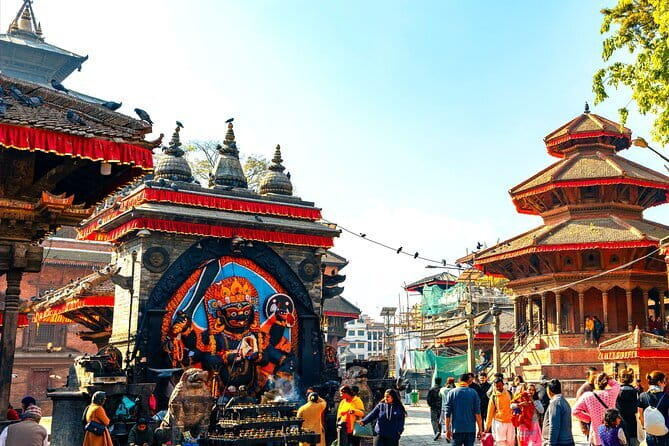
The tour is presented as covering all seven UNESCO World Heritage sites in the Kathmandu Valley. The named route clearly includes these six:
- Kathmandu Durbar Square
- Patan Durbar Square
- Bhaktapur Durbar Square
- Swayambhunath
- Boudhanath
- Pashupatinath
The seventh UNESCO site in the valley is Changu Narayan, but it does not appear in the supplied three-day route. Budhanilkanth is included instead, and it is not part of the seven-site UNESCO group.
This does not make the tour poor. The route already covers the valley’s three great old cities and five major religious or royal sites, depending on how you count the UNESCO locations. But if collecting all seven matters to you, ask the operator directly if Changu Narayan can be substituted or added.
What the $385 price includes
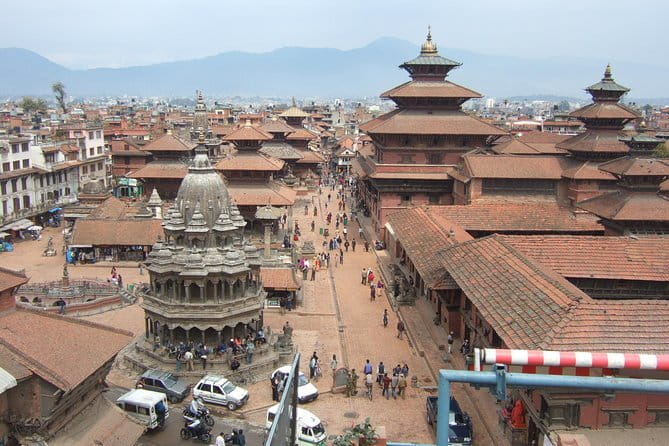
At $385 per person, this is not a budget walk. The price covers three days, private transportation, an air-conditioned vehicle, a certified local tour leader, entrance fees, environmental management fees, and one bottle of water per day.
You pay separately for meals, accommodation, gratuities, and the optional Thamel nightlife. Accommodation is not bundled, which can be useful if you already have a hotel or want to choose among different brands and luxury levels. It also means the total cost of your Nepal stay will be higher than the headline price.
I see the strongest value in the private vehicle and the guide’s local focus. Entry fees across several major sites add up, and the route would be difficult to manage efficiently by yourself in three days. The value is weaker if you want a slow, unstructured visit or already have a guide who can explain Newar culture and arrange craft encounters.
The tour starts at 9:15 a.m. Pickup is offered, and confirmation arrives at booking. Most people can take part, public toilets are available, and service animals are allowed. Cancellation is free up to 24 hours before the start time. Since food is not included, budget separately for tastings and meals.
Who should book this three-day route?
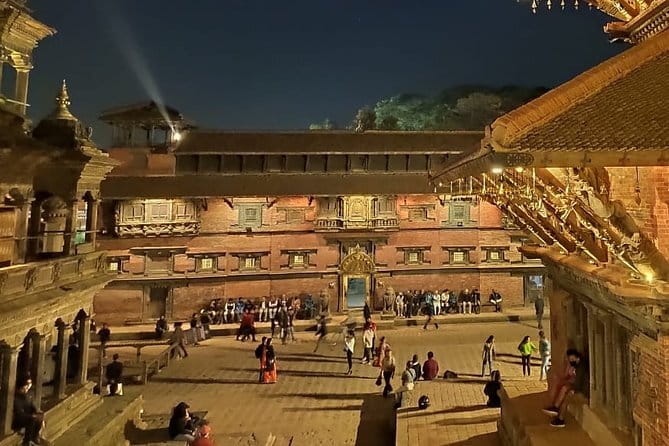
I would choose this tour if you want the valley’s major sights but also care about local food, craft, and neighborhood life. It suits first-time visitors who want a clear plan, families who prefer private transport, and culture-focused visitors who do not want to spend every hour inside a palace square.
It is also a good match after a trek. Several people used the city tour alongside Himalayan trekking, and that pairing makes sense: the three days give you cultural context before or after time in the mountains.
I would hesitate if you dislike full days, have limited mobility, or want a hotel-and-meals package. The walking is substantial, the schedule is busy, and some religious sites have access rules you cannot control. I would also confirm the Changu Narayan question before paying if the seven-site promise is central to your decision.
FAQ
How long is the tour?
The experience lasts approximately three days, with a 9:15 a.m. start time.
Is transportation included?
Yes. Private transportation in an air-conditioned vehicle is included.
Is this a private tour?
Yes. Only your group participates in the activity.
Are entrance fees included?
Yes. Entrance fees and environmental management fees for the attractions named in the route are included.
Are meals included?
No. Food is not included. The guide can advise you about local dishes and places to eat.
Is accommodation included?
No. Accommodation is separate, and you can choose from different brands and luxury options.
Does the tour visit all seven UNESCO sites in the Kathmandu Valley?
The route names six UNESCO sites: Kathmandu Durbar Square, Patan Durbar Square, Bhaktapur Durbar Square, Swayambhunath, Boudhanath, and Pashupatinath. Changu Narayan is not listed, so confirm this point before booking.
Can I cancel for a full refund?
Yes, if you cancel at least 24 hours before the experience start time. Cancellations made less than 24 hours in advance are not refunded, and late changes are not accepted.
Should you book it?
Book this tour if your priority is local context rather than a quick checklist. Juju Dhau, Pottery Square, Patan’s monasteries, old water fountains, woodcarving families, Asan market, and the major stupas give the three cities distinct personalities.
At $385, it is best value for visitors who want private transport, entry fees, and a native guide arranged in one package. Before booking, ask two direct questions: who will lead your group, and how will the seventh UNESCO site be handled? If the answer suits you, this is a strong way to meet Kathmandu Valley through its food, faith, crafts, and old streets, not only its famous monuments.
More UNESCO Heritage Tours in Kathmandu
- Private Kathmandu Sightseeing Tour | UNESCO World Heritage sites
★ 5.0 · 756 reviews - Kathmandu: Full Day 7 UNESCO Tour with Lunch – Private/Group
★ 5.0 · 415 reviews - Kathmandu: Full Day Top 4 UNESCO Tour with Lunch – Private/Group
★ 5.0 · 269 reviews - UNESCO Seven World Heritage Tour in Kathmandu
★ 5.0 · 253 reviews
Just added around Kathmandu
- Traditional Momo Making Class★ 5.0 · 10 reviews
- Women Empowerment Project(Nepali cooking class & jewelry workshop★ 5.0 · 15 reviews
- Manthali Airport (Ramechhap) To Kathmandu – Transport Service★ 4.5 · 11 reviews
- Amazing 1 Day Trekking Experience in Kathmandu Nepal★ 5.0 · 24 reviews
- Walking tour of Kathmandu with awesome local guides★ 5.0 · 4 reviews
- Walking tour of real Kathmandu through back streets.★ 5.0 · 3 reviews
- Private Manaslu Circuit Trek at Himalayas★ 5.0 · 3 reviews
- Walking Street Food Tour in Kathmandu★ 5.0 · 111 reviews
UNESCO World Heritage Tours, compared.
Private Kathmandu Sightseeing Tour | UNESCO World Heritage sites
Read our review →
Full Day 7 UNESCO Tour with Lunch – Private/Group
Read our review →
Full Day Top 4 UNESCO Tour with Lunch – Private/Group
Read our review →
Full-Day 7 UNESCO Tour with Lunch – Private/Group
Read our review →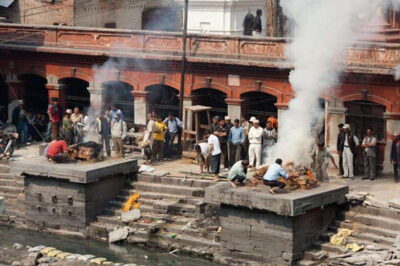
Kathmandu Private Sightseeing Tour | UNESCO World Heritage Sites
Read our review →Browse the lists this tour appears in