Reviewed · TOURS
Fixed Departure Tibet Overland Group Joining Tours.
Crossing into Tibet by road gives you the big scenery right away: Himalayan ridges, high passes, turquoise Yamdrok Tso, and the Brahmaputra River. This is not a slow cultural stay, but it packs a lot into eight days, from the Kerung border to Lhasa’s great monasteries.
I like the Everest-area mountain views and the chance to see important sites such as Tashlhumpu Monastery, Gyantse Kumbum, Potala Palace, and Jokhang Temple. I also like that the price includes transport, seven breakfasts, monastery entrance fees, a Tibetan guide, and the Tibet Travel Permit.
The main drawback is the pace. You spend long hours in a van or bus, cross passes above 4,700 meters, and have limited time in each place. Permit preparation also takes planning: your original passport is needed at least three working days ahead, and booking confirmation is required at least 15 working days before the trip.
Key points to know before you book
- Eight days from Kathmandu to Tibet: The route begins with an early 5:15 am departure and ends with onward travel to Kathmandu or mainland China.
- High-altitude road travel: Gyatchu La reaches 5,220 meters, with Karo La at 5,010 meters and Kamba La at 4,794 meters.
- Major Lhasa sights included: Potala Palace, Norbulingka Palace, Barkhor Bazaar, Tibet Museum, Sera Monastery, Drepung Monastery, and Jokhang Temple.
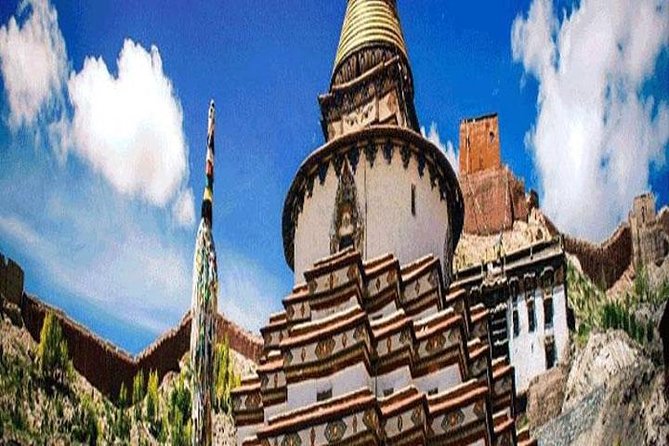
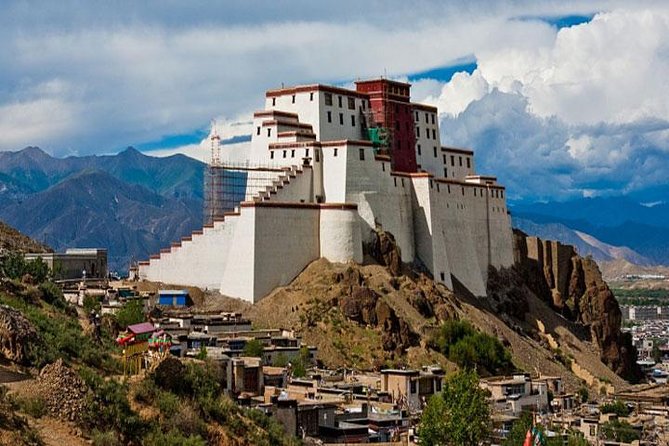
- Strong cultural focus: You visit Tashlhumpu, Gyantse Kumbum, Gyantse Dzong, Sakya Monastery, and Shalu Monastery.
- Group format with practical inclusions: The maximum group size is 30, with twin-sharing rooms, breakfast, road transport, entrance fees, and a Tibetan guide included.
- Hands-on trip support: Gokul and Asmita are named contacts associated with arranging permits, transport, and wider Nepal and Tibet itineraries.
Why this overland route is worth your time
The real appeal is the change in scenery. You leave Kathmandu’s lower hills and climb toward the Tibetan Plateau, where the road opens into wide, spare views and huge mountain horizons. The route feels like a journey rather than a flight followed by sightseeing.
You also get a useful mix of religious and political history. The monasteries are not interchangeable stops. Tashlhumpu is linked with the Panchen Lama, Drepung was once associated with thousands of monks, and Potala Palace gives you the grandest view of Lhasa.
The price is $1,300 per person. That is a fair package price for an eight-day organized crossing if you value having the route, permits, transport, guide, hotel rooms, breakfasts, and monastery entry fees arranged together. You still pay for lunch, dinner, visa costs, flights or trains, drinks, tips, personal purchases, and a single-room supplement if you do not share.
A group of up to 30 can keep the cost down, but it also affects the feel of the trip. Sightseeing will be more structured, and road stops may take longer. If you prefer private timing and quiet visits, this is not the format to choose. If you want an organized route across a difficult border and high plateau, the group structure makes practical sense.
More days out in Kathmandu:
- Private Kathmandu Sightseeing Tour | UNESCO World Heritage sites
★ 5.0 · 756 reviews - Half day cooking class in Thamel kathmandu
★ 5.0 · 607 reviews - Nagarkot Sunrise View and Day Hiking from Kathmandu
★ 5.0 · 471 reviews
Day 1: Kathmandu to Kerung by way of the border
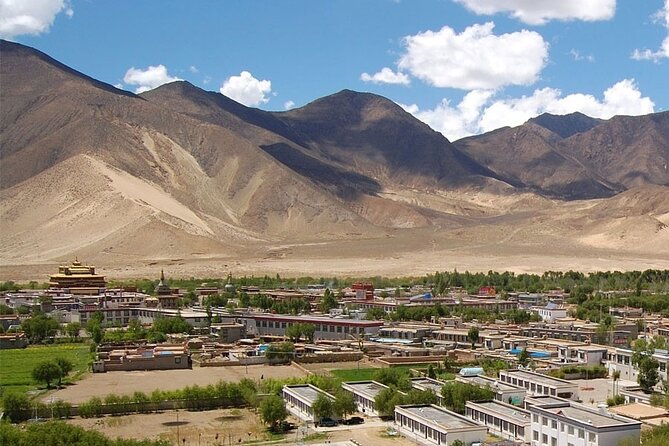
The first morning starts at 5:15 am, so you need to be ready before sunrise. The road heads toward the Kerung border through Nepali countryside, then the group handles border formalities before continuing uphill toward Kerung.
This is a travel day, not a sightseeing day. Its value lies in the transition from Nepal into Tibet and in the changing scenery along the road. The schedule depends on border procedures, so the day may feel less predictable than a normal point-to-point transfer.
You should also note the paperwork requirement before you commit. The company needs your original passport at least three working days in advance for the Tibet visa process, and booking confirmation is required at least 15 working days before the Tibet portion of the trip. Those dates matter more here than on an ordinary city tour.
Day 2: The Tibetan Plateau and views near Tengri
The second day continues toward the high plateau. The road brings broad Tibetan scenery and Himalayan views, with Tengri named as a key point on the route. The itinerary highlights views of Mount Everest, known locally as Qomolangma, at 8,848 meters.
The appeal is visual rather than busy. You are moving through a high, open region where the road and mountains provide the main show. The itinerary does not promise an Everest trek or a long mountain walk, so think of this as a scenic overland day with viewing opportunities from the route.
The long drive is also the challenge. You spend much of the day in a van or bus, and the altitude becomes a serious part of the experience. Since the schedule crosses some of the world’s highest roads, this is better suited to you if you are comfortable with a demanding road journey rather than a relaxed holiday.
Day 3: Shigatse and the 5,220-meter Gyatchu La
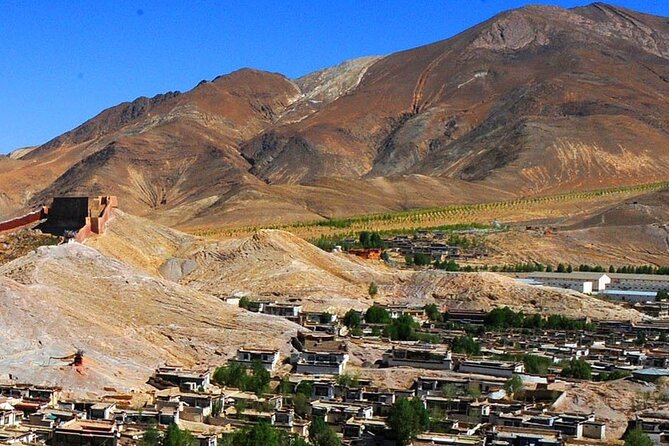
After breakfast, the road continues to Shigatse over Gyatchu La, the highest pass on the trip at 5,220 meters. That figure is not a small detail. It explains why the route is dramatic, why the scenery feels so vast, and why the pace needs to remain sensible.
The drive is built around views of Tibetan villages, open country, and mountain terrain. Shigatse gives the route a proper urban and religious center before the journey continues toward Gyantse and Lhasa.
There is no separate sightseeing program described for this day, so keep your expectations clear. This is another transfer day with scenery and altitude as its main features. The benefit is that the road itself is part of the experience. The cost is less time on your feet and less control over how long you stop.
A completely different kind of day, same corner of Nepal:
- Kathmandu: Full Day 7 UNESCO Tour with Lunch – Private/Group
★ 5.0 · 415 reviews - Kathmandu: Local Women-Led Nepali Cooking & Momo Class
★ 4.9 · 360 reviews - Private Bhaktapur and Nagarkot Day Tour From Kathmandu
★ 5.0 · 305 reviews - Kathmandu: Full Day Top 4 UNESCO Tour with Lunch – Private/Group
★ 5.0 · 269 reviews
Day 4: Tashlhumpu Monastery and the road to Gyantse
The day begins with a small sightseeing program in Shigatse at Tashlhumpu Monastery, associated with the Panchen Lama. This is one of the route’s strongest cultural stops, especially if you want more than postcard views.
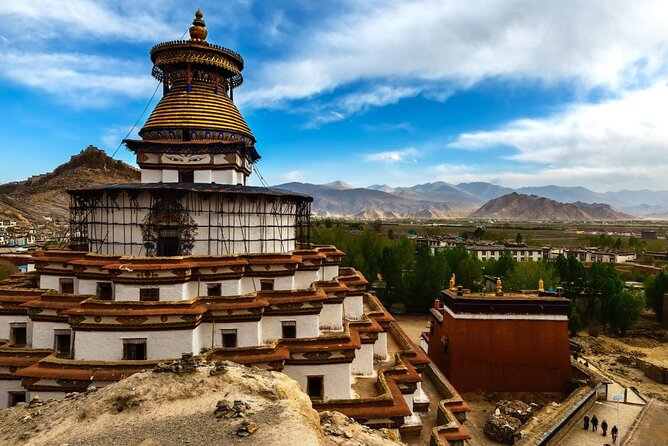
You then drive through Tibetan villages toward Gyantse Valley. Gyantse adds several notable places to the journey, including Gyantse Kumbum and Gyantse Dzong. The Kumbum is known for its distinctive religious architecture, while the dzong gives the stop a different historical character.
This day works well because it breaks up the long transfers with substantial sites. You are not simply rushing from border to capital. At the same time, the itinerary does not specify how long you spend at each monument, so the group schedule will shape the visit.
Shalu Monastery and Sakya Monastery are also included among the places visited on the full route. The exact day for each is not clearly assigned in the schedule, so confirm the final operating plan before departure if one of these sites is especially important to you.
Day 5: Yamdrok Tso, two high passes, and Lhasa
The road to Lhasa crosses Karo La at 5,010 meters and Kamba La at 4,794 meters. Between these high points, you see Yamdrok Tso, often called Turquoise Lake, along with the Brahmaputra River.
This is probably the most scenic road day of the trip. Yamdrok Tso gives you a strong contrast to the dry plateau, while the river adds another sense of scale. The route is not just about reaching Lhasa. It shows you how water, mountains, roads, and settlements fit together on the Tibetan Plateau.
Again, the scenery comes with a price: long hours at altitude. The itinerary does not describe a special acclimatization day, so you should be realistic about your energy. You will need to follow the guide’s timing and avoid treating every viewpoint as a chance for a long walk.
Arriving in Lhasa is an important change of pace. The capital offers more concentrated sightseeing, but you still have only a short stay. The next two days carry most of the city program.
Day 6: Potala Palace, Norbulingka, and central Lhasa
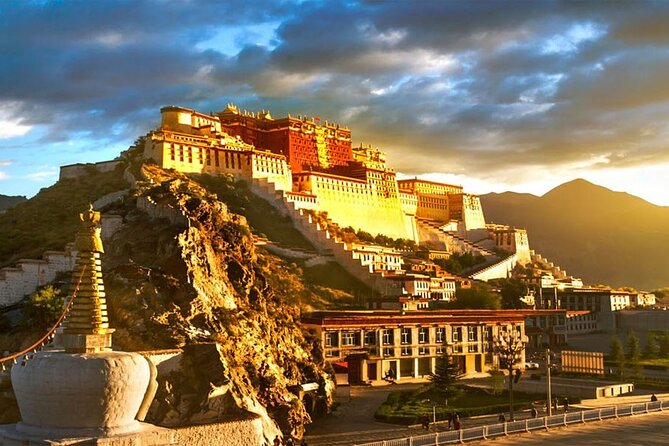
The first guided sightseeing day in Lhasa begins with Potala Palace, the winter palace of the Dalai Lama. Its position above the city makes it both a major religious site and a viewing point over Lhasa.
The program then includes Norbulingka Palace, the former summer palace, along with Barkhor Bazaar and the Tibet Museum. These stops give you different ways to understand Lhasa. Potala presents the monumental side of Tibetan religious and political life. Norbulingka offers a palace setting, while Barkhor connects the city’s religious center with daily commercial activity.
Jokhang Temple is also part of the Lhasa program. It is one of the most important religious sites in Tibet, and its location near Barkhor makes the two stops work naturally together.
This is a full day, and the group format matters. You will have a guide to explain what you are seeing, but the visit will not be completely self-directed. The advantage is that you are less likely to miss the major landmarks. The limitation is that you may not have unlimited time at the places that interest you most.
Day 7: Drepung, Sera, and the final Lhasa sights
The second Lhasa sightseeing day focuses on Drepung Monastery and Sera Monastery. Drepung was built in the 14th century and was once home to 10,000 monks, giving the site an important place in Tibetan religious history.
Sera adds another major monastic stop. Together, these visits give you a better sense of how large monastic institutions shaped Tibetan culture, education, and daily life. They also balance the palace and city sights from the previous day.
By this point, the route has covered a lot: border crossing, high passes, village roads, major monasteries, palaces, markets, and museums. I would treat this as the final full sightseeing day and avoid planning extra independent activities unless the guide confirms you have free time.
The program is especially suitable if you want a guided introduction rather than specialist study. You will see an impressive range of sites, but eight days is too short for a slow, detailed examination of every monastery and historical setting.
Day 8: Leaving Lhasa for Kathmandu or mainland China
After breakfast, you check out and continue toward your next destination, either Kathmandu or mainland China. The road is described as scenic again, but this day is mainly about onward transport.
The flexible ending is useful if Tibet is one part of a longer trip. It also means you should confirm your onward arrangements carefully before booking flights or other transport, since the tour itself does not include airfare or train tickets.
The final day reinforces the nature of the whole experience. This is a route-based trip, not a hotel-based stay in Lhasa. You are paying to cross a large region and see its major sites in sequence.
What the $1,300 price covers
The package includes twin-sharing rooms on a bed-and-breakfast basis, seven breakfasts, road transport by van or bus, an English-speaking Tibetan guide, monastery entrance fees, and the Tibet Travel Permit.
That list gives you a useful way to judge value. The permit and organized border process are important parts of a Tibet journey, and having them handled reduces a lot of practical work. Transport is also a major cost on an eight-day road trip.
The package does not include lunch or dinner. You also pay for personal drinks, tips, personal expenses, visa fees, flights or trains, and a single supplement if needed. Natural or political disruptions beyond the operator’s control are excluded as well.
The booking support appears to be a strong part of the service. Gokul is described as helping arrange trips within Nepal and Tibet and communicating in English and Spanish. Asmita is associated with preparing people for departure and helping organize the practical details. Confirm who will be your direct contact for this specific departure.
Who should book this Tibet group tour
I would recommend it to you if you want:
- A road crossing from Kathmandu rather than a quick flight
- Major Tibetan monasteries and palaces in one organized route
- Everest and Himalayan views without joining a trekking program
- A lower-cost group structure with transport and permits arranged
- A guided first visit to Lhasa and the Tibetan Plateau
I would hesitate if you want slow travel, private sightseeing, flexible meal stops, or a light schedule. The maximum group size is 30, the first departure is very early, and several days involve long drives at high altitude.
The tour is also a better fit for someone comfortable with uncertain border timing and a tightly managed itinerary. You should confirm the passport, permit, visa, and onward travel requirements before paying, not after arriving in Kathmandu.
Should you book it?
Book this tour if the road journey matters as much as Lhasa itself. The strongest reasons are the high mountain route, Yamdrok Tso, the Everest views, and the unusually broad set of religious sites included in eight days.
Skip it if you need plenty of free time or want a private, slower experience. For the price, the combination of transport, guide, breakfasts, entry fees, and permit support is sensible, but the value depends on accepting long road days and group timing.
The best practical move is to confirm the exact departure date, guide, final route, border plan, and onward transport before booking. If those details suit you, this is a focused and efficient introduction to Tibet from Kathmandu.
FAQ
How long is the Tibet overland group tour?
The tour lasts approximately eight days, beginning in Kathmandu and ending with onward travel toward Kathmandu or mainland China.
What time does the tour start?
The stated start time is 5:15 am.
What is included in the tour price?
The price includes twin-sharing accommodation on a bed-and-breakfast basis, seven breakfasts, an English-speaking Tibetan guide, road transport by van or bus, monastery entrance fees, and the Tibet Travel Permit.
What is not included?
Lunch, dinner, drinks, tips, personal expenses, visa fees, flights, train fares, and a single-room supplement are not included.
How many people can join the group?
The tour can have a maximum of 30 participants.
Which major sights are included in Lhasa?
The Lhasa program includes Potala Palace, Norbulingka Palace, Barkhor Bazaar, Tibet Museum, Jokhang Temple, Drepung Monastery, and Sera Monastery.
When is the passport needed for permit arrangements?
Your original passport is needed at least three working days in advance for the Tibet visa process. Booking confirmation is required at least 15 working days before the Tibet tour.
Just added around Kathmandu
- Women Empowerment Project(Nepali cooking class & jewelry workshop★ 5.0 · 15 reviews
- Manthali Airport (Ramechhap) To Kathmandu – Transport Service★ 4.5 · 11 reviews
- Amazing 1 Day Trekking Experience in Kathmandu Nepal★ 5.0 · 24 reviews
- Walking tour of Kathmandu with awesome local guides★ 5.0 · 4 reviews
- Walking tour of real Kathmandu through back streets.★ 5.0 · 3 reviews
- Private Manaslu Circuit Trek at Himalayas★ 5.0 · 3 reviews
- Walking Street Food Tour in Kathmandu★ 5.0 · 111 reviews
- Kathmandu Street Food Walking Tour – Eat Like a Local★ 5.0 · 3 reviews
Tours, compared.
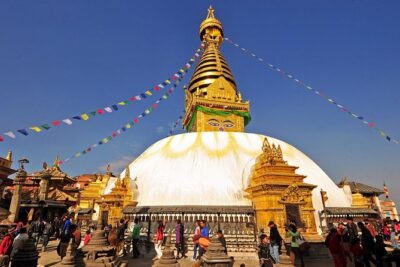
Private Kathmandu Sightseeing Tour | UNESCO World Heritage sites
Read our review →
Everest Base Camp Helicopter Tour landing at Everest View Hotel
Read our review →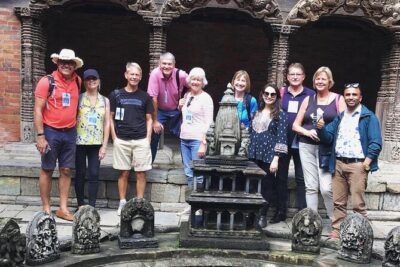
Full Day 7 UNESCO Tour with Lunch – Private/Group
Read our review →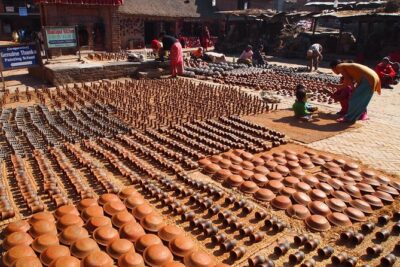
Private Bhaktapur and Nagarkot Day Tour From Kathmandu
Read our review →
Full Day Top 4 UNESCO Tour with Lunch – Private/Group
Read our review →