
Reviewed · ANNAPURNA BASE CAMP TREKS
From Pokhara: 10-Day Poon Hill and Annapurna Base Camp Trek
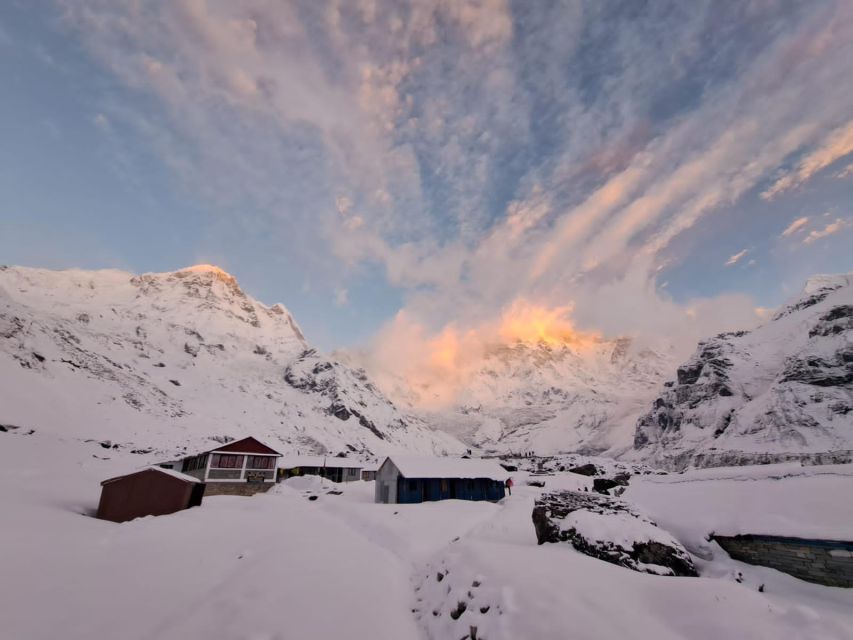
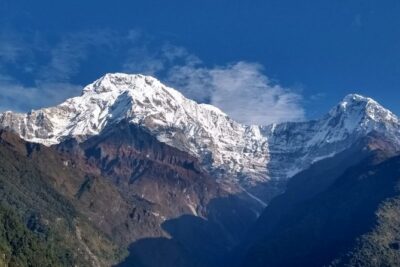
The big reward here is variety. In ten days, you move from terraced farmland and stone steps to the high, enclosed bowl of Annapurna Base Camp, with a sunrise climb to Poon Hill along the way. On clear mornings, Annapurna I, Machhapuchhre, Dhaulagiri, Nilgiri, and Hiunchuli fill the view.
I like the sensible pace and the private format. You usually walk about three to six hours a day, and guides such as Biru, Arjun, and Bikram have adjusted the speed and route when hikers needed extra time. The catch is that this remains a serious mountain trek, with steep steps, cold nights, changing weather, and several days above 3,000 meters.
Key points at a glance
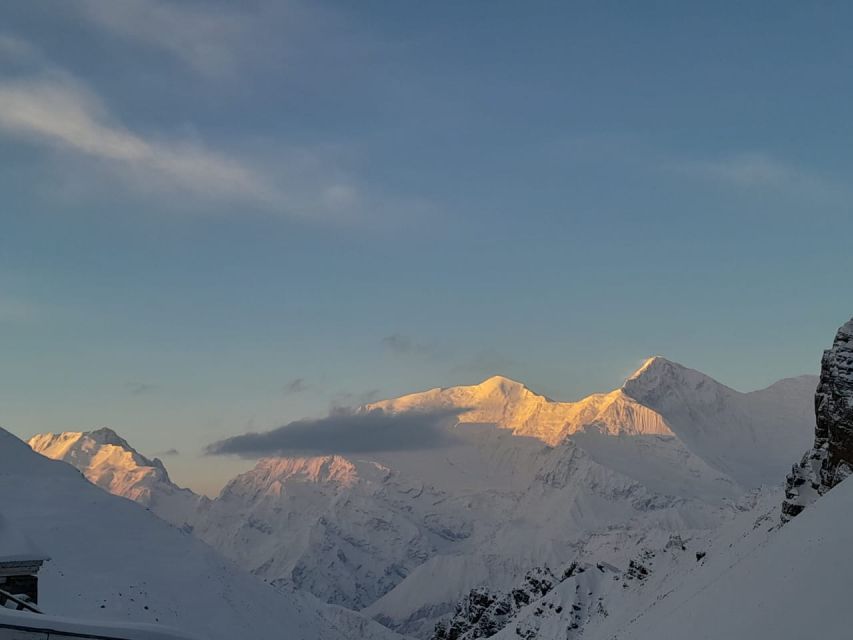
- Poon Hill sunrise: Start early from Ghorepani for a wide view of the Annapurna and Dhaulagiri ranges.
- Annapurna Sanctuary: Reach Annapurna Base Camp at 4,130 meters, surrounded by towering Himalayan peaks.
- Private guiding: A private group lets the guide set a more suitable pace and respond to altitude or fatigue.
- Village-to-village walking: The route passes through Tikhedhunga, Ghorepani, Tadapani, Chhomrong, Bamboo, and Jhinu Danda.
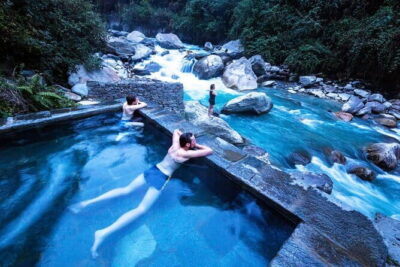
- A hot-spring finish: Rest tired legs at the natural hot springs in Jhinu Danda on day nine.
- Good value with important extras: The $310 price includes permits, guesthouses, guiding, and transfers, but not meals, insurance, or emergency rescue.
Why this 10-day route works
This trek combines two famous sections of the Annapurna region: the Poon Hill route and the trail to Annapurna Base Camp. That makes it more varied than a short out-and-back walk to the base camp, while ten days gives you room to enjoy the villages and forests instead of racing from lodge to lodge.
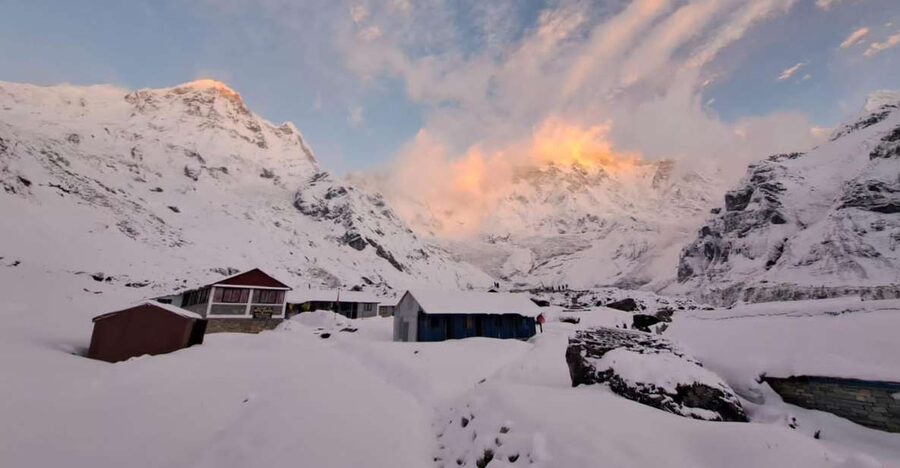
The scenery changes often. Near the lower trail, you see terraced fields, small settlements, and the Modi Khola river valley. Higher up, rhododendron and bamboo forests close around the path. Above Deurali, the trees thin out and the trail opens into the Annapurna Sanctuary, a dramatic mountain bowl ringed by snow-covered peaks.
I also like the human scale of the trip. This is not a large coach excursion with a few short walks. You spend each day on foot, sleep in local guesthouses, and rely on a guide for route choices, lodging, and altitude decisions. The private arrangement matters most if you are a slow hiker or prefer a quiet walking rhythm.
The price is attractive at $310 per person, given that it includes a professional English-speaking guide, permits, official documents, guesthouse accommodation, the Poon Hill entrance, and private car transfers between Pokhara and Nayapul. It does not include food or drinks, and the costs rise at higher elevations. Plan at least $30 to $40 per day if you want extras such as hot showers, Wi-Fi, battery charging, and heater use.
More Annapurna Base Camp treks:
- Annapurna base camp trek 5 Days
★ 5.0 · 252 reviews - Annapurna Base Camp Trek
★ 5.0 · 111 reviews - Kathmandu to Annapurna Base Camp (ABC) 5-Day Trek
★ 5.0 · 102 reviews
Day 1: Pokhara to Tikhedhunga by way of Nayapul
Your morning begins with pickup within the Lakeside area of Pokhara. A private car takes you to Nayapul in about 1.5 hours, reducing the fuss of arranging local transport before a long walk.
From Nayapul, the trail follows the Modi Khola and passes small villages and terraced fields. The first day is a useful introduction to village life and the walking rhythm, but it is not merely a gentle stroll. You reach Tikhedhunga at 1,577 meters and spend the night in a guesthouse.
Tikhedhunga is a practical overnight stop rather than a grand destination. Its value is its position on the route. You get a chance to settle into mountain accommodation before the steepest early climb.
Day 2: Ulleri steps and the forests around Ghorepani
Day two brings the route’s first major test: the stone steps up toward Ulleri. The ascent is steady and can feel hard early in the trek, especially if you are not used to repeated stairs.
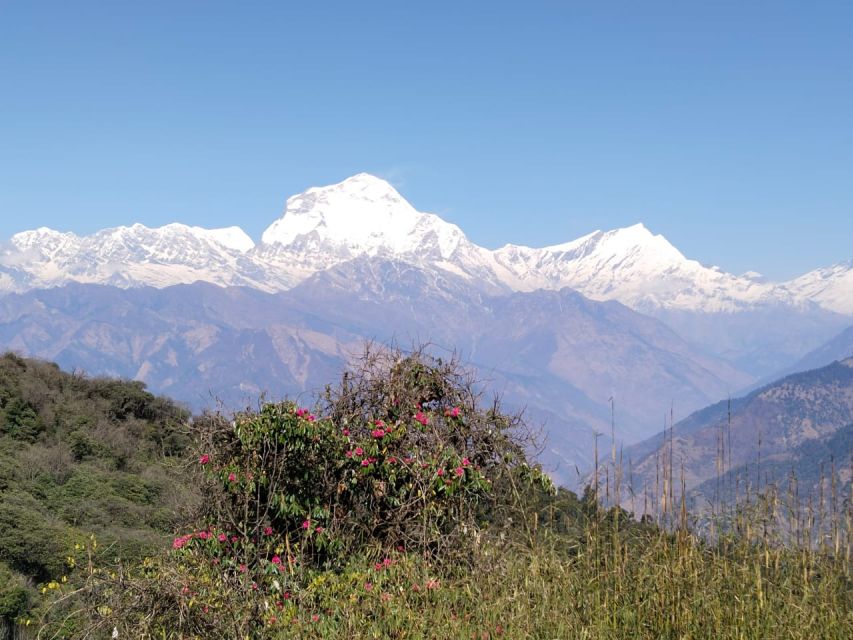
After Ulleri, the trail passes through rhododendron and marigold forests and continues past small villages. At 2,874 meters, Ghorepani gives you your first broad mountain outlook, with the Annapurna and Dhaulagiri ranges visible when the weather cooperates.
This is a day when patience pays. You do not need to hurry, and the private format allows your guide to adjust the pace. Biru has been praised for staying patient with slower hikers, while Bikram has been noted for changing the walking speed to match the person in front of him. Those details matter more than a fast arrival when you are gaining altitude.
Day 3: Poon Hill sunrise and the trail to Tadapani
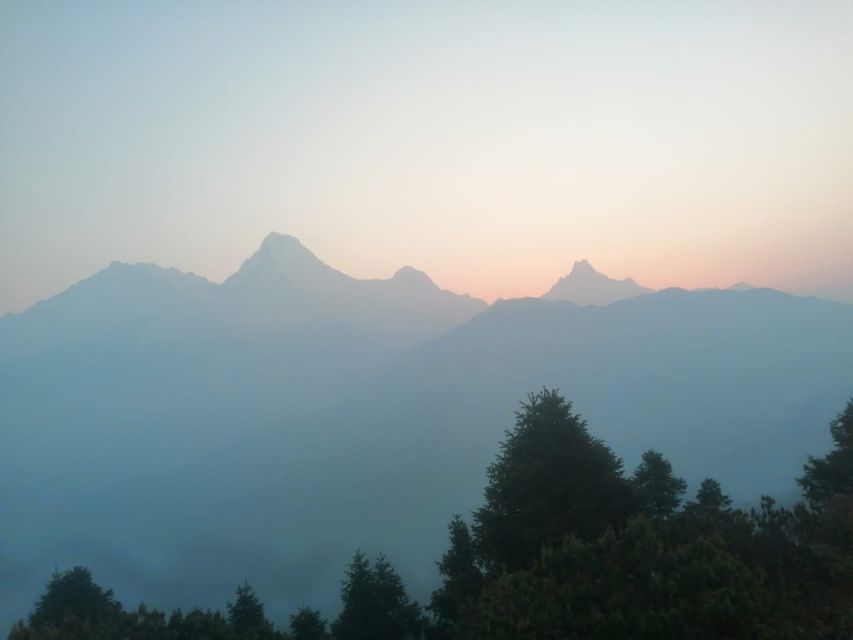
The classic Poon Hill morning starts before breakfast. From Ghorepani, you climb to Poon Hill at 3,210 meters for sunrise. The viewpoint gives you a broad panorama of the Annapurna and Dhaulagiri ranges, and clear weather can reveal peaks including Annapurna South, Machhapuchhre, and Dhaulagiri.
The early start is cold and the climb is uphill, but this is one of the route’s best uses of effort. After returning to Ghorepani for breakfast, you continue toward Tadapani through forest and rhododendron-filled valleys.
Tadapani sits at 2,630 meters and feels more enclosed than Poon Hill. The forest gives the day a different mood, with the trail shifting between shaded paths and mountain openings. The combination of sunrise and woodland walking makes this one of the fullest days of the trip.
More Poon Hill and Ghorepani treks:
- Poon hill Trek 3 days
★ 5.0 · 176 reviews - Pokhara: 4-Day Ghorepani, Poonhill & Ghandruk Mountain Trek
★ 5.0 · 132 reviews - Ghorepani – Poon Hill Trek 3N-4D
★ 5.0 · 125 reviews - 4 Days Poon Hill Trek
★ 5.0 · 94 reviews
Day 4: From Tadapani to Gurung country in Chhomrong
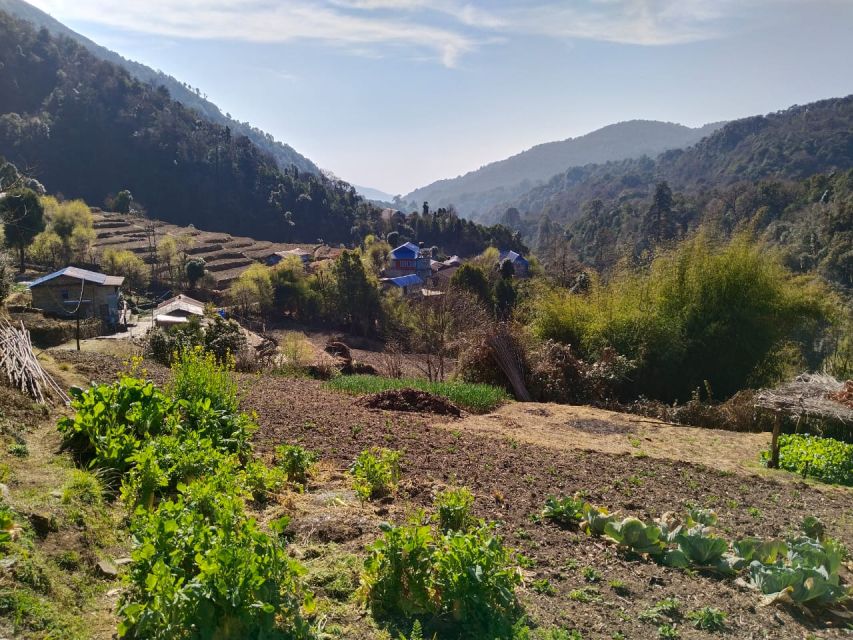
The trail descends through lush forest toward Gurjung village, then drops to the Kimrong Khola before climbing again to Chhomrong at 2,170 meters. This up-and-down pattern can be more tiring than a steady climb, so keep your pace controlled.
Chhomrong is a large Gurung village with views toward Annapurna South and Machhapuchhre, also called Fishtail. It is an important stop because the village marks the transition toward the Annapurna Sanctuary route.
The lower altitude here can feel welcome after Ghorepani and Poon Hill. Still, do not mistake the descent for an easy day. You lose height, cross the river area, and then regain it before reaching the village.
Day 5: Crossing the Chhomrong Khola to Bamboo
From Chhomrong, the path drops to the Chhomrong Khola and crosses a suspension bridge. You then climb toward Sinuwa before entering thicker bamboo and rhododendron forest.
Bamboo, at 2,310 meters, is a straightforward overnight stop, but its setting gives the day its appeal. The trail feels more enclosed, with dense vegetation replacing the open fields and distant village views of the first few days.
This section also begins to feel more remote and focused. You are now walking deeper into the valley toward the base camp, with fewer broad routeside views and more attention on the trail, river, and forest. I would treat this as a steady walking day rather than one to rush.
Day 6: Bamboo, Hinku Cave, and Deurali
The route continues through bamboo forest and along the Modi Khola valley. You pass the Himalayan Hotel and Hinku Cave before climbing steadily to Deurali at 3,230 meters.
Deurali is where altitude and weather deserve more attention. The air is thinner, temperatures can drop, and cloud can hide peaks that appear only for a few minutes. A September departure may bring rain and heavy cloud, while spring and autumn usually offer better odds of stable weather. Even in the best seasons, mountain conditions can change quickly.
This is also a good point to watch how you feel. Headache, unusual fatigue, or other symptoms should be reported to your guide. Arjun has adjusted a trek for altitude problems before, extending the schedule by three days rather than forcing the planned pace. That kind of flexibility is a real safety benefit, though any extension should be confirmed with the operator and may affect costs.
Day 7: Entering the Annapurna Sanctuary
From Deurali, the valley narrows before opening into the Annapurna Sanctuary. You pass Machhapuchhre Base Camp at 3,700 meters and continue to Annapurna Base Camp at 4,130 meters.
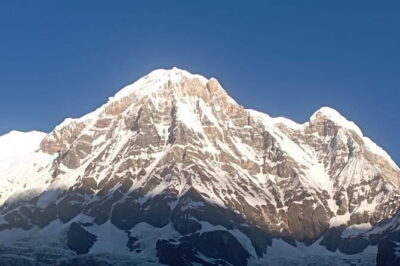
This is the trip’s central achievement. Annapurna I rises to 8,091 meters, and the base camp is surrounded by a ring of major peaks. Depending on the weather, you may also see Annapurna II, III, and IV, Hiunchuli, Nilgiri, Dhaulagiri, and Machhapuchhre.
The scenery is powerful because the trail has gradually brought you into the heart of the mountains. You are not looking at a distant skyline from a road. You are standing inside a high mountain basin with steep walls around you.
The downside is simple: this is a high-altitude day. The final approach can feel slow, and cold, wind, snow, rain, or cloud may limit the views. Do not judge the experience only by photographs. Reaching the base camp safely is the priority, and the guide should set the pace.
Day 8: Sunrise at base camp and the long return to Bamboo
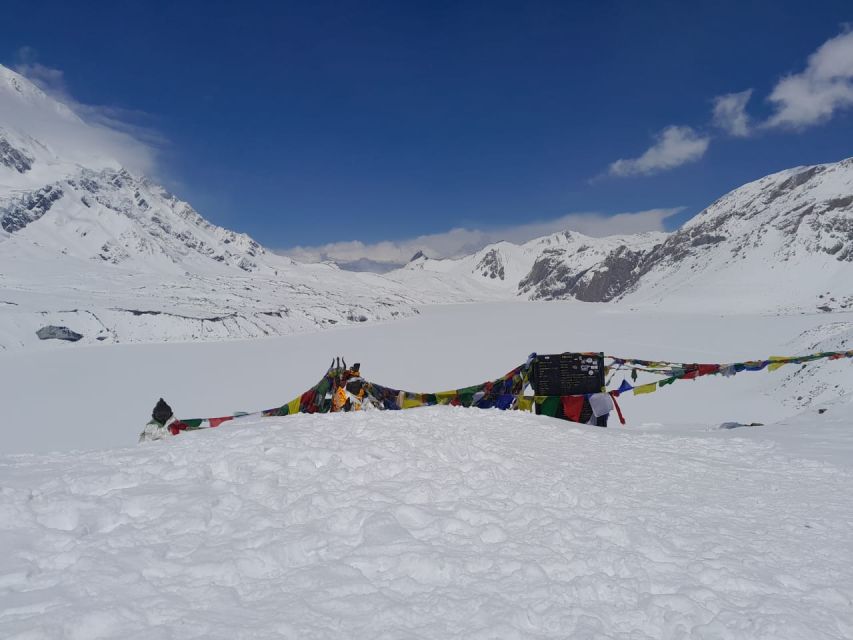
An early start at Annapurna Base Camp gives you another chance at clear mountain light. Sunrise can reveal the peaks in changing shades before you begin the long descent.
You retrace the route through Deurali and continue to Bamboo. Going downhill is easier on the lungs but can be tough on knees, especially after the high point of the trek. Trekking poles, comfortable shoes, and a controlled pace are useful here.
The return also gives you a second look at places that may have been hidden by cloud on the way up. A rainy or cloudy ascent does not mean the entire route will stay that way. One September trek had three wet days and only one sunny day, yet brief openings in the cloud made the scenery memorable.
Day 9: Chhomrong and the hot springs at Jhinu Danda
You continue descending through forest, reach Chhomrong for lunch, and then drop farther to Jhinu Danda at 1,780 meters. The lower elevation feels easier after the nights above 3,000 meters.
Jhinu Danda is the trip’s most relaxing finish. Its natural hot springs offer a chance to soak tired legs and enjoy a slower evening before the final walk. Bring suitable clothing for the hot springs and keep your expectations practical. This is a mountain stop, not a polished spa.
One useful choice comes here: continue on foot rather than ending the trek at Jhinu Danda by jeep. The walking route completes the experience and gives you the hot-spring stop as a reward, rather than using the road to cut the final section short.
Day 10: Walking out to Nayapul and returning to Pokhara
The last day takes you from Jhinu Danda to Nayapul, followed by a private car transfer to Pokhara. After nine days on foot, the final trail may feel easy or surprisingly tiring.
The private transfer is a welcome inclusion. You do not need to arrange a vehicle after finishing the walk, and the trip ends back in Pokhara rather than at a roadside drop-off.
Guides, pace, and the private format
The guide may be the most important part of this experience. The strongest guide names connected with this trek are Biru, Arjun, and Bikram. Biru is described as patient and careful with safety and accommodation details. Arjun has adapted the schedule for altitude concerns. Bikram has been praised for local knowledge, gentle pacing, and help when a hiker had not withdrawn enough cash.
You should confirm your guide’s name and the porter arrangement before departure. The package specifically includes a professional English-speaking guide, but food, drinks, insurance, and emergency rescue are separate. The guiding languages are Nepali, English, and Hindi.
A private group is especially useful if you are a slow hiker, want to stop for photographs, or prefer not to match a stranger’s pace. It does not make the route easy. You still face steep stone steps, repeated ascents and descents, and high-altitude walking.
Weather, equipment, and daily costs
Spring, from March to May, and autumn, from September to November, generally offer the best chance of stable weather and clear mountain views. The trek can run throughout the year, but conditions in the mountains remain unpredictable.
Pack comfortable walking shoes, warm layers, rain protection, a passport or ID card, a passport-sized photo, and travel insurance. Keep some cash available for meals and drinks, since they are not included. At higher elevations, Wi-Fi, charging, hot showers, and heaters can cost extra, with $30 to $40 per day suggested for those comforts.
Plastic bottles are not allowed on the activity, so plan your water setup carefully. Pets are also not permitted, and the route is not suitable for wheelchair users or pregnant women.
The package includes free cancellation up to 24 hours before the start and allows you to reserve without paying immediately. Those terms are useful if your plans are still moving, but they do not replace travel insurance. Emergency rescue is specifically your responsibility through insurance.
Who should book this trek?
Book it if you want a serious but well-paced Himalayan walk that combines two major sights: Poon Hill at sunrise and Annapurna Base Camp at 4,130 meters. It suits hikers who value village stays, forest trails, private guiding, and time to adapt rather than a rushed schedule.
Think twice if you dislike basic guesthouses, steep steps, early mornings, or uncertain weather. The $310 price is good for the included guide, permits, accommodation, and transport, but your real budget must include food, drinks, personal comforts, insurance, and possible rescue costs.
For me, the best reason to choose this itinerary is its balance. You get the broad sunrise view from Poon Hill, the close mountain setting of the Annapurna Sanctuary, and a hot-spring stop at the end. If you confirm the guide, porter arrangements, daily expenses, and insurance before leaving Pokhara, this is a strong choice for a complete Annapurna experience.
FAQ
How long is the Poon Hill and Annapurna Base Camp trek?
The trek lasts 10 days, starting and ending in Pokhara. The route includes Poon Hill, Annapurna Base Camp, and overnight stops in mountain guesthouses.
What is included in the $310 price?
The price includes hotel pickup and drop-off within the Lakeside area, a professional English-speaking trekking guide, trekking permits and official documents, private car transfers between Pokhara and Nayapul, guesthouse accommodation, an emergency first-aid kit with the guide, a private group, and the Poon Hill entrance.
Are food and drinks included?
No. Food and drinks are available for purchase during the trek and must be paid for separately.
What height does Annapurna Base Camp reach?
Annapurna Base Camp is at 4,130 meters. Poon Hill is at 3,210 meters, and Machhapuchhre Base Camp is at 3,700 meters.
Which languages can the guide speak?
Guiding is available in Nepali, English, and Hindi.
What should I bring?
Bring a passport or ID card, comfortable shoes, travel insurance, and a passport-sized photo. You should also prepare for changing mountain weather and temperature.
Just added around Annapurna Region
- 7-Day Trek to Annapurna Base Camp from Pokhara★ 5.0 · 12 reviews
- Private 4 Day Poon Hill Trek from Pokhara★ 5.0 · 16 reviews
- 4 Day Mardi Himal Base Camp Trek from Pokhara★ 5.0 · 18 reviews
- Annapurna Base Camp Trek from Pokhara and Kathmandu★ 5.0 · 7 reviews
- 6 days Annapurna Basecamp Trek★ 5.0 · 16 reviews
- “Exclusive Round-Trip Transfer: Pokhara to Jomsom & Muktinath”★ 5.0 · 11 reviews
- Poon Hill Ghandruk Circuit Trek from Pokhara 4 Days★ 5.0 · 10 reviews
- Pokhara: Poon Hill Ghorepani Short Trek★ 5.0 · 6 reviews
Annapurna Base Camp Treks, compared.
Kathmandu to Annapurna Base Camp (ABC) 5-Day Trek
Read our review →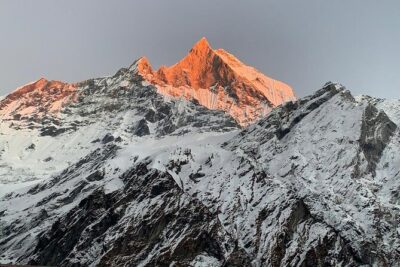
Kathmandu/Pokhara: 5-Day Annapurna Base Camp (ABC) Trek
Read our review →
11-Day Hike Tour to Annapurna Base Camp Bliss in Kathmandu
Read our review →Browse the lists this tour appears in