
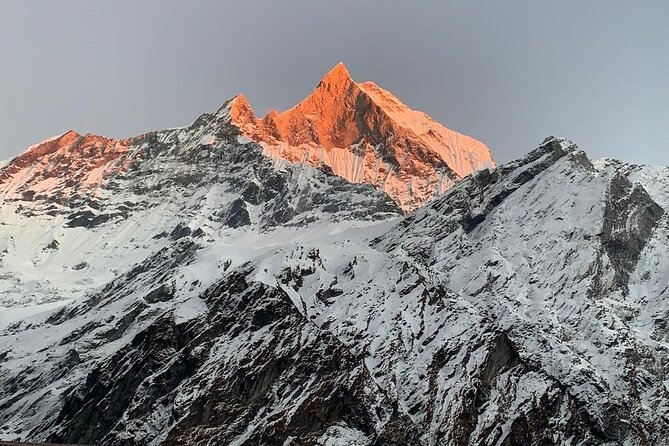
Reviewed · ANNAPURNA BASE CAMP TREKS
Annapurna Base Camp Trek 12 Days
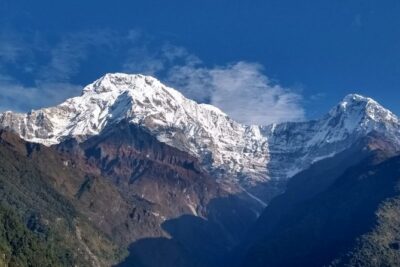
The best part of this 12-day Annapurna Base Camp trek is the variety packed into one route. You begin with Kathmandu and Pokhara, walk through hillside villages and forest, climb to Poon Hill for sunrise, then reach a high mountain basin surrounded by Annapurna peaks. It is a proper Himalayan trek, not just a quick mountain outing.
I like the way the package combines Poon Hill and Annapurna Base Camp. You get an early taste of big mountain views before reaching the main goal. I also like the practical setup: airport transfers, permits, tourist buses, trekking meals, a guide, and mountain accommodation are included. The main consideration is that this is still a demanding walk with long uphill sections, basic mountain lodging, and changing conditions. You need moderate fitness and suitable insurance.
Key points at a glance
- Poon Hill sunrise: Leave Ghorepani early for views of as many as 18 Himalayan peaks when the sky is clear.
- Annapurna Base Camp finish: Reach the high mountain sanctuary after passing Machhapuchhre Base Camp.
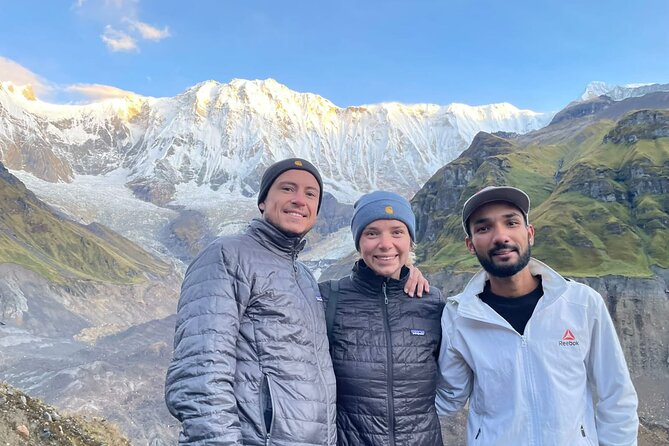
- Named guide team: Guides including Bhairas Tamang, Prajil, Somnath Tripathi, Deepak, Uttar, and Buddha have been associated with this route.
- $800 package value: The price includes 11 nights of lodging, trekking meals, permits, ground transport, and airport transfers, but not a porter, insurance, drinks, or Kathmandu meals.
- Private group format: Only your own group takes part, with pickup offered and a mobile ticket.
- Good route variety: Expect buses, shared mountain transport, stone steps, forest trails, farm country, rivers, waterfalls, and high-altitude views.
What the $800 package really covers
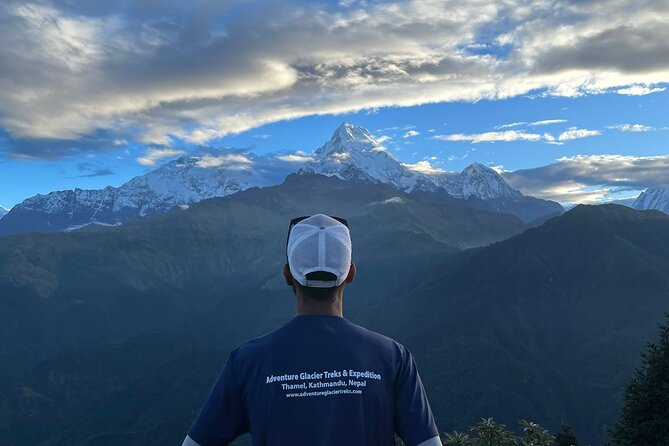
At $800 per person, this trek is priced as a bundled Nepal experience rather than a bare guiding service. You receive airport pickup and departure transfer, tourist bus travel between Kathmandu and Pokhara, a guide, 11 nights of accommodation, trekking meals, tea and coffee, trekking permits, a map, water purification drops or tablets, and vehicle transfers between Pokhara and the walking route.
That list matters because small costs add up quickly in Nepal. Permits, transport, lodging, meals, and local vehicles can be awkward to arrange separately. Here, the main route is organized for you.
The package includes breakfast 11 times, plus eight lunches and eight dinners. Lunch and dinner in Kathmandu and Pokhara are not included. Personal spending is also separate, including bottled water, soft drinks, beer, juice, snacks, Wi-Fi, and other drinks during the walk.
A porter is not included either. You can arrange one if you want help with your bag, but you should clarify the cost and arrangement before departure. Tips for the guide are expected, so include that in your budget.
More Annapurna Base Camp treks:
- Annapurna base camp trek 5 Days
★ 5.0 · 252 reviews - Annapurna Base Camp Trek
★ 5.0 · 111 reviews - Kathmandu to Annapurna Base Camp (ABC) 5-Day Trek
★ 5.0 · 102 reviews
Day 1: Airport arrival and a useful rest day
Your trip begins at Tribhuvan International Airport in Kathmandu. The company provides an airport transfer and takes you to your hotel.
This first day is more than a formality. The schedule recommends spending part of it resting and preparing for the trek. That is sensible. You may need time to organize clothing, check equipment, buy small personal items, and recover from an international flight.
You also meet the team and receive practical information about the route. Since the next morning begins early, use this day to keep things simple. Kathmandu meals are not included, so plan for your own lunch and dinner.
Day 2: Kathmandu to Pokhara by tourist bus
The guide meets you at your hotel or hostel at 6:30 a.m. You walk to Sorakhutte tourist bus station and leave Kathmandu at about 7 a.m. The drive includes a stop at Malekhu before continuing toward Pokhara.
This is a long ground transfer, so the bus ride is an important part of the day. It is less comfortable than flying, but it keeps the cost down and places you on the same road journey used by many people heading toward the Annapurna region.
I would not treat this as wasted time. Nepal reveals itself gradually on the road, with changing hills, river views, roadside settlements, and plenty of ordinary local activity. Still, you should expect a full transport day rather than a mountain walk.
Day 3: Pokhara to Nayapul and the first trail
After breakfast in Pokhara, your guide arranges a car or taxi to the bus park. From there, you take a shared local bus or jeep toward Nayapul, the traditional starting point for the trek. The drive takes about an hour and a half.
The switch from tourist bus to local transport gives this day a more practical feel. You are not moving through a sealed tour bubble. You are using the same kind of transport that connects the mountain communities.
The route description does not give every overnight village or walking distance for this day, so your guide will confirm the exact plan locally. You should expect the beginning of the trail to feel more settled and agricultural than the high section near base camp.
More trekking days out of Annapurna Region:
- Annapurna Circuit Trek with Tilicho Lake
★ 5.0 · 368 reviews - Poon hill Trek 3 days
★ 5.0 · 176 reviews - Trekking in Annapurna/Langtang/Everest/Upper Mustang regions
★ 5.0 · 161 reviews - Pokhara: 4-Day Ghorepani, Poonhill & Ghandruk Mountain Trek
★ 5.0 · 132 reviews
Day 4: First mountain morning and views near Annapurna
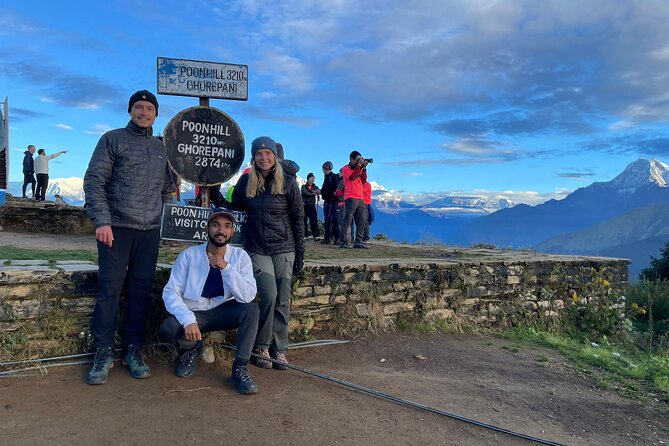
The first mountain morning begins with the sounds of village life: donkeys, goats, chickens, and dogs. That detail tells you something useful about this trek. You are walking through working communities, not an isolated wilderness route.
Breakfast comes with mountain views, and the day continues through the Annapurna foothills. The route combines village paths, hillside scenery, and sections of trail where the rhythm is set by walking rather than by a strict sightseeing timetable.
Your guide’s pacing matters here. Several people who have completed the route with this company specifically valued guides who stopped when someone was tired and kept the pace manageable. Bhairas Tamang was repeatedly praised for checking on the group, explaining the route, and keeping a good walking speed.
Day 5: Ghorepani and the Poon Hill sunrise
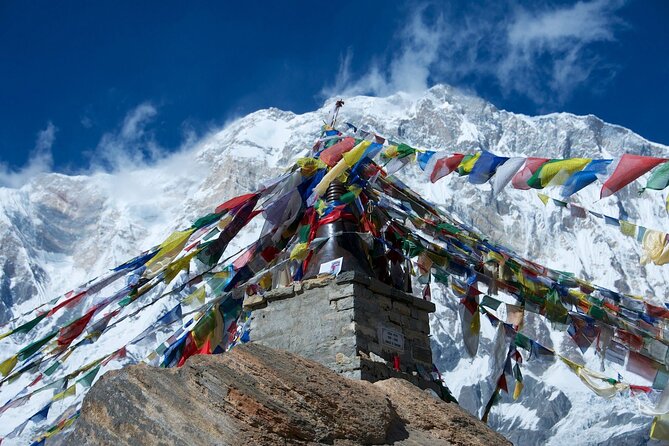
This is one of the trek’s strongest days. You wake early at Ghorepani and walk for roughly 45 minutes to an hour to Poon Hill Viewpoint for sunrise.
Poon Hill is famous for a wide Himalayan panorama. On a clear morning, the route description says you may count 18 peaks. Exact visibility depends on cloud and weather, but the early start is worthwhile because sunrise gives the mountains changing light and clearer air before the day builds clouds.
The climb is short but steep in places, and you will feel it more because of the early hour and cold morning. Bring warm layers, a headlamp, and water within easy reach.
After returning for breakfast, the trek continues toward the next mountain villages. This day can feel busy because the sunrise walk is added to the main route, but it gives you a major viewpoint without requiring a separate expedition.
Day 6: Tadapani to Sinuwa through Chhomrong
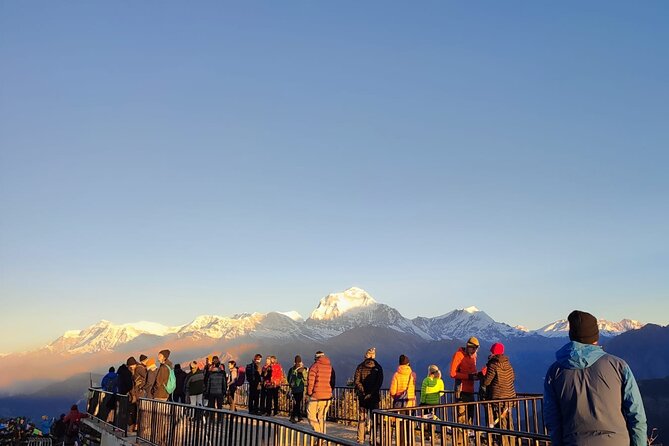
The itinerary describes this as a largely downhill day toward Sinuwa. You leave Tadapani and descend through forest and mountain settlements, with views toward Modi Khola and Chhomrong Khola.
The route passes through Chhomrong, an important village on the way to Annapurna Base Camp. From here, the character of the walk begins to change. The trail becomes more focused on the valley leading toward the sanctuary, and the mountains feel closer.
Downhill walking sounds easy, but long descents can be hard on knees. Stone steps and uneven ground require care. Trekking poles can be useful, though they are not listed among the included equipment.
Sinuwa is a practical overnight point before the main ascent. You are still surrounded by forest and village life, but the route ahead becomes more demanding.
Day 7: Sinuwa to Deurali
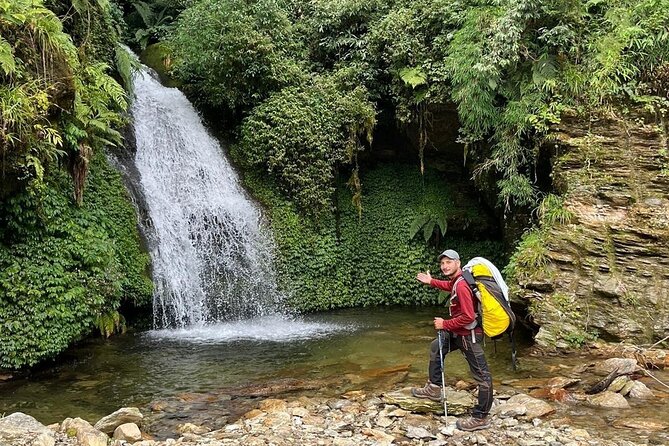
Sinuwa offers a morning view toward the Himalayas, then the trail turns uphill toward Deurali. The climb to Bamboo takes about an hour and a half, after which you continue through forest and mountain terrain.
This is one of the days where steady pacing is more important than speed. You are gaining altitude, and the trail includes sustained climbing. Your guide should help you keep a pace that lets you walk without burning out early.
The route description places you near Deurali by the end of the day. Exact walking times can change with trail conditions, group speed, and the overnight arrangement. Ask for the final schedule at the pre-trek briefing so you know how much walking remains.
Day 8: Machhapuchhre Base Camp to Annapurna Base Camp
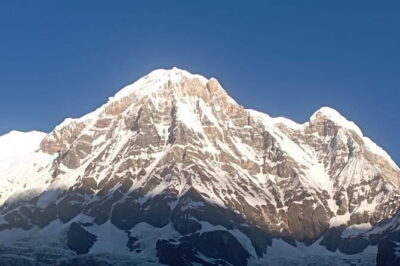
This is the central day of the trip. You pass Machhapuchhre Base Camp before continuing to Annapurna Base Camp, your highest and most memorable destination.
The approach is framed by high peaks, with the trail entering a broad mountain setting surrounded by dramatic summits. The appeal is not one single viewpoint. It is the sense of moving into the mountains themselves, with the route becoming more open and the surrounding peaks growing larger.
Weather is the deciding factor. Clear conditions can give you the views you came for, while cloud may hide much of the scenery. Even so, reaching the base camp remains the major physical achievement of the trek.
The route is not described as a technical climb, but it is a serious mountain walk. You should take altitude, cold, tired legs, and changing weather seriously. Travel and health insurance covering emergency rescue and evacuation is not included, and it is specifically your responsibility.
Day 9: Sunrise at base camp and the return to Sinuwa
If the weather is clear, you watch sunrise from Annapurna Base Camp. This is another early start, but the setting gives it real purpose. After breakfast, you retrace the route toward Sinuwa.
The return includes rugged trails and lightly forested sections. Descending the same route can feel easier because you know what is ahead, but it can also be tiring after the high point of the trip. Be careful on loose or uneven ground and do not rush the downhill sections.
This is a good day to listen to your body. A guide who pays attention to fatigue can make a large difference. The strongest feedback about this company centers on care, communication, and guides who stop to check that people are all right.
Day 10: Sinuwa to Siwai and the road back
The final walking day takes about two hours from Sinuwa to Siwai, though the route also includes the climb toward Chhomrong and views of mountains, waterfalls, and farmland.
Siwai marks the end of the main trek. From there, a private vehicle takes you back toward Pokhara. The change from walking trail to road transport can feel abrupt, but it is welcome after several days on foot.
This day is less about reaching a new mountain viewpoint and more about finishing well. Keep some energy for the descent and the vehicle transfer. Once back in Pokhara, you have the comfort of a city with more restaurants, shops, and accommodation choices than the mountain villages.
Day 11: Pokhara to Kathmandu and a final evening
After breakfast, you return from Pokhara to Kathmandu by tourist bus. The rest of the day is free for rest or shopping, followed by a farewell dinner.
This return journey can be tiring, especially after the trek, but the free time in Kathmandu gives you room to recover. You can keep the afternoon quiet rather than forcing in more sightseeing.
The farewell dinner is included in the overall schedule, though the package does not cover ordinary lunch and dinner in Kathmandu and Pokhara. Confirm which meal is covered on your exact departure, since the meal count and day-by-day arrangements should be checked before booking.
Day 12: Airport departure
The final morning is reserved for your onward flight. The team provides a transfer to Tribhuvan International Airport.
The end point is listed in Kathmandu, while the departure service is airport based. Confirm your pickup time with the company before your flight, especially if your departure is early.
Guides and the human side of the trek
The company’s strongest feature appears to be its guide service. Names connected with this route include Bhairas Tamang, Prajil, Somnath Tripathi, Deepak, Uttar, and Buddha.
Bhairas Tamang receives especially strong praise for a calm pace, humor, route explanations, and regular attention to group wellbeing. Prajil is noted for helping with practical needs, bringing snacks for tea stops, and making the trek feel relaxed. Somnath Tripathi is described as well prepared and capable of adjusting the agenda when problems arise.
That does not mean you are guaranteed a particular guide unless the company confirms one in writing. It does mean you should ask who will lead your departure and how many people will be in your private group. Since the activity is private, only your group takes part, which can make the pace and daily decisions more personal.
Accommodation, meals, and what you still pay for
The package includes 11 nights of accommodation and meals during the trek: breakfast, lunch, dinner, tea, and coffee. Mountain lodging is generally functional rather than luxurious, and the provided details do not specify room standards or bathroom arrangements.
Food is part of the practical value here. You do not need to arrange every mountain meal yourself, but you should budget for extra drinks, snacks, Wi-Fi, and bottled water if you want them. Water purification drops or tablets are supplied, which helps reduce the need to buy bottled water.
The package does not include a porter. If you prefer to walk with a light daypack, ask about adding one before you arrive. Also arrange comprehensive travel and health insurance that covers emergency rescue and evacuation. This is one area where saving money would be a poor choice.
Who should book this Annapurna trek?
I would recommend this trip to you if you want a guided Himalayan trek with a clear route, organized transport, included permits, and a mix of famous viewpoints and village walking. It suits someone with moderate fitness who is comfortable walking uphill and downhill for several days.
It is also a good choice if you want both Poon Hill and Annapurna Base Camp rather than choosing between them. The route gives you an early panoramic viewpoint, a gradual approach through villages, and a high mountain finish.
I would be more cautious if you dislike early starts, shared buses, basic mountain accommodation, or changing plans caused by weather. The $800 price is fair for the services included, but it is not an all-in budget. Add insurance, personal spending, guide tips, and possibly a porter.
Free cancellation is available if you cancel at least 24 hours before the experience start time. Changes or cancellations inside that window are not accepted for a refund.
FAQ
How long is the Annapurna Base Camp trek?
The experience lasts approximately 12 days, including arrival and departure in Kathmandu, transport between Kathmandu and Pokhara, the trek, and the return journey.
Is airport pickup included?
Yes. Arrival and departure airport transfer services are included, with the trip beginning at Tribhuvan International Airport in Kathmandu.
What meals are included?
The package includes breakfast 11 times, lunch eight times, and dinner eight times. Tea and coffee are included during the trekking portion. Lunch and dinner in Kathmandu and Pokhara are not included.
Is a trekking porter included?
No. A porter is not included, but you can request one if needed. The cost should be confirmed before the trek.
What fitness level is required?
The activity advises a moderate level of physical fitness. You should be ready for uphill and downhill mountain walking, an early hike to Poon Hill, and the route to Annapurna Base Camp.
Is travel insurance included?
No. You must arrange your own travel and health insurance, including coverage for emergency rescue and evacuation.
Should you book it?
Book this Annapurna Base Camp trek if you want a well-organized private route with Poon Hill sunrise and Annapurna Base Camp in the same 12-day plan. The included transport, permits, meals, accommodation, and guide make $800 a useful starting value.
Before paying, confirm your guide, porter arrangements, group size, exact overnight stops, and what the meal count covers. If you accept the early mornings, long mountain days, basic lodging, and extra personal costs, this is a practical way to reach one of Nepal’s best-known high mountain destinations with support along the way.
Just added around Annapurna Region
- 4 Day Mardi Himal Base Camp Trek from Pokhara★ 5.0 · 18 reviews
- 7-Day Trek to Annapurna Base Camp from Pokhara★ 5.0 · 12 reviews
- Private 4 Day Poon Hill Trek from Pokhara★ 5.0 · 16 reviews
- Annapurna Base Camp Trek from Pokhara and Kathmandu★ 5.0 · 7 reviews
- 6 days Annapurna Basecamp Trek★ 5.0 · 16 reviews
- “Exclusive Round-Trip Transfer: Pokhara to Jomsom & Muktinath”★ 5.0 · 11 reviews
- Poon Hill Ghandruk Circuit Trek from Pokhara 4 Days★ 5.0 · 10 reviews
- Pokhara: Poon Hill Ghorepani Short Trek★ 5.0 · 6 reviews
Annapurna Base Camp Treks, compared.
Kathmandu to Annapurna Base Camp (ABC) 5-Day Trek
Read our review →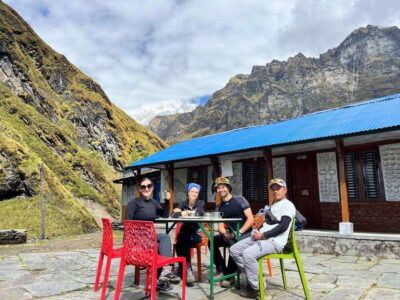
Kathmandu/Pokhara: 5-Day Annapurna Base Camp (ABC) Trek
Read our review →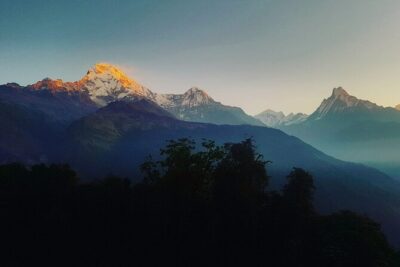
11-Day Hike Tour to Annapurna Base Camp Bliss in Kathmandu
Read our review →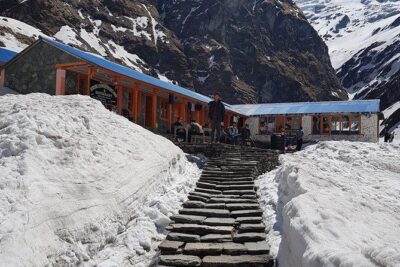
Browse the lists this tour appears in