
Reviewed · 1-DAY TOURS
1 day with our women empowerment and children development project
The best part of this Kathmandu experience is its simple rhythm: cook with local women, eat together, make a small piece of jewelry, then spend the evening with children after school. It gives you time with the people behind a nonprofit rather than a quick photo stop at an attraction.
I like the hands-on cooking class and the two hours set aside for games, walking, painting, dancing, or singing with the children. I also like the chance to talk with Tenzing, who helps run the organization, and learn how the Human Welfare Committee supports women and children from underprivileged communities.
The main consideration is the long schedule. This is a full nine-hour day, and the activities depend on the group, the women leading the workshops, and the children’s energy after school. If you want a tightly scripted sightseeing tour, this will feel loose. If you want personal contact and time to take part, that flexibility is the point.
Key points to know before booking
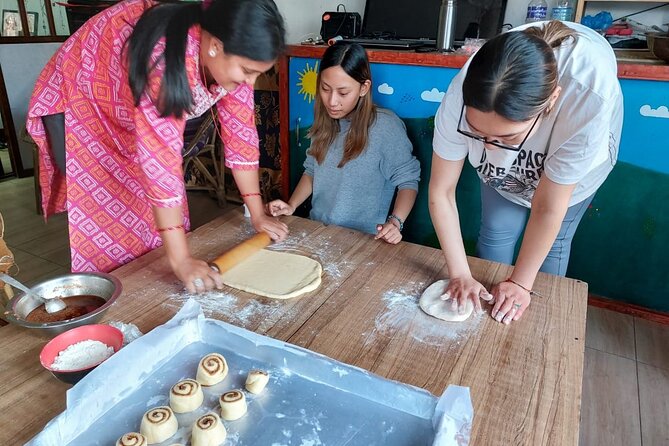
- Cook dal bhat or momo with local women: The day begins with a practical Nepali food lesson, followed by a shared lunch.
- Make your own bead jewelry: The afternoon workshop gives you a small souvenir and time for conversation.
- Walk about 30 minutes to the main center: At 4 pm, you go from We Handicraft in Paknajol to the Human Welfare Committee in Manjushree Galli.
- Meet the children after school: Games, sports, painting, walking, dancing, and singing fill the evening.
- Share dinner before an 8 pm farewell: Food is part of the social experience, not just a break between activities.
- Expect a private, full-day visit: Only your group takes part, and the listed price is $120.13 per person.
A day built around people, not monuments
Kathmandu offers temples, shrines, markets, and mountain views, but this experience takes a different route. You spend the day inside the work of the Human Welfare Committee, a nonprofit focused on women and children from underprivileged communities.
That difference matters. You are not simply watching a performance or dropping off supplies. The schedule asks you to cook, eat, make things, walk, play, and talk. The activities are modest, but they create repeated chances for real contact.
The day starts at 11 am at We Handicraft in Paknajol. It ends at about 8 pm at the Human Welfare Committee’s main center on Manjushree Galli. You should plan for roughly nine hours, although the advertised duration is eight to ten hours.
I would choose this for a day when you want to slow down. It is not a sightseeing circuit, and you should not book it as a substitute for seeing Kathmandu’s major historic sites. Instead, it offers a closer look at community work and everyday social life.
A few more Kathmandu days to weigh up
- Kathmandu: 7 UNESCO Sites Tour in 1 Day (Private Tour)
★ 4.9 · 204 reviews - Day Trip to Bhaktapur and Panauti from Kathmandu
★ 5.0 · 184 reviews - The Most Beautiful 1 Day Experience in Kathmandu Nepal
★ 5.0 · 84 reviews
11 am cooking with Nepali women
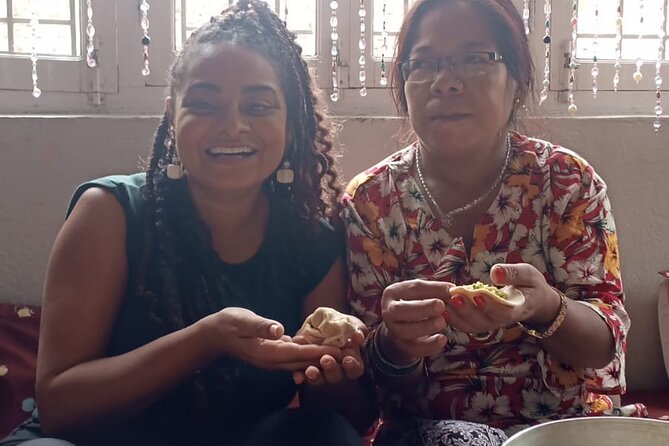
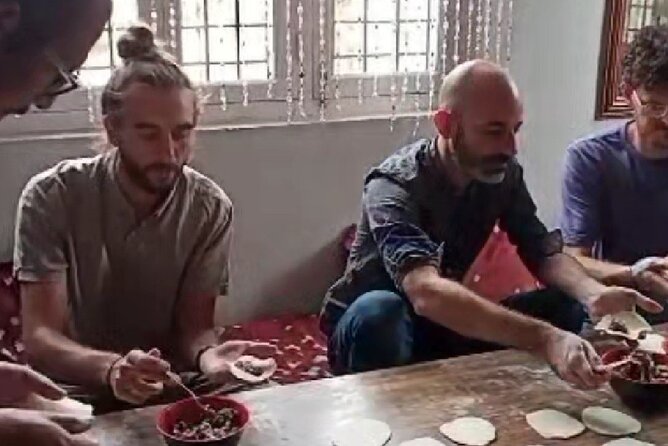
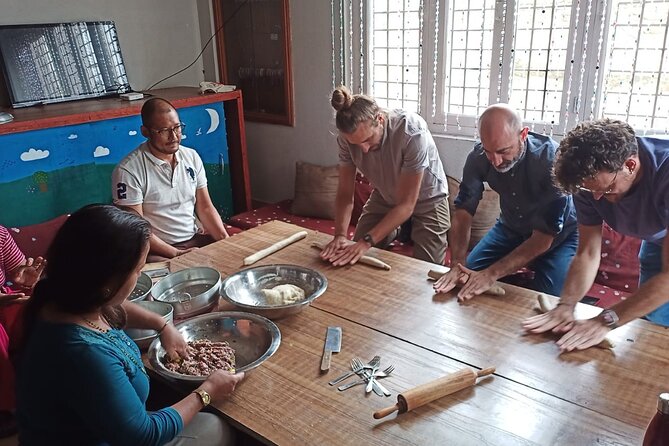
The first activity runs from 11 am to 1 pm. Local women lead a cooking class in one of two familiar Nepali dishes: dal bhat or momo.
Dal bhat is the everyday combination of lentils, rice, and accompanying foods that many people associate with Nepali home cooking. Momo are Nepali dumplings, usually prepared with a filling and folded before cooking. The exact dish may depend on the day, but both give you a useful way to learn through your hands.
I like this opening because food removes some of the awkwardness that can come with meeting people for the first time. You have a shared task, then a shared meal. Rather than sitting across from one another with nothing to say, you can work side by side and ask questions as the class moves along.
Do not expect a polished restaurant cooking show. The value is in the exchange and in seeing how a familiar meal is prepared in a community setting. If you have a strong interest in food, you may wish to ask in advance which dish will be taught.
The cooking class also gives the women a central role in the day. They are not simply present to welcome you. They lead the activity and later guide the jewelry workshop, making the program about women’s skills and participation.
1 pm lunch and the value of eating together
Lunch runs from 1 to 2 pm. You eat the food prepared during the class, creating a natural second stage to the morning activity.
This shared meal is one of the reasons the experience feels more personal than a short volunteer visit. You have already worked together, and now you sit down together. Conversation can continue without the pressure of a formal question-and-answer session.
The food is part of the price, along with the cooking class, jewelry workshop, activities, and dinner later in the day. For you, lunch is also a useful pause before the afternoon workshop. The schedule is active but not rushed at this point.
One practical note: the day has several food-related moments, including lunch and dinner with the children. If you have dietary needs, the supplied details do not explain what alternatives are available. Ask before booking rather than assuming that every meal can be changed.
2 pm jewelry workshop with local women
From 2 to 4 pm, the women lead a bead jewelry workshop. You can make jewelry for yourself or create a small souvenir to take home.
This activity gives the afternoon a quieter pace. After cooking and lunch, you have time to sit, work with your hands, and continue talking. The result may be simple, but it has more meaning than a mass-produced souvenir because you made it during a shared activity.
The workshop also adds another practical element to the women’s role in the program. You are seeing skills presented as something that can support creativity, connection, and possibly income. The experience does not promise a full training course in jewelry production, so keep your expectations at the level of a guided craft session.
I would bring patience rather than a strict idea of what your finished piece should look like. Craft workshops are usually most enjoyable when you allow the process to matter as much as the object. You can also ask about the materials and the work behind them, although the available details do not specify the type of beads or jewelry you will use.
More days out in Kathmandu:
- Private Kathmandu Sightseeing Tour | UNESCO World Heritage sites
★ 5.0 · 756 reviews - Half day cooking class in Thamel kathmandu
★ 5.0 · 607 reviews - Nagarkot Sunrise View and Day Hiking from Kathmandu
★ 5.0 · 471 reviews - Kathmandu: Full Day 7 UNESCO Tour with Lunch – Private/Group
★ 5.0 · 415 reviews
The 4 pm walk to the Human Welfare Committee
At 4 pm, you walk together for about 30 minutes to the Human Welfare Committee’s main center on Manjushree Galli. The starting point is We Handicraft in Paknajol, and the walk connects the women’s program with the children’s evening activities.
This transfer is worth noting when you plan your day. You are not picked up and driven between every part of the program. The walk is built into the experience, so comfortable shoes make sense.
It also creates a clear change of focus. The first half of the day centers on women, cooking, food, and crafts. The second half begins when the children return from school. Instead of treating the children’s visit as a quick add-on, the schedule gives you a full afternoon and evening with them.
The supplied information does not describe the exact route or terrain. You should allow the full 30 minutes and be ready for an ordinary urban walk through Kathmandu rather than a scenic excursion.
5 pm games, sports, painting, music, and conversation
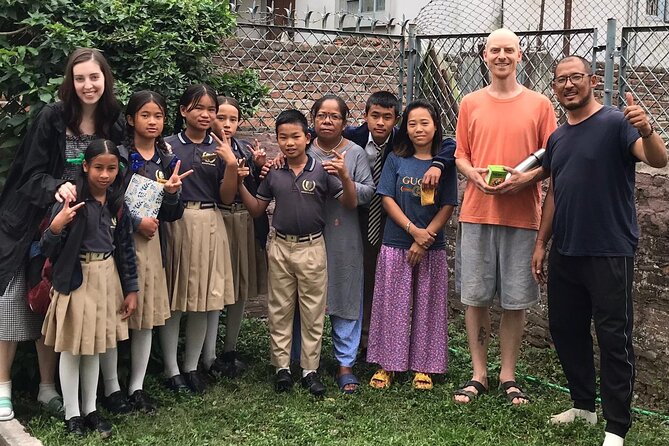
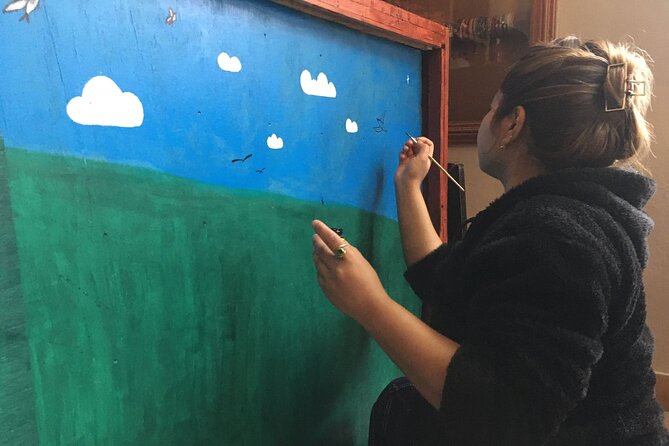
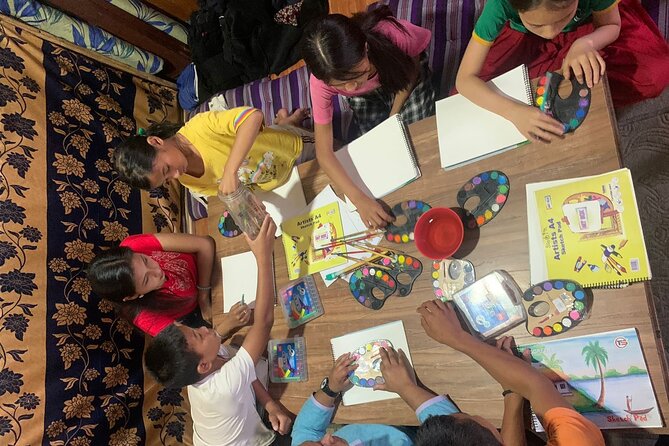
The children’s activities run from 5 to 7 pm. The choices include games, sports, walking, painting, dancing, and singing.
This is the most open-ended part of the day. You may play a game, join a walk, help with painting, or take part in music and dancing. The children arrive after school, so their mood and interests will shape the evening.
That flexibility can be a strength. You do not need special teaching credentials or a prepared lesson. You can join in, listen, and follow the group’s lead. A simple game or shared song can be enough to create a friendly connection.
At the same time, this is not a formal child-development class with a published curriculum. The experience offers contact and activities, not a guaranteed lesson plan. If you prefer a fixed volunteer assignment with clear duties, ask the provider for more detail before booking.
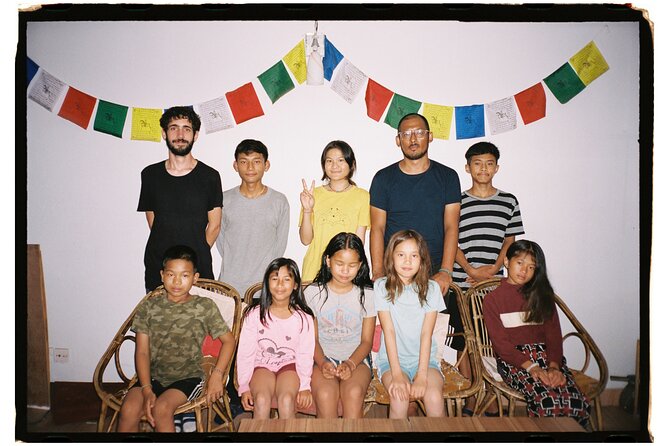
A past participant described spending time with children who had just returned from school, and that detail helps explain the timing. You meet them at a natural point in their day, rather than during a staged presentation. The evening may feel lively, but you should also respect the children’s space and let the organization guide appropriate interaction.
7 pm dinner with the children
Dinner with the children runs from 7 to 8 pm. Like lunch, it makes food part of the connection between you and the community.
After two hours of games and shared activities, dinner gives the evening a calmer finish. You can sit together, continue conversations, and enjoy a final meal before the farewell.
The information provided does not list the dinner menu. If food is a major concern for you, ask what will be served and whether the meal can accommodate your needs. Otherwise, treat this as a communal meal rather than a restaurant dining experience.
The schedule says the program ends with a farewell at 8 pm. You should not assume that the tour returns you to your hotel, since the listed end point is the Human Welfare Committee on Manjushree Galli.
What the $120.13 price includes in practical terms
At $120.13 per person, this is not a low-cost cooking class or a quick children’s visit. You are paying for a long, private day that includes several activities, meals, time with the women, time with the children, and the organization’s coordination.
The value depends on what you want from Kathmandu. If you judge the price only by the food or the jewelry, it may seem high. If you value a full day of guided contact with a local nonprofit, the cost is easier to understand. The schedule gives you roughly nine hours of participation rather than a short workshop followed by free time.
The private format is useful for couples, families, and small groups that want to ask questions without being part of a large crowd. Only your group participates. That can make the cooking class and children’s activities more comfortable, though the children themselves are part of the community program and not simply performers for a private audience.
The experience is booked, on average, 79 days ahead. That suggests you should plan early if this is important to your Kathmandu schedule, especially since the format is private and may depend on the organization’s availability.
Who will get the most from this experience
I would recommend this day to you if you want to meet local people through shared tasks rather than sightseeing alone. It suits visitors who enjoy cooking, crafts, informal conversation, and child-friendly activities.
It can work well for a family, since the later games, painting, and sports give younger participants something active to do. It may also suit solo visitors who want a structured way to meet people and learn about community work.
You should think twice if you dislike long days, group activities, or flexible schedules. The program includes a 30-minute walk, several meals, and a long evening with children. It is not designed for someone who wants to spend the day moving quickly between famous Kathmandu sights.
The experience is also best approached with humility. You are visiting an organization that supports people facing disadvantage. Come ready to participate, but do not expect the community to provide a staged display of hardship. The most respectful role is to join the activities offered, listen, and follow the staff’s direction.
Booking details and cancellation
Confirmation is provided when you book. The experience is near public transportation, and the information says most people can participate.
The stated meeting point is We Handicraft, Paknajol, Kathmandu 44600. The end point is the Human Welfare Committee, Manjushree Galli, Kathmandu 44600. The provider lists opening dates through December 15, 2026, with hours shown as Monday through Sunday, 10 am to 6 pm, although this particular program continues to an 8 pm farewell.
You can cancel for a full refund up to 24 hours before the local start time. Cancellations or changes made within 24 hours are not accepted and are not refunded.
Should you book this Kathmandu day?
Book it if you want a people-centered day with real participation: cooking dal bhat or momo, sharing meals, making bead jewelry, walking to the main center, and spending the evening with children after school. The chance to speak with Tenzing about the organization adds useful context to the visit.
Skip it if your priority is temples, museums, or a tightly timed city tour. The day is long, the later activities are flexible, and the price makes sense mainly when you value personal contact and support for a local nonprofit.
For the right visitor, this is a thoughtful way to set aside one day in Kathmandu for community, food, craft, and play.
FAQ
How long does the experience last?
The program lasts about nine hours, from the 11 am start until the 8 pm farewell. The general duration is listed as eight to ten hours.
Where does the day begin?
You meet at We Handicraft in Paknajol, Kathmandu 44600, Nepal.
Where does the experience end?
The day ends at the Human Welfare Committee on Manjushree Galli, Kathmandu 44600, Nepal.
What food do you learn to prepare?
The cooking class covers a traditional Nepali dish, either dal bhat or momo. Lunch follows the class, and dinner is served with the children later in the evening.
Is the activity private?
Yes. Only your group participates in this private tour or activity.
Can I cancel for a full refund?
Yes. You can receive a full refund if you cancel at least 24 hours before the experience start time. Cancellations or changes within 24 hours are not refunded or accepted.
Just added around Kathmandu
- Traditional Momo Making Class★ 5.0 · 10 reviews
- Women Empowerment Project(Nepali cooking class & jewelry workshop★ 5.0 · 15 reviews
- Manthali Airport (Ramechhap) To Kathmandu – Transport Service★ 4.5 · 11 reviews
- Amazing 1 Day Trekking Experience in Kathmandu Nepal★ 5.0 · 24 reviews
- Walking tour of Kathmandu with awesome local guides★ 5.0 · 4 reviews
- Walking tour of real Kathmandu through back streets.★ 5.0 · 3 reviews
- Private Manaslu Circuit Trek at Himalayas★ 5.0 · 3 reviews
- Walking Street Food Tour in Kathmandu★ 5.0 · 111 reviews
1-Day Tours, compared.
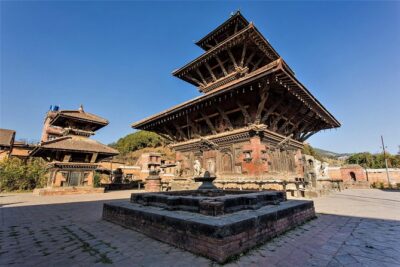
Day Trip to Bhaktapur and Panauti from Kathmandu
Read our review →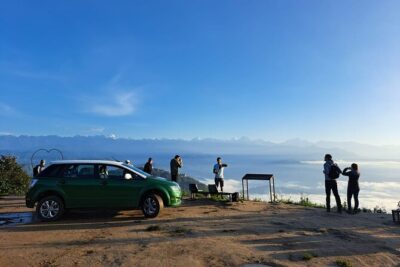
The Most Beautiful 1 Day Experience in Kathmandu Nepal
Read our review →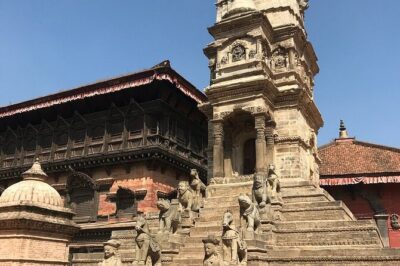
Nagarkot Sunrise & Bhaktapur Heritage Tour -Private Full Day Trip
Read our review →
1-Day Scenic Australian Camp & Dhampus Guided Hike
Read our review →Browse the lists this tour appears in