
Reviewed · TIBETAN CULTURE TOURS
Half Day Tibetan Cultural tour Pokhara
Tibetan life in Pokhara is more than prayer flags and monastery walls. This tour takes you into a refugee settlement, where you can see carpets being woven, speak with local people, meet a Tibetan doctor, and learn how displaced families have built new lives in Nepal. Guide Mr. Thupten Gyatso leads the visit with personal knowledge of Tibetan culture and refugee life.
I like two things especially. First, the day moves beyond sightseeing: you learn about schools, medicine, religion, and daily routines. Second, the Tibetan lunch gives the tour a tasty finish, with momos and thukpa among the dishes you may sample. The main consideration is the price, $63.52 per person, which is fair for the number of visits included but higher than a simple Pokhara half-day outing.
Key points
- Meet Tibetan guide Mr. Thupten Gyatso, who explains culture, religion, and refugee life in Nepal.
- Walk through a Tibetan settlement and see ordinary daily life rather than only visiting a monument.
- Watch carpets being woven by hand, then browse the designs in a nearby showroom.
- Visit a Tibetan doctor for an introduction to traditional medicine and pulse reading.
- Finish with Tibetan food, including dishes such as momos and thukpa.
- Hotel transfers are included, with a scheduled 9 a.m. departure and return around 2 p.m.
Why this Pokhara tour offers more than a monastery visit
Many cultural outings give you a temple, a few facts, and a quick photo stop. This one is built around conversation and context. You visit several parts of Tibetan community life, from Buddhist practice and education to craftwork, medicine, food, and the story of Tibetans living in Nepal.
That range matters. A prayer wheel means more when you understand its place in daily religious practice. A carpet becomes more interesting when you see the patient work behind each pattern. A visit to a Tibetan doctor helps connect old medical traditions with life in a modern Nepali town.
The day is led by Mr. Thupten Gyatso, a Tibetan guide who speaks about the subject with personal commitment. The tour is not simply an outside look at a community. It is meant to help you understand how Tibetan people have preserved customs while adapting to life in Nepal.
The schedule is advertised as a half-day experience, with departure at 9 a.m. and return at about 2 p.m. The stated duration is approximately four and a half hours, so allow the full morning and early afternoon rather than planning a tight connection afterward.
More Tibetan Culture Tours in Pokhara:
- Full-Day Tibetan Cultural Tour to Tibetan Settlements Pokhara
★ 5.0 · 184 reviews - Afternoon Tibetan Cultural Tour to Tibetan Settlements Pokhara
★ 5.0 · 106 reviews - Morning Tibetan cultural tour to Tibetan settlements Pokhara
★ 5.0 · 66 reviews
Walking through a Tibetan settlement in Pokhara
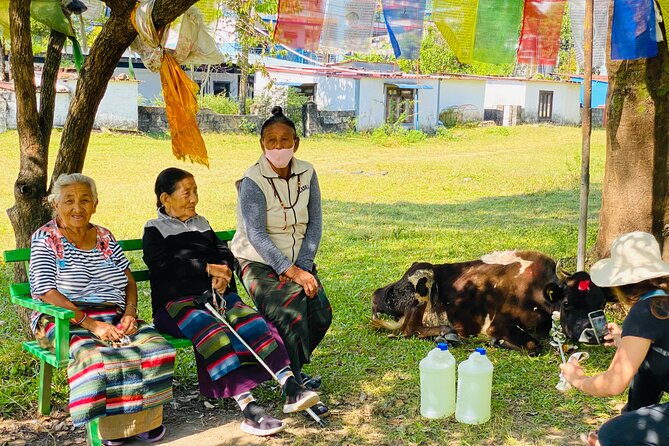
The tour begins with a visit to one Tibetan refugee settlement. You walk through the village and see how people live their daily lives. This is an important part of the outing because it places Tibetan culture in a living setting, not behind glass or inside a staged display.
You should expect the focus to be on observation and explanation. Mr. Thupten can discuss the settlement, the lives of its residents, and the circumstances that brought Tibetans to Nepal after leaving Tibet. The tour also addresses the situation of Tibetan refugees in present-day Nepal, giving you useful political and social context without reducing the community to a single historical event.
This portion may feel less polished than a conventional attraction. That is part of its value, but it also means you should approach it respectfully. You are walking through a real community, so listen carefully, avoid treating people’s homes as photo props, and let your guide explain what is appropriate.
Prayer wheels, flags, stupas, and Buddhist meaning
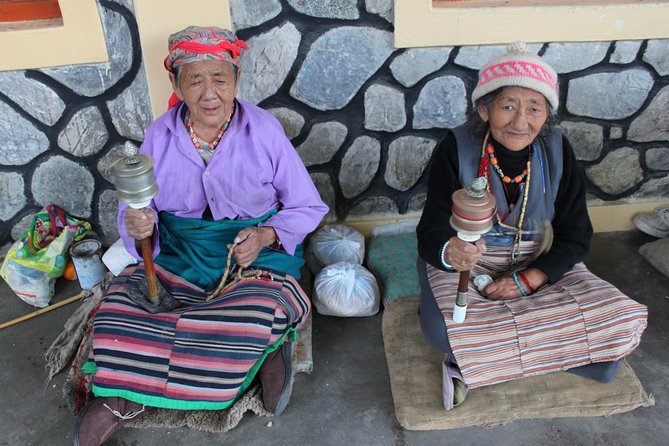
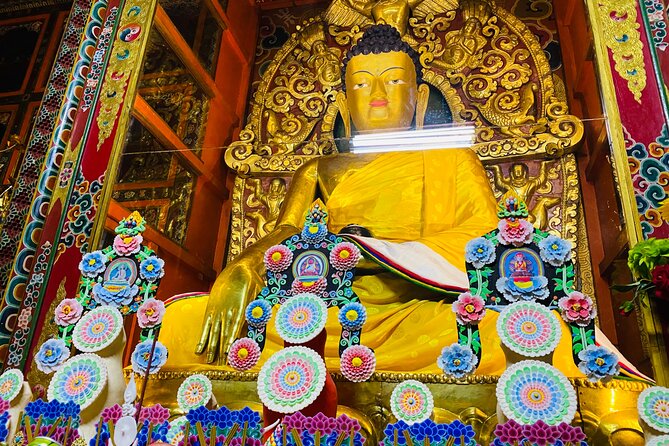
A Buddhist monastery is one of the central stops. Here, you learn about symbols that you will also see around Nepal, including prayer wheels, prayer flags, stupas, and other Buddhist signs.
The useful part is not simply seeing these objects. It is learning how they function in religious life and why their placement and use matter. If you have already visited Buddhist sites in Nepal, this explanation can help you make better sense of what you have seen elsewhere. If this is your first close look at Tibetan Buddhism, the stop gives you a clear introduction.
The monastery visit may be especially rewarding if you enjoy asking questions. Several parts of the tour invite discussion, and the guide’s background allows the conversation to move beyond basic definitions. One past itinerary experience included an extended conversation with a young monk, though the precise opportunity can vary, so do not treat that as a guaranteed part of every departure.
Remember that a monastery is a place of worship. Follow local instructions, keep your voice low, and ask before taking photographs.
Tibetan schools and the work of preserving identity
Education receives its own place in the tour. You learn about Tibetan schools and the educational system used by the community. This helps explain how language, religion, and cultural customs are passed to younger generations while families live outside Tibet.
For you, this may be one of the less visual stops, but it adds real weight to the rest of the day. Traditional clothing, food, and religious objects are easy to notice. Schooling shows the less visible work involved in keeping a culture alive.
The subject also connects with the wider question of refugee life. A community does not preserve its identity only through festivals or handicrafts. It does so through children’s education, family life, religious practice, and the choices people make every day.
More heritage days around Pokhara:
- Afternoon Tibetan cultural tour
★ 5.0 · 41 reviews - Morning Half Day Tibetan cultural tour to Tibetan Settlements
★ 5.0 · 26 reviews - Sarangkot Sunrise with a half day Tibetan cultural tour
★ 5.0 · 13 reviews - Full Day Tibetan Cultural Tour
★ 5.0 · 12 reviews
Watching Tibetan carpets take shape by hand
At the carpet workshop, you see how Tibetan carpets are made by hand. Mr. Thupten explains the process step by step, making this more useful than simply walking through a shop filled with finished rugs.
The pace of handmade carpet production is slow and careful. Seeing the work in progress gives you a better idea of why the finished pieces require time and skill. You may also get a chance to try some of the rug-making work yourself, depending on the day and the workshop’s activities.
Afterward, you visit a carpet showroom with different designs and colors. The showroom is naturally a commercial stop, so you may feel some pressure to browse or buy. You do not need to purchase anything to benefit from the workshop, but the showroom gives you a chance to examine the finished products and compare patterns after seeing how they are produced.
If you are considering buying a carpet, ask questions about size, materials, price, and shipping before making a decision. The tour provides the cultural background, but the supplied details do not specify shipping arrangements or purchase policies.
A photo gallery that explains the refugee story
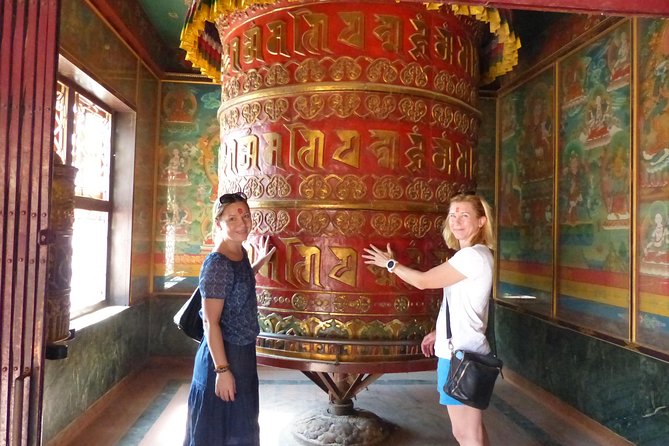
The photo gallery focuses on the history of Tibetan refugees. This stop adds a human dimension to the broader story you hear during the settlement walk and the discussion of education.
Photographs can make political events easier to understand because they show people, places, and stages of change. The gallery also gives the guide a natural setting for explaining why Tibetans came to Nepal and how their communities developed.
This is serious subject matter. The tour presents Tibetan life as both a cultural story and a refugee story. If you want only light sightseeing, the historical and political discussion may feel heavier than expected. If you want to understand the people behind the crafts and religious traditions, it is one of the most useful sections.
Meeting a Tibetan doctor and learning about pulse reading
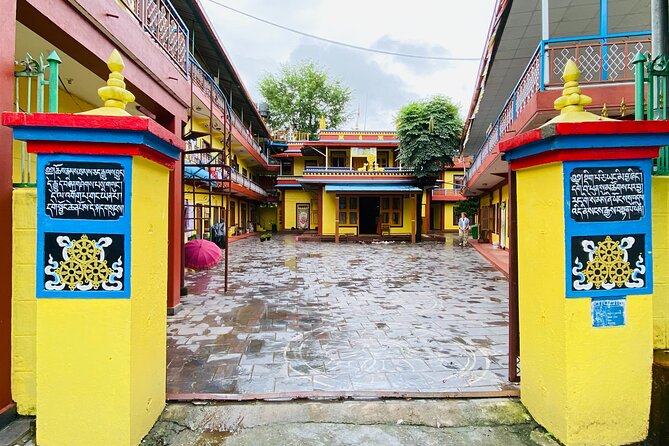
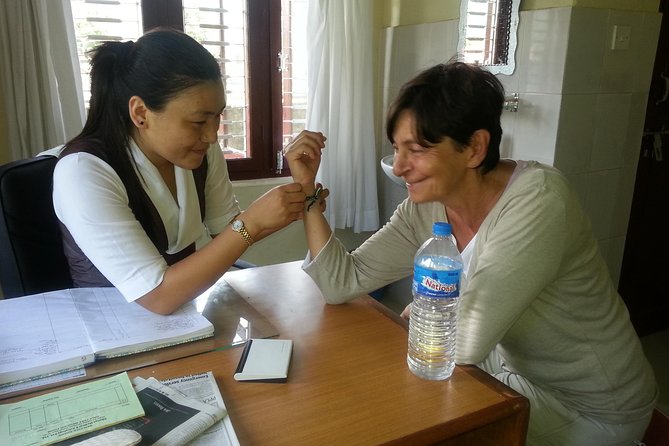
The visit to a Tibetan doctor is one of the most distinctive parts of the experience. You learn about Tibetan medicine and may have a first-hand experience of pulse reading.
This is not just another talk at a cultural center. The consultation gives you a direct look at a medical tradition that many people will not encounter elsewhere in Pokhara. You can ask about its principles and how the doctor interprets the pulse.
Keep your expectations sensible. The tour introduces you to Tibetan medicine, but the information provided does not describe it as a full medical consultation or treatment. Treat the session as a cultural and educational encounter, not as a replacement for medical care.
Allow time for questions here. The doctor visit has been a memorable part of the outing for many people because it is personal, unusual, and difficult to duplicate through ordinary sightseeing.
Tibetan momos, thukpa, and lunch at a local restaurant
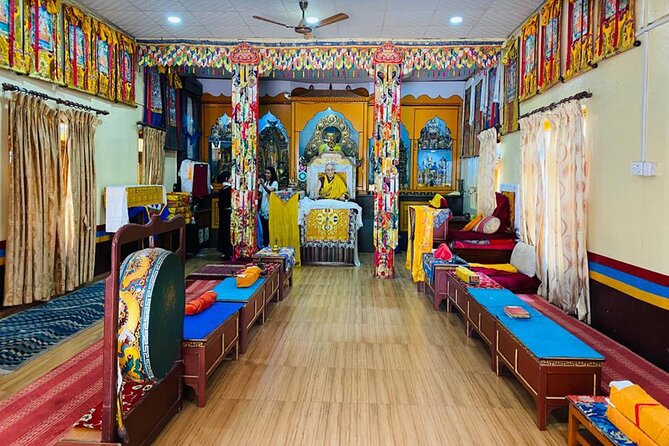
The final food stop brings the cultural lesson to the table. You enjoy an authentic Tibetan lunch at a local Tibetan restaurant, with momos and thukpa among the dishes associated with the experience.
Momos are dumplings, while thukpa is a noodle soup. They are familiar enough for most people to try, but still give you a direct taste of Tibetan food traditions. Food is often the easiest way to connect the dots between culture and daily life, especially after a morning of discussion.
A vegetarian option is available if you request it when booking. Gluten-free food is also offered, including plain rice with vegetable or non-vegetable curry. If you have dietary needs, say so in advance rather than waiting until lunch.
The meal is included as part of the day’s program, which improves the value of the $63.52 price. The exact menu can vary, so do not expect a fixed list of every dish.
What the $63.52 price covers in practical terms
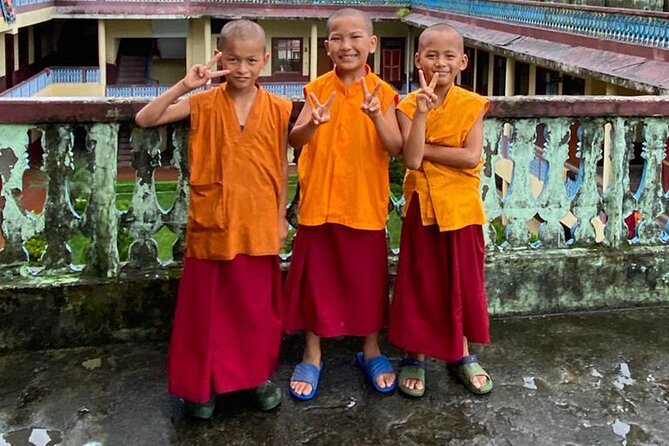
At $63.52 per person, this is not the cheapest way to spend a morning in Pokhara. You are paying for more than transport to a single site. The experience combines a guide, hotel transfers, a settlement visit, monastery teaching, a carpet workshop, a showroom, a photo gallery, a doctor visit, and lunch.
That makes the price easier to justify if you value access and explanation. Arranging all these introductions independently would be difficult, especially the visit to a Tibetan doctor and the chance to see carpet production from inside the workshop.
The value is weaker if you mainly want photographs or a quick monastery stop. You could spend less on a simpler cultural outing. This tour suits you better if you want to ask questions, listen to personal stories, and understand how several parts of Tibetan life fit together.
Group size deserves a quick note. The experience is described as a small-group tour with a maximum of eight in one part of the information, while the additional booking details give a maximum of 15. Confirm the expected group size if that matters to you. A smaller group should make discussion easier, while a group closer to 15 may feel less personal.
Timing, transfers, and who should book
Hotel pickup is offered, and transfers are included. The listed start time is 9 a.m., with return around 2 p.m. Since the schedule stretches into the afternoon, leave room in your plans afterward.
I would choose this tour if you are staying in Pokhara and want a cultural experience with substance. It is a good fit for people interested in Buddhism, refugee communities, traditional crafts, food, or alternative medical practices.
It should also suit solo visitors and couples who prefer conversation over a large sightseeing circuit. A past small-group departure had just two people, which allowed plenty of time for questions and even some hands-on carpet practice. Group size can change, but the format allows for a more personal experience than a large coach tour.
Families and older adults may also find the program manageable because most visitors can participate. Still, the experience includes walking around a settlement and moving between several stops, so ask the provider if you have specific mobility concerns. No detailed accessibility information is supplied.
A few things to know before you go
Book with enough notice if your schedule is fixed. The experience is booked, on average, 86 days ahead, which suggests that early planning can be wise during busy periods.
Bring curiosity rather than a checklist. The best parts depend on listening to Mr. Thupten, asking questions, and giving each stop time to make sense. The tour is educational, but it is not a lecture from beginning to end. You move between places, people, objects, and food.
You should also be ready for a serious discussion of Tibetan refugee life. The subject is handled alongside religion, crafts, and lunch, but it remains an important part of the day. That balance is what gives the experience more substance than a standard cultural attraction.
Free cancellation is available if you cancel at least 24 hours before the start time. Changes or cancellations made later are not accepted for a refund.
Should you book the Half Day Tibetan Cultural Tour?
Book it if you want to understand Tibetan life in Nepal rather than simply look at Tibetan buildings. The combination of a settlement walk, Buddhist teaching, handwoven carpets, a photo gallery, Tibetan medicine, and lunch gives you a broad and unusually personal introduction.
The strongest reasons to go are Mr. Thupten’s guidance, the doctor visit, and the chance to see craftwork in progress. The main reasons to pause are the price and the uncertain group-size range. If you want a quick, low-cost excursion, choose something simpler. If you want a thoughtful morning with real conversation and several direct encounters, this is one of the better cultural choices in Pokhara.
FAQ
How long does the Tibetan Cultural Tour last?
The tour is listed as approximately four and a half hours. The scheduled departure is 9 a.m., with return around 2 p.m.
What is the price?
The listed price is $63.52 per person.
Is hotel pickup available?
Yes. Hotel transfers are included.
What places are visited?
The program includes a Tibetan refugee settlement, Buddhist monastery, carpet workshop, carpet showroom, refugee photo gallery, Tibetan doctor, and Tibetan restaurant.
Is lunch included?
Yes. The tour includes an authentic Tibetan lunch at a local Tibetan restaurant, with foods such as momos and thukpa.
Are vegetarian and gluten-free meals available?
Yes. A vegetarian option is available if requested when booking. Gluten-free food is also offered, including plain rice with vegetable or non-vegetable curry.
What is the cancellation policy?
You can receive a full refund if you cancel at least 24 hours before the experience begins. Cancellations or changes made less than 24 hours before the start time are not accepted for a refund.
Just added around Pokhara
- Pokhara: Pokhara Highlights Tour by Bus★ 3.6 · 10 reviews
- Discover Pokhara in Style: Private Vehicle Service with Driver★ 5.0 · 5 reviews
- Pokhara in 5 Hours: Lake, Museum, Cave, Falls & Pagoda Hill★ 4.5 · 16 reviews
- Beautiful Sarankot Sunrise with Full Day Sightseeing in Pokhara★ 4.5 · 3 reviews
- Sarangkot Sunrise Tour in Private Car★ 5.0 · 3 reviews
- Pokhara: Group Joining Sarangkot Sunrise Himalayas Tour★ 4.5 · 23 reviews
- Sarangkot Sunrise Tour from Pokhara★ 4.5 · 9 reviews
- Pokhara: Full-Day Sightseeing & Viewpoints Tour – Private/Group★ 5.0 · 4 reviews
Tibetan Culture Tours, compared.
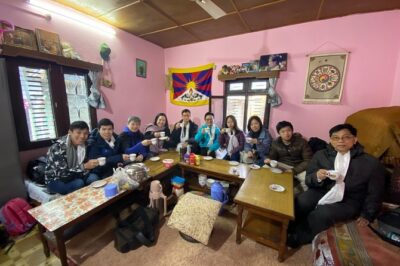
Full-Day Tibetan Cultural Tour to Tibetan Settlements Pokhara
Read our review →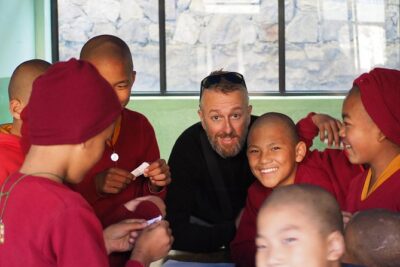
Afternoon Tibetan Cultural Tour to Tibetan Settlements Pokhara
Read our review →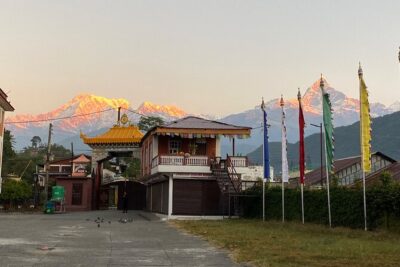
Morning Tibetan cultural tour to Tibetan settlements Pokhara
Read our review →
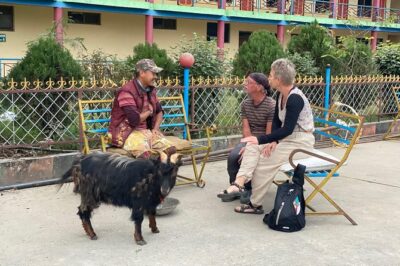
Morning Half Day Tibetan cultural tour to Tibetan Settlements
Read our review →
Sarangkot Sunrise with a half day Tibetan cultural tour
Read our review →
Browse the lists this tour appears in