
Reviewed · HISTORICAL TOURS
Kathmandu Heritage Walk | Heritage Walk of Kathmandu
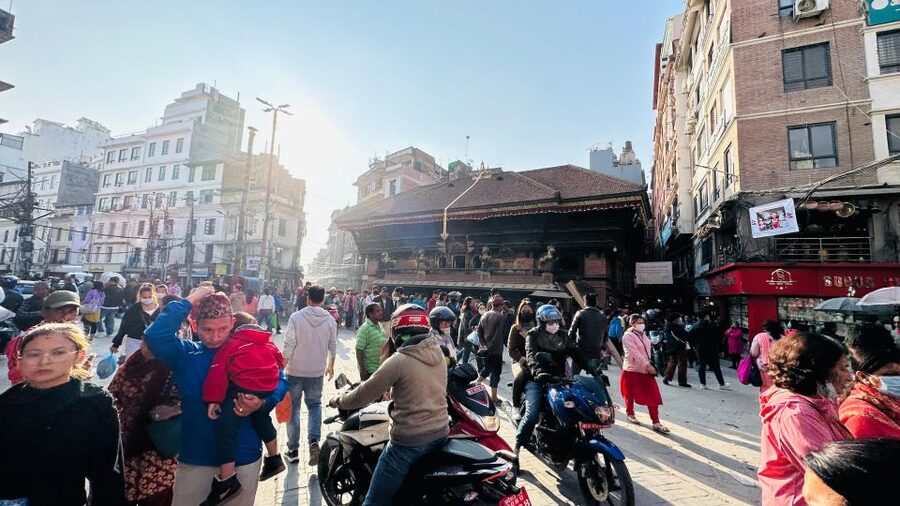
Kathmandu’s best stories often unfold away from its famous UNESCO monuments. This 3.5-hour walk takes you from Thamel’s busy lanes to courtyards, shrines, markets, and temples where daily worship still shapes the city. I like the route because it shows Kathmandu as a living city, not just an open-air museum.
I especially like two things here: the private format, which lets your guide adjust the pace, and the choice of less-famous stops such as Shanti Bihar Stupa, Sankata Temple, and Bhotahiti. Guides Madan and Martin have received strong praise for their clear explanations, good timing, and considerate pace. The main drawback is that this is a walking tour through crowded urban streets, with no included transport, meals, or entry into UNESCO World Heritage sites.
Key details at a glance
- A 3.5-hour walk from Thamel: Start and finish near Breakfree Adventures, in front of Everest Bank Limited.
- A private English-speaking guide: The tour is designed for your group rather than a large shared crowd.
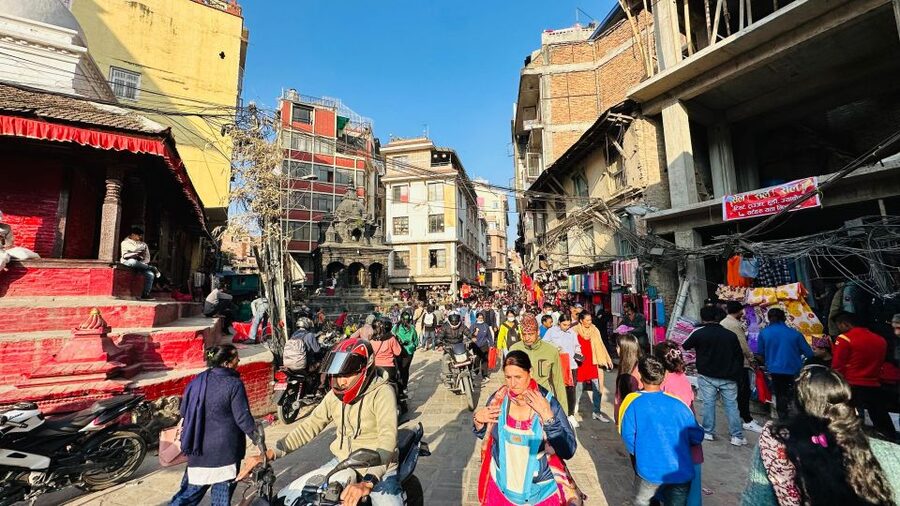
- Temples beyond the usual checklist: Visit Akash Bhairab, Sankata, Mahankal Bhairab, and Annapurna Temple.
- Markets and craftwork included: See Tahiti, Indrachowk, Bhotahiti, local market streets, and the Gold Souq.
- No UNESCO monuments: This route focuses on everyday religious and commercial Kathmandu instead.
- Useful practical inclusions: A government-certified guide, 1,000 milliliters of mineral water, and service charges are covered.
Starting in Thamel, Kathmandu’s tourist quarter
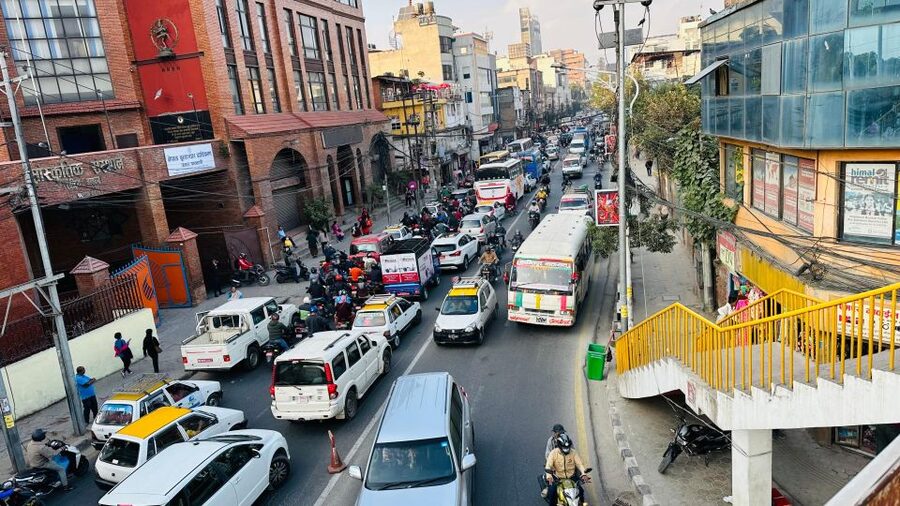
Meet at the Breakfree Adventures entrance in Thamel, in front of Everest Bank Limited. This is a practical starting point because Thamel is easy to find and filled with shops, cafés, restaurants, and travel businesses. The tour begins and ends here, so you do not need to arrange a separate ride back from another part of the city.
Thamel is often treated as a base for trekking trips, but it also gives you an immediate look at Kathmandu’s commercial side. Expect streets lined with shops and places to eat, with plenty of energy and local activity. The walk does not present Thamel as a polished historic district. Instead, you see how tourism and ordinary city life share the same narrow streets.
I like beginning here because it gives you a useful point of comparison. Later, when the route reaches old temples and local markets, you can see how quickly Kathmandu shifts from travel-oriented commerce to long-standing religious and neighborhood life.
The first section may feel crowded and noisy. If you want a quiet, slow introduction, this is not the ideal opening. If you want to get your bearings in central Kathmandu and start seeing how the city works, it makes sense.
More Walking Tours in Kathmandu
- Kathmandu Food and Drink Walking Tour
★ 5.0 · 266 reviews - Kathmandu: Food and Drink Walking Tour
★ 4.9 · 119 reviews - Walking Street Food Tour in Kathmandu
★ 5.0 · 111 reviews
Tahiti and Shanti Bihar Stupa
From Thamel, the walk continues to Tahiti, an area where older buildings and modern city activity meet. The supplied route does not promise a formal architectural lecture at every stop, so treat this part as a chance to observe the street itself: traditional forms, shopfronts, shrines, and the steady movement of Kathmandu residents.
The contrast becomes sharper at Shanti Bihar Stupa. This is one of the calmer pauses on the walk, giving you a break from traffic and street noise. The stupa represents peace, but its value on this tour is also practical: it gives your eyes and ears a rest while showing you how sacred places can sit close to the city’s commercial core.
Your guide can explain the religious meaning and local setting in English. Since this is a private tour, you can ask questions without waiting for a large group to catch up. That matters at a place like this, where a short stop can either feel meaningful or pass by too quickly depending on how much context you receive.
Bring comfortable shoes. The route lasts three and a half hours, and even an easy city walk can become tiring when you are standing at temples and moving through crowded streets. An umbrella is also recommended, along with comfortable clothing and a face mask or other protective covering.
Akash Bhairab Temple in Indrachowk
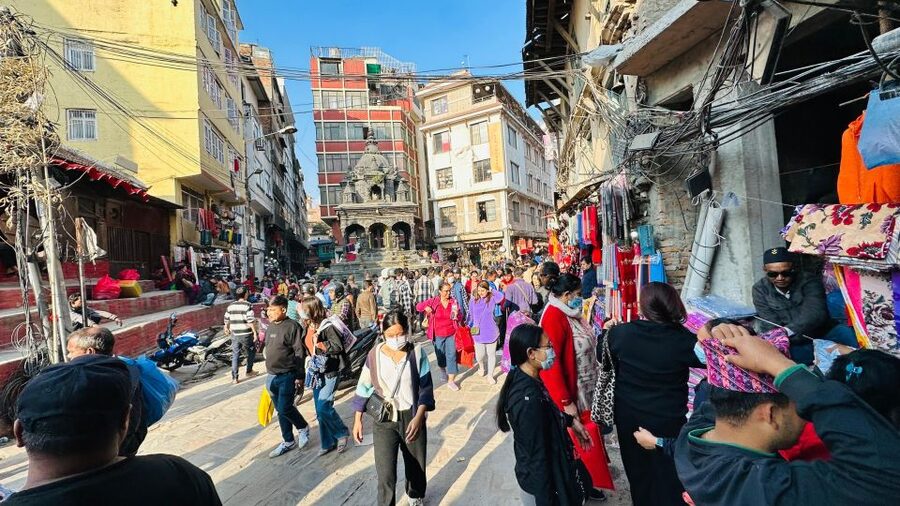
The route then reaches Akash Bhairab Temple in Indrachowk. This is one of the more important religious stops on the walk, and the atmosphere shifts again from quiet stupa to active city shrine.
Indrachowk is a useful place to see Kathmandu’s old trading and worship traditions side by side. You may find shopkeepers, shoppers, worshippers, and visitors sharing the same public space. The point is not simply to look at a temple from the outside. It is to notice how the temple fits into the neighborhood around it.
At Akash Bhairab, pay attention to the behavior of people who come to worship. Dress respectfully and follow your guide’s instructions about where you may stand or what you may photograph. A camera is listed among the recommended items, but religious sites still call for restraint. Ask before taking close photographs of worshippers or ritual activity.
This stop should suit you if you like learning how a city’s faith traditions remain part of ordinary daily life. If your main goal is grand architecture or famous monuments, you may find the route less satisfying because it deliberately avoids Kathmandu’s headline UNESCO attractions.
The Gold Souq and Kathmandu craftsmanship
The Gold Souq adds a commercial and craft-focused element to the walk. Here, you can look at Kathmandu’s jewelry trade and the skill behind gold work. The stop is not described as a buying obligation, which is helpful. You can observe the displays and ask your guide about what you are seeing without treating the visit as a shopping assignment.
This part of the tour works best if you enjoy the connection between local commerce and culture. Gold jewelry is not just a souvenir category. In Kathmandu, it can reflect religious practice, family traditions, personal decoration, and the city’s long role as a center of skilled craft.
Keep personal spending separate from the tour price. Gold, food, drinks, and other purchases are not included. The tour includes water, but you should budget for anything else you want to buy.
A private guide can be useful here because you can decide how much time to spend looking. If you have no interest in shopping or jewelry, the Gold Souq may be a shorter stop for you. If you enjoy crafts and markets, it provides one of the more distinctive parts of this route.
A completely different kind of day, same corner of Nepal:
- Private Kathmandu Sightseeing Tour | UNESCO World Heritage sites
★ 5.0 · 756 reviews - Half day cooking class in Thamel kathmandu
★ 5.0 · 607 reviews - Nagarkot Sunrise View and Day Hiking from Kathmandu
★ 5.0 · 471 reviews - Kathmandu: Full Day 7 UNESCO Tour with Lunch – Private/Group
★ 5.0 · 415 reviews
Sankata Temple and Mahankal Bhairab
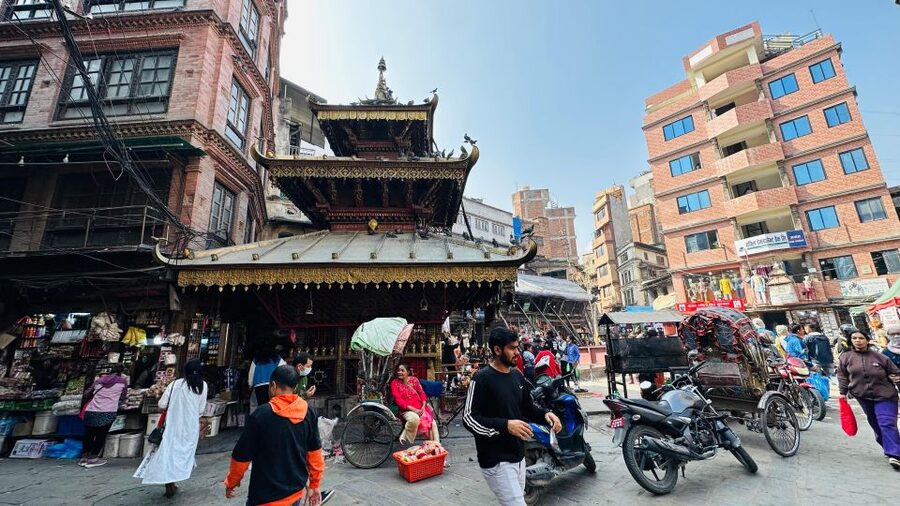
Next come Sankata Temple and Mahankal Bhairab, two sites with strong religious importance. The tour presents them as places to understand Kathmandu’s devotional life, rather than as isolated photo stops.
Sankata is associated with protection and the removal of difficulties, while Mahankal Bhairab represents another powerful form of religious devotion. The exact amount of time spent at each site can depend on the pace of your group and the guide’s approach. Since the tour is private, you can ask for more explanation if these traditions interest you.
These temples may feel more intense than Shanti Bihar Stupa. You may encounter narrow spaces, active worship, and a stronger sense that you are entering a place used by local people rather than a site arranged for sightseeing. That is part of the appeal, but it also means you should remain aware of your surroundings and avoid blocking entrances or ritual areas.
I would recommend this section to anyone who wants more than a quick list of monuments. It gives you a chance to see several forms of belief within a compact part of the city. The route is especially useful on your first full day in Kathmandu because it can help you understand the religious references you will notice elsewhere in Nepal.
Bhotahiti and the local market streets
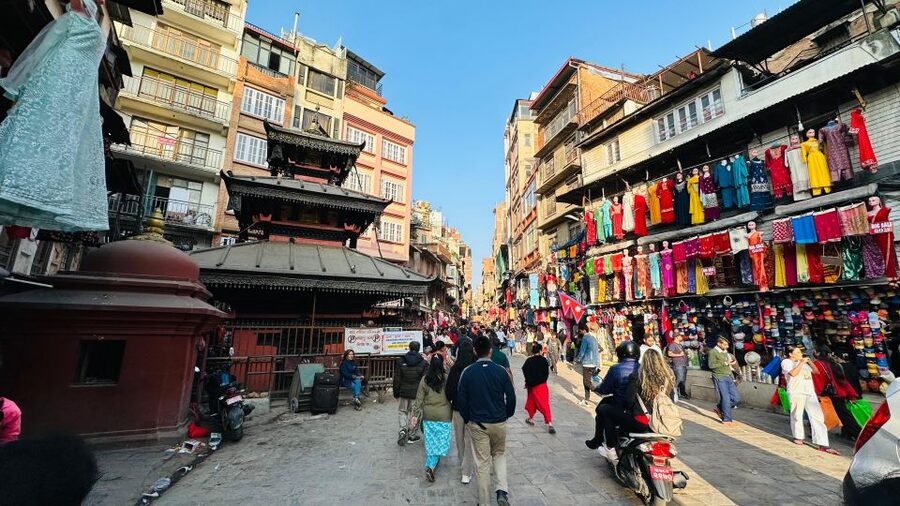
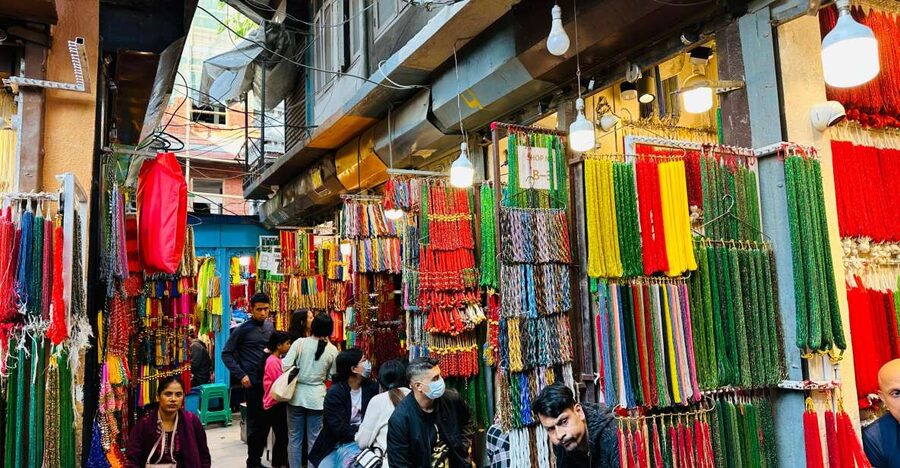
Bhotahiti brings the tour back into everyday city life. This area is described as full of local flavor, and it helps balance the temple visits with a look at shopping streets and neighborhood movement.
You might find the pace here less orderly than a standard sightseeing route. Markets can be crowded, sounds overlap, and the best details may be small: a shop display, a side shrine, a passing vendor, or the way people use the street. Keep your wallet and phone secure in crowded areas, and stay close enough to your guide to hear directions.
The route finishes with a lively local market before returning to Thamel. This ending makes sense because it leaves you in a useful area for a meal, further shopping, or the next part of your day. Meals and drinks are not included, so plan to eat before or after the walk. The tour does include 1,000 milliliters of mineral water, which is helpful but may not cover every person’s needs in warm weather.
Annapurna Temple and the city center
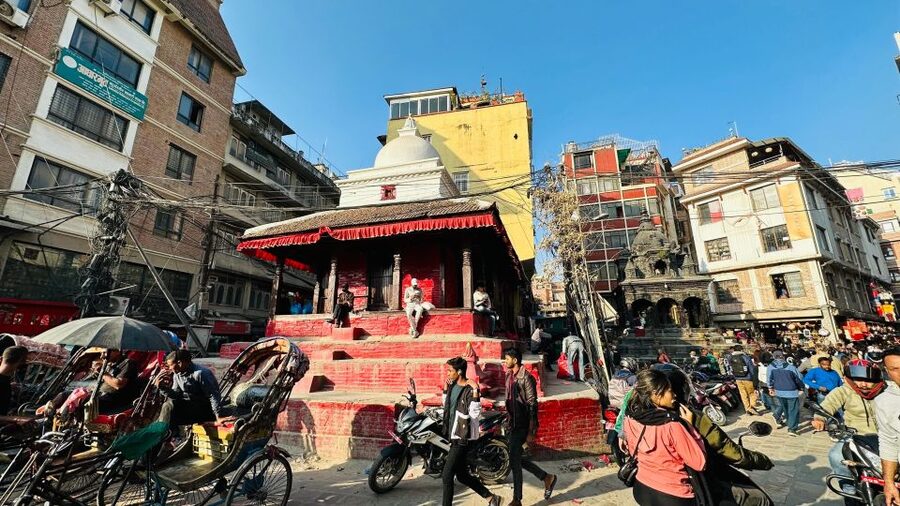
Annapurna Temple is another major cultural stop and one of the route’s architectural highlights. Its setting in the city center lets you see how a temple can function as both a religious site and part of a busy urban neighborhood.
The value here is the combination of form and use. You can appreciate the building, but you can also watch how people approach it, pause there, and continue with their daily business. Your guide can connect the temple to Kathmandu’s wider religious traditions and point out details you might otherwise pass without noticing.
The route does not promise entry to every structure or access to every interior area. Temples can have rules that change according to worship, preservation, or local custom. A good approach is to treat the guide’s instructions as part of the experience, not as an inconvenience.
What the private guide changes
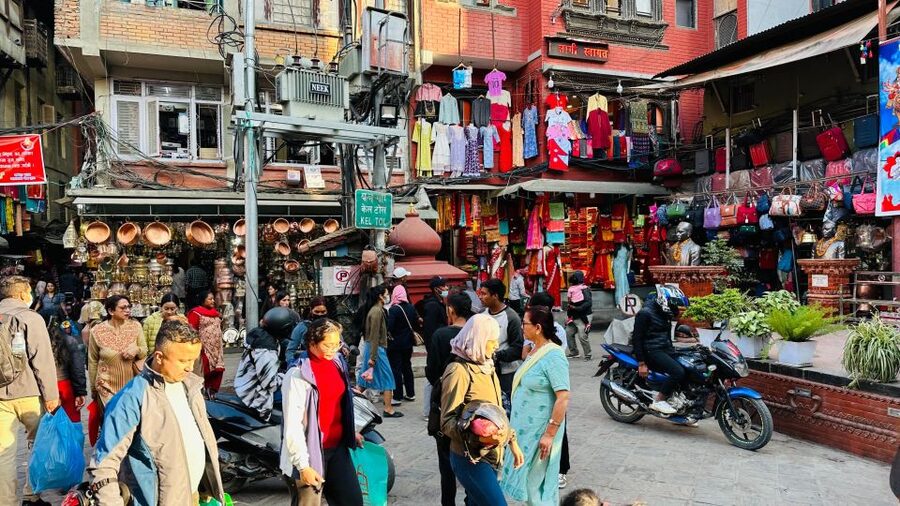
This tour is for a private group, and that is one of its strongest features. A fixed route can feel very different when the guide can set a comfortable pace and answer your own questions. You are not trying to hear a speech over a large group or waiting for people who want to take a different number of photographs.
Past guide feedback gives you two names to look for: Martin and Madan. Martin was praised for covering a lot of ground without making the walk too strenuous for older participants. Madan was praised for his professionalism, good personality, timing, and helpful introduction to Kathmandu.
That does not guarantee which guide you will receive, so I would not book based on a promise of one specific person unless the provider confirms it. Still, the guide is an important part of the value here. A government-certified English-speaking guide should help explain the temples and keep the route moving through a complicated city center.
The walking pace may suit many people, but the age and accessibility restrictions matter. The experience is not suitable for wheelchair users, pregnant women, babies under one year, people over 95, or people over 70 according to the supplied conditions. The two age limits are inconsistent, so anyone in that range should confirm the rule before booking.
Is $40 a fair price?
At $40 per person, this is not the cheapest way to wander through Kathmandu. You can walk through public streets and see some temples without paying for a tour. The real question is what you want from the route.
The price includes a private English-speaking guide, a government-certified guide service, 1,000 milliliters of mineral water, and the service charge. It does not include transport, food, drinks, or personal purchases. For a first visit, the guide’s explanations and the convenience of a planned route can make the cost reasonable, especially if you are traveling as two people or a small private group.
The tour also saves you from building your own sequence between Thamel, Tahiti, Indrachowk, Bhotahiti, and the temple stops. Kathmandu’s central streets can be confusing, and the value is partly in having someone connect places that might otherwise feel like separate errands.
I would see the price as fair for a private introduction, not as an all-inclusive sightseeing package. If you only want famous landmarks, spend your money on a tour that includes UNESCO sites. If you want local temples, streets, markets, and craft shops with a guide beside you, this route offers something different.
Who should book this Kathmandu walk?
I would recommend it to first-time visitors who want a useful orientation to central Kathmandu without spending the whole day on a large sightseeing circuit. It also suits repeat visitors who have already seen the major UNESCO sites and want a less familiar route.
Couples, friends, and families with members who can comfortably walk through city streets should appreciate the private setup. The tour can also suit older walkers who are mobile but prefer a measured pace, as long as they meet the stated restrictions. Martin’s reported pacing is encouraging, but you should still be ready for three and a half hours on foot.
You may want to skip it if you need step-free access, dislike markets and crowded streets, or want a quiet museum-style visit. You should also look elsewhere if UNESCO World Heritage monuments are your main goal, since they are specifically excluded.
Book this tour if you want Kathmandu explained through working streets, active temples, local markets, and craft traditions. Skip it if you are mainly chasing the city’s famous postcard sights. The route’s strength is its everyday focus, and its best moments are likely to come from the contrast between Thamel, peaceful Shanti Bihar Stupa, the temples of Indrachowk, and the market streets on the way home.
FAQ
Where does the Kathmandu Heritage Walk begin and end?
The tour begins at the Breakfree Adventures entrance in Thamel, in front of Everest Bank Limited. It also ends in Thamel.
How long does the walking tour last?
The tour lasts 3.5 hours.
Is the tour private?
Yes. The experience is offered for a private group rather than as a shared group tour.
What language does the guide speak?
The live guide speaks English.
Are UNESCO World Heritage sites included?
No. UNESCO World Heritage sites are not included in this route.
What is included in the $40 price?
The price includes a government-certified guide, 1,000 milliliters of mineral water, and the service charge. Transportation, meals, drinks, and personal expenses are not included.
More Heritage Days Around Kathmandu
- Private Kathmandu Sightseeing Tour | UNESCO World Heritage sites
★ 5.0 · 756 reviews - UNESCO Seven World Heritage Tour in Kathmandu
★ 5.0 · 253 reviews - Kathmandu Private Sightseeing Tour | UNESCO World Heritage Sites
★ 5.0 · 109 reviews - Kathmandu: Full Day Private Top 4 UNESCO Heritage Tour W/Lunch.
★ 5.0 · 86 reviews
Just added around Kathmandu
- Women Empowerment Project(Nepali cooking class & jewelry workshop★ 5.0 · 15 reviews
- Manthali Airport (Ramechhap) To Kathmandu – Transport Service★ 4.5 · 11 reviews
- Amazing 1 Day Trekking Experience in Kathmandu Nepal★ 5.0 · 24 reviews
- Walking tour of Kathmandu with awesome local guides★ 5.0 · 4 reviews
- Walking tour of real Kathmandu through back streets.★ 5.0 · 3 reviews
- Private Manaslu Circuit Trek at Himalayas★ 5.0 · 3 reviews
- Walking Street Food Tour in Kathmandu★ 5.0 · 111 reviews
- Kathmandu Street Food Walking Tour – Eat Like a Local★ 5.0 · 3 reviews
Historical Tours, compared.
Private Kathmandu Sightseeing Tour | UNESCO World Heritage sites
Read our review →
Full-Day Tibetan Cultural Tour to Tibetan Settlements Pokhara
Read our review →
Kathmandu Private Sightseeing Tour | UNESCO World Heritage Sites
Read our review →
Afternoon Tibetan Cultural Tour to Tibetan Settlements Pokhara
Read our review →
Full Day Private Top 4 UNESCO Heritage Tour W/Lunch.
Read our review →
Nagarkot Sunrise & Bhaktapur UNESCO Heritage Private Tour
Read our review →Browse the lists this tour appears in