
Reviewed · TEMPLE & MONASTERY TOURS
Kathmandu: Kopan Monastery, Swayambhu and Boudha Nath Stupa Tour
Kathmandu’s Buddhist heart comes into focus on this half-day tour, which links Boudhanath Stupa, Kopan Monastery, and Swayambhunath in one well-planned loop. You move from a major pilgrimage center to a quiet monastery, then up to a hilltop shrine with broad views across the Kathmandu Valley.
I like two things right away: the private format lets you set the pace, and the English-speaking guide adds the background that can be easy to miss when you visit alone. Guide Madan is specifically noted for answering many questions and adjusting the visit to suit the group.
The main consideration is time. Five to six hours is enough for a useful introduction, but the schedule is fairly tight if you want a long lunch, extensive photography, or slow meditation at every stop.
Key points at a glance
- Three important Buddhist sites in one morning or afternoon: See Boudhanath, Kopan Monastery, and Swayambhunath without arranging separate transport.
- Private touring with guide Madan available: Your group travels alone, and the guide can respond to your questions and adjust the pace.
- Boudhanath entrance included: Spend time at one of the world’s largest stupas and a major center of Tibetan Buddhist culture.
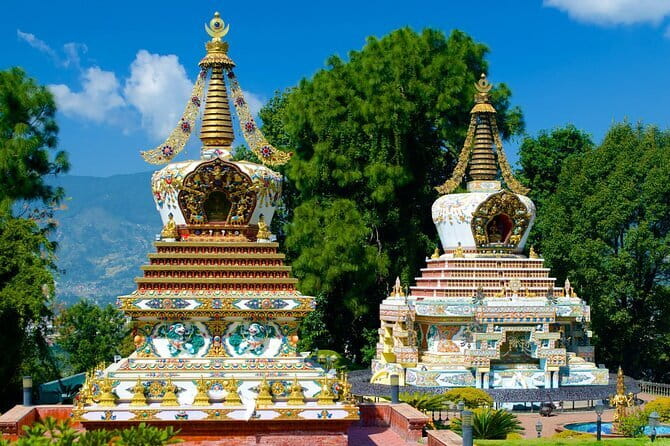
- Kopan offers a quieter contrast: The hilltop monastery provides a calmer setting after the activity around Boudhanath.
- Swayambhunath adds views and religious variety: The Monkey Temple combines Buddhist and Hindu symbols above Kathmandu Valley.
- Rooftop lunch is possible, but not included: Nearby restaurants offer views of Boudhanath while you eat, at your own cost.
Why these three Kathmandu sites work well together
This tour succeeds because each stop gives you a different view of Buddhism in Nepal. Boudhanath is large, public, and closely connected with Tibetan Buddhist culture. Kopan feels more reflective and removed from the city. Swayambhunath brings together Buddhist and Hindu traditions on a hill above Kathmandu.
I like this progression. You begin with the scale and ceremony of a famous stupa, spend time in a monastic setting, then finish with a hilltop monument and valley views. It gives you more than three photo stops.
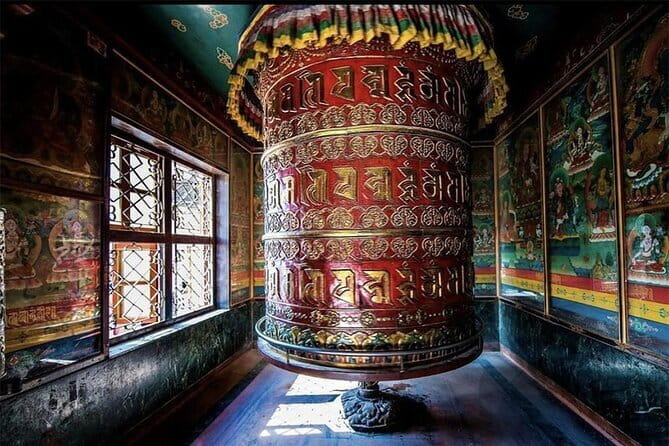
The guide matters here. Religious sites can be beautiful but confusing when you do not know what you are looking at. Prayer wheels, painted eyes, shrine details, and the relationship between Buddhism and Hinduism all make more sense when someone explains their place in local life.
The tour is private, not a shared group outing. That means you do not have to wait for strangers or follow a fixed set of questions. You still need to keep an eye on the clock, but the format is better suited to people who want explanation rather than a quick drive-by visit.
More Temple & Monastery Tours in Kathmandu:
- Kathmandu Spiritual Sites: Bodhnath & Pashupatinath Tour
★ 5.0 · 185 reviews - Kathmandu: Nagarkot Sunrise and Hike Tour to Changu Narayan
★ 4.7 · 151 reviews - Kathmandu: Chandragiri Cable Car and Monkey Temple Tour
★ 4.8 · 139 reviews
Boudhanath Stupa: begin with Kathmandu’s great Buddhist circle
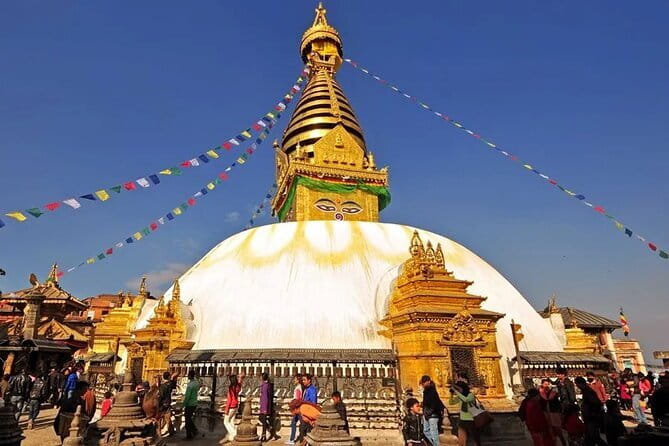
Boudhanath is the tour’s most visually powerful stop. The enormous white stupa rises above the surrounding buildings, with the familiar painted eyes looking across the city. It is one of the largest stupas in the world and a UNESCO World Heritage site.
Plan on about one hour here. That gives you enough time to walk around the stupa, notice the prayer wheels, and take in the movement around the circular pilgrimage route. Your guide can explain the meaning behind the site instead of leaving you with only its impressive scale.
Boudhanath is also the place to see the strongest Tibetan Buddhist influence on this tour. The surrounding area has a distinct religious and cultural character, and the stupa remains an important destination for Buddhist pilgrims.
I recommend paying attention to the rhythm of the visit. You will see people moving around the stupa, turning prayer wheels, and stopping at shrines. This is not simply an old monument placed in a square. It is an active religious center, so a respectful, observant approach makes the visit more rewarding.
The nearby rooftop restaurants offer a practical lunch option. You can sit above the surrounding streets and look toward the stupa while eating. Meals and drinks are not part of the tour price, so treat this as an optional extra rather than an included feature.
One hour is useful but not generous. If Boudhanath is your main reason for booking, tell your guide early that you would like enough time here. The private setup should make that conversation easier, though the other two stops still need their share of the day.
Kopan Monastery: a quieter hour on the hill
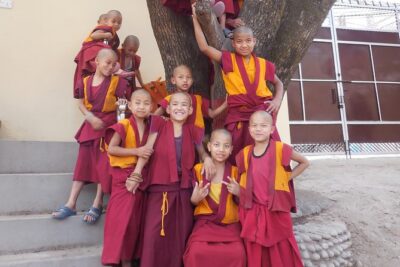
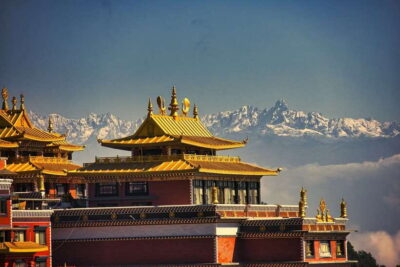
Kopan Monastery changes the mood. After the public energy of Boudhanath, you move to a hilltop Tibetan Buddhist monastery known for meditation and Buddhist teaching. The setting is intended to feel calm, and the visit gives you time to think about the religious practices you have just seen.
The planned stop lasts about one hour. That is enough for a meaningful introduction to the monastery, especially if you use the time to listen and ask questions rather than rush from one view to the next.
Kopan is a strong part of the tour for anyone interested in the living side of Buddhism. Boudhanath shows public devotion, while Kopan gives you a closer look at a place connected with study, meditation, and monastic life.
Do not expect the same kind of sightseeing rhythm at Kopan as at Boudhanath. The value here comes from the quieter atmosphere and the explanations. Your guide can help connect the monastery to the wider Buddhist tradition in Kathmandu.
The information provided does not promise a formal teaching session, access to every part of the monastery, or a scheduled meeting with monks. Keep your expectations practical. You are visiting a working religious institution, not attending a guaranteed private lecture.
Donations to the monastery are not included. Carrying some extra money may be useful if you want to contribute, but the tour price already covers the listed entrance fees and taxes.
Swayambhunath: prayer wheels, monkeys, and valley views
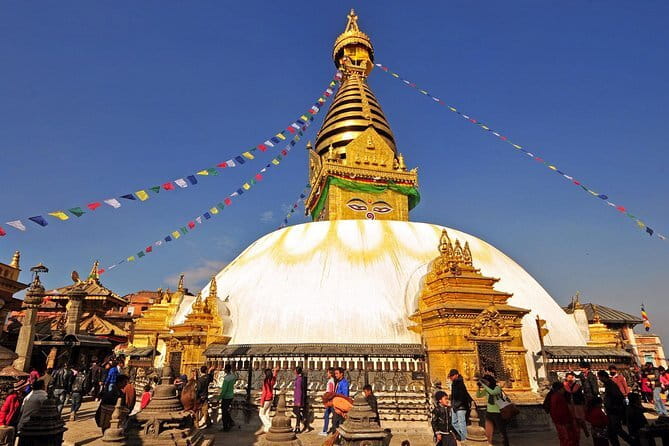
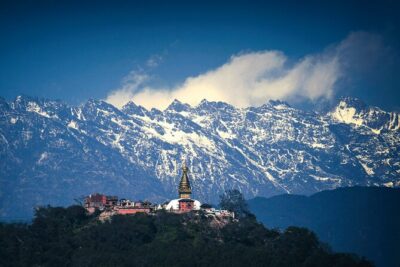
Swayambhunath, often called the Monkey Temple, sits on a hill overlooking Kathmandu Valley. It is another UNESCO World Heritage site and one of the city’s best-known religious landmarks.
The visit is scheduled for about 30 minutes in several parts of the supplied timing, with the site also described under the names Swayambhu and Swayambhunath Mahachaitya. In practical terms, you should think of this as one stop, not three separate attractions.
This is the tour’s best location for a broad view over Kathmandu Valley. The hilltop position gives the monument a different feel from Boudhanath, which is surrounded by city streets. You can take in the stupa, prayer wheels, and the mix of Buddhist and Hindu symbols before looking outward over the valley.
The short time here is the clearest limitation. Thirty minutes may be enough to see the main shrine and enjoy the view, but it does not leave much room for a slow exploration. If you want time for photographs or careful observation, keep your visit focused.
Swayambhunath also introduces the playful side of the site’s identity. The Monkey Temple name is widely used, but the religious meaning is more important than the nickname. Look for the way Buddhist and Hindu elements share the same sacred setting.
The tour data does not specify the exact approach used at the hilltop, so you should ask your guide about the best access point when you book or begin the day. The site is elevated, and anyone who needs extra time at a hilltop monument should say so at the start.
More days out in Kathmandu:
- Private Kathmandu Sightseeing Tour | UNESCO World Heritage sites
★ 5.0 · 756 reviews - Half day cooking class in Thamel kathmandu
★ 5.0 · 607 reviews - Nagarkot Sunrise View and Day Hiking from Kathmandu
★ 5.0 · 471 reviews - Kathmandu: Full Day 7 UNESCO Tour with Lunch – Private/Group
★ 5.0 · 415 reviews
What the private vehicle adds to the day
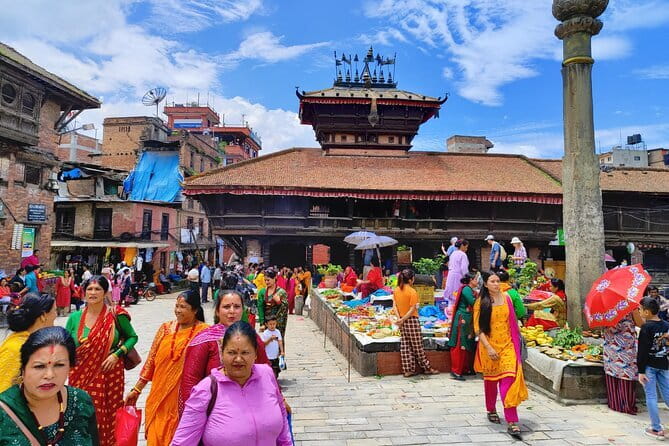
Hotel pickup and drop-off are included, along with an air-conditioned private vehicle. In Kathmandu, this saves you from arranging separate rides between three sites that sit in different parts of the city.
The value is not just comfort. A private vehicle gives you a place to leave your belongings and makes the day easier to manage, especially if you are visiting Kathmandu for a short stay. You are not spending the tour working out the next taxi or negotiating each transfer.
The total duration is about five to six hours. That includes transport, visits, and possibly time for lunch, so do not treat the full period as five or six hours inside the monuments.
The private arrangement is also useful for questions. The one direct account available describes guide Madan as professional, clear in his historical explanations, and willing to move at the customer’s pace. That is exactly the sort of service that makes this experience more useful than simply hiring a car.
The tour is listed for $70 per person. Its value depends on group size. For one person, it is a fairly substantial price for a half-day outing. For a couple or small group, the private vehicle, hotel transfers, guide, entrance fees, and taxes make the cost easier to justify.
Group discounts are available, though the exact savings are not specified. If you are traveling with several people, check the final per-person price before booking. The private format can become a practical choice when the cost is shared.
Guide service and the value of explanation
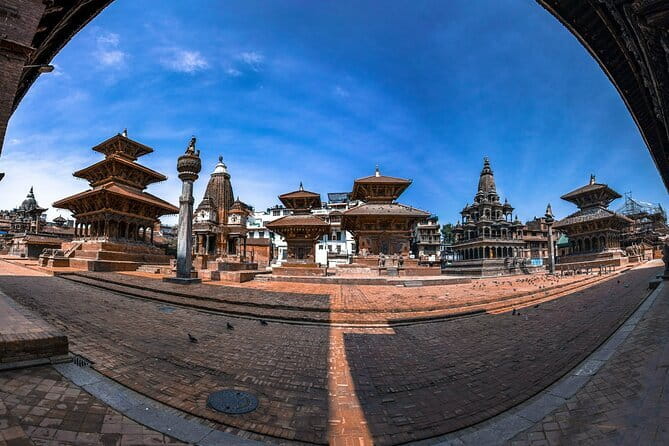
You can visit all three sites independently, but the religious details are not always self-explanatory. The strongest reason to choose this experience is the private English-speaking guide.
Guide Madan is named in the available feedback, with particular praise for clear history, patience with questions, and matching the pace to the group. Those are useful qualities on a tour that moves between major monuments and a monastery in a limited amount of time.
I would use the guide actively. Ask what the symbols mean, how the three sites differ, and which details deserve your attention. A guided visit is only as good as the questions you bring to it, especially at places where a quick look can make every shrine seem similar.
The private format does not guarantee that every stop will last longer than planned. It does give you a better chance to pause when something interests you, skip unnecessary repetition, or ask for more context.
Most people can participate, according to the supplied details. Still, the tour includes a hilltop site and several religious compounds, so you should tell the provider about any need for a slower pace before departure.
Lunch with a stupa view
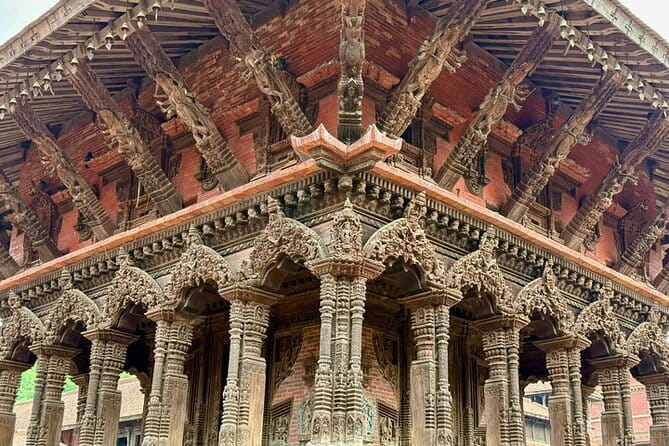
Lunch is not included, but you can eat at a rooftop restaurant near Boudhanath. The setting is a worthwhile part of the day because it gives you time to look back at the stupa from above rather than moving straight from one monument to the next.
This option works best if you want a relaxed break and do not mind paying separately for food and drinks. If your priority is seeing all three sites within five hours, keep lunch short or confirm the timing with your guide.
The rooftop meal is not a formal part of the included tour service, so do not assume a reservation, set menu, or meal allowance. Think of it as a convenient local option placed near one of the day’s main stops.
Who will get the most from this tour

I would recommend this tour to a first-time visitor who wants a clear introduction to Kathmandu’s Buddhist sites without arranging transport alone. It also suits anyone who prefers private guiding and likes to ask questions as they go.
It is a good match for:
- People with only half a day available
- Visitors interested in Buddhist practice and Tibetan culture
- Couples, families, and small groups who want a private vehicle
- People who prefer a guide to explain symbols and local history
- Visitors who want hotel pickup and drop-off included
I would be more cautious if you want long, unhurried visits. The schedule gives you a useful overview, but Boudhanath, Kopan, and Swayambhunath could each occupy much more time on their own.
It may also be less suitable if your main goal is a long meditation experience at Kopan or a relaxed meal overlooking Boudhanath. Those options may be possible only with careful timing and a conversation with the guide.
Booking details that matter
Confirmation is provided at booking, and the activity is private for your group only. Hotel pickup and drop-off are included, as are monument entrance fees, all listed taxes, and the air-conditioned vehicle.
Donations, meals, and drinks cost extra. The tour has free cancellation up to 24 hours before the start time. Cancellations made within 24 hours are not refunded, and changes within that period are not accepted.
The experience is often booked well in advance, with an average booking lead time of 47 days. That does not mean you must reserve that early, but it suggests that planning ahead is sensible during busy periods.
Should you book the Kathmandu Buddhist sites tour?
Book it if you want an efficient, private introduction to three of Kathmandu’s most important Buddhist landmarks, with transport and entrance fees handled for you. The guide service is the key value, especially if you want historical and religious context rather than photos alone.
The tour is less convincing for someone who wants to linger at every site. At $70 per person, it is best value for a couple or small group that will use the guide, ask questions, and appreciate the convenience of hotel transfers.
My practical advice is to tell guide Madan, or the assigned guide, which stop matters most to you. Ask for enough time at Boudhanath if the stupa is your priority, or protect the quiet hour at Kopan if meditation and monastic life interest you most. With realistic expectations about the short Swayambhunath visit, this is a useful and well-focused half-day in Kathmandu.
FAQ
How long does the tour take?
The tour lasts approximately five to six hours, including transportation between the sites and the visits themselves.
Which sites are included?
The tour visits Boudhanath Stupa, Kopan Monastery, and Swayambhunath, also called Swayambhu, Swayambhunath Stupa, or the Monkey Temple.
Is hotel transportation included?
Yes. Hotel pickup and drop-off are included in an air-conditioned private vehicle.
Is the tour private?
Yes. Only your group participates in the private activity.
Are entrance fees included?
Yes. Monument entrance fees, all listed taxes, and fees are included. Donations to the monastery, meals, and drinks are not included.
Can I cancel for a full refund?
Yes, if you cancel at least 24 hours before the experience start time. Cancellations or changes made within 24 hours are not accepted, and the amount paid is not refunded.
Just added around Kathmandu
- Traditional Momo Making Class★ 5.0 · 10 reviews
- Women Empowerment Project(Nepali cooking class & jewelry workshop★ 5.0 · 15 reviews
- Manthali Airport (Ramechhap) To Kathmandu – Transport Service★ 4.5 · 11 reviews
- Amazing 1 Day Trekking Experience in Kathmandu Nepal★ 5.0 · 24 reviews
- Walking tour of Kathmandu with awesome local guides★ 5.0 · 4 reviews
- Walking tour of real Kathmandu through back streets.★ 5.0 · 3 reviews
- Private Manaslu Circuit Trek at Himalayas★ 5.0 · 3 reviews
- Walking Street Food Tour in Kathmandu★ 5.0 · 111 reviews
Temple & Monastery Tours, compared.
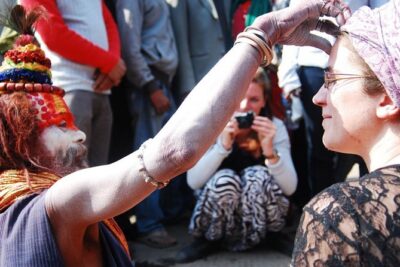
Kathmandu Spiritual Sites: Bodhnath & Pashupatinath Tour
Read our review →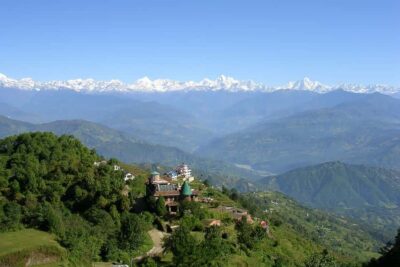
Nagarkot Sunrise and Hike Tour to Changu Narayan
Read our review →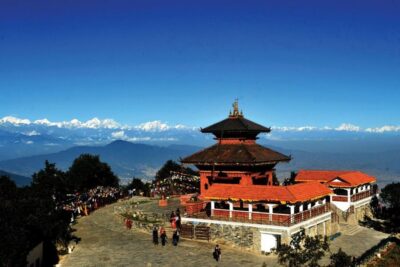
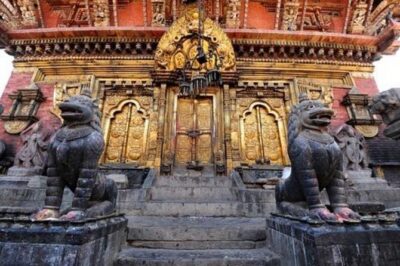
Nagarkot Sunrise & Hike to Changu Narayan Day Tour from Kathmandu
Read our review →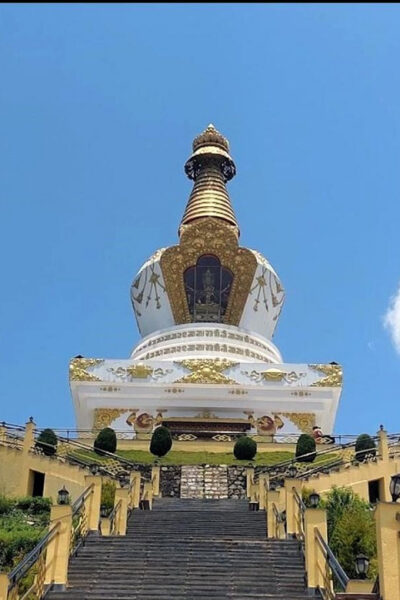
Monkey Temple – Swayambhunath Tour – Private/Small Group
Read our review →Browse the lists this tour appears in