
Reviewed · PATAN TOURS
Patan and Bhaktapur Boutique Tour
Patan and Bhaktapur give you two very different looks at the Kathmandu Valley. Patan feels artistic and courtyard-centered, while Bhaktapur opens into grand squares, tall temples, and working pottery yards. This 9.5-hour small-group outing links both cities without asking you to puzzle out local transport.
I like the maximum group size of 10, which should make narrow lanes and temple courtyards easier to manage. I also like the mix of major sights and ordinary details, from old water spouts and pilgrims’ rest areas to potters shaping clay by hand. The main catch is the extra cost: lunch and several entrance fees are not included, and you should carry cash.
Key points at a glance
- Two historic cities in one day: See Patan and Bhaktapur, each with its own palace square and Newar character.
- A small group of up to 10: The size suits tight lanes, courtyards, and questions for the guide.
- Patan’s Golden Temple and museum: Pair a living Buddhist sanctuary with a restored Malla-era palace.
- Bhaktapur pottery in action: Pottery Square lets you watch local artisans work rather than only view finished monuments.
- Guides with cultural range: Shreya Karki and Santosh are named guides associated with this experience, though your assigned guide may differ.
- Budget for extras: The tour costs $40 per person, but lunch and entrance fees are separate.
Why Patan and Bhaktapur work so well together
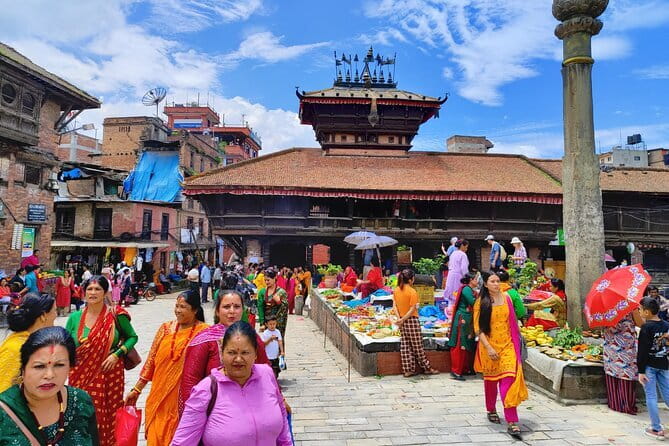
Patan, also called Lalitpur, is the quieter-feeling half of the day. Its appeal comes from connected lanes, enclosed courtyards, Buddhist bahals, carved shrines, and skilled metalwork traditions. You are not only looking at one large square. You are moving through the city’s older residential fabric.
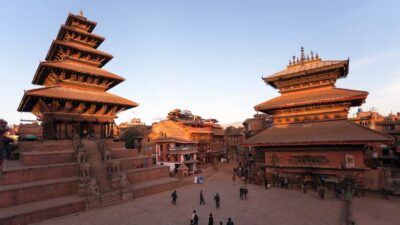
Bhaktapur is more theatrical. Its main squares open wider, and its temples rise higher. The city gives you the famous Nyatapola Temple, the 55-Window Palace, the Golden Gate, and a working pottery area in one compact visit.
I like this pairing because it avoids a common problem with city sightseeing: seeing several grand monuments that begin to blur together. Patan gives you small-scale detail first, then Bhaktapur supplies larger views and a stronger sense of ceremony. You still spend much of the day among historic buildings, so anyone who needs a varied pace should know that this is an architecture and culture-heavy outing.
The tour begins at 8:30 am and lasts about nine and a half hours, including transport and a lunch and coffee stop. The meal is not part of the $40 price. You will want comfortable shoes and enough energy for walking over old streets and standing at many stops.
More days out in Bhaktapur:
- Private Bhaktapur and Nagarkot Day Tour From Kathmandu
★ 5.0 · 305 reviews - Day Trip to Bhaktapur and Panauti from Kathmandu
★ 5.0 · 184 reviews - Bhaktapur & Patan Durbar Square Day Tours
★ 5.0 · 122 reviews
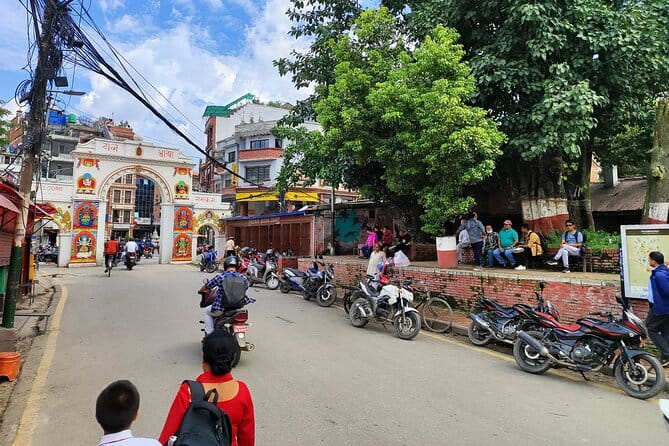
Patan Gate starts the story at Patan Dhoka
The first stop is Patan Dhoka, the historic entrance to Patan. The gate is decorated with images of the Asta Matrika, the eight mother goddesses, giving your first look at the visual language of Newar religious art.
This is a short 15-minute introduction, but it helps set the scene. Rather than arriving directly at the main palace square, you begin at an old threshold and move inward as people once did. There is no admission fee here, and the stop should not feel like a rushed photo pause if your guide uses it to explain the city’s layout.
Pimbahal and Nag Baha Galli reveal everyday Patan
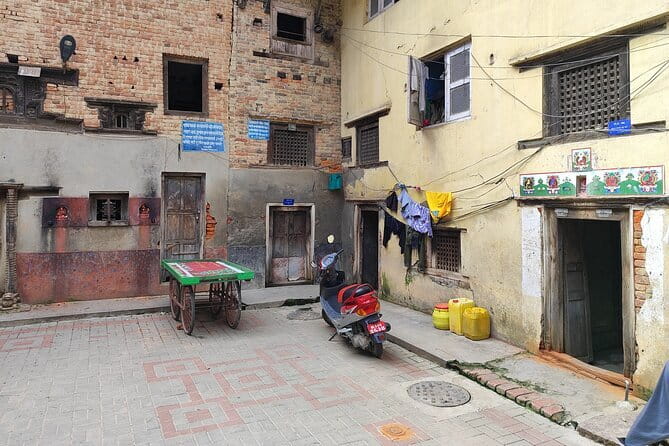
At Pimbahal, you get a more grounded look at how older city life worked. The stop focuses on cooking, water collection, and places where pilgrims, traders, and other visitors could rest. You will also hear the story of Gaya Baje, a Hindu priest connected with the site.
That kind of stop is valuable because it shifts attention away from royal buildings. You see how practical needs shaped the old city. The visit lasts about 20 minutes and is free.
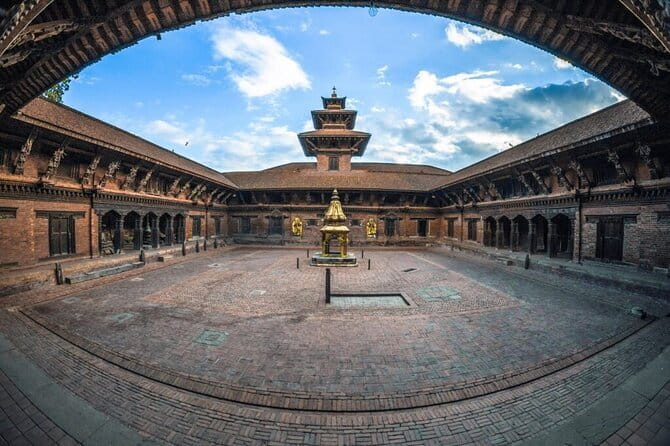
Next comes Nag Baha Galli, a courtyard devoted to serpents. It is also connected with Samyak Mahadan, a major giving festival held every five years. This 30-minute stop adds religious context without requiring another ticket.
I would pay attention to the guide here. A courtyard like this can look simple if you only take a quick photograph. The meaning comes from the rituals and festival traditions tied to it. Guides such as Shreya Karki have been associated with this tour and are described as covering Nepalese culture, history, and traditions in detail. Santosh is another named guide connected with the operation. Your guide is not guaranteed to be either person, but the cultural explanation is an important part of the experience.
The Golden Temple offers Patan’s quietest pause
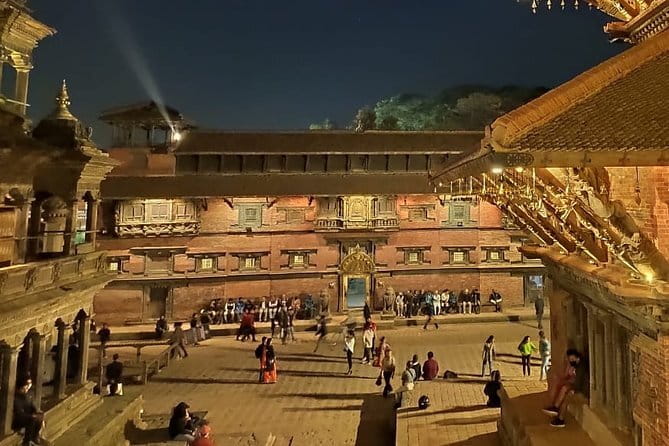
The Golden Temple, formally Hiranya Varna Mahavihar, is a three-story pagoda with a gilded roof and detailed carvings. It is dedicated to Gautam Buddha and offers a more enclosed, contemplative setting than the open palace square later in the morning.
You should allow about 30 minutes here. The admission fee is not included, so keep your cash ready. The supplied pricing information also notes that entrance to the Durbar Square area costs about NPR 1,000, or roughly $9, paid in cash at the entrance. Since several sites list separate admission as not included, ask your guide which ticket covers which area before paying.
The Golden Temple is one of the strongest reasons to choose this tour instead of a simple palace-square transfer. It gives you a religious site with its own atmosphere, not just another royal courtyard. Dress and behave respectfully at sacred places, and remember that the tour is designed for cultural viewing rather than a private worship visit.
More days out in Patan:
- Kathmandu: Private Patan and Bhaktapur Sightseeing Tour
★ 4.7 · 64 reviews - Patan and Bhaktapur City Full Day Tour
★ 5.0 · 24 reviews - City tour of Bhaktapur and Patan Durbar Square
★ 4.5 · 20 reviews - Patan Heritage Tour – Private/Small Group
★ 5.0 · 14 reviews
Manga Hiti shows how Patan managed water
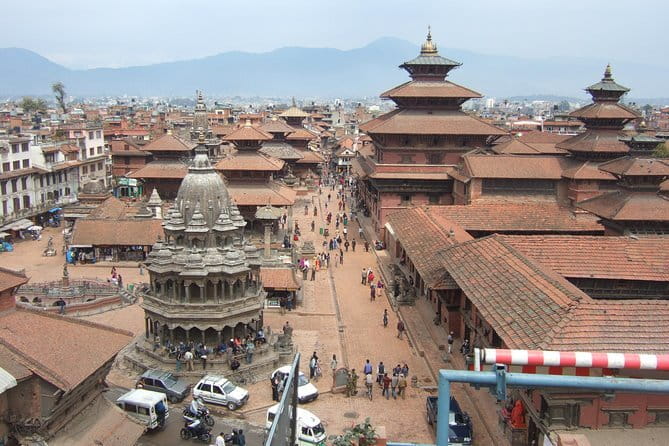
Manga Hiti, also called Manga Dhara, is an old stone water spout in the center of Lalitpur. It dates to the Lichhavi period and has carved figures and decorative details.
The planned visit is about 15 minutes and free. This is a small stop, but it helps you understand that Patan’s old infrastructure is part of its history. Water spouts were practical public facilities, yet they were also decorated with religious imagery and carefully placed within the city.
I like having this stop between the Golden Temple and the museum. It gives your eyes a break from large structures and shows how design entered daily life. Do not expect a long visit. Its value comes from the explanation and the chance to notice details you might otherwise walk past.
Patan Museum brings the art together
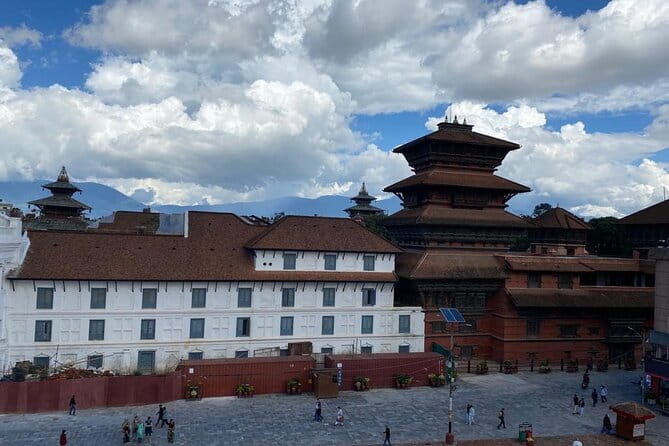
Patan Museum occupies a restored Malla-era palace and presents Nepalese art, culture, and history. The building itself is part of the attraction, with traditional architecture that gives the displays a fitting setting.
The visit lasts around 30 minutes. Admission is not included, so this is another place where the day’s final price depends on which tickets you buy. A half hour is enough for an introduction, but not for a slow, room-by-room study.
The museum works best after the smaller Patan stops because you can connect objects and religious forms with buildings you have just seen outside. If you enjoy architecture and sculpture, this is likely one of the most useful stops in the morning. If museums are not your thing, you may prefer to spend extra time in the square itself, though the schedule may not allow much flexibility.
Patan Durbar Square places the palace in context
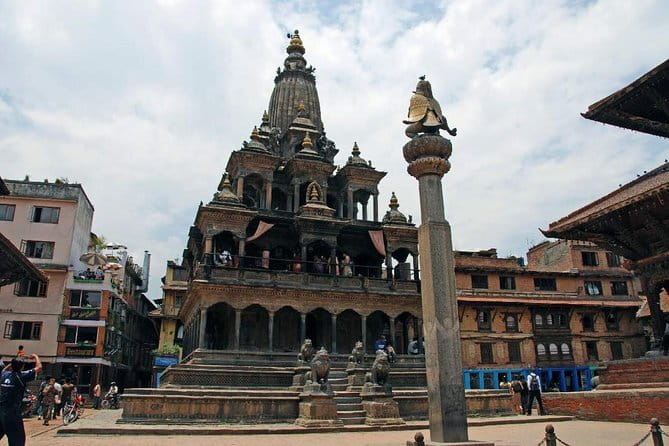
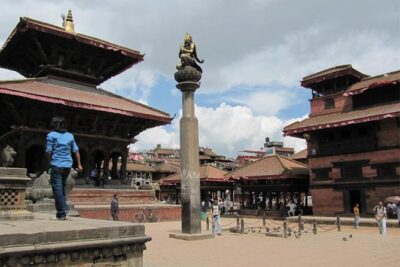
Patan Durbar Square was once the royal center of the Malla kings. Its temples, courtyards, and carved façades show why Patan is often prized for Newar architecture.
The scheduled visit is about 30 minutes, with admission not included. The square is a major landmark, but the tour’s earlier stops make it more meaningful. By the time you arrive, you have already seen a gate, religious courtyards, a water spout, a Buddhist temple, and the museum. You can read the palace square as part of a wider city rather than as an isolated monument.
The short time here is a practical limitation. Patan has enough detail to reward lingering, and 30 minutes may feel brief if you want extensive photographs or careful study. The advantage is that the tour keeps moving toward Bhaktapur instead of using the entire day in one city.
Bhaktapur Durbar Square changes the scale
Bhaktapur Durbar Square gives you a different architectural rhythm. The square is linked with the 55-Window Palace, the Golden Gate, old courtyards, and traditional Newar buildings. The visit is planned for 30 minutes, and admission is not included.
This is one of the places where you should keep your camera ready, but do not let photographs crowd out the guide’s explanation. The carved entrances and palace details are easier to appreciate when you know what role the buildings played.
The separate entrance fee matters here. The stated fee for Durbar Square entry is NPR 1,000, about $9, paid in cash. The information also recommends a minimum NPR 100 donation to the Royal Kumari. Because the exact fee and donation instructions can matter at the gate, carry Nepalese currency and confirm the current amount with the guide.
Pottery Square puts working craft before monuments
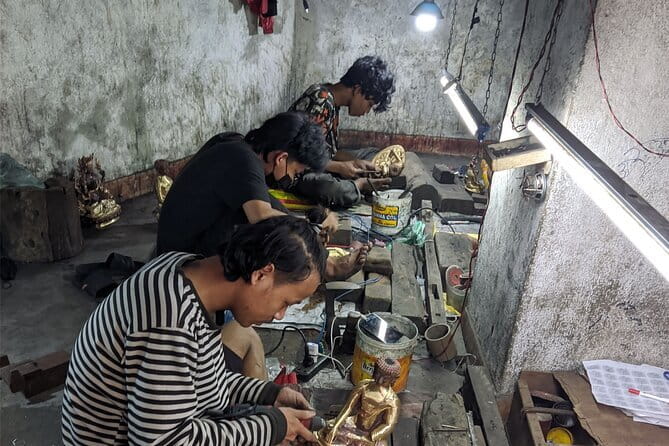
Pottery Square is one of Bhaktapur’s most appealing stops because it is not only a preserved site. Local artisans make and sell handmade clay pottery there, giving you a chance to see the craft in progress.
The planned visit lasts 30 minutes. That is enough to watch the basic process and browse the pieces, but not necessarily enough for a long conversation or a serious shopping session. The tour does not specify that purchases are included, so any pottery you take home is an extra expense.
This stop also gives the day a useful change of pace. After palace courtyards and temples, you see a working trade. I would keep some room in your bag if you are interested in small handmade items, but do not buy anything simply because the square is part of the route.
Taumadhi Square and Nyatapola Temple go vertical
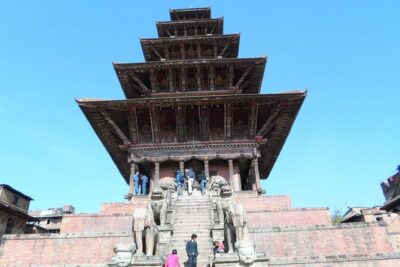
Taumadhi Square is home to Nyatapola Temple, a five-story pagoda dedicated to Siddhi Lakshmi. It is one of Nepal’s tallest temples and one of Bhaktapur’s most recognizable structures.
The visit lasts about 30 minutes, with admission not included. The temple’s height gives you a strong visual contrast with Patan’s lower courtyards and enclosed bahals. Look up at the stacked roofs, then look down the square to see how the surrounding buildings frame the temple.
Stairs and old paving can make this part more tiring for anyone with limited fitness. The tour asks for a moderate level of physical fitness, and the day includes repeated walking and standing. Children under nine are not permitted for insurance reasons, and the minimum age is nine.
Dattatraya Square adds a different religious layer
Dattatraya Square centers on the Dattatraya Temple, dedicated to a Hindu deity representing the unity of Brahma, Vishnu, and Shiva. The square is also known for the Peacock Window, a finely carved architectural feature.
The planned stop is 30 minutes and free. It adds another religious tradition to the day and helps show that Bhaktapur’s appeal is not limited to one famous temple. The Peacock Window is the sort of detail that is easy to miss without a guide pointing it out.
After the larger Bhaktapur square, this stop may feel more intimate. It is a good place to slow down and ask questions, especially if you want to understand how Hindu symbols and Newar design appear together in the city.
The final Patan segment ties the day together
The final stop is listed as Patan, or Lalitpur, and returns to the city’s narrow connected paths and open spaces. The focus includes an old palace, stupas, and peaceful temples, along with an opportunity to receive further local explanation.
The planned time is about 30 minutes and admission is free. On paper, returning to Patan after Bhaktapur may seem repetitive. In practice, it gives the day a closing frame and reinforces the contrast between the two cities. Patan is not just its Durbar Square. Its smaller lanes and religious courtyards are central to its character.
The exact flow of this final portion may depend on traffic and how long earlier visits take. The tour includes transportation, so road conditions can affect the schedule even though the stated duration is about nine and a half hours.
What the $40 price really covers
At $40 per person, the price is reasonable if you value a guide, an air-conditioned vehicle, onboard WiFi, and transport between two cities in one day. The maximum group size of 10 is also useful. You are paying for structure and interpretation, not just a ride to two squares.
The price is not all-inclusive. Lunch is extra, as is the coffee stop. Entrance fees are also separate, including the stated NPR 1,000 Durbar Square charge, about $9. The Golden Temple, Patan Museum, Patan Durbar Square, Bhaktapur Durbar Square, Pottery Square, and Taumadhi Square are marked as having admission not included, so you should bring extra cash.
The meeting point is Filli chai on Kathmandu Guest House Road, near Kathmandu Guest House in central Thamel. Pickup is also described as available from Boudha and the Kathmandu Guest House area. The listed start time is 8:30 am, and the tour returns to the meeting point.
Free cancellation is available if you cancel at least 24 hours before the start time. Changes or cancellations inside that window are not refunded.
Who should book this day out
I would choose this tour if you have one full day for the Kathmandu Valley and want both major sights and smaller cultural details. It suits first-time visitors who prefer a guide to explain courtyards, festivals, religious symbols, and architecture as they go.
It also fits solo visitors or couples who like small groups but do not want to pay for a private tour. The air-conditioned vehicle is useful for moving between cities, while WiFi is a practical extra rather than a reason to book by itself.
You should think twice if you want a slow museum day, long photography sessions, or extensive shopping. Eleven listed stops plus transportation make this an active schedule. You should also be comfortable with moderate walking, old streets, and repeated periods on your feet.
Should you book Patan and Bhaktapur Boutique Tour?
Book it if you want an efficient, culture-focused day with a guide, transport, and a group capped at 10. The best feature is the balance between landmark sites and smaller places such as Pimbahal, Nag Baha Galli, Manga Hiti, and Pottery Square.
Before you reserve, add roughly $9 for the stated Durbar Square fee, plus other admission charges, lunch, coffee, and the suggested Royal Kumari donation. If that extra planning is acceptable, the $40 base price offers a practical way to see two of Nepal’s most important historic cities without arranging the route yourself.
FAQ
Where does the tour start?
The listed meeting point is Filli chai, P885+3V9, Kathmandu Guest House Road, Kathmandu 44600, Nepal. The tour starts at 8:30 am.
Is pickup available from Boudha?
The tour description says convenient pickup is available from Boudha and Kathmandu Guest House in central Thamel. The listed meeting point is Filli chai near Kathmandu Guest House.
Where does the tour end?
The activity ends back at the meeting point.
How long does the tour last?
The approximate duration is 9 hours and 30 minutes. This includes transportation and time for a lunch and coffee stop.
Is lunch included?
No. Lunch is not included in the ticket price. The coffee stop is also not included.
Are entrance fees included?
No. Several entrance fees are listed separately. Entrance to Durbar Square is stated as NPR 1,000, about $9, payable in cash at the entrance.
Should I bring cash?
Yes. The Durbar Square entrance fee must be paid in cash, and the tour also recommends a minimum NPR 100 donation to the Royal Kumari.
How large is the group?
The tour has a maximum of 10 travelers.
What is the minimum age?
The minimum age is nine. Children under nine cannot join for insurance reasons, and babies cannot be carried on a parent’s lap.
What is included in the tour?
An air-conditioned vehicle, WiFi onboard, and a guide are included. Lunch, coffee, and entrance fees are not included.
Just added around Kathmandu
- Women Empowerment Project(Nepali cooking class & jewelry workshop★ 5.0 · 15 reviews
- Manthali Airport (Ramechhap) To Kathmandu – Transport Service★ 4.5 · 11 reviews
- Amazing 1 Day Trekking Experience in Kathmandu Nepal★ 5.0 · 24 reviews
- Walking tour of Kathmandu with awesome local guides★ 5.0 · 4 reviews
- Walking tour of real Kathmandu through back streets.★ 5.0 · 3 reviews
- Private Manaslu Circuit Trek at Himalayas★ 5.0 · 3 reviews
- Walking Street Food Tour in Kathmandu★ 5.0 · 111 reviews
- Kathmandu Street Food Walking Tour – Eat Like a Local★ 5.0 · 3 reviews
Patan Tours, compared.
Kathmandu and Patan Heritage and Living Goddess Experience Tour
Read our review →
Patan & Bhaktapur Durbar Square Tour with Lunch – Private/Group
Read our review →
Nagarkot Sunrise, Bhaktapur and Patan Durbar Square Tour in Kathmandu
Read our review →Browse the lists this tour appears in