
Reviewed · HIKING & TREKKING
Pokhara: 3-Day Trek
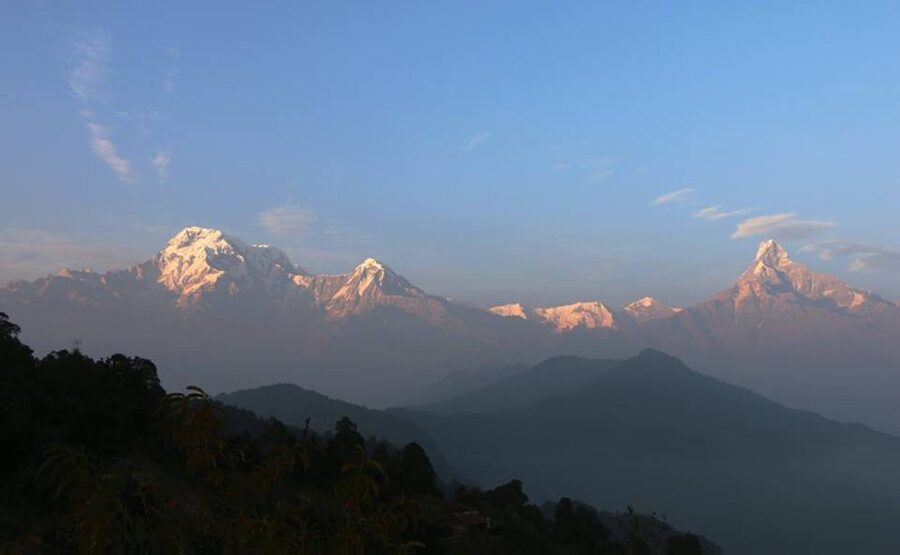
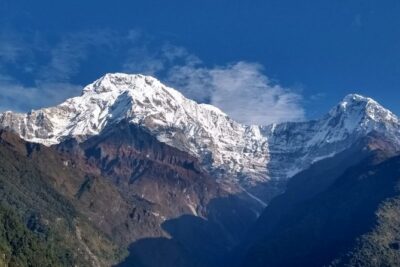
Australian Camp gives you the best reason to leave Pokhara for a few days: a sunrise over the Annapurna Range from a small lodge settlement in the rhododendron forest. From there, you walk ridges, terraces, jungle paths, and traditional villages rather than spending your whole Nepal trip in the city. I especially like the comfortable lodge rooms with attached bathrooms and hot showers, and the easy private format, which lets you adjust the pace.
I also like the second night at Annapurna Eco Village Resort in Astam, where organic farming, rainwater collection, and reused water add substance to the stay. The main caution is that meals are not included, and the route still involves several hours of walking over uneven ground, so this is a short trek, not a no-effort sightseeing trip.
Key points at a glance
- Australian Camp sunrise: Sleep above Dhampus in a teahouse settlement with wide Himalayan views.
- A gentle three-day route: Walk from Naudanda through Dhampus, Pothana, and Astam with options to shorten the route by vehicle.
- Two different lodge stays: Spend one night in a rhododendron forest and another at an eco-focused hilltop resort.
- Private guiding: A licensed English-speaking guide leads the route, while a porter carries luggage.
- Good cultural contact: Pass through villages, terraced fields, farms, and countryside homes around the Annapurna foothills.
- Useful comfort level: Both nights include rooms with attached toilet and bathroom, plus hot showers.
Why this short trek works so well from Pokhara
Pokhara is famous for its lake, cafés, and mountain views, but the city only gives you a taste of Nepal’s hill country. This trek takes you roughly 30 kilometers northwest, closer to Mount Fishtail and the Annapurna Himalayas, without asking you to commit to a long high-altitude route.
That makes it a smart choice if you want the feel of Himalayan trekking but have limited time. You get rural paths, steep hillsides, farm terraces, forest, and mountain viewpoints in three days. You also return to Pokhara before the demands of a longer trek begin to build.
The route is private, so you are not tied to the pace of a large group. Your guide can adjust the walking according to your interests and energy. Several options exist for driving higher at the start or shortening sections, which matters if you are new to walking in the hills.
Still, easy is a relative word in Nepal. The itinerary includes a gradual descent, climbs to Dhampus, ridge walking, and a final downhill walk to the highway. You should be comfortable walking for several hours and handling uneven paths. People with mobility impairments and pregnant women are not suited to this activity.
More Day Hikes in Pokhara
- Pokhara: Annapurna Foothills Day Hike with Transfers
★ 5.0 · 100 reviews - Pokhara: Easy Day Hike to Australian Camp & Dhampus Village
★ 5.0 · 24 reviews - Pokhara: Day Hiking from Sarangkot to World Peace Stupa from Lakeside
★ 5.0 · 20 reviews
Day one: Naudanda, Dhampus, Pothana, and Australian Camp
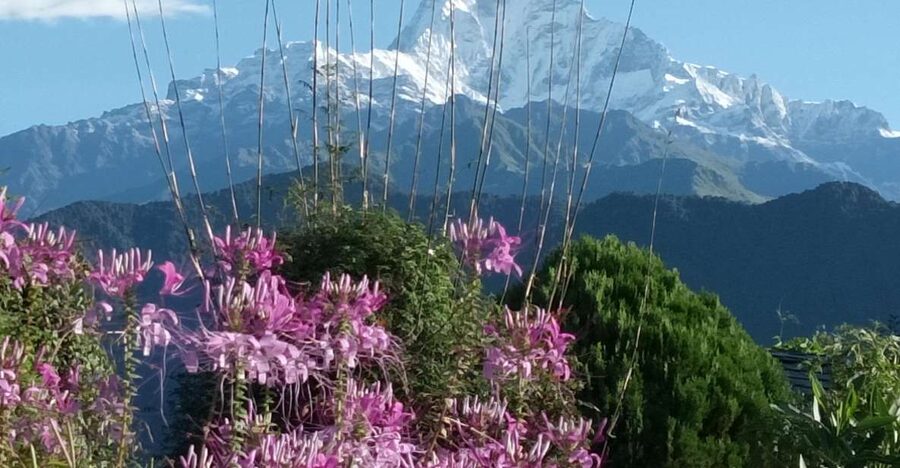
Your guide picks you up at your Lakeside hotel and drives for about half an hour to Naudanda on the western rim of the Pokhara Valley. This short transfer gets you out of the city quickly and puts you on the trail without spending the first morning in a vehicle.
From Naudanda, the route gradually drops toward a stream before climbing toward Dhampus. The walk to Dhampus takes about two hours. This opening section lets you settle into the rhythm of hill walking, with the trail moving through countryside rather than jumping straight into a hard ascent.
Dhampus is a popular village on the Annapurna foothill route. The appeal here is not a single monument, but the everyday setting: village paths, cultivated slopes, and open views toward the mountains. The route gives you a direct look at how homes and farms sit on steep ground around Pokhara.
After Dhampus, you continue for about an hour to Pothana, where you stop for lunch. Meals are not part of the package, but you can order food at the teahouses and pay directly. The food is described as simple international fare, so you should expect practical lodge cooking rather than a restaurant menu.
After lunch, the final walk to Australian Camp takes about 30 minutes. This short finish is welcome after the morning climb and gives you time to enjoy the setting before sunset. Australian Camp is a small teahouse settlement above Dhampus, surrounded by rhododendron forest.
The first night is the visual highlight for many people. The lodges have views toward the Annapurna Range, and the early morning light is the key moment. Set an alarm before sunrise, because the mountain panorama is the reason this overnight stop earns its place in the plan.
Your room is expected to have an attached toilet and bathroom with a hot shower. That is a real comfort after a day on foot. The accommodation remains a teahouse, so do not expect a city hotel, but the basic private facilities make this route easier than many treks at the same level.
Day two: A four-hour ridge walk to Astam
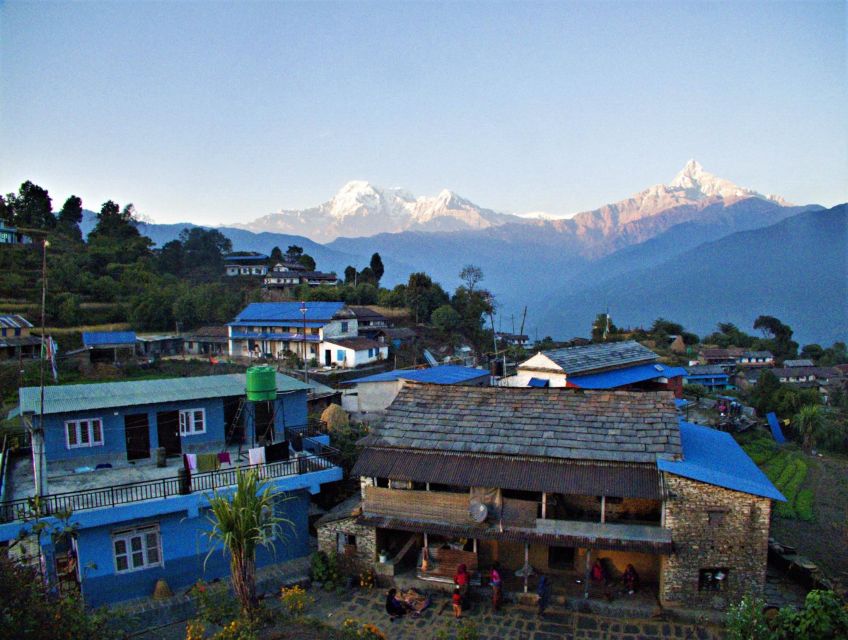
The second morning begins with breakfast and a Himalayan view. After eating, you follow the ridge toward Astam, walking for about four hours through a changing mix of countryside.
This section is less about reaching one famous point and more about the steady sequence of views. You pass traditional villages, terraced farmland, wooded stretches, and open slopes overlooking the valley. Seasonal crops can give the terraces a changing appearance, and the route provides a useful look at rural life around the Annapurna foothills.
Several past departures have had guides named Jit, Prabin, Probin, Dansay, and Basanta. The names are useful to know, though the guide assigned to your departure can differ. The guide’s role is more than route finding. The information provided for the trip emphasizes local stories, mountain culture, village life, plants, and safety, and the private setup gives you time to ask questions.
The porter carries luggage to the next destination, so you can walk with a lighter day bag. That makes a noticeable difference on ridges and uneven paths. You will still want water, sun protection, sunglasses, and anything you need during the day close at hand.
Astam provides a different mood from Australian Camp. Instead of a forest teahouse settlement, you stay at Annapurna Eco Village Resort, a hilltop property with simple but comfortable rooms. Each room includes an attached toilet and bathroom.
The resort uses eco-friendly measures such as water reuse and rainwater harvesting. It also has organic farming, and part of the stay involves learning about the farm and the village. I like this stop because the environmental ideas are tied to the place itself rather than presented as a slogan.
The accommodation is still straightforward, but the location, clean rooms, staff, fresh mountain air, and organic food have made it a strong part of the experience. You can expect a quieter evening than in Pokhara, with the focus on the village and the views rather than nightlife.
Day three: Downhill walking and the return to Pokhara
The final day is the shortest walking day. You trek downhill for about two hours to the highway, then meet private transport for the drive back to Pokhara.
A downhill finish is easier in terms of breathing, but it can still work your knees, especially on uneven paths. Good walking shoes matter here. The suggested equipment is modest, comfortable shoes and sunglasses, but I would also bring sun cream, insect repellent, a small daypack, and clothing you can layer.
The return drive means you can spend the afternoon or evening back in Lakeside. That makes this trip convenient if you have onward plans from Pokhara or want a short rural break between longer parts of a Nepal itinerary.
A completely different kind of day, same corner of Nepal:
- ZipFlyer Nepal – The World’s Steepest Zip-line
★ 5.0 · 608 reviews - Bungee Pokhara by HighGround Adventures
★ 5.0 · 366 reviews - From Pokhara: Sarangkot Sunrise Himalayas Tour
★ 4.7 · 218 reviews - ATV Adventure Tour in Pokhara, Nepal
★ 5.0 · 194 reviews
The walking level and what easy really means
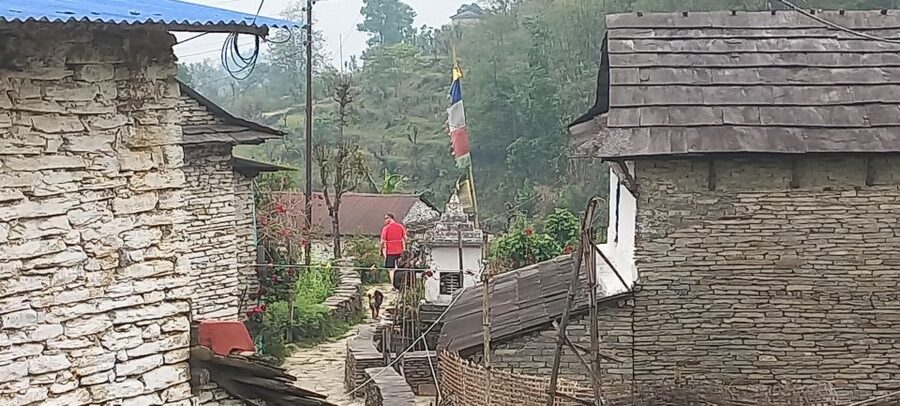
This is a short and accessible Himalayan foothill trek, but it is not flat. Day one includes the climb from the stream to Dhampus, followed by the walk to Pothana and Australian Camp. Day two takes about four hours along the ridge, while day three descends for about two hours.
The route is often described as not too hard and not too easy. That is a fair way to think about it. You do not face a long high-altitude pass or several consecutive days of exhausting walking, but you should have enough fitness for hills.
The route can be customized. You may be able to drive to a higher starting point or shorten a section, depending on the conditions and your walking interest. Discuss this with the operator during the briefing rather than assuming every change is automatic.
The tour operator meets you at your hotel a day before departure for a trek briefing and to arrange the start time. Use that meeting to ask how much walking your departure will include, where the vehicle will meet you, and what luggage the porter will carry.
Lodges, food, and comfort on the trail
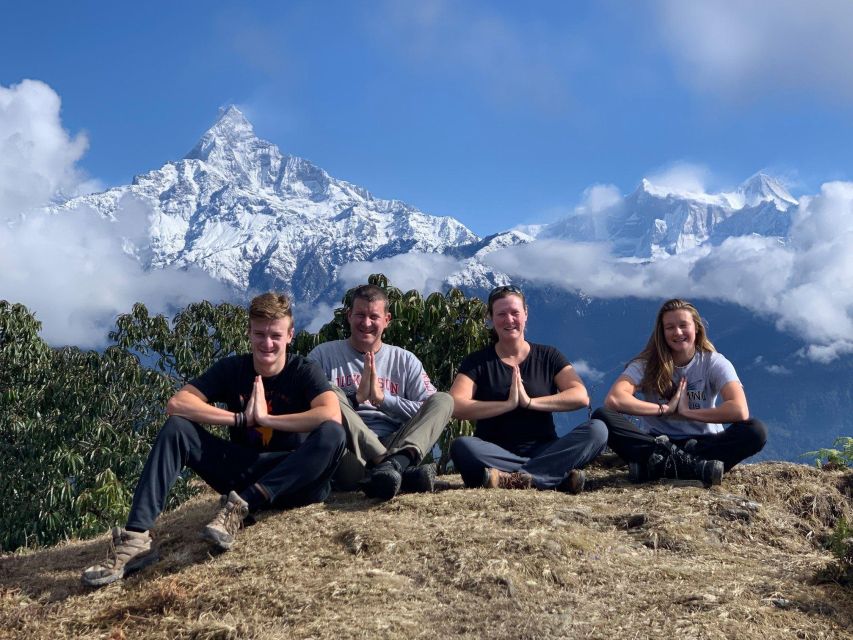
The two overnight stays are a strong selling point. Australian Camp gives you a classic teahouse experience in a forest setting, while Annapurna Eco Village Resort offers a more developed room and an environmental focus.
Both accommodations are described as having attached bathrooms and toilets, with hot showers. That is better than the shared washroom arrangement common on many trekking routes. It also makes this trip suitable for people who want nature and village access without giving up basic privacy.
Meals are not included in the $250 price. You order breakfast, lunch, and dinner at the teahouses or resort, then pay directly. The food is described as simple but tasty, with international dishes available, and the Astam resort serves organic meals connected to its farm.
The separate meal arrangement gives you some choice, but it also means the final cost will be higher than the advertised tour price. Ask the operator about likely meal prices during the briefing so you can budget properly. Bring some money for food and drinks, since none are covered in the package.
What the $250 price buys you
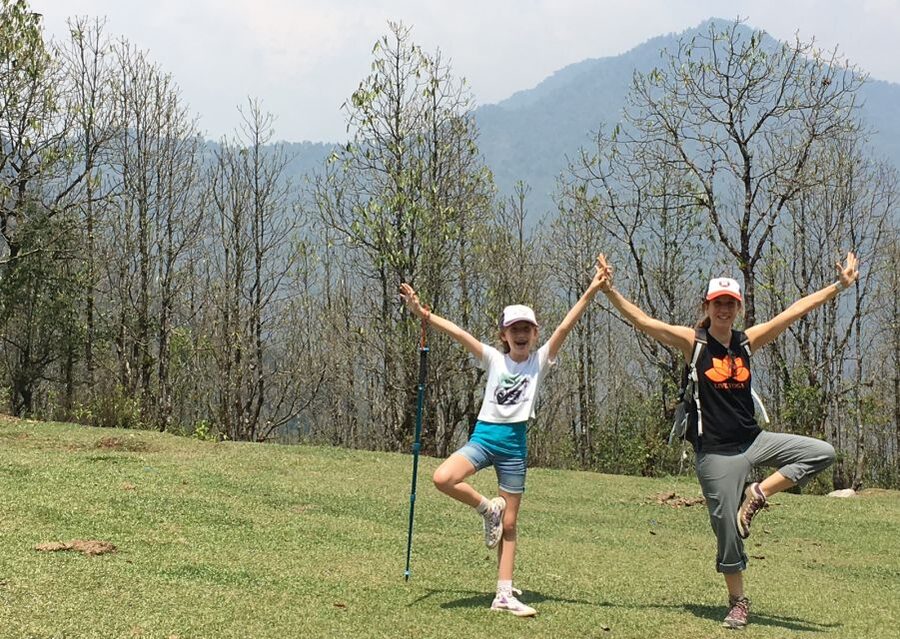
At $250 per person, the main value comes from having a private three-day trek arranged around you. The price includes transport to and from the trailhead, two nights of lodge accommodation, a licensed English-speaking guide, and a porter.
You are paying for the coordination as much as the walking. Transport, lodging, route planning, luggage support, and local guiding are handled together. For a first Himalayan foothill trek, that can remove a lot of practical stress.
The private format is especially useful if you care about pace. A strong walker can keep moving, while someone who wants more photo stops or village conversation has room to do so. The guide can also help adjust the route within the available options.
The main extra cost is food, because it is excluded. You may also pay more for hotel pickup if you are staying away from the Phewa Lakeside area. The included pickup applies only to Lakeside hotels, so check this before booking.
The price is best judged as a service package rather than a cheap three-day walk. If you only want a basic route and are happy arranging everything yourself, it may feel high. If you want a private guide, porter, transport, and comfortable bathrooms, it offers a useful level of support.
Sunrise, sunset, and mountain views
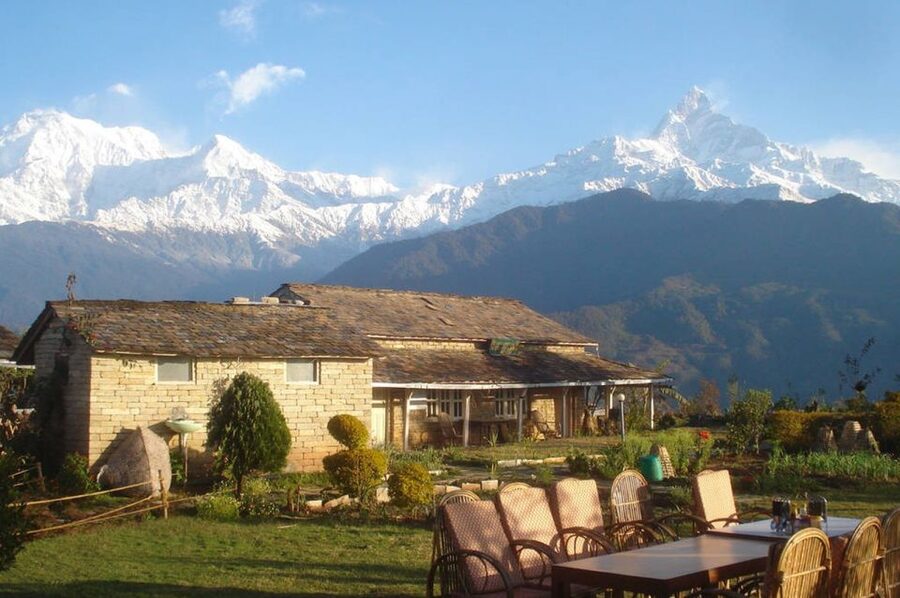
The best mountain view is at Australian Camp, especially early in the morning. The camp is positioned above Dhampus, and the sunrise can open the Annapurna Range across the horizon.
The route also promises strong sunset and sunrise views more generally, but weather controls the result. Mountain views can be affected by cloud, haze, or seasonal conditions, so you should treat the scenery as a major possibility rather than a guarantee.
Astam adds another viewpoint from a hilltop resort. The ridge walk gives you repeated views rather than one fixed lookout, and the changing height of the trail helps make the two walking days feel different.
Bring sunglasses and sun cream. The open ridges and terraces can expose you to strong sun, while the forest sections may feel cooler and shadier. Insect repellent is also a sensible addition, particularly because one account specifically recommends it.
Who should book this Pokhara trek
I would choose this trek if you have three days, want a taste of the Himalayas, and prefer a private trip over a group departure. It suits first-time trekkers who want support from a guide and porter, but who do not need a long, demanding route.
It also fits people who care about cultural contact. The villages, farms, terraces, eco-friendly resort, and local guide stories are not background decoration. They are the heart of the trip.
This is a good option for couples, friends, and solo visitors who want their own pace. Solo walkers can benefit from the guide’s company and route support, while couples or friends can shape the day around their own interests.
I would not choose it if you want a high-altitude expedition, a strenuous challenge, or fully included meals. I would also avoid it if walking downhill or on uneven paths is difficult. The route is gentle by Himalayan standards, but it remains a hill trek.
Practical details before you reserve
Pickup is included from hotels in Pokhara’s Lakeside area. If you stay farther from Phewa Lake, an extra pickup charge may apply. Confirm the location and cost before the trek briefing.
The tour is offered with an English-speaking live guide. The operator meets you one day before departure, gives a briefing, and arranges the next morning’s start time. On departure day, the guide arrives by car.
Cancellation is allowed up to 24 hours in advance for a full refund, and you can reserve now and pay later. These policies help if your Nepal schedule is still changing, but you should still confirm the current departure time and pickup details.
The activity is not suitable for pregnant women or people with mobility impairments. Comfortable shoes and sunglasses are listed as essentials. I would add a light daypack, sun cream, insect repellent, a reusable water bottle, and a small amount of cash for meals.
Should you book it?
Book this trek if you want a comfortable introduction to Himalayan walking rather than a hard expedition. Australian Camp supplies the sunrise, Astam supplies the eco-village experience, and the route between them gives you forests, terraces, villages, and ridge views in a compact package.
The strongest reasons to go are the private guide, porter support, en-suite lodge rooms, hot showers, and easy access from Pokhara. The main drawbacks are the extra meal cost, possible pickup charge outside Lakeside, and the fact that even a gentle route still requires several hours on foot.
For a three-day break from Pokhara, I find the balance very good. You get a real taste of rural Nepal without giving up every comfort or spending a week on the trail.
FAQ
How long is the trek?
The experience lasts three days. Day one includes about three and a half hours of walking after the drive to Naudanda, day two takes about four hours, and day three includes about two hours downhill before the return drive.
Where does the trek start?
You are driven from Pokhara to Naudanda, on the western rim of the Pokhara Valley. The drive takes about half an hour.
Where do I stay on the first night?
You spend the first night at Australian Camp, a small teahouse settlement in the rhododendron forest above Dhampus.
Where do I stay on the second night?
The second night is at Annapurna Eco Village Resort in Astam. The resort has simple rooms with attached bathrooms and toilets and uses measures such as water reuse and rainwater harvesting.
Are meals included?
No. You can order meals at the teahouses and resort and pay directly. The food includes simple international dishes, and the Astam resort offers organic meals.
Is hotel pickup included?
Pickup is included from hotels in the Lakeside area of Pokhara. Hotels farther from Phewa Lakeside may require an extra pickup charge.
Is a guide provided?
Yes. A licensed, experienced English-speaking trekking guide leads the walk, and a porter carries luggage to each destination.
What should I bring?
Bring comfortable walking shoes and sunglasses. Sun cream and insect repellent are also sensible additions based on the route and the conditions described.
More 3-Day Experiences in Pokhara
- 2 Night 3 Days Pokhara City Tour
★ 5.0 · 22 reviews - 2 Nights 3 Days Pokhara Tour Package with Hotel Pick Up/Drop Off
★ 5.0 · 15 reviews - Lumbini Tour Package From Kathmandu or Pokhara: 2 Night 3 Days
★ 4.5 · 14 reviews - 3 Day Kapuche Glacier Lake Trek with Siklesh from Pokhara
★ 5.0 · 5 reviews
Just added around Pokhara
- Pokhara: Pokhara Highlights Tour by Bus★ 3.6 · 10 reviews
- Discover Pokhara in Style: Private Vehicle Service with Driver★ 5.0 · 5 reviews
- Pokhara in 5 Hours: Lake, Museum, Cave, Falls & Pagoda Hill★ 4.5 · 16 reviews
- Beautiful Sarankot Sunrise with Full Day Sightseeing in Pokhara★ 4.5 · 3 reviews
- Sarangkot Sunrise Tour in Private Car★ 5.0 · 3 reviews
- Pokhara: Group Joining Sarangkot Sunrise Himalayas Tour★ 4.5 · 23 reviews
- Sarangkot Sunrise Tour from Pokhara★ 4.5 · 9 reviews
- Pokhara: Full-Day Sightseeing & Viewpoints Tour – Private/Group★ 5.0 · 4 reviews
Hiking & Trekking, compared.
Nagarkot Sunrise View and Day Hiking from Kathmandu
Read our review →
Browse the lists this tour appears in