
Reviewed · UNESCO WORLD HERITAGE TOURS
Private Tour of 4 UNESCO Heritage Sites in Kathmandu by Car
Kathmandu packs Buddhist stupas, Hindu temples, royal courtyards, and centuries of Nepalese art into a surprisingly small area. This private outing links four UNESCO-listed sites in one half-day, so you can see the city’s biggest cultural landmarks without arranging separate taxis or buses.
I like the private vehicle, which gives you a quieter ride and some room to adjust the pace. I also like the compact design: Boudhanath, Swayambhunath, Pashupatinath, and Kathmandu Durbar Square each show a different side of Kathmandu.
The main consideration is the guide service. Your experienced driver also acts as your guide, so this may feel less like a formal museum tour and more like a practical sightseeing run. If you have already visited one site or need a special change, confirm the plan carefully before departure.
Key points to know
- Four major sites in about five hours: The schedule gives roughly one hour at Boudhanath, one and a half hours at Swayambhunath, and one hour each at Pashupatinath and Kathmandu Durbar Square.
- A private car keeps the day simple: You avoid haggling with taxi drivers and trying to connect the sights by bus.
- Two Buddhist landmarks bookend the cultural picture: Boudhanath offers a broad stupa complex, while Swayambhunath adds hilltop views and its famous monkey population.
- Hindu and royal Nepal appear in the same outing: Pashupatinath focuses on Shiva worship, while Kathmandu Durbar Square centers on palaces and old court architecture.
- Admission and water are included: Personal spending is separate, so carry money only for your own needs.
- Confirm custom requests in advance: The experience is described as customizable, but a previous low-rated account points to the need for clear agreement about which sites you will visit.
Four UNESCO sites, one practical half-day
This tour is built for a short stay in Kathmandu. In four to five hours, you move between the valley’s key religious and historic centers, with a private driver handling the transport.
That matters in Kathmandu. The city’s major sights are not one tidy pedestrian circuit, and arranging each ride yourself can eat into a short visit. A private car gives you a fixed plan, a place to return to between stops, and less time spent negotiating fares.
The outing is also private for your group alone. That makes it easier to ask questions, pause at a site, or adjust the order when needed. Still, do not assume every request will be handled automatically. The experience is advertised as customizable, and one poor rating involved a disagreement over changing the planned stops, so put any changes in writing when you book and repeat them to the driver.
The price is $150 per person. That is a serious cost for a half-day, especially for one or two people. The value improves for a small group because private transportation, a driver-guide, bottled water, and admission tickets are bundled together, and group discounts are offered.
Think of the price as payment for convenience as much as sightseeing. You are buying one organized vehicle, four major entries, and a direct route through the valley. If you are comfortable with local buses and taxis, you may find a cheaper day on your own. If you have limited time, the simplicity can justify the cost.
More UNESCO Heritage Tours in Kathmandu:
- Private Kathmandu Sightseeing Tour | UNESCO World Heritage sites
★ 5.0 · 756 reviews - Kathmandu: Full Day 7 UNESCO Tour with Lunch – Private/Group
★ 5.0 · 415 reviews - Kathmandu: Full Day Top 4 UNESCO Tour with Lunch – Private/Group
★ 5.0 · 269 reviews
Boudhanath Stupa and the scale of Tibetan Buddhism
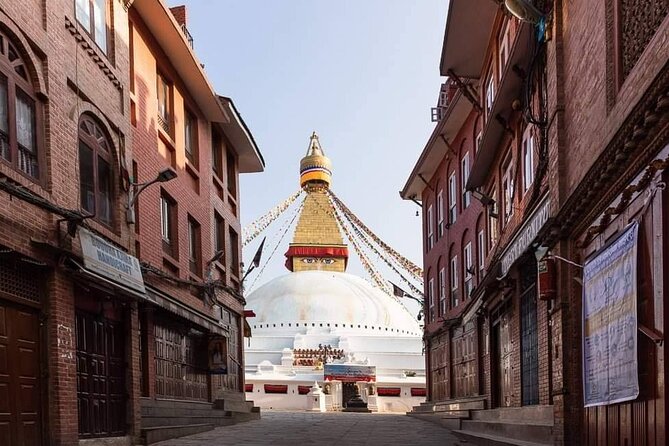
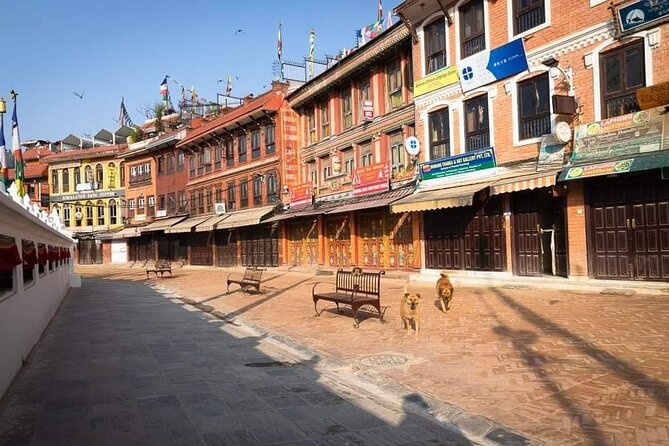
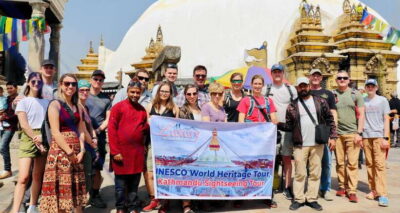
The first stop is Boudhanath Stupa, described as the biggest Buddhist stupa in Kathmandu. You have about one hour here, with admission included.
Boudhanath is the kind of place that gives you a clear visual introduction to Kathmandu’s Buddhist culture. The white dome, broad circular base, and watchful Buddha eyes create a strong sense of order, while the surrounding area adds monasteries, shrines, and places connected with Tibetan Buddhist practice.
Your driver-guide can provide the basic cultural setting, though the supplied details do not name an individual guide or promise a specialist historian. That distinction matters. You should expect useful orientation and local assistance, not necessarily a long academic talk at every stop.
One hour is enough to walk around the stupa and take in its design without turning the visit into a rushed photo stop. You can focus on the building’s shape, the prayer activity around it, and the way the religious site functions as part of the city.
Boudhanath also offers a good contrast with the next Buddhist stop. It is broad and open, while Swayambhunath is built on a hill. Seeing both helps you understand that Buddhist Kathmandu is not represented by one style of sacred place.
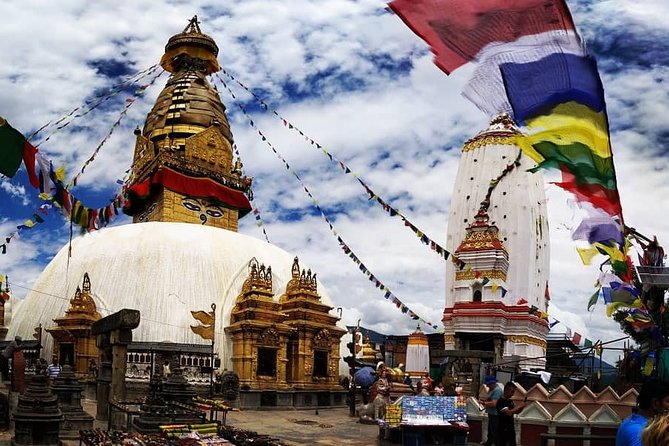
Swayambhunath, the hilltop Monkey Temple
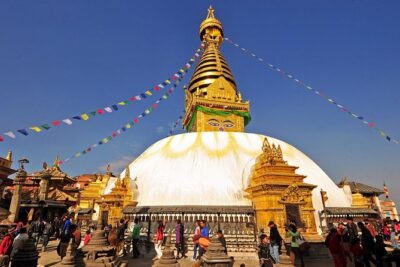
The second stop is Swayambhunath, often called the Monkey Temple. The visit is planned for about one hour and 30 minutes, the longest allocation of the day.
That extra time makes sense. Swayambhunath is a hilltop stupa, so the visit includes more than looking at one monument. You have time to explore the religious complex and take in its position above Kathmandu. The hilltop setting adds a different kind of experience from Boudhanath’s wide, level plaza.
The name Monkey Temple comes from the monkeys associated with the site. You should treat them as part of the setting, not as an invitation to feed or approach them. The supplied information does not give specific animal guidance, so use ordinary care around any monkeys and keep your belongings secure.
This is likely to be the most physically demanding stop, although the activity is described as easy and suitable for most people. The details do not state the number of steps, so anyone concerned about hills or stairs should ask the provider before booking.
The longer stop also gives you room to ask your driver-guide about the relationship between Buddhist and Hindu traditions in Kathmandu. This is one of the tour’s strengths: the day is not limited to one faith or one period. You move from Buddhist worship at Boudhanath and Swayambhunath to Hindu worship at Pashupatinath, then to royal history at Durbar Square.
Pashupatinath and Kathmandu’s Hindu heart
Pashupatinath Temple receives about one hour. It is described as Kathmandu’s largest temple dedicated to Lord Shiva, making it the main Hindu site on the route.
Pashupatinath is an important stop for understanding Nepal’s Hindu culture. The temple complex is tied to Shiva worship and carries a different religious atmosphere from the Buddhist stupas. Even if your interest is mainly architecture, the site helps explain how faith shapes Kathmandu’s public life and historic spaces.
The provided information does not specify which areas non-Hindu visitors may enter, and that can matter at an active religious site. Ask your driver-guide where you may go and what behavior is expected. Dress and act respectfully, and follow local instructions rather than treating the complex like an ordinary monument.
One hour gives you a focused visit. You can see the main setting, listen to an explanation, and move on without losing the whole afternoon. If Pashupatinath is your top priority, ask whether more time can be assigned there, since the tour is described as flexible.
The guide arrangement deserves a clear explanation. An experienced driver is included as a guide, but the information does not promise a separately trained religious guide. You may receive practical commentary and cultural context while moving between sites, but you should not book this expecting a specialist-led lecture at each temple.
More heritage days around Kathmandu:
- UNESCO Seven World Heritage Tour in Kathmandu
★ 5.0 · 253 reviews - Kathmandu Private Sightseeing Tour | UNESCO World Heritage Sites
★ 5.0 · 109 reviews - Kathmandu: Full Day Private Top 4 UNESCO Heritage Tour W/Lunch.
★ 5.0 · 86 reviews - Kathmandu World Heritage Tour
★ 5.0 · 74 reviews
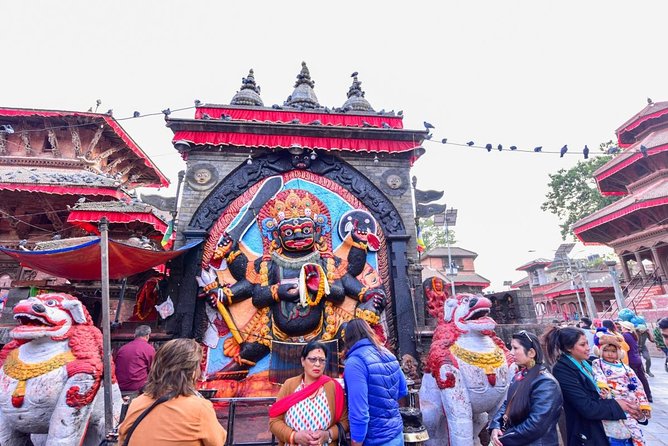
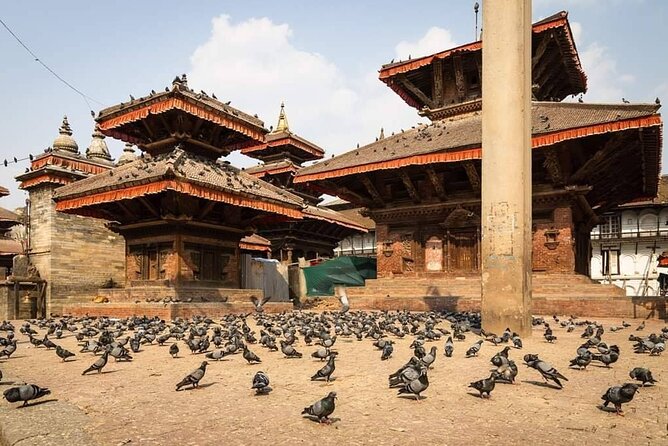
Kathmandu Durbar Square and the old royal city
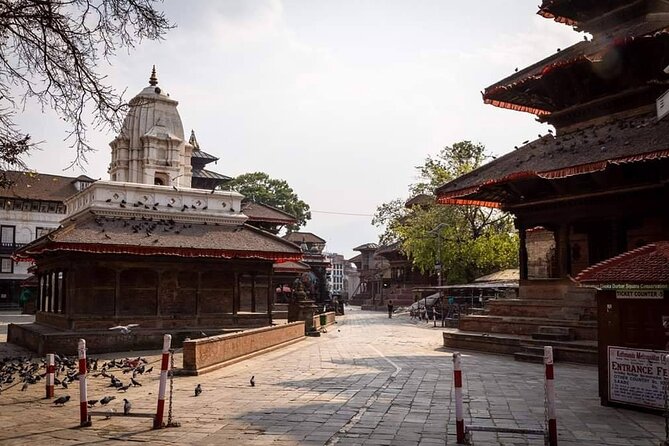
The final stop is Kathmandu Durbar Square, with about one hour set aside. This is the historic palace area of Kathmandu Valley, and it brings a royal and architectural side to a day otherwise centered on active religious sites.
The square lets you shift your attention from stupas and temples to palaces, courtyards, carved details, and the former center of royal life. It is a useful final stop because you can compare the building traditions you have seen throughout the day.
An hour is enough for a concentrated walk, but the square can reward a slower pace. The experience is designed as a broad introduction to four major places, not as a full architectural study of each one. If you want time for every courtyard and carving, the schedule may feel tight.
The tour description does not provide a detailed account of individual buildings or post-earthquake conditions, so your driver-guide’s explanation will shape much of the visit. Ask direct questions if you want more context about the palace area, its religious spaces, or the architecture.
Ending here also keeps the day balanced. You finish with Nepal’s royal past after seeing Buddhist and Hindu centers, giving you a useful first map of Kathmandu’s cultural history.
What the private car changes
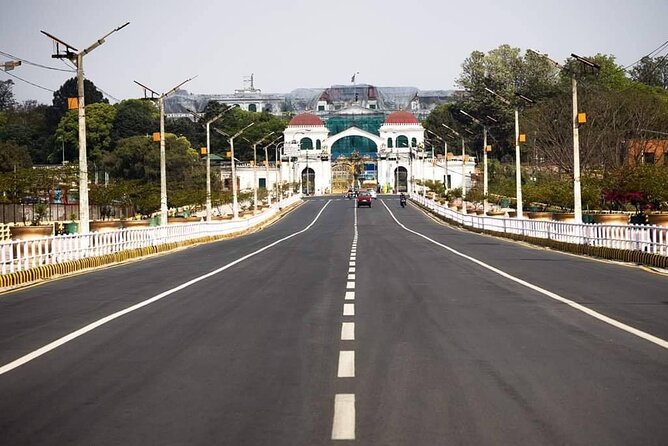
The private car is the practical core of this experience. You do not need to find a taxi at every site, bargain over the fare, or work out a bus connection between stops.
That is especially useful if you are visiting Kathmandu for only a short time. The vehicle provides a steady base for the day, and pickup is offered. The exact pickup point is not stated in the supplied details, so confirm it before the tour begins.
The private format also lets your group control the social side of the outing. You do not have to keep pace with a large crowd or strain to hear a guide speaking to many people. You can ask a question in the car, request a little more time at a favorite place, or keep the day moving if you have evening plans.
The tradeoff is that the driver-guide role may be less formal than a dedicated guide. The description calls the driver experienced and includes guiding, but it does not list a guide’s name or detailed qualifications. If your priority is art history, religious studies, or extensive commentary, ask exactly what the guiding service covers.
Timing, comfort, and what to bring
The advertised length is four to five hours. The stop times add up to about four and a half hours, so the schedule is internally sensible, with travel between sites fitting into the remaining time.
The tour includes bottled water, which is a small but useful touch during a compact sightseeing day. Personal expenses are not included, so bring money for anything beyond the stated inclusions.
The experience is described as easy, comfortable, and suitable for most people. That does not remove every physical question. Swayambhunath is on a hill, and the details do not specify steps, walking distances, restroom arrangements, or vehicle type.
If you have mobility concerns, ask the provider before booking. If you simply want a relaxed pace, use the private format to say so. The tour is designed for a short visit, but customization should let you explain which sites matter most.
Because admission tickets are listed as included at all four stops, you should not need to budget separate entrance fees for the planned visits. Personal expenses remain outside the price, and group discounts may change the calculation for parties booking together.
Who will get the most from this tour
I would choose this outing if you have one half-day in Kathmandu and want the main cultural landmarks in a single run. It suits first-time visitors who prefer a simple plan and do not want to arrange transport four times.
It is also a good match for small groups. A family or group of friends can share the private car and use the flexible format to set a comfortable rhythm. The group discount makes the $150 per-person price worth comparing against the cost of arranging separate rides and admissions.
You may want another format if you prefer to spend a full morning at one site, take long photography breaks, or receive specialist-level commentary. Four stops in five hours means you are sampling Kathmandu rather than studying each place in detail.
I would also be cautious if your custom plan is firm. If you have already visited one stop and want to replace it, confirm the revised route directly before the day begins. The available information includes a one-star complaint about a requested change not matching what was delivered, followed by an apology from the provider. That does not prove every booking will have the same issue, but it is a good reason to make your expectations unmistakable.
Should you book this Kathmandu tour?
Book it if you want an efficient introduction to Kathmandu’s Buddhist, Hindu, and royal heritage, with private transport and included admissions. The strongest value comes when two or more people share the convenience and when your time in the city is limited.
Skip it if you want a specialist guide, a slow visit at each monument, or complete certainty that a custom route will be changed without written confirmation. Before paying, confirm your pickup point, the exact sites you want, and whether the driver-guide format matches your expectations.
Free cancellation is available when you cancel at least 24 hours before the start time. Inside that window, the amount paid is not refunded, and changes are not accepted. That policy makes early confirmation even more important.
FAQ
How long does the private Kathmandu tour last?
The tour lasts approximately four to five hours. The planned visits allow about one hour at Boudhanath, one hour and 30 minutes at Swayambhunath, and one hour each at Pashupatinath and Kathmandu Durbar Square.
Which sites are included?
The route includes Boudhanath Stupa, Swayambhunath, Pashupatinath Temple, and Kathmandu Durbar Square. All four are UNESCO-listed cultural sites in Kathmandu Valley.
Is transportation included?
Yes. Private transportation in a comfortable vehicle is included, and pickup is offered. The exact pickup details should be confirmed before departure.
Is the tour private?
Yes. Only your group participates in the activity. This means you can ask questions and discuss adjustments without sharing the vehicle with a larger group.
Are admission tickets included?
Admission tickets are listed as included for all four stops. Personal expenses are not included.
Who provides the guiding?
An experienced driver also serves as the guide. No individual guide name or separate specialist guide is specified.
What is the cancellation policy?
You can cancel at least 24 hours before the experience start time for a full refund. Cancellations or changes made less than 24 hours before the start time are not accepted, and the amount paid is not refunded.
Just added around Kathmandu
- Traditional Momo Making Class★ 5.0 · 10 reviews
- Women Empowerment Project(Nepali cooking class & jewelry workshop★ 5.0 · 15 reviews
- Manthali Airport (Ramechhap) To Kathmandu – Transport Service★ 4.5 · 11 reviews
- Amazing 1 Day Trekking Experience in Kathmandu Nepal★ 5.0 · 24 reviews
- Walking tour of Kathmandu with awesome local guides★ 5.0 · 4 reviews
- Walking tour of real Kathmandu through back streets.★ 5.0 · 3 reviews
- Private Manaslu Circuit Trek at Himalayas★ 5.0 · 3 reviews
- Walking Street Food Tour in Kathmandu★ 5.0 · 111 reviews
UNESCO World Heritage Tours, compared.
Private Kathmandu Sightseeing Tour | UNESCO World Heritage sites
Read our review →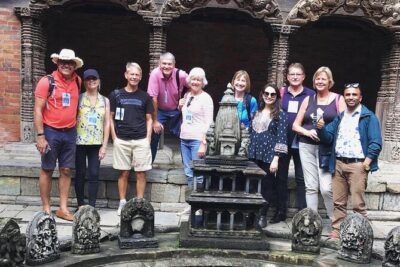
Full Day 7 UNESCO Tour with Lunch – Private/Group
Read our review →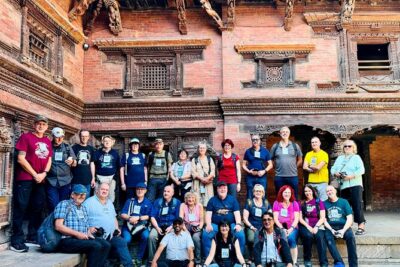
Full Day Top 4 UNESCO Tour with Lunch – Private/Group
Read our review →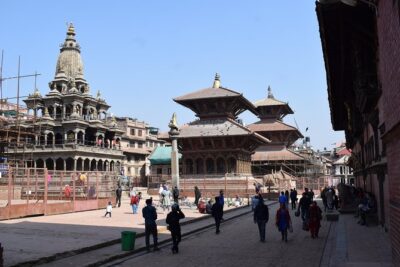
Full-Day 7 UNESCO Tour with Lunch – Private/Group
Read our review →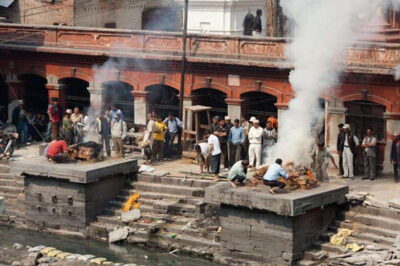
Kathmandu Private Sightseeing Tour | UNESCO World Heritage Sites
Read our review →Browse the lists this tour appears in