Reviewed · KATHMANDU TOURS
Gurkha Knife Making
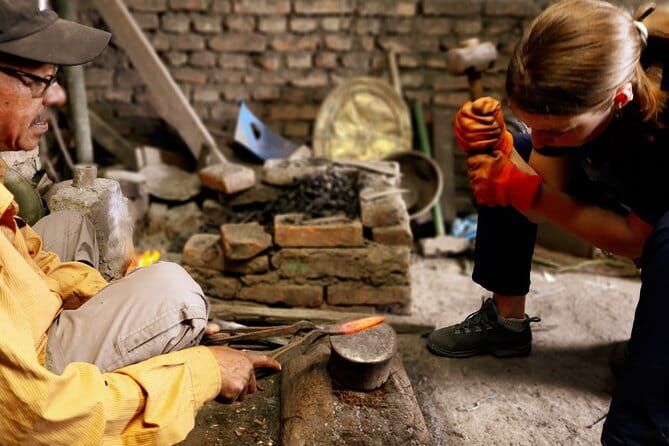
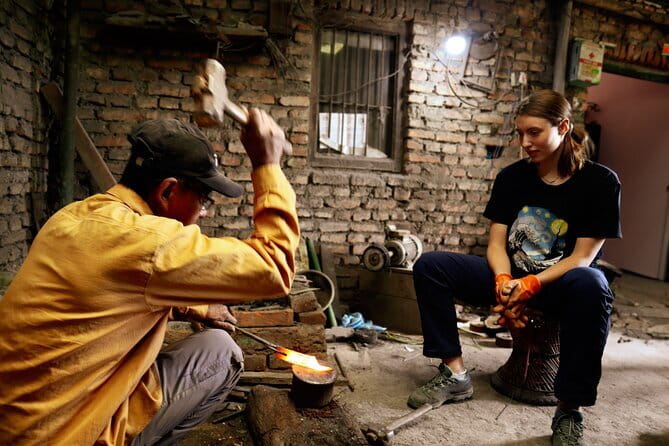
The most unusual part of this Kathmandu morning is simple: you do not just buy a Gurkha knife, you help make one. Inside a small forge, a local smith guides you through the work while you learn about the kukri and the Gurkha warriors linked to it. Your initials go on the blade, making the finished knife personal rather than just another souvenir.
I like two things here. First, the group size is capped at four people, so the blacksmith can give real attention to each piece. Second, the experience connects metalwork with living local skill, from the smith and his apprentice to guides such as Aayam and Aachal, who help explain the process and keep the morning friendly.
The main drawback is the schedule information. The session is described as four hours, but the listed opening window runs from 7:15 AM to 10:15 AM. Confirm the exact start time before booking, especially if you have a flight, trek departure, or other morning plan.
Key points to know before you book
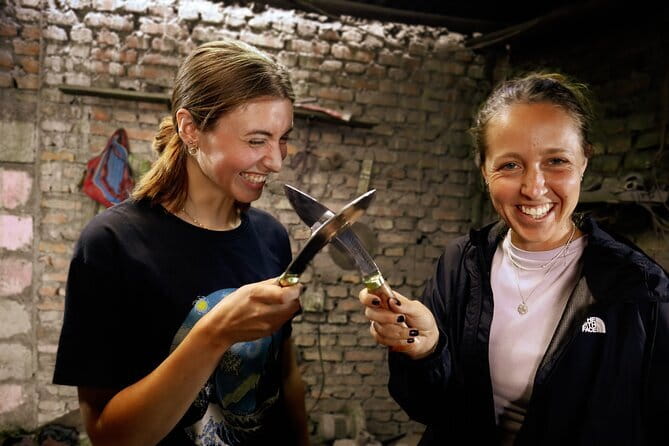
- You make a real kukri rather than watching a demonstration, with hands-on work from blade to handle.
- The forge is small and personal, with no more than four participants in a session.
- Indra is the local knife maker, while guides including Aayam and Aachal help with communication and keep the work moving.
- The handle uses Indian rosewood, and you can stamp your initials into the blade.
- Tea and cookies are included, a small comfort during a hands-on morning at the forge.
- Each knife comes with a 100-year guarantee, adding weight to the $66 price.
Why this kukri-making session is different
Kathmandu has plenty of shopping opportunities, but most souvenirs ask you to choose from items already finished. This session gives you a part in the making. You work with a local blacksmith and help turn metal into a traditional Gurkha knife, often called a kukri.
That distinction matters. You are not simply carrying home an object connected with Nepal. You are carrying home a story about heat, tools, craft, and the person who helped shape it. The process also gives you a better sense of why a good knife takes time and skill.
The session also explains the kukri’s connection with Gurkha warriors. The knife is presented as a symbol of strength, resistance, and military tradition. The historical material is part of the experience, but the real focus is practical: you learn by doing.
I would choose this for someone who likes workshops, local crafts, or unusual souvenirs. If you only want a quick cultural talk, four hours may feel long. If you enjoy making something with your hands, the time gives the activity room to feel worthwhile.
More days out in Kathmandu:
- Private Kathmandu Sightseeing Tour | UNESCO World Heritage sites
★ 5.0 · 756 reviews - Half day cooking class in Thamel kathmandu
★ 5.0 · 607 reviews - Nagarkot Sunrise View and Day Hiking from Kathmandu
★ 5.0 · 471 reviews
Starting at Garden of Dreams
The meeting point is Garden of Dreams on Tridevi Sadak in central Kathmandu. You begin there, and the activity ends back at the same meeting point. Pickup is offered, but because Garden of Dreams is the stated start and end point, check the exact pickup arrangement when you book.
The early start can work well in Kathmandu. A morning session leaves the rest of the day open for temples, markets, or a slower lunch. It also avoids placing a four-hour workshop in the middle of a packed sightseeing day.
The published hours list Monday through Sunday from 7:15 AM to 10:15 AM, for dates running from March 22, 2024, through December 15, 2026. Since the stated activity length is approximately four hours, I would not rely on the short three-hour window shown in the schedule. Ask for the confirmed meeting time and expected finish before you pay.
Entering the small forge
The heart of the activity is a small working forge with a local knife maker. You may work with Indra, identified as the main craftsman, along with an apprentice. Guides such as Aayam or Aachal can help with translation, introductions, and the flow of the session.
That support is useful. Blacksmithing involves tools and steps that are not always easy to explain with gestures alone. A guide who can translate gives you a better chance to understand what you are doing, rather than simply copying movements.
The small setting is a strength, but it also sets expectations. This is not a large workshop built for a crowd. With a maximum of four people, you get a more direct connection with the smith. The tradeoff is that the atmosphere may feel informal and close rather than polished or theatrical.
Tea and cookies are provided during the work. That sounds minor, but a warm drink and a short break help keep the morning comfortable when your attention is on metal, tools, and a new set of instructions.
Shaping the blade from metal
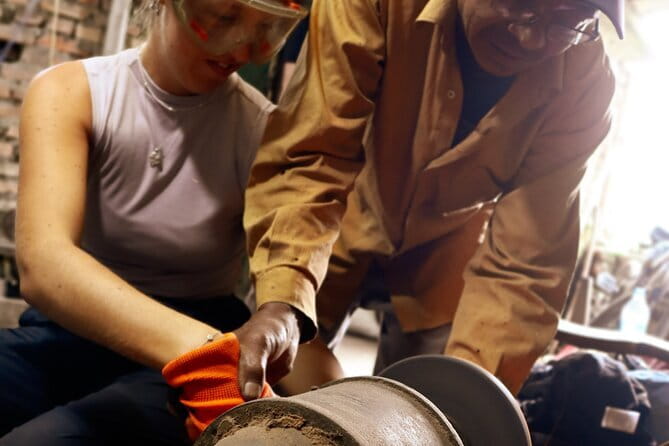
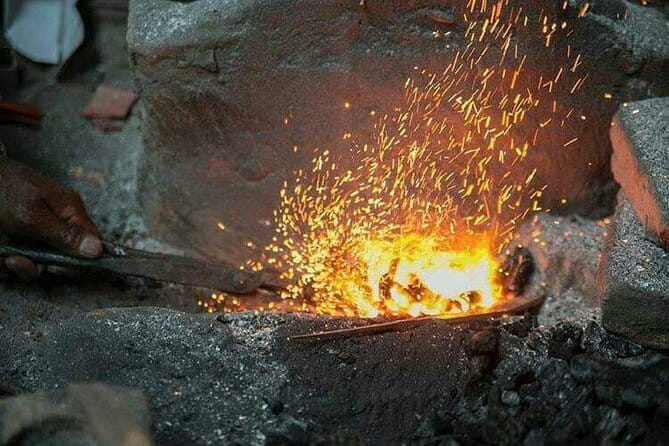
The central task is making the knife itself. The supplied details describe the process as creating a kukri from scratch, and one account specifically describes working with scrap metal. You take part in the metalwork under the smith’s direction, rather than watching from behind a barrier.
Do not expect to leave with a factory-perfect object made entirely by your own hand. A traditional knife requires control and experience, so the local smith remains central to the work. Your role is participatory, while the most demanding shaping and finishing remain in skilled hands.
That balance is exactly what makes the session practical for most people. The activity is not presented as an advanced blacksmithing course. Most people can participate, and the maker helps you through the steps. You get the satisfaction of making decisions and handling the process without needing prior metalworking skills.
The kukri’s curved form gives the finished knife a strong visual identity. The experience also gives you context for the tool’s place in Gurkha culture and for the stories surrounding the warriors who carried it. I would pay close attention during this part, because the historical explanation gives the object more meaning after you return home.
A completely different kind of day, same corner of Nepal:
- Kathmandu: Full Day 7 UNESCO Tour with Lunch – Private/Group
★ 5.0 · 415 reviews - Kathmandu: Local Women-Led Nepali Cooking & Momo Class
★ 4.9 · 360 reviews - Private Bhaktapur and Nagarkot Day Tour From Kathmandu
★ 5.0 · 305 reviews - Kathmandu: Full Day Top 4 UNESCO Tour with Lunch – Private/Group
★ 5.0 · 269 reviews
Choosing the Indian rosewood handle
Once the blade work is under way, the handle adds another layer of craft. The stated material is Indian rosewood, a detail worth noting if you care about traditional materials and finish.
The handle is more than decoration. It is the part you hold, so its shape and feel change how the finished knife seems in your hand. You will have a chance to see how the wooden piece becomes part of the completed kukri, with the smith guiding the work.
The information provided does not promise a choice of several wood colors, handle shapes, or custom designs. I would not assume you can redesign the knife from the ground up. The personal element comes mainly through your participation and the stamped initials, while the smith controls the final workmanship.
That is a fair arrangement for a half-day session. You receive a traditional form made with local expertise, plus a direct connection to the process. The result should feel personal without pretending that a first-time maker can replace a lifelong craftsperson.
Stamping your initials on the blade
The clearest custom detail is the chance to stamp your initials on the blade. This small mark changes the souvenir from a purchased knife into a record of your morning at the forge.
I especially like this feature for couples, friends, and solo visitors. You can mark the knife with your own initials, and the object will still point back to a particular place, maker, and day. It is a better keepsake than a generic nameplate because it belongs to the making process itself.
Take care with your choice of initials. The information does not say that names, dates, symbols, or longer inscriptions are available, so assume the option is limited to initials unless the provider tells you otherwise.
What the $66 price includes in value
At $66 per person, this is not the cheapest souvenir activity in Kathmandu. It is also not just a short demonstration. You receive about four hours of instruction and participation, a finished kukri, tea and cookies, the use of quality Indian rosewood for the handle, and a 100-year guarantee on the knife.
The value depends on what you want to bring home. If you only want a decorative blade, local shops may offer simpler and faster choices. If you want a small-group craft session with a finished object made with your help, the price makes more sense.
The maximum of four is important here. A large group would make hands-on blacksmithing less satisfying. In this format, you have a better chance to ask questions, follow the smith’s instructions, and see your own knife take shape.
The guarantee also gives the purchase more weight. A 100-year guarantee is an unusually long promise for a souvenir. It does not tell you every condition or cover every type of damage, so ask for the precise terms if durability is a major reason for booking. Still, it signals confidence in the construction.
The people who will enjoy it most
I would recommend this to you if you enjoy making things, want a personal souvenir, or prefer a small local activity over a large sightseeing tour. It suits solo visitors particularly well because the small group and guide support can make it easy to join without bringing companions.
It also works for couples and small families, provided everyone understands that the session centers on metalwork. The activity has a welcoming tone and is described as open to everyone. One account also specifically praised the chance to support Nepal’s queer community through the provider, Queermandu, or Gay Tours Nepal.
You should think twice if you have very little time in Kathmandu. The session takes approximately four hours, and the morning schedule needs clarification. It may also be a poor fit if you dislike heat, tools, or the idea of handling a knife, even with instruction.
The finished item may be the biggest practical concern. A knife is not the easiest souvenir to carry through airports or across borders. The provided information does not give export, airline, or shipping instructions, so ask the provider about transport before you book if you are flying onward.
Booking details that matter
Confirmation is received at the time of booking, and a mobile ticket is offered. The listed price is $66 per person. Booking is commonly made about nine days before the session, so this is not necessarily something you need to reserve months ahead, though the four-person limit makes early planning sensible during a busy visit.
Free cancellation is available up to 24 hours before the start time for a full refund. If you cancel or request changes less than 24 hours before the start, the payment is not refunded and changes are not accepted. The cutoff follows Kathmandu local time.
The provider is Queermandu, also known as Gay Tours Nepal. That gives the activity a clear community connection beyond the knife itself. If supporting inclusive local businesses matters to you, it is a meaningful part of the booking decision.
My take: should you book it?
Book this Gurkha knife-making session if you want a hands-on morning, a small group, and a souvenir with a clear connection to Nepalese craft. The best features are the personal instruction, the Indian rosewood handle, the initials on the blade, and the long guarantee.
I would skip it if your schedule is tight, if you only want to watch a demonstration, or if carrying a knife home will create problems. Before booking, confirm the exact start time because the four-hour duration and listed morning window do not match neatly.
For the right person, $66 buys more than a kukri. You get time with a local smith, a practical look at a traditional craft, and a finished object that carries your own mark.
FAQ
Where does the Gurkha knife-making activity begin?
It begins at Garden of Dreams, Tridevi Sadak, Kathmandu 44600, Nepal.
Where does the activity end?
The activity ends back at the meeting point at Garden of Dreams.
How long does the session last?
The session lasts approximately four hours.
How much does it cost?
The price is $66 per person.
How many people can join?
The maximum group size is four people.
Is pickup available?
Pickup is offered. Garden of Dreams is the stated meeting point, so confirm the pickup details when booking.
What will I make?
You will make your own Gurkha knife, also known as a kukri.
What materials are used?
The handle uses Indian rosewood. The knife-making process may involve scrap metal, according to the activity details.
Can I personalize the knife?
Yes. You can stamp your initials on the blade.
Is cancellation available?
Yes. You can cancel at least 24 hours before the start time for a full refund. Cancellations or changes made less than 24 hours before the start are not accepted for a refund.
Just added around Kathmandu
- Traditional Momo Making Class★ 5.0 · 10 reviews
- Women Empowerment Project(Nepali cooking class & jewelry workshop★ 5.0 · 15 reviews
- Manthali Airport (Ramechhap) To Kathmandu – Transport Service★ 4.5 · 11 reviews
- Amazing 1 Day Trekking Experience in Kathmandu Nepal★ 5.0 · 24 reviews
- Walking tour of Kathmandu with awesome local guides★ 5.0 · 4 reviews
- Walking tour of real Kathmandu through back streets.★ 5.0 · 3 reviews
- Private Manaslu Circuit Trek at Himalayas★ 5.0 · 3 reviews
- Walking Street Food Tour in Kathmandu★ 5.0 · 111 reviews
Kathmandu Tours, compared.
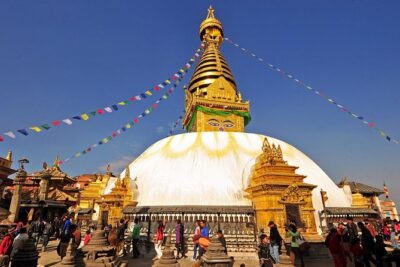
Private Kathmandu Sightseeing Tour | UNESCO World Heritage sites
Read our review →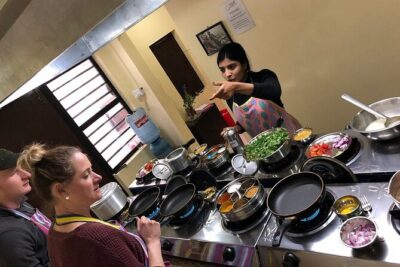
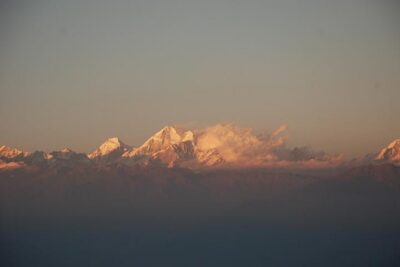
Nagarkot Sunrise View and Day Hiking from Kathmandu
Read our review →
Full Day 7 UNESCO Tour with Lunch – Private/Group
Read our review →
Private Bhaktapur and Nagarkot Day Tour From Kathmandu
Read our review →
Full Day Top 4 UNESCO Tour with Lunch – Private/Group
Read our review →