
Reviewed · HIKING & TREKKING
6 days Annapurna Basecamp Trek
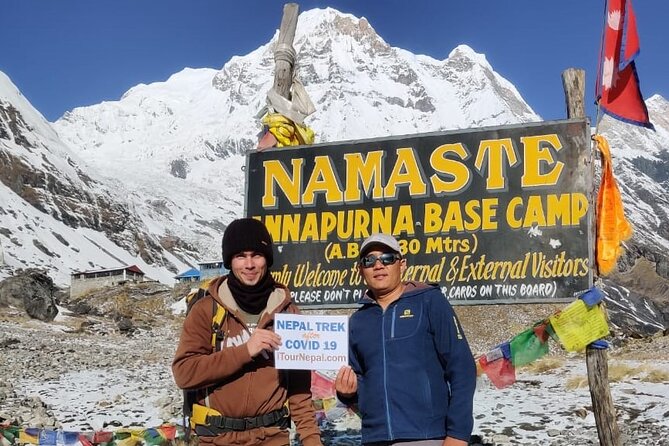
Annapurna Base Camp is the prize here: after days of walking up the Modi River valley, you wake beneath a 360-degree ring of snow peaks and watch the first light change Annapurna I, at 8,091 meters, from shadow to gold. The route also brings you through Gurung villages, rhododendron forest, and across a 285-meter suspension bridge above the Kimrong River.
I like the practical setup: private transportation, a licensed insured guide, teahouse lodging, and five breakfasts are included in the $450 price. I also like the compact six-day plan, which gives you a direct route to the sanctuary without adding extra days such as Poon Hill.
The tradeoff is stamina. Several days are described as roughly 12 hours, and lunch, dinner, porter service, insurance, drinks, Wi-Fi, charging, and personal items cost extra. This is a serious mountain trek, not a gentle sightseeing walk.
Key points to know before booking
- Annapurna I sunrise: The early-morning view from base camp is the emotional high point, with snowy peaks circling the sanctuary.
- A short route from Pokhara: The itinerary uses road transport to reach the trail area, then concentrates your walking time on the Annapurna Sanctuary.
- Long walking days: The schedule lists approximately 12 hours for each day, so a moderate level of fitness is required.
- Gurung culture and mountain villages: You pass through communities associated with the famous Gurkha soldiers and see daily life in the Annapurna foothills.
- Useful gear support: A duffle bag, sleeping bag, and anti-slip crampons are supplied when required.
- Small-group scale: The maximum group size is 20, with group discounts available and pickup offered.
Why this six-day route works
This is the shortest advertised route to Annapurna Base Camp in the program, and that makes it appealing if you have limited time in Nepal. You spend less time on side trails and more time heading toward the sanctuary, with transport handling part of the approach from Pokhara.
The route is described as one of the safer short options, but that should not be confused with easy. You still gain altitude, walk for long stretches, and sleep in basic mountain accommodation. Your guide is licensed, experienced, and insured, and the operator supplies a sleeping bag and crampons when needed. Those inclusions remove several planning jobs, but they do not remove the physical work.
The six-day structure also suits people who want a focused Himalayan trip rather than a broad Nepal itinerary. If you want Poon Hill, Chitwan, Bandipur, or extra village time, this is not the right schedule by itself. The company has arranged custom trips that combine those places with trekking, so extensions may be possible, but they are not part of this $450 package.
A few more Annapurna Region days to weigh up
- 6 Days Muktinath Tour Package in Nepal
★ 5.0 · 20 reviews - 6 Day Upper Mustang Tour by 4WD Jeep from Pokhara
★ 5.0 · 8 reviews - Kathmandu: 6-Day Limitless Langtang Trek
★ 5.0 · 21 reviews
Day 1: Chhomrong, Jhinu Danda, and the long bridge
The first day begins with about three hours of driving from Pokhara toward the trail area near Jhinu Danda. That road transfer matters. It cuts out part of the lower approach and lets you spend your limited days in the more dramatic section of the route.
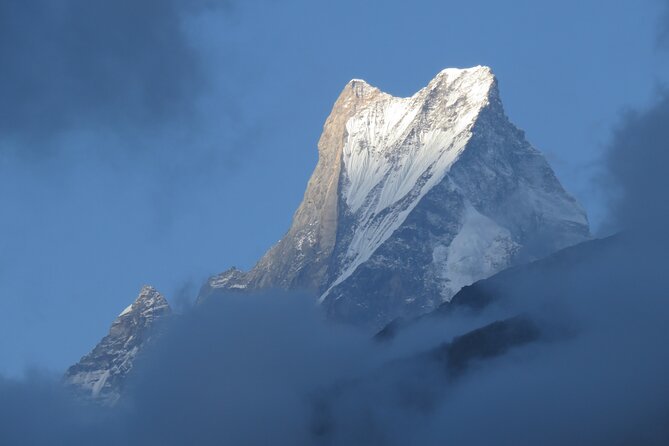
Chhomrong sits at about 2,150 meters and gives you early views toward Annapurna South, Hiunchuli, and Machhapuchhre, commonly called Fishtail. It is the nearest viewpoint in this plan for several major peaks, so keep your camera ready even before the trek reaches the high valley.
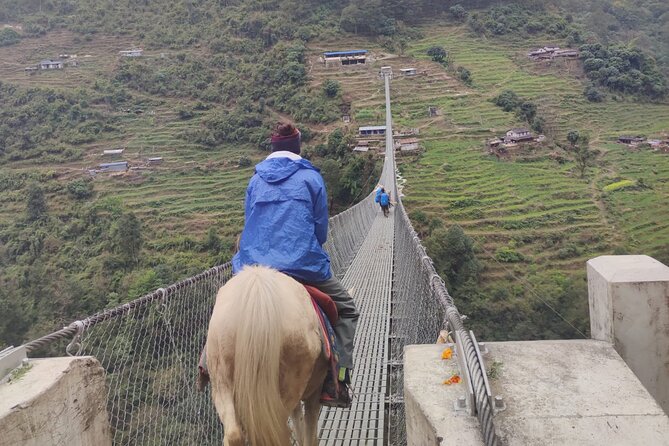
The day also includes Jhinu Danda and its suspension bridge. At 285 meters long and 135 meters above the Kimrong River, it is a memorable crossing, especially if you are not fond of heights. The bridge is not simply a transport detail. It gives the first day a real sense of entering the mountain country.
The schedule allows about 12 hours, including the day’s stops and walking. That is a demanding opening. Ask your guide about the exact meeting point, road conditions, and how the walking time is calculated before setting out. Pickup is offered, but the exact pickup arrangement should be confirmed when you book.
Day 2: From Chhomrong toward the Annapurna Sanctuary
The second day begins with views of Annapurna South and Fishtail, then follows a trail that rises and falls through the lower foothills before entering the Annapurna Sanctuary. The repeated climbs and descents are important. A trail that looks modest on a map can feel tiring when every gain is followed by a drop and another climb.
The route brings you into a more enclosed mountain setting as it follows the Modi River corridor. You will see changing vegetation, village paths, and hillside scenery rather than one constant wall of snow peaks. That variety is one of the route’s strengths.
This day is listed at around 12 hours. Pace matters more than speed. Use the first part of the trek to settle into a steady rhythm, keep your daypack light, and ask for pauses before you are exhausted. Because lunch and dinner are not included, you will pay separately for meals along the route. Carrying enough small spending money is sensible, since drinks and food costs can add up in the mountains.
Day 3: Rhododendron forest and the Modi River valley
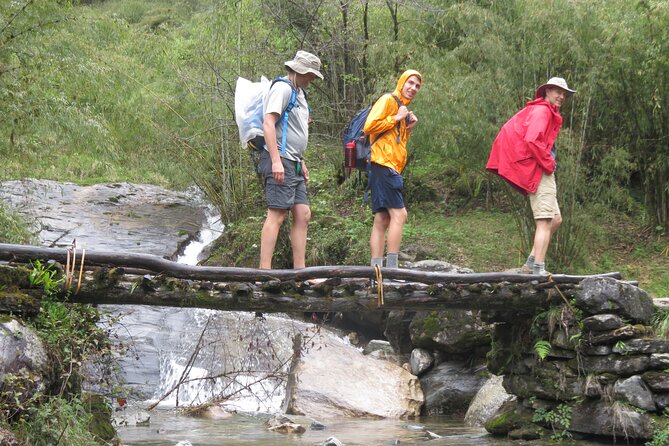
The third day leads through the Modi River valley basin around Dovan, between Hiunchuli and Mardi Himal. The walk gradually follows the river upstream through thick rhododendron forest. More than 30 rhododendron species are found in the area, so spring can bring especially colorful forest sections, though the exact display depends on timing.
This is one of the most appealing parts of the trek for people who want more than a mountain viewpoint. The forest changes the mood of the route. You are walking through a living corridor of trees, streams, and clearings before the high sanctuary opens up.
The itinerary gives another 12-hour estimate, which tells you to expect a full day rather than a brief transfer between lodges. Dovan is at a lower point in the valley than base camp, but the surrounding walls make the route feel remote. Teahouse accommodation keeps the plan simple: you sleep where the route allows, rather than returning to a town each night.
The rooms and facilities are not described in detail, so bring realistic expectations. Wi-Fi, charging, toiletries, bottled drinks, and machine coffee may carry small extra charges at the teahouses. A sleeping bag is included, which is useful for cold nights, but you should still pack suitable warm layers.
More trekking days out of Annapurna Region:
- Annapurna Circuit Trek with Tilicho Lake
★ 5.0 · 368 reviews - Annapurna base camp trek 5 Days
★ 5.0 · 252 reviews - Poon hill Trek 3 days
★ 5.0 · 176 reviews - Trekking in Annapurna/Langtang/Everest/Upper Mustang regions
★ 5.0 · 161 reviews
Day 4: The final approach to Annapurna Base Camp
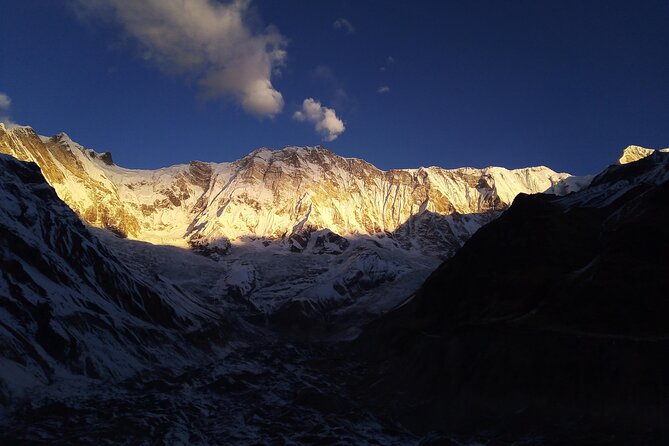
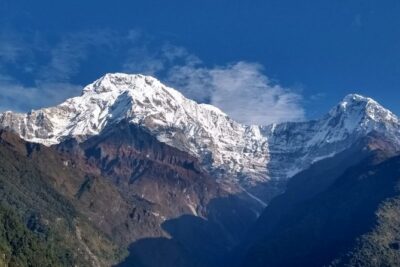
The route from Deurali to Annapurna Base Camp is the scenic heart of the trek. The trail follows the Modi Khola upstream and opens toward Fishtail, Annapurna III, Annapurna South, Annapurna I, and other peaks. The closer you get to base camp, the less the forest dominates and the more the mountains take over.
Annapurna I reaches 8,091 meters and is the world’s tenth-highest mountain. Seeing it from the sanctuary gives you a clear sense of scale. The mountain walls rise around the valley, creating the 360-degree setting that makes this route so memorable.
The day is again listed at about 12 hours, so the final approach will not feel casual. Cold weather and altitude add to the challenge. The included guide is especially valuable here, since you do not have to manage the route alone or make every decision about direction and timing.
Admission to Annapurna Base Camp is included. This is one of the few clearly stated ticket inclusions, while the wider package also covers all fees and taxes. At $450 per person, that combination gives the price real value, provided you are comfortable paying separately for most main meals and optional porter service.
Day 5: Sunrise at 8,091 meters
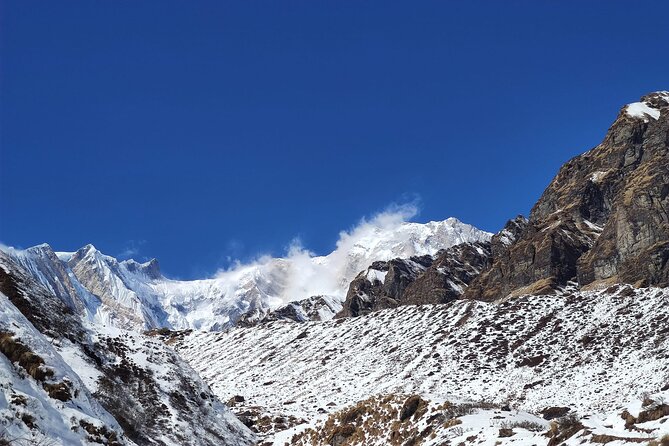
Day five is built around the early light at base camp. The first rays reach the surrounding snow peaks, and Annapurna I changes color as the sun rises. This is the moment to protect your phone battery, keep your warm layers close, and plan to be outside before the best light arrives.
The view works because you are inside the sanctuary rather than looking at it from a distant hill. Peaks surround you on all sides, and the setting makes the sunrise feel larger than a normal viewpoint stop.
After the morning, the plan calls for an easier day at base camp before beginning the return. The exact walking details are not specified, so ask your guide how much time you will spend at base camp and where you will sleep that night. The itinerary still lists about 12 hours, which may include the early start, walking, and return movements.
This is also the day when a good sleeping bag earns its place in your pack. The base camp section is cold, and the tour’s gear support is one of its practical advantages. Anti-slip crampons are available as required, though the need depends on conditions.
Day 6: Returning to greenery and the road
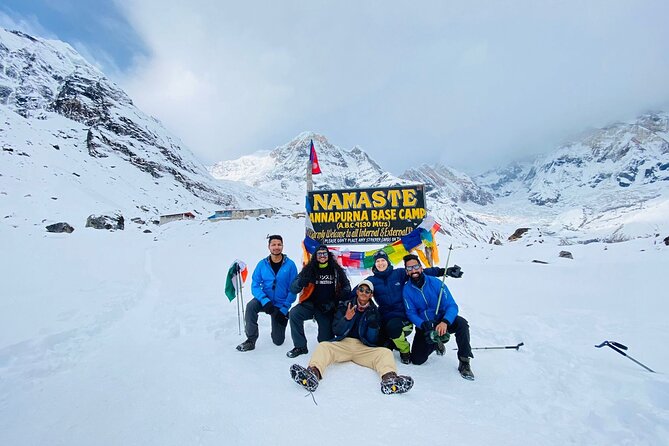
The final day brings you back toward lower elevations, greenery, villages, and the Modi River valley. After several days in a colder, enclosed mountain corridor, the change can feel almost as striking as the first snow peaks.
The itinerary describes breakfast with far-reaching views of layered hills and the river valley. Breakfast is included five times, so this final morning should be covered within the package. Lunch and dinner remain your responsibility.
The day is again marked at approximately 12 hours. The route ends with a return toward transport and civilization, but the exact drop-off point is not stated. Confirm where the trek finishes and whether the private vehicle returns you to Pokhara or another agreed location.
What the $450 price really covers
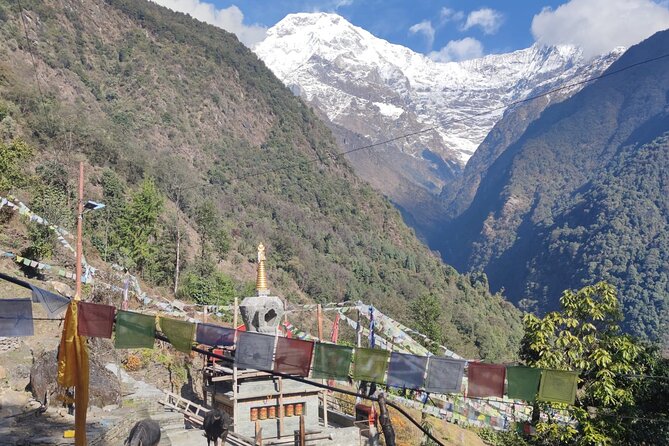
The price is $450 per person. That is a useful value for a six-day guided trek because it includes several costs that can otherwise make a Himalayan trip harder to plan:
- Private transportation
- All fees and taxes
- Five breakfasts
- Teahouse accommodation
- A licensed, experienced, insured guide
- Duffle bag and sleeping bag
- Anti-slip crampons when needed
- Pickup availability
The main gap is food. Lunch and dinner are not included, and drinks are extra. Wi-Fi, device charging, toiletries, bottled drinks, and machine coffee may also cost a little more at teahouses.
A porter is available for $30 per day. If you do not want to carry your own larger bag, add $180 for six days before tips. Porter service can make a major difference on long walking days, but the package does not include it, so decide early and budget for it.
Tips for the guide and porter are also separate. Service charges are included in hotels and restaurants, but that does not replace trekking tips. Insurance is your responsibility and is not included.
Guides, group size, and the human side
You travel with a licensed guide rather than following a self-guided route. That gives you help with trail decisions, timing, and the practical rhythm of teahouse trekking. The maximum group size is 20, large enough for a social trip but still manageable on a mountain path.
The company has worked with guides named Saroj and Ajaya on other Nepal journeys, with porter support from Samir in one arrangement. The specific guide for your departure is not named in the available details, so ask for that information before booking if the guide relationship matters to you.
The strongest praise attached to this operator focuses on care, safety, flexibility, and personal attention. One repeat customer used the company three times, and another described custom planning for a Canada-based couple with only 15 days available for the Himalayas and Upper Mustang. That suggests the business can adjust plans when you ask clearly, though this fixed six-day itinerary has its own limits.
Who should book this trek?
I would point this trip toward an active visitor who wants a direct route to Annapurna Base Camp and has about six days available from Pokhara. You should be comfortable with long days, basic teahouse lodging, changing weather, and paying for meals as you go.
It also suits someone who wants the security of a guide and transport without arranging every permit, lodge, bag, and transfer alone. The included sleeping bag and possible crampons are especially helpful if you do not want to buy or rent every item separately.
I would hesitate to recommend it to anyone seeking short walks, private rooms with full hotel comforts, or a relaxed schedule. The repeated 12-hour estimates are the clearest warning. A moderate fitness level is required, and the route’s short length means there is less spare time if you fall behind.
Booking, cancellation, and final advice
Confirmation is provided when you book, and pickup is offered. The experience is often booked about 40 days ahead, so securing your place early is sensible, particularly if you need a certain travel date.
You can cancel for a full refund up to three full days before the local start time. Cancellations and changes inside that window are not accepted for a refund.
Book this trek if you want the shortest practical path to a major Himalayan base camp, value a guide and included equipment, and can handle long walking days. The $450 price is fair once you account for transport, five breakfasts, lodging, guide service, and gear support. Add a porter, meals, insurance, tips, and personal expenses to your real budget.
Skip it if you want a slow cultural walk or a broad Nepal holiday. For a focused mountain trip with a famous sunrise as its payoff, this six-day plan gives you a lot of scenery and support in a tight schedule.
FAQ
Where does the Annapurna Base Camp trek begin?
The experience is based in Pokhara, Nepal. Pickup is offered, and private transportation is included.
How long is the trek?
The tour lasts approximately six days.
What is the price?
The listed price is $450 per person.
How many people can join the group?
The maximum group size is 20 people.
Is a guide included?
Yes. The package includes a licensed, experienced, and insured guide.
Is accommodation included?
Yes. Teahouse accommodation is included.
How many breakfasts are included?
Five breakfasts are included.
Are lunch and dinner included?
No. Lunch and dinner are not included and must be paid for separately.
Is a porter included?
No. Porter service is optional and available for $30 per day.
Is trekking equipment provided?
A duffle bag and sleeping bag are included. Anti-slip crampons are provided when required.
Just added around Annapurna Region
- 4 Day Mardi Himal Base Camp Trek from Pokhara★ 5.0 · 18 reviews
- 7-Day Trek to Annapurna Base Camp from Pokhara★ 5.0 · 12 reviews
- Private 4 Day Poon Hill Trek from Pokhara★ 5.0 · 16 reviews
- Annapurna Base Camp Trek from Pokhara and Kathmandu★ 5.0 · 7 reviews
- “Exclusive Round-Trip Transfer: Pokhara to Jomsom & Muktinath”★ 5.0 · 11 reviews
- Poon Hill Ghandruk Circuit Trek from Pokhara 4 Days★ 5.0 · 10 reviews
- Pokhara: Poon Hill Ghorepani Short Trek★ 5.0 · 6 reviews
- Pokhara: 4 Days Poon Hill and Ghandruk Trek★ 5.0 · 23 reviews
Hiking & Trekking, compared.
Nagarkot Sunrise View and Day Hiking from Kathmandu
Read our review →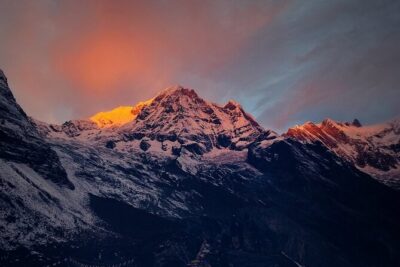
Browse the lists this tour appears in