

Reviewed · MARDI HIMAL TREKS
4 Day Mardi Himal Base Camp Trek from Pokhara
Mardi Himal gives you a short route to serious mountain scenery. In four days, you leave Pokhara, walk through forest and high meadows, reach Mardi Himal Base Camp, then return by trail and road. The payoff is a close look at Machhapuchhre, Annapurna, and Hiunchuli without committing to a much longer Himalayan trek.
I like the private format, which means only your own group takes part, and I like that permits, official documents, transport, a guide, guesthouses, and entrance fees are included. The main catch is the pace: several days run six to eight hours, with steep ground near base camp. You need moderate fitness, and food is extra.
Key points at a glance
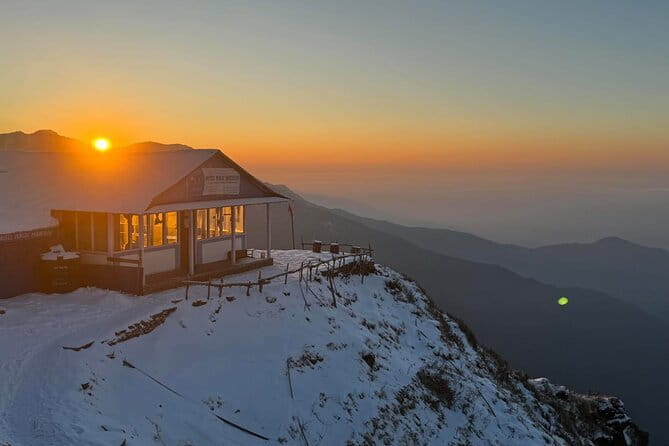
- Four days from Pokhara: You can reach Mardi Himal Base Camp and return to Pokhara in a compact schedule.
- A changing trail: Walk from villages and terraced fields into rhododendron forest, then on to open alpine meadows.
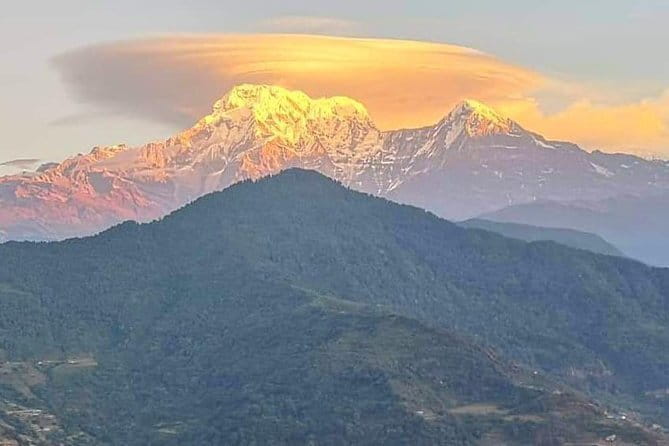
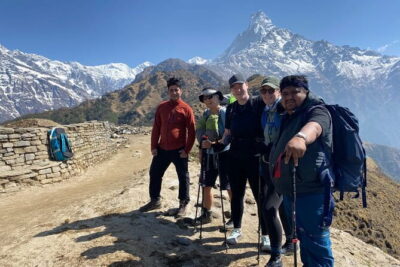
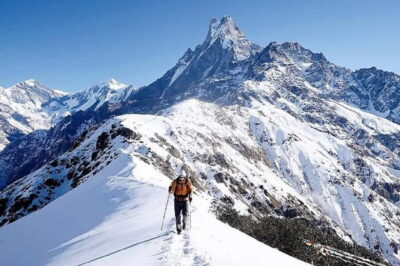
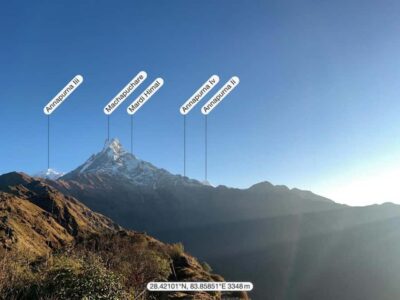
- Mountain views at higher ground: Machhapuchhre, Annapurna, and Hiunchuli provide the main visual reward.
- Private group setting: Your booking is for your group alone, rather than a mixed public group.
- Useful inclusions: Permits, official documents, guide, transport, accommodation, entrance fees, and hotel transfers are covered.
- A demanding short trek: Six to eight-hour walking days and a steep climb to base camp require preparation.
Why this four-day route works from Pokhara
The appeal is simple: you get a taste of high Himalayan trekking without spending a week or more on the trail. The route begins near Pokhara, the popular lakeside base in Nepal, and quickly shifts from road travel to footpaths, forest, and mountain country.
That compact schedule is both the strength and the limitation. You spend less time away from Pokhara, but each walking day is full. This is not a gentle sightseeing walk with a little mountain air on the side. You should expect long stretches on foot, uneven trail, and a harder third day.
I would choose this trip if you have only four days available and want a proper trek rather than a short viewpoint excursion. It also suits you if you prefer a private group and want the practical work handled by a local trekking company.
The scenery changes in a satisfying way. Lower sections pass villages and cultivated land. Higher sections bring thick forest, open slopes, wildflowers, and wider views of the peaks. The route has enough variety to keep the walk interesting, even when your legs begin to complain.
More Mardi Himal treks:
- Pokhara: 4-Day Mardi Himal Trek
★ 4.9 · 59 reviews - Private Mardi Himal Trek
★ 5.0 · 42 reviews - Mardi Himal Trek
★ 5.0 · 41 reviews
Day 1: Kande to Forest Camp through forest and villages
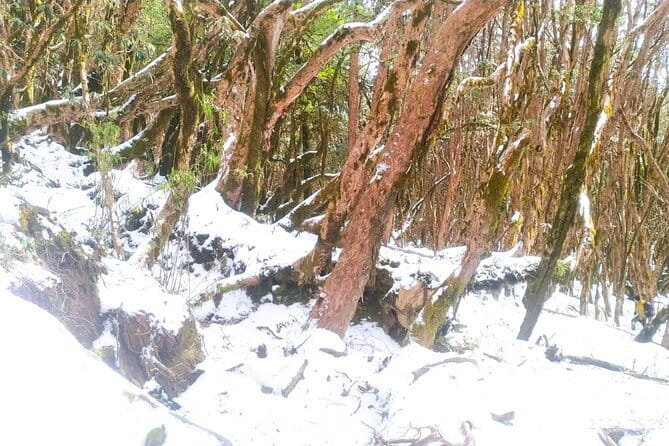
The first transfer takes you from Pokhara to Kande, a drive of about one hour. From there, the trek begins on foot, with the trail passing through villages and lush forest before reaching Forest Camp.
The walking time is about five to six hours, and the day includes steep sections. That matters because the first day can feel harder than its distance suggests. You are not simply strolling uphill on a smooth path. A steady pace will serve you better than trying to race ahead early.
Forest Camp is a useful first night because it breaks the climb into manageable stages. Accommodation is in a tourist-standard guesthouse, giving you a straightforward place to rest before the route climbs higher.
This part of the trek is less about big mountain views and more about the setting. Forest cover creates a quieter start, while the villages offer a look at daily life around the Annapurna region. The tree cover can also mean that the grand peaks are not visible all the time, so keep your expectations realistic on day one.
Your guide matters here. A good guide can help set a pace that protects your energy for the higher days. CAN Travels assigns an English-speaking trekking guide, and guide names connected with this operation include Krishna Adhikari, Biru, and Birendra. The person assigned to your group may differ, so confirm that when booking if a particular guide matters to you.
Day 2: The climb toward Low Camp and High Camp
The second day begins with a gradual ascent through forest. As you gain height, the trees begin to give way to more open views, and the mountains become a larger part of the walk.
The schedule describes roughly six to seven hours of trekking toward High Camp. It also refers to Low Camp as a stop, so you should think of this as a day of continued climbing rather than a short transfer between two nearby lodges.
This is one of the most enjoyable parts of the route because the scenery opens up as you walk. You get more frequent views of the peaks and the valley below, while the forest still provides a sense of shelter. The changing scenery gives the day a natural rhythm: shaded trail, open viewpoints, then more uphill ground.
The day is described as relatively easy compared with the climb to base camp, but six or seven hours is still a full day. Carry water, keep snacks handy, and do not burn all your energy during the first few hours. Food and drinks are not included in the tour price, though they are available to purchase along the trek.
High Camp is the key overnight point before the base camp push. Guesthouse accommodation is included, but this is still a mountain trek, not a hotel circuit. Tourist-standard means practical lodging rather than luxury. Pack with that in mind and bring only what you need.
Day 3: High Camp to Mardi Himal Base Camp
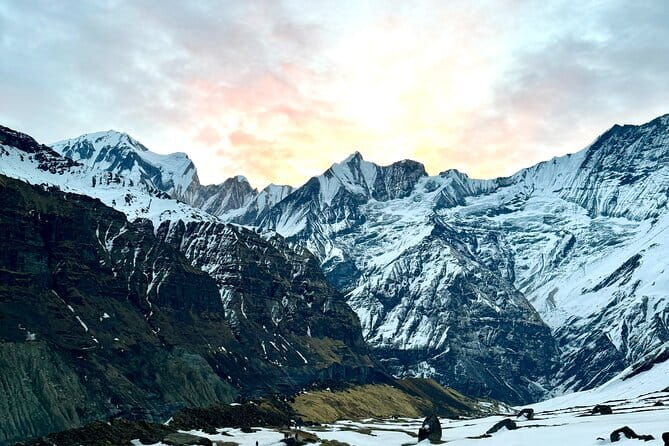
The third day is the main event. From High Camp, the trail becomes steeper and more demanding, with about three to four hours of walking to Mardi Himal Base Camp.
The shorter walking time does not make this an easy day. You are climbing higher, and the ground is described as more challenging. The reward is a broad view of the surrounding mountains and the valley below. Machhapuchhre, Annapurna, and Hiunchuli are the major peaks named for this route, and the higher you go, the more impressive their presence becomes.
This is where a moderate level of fitness becomes important. You should be comfortable walking uphill for several hours and then returning to High Camp or continuing according to the guide’s plan. The supplied schedule places the base camp visit within an eight-hour day, so allow for a long outing once the full day is counted.
The best approach is to treat the base camp climb as a gradual effort. Walk at a pace you can maintain, listen to your guide, and allow time for stops. The point is not to arrive first. It is to reach the viewpoint with enough energy to enjoy it.
The high point of this day is not only the destination. The trail itself delivers the transition from forest and meadow to open mountain terrain. You get the sense of leaving the lower hills behind and entering a more exposed part of the route.
Weather can affect what you see, and the supplied details do not promise clear skies. That is worth remembering when you judge the value of the trek. The route offers mountain views, but no company can guarantee perfect visibility on a particular morning.
A few more Annapurna Region days to weigh up
- Pokhara: 4-Day Ghorepani, Poonhill & Ghandruk Mountain Trek
★ 5.0 · 132 reviews - 4 Days Poon Hill Trek
★ 5.0 · 94 reviews - 4-day Poon Hill Trek
★ 5.0 · 74 reviews - 4-Day Private Poon Hill Trekking Tour
★ 5.0 · 58 reviews
Day 4: Descending to Siding and driving back to Pokhara
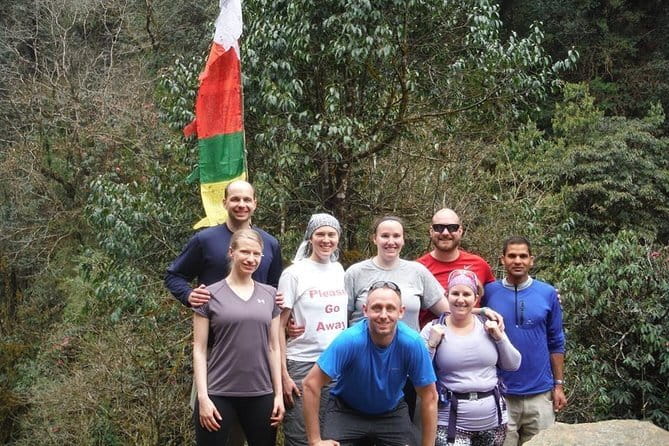
The final day combines a long descent with a road transfer. You walk through forest and villages, passing traditional Nepalese houses and terraced fields before reaching Siding Village.
The walking portion takes about five to six hours. Descending may sound easier than climbing, but steep downhill trail can be tiring on knees and ankles. Good footwear matters, and trekking poles could be useful, though they are not listed as an included item.
From Siding, the drive back to Pokhara takes another two to three hours. The full day is listed at about eight hours, so this is not a lazy final morning followed by a quick ride. You should expect to arrive back in Pokhara after a substantial day.
The return route gives you a different view of local life than the higher trail. Terraced fields and traditional houses bring the trip back to the lived-in hills, and the road transfer saves you from retracing every step on foot.
Hotel pickup and drop-off are included. The tour also lists round-trip transfer by shared bus or jeep according to the schedule, so clarify the exact vehicle and pickup plan before departure. The activity itself is private for your group, but transport may be shared depending on the arrangement.
What the $290 price really covers

At $290 per person, the price is easiest to judge by looking at what you do not have to arrange separately. The package includes:
- Trekking permits and official documents
- An English-speaking trekking guide
- Round-trip transport by shared bus or jeep
- Tourist-standard guesthouse accommodation
- Entrance fees
- Hotel pickup and drop-off
- A normal emergency first-aid kit with the guide
- A private tour for your group
That is a useful bundle for a short trek. Permits, transport, lodging, and guide services can be awkward to coordinate on your own, especially when you have only four days and need the road connections to work.
Food and drinks are extra. This is the most important cost to allow for beyond the advertised price. You will buy meals and beverages during the trek, so do not treat $290 as the complete spend.
Gratuities are optional. You can decide at the end based on the guide’s care, pacing, and help during the trek. The package also offers group discounts, which may improve the value if you are booking with several people.
The private format adds value if you want a pace suited to your group. It may be less important if you are happy joining other walkers and mainly want the lowest possible price. The best value here comes from convenience and a short, organized schedule, not from luxury.
Guides, accommodation, and the practical feel
An English-speaking guide is included, and the strongest praise connected with this trek focuses on organization, helpfulness, pace, and care. Krishna Adhikari is described as friendly, attentive, and well informed about the route. Biru is associated with a professional approach and careful pacing, while Birendra is also named as a strong guide for this trek.
Those names give you useful points to ask about, but guide assignment is not guaranteed in the supplied information. If you have a preferred guide, request that person before paying.
Guesthouses are described as tourist standard. That means you get basic trekking accommodation at Forest Camp, High Camp, and the other overnight points rather than resort-style rooms. The value is in having a planned bed along the route, not in expecting elaborate facilities.
The first-aid kit carried by the guide is for normal emergencies. It is sensible to bring your own personal medication and any basic items you normally need, since the package does not promise a full medical service.
The listed start time is 7:15 pm, which does not clearly match the stated morning drive from Pokhara to Kande. Confirm the exact departure time and pickup point with CAN Travels before the trek. The experience offers hotel pickup, but the practical details should be clear before you set your alarm.
Who should book this Mardi Himal trek
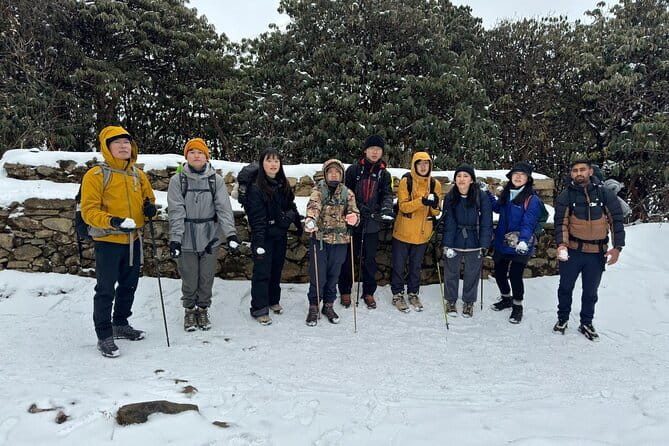
This trip is a good match for you if:
- You have four days and want a real Himalayan trek.
- You have moderate physical fitness.
- You are comfortable with six to eight-hour walking days.
- You want a private group rather than a public mixed group.
- You prefer to have permits, transport, lodging, and a guide arranged.
- You are staying in Pokhara and want a route that begins and ends there.
Think twice if you want short walks, guaranteed comfort, or a relaxed holiday schedule. The route includes steep sections on the first day and a harder climb to base camp on the third. The final day also combines five to six hours of walking with a two to three-hour drive.
This is also not the right choice if you expect meals to be part of the quoted price. Food and drinks are available to buy, but they are not included.
Booking, cancellation, and final advice
Confirmation is provided at booking, and free cancellation is available if you cancel at least 24 hours before the experience start time. Cancellation within 24 hours is not refundable, and changes inside that period are not accepted. Cut-off times use local time.
I would book this trek if you want the most scenery you can reasonably fit into four days from Pokhara. The route has a clear payoff, the organization covers the major practical pieces, and the private format lets your group work with its guide rather than a large public party.
I would not book it simply because the price looks low. Add food, drinks, and any optional gratuity, then consider the effort of the long walking days. If you are fit enough for the schedule and want mountain views, forest, villages, and a proper base camp goal in one compact trip, this is a strong choice.
FAQ
Where does the Mardi Himal trek begin?
The trek begins at Kande, reached by a drive of about one hour from Pokhara.
How long is the trek?
The experience lasts approximately four days.
How long is the walking on the first day?
The walk from Kande to Forest Camp takes about five to six hours.
Where do you stay on the first night?
The first overnight stop is Forest Camp, where accommodation is provided in a tourist-standard guesthouse.
How long is the second trekking day?
The second day takes about six to seven hours and continues upward toward High Camp.
How long does it take to reach Mardi Himal Base Camp?
The walk from High Camp to Mardi Himal Base Camp takes about three to four hours.
Is the trek private?
Yes. Only your own group takes part in the private tour or activity.
Is a guide included?
Yes. An English-speaking trekking guide is included.
Are food and drinks included?
No. Food and drinks are available to purchase but are not included in the price.
Is transport included?
Yes. Hotel pickup and drop-off are included, along with round-trip transfer by shared bus or jeep according to the schedule.
What happens after reaching Siding Village?
After walking to Siding Village on the final day, you take a drive of about two to three hours back to Pokhara.
Can you cancel for a full refund?
Yes, if you cancel at least 24 hours before the experience start time. Cancellations within 24 hours are not refunded.
Just added around Annapurna Region
- 7-Day Trek to Annapurna Base Camp from Pokhara★ 5.0 · 12 reviews
- Private 4 Day Poon Hill Trek from Pokhara★ 5.0 · 16 reviews
- Annapurna Base Camp Trek from Pokhara and Kathmandu★ 5.0 · 7 reviews
- 6 days Annapurna Basecamp Trek★ 5.0 · 16 reviews
- “Exclusive Round-Trip Transfer: Pokhara to Jomsom & Muktinath”★ 5.0 · 11 reviews
- Poon Hill Ghandruk Circuit Trek from Pokhara 4 Days★ 5.0 · 10 reviews
- Pokhara: Poon Hill Ghorepani Short Trek★ 5.0 · 6 reviews
- Pokhara: 4 Days Poon Hill and Ghandruk Trek★ 5.0 · 23 reviews
Mardi Himal Treks, compared.


Browse the lists this tour appears in