Reviewed · TOURS
8 Days Tour in Nepal (Accommodation at 5 Star Hotel)
Kathmandu’s temples, Chitwan’s jungle, and Pokhara’s mountain views all fit into one busy eight-day trip. This tour gives you a broad first look at Nepal without asking you to plan every hotel, guide, and transfer yourself. The route works like a sampler: culture first, wildlife next, then lakes and Himalayan views.
I like the strong mix of places, especially the contrast between Boudhanath’s calm prayer flags and Chitwan’s open-top jeep safari. I also like the 5-star hotel plan, which gives you a more comfortable base after long road days and early starts.
The tradeoff is time. You cover Kathmandu, Chitwan, and Pokhara in one week, so some days involve long road travel and several stops. Private transportation is not included, despite airport pickup being offered, so confirm exactly how transfers and vehicle costs are handled before paying.
Key points to know before booking
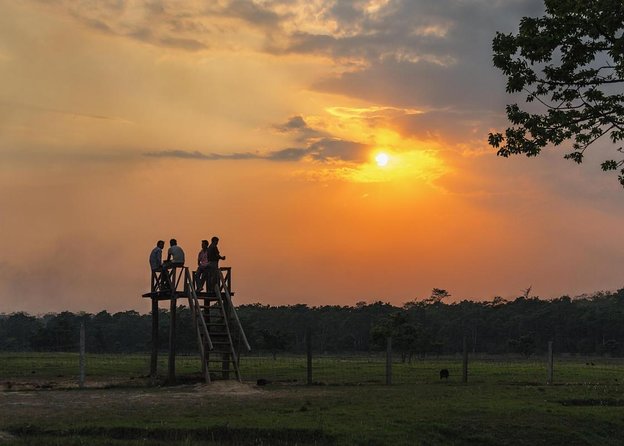
- Kathmandu’s four major sights arrive in one full day: Boudhanath, Patan Durbar Square, Pashupatinath, and Swayambhunath.
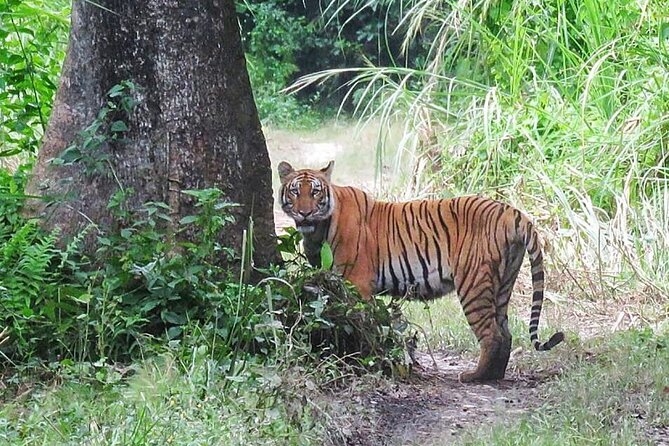
- Chitwan includes both water and land wildlife time: canoeing, a jungle walk, a jeep safari, and a Tharu village visit.
- Pokhara gets its best moments early and late: sunrise from Sarangkot, boating on Phewa Lake, and a hilltop view from the World Peace Pagoda.
- The route is culturally broad: you see Buddhist stupas, Hindu temples, Newar courtyards, Tharu village life, and Nepal’s forested lowlands.
- The service team is a useful strength: owner Mani is noted for clear communication and flexible arrangements, while guides named Sanjaya and drivers including Binod and Ram appear in the company’s service record.
- The $1,400 price buys convenience, not an all-inclusive holiday: six breakfasts, two dinners, two lunches, sightseeing admissions, and 5-star lodging are included, but private transport is not.
A practical first look at the eight-day route
This is a sightseeing circuit rather than a trekking holiday. You do not need to carry camping gear or spend nights at high altitude. Instead, you move between three very different parts of Nepal, with local guiding and arranged accommodation doing much of the organizational work.
The route begins and ends in Kathmandu. Chitwan comes next, followed by Pokhara, then a return to the capital for a final evening around Durbarmarg. That shape makes sense for a first visit, since it combines Nepal’s main cultural sights with its most accessible wildlife area and one of its prettiest lakeside towns.
The main question is not what you will see. You will see plenty. The question is how comfortable you are with road travel and a full schedule. Nepal’s roads can be slow, and the move from Kathmandu to Chitwan and then Chitwan to Pokhara takes up a meaningful part of two days. You gain variety, but you give up the relaxed pace of a stay in one region.
More days out in Kathmandu:
- Private Kathmandu Sightseeing Tour | UNESCO World Heritage sites
★ 5.0 · 756 reviews - Half day cooking class in Thamel kathmandu
★ 5.0 · 607 reviews - Nagarkot Sunrise View and Day Hiking from Kathmandu
★ 5.0 · 471 reviews
Day 1: Arrival and an easy start in Thamel
The first day is intentionally light. Staff collect you at Tribhuvan International Airport and take you to the hotel. After check-in, you can use the remaining time for a walk around Thamel, Durbarmarg, or nearby central Kathmandu.
Thamel is a useful place to get your bearings. It is close to shops, restaurants, travel businesses, and streets made for wandering. Durbarmarg offers a different feel, with shopping, clubs, pubs, massage centers, and views toward Narayanhiti Palace.
Do not expect a major sightseeing program on arrival day. Its value is practical. You can settle in, recover from the flight, and get an early taste of Kathmandu without having to rush straight into temple visits. Airport pickup is offered, but ask in advance whether the vehicle is part of your package, since private transportation is listed separately as not included.
Day 2: Kathmandu’s four powerful landmarks
Day two is the cultural heart of the tour. Four major sites are packed into one day, and each shows a different side of the Kathmandu Valley.
Boudhanath Stupa
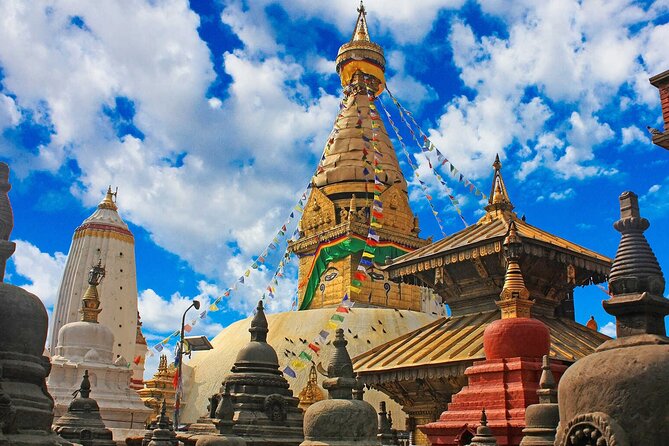
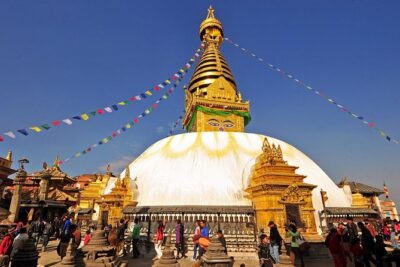
Boudhanath is a large white dome ringed by Buddhist flags, shrines, and walking paths. Its shape is immediately recognizable, but the real appeal is the sense of order around it. You can watch people circle the stupa, pause at prayer wheels, and take in the colors against the pale dome.
The planned visit lasts about an hour. That is enough for a good look and photographs, though you may wish you had more time if religious architecture interests you. This stop is also a gentle way to begin the sightseeing day before the denser details of Patan and Pashupatinath.
A completely different kind of day, same corner of Nepal:
- Kathmandu: Full Day 7 UNESCO Tour with Lunch – Private/Group
★ 5.0 · 415 reviews - Kathmandu: Local Women-Led Nepali Cooking & Momo Class
★ 4.9 · 360 reviews - Private Bhaktapur and Nagarkot Day Tour From Kathmandu
★ 5.0 · 305 reviews - Kathmandu: Full Day Top 4 UNESCO Tour with Lunch – Private/Group
★ 5.0 · 269 reviews
Patan Durbar Square
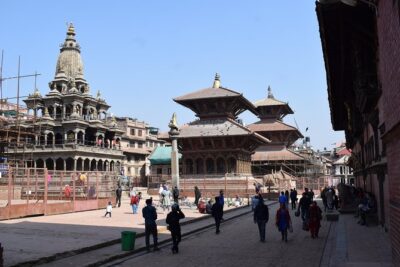
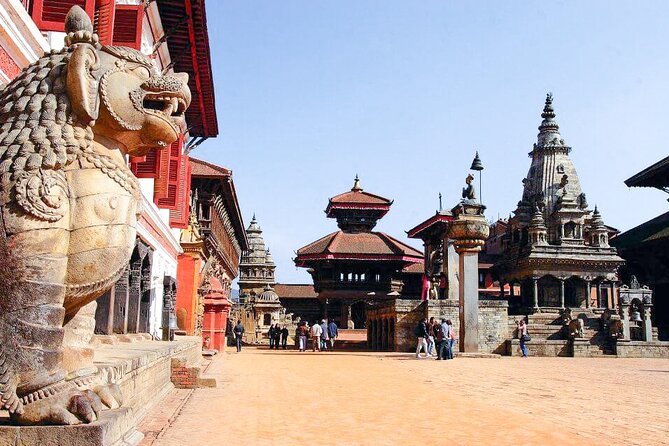
Patan gives you the most concentrated display of Newar architecture on the route. Within a compact area, you can see major temples, courtyards called bahals, and finely worked brick and timber buildings.
The important stops include Krishna Temple, the Golden Temple, Mahabauddha Temple, Hiranya Varna Mahavihar, the Golden Window, and Patan Museum. Two hours allows a useful introduction, but the square rewards patient looking. Let your guide point out carvings and courtyards rather than treating the stop as a quick photo break.
Patan is one of the tour’s best choices because it shows how much of Kathmandu’s cultural appeal sits in details: carved doors, small shrines, courtyards, and temple roofs. Wear shoes you can walk in comfortably, since the day involves several historic sites and uneven surfaces may be present.
Pashupatinath Temple
Pashupatinath spreads along the sacred Bagmati River and includes many temples, shrines, images, inscriptions, and religious buildings. It is one of the most important Hindu sites in Nepal.
A guide matters here. The complex can feel confusing at first, and the religious meaning of the buildings is not always obvious from the outside. The planned two-hour visit gives you time to see the wider area rather than only one main temple.
Access rules can vary at Hindu religious sites, so follow your guide’s instructions. The value of this stop is not just visual. It gives you a closer look at living religious practice, rather than a monument that exists only for sightseeing.
Swayambhunath
Swayambhunath sits on a hill and is known for Buddhist images, temples, chaityas, and a wide view over Kathmandu. Its hilltop setting gives the day a change of pace after the flatter temple areas.
The visit is listed at two hours. That allows time for the religious objects and the outlook, though the climb may feel demanding after three earlier stops. If you want the best experience, keep some energy in reserve and do not rush the first half of the day.
This is a long sightseeing day, but it is well designed for a first visit. You see Buddhist and Hindu traditions side by side, plus the royal and artistic center of Patan.
Day 3: Crossing the hills to Chitwan
The journey out of Kathmandu takes you across the valley and into a hill-filled route. From the vehicle, you can see layers of hills on both sides, with mountain views possible when weather and visibility cooperate.
The road transfer is part of the experience, but it is also the main comfort issue. The schedule does not state the exact driving time, and road conditions in Nepal can make distances feel longer than they look on a map. A flexible attitude helps. This is not a fast transfer between two airports.
After reaching Chitwan, the program turns gentler. You can rest, walk along the Rapti River, watch the sunset, and attend a Tharu cultural show. Chitwan introduces the region before the more active wildlife activities begin the next day.
The short listed duration for the Chitwan arrival stop should not be read as the total time in the park area. It is better understood as an arrival and orientation period, with the afternoon and evening used for riverside and cultural activities.
Day 4: Canoes, jungle paths, and a jeep safari
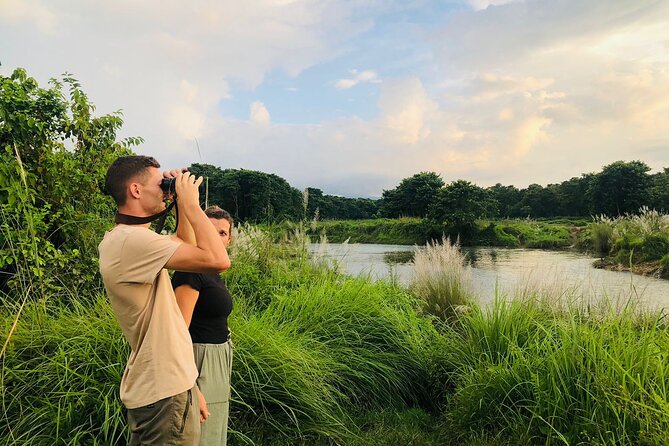
Day four is the most active day of the tour. It combines several ways to see Chitwan, and that variety is important. Wildlife sightings are never guaranteed, so changing the setting gives you more chances to notice birds, crocodiles, and other animals.
Rapti River canoeing
The 45-minute canoe trip offers a quiet view of the river edge. Crocodiles and other wildlife may be seen from close range, and the low position on the water changes the feel of the forest compared with a vehicle.
This is a short activity, but it adds a calm pause before the jungle walk. Keep your expectations sensible. A river outing is about watching carefully, not checking off a guaranteed animal list.
Jungle walking
The jungle walk lasts about three hours and takes you into the forest on foot. Walking makes the experience more alert and personal than a vehicle ride. You hear and notice the surroundings at a slower pace, while your guide helps you move through the area safely.
This is the part of the tour that needs the most attention to clothing and footwear. The supplied details do not specify equipment, so ask the operator what is recommended before departure. You should also be ready for heat, uneven ground, and a slower pace than a standard city walk.
Sauraha and the elephant center
After the walk, the route includes Sauraha and the Elephant Breeding and Training Center. The stop is listed at about an hour and adds another perspective on the animals and the local tourism economy.
The elephant center may be particularly interesting if you want more context about how elephants are cared for and trained. Give yourself time to listen to the guide instead of treating it as a quick photo stop.
Tharu village
The Tharu village visit lasts about 30 minutes and focuses on daily life and community activities. It is brief, but it prevents Chitwan from becoming only a wildlife stop.
Because the time is short, you will get an introduction rather than a full cultural program. Be respectful with photography and let the guide explain what you are seeing. The Tharu cultural show on the previous evening adds more local context.
Jeep safari
The four-hour open-top jeep safari is the longest activity of the day. It takes you through the park’s forest in search of wildlife and offers a better range than a short drive near the lodge.
The open vehicle gives you a clear view and makes photography easier, although weather can affect comfort. The safari is a strong reason to choose this tour if you want wildlife without committing to a multi-day wilderness trip. Still, nature does not run on a timetable. The experience is best judged by the forest, river, and chance of sightings, not by a promise of a particular animal.
Day 5: Chitwan to Pokhara and Phewa Lake
The route to Pokhara passes three notable rivers: the Trisuli, Marsyangdi, and Daraudi. These crossings give the drive some visual interest, but this remains a transfer day, so do not plan it as a full day of sightseeing.
After arriving in Pokhara, you visit Phewa Lake and go boating. The lake is closely tied to the town’s identity, and the water provides a welcome contrast to Chitwan’s forest and Kathmandu’s temples.
Two hours is enough for a boat outing and lakeside time. The calm water and surrounding hills make this one of the easier moments in the program. If the road journey has worn you out, resist the urge to overfill the evening. The following morning begins early.
Day 6: Sarangkot sunrise and Pokhara’s southern sights
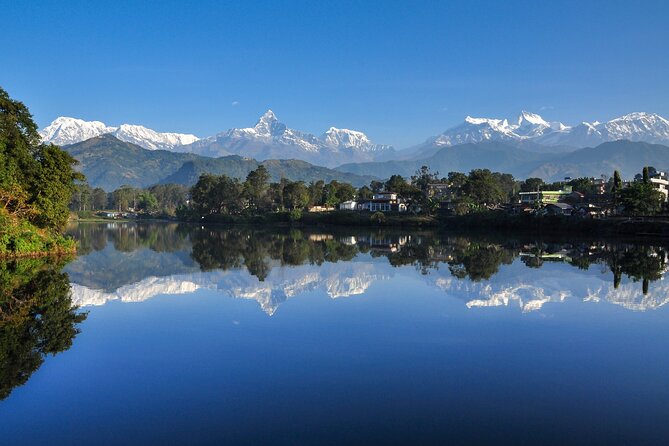
Day six starts at Sarangkot, a hill known for sunrise views toward the Annapurna and Manaslu regions and over Pokhara Valley. The early departure is the price of admission for the best light. Clouds can change the view, so treat clear mountain scenery as a bonus rather than a promise.
The one-hour visit is short, but sunrise does not require a long stay if conditions cooperate. Bring a warm layer if you are sensitive to early morning cold, though the supplied tour details do not specify temperatures or equipment.
Devi’s Fall and Gupteswar Gupha
Devi’s Fall is linked to water from Phewa Lake, which drops through a narrow gorge before reaching the Seti River. The visit lasts about 30 minutes, making it an easy stop between the morning viewpoint and the cave.
Gupteswar Gupha follows, with about an hour inside the cave. The cave is described as Nepal’s longest, at 2,950 meters, and is associated with a discovery in the 16th century. The combination of waterfall and cave gives the day a useful change from open mountain views.
World Peace Pagoda
The World Peace Pagoda requires a short hike from the city. Once there, you get a broad view of the lakeside area from beside the white pagoda.
The two-hour stop gives you time to walk, look around, and enjoy the view without the rushed feel of a roadside photo halt. It is one of Pokhara’s more peaceful stops, but the hike means you should be comfortable walking uphill. This is a full day with an early start, so keep the evening simple.
Day 7: Back to Kathmandu and Durbarmarg
The return to Kathmandu brings you back to Durbarmarg for a final hour of free time. You can shop, visit a massage center, look toward Narayanhiti Palace, or choose a club or pub.
This is not a major guided sightseeing day. It works as a buffer before your flight and gives you a chance to buy last-minute items. If you prefer quiet streets and cultural sites, Durbarmarg may feel more commercial than the old temple areas. If you want an easy final evening close to central Kathmandu, it is convenient.
Day 8: Airport transfer and departure
On departure day, staff take you to Tribhuvan International Airport according to your flight time. Since the exact pickup hour depends on your flight, give the operator your confirmed details early.
The package includes six breakfasts, two dinners, and two lunches. That covers some meals, but not every meal across eight days, so budget for additional food. The 5-star accommodation is a meaningful part of the price, especially after the road transfers and early Sarangkot start, but confirm the exact hotel names and what each property includes.
Is $1,400 a fair price?
At $1,400 per person, this is priced as a comfort-focused guided circuit rather than a budget Nepal trip. You are paying for 5-star accommodation, local coordination, admission fees, guiding, airport pickup, wildlife activities, and a route that would take real effort to arrange independently.
The value depends heavily on the transport question. Private transportation is listed as not included, even though pickup is offered. Ask for a written breakdown covering airport transfers, Kathmandu sightseeing, the Chitwan and Pokhara road legs, vehicle type, driver costs, and any park-related transport.
The company’s service style appears flexible. Mani, identified as the owner, is noted for being easy to communicate with and capable of adjusting arrangements. Sanjaya is named as a guide, while Binod and Ram are named as drivers in company trips. Ask who will handle your specific departure, since names and assignments can change.
A group maximum of 30 is stated. That is not a small private tour, and the experience may feel different depending on the final group size. If you want private pacing, ask about an upgrade and the extra cost.
Who should book this Nepal tour?
You should consider it if you want a first Nepal visit with major sights, comfortable hotels, wildlife, and local assistance in one package. It suits couples, families, and small groups who prefer a planned route over arranging each transfer themselves.
It is also a good fit if you want to see several regions without trekking. You get culture, forest, rivers, caves, a lake, and mountain viewpoints without sleeping outdoors or walking for days at altitude.
I would hesitate if you dislike long road journeys, early starts, or tightly scheduled sightseeing. You may also prefer another plan if your main goal is trekking, quiet village time, or a slow stay in Pokhara. This tour gives you breadth, not much free time.
The cancellation rule is simple but firm: cancel at least three full days before the local start time for a full refund. Later cancellations and changes are not accepted, and poor weather may lead to a new date or a full refund.
Should you book it?
Book this tour if you want Nepal’s main highlights in one organized week and value a higher hotel standard. The strongest parts are the cultural day in Kathmandu, the varied Chitwan program, and the sunrise, lake, and pagoda combination in Pokhara.
Before committing, get clarity on private transportation, exact hotels, group size, and the guide assigned to your departure. If those details are satisfactory, $1,400 can be a fair price for a broad and comfortable introduction to Nepal. If you want a slower, more independent trip, use this route as a framework and cut one region rather than trying to add even more stops.
FAQ
How long is the tour?
The tour lasts approximately eight days, beginning with airport pickup in Kathmandu and ending with transfer to Tribhuvan International Airport on day eight.
What destinations are included?
The route includes Kathmandu, Chitwan National Park, and Pokhara, before returning to Kathmandu. Main stops include Boudhanath, Patan Durbar Square, Pashupatinath, Swayambhunath, the Rapti River, Phewa Lake, Sarangkot, Devi’s Fall, Gupteswar Gupha, and the World Peace Pagoda.
Is private transportation included?
Private transportation is listed as not included. Airport pickup is offered, so you should confirm which transfers are covered and which require an extra payment.
How many people can join the tour?
The maximum group size is 30 travelers.
What meals are included?
The package includes six breakfasts, two dinners, and two lunches.
Can I cancel for a full refund?
Yes. You must cancel at least three full days before the experience start time for a full refund. Cancellations or changes made later are not accepted. If poor weather causes the experience to be canceled, you will be offered another date or a full refund.
Just added around Kathmandu
- Traditional Momo Making Class★ 5.0 · 10 reviews
- Women Empowerment Project(Nepali cooking class & jewelry workshop★ 5.0 · 15 reviews
- Manthali Airport (Ramechhap) To Kathmandu – Transport Service★ 4.5 · 11 reviews
- Amazing 1 Day Trekking Experience in Kathmandu Nepal★ 5.0 · 24 reviews
- Walking tour of Kathmandu with awesome local guides★ 5.0 · 4 reviews
- Walking tour of real Kathmandu through back streets.★ 5.0 · 3 reviews
- Private Manaslu Circuit Trek at Himalayas★ 5.0 · 3 reviews
- Walking Street Food Tour in Kathmandu★ 5.0 · 111 reviews
Tours, compared.
Private Kathmandu Sightseeing Tour | UNESCO World Heritage sites
Read our review →
Everest Base Camp Helicopter Tour landing at Everest View Hotel
Read our review →
Full Day 7 UNESCO Tour with Lunch – Private/Group
Read our review →
Private Bhaktapur and Nagarkot Day Tour From Kathmandu
Read our review →
Full Day Top 4 UNESCO Tour with Lunch – Private/Group
Read our review →