
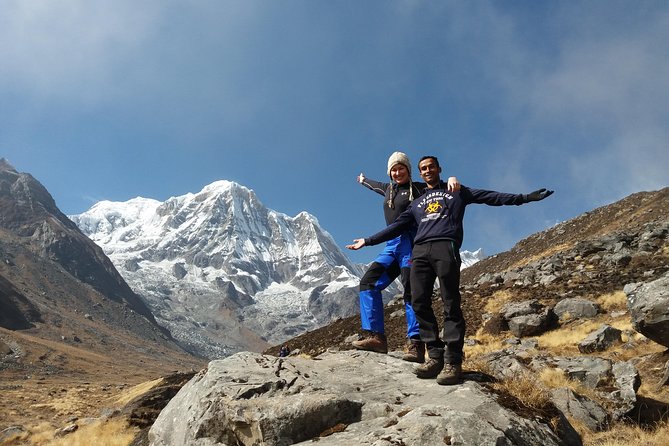
Reviewed · ANNAPURNA BASE CAMP TREKS
Annapurna base camp -9 days
The best part of this trek is the steady change in scenery: Gurung villages and terraced hills give way to rhododendron forest, then to the stark high country around Annapurna Base Camp. You get the famous peaks, but also village life, river valleys, hot springs, and time with a local guide.
I like that the price includes nearly all of the big costs, including transport, permits, meals, guide insurance, a sleeping bag, and a down jacket. I also like the private format, since guides such as Binod and Sona have adjusted plans for guests when travel schedules changed.
The main consideration is the pace. This is a real mountain trek with several hours of walking each day, steep stone steps, and a rapid gain in altitude. The advertised price also excludes a porter, which costs an additional $220 per person, as well as Kathmandu accommodation and personal expenses.
Key points before you book
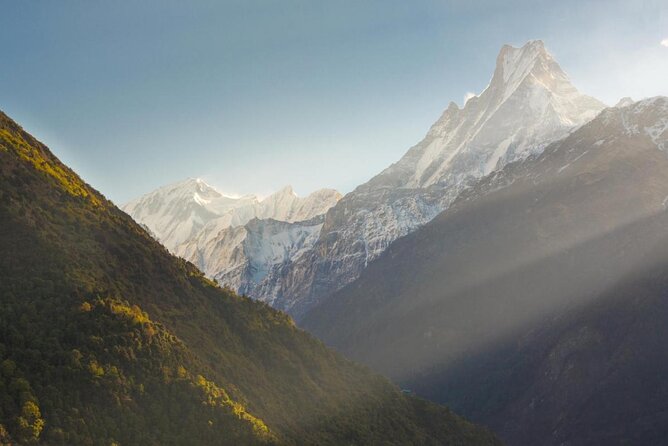
- Annapurna Sanctuary is the main prize: Reach the dramatic amphitheater around Annapurna Base Camp, with views of Annapurna South, Hiunchuli, Machhapuchhre, and surrounding peaks.
- The route mixes nature with village life: Walk through Gurung and Magar communities, terraced fields, forest, suspension bridges, and river valleys.
- The package is private: Only your group takes part, giving you more flexibility than a large scheduled group.
- The $693.34 price covers a lot: Meals, transport, permits, guide costs, insurance, lodging, and basic cold-weather gear are included.
- A porter is extra: Budget another $220 per person if you do not want to carry your own pack.
- You need moderate fitness: Daily walks last about four to six hours, with steep descents and climbs on stone paths.
Why the Annapurna Base Camp route works so well
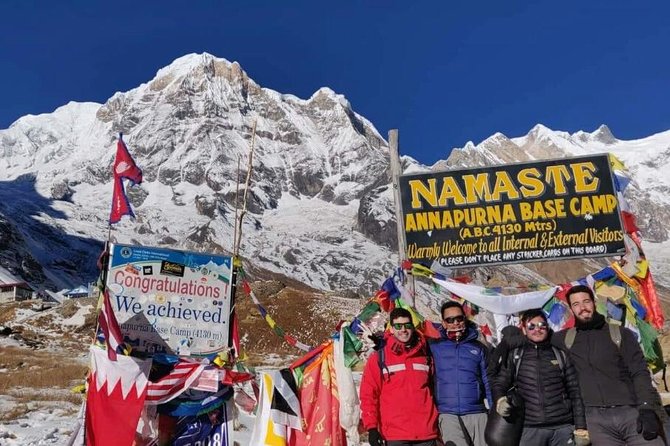
Annapurna Base Camp is not just a mountain viewpoint reached by road. You walk into the mountains through communities that still give the route its character. The path moves from low hills and farmland into forests, then into the high, open bowl known as the Annapurna Sanctuary.
That variety is what makes the nine-day plan appealing. You are not spending every day staring at one distant ridge. You pass through changing plant life, different village styles, and several river valleys. The mountain views also improve as you go.
The route is especially good for someone who wants a classic Nepal trek without committing to a two- or three-week journey. Nine days gives you enough time to reach the base camp and return, though it leaves less room for delays than a slower plan.
The package begins with airport pickup in Kathmandu, but the actual mountain program starts after your arrival day. That matters when planning flights. You need to allow enough time for the Kathmandu start, the road or flight connection to Pokhara, and the trek itself.
More Annapurna Base Camp treks:
- Annapurna base camp trek 5 Days
★ 5.0 · 252 reviews - Annapurna Base Camp Trek
★ 5.0 · 111 reviews - Kathmandu to Annapurna Base Camp (ABC) 5-Day Trek
★ 5.0 · 102 reviews
Kathmandu to Pokhara: the practical opening
Your arrival at Tribhuvan International Airport is covered by private vehicle transfer. The operator also provides a welcome or farewell dinner at a cultural restaurant in Kathmandu, but food and lodging in Kathmandu are not included in the trek price.
Transport between Kathmandu and Pokhara is included by tourist bus. An optional flight is available at extra cost. The bus keeps the package more affordable, while flying may suit you better if you value time or want to reduce the amount of road travel.
Pokhara is the staging point for the walk. From there, the route drives to Phedi, where the trail begins. The return from Nayapul includes a private car to Pokhara, followed by the onward transfer arrangement.
Keep your first and last travel days flexible. Mountain transport and flight schedules can affect the timetable, and the company has adjusted plans for some departures when guests had changes to their travel arrangements.
Day 1: Phedi to Dhampus and the first mountain views
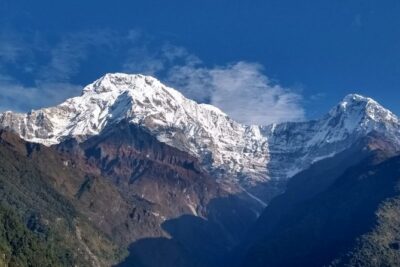
The day described as the Poon Hill stop begins with the arrival and transfer arrangement, while the actual trek starts from Phedi on the following day. From Phedi, you walk toward Dhampus, a Gurung village with wide views toward Hiunchuli, Annapurna South, and Machhapuchhre, also called Fishtail.
This is a useful first walking day because it introduces the rhythm without placing you immediately in the highest part of the route. You get a village setting, farmland, and open mountain views after the drive from Pokhara.
The listed walking time is about four hours. That sounds manageable, but Nepal trails often include stone steps and repeated short climbs. Use this day to settle your pace rather than trying to rush ahead.
The Poon Hill name in the day description can be confusing, since the detailed route given here focuses on the Phedi to Dhampus section. Ask the operator to confirm the exact first-night plan before departure.
Day 2: Landrung, Jhinu, and the first long descent
The next section takes you through oak forest and terraced fields toward Landrung. This village has Gurung, Magar, and Brahmin communities, giving the walk a strong cultural side as well as mountain scenery.
From there, the route continues down toward Jhinudanda and the Chhomrong area. The listed walking time is about five hours. Descending may sound easier than climbing, but long downhill stretches can be hard on your knees, especially on uneven stone stairs.
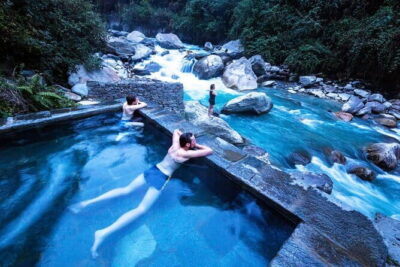
Jhinu is one of the route’s pleasant stopping points because of its natural hot springs. You may visit the springs during the stay, depending on the timing and the final overnight plan. One guest specifically had the schedule adjusted to spend a night near the hot springs, so ask if this is important to you.
More to do in the Annapurna Region:
- Annapurna Circuit Trek with Tilicho Lake
★ 5.0 · 368 reviews - Poon hill Trek 3 days
★ 5.0 · 176 reviews - Trekking in Annapurna/Langtang/Everest/Upper Mustang regions
★ 5.0 · 161 reviews - Pokhara: 4-Day Ghorepani, Poonhill & Ghandruk Mountain Trek
★ 5.0 · 132 reviews
Day 3: Crossing the Seti River and entering forest
From Chhomrong, you cross a bridge and climb toward Sinuwa Danda. The path then enters thick rhododendron forest and continues toward Khuldighar before dropping down a long, steep stone staircase.
The listed walking time is about five hours, but the stairs make this day feel more demanding than the number suggests. You will want sturdy footwear and a walking pace that lets you keep breathing comfortably.
This is where the route begins to feel more remote. The forest offers shade, but the stone steps can be slippery in wet conditions. Your guide is useful here for setting the pace and helping with route decisions.
The Annapurna region is known for its plant life and bird species, including the colorful Impeyan and blood pheasant. You should not expect to see rare wildlife on demand, but the forest gives you a chance to notice more than just the peaks.
Day 4: Bamboo forest and the approach to Machhapuchhre Base Camp
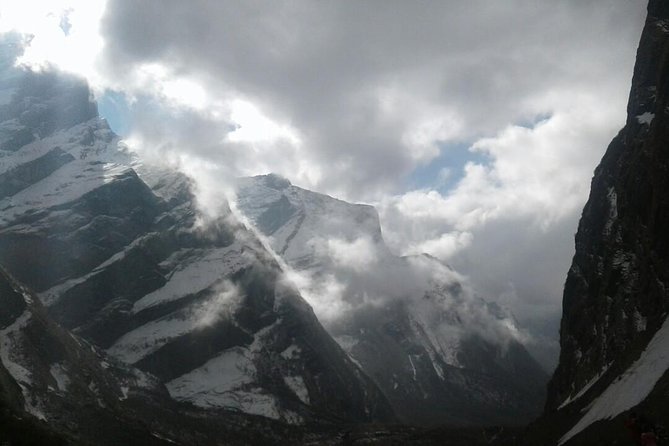
The path follows the Madi River through a sacred valley, climbing gradually through bamboo and forest. The route passes through an area where meat and fish are not allowed because of local Buddhist and Hindu beliefs.
This section takes about six hours. The gradual ascent is helpful for adapting to higher ground, but the increasing altitude can still make the walk tiring. Keep your pack light and drink regularly.
The forest begins to thin as you approach Machhapuchhre Base Camp. The name can be misleading because Machhapuchhre, or Fishtail, is considered sacred and is not climbed in the usual way. The base camp is an overnight stop and a major visual turning point, with high peaks closing in around the valley.
The no-meat rule is more than a small travel detail. It reflects the beliefs tied to this valley, and it is a reminder that you are walking through a place with its own customs, not simply a scenic route.
Day 5: Annapurna Base Camp and the high sanctuary
Leaving Machhapuchhre Base Camp, you move above the tree line and into the Annapurna Sanctuary. The setting becomes open and severe, with fewer plants and a broad circle of mountain walls around you.
The walk to Annapurna Base Camp takes about five hours. The distance is not the only challenge. At this height, a modest slope can feel much harder than it would near Pokhara.
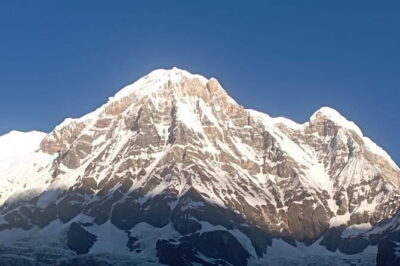
The payoff is the mountain setting. Annapurna South, Hiunchuli, Machhapuchhre, and other high peaks surround the sanctuary, giving you the close-up views that make this trek famous. Unlike a distant roadside viewpoint, you reach the center of the mountain basin on foot.
The base camp stop is also the point where you should pay attention to how your body feels. The guide carries a first-aid kit, but you are responsible for telling the guide promptly if you feel unwell. Personal travel and medical insurance are not included, and emergency helicopter costs are also excluded.
Day 6: Sunrise in the sanctuary and the long return
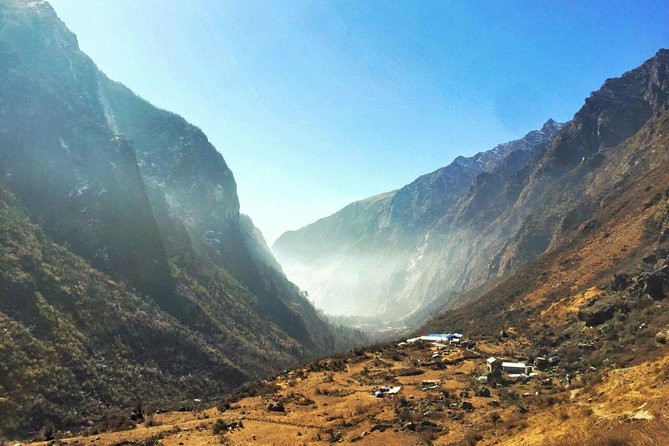
An early wake-up lets you see sunrise over the Annapurna Sanctuary. This is one of the strongest moments of the route, since the changing light reaches the peaks before the descent begins.
After breakfast, you follow the Modi Khola River down toward Bamboo Hut. The listed walking time is about six hours. Downhill travel is often tough after a high overnight stay, so trekking poles can be useful, though they are not listed among the included equipment.
The descent changes the feel of the trip quickly. Trees and warmer air return, and the route becomes less exposed. You still have a long way to go, but the most demanding high-altitude section is behind you.
Day 7: Chhomrong, Jhinu, and the final hard climb
The morning begins with an uphill walk to Sinuwa, followed by a descent to the Chhomrong Khola River. You then climb again to Chhomrong before making the final descent to Jhinu.
This day is about five to six hours and has a classic Nepal trail pattern: down to a river, up to a village, then down again. It is not the easiest day simply because you are returning. The repeated climbs can feel tiring after the base camp section.
If the hot springs are part of your schedule, Jhinu gives you a welcome chance to rest. The operator may also adapt the plan, as one departure was changed to allow a longer stay there. Confirm this before you set your expectations.
Day 8: Nayapul and the return to Pokhara
The final walking section is an easier descent along the Modi Khola River to Nayapul. From there, a private car takes you to Pokhara, with the drive listed at about one and a half hours.
The walking time is about five hours. It is still a full day, but the end feels close. Reaching Nayapul marks the completion of the mountain route, while Pokhara provides a more comfortable base before the journey back toward Kathmandu.
The final transfer to Kathmandu is included by tourist bus. If your international flight is soon after the trek, leave plenty of breathing room. The package gives you transport, but it does not remove the risk of delays on mountain roads.
What the $693.34 price really covers
At $693.34 per person, the package offers solid value if you use the included services. The price covers airport pickup and drop-off, tourist bus transport between Kathmandu and Pokhara, a licensed English-speaking guide, permits, paperwork, guide insurance, meals during the trek, accommodation, and a returnable down jacket and sleeping bag.
You also get breakfast, lunch, and dinner for nine days, plus nine nights of accommodation. The details describe the stays as teahouse-style lodging, and the practical standard is simple rather than luxurious. You are paying for access, support, food, and logistics in a remote mountain setting, not resort comfort.
The biggest extra is a porter at $220 per person. If you do not want to carry your own equipment, add that cost when comparing this trek with other packages. You also need to pay for international flights, Nepal visa charges, personal insurance, Kathmandu lodging and meals, hot showers, laundry, phone use, drinks, snacks, and tips.
That list can make the final cost much higher than the headline figure. Still, permits, meals, guide costs, gear, and transport are the expensive pieces to arrange independently, so the package is easy to understand and budget.
Guides, private format, and the human side
This is a private activity, so only your group takes part. That gives you more control than a large group departure, especially if you need a slower pace or want to adjust a night near the hot springs.
Guide assignments can vary. Binod and Sona are among the guides connected with past departures, while Shiva is associated with the company’s management. Porters named in departure feedback include Rajendra, Rahul, and Bikash. Do not assume a particular guide is guaranteed unless the operator confirms it in writing.
The strongest personal feature is the guide and porter support. Solo guests and family groups have received help with pacing, comfort, and schedule changes. That matters on a route where fatigue can build quickly and where a small adjustment can make the difference between enjoying the day and merely getting through it.
Who should book this trek
I would choose this trek if you want the Annapurna Base Camp experience in a compact nine-day plan, prefer a private group, and like having transport, meals, permits, and guide support arranged in advance.
It suits people with moderate physical fitness who can manage four to six hours of walking and repeated stone steps. You should also be comfortable with simple accommodation, changing weather, and the possibility that transport or plans may need adjustment.
I would hesitate if you want a relaxed holiday, dislike long descents, need guaranteed luxury lodging, or have no room in your schedule for transport delays. A longer Annapurna plan may be better if you want more rest days, though that option is not this package.
Should you book the Annapurna Base Camp trek?
Book it if the close mountain views, village contact, and private guiding matter more to you than polished comfort. The package includes the key trekking services and gives you a direct route into the Annapurna Sanctuary without asking you to organize every permit, meal, and transfer yourself.
Before paying, confirm the exact first-day route, the guide assigned to your group, the Kathmandu lodging plan, and the porter charge. If you budget for the extra costs and arrive ready for steep steps, this is a practical way to reach Annapurna Base Camp while still having room for local villages, forest, rivers, and the hot springs at Jhinu.
FAQ
How long is the Annapurna Base Camp trek?
The experience lasts approximately nine days. Daily walking sections are generally listed at about four to six hours.
Where does the trek begin?
The package begins with pickup at Tribhuvan International Airport in Kathmandu. The mountain trek begins after transport to Pokhara, with the walking route starting from Phedi.
Is airport pickup included?
Yes. Airport pickup and drop-off are provided in a private vehicle.
Is transport between Kathmandu and Pokhara included?
Yes. Tourist bus transport from Kathmandu to Pokhara and back to Kathmandu is included. An optional flight is available for an extra cost.
Are meals included?
Yes. Breakfast, lunch, and dinner are included for nine days during the trek.
Is a porter included in the price?
No. A porter costs an additional $220 per person.
What level of fitness is required?
A moderate level of physical fitness is required. You should be prepared for four to six hours of walking per day, including steep stone steps and repeated climbs.
What happens if I need to cancel?
You can receive a full refund if you cancel at least 24 hours before the experience start time. Cancellations or changes made less than 24 hours before the start time are not accepted for a refund.
Just added around Annapurna Region
- 4 Day Mardi Himal Base Camp Trek from Pokhara★ 5.0 · 18 reviews
- 7-Day Trek to Annapurna Base Camp from Pokhara★ 5.0 · 12 reviews
- Private 4 Day Poon Hill Trek from Pokhara★ 5.0 · 16 reviews
- Annapurna Base Camp Trek from Pokhara and Kathmandu★ 5.0 · 7 reviews
- 6 days Annapurna Basecamp Trek★ 5.0 · 16 reviews
- “Exclusive Round-Trip Transfer: Pokhara to Jomsom & Muktinath”★ 5.0 · 11 reviews
- Pokhara: Poon Hill Ghorepani Short Trek★ 5.0 · 6 reviews
- Pokhara: 4 Days Poon Hill and Ghandruk Trek★ 5.0 · 23 reviews
Annapurna Base Camp Treks, compared.
Kathmandu to Annapurna Base Camp (ABC) 5-Day Trek
Read our review →
Kathmandu/Pokhara: 5-Day Annapurna Base Camp (ABC) Trek
Read our review →
11-Day Hike Tour to Annapurna Base Camp Bliss in Kathmandu
Read our review →Browse the lists this tour appears in