
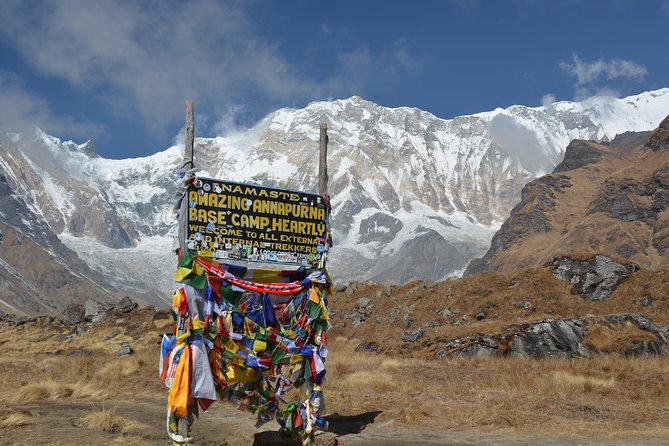
Reviewed · ANNAPURNA BASE CAMP TREKS
Annapurna Base Camp, Nepal 10 days
The best part of this 10-day Annapurna Base Camp trek is the steady change in scenery. You move from a long road trip and warm foothill villages into cool forest, stone stairways, high mountain country, and finally the bowl-shaped sanctuary beneath Annapurna. It is a proper mountain trek, not a sightseeing ride with a short walk added on.
I like the private format, which gives you more say over walking speed and rest stops. I also like the village-to-teahouse route, especially Ghandruk and the Gurung communities along the way. The main caution is simple: this is a demanding high-altitude trip with days of three to eight hours on foot, steep stone steps, and basic facilities.
Key points to know before booking
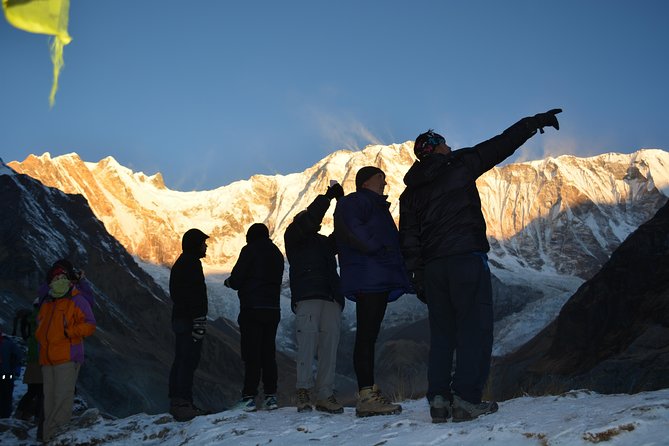
- Ghandruk brings the cultural start: Begin the walking portion in a Gurung village rather than heading straight into the high country.
- The route includes serious stair climbing: Chhomrong is reached and left by long runs of stone steps, including a descent of about 2,500 steps.
- Private guiding is the main comfort: You can adjust the pace with your guide instead of keeping up with a larger group.
- Teahouse life is part of the experience: Accommodation is included, but hot water, hot showers, WiFi, and battery charging cost extra.
- The highest point is the goal: Days 5 and 6 take you toward Deurali, Machhapuchhre Base Camp, and Annapurna Base Camp.
- The price covers a lot, but not everything: At $848 per person, transport, lodging, and most meals are included, while tips and several trekking comforts are not.
Why this 10-day route works
This trek gives you a full mountain story in a compact schedule. You start in Kathmandu, ride west to Pokhara, walk through settled hill country, and then follow a narrow route into the Annapurna Sanctuary. The return uses much of the same trail, but the downhill direction changes how the scenery feels.
The private setup matters more than it might on a simple day hike. Your group can go at its own pace, and a guide can help decide when to pause or when to keep moving. Previous trips have been led by guides including Resham GC, Sandip, Nitesh, and Raju, with Sandip receiving especially warm praise for his cheerful help and steady support.
You should still think of this as a serious physical holiday. The walking days run from about four to eight hours. The route includes steep climbs, long descents, suspension bridges, and high-altitude sections where a slow rhythm is far wiser than trying to win the trail.
More Annapurna Base Camp treks:
- Annapurna base camp trek 5 Days
★ 5.0 · 252 reviews - Annapurna Base Camp Trek
★ 5.0 · 111 reviews - Kathmandu to Annapurna Base Camp (ABC) 5-Day Trek
★ 5.0 · 102 reviews
Day 1: Kathmandu to Pokhara by tourist bus
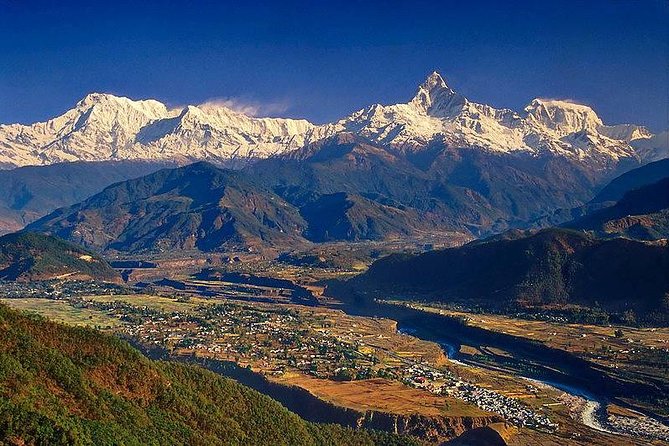
The first day is mostly about getting into position. You leave Kathmandu early and spend about seven hours on a tourist bus for the roughly 200-kilometer journey to Pokhara, at about 820 meters.
The road follows river valleys and hill country, so the ride gives you an early sense of Nepal beyond the capital. It is also the least glamorous part of the trip. Seven hours on a bus can feel long, especially after an international flight or a busy few days in Kathmandu.
The tour includes an air-conditioned vehicle, which is useful for this transfer. An optional flight is available for the return to Kathmandu at an additional $100, but the stated plan uses road transport. Pokhara is your staging point for the trek and a more relaxed place to prepare for the early start the next morning.
Day 2: Siwai to Ghandruk and the Gurung villages
After breakfast, you drive about two and a half hours to Siwai. From there, you begin walking toward Ghandruk for roughly four hours.
Ghandruk is one of the most appealing early stops because it introduces you to Gurung village life before the route becomes more rugged. The village is mainly inhabited by the Gurung community, and the setting gives you a useful cultural counterpoint to the mountain views.
This is a good first walking day because it is substantial without being the longest day on the schedule. You get your legs working, but you are not immediately pushed into the highest section. The trade-off is that road access to Siwai means the trip does not begin with a long approach from the lowlands. That saves time, but some hikers may prefer a slower buildup.
Accommodation shifts from a hotel in the cities to teahouses in the mountains. Teahouses are practical, social, and basic. You should expect a bed and meals, but not hotel-style services.
Day 3: Climbing toward Chhomrong
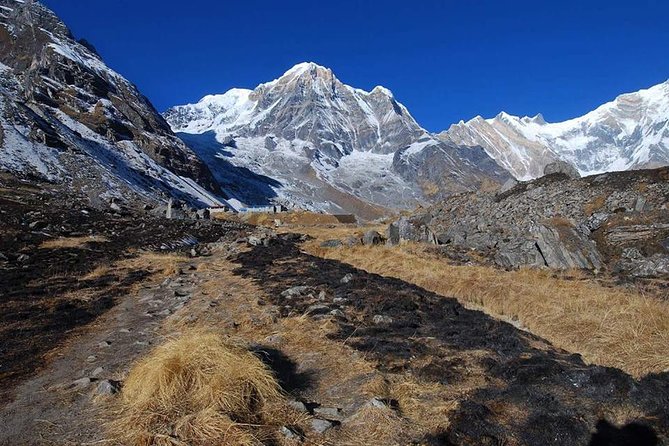
The route climbs for about an hour to Kimrungdanda, with views toward Annapurna South, Hiunchuli, Machhapuchhre, and Gangapurna. The full walking day lasts about six hours.
This is where the trek begins to feel properly Himalayan. The views open across several major peaks, and the trail gains height in a way you will feel in your legs. Machhapuchhre, also called Fishtail Mountain, is one of the memorable shapes along the route.
Chhomrong is an important waypoint because it sits above the valley leading toward the sanctuary. Reaching it means you have moved beyond the village approach and into the main trekking corridor.
Do not judge this day only by its six-hour duration. A climb with repeated stone steps can be harder than a longer but flatter walk. Keep your pace even, drink regularly, and let the guide set a sensible rhythm.
More to do in the Annapurna Region:
- Annapurna Circuit Trek with Tilicho Lake
★ 5.0 · 368 reviews - Poon hill Trek 3 days
★ 5.0 · 176 reviews - Trekking in Annapurna/Langtang/Everest/Upper Mustang regions
★ 5.0 · 161 reviews - Pokhara: 4-Day Ghorepani, Poonhill & Ghandruk Mountain Trek
★ 5.0 · 132 reviews
Day 4: Chhomrong, Sinuwa, and the forest trail
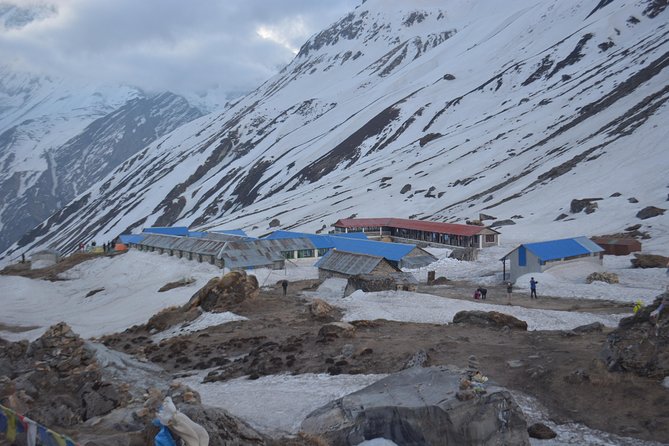
The trail out of Chhomrong drops down roughly 2,500 stone steps before crossing the Chhomrong Khola on a suspension bridge. After the crossing, you climb again toward Sinuwa and continue through forest toward Kuldighar.
This is one of the route’s most physical days because it gives you a classic Himalayan trick: lose height, then gain it again. The suspension bridge adds a memorable moment, but the real test is the repeated stair work.
The forest provides shade and a change from open mountain views. You may find the cool, enclosed trail refreshing, though damp conditions can make the surface feel slick. The walk takes about five hours, but your knees may remember it longer than the clock suggests.
Chhomrong is also a useful place to understand the shape of this trek. Progress is not a straight line upward. The route follows the contours of the valleys, and that means descents are part of the price of reaching higher ground.
Day 5: Bamboo to Deurali at 3,230 meters
From Bamboo, you spend four to five hours heading toward Deurali, at about 3,230 meters, or 10,595 feet. The route passes through bamboo forest, described as damp and cold, then climbs steadily with fewer very steep sections.
The character of the walk changes here. The forest feels cooler, the air thinner, and the settlements more closely tied to the trekking route. After Himalaya Hotel, the trail becomes more open as you gain height.
Deurali is a key overnight stop before the base camp approach. This is also where you should pay closer attention to how your body feels. The tour is designed for people with moderate fitness, but high-altitude trekking is not just a fitness test. A private guide can help you slow down, rest, and avoid wasting energy.
Teahouse facilities are basic at this stage. Hot water, hot showers, WiFi, and battery charging are not included, so carry enough power for the trip and do not count on a long, comfortable shower each evening.
Day 6: Machhapuchhre Base Camp and Annapurna Base Camp
This is the central day of the trek. You climb through a river bed and then take a steeper trail along the mountainside. The section from Bagar to Machhapuchhre Base Camp is described as strenuous, and the walking day lasts about six hours.
From Machhapuchhre Base Camp, you continue toward Annapurna Base Camp. The surrounding peaks become the main event, and the sense of entering the Annapurna Sanctuary grows with each step. You are walking toward the foot of one of the world’s tallest mountains, with the route enclosed by high Himalayan summits.
This day is short enough on paper to seem manageable, but the altitude and steep trail make it one of the hardest parts. Your guide’s role is especially valuable here. The private arrangement allows the group to move slowly without worrying about holding up a larger party.
The reward is not a single quick viewpoint. It is the gradual arrival into a high mountain basin, where the scale of the peaks gives the trek its purpose. Weather can affect this part of the journey, so flexibility matters. The operator states that poor weather can lead to a different date or a full refund if the experience is canceled.
Day 7: Retracing the trail to Bamboo
After reaching Annapurna Base Camp, you retrace your steps toward Bamboo. The walk lasts about eight hours and is mostly downhill.
Downhill sounds easy until you have spent several days climbing and your knees meet the same stone steps from the opposite direction. The benefit is that the scenery now feels familiar, and the route should require less effort from your breathing than the ascent.
This is the longest stated walking day, so it deserves a realistic approach. Start early, take sensible breaks, and do not treat the descent as a race. The extraordinary mountain scenery helps, but tired legs still need care.
Returning by the same trail is not a flaw in this route. The Annapurna Base Camp approach is an out-and-back route, and the descent lets you notice details missed while climbing. You also get a different view of the bridges, forests, and valley walls.
Day 8: Bamboo to Jhinu Danda
From Bamboo, you climb toward Kuldighar, descend to the Chhomrong Khola, and then climb the stone steps to Chhomrong. From there, the trail descends to Jhinu Danda. The walking time is about six hours.
This is another day of opposing movements. You gain height, lose it, gain it again, and finally descend. The pattern can feel tiring, but it also brings you back through several distinct sections of the route.
Jhinu Danda is a useful overnight stop because it breaks up the return journey. The walk is still demanding, but you are now moving toward lower country and the end of the high mountain section.
The schedule gives you time to appreciate the route rather than rushing directly from Base Camp to the road. That is one reason the 10-day format has value, even though a shorter Annapurna Base Camp itinerary may be available elsewhere.
Day 9: Jhinu Danda to Siwai, then Pokhara
You walk from Jhinu Danda to Siwai in about six hours. Along the way, the route offers western Nepal hill scenery and views of wild bee hives under cliffs. Lunch is taken along the way before you board the vehicle at Siwai.
This final walking day brings you back into warmer, lower surroundings. It is a satisfying transition from remote mountain paths to road travel, though the six-hour walk means you do not simply coast to the finish.
You then return to Pokhara. The day combines a real final hike with transport, so it may feel longer than a simple arrival in town. Plan to keep some energy for the ride and the evening.
Day 10: Pokhara to Kathmandu
After breakfast, you drive back to Kathmandu in about seven hours. The alternative flight costs an additional $100.
The final day is not a sightseeing day in the usual sense. It is mainly a transfer, with time in Kathmandu for shopping, souvenirs, rest, and looking around after the trek. That arrangement works well if you need to return to the capital, but it leaves little room for a relaxed final morning if the road journey runs long.
The bus keeps the listed price lower. The flight saves road time but adds cost, so your choice depends on how much you value convenience at the end of ten active days.
What the $848 price really covers
At $848 per person, the package includes a substantial set of essentials:
- Hotel and teahouse accommodation
- Air-conditioned vehicle transport
- Ten breakfasts
- Seven dinners
- Eight lunches
- Private guiding
- The stated Kathmandu to Pokhara and return transport plan
That is a fair structure for a private trek, but you should budget for extras. Hot water, hot showers, WiFi, and battery charging during the trek are not included. Tips for the crew are also separate.
The meal count is worth reading carefully. Breakfast is included for all ten days, while dinner is included on seven days and lunch on eight. The package covers most meals, not every meal in every situation.
Pickup is offered, the meeting time is 6:15 a.m., and confirmation is provided at booking. The experience is marked as suitable for people with moderate physical fitness. Cancellation is free until 24 hours before the start time, while late cancellations and last-minute changes are not accepted.
Who should book this trek
I would recommend it to a fit person who wants a private Himalayan route without arranging every hotel, vehicle, guide, and meal separately. It also suits a small group of friends who want to walk together and adjust the pace as needed.
The trip is less suitable if you want luxury lodging, reliable internet, daily hot showers, or short walking days. It is also not a good match if you dislike long bus rides, steep stairs, or repeating part of a trail on the return.
The positive pattern from past trips is clear: guides such as Sandip, Resham GC, Nitesh, and Raju have been praised for being caring, helpful, friendly, and attentive. That human support matters on a route where small problems can become tiring ones.
Should you book the Annapurna Base Camp trek?
Book it if you want a focused mountain trek with village life, forest walking, major peak views, and a private guide at a relatively accessible price. The strongest reasons are the flexible pace, the included transport and meals, and the gradual route from Ghandruk to the Annapurna Sanctuary.
Think twice if you need polished facilities or an easy holiday. The stone steps, eight-hour return day, basic teahouses, and extra charges for simple comforts are real parts of the experience. For a fit hiker who accepts those limits, this 10-day plan offers a well-rounded way to reach Annapurna Base Camp without managing the complicated details alone.
FAQ
How long does the Annapurna Base Camp experience last?
The experience lasts approximately 10 days, including transport between Kathmandu and Pokhara and the walking route to and from Annapurna Base Camp.
Where does the tour start?
The tour starts in Kathmandu, with a stated meeting time of 6:15 a.m. Pickup is offered.
How much does the trek cost?
The listed price is $848 per person.
Is this a private tour?
Yes. Only your group participates, and the route can be customized to suit your needs.
How many hours do you walk each day?
The walking days take approximately four to eight hours. The overview describes daily walking of about three to eight hours, depending on the route section.
What accommodation is included?
Accommodation in hotels and mountain teahouses is included.
Are meals included?
Most meals are included. The package lists 10 breakfasts, seven dinners, and eight lunches.
Are hot showers, WiFi, and battery charging included?
No. Hot water, hot showers, WiFi, and battery charging during the trek are not included.
Can I cancel for a full refund?
You can cancel at least 24 hours before the experience start time for a full refund. If poor weather or insufficient numbers cause the operator to cancel, you are offered another date or experience, or a full refund.
Just added around Annapurna Region
- 4 Day Mardi Himal Base Camp Trek from Pokhara★ 5.0 · 18 reviews
- 7-Day Trek to Annapurna Base Camp from Pokhara★ 5.0 · 12 reviews
- Private 4 Day Poon Hill Trek from Pokhara★ 5.0 · 16 reviews
- Annapurna Base Camp Trek from Pokhara and Kathmandu★ 5.0 · 7 reviews
- 6 days Annapurna Basecamp Trek★ 5.0 · 16 reviews
- “Exclusive Round-Trip Transfer: Pokhara to Jomsom & Muktinath”★ 5.0 · 11 reviews
- Pokhara: 4 Days Poon Hill and Ghandruk Trek★ 5.0 · 23 reviews
- Poon Hill Ghandruk Circuit Trek from Pokhara 4 Days★ 5.0 · 10 reviews
Annapurna Base Camp Treks, compared.
Kathmandu to Annapurna Base Camp (ABC) 5-Day Trek
Read our review →
Kathmandu/Pokhara: 5-Day Annapurna Base Camp (ABC) Trek
Read our review →
11-Day Hike Tour to Annapurna Base Camp Bliss in Kathmandu
Read our review →Browse the lists this tour appears in