
Reviewed · ANNAPURNA BASE CAMP TREKS
Annapurna Base Camp Trek 10 Days
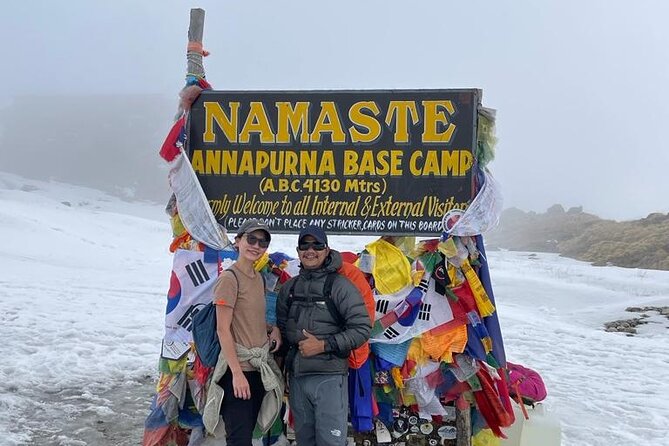
Annapurna Base Camp gives you a rare mix of high mountain drama and village life in only 10 days. The route moves from Pokhara’s lakeside setting through Gurung and Magar communities, forest trails, stone steps, and finally the stark amphitheater below Annapurna I and Machapuchare. You reach 4,130 meters, but the route remains more approachable than many longer Himalayan treks.
I like two things right away: the strong guide and porter setup, which takes pressure off carrying gear, and the route’s variety, from Ghandruk’s village views to sunrise at base camp. The main consideration is physical effort. Long days, steep steps, and a fast schedule mean you need moderate fitness, and the Day 10 return from Pokhara is not fully fixed between a scenic flight and a bus.
Key points to know before you book
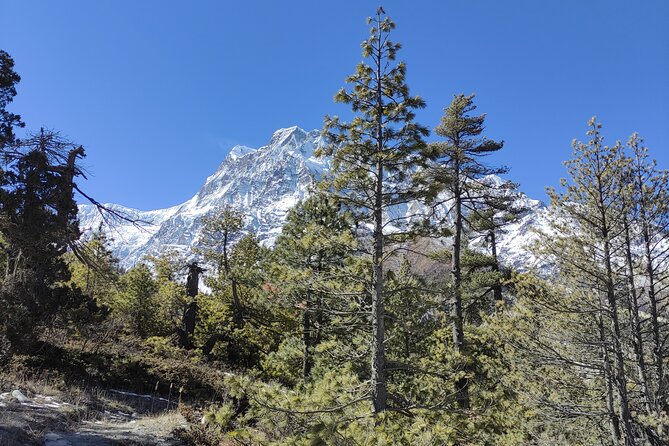
- Base camp at 4,130 meters: The high point brings you into a huge mountain bowl surrounded by Annapurna peaks, Hiunchuli, Gangapurna, and Machapuchare.
- A practical 10-day route: You combine trekking with road transfers, two nights in Pokhara, and a return to Kathmandu.
- Named guide support: Guides Sudam and Ganesh have been repeatedly praised for attentive care, humor, and group management.
- Porter assistance included: One porter is assigned for every two trekkers, with a combined baggage limit of 25 kilograms.
- Meals and permits are covered: Eight breakfasts, eight lunches, eight dinners, ACAP and TIMS permits, sleeping bags, and down jackets are included.
- A group of up to 16: This is not a private trek for just two people, but the maximum group size is still manageable.
Why Annapurna Base Camp works in 10 days
The appeal of this trek is its compact shape. You do not spend days simply approaching the mountains. From Kathmandu, you reach Pokhara by tourist bus, then begin the mountain route near Ghandruk. Within a few walking days, the scenery shifts from wooded hillsides to high alpine ground.
The route is also a good introduction to Nepal’s trekking style. You walk through traditional villages, cross suspension bridges, pass streams, and climb long flights of stone steps. The path is not easy, but it does not demand the time commitment of a much longer Himalayan circuit.
Your final goal is Annapurna Base Camp, not a summit. That distinction matters. You are walking to a mountain camp at 4,130 meters, where the surrounding peaks create the main spectacle. You do not need climbing equipment or technical mountaineering skills based on the information provided, but you do need to be ready for sustained uphill walking and altitude.
The itinerary uses the same broad trail for much of the return. That keeps navigation simple, and your guide can focus on pacing, meals, and daily conditions. It also means the second half can feel repetitive, especially on the descent from base camp to Bamboo.
More Annapurna Base Camp treks:
- Annapurna base camp trek 5 Days
★ 5.0 · 252 reviews - Annapurna Base Camp Trek
★ 5.0 · 111 reviews - Kathmandu to Annapurna Base Camp (ABC) 5-Day Trek
★ 5.0 · 102 reviews
Day 1: Kathmandu to Pokhara by tourist bus
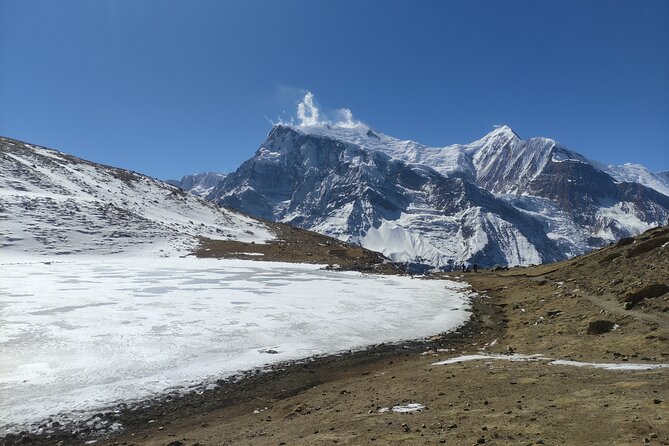
The trek begins at the operator’s office in Chhusya Galli, Kathmandu, with an 8:15 am start. Airport pickup and a transfer to your hotel are included, along with Kathmandu sightseeing by private vehicle, although the detailed schedule does not specify how much sightseeing time is available before the trek.
The bus trip to Pokhara takes about six to seven hours, with the full day listed at roughly eight hours. A tourist bus is a sensible value choice. It costs less than flying and lets you watch the hills and river valleys change along the route, but it is not the quickest way to reach the trail.
Pokhara is an important part of the trip, not just a transit point. It is a lakeside base with views toward the Annapurna region, and you return here after the trek for a leisure day. The first night helps break up the journey from Kathmandu before the walking begins.
Day 2: Ghandruk, a village start with mountain views
After breakfast, you drive from Pokhara to Ghandruk in about three to three and a half hours. At roughly 1,940 meters, Ghandruk gives you a gentler introduction to altitude than starting immediately at a much higher elevation.
The village is mainly inhabited by Gurung people, and the route begins with a strong cultural element rather than just mountain scenery. You can expect traditional settlements, hillside paths, and broad views of the Annapurna area. The itinerary allows about five hours for this day, including the drive and time around Ghandruk.
This is a short walking day compared with what comes later, which is useful. You have time to settle into the rhythm of a mountain trek, check your daypack, and learn how the guide organizes the group.
Day 3: Ghandruk to Chhomrong over steep stone steps
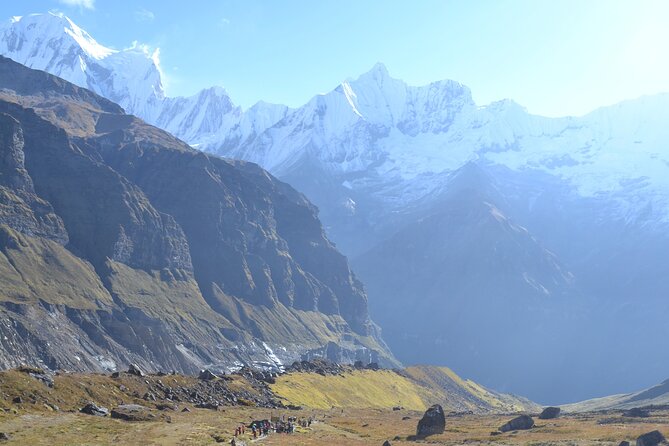
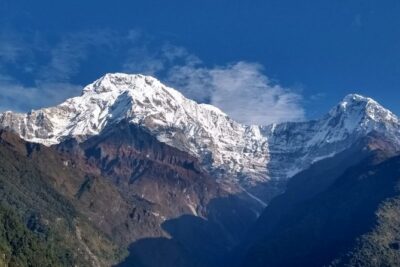
From Ghandruk, the trail climbs for about an hour to Kimrungdanda. This section rewards the effort with views toward Annapurna South, Hiunchuli, Machapuchare, and Gangapurna. The route then continues toward Chhomrong, a major settlement on the approach to base camp.
The day is listed at about six hours. That sounds moderate, but uphill steps can make it feel longer than a flat six-hour walk. You should expect a steady pace rather than a casual village stroll.
Chhomrong is an important point on the route because the trail begins to feel more remote and more mountain-focused from here. The village also marks the start of many stairs, a recurring feature of this trek. Your guide’s role becomes useful here. A good guide can help set a pace that keeps the group moving without burning out early.
More trekking days out of Annapurna Region:
- Annapurna Circuit Trek with Tilicho Lake
★ 5.0 · 368 reviews - Poon hill Trek 3 days
★ 5.0 · 176 reviews - Trekking in Annapurna/Langtang/Everest/Upper Mustang regions
★ 5.0 · 161 reviews - Pokhara: 4-Day Ghorepani, Poonhill & Ghandruk Mountain Trek
★ 5.0 · 132 reviews
Day 4: Chhomrong to the Himalayan Hotel
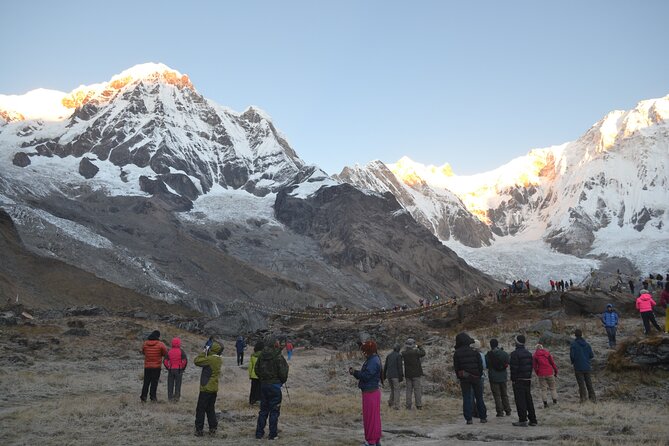
This is one of the most varied days. You first descend through thousands of steps to the Chhomrong Khola, cross a suspension bridge, and then climb again toward Khuldighar at about 2,380 meters.
The route passes through forest and along the Modi Khola valley. You may find this combination of descent followed by ascent frustrating, especially if you are thinking only in terms of distance. In mountain trekking, a downhill section is not always an easier day because every lost meter must later be regained.
The day takes about seven hours. The Himalayan Hotel is a useful overnight point before the final push toward the high camps. The forested sections also provide a different mood from the open mountain views earlier in the trek. Shade can help, but wet or uneven trail conditions may make footing slower.
Day 5: Machhapuchhre Base Camp to Annapurna Base Camp
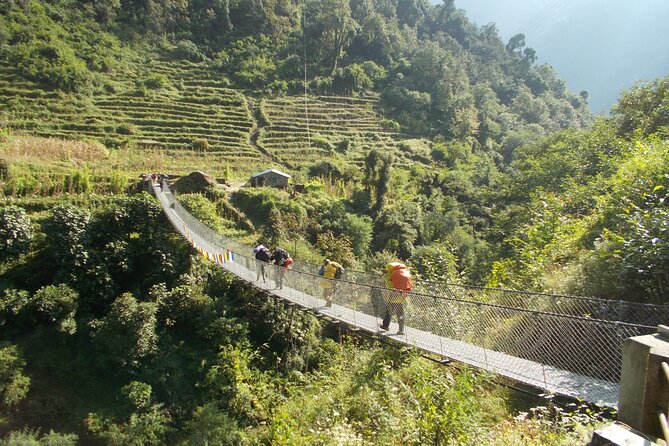
This is the dramatic heart of the trek. From the Himalayan Hotel, you walk about an hour to Deurali, then continue through a riverbed and up a steeper trail toward Bagar. The route eventually reaches Machhapuchhre Base Camp, often shortened to MBC.
From MBC, the vegetation begins to disappear as you approach Annapurna Base Camp. The change is striking. Forest gives way to open high mountain ground, with fewer distractions between you and the surrounding peaks.
The final approach to ABC takes about six hours for the day’s route. At 4,130 meters, base camp is high enough that the altitude becomes a real concern. The itinerary does not provide a separate acclimatization day at this elevation, so you should take the pace seriously, drink regularly, and tell your guide if you feel unwell.
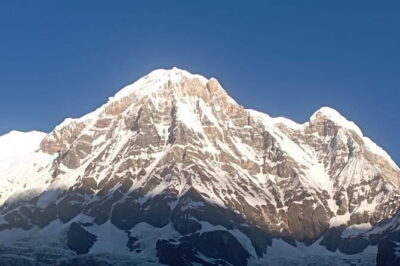
The reward is the mountain amphitheater. Annapurna I, Machapuchare, Hiunchuli, Annapurna South, and other peaks rise around the camp. The sunrise is a key moment, so the overnight stay at ABC matters. You are not simply walking in, taking a photo, and leaving. You have a chance to see the peaks change color in the morning before beginning the descent.
Day 6: Descending from base camp to Bamboo
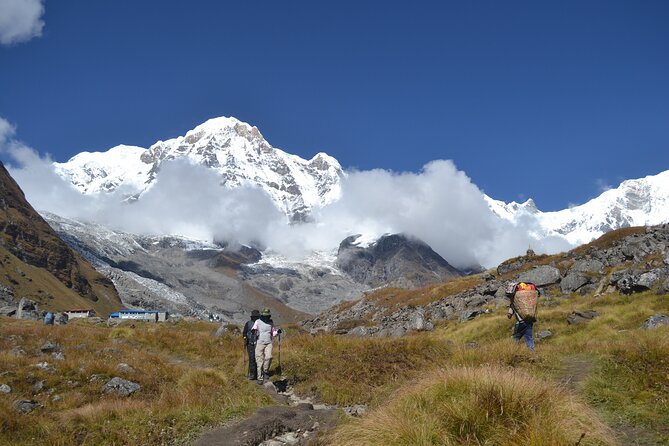
After sunrise at Annapurna Base Camp, you retrace the trail toward Bamboo. The day is listed at about eight hours, making it one of the longest and most tiring sections.
Descending is easier on the lungs than climbing at altitude, but it can be hard on knees and thighs. The trail includes the same uneven ground, steps, and river sections you crossed on the way up. Trekking poles would be useful, although poles are not listed among the included equipment.
Bamboo brings you back into a lower, greener section of the route. The contrast with the open ground around ABC is part of the trek’s charm, but this day is not a leisurely stroll. You should expect fatigue and keep your focus on careful foot placement.
Day 7: Bamboo to Jhinu Danda
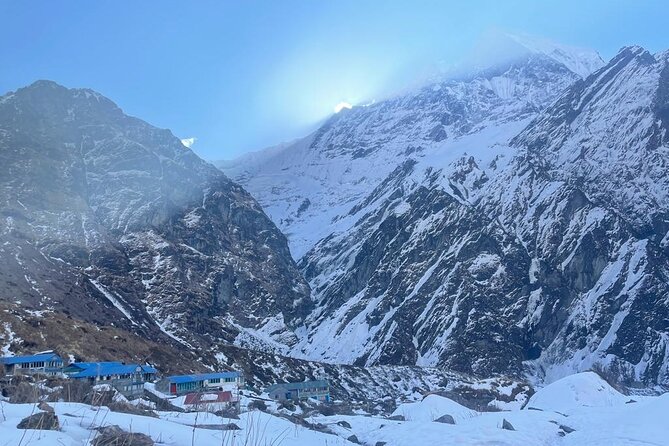
The route first climbs toward Kuldighar, then descends to Chhomrong Khola. After crossing the river, you climb again through stone steps for about an hour before reaching Chhomrong and continuing toward Jhinu Danda.
This six-hour day contains the familiar Annapurna pattern: down to a river, then back up the hillside. The repeated climbs can test your patience after the base camp day, but the route also gives you a final chance to enjoy the villages and hills before leaving the mountain trail.
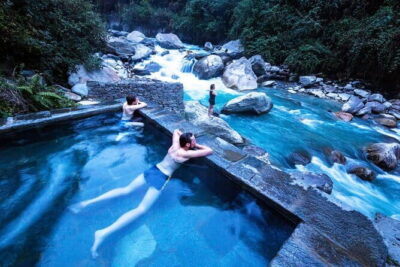
Jhinu Danda is a well-known stopping point on this route. The supplied schedule does not promise a hot spring visit, so you should not assume that it is included as an organized activity. The value of stopping here is mainly its location on the return route and the chance to break up the descent.
Day 8: Jhinu Danda to Naya Pul, then Pokhara
You follow the Modi Khola for about four to five hours, passing through the hills of the Annapurna Conservation Area before reaching Birethanti and continuing to Naya Pul.
The walking day is listed at about five hours, followed by roughly an hour’s drive to Pokhara. After several days of mountain paths, the road transfer feels like a clear change of pace.
This is a satisfying final walking day because you can look back on the route while moving through lower hills. It also avoids forcing you to walk all the way into Pokhara, which would make the day far too long.
Day 9: A free day in Pokhara
The leisure day is one of the better features of this schedule. You can recover from the trek instead of being rushed straight back to Kathmandu.
The itinerary suggests Phewa Lake and Begnas Lake, along with independent sightseeing in Pokhara. You can use the day for a quiet lakeside break, a walk, or simply rest. Since no organized sightseeing is specified for this day, any personal activities should be treated as separate from the package.
A free day also adds practical value. Mountain transport can change because of road or flight conditions, and an extra day in Pokhara gives the schedule a little breathing room before your return to Kathmandu.
Day 10: Pokhara back to Kathmandu
The final transfer is described as either a scenic flight or a bus, taking about eight hours in the schedule. The choice is important, so confirm it before booking or before the trek starts.
A flight is much faster and offers a final view of the Annapurna range. The tourist bus is slower but follows the overland route and avoids the cost of air travel if that is not included. Since the details do not state which option is included or who makes the decision, this is the clearest point to clarify with the operator.
The activity ends back at the Kathmandu meeting point. Airport pickup, hotel transfer, and Kathmandu sightseeing are included in the overall program, but the final day’s exact transport arrangement should be treated as something to verify.
What the $996 price covers
At $996 per person, the package offers solid value if you want a supported trek rather than arranging each part yourself. The price includes a licensed trekking guide, porter support, transport on the stated route, permits, meals, equipment, guide and porter costs, and government taxes.
The food allowance covers eight breakfasts, eight lunches, and eight dinners. That matches the trekking portion, although you should check which meals are covered on transfer days and whether drinks or snacks are extra.
A porter carries baggage for every two trekkers, with a maximum of 25 kilograms. That means you should not expect one porter to carry a full 25 kilograms for each person. Pack carefully and confirm how your group’s luggage will be divided.
The sleeping bag and down jacket are useful inclusions, especially if you do not want to buy or transport cold-weather gear for one trek. The first-aid kit is also supplied. Emergency rescue help is not covered by the operator’s package, so your own travel insurance must handle that risk.
Guides, group size, and the human side of the trek
The strongest personal detail attached to this trip is the repeated praise for guides Sudam and Ganesh. They are described as attentive, professional, funny, and good at looking after a group of 11. Sudam has also guided repeat clients on another Himalayan trek, and he speaks Chinese, which may help Chinese-speaking trekkers.
That does not guarantee that both guides will lead every departure. Guide assignments can vary, so ask who is scheduled for your date. Still, the company’s guide model is clearly one of the package’s main strengths.
The maximum group size is 16 people. That is large enough to have company on the trail, but small enough for a guide to keep track of the group. The porter ratio also gives you useful practical support without turning the trek into a fully private expedition.
You need a moderate level of physical fitness. That means you should be comfortable walking for up to eight hours, climbing steep steps, and handling repeated ascents and descents. This is not a good choice if you want a relaxed sightseeing holiday with only short walks.
Who should book this trek
I would recommend this route to you if you want a first Himalayan trek with a clear goal, included support, and enough time for Pokhara. It suits people who value mountain scenery but also want villages, bridges, forests, and local communities along the way.
It is also a good fit if you prefer to let a guide handle permits, route planning, luggage support, and basic equipment. The combination of a licensed guide, porter, meals, and transport removes much of the planning work.
I would hesitate if you need a slow acclimatization schedule, dislike long stair sections, or want a guaranteed private itinerary. The 10-day plan is efficient, but not leisurely. You should also clarify the Day 10 flight or bus choice, the exact guide assignment, and how luggage limits apply to your group.
Cancellation is generous only if you act early: cancel at least six full days before the start for a full refund. A cancellation two to six days before departure receives 50 percent back, while cancellation less than two days before departure is nonrefundable.
Should you book the Annapurna Base Camp Trek?
Book it if the idea of waking below Annapurna at 4,130 meters excites you more than the thought of a few hard days on stone steps. The scenery is the main prize, but the route earns its appeal through village life, changing terrain, strong guide support, and a sensible rest day in Pokhara.
At $996, the package is particularly attractive if you would otherwise need to arrange permits, transport, porters, meals, and cold-weather gear separately. I would ask about the return transport and guide assignment before paying, then prepare for long walking days rather than treating this as a soft adventure.
For a first supported trek in Nepal, this is a focused and rewarding choice. Just bring realistic fitness, a flexible attitude toward mountain transport, and enough time to enjoy the trail instead of racing only toward the base camp sign.
FAQ
Where does the Annapurna Base Camp trek start?
The trek starts at The Great Adventure Treks & Expedition office in Chhusya Galli, Kathmandu. The listed start time is 8:15 am.
How high is Annapurna Base Camp?
Annapurna Base Camp is at 4,130 meters above sea level.
Is transport from Kathmandu to Pokhara included?
Yes. Transport from Kathmandu to Pokhara by tourist bus is included. The return from Pokhara to Kathmandu is described as either a scenic flight or tourist bus, so confirm the exact arrangement.
Is a guide included?
Yes. The package includes a professional trekking guide with a government license. Guides named in the available trip details include Sudam and Ganesh, but you should confirm who will lead your departure.
How is porter support arranged?
One porter is provided for every two trekkers. The maximum combined baggage allowance is 25 kilograms for the porter arrangement.
Are meals included?
Yes. The package includes eight breakfasts, eight lunches, and eight dinners.
What equipment is included?
A sleeping bag and down jacket are included, along with a first-aid kit. Emergency rescue help is not included in the package and must be covered by your travel insurance.
Just added around Annapurna Region
- 4 Day Mardi Himal Base Camp Trek from Pokhara★ 5.0 · 18 reviews
- 7-Day Trek to Annapurna Base Camp from Pokhara★ 5.0 · 12 reviews
- Private 4 Day Poon Hill Trek from Pokhara★ 5.0 · 16 reviews
- Annapurna Base Camp Trek from Pokhara and Kathmandu★ 5.0 · 7 reviews
- 6 days Annapurna Basecamp Trek★ 5.0 · 16 reviews
- “Exclusive Round-Trip Transfer: Pokhara to Jomsom & Muktinath”★ 5.0 · 11 reviews
- Poon Hill Ghandruk Circuit Trek from Pokhara 4 Days★ 5.0 · 10 reviews
- Pokhara: Poon Hill Ghorepani Short Trek★ 5.0 · 6 reviews
Annapurna Base Camp Treks, compared.
Kathmandu to Annapurna Base Camp (ABC) 5-Day Trek
Read our review →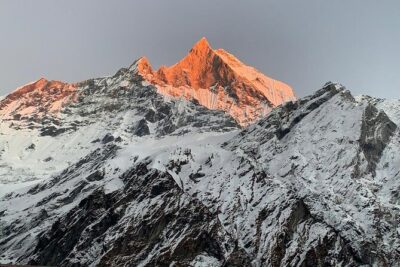
Kathmandu/Pokhara: 5-Day Annapurna Base Camp (ABC) Trek
Read our review →
11-Day Hike Tour to Annapurna Base Camp Bliss in Kathmandu
Read our review →Browse the lists this tour appears in