
Reviewed · ANNAPURNA BASE CAMP TREKS
Annapurna Base Camp Trek – 11 Days
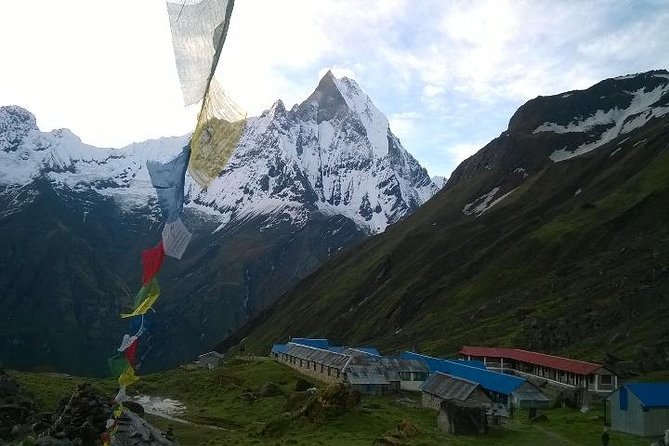
Annapurna Base Camp gives you a fine slice of Nepal in 11 days: rhododendron forests, stone stairways, ethnic villages, hot springs, and high Himalayan views. The route also includes an early climb to Poon Hill and a night near Annapurna Base Camp, so you get two very different mountain viewpoints rather than one long march to a single destination.
I like the practical setup. The price includes transport from Kathmandu, a guide, permits, guesthouse accommodation, most meals, a down jacket, sleeping bag, duffel bag, first-aid supplies, and an oxygen monitor. I also like the private format, since your group can move at its own pace more easily than a large fixed group.
The main caution is physical: this is an active trek with repeated uphill and downhill sections, many stone stairs, and a high point of about 4,130 meters at Annapurna Base Camp. The itinerary also needs careful checking, since several days involve long walks and the route description repeats sections around Sinuwa, Chhomrong, and Jhinu Danda.
Key points to know before you book
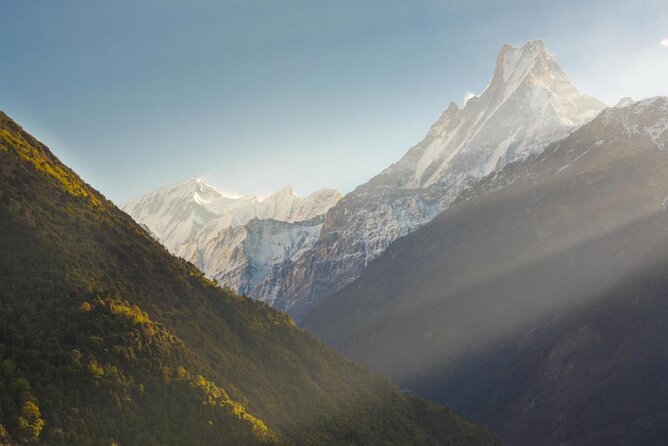
- Poon Hill adds a spectacular sunrise stop: The pre-dawn climb from Ghorepani brings views of Annapurna, Dhaulagiri, Nilgiri, and Lamjung Himal.
- Annapurna Base Camp reaches about 4,130 meters: You should have moderate fitness and take the pace seriously.
- The price covers a lot: Transport, trekking permits, guide services, guesthouses, meals, staff costs, and selected equipment are included.
- You get a private tour: Only your own group participates, which can make the long walking days easier to manage.
- The route mixes comfort and effort: Jhinu Danda’s hot springs offer a welcome pause, but the stone stairs are frequent and sometimes demanding.
- Your individual guide is not guaranteed by name: Past departures have involved guides called Prakash, Shiva, Naba, and Saroj Dhakal, but confirm your assigned guide before departure.
From Kathmandu to Pokhara on the first morning
Your day begins at 6:15 a.m. in Kathmandu, followed by a tourist-bus ride toward Pokhara. The route follows the Prithvi Highway, with river valleys, terraced farms, villages, and roadside towns along the way.
This transfer is not just a necessary ride. It gives you an early look at rural Nepal before the walking begins. Still, it is a full travel day, and you should not picture Day 1 as a mountain hike. You spend the day moving between Kathmandu and Pokhara, then prepare for the trail.
The included surface transfer is useful for budget planning. You do not have to arrange a separate connection between Kathmandu and Pokhara, and the journey keeps the tour in one package. The early start may be tiring, especially after an international flight, so arrive in Nepal with enough rest built in if you can.
More Annapurna Base Camp treks:
- Annapurna base camp trek 5 Days
★ 5.0 · 252 reviews - Annapurna Base Camp Trek
★ 5.0 · 111 reviews - Kathmandu to Annapurna Base Camp (ABC) 5-Day Trek
★ 5.0 · 102 reviews
Nayapul and the first village trails
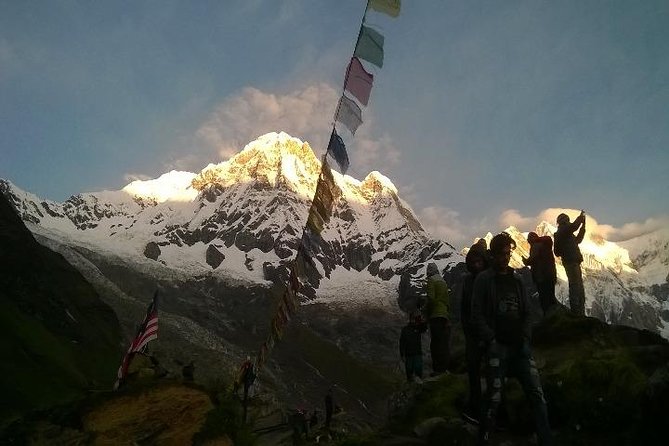
On Day 2, you leave Pokhara by road for Nayapul. The drive takes about two hours, after which you begin walking, crossing the suspension bridge over the Modi River and heading toward Birethanti.
This opening section introduces the trek at a manageable pace. You walk through villages and along trails rather than jumping straight into high-altitude terrain. That matters because your legs have time to adjust to the daily rhythm of walking, resting, eating, and sleeping in simple lodgings.
The route then continues uphill toward the Banthanti area. Expect a mix of village paths, forest, and stone steps. The route description does not provide exact walking hours or overnight villages for every day, so ask the operator for the confirmed daily distances before you leave.
Rhododendron forests and the climb to Ghorepani
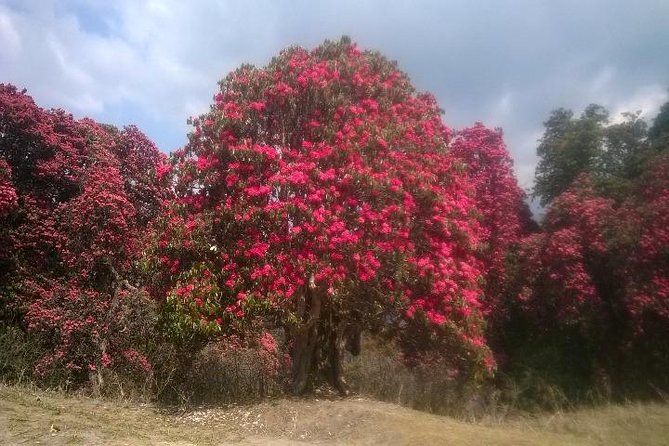
Day 3 leads through thick rhododendron forest, with Banthanti and Nangethanti along the way to Ghorepani. Rhododendrons are one of the pleasures of this route, especially when the forest opens to mountain views.
This is not a flat woodland stroll. The approach to Ghorepani includes uphill stone stairs, and the elevation begins to feel more serious. You will want trekking shoes with firm grip, and you should keep your pace steady rather than trying to match the fastest person in the group.
Ghorepani is important because it positions you for the early climb to Poon Hill. The guesthouse arrangement is mainly twin-sharing, and the accommodation is described as the best available guesthouse option along the route. That means practical mountain lodging, not hotel comfort. Pack patience for shared facilities and simple rooms.
Poon Hill sunrise and the road toward Jhinu Danda
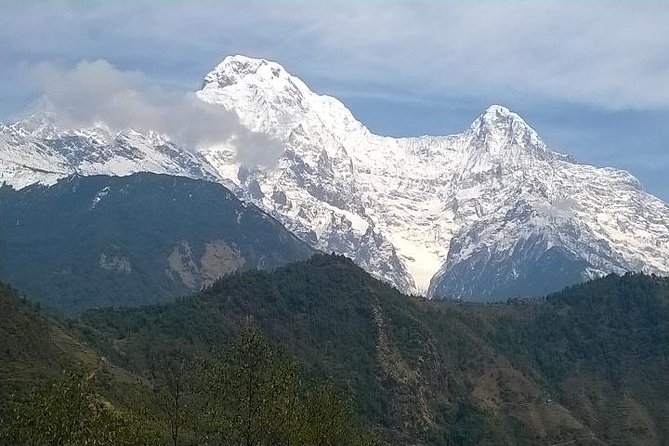
Day 4 starts early with an ascent to Poon Hill. The climb takes place before sunrise, and the reward is a wide view of the Annapurna and Dhaulagiri ranges. The named peaks include Nilgiri at 7,061 meters and Lamjung Himal at 6,983 meters.
Poon Hill is one of the route’s strongest features because you see the mountains from a viewpoint before reaching the higher valleys. It also gives you a useful sense of scale. The peaks are not just scenery around the trail. They become the backdrop for the days ahead.
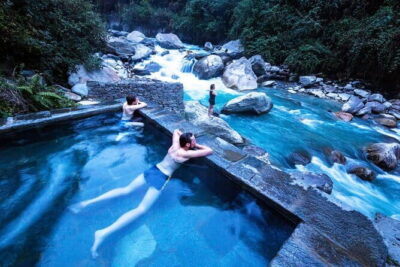
After Poon Hill, you return to the trail and continue through forested terrain. Day 5 includes an uphill and downhill section, a suspension bridge over Kimrong Khola, and arrival at Jhinu Danda. The hot springs here are a well-timed break for tired legs.
I would treat the hot spring as a bonus, not the main reason to book the trek. The real value is the contrast: a demanding mountain route followed by a warm rest before you continue toward the higher valleys. Bring a small towel and swimwear if you want to use the spring, but these personal items are not listed as included.
More trekking days out of Annapurna Region:
- Annapurna Circuit Trek with Tilicho Lake
★ 5.0 · 368 reviews - Poon hill Trek 3 days
★ 5.0 · 176 reviews - Trekking in Annapurna/Langtang/Everest/Upper Mustang regions
★ 5.0 · 161 reviews - Pokhara: 4-Day Ghorepani, Poonhill & Ghandruk Mountain Trek
★ 5.0 · 132 reviews
Stone stairs, Sinuwa, and the changing trail
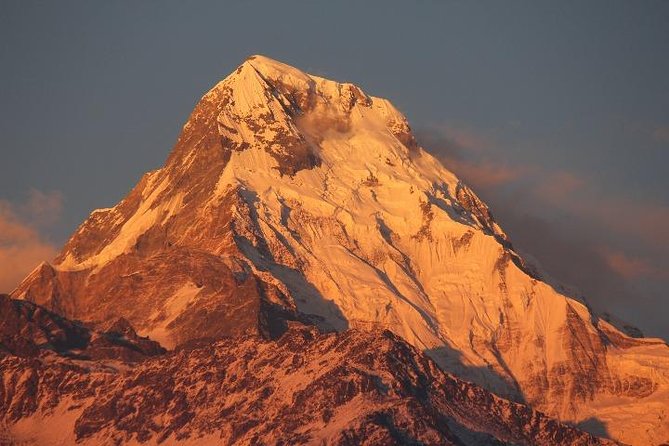
The route continues through rhododendron forest on Day 6, with orchids and ferns along the trail. You descend stone stairs, cross Chhomrong Khola, and then climb again toward Sinuwa.
This section shows why the trek requires moderate fitness. A downhill stretch does not always mean an easier day, because the route may send you uphill again soon after. Stone steps also place more strain on knees than a smooth dirt path. Trekking poles would be a sensible personal item, although they are not listed among the included equipment.
The scenery changes as you gain height. Forest remains important, but the route begins to feel more remote and alpine. You should expect fewer comforts as you move farther from road access. The guide, staff support, first-aid kit, and oxygen monitor are useful here, though an oxygen monitor is not a substitute for careful pacing or proper medical advice.
Machhapuchhre Base Camp and Annapurna Base Camp
Day 7 is one of the trek’s major walking days. You ascend toward Deurali, follow stone stairs, and reach views of snow-covered peaks on the way to Machhapuchhre Base Camp at about 3,700 meters.
Machhapuchhre, also called Fishtail, is one of Nepal’s best-known mountain shapes. From here, the trail continues through moraine terrain toward Annapurna Base Camp. The setting becomes more open and rocky as the forest gives way to the high mountain valley.
Annapurna Base Camp sits at about 4,130 meters. At this height, cold, tiredness, and altitude can affect you even if you are fit. Walk slowly, drink regularly, and tell your guide if you develop a headache, unusual breathlessness, dizziness, or nausea. The tour provides an oxygen monitor and first-aid equipment, but your own judgment still matters.
The itinerary places the base camp section across Days 7 and 8. Day 8 begins with a descent through the moraine route, then follows the Modi Khola through rhododendron and fir forest. That gives you time to take in the mountain setting without treating the base camp as a quick photo stop.
The return through Chhomrong and Jhinu Danda
The return route retraces familiar territory, but it does not feel pointless. Downhill walking changes your views, and you often notice details missed during the climb. The plan describes a return through Sinuwa, Chhomrong Khola, upper Chhomrong, and Jhinu Danda, with another chance to use the hot spring.
There is some repetition in the published day-by-day description, so you should confirm exactly where you sleep on Days 8 and 9. The route clearly includes a descent from the base camp area and a return toward Jhinu Danda, but the daily sequence should be clarified before you pay or begin.
That small planning check is worthwhile. A private tour can adjust the pace, but it cannot remove the distance. Knowing the expected walking time and overnight point each day helps you decide how much energy to save for the next section.
Nayapul, Pokhara, and the final bus ride
Day 10 takes you back toward Nayapul along the Modi Khola, with a final walk through the lower hills before the drive to Pokhara. After the long trek, the road transfer will feel welcome.
The evening in Pokhara is open according to the plan. You may have time to rest, eat, or explore on your own, but the exact arrangement is not specified. Do not assume extra sightseeing or a particular hotel activity is included.
On Day 11, you leave Pokhara early by tourist bus for Kathmandu. The highway again brings views of villages, greenery, rivers, and terraced farmland. The activity ends back at the Kathmandu meeting point.
What the $986 price really covers
At $986 per person, this is not simply a walking package. The cost includes surface transport from and back to Kathmandu, trekking permits and entry fees, a local government licensed English-speaking guide, guesthouse accommodation, and food listed as 10 breakfasts, 9 lunches, and 8 dinners.
It also covers salary, insurance, equipment, medicine, and transportation for trekking staff. A down jacket, sleeping bag, duffel bag, route map, first-aid kit, and pulse and oxygen monitor are included. For an 11-day Himalayan trek, those inclusions make the price easier to justify.
You still need to budget for drinks, laundry, alcohol, personal trekking equipment, international flights, airport departure tax, travel insurance, and tips. The phrase personal trekking equipment is important. Confirm exactly what you must bring, especially footwear, warm layers, rain protection, a water bottle, toiletries, and any medication you need.
The accommodation is mainly twin-sharing in the best available guesthouses. You should expect function over comfort. If you want private rooms, premium meals, or a higher level of lodging, ask before booking rather than assuming the standard price includes them.
Guides, group size, and the human side of the trek
This is a private activity, so only your group participates. That is a useful advantage for couples, families, or friends who want to walk at a shared pace. It can also help if one person needs a slower morning or an extra rest stop.
Past departures connected with this operator have included guides named Prakash, Shiva, Naba, and Saroj Dhakal. One solo departure specifically praised Saroj Dhakal’s work, while several group departures highlighted Prakash and his team. These names may help you ask a precise question, but your assigned guide is not guaranteed in the information provided.
The operator includes staff insurance, food, accommodation, equipment, medicine, and transport. That suggests the fee supports more than the person walking beside you. Still, ask who will carry which gear and what weight limit applies to your duffel. The supplied information does not specify porter arrangements in enough detail to assume unlimited luggage support.
The overall rating is 4.9 from 30 ratings, with 97 percent recommending the experience. That is a strong signal, especially alongside praise for organization, hospitality, helpful porters, and well-managed mountain days. One negative account raised concerns about an unprofessional guide, and the operator disputed that the trip belonged to its company. I would not ignore the issue, but I would use it as a reason to confirm your guide, route, and emergency procedures in writing.
Who should book this Annapurna trek?
You should consider this trip if you want a classic Nepal trek with mountain villages, forests, a famous sunrise viewpoint, a high base camp, and hot springs. It suits someone with moderate physical fitness who is ready for repeated stairs and several long walking days.
The private format makes it a good choice for a small group that values flexibility. The included gear and meals also help if you want one organized price instead of arranging permits, transport, lodging, and staff separately.
I would hesitate if you dislike early starts, basic guesthouses, shared rooms, long bus rides, or uncertain weather. The itinerary also requires careful confirmation because the daily descriptions do not provide complete walking times and repeat parts of the return route.
Cancellation is free up to 24 hours before the 6:15 a.m. start time. If poor weather cancels the activity, you are offered another date or a full refund. Travel insurance remains your responsibility, and that is especially important for a high-altitude trek.
Should you book it?
I would book this Annapurna Base Camp trek if you want strong scenery and a well-supported route at a clear mid-range price. The combination of Poon Hill, Annapurna Base Camp, guesthouses, meals, permits, staff support, and Kathmandu transport gives you a lot for $986.
Before paying, ask for the exact daily walking hours, overnight villages, assigned guide, porter arrangements, equipment list, and altitude plan. If those answers are clear, this is a sensible way to experience one of Nepal’s classic mountain routes without arranging every detail yourself.
FAQ
Where does the trek start and finish?
The activity starts at Kathmandu 44600, Nepal, at 6:15 a.m. It ends back at the Kathmandu meeting point after the return from Pokhara.
How long is the Annapurna Base Camp trek?
The experience lasts approximately 11 days.
What is the highest point on the route?
Annapurna Base Camp is reached at approximately 4,130 meters. Machhapuchhre Base Camp is listed at about 3,700 meters.
Is transport from Kathmandu included?
Yes. Surface transport from Kathmandu to Pokhara, transport to the trailhead, the return to Pokhara, and the final bus ride back to Kathmandu are included.
Are meals included?
Yes. The package includes 10 breakfasts, 9 lunches, and 8 dinners. Alcoholic drinks, hot and cold drinks, and other personal purchases are not included.
Is accommodation included?
Yes. The package includes the best available guesthouse accommodation during the trek, mainly in twin-sharing rooms.
Is a guide included?
Yes. A local government licensed English-speaking trekking guide is included. The information does not guarantee a particular guide by name.
Is this a private tour?
Yes. Only your own group participates in the activity.
Can I cancel for a full refund?
You can cancel at least 24 hours before the experience start time for a full refund. Cancellations or changes made less than 24 hours before the start are not refunded or accepted. If poor weather cancels the activity, you are offered a different date or a full refund.
Just added around Annapurna Region
- 4 Day Mardi Himal Base Camp Trek from Pokhara★ 5.0 · 18 reviews
- 7-Day Trek to Annapurna Base Camp from Pokhara★ 5.0 · 12 reviews
- Private 4 Day Poon Hill Trek from Pokhara★ 5.0 · 16 reviews
- Annapurna Base Camp Trek from Pokhara and Kathmandu★ 5.0 · 7 reviews
- 6 days Annapurna Basecamp Trek★ 5.0 · 16 reviews
- “Exclusive Round-Trip Transfer: Pokhara to Jomsom & Muktinath”★ 5.0 · 11 reviews
- Poon Hill Ghandruk Circuit Trek from Pokhara 4 Days★ 5.0 · 10 reviews
- Pokhara: Poon Hill Ghorepani Short Trek★ 5.0 · 6 reviews
Annapurna Base Camp Treks, compared.
Kathmandu to Annapurna Base Camp (ABC) 5-Day Trek
Read our review →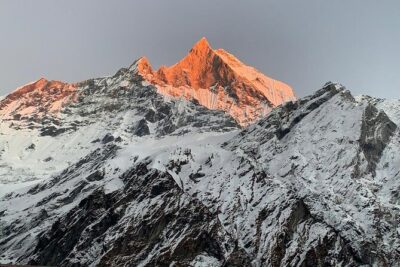
Kathmandu/Pokhara: 5-Day Annapurna Base Camp (ABC) Trek
Read our review →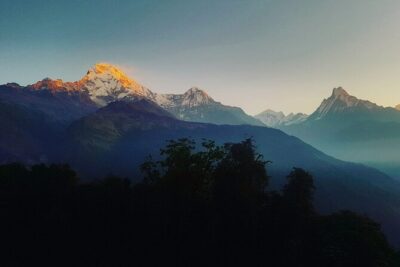
11-Day Hike Tour to Annapurna Base Camp Bliss in Kathmandu
Read our review →Browse the lists this tour appears in