
Reviewed · ANNAPURNA BASE CAMP TREKS
Annapurna Base Camp Trek 12 Days
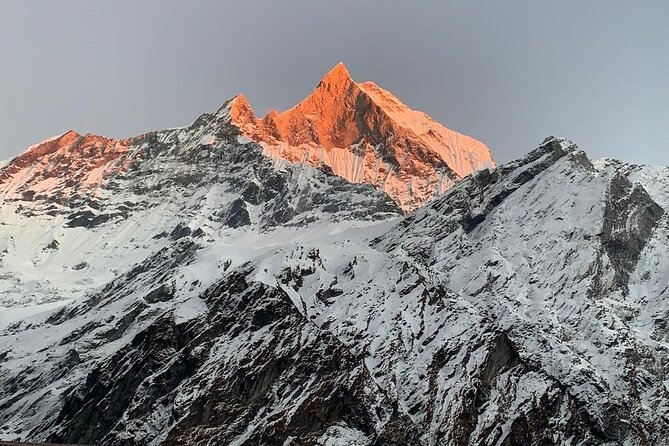
The best part of this 12-day Annapurna Base Camp trek is the changing scenery under your boots: stone steps above villages, cool forest beside rushing water, high mountain views, and a sunrise from Poon Hill before you reach the sanctuary. You also get a taste of daily life in Gurung and Magar communities, rather than simply rushing toward a famous viewpoint.
I like the practical all-in-one setup, with airport pickup, ground transport, permits, lodges, a guide, and three meals a day included. I also like the human touch: director Dil Prasad Sapkota has helped arrange flexible plans, while guides and porters such as Arjun, Sudip, Ram, and Krishna have been praised for polite, helpful service.
The main consideration is the pace. You climb roughly 3,000 stone steps to Ulleri, spend several days gaining height, and walk through an avalanche-prone section near Fishtail Base Camp. This is not a sightseeing stroll, and the listed price does not include your Kathmandu accommodation, personal insurance, drinks, tips, or a porter.
Key things to know before booking
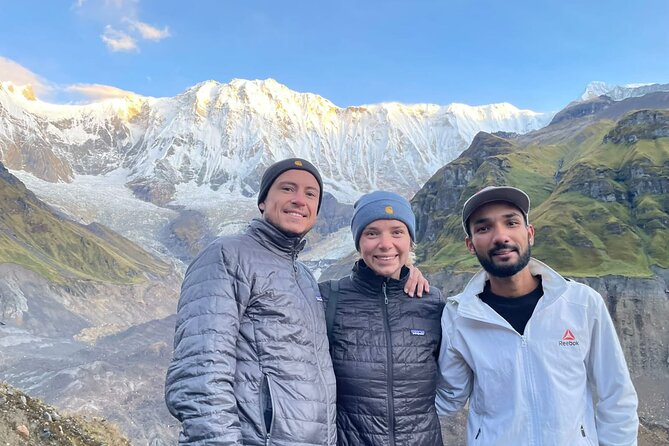
- Poon Hill comes before base camp: You get a Himalayan sunrise at about 3,200 meters before continuing toward Annapurna Base Camp.
- The trek begins near Pokhara: A tourist bus from Kathmandu usually takes six to seven hours, depending on road conditions.
- Local culture is part of the route: Chhomrong is a large Gurung village, and the route passes through communities connected with Gurung and Magar traditions.
- Base camp access can change: The route near Fishtail Base Camp is prone to avalanches, so your guide may alter the crossing near the Modi River.
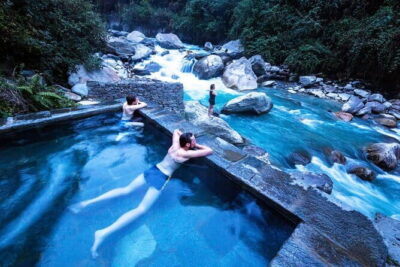
- The return includes Jhinu hot springs: After the high mountain section, you have time to bathe in natural hot springs before returning to Pokhara.
- The price covers a lot, but not everything: At $799 per person, meals, permits, transport, guide costs, and lodges are included, while insurance and some city costs are extra.
What $799 buys you on the Annapurna route
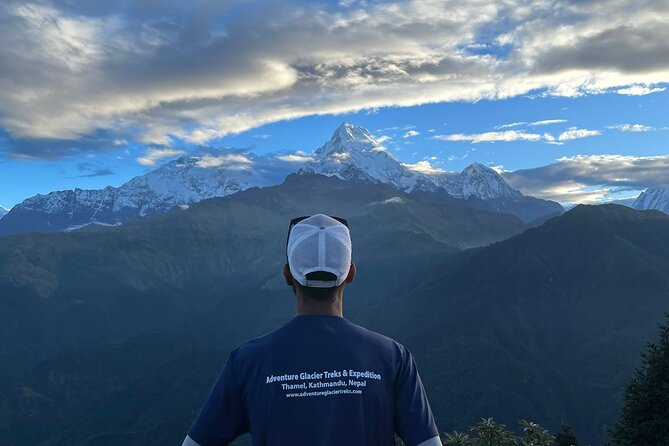
At $799 per person, this is a strong package for anyone who wants the main costs settled before setting out. Your price includes accommodation in trekking lodges, breakfast, lunch, and dinner during the trek, tea or coffee with meals on the route, ground transportation, airport pickup and drop-off, the professional guide’s expenses, guide insurance and equipment, and applicable permits.
The Annapurna Conservation Area Permit and local permits are included too. That matters because permits are part of the basic paperwork for this route, and having the agency handle them keeps your first days in Nepal simpler.
You should budget separately for accommodation in Kathmandu, food in Kathmandu and Pokhara apart from daily breakfast, drinks during the trek, tips, personal expenses, and travel insurance. A porter is also extra if you want one. The package includes guide expenses, but it does not include porter service.
The value is especially good if you want a private trip. Only your group participates, so the experience is not built around a large public departure. Ask in advance how many people are in your group and whether a porter is needed for your luggage.
More Annapurna Base Camp treks:
- Annapurna base camp trek 5 Days
★ 5.0 · 252 reviews - Annapurna Base Camp Trek
★ 5.0 · 111 reviews - Kathmandu to Annapurna Base Camp (ABC) 5-Day Trek
★ 5.0 · 102 reviews
Day 1: A soft landing in Thamel
Your trip starts at Tribhuvan International Airport in Kathmandu. An Adventure Glacier Treks representative meets you at the arrival gate, takes you to your hotel, and gives you a trek briefing.
This is a useful first day because the briefing gives you a chance to ask about walking hours, meals, luggage, and the route ahead. The program places you in Thamel, a convenient part of Kathmandu for getting oriented, but your Kathmandu accommodation is not included in the price. You will need to arrange and pay for that yourself.
The agency’s director, Dil Prasad Sapkota, has helped with pre-trip advice and changes when plans went wrong. One useful example involved a canceled flight to Pokhara, when he helped arrange another way forward. That does not remove the need for travel insurance, but it suggests you will have a local contact when transport plans become complicated.
Day 2: The long road from Kathmandu to Pokhara
After breakfast, you take a tourist bus from Kathmandu to Pokhara. Buses usually leave around 7:00 a.m. and take six to seven hours, depending on road conditions.
This is a full travel day, not a mountain walk. I would treat it as part of the adventure and keep your expectations realistic. Road conditions can affect the timing, so do not schedule a tight flight or an important appointment immediately afterward.
Pokhara Lakeside is a pleasant place to pause before the trek. You spend the night at a hotel, with time to rest before the road to Nayapul the next morning. Food and accommodation in Pokhara are not included except for the daily breakfast arrangement noted in the package, so check exactly what your hotel booking covers.
Day 3: Nayapul to Tikhedhunga
After breakfast, a private vehicle takes you from Pokhara toward Nayapul, the trailhead. The drive takes about two hours through countryside, reaching the meeting point of the Modi River and the trail system.
From Nayapul, you begin walking toward Tikhedhunga. This first trekking day lets you settle into the rhythm of the route without immediately facing its hardest climb. You pass through countryside and reach a trekking lodge for the night.
The walking is still physical, especially if your body is adjusting to Nepal’s roads, heat, and uneven trails. Wear shoes that you already trust. This is not the day to test brand-new boots.
More trekking days out of Annapurna Region:
- Annapurna Circuit Trek with Tilicho Lake
★ 5.0 · 368 reviews - Poon hill Trek 3 days
★ 5.0 · 176 reviews - Trekking in Annapurna/Langtang/Everest/Upper Mustang regions
★ 5.0 · 161 reviews - Pokhara: 4-Day Ghorepani, Poonhill & Ghandruk Mountain Trek
★ 5.0 · 132 reviews
Day 4: The 3,000 steps to Ghorepani
The route from Tikhedhunga to Ghorepani is one of the early tests. After breakfast, you climb toward Ulleri on about 3,000 stone steps, a climb that takes around two hours. From Ulleri, the trail continues upward toward Ghorepani.
This section gives you a clear idea of what the trek demands. The steps are not technically difficult, but their number makes them tiring. I would keep your pace steady and use the guide’s rhythm rather than trying to race ahead.
Ghorepani is valuable because it prepares you for the next morning’s early walk to Poon Hill. The village is also one of the route’s well-known overnight points, with lodges serving trekkers before the sunrise climb.
Day 5: Sunrise at Poon Hill, then Tadapani
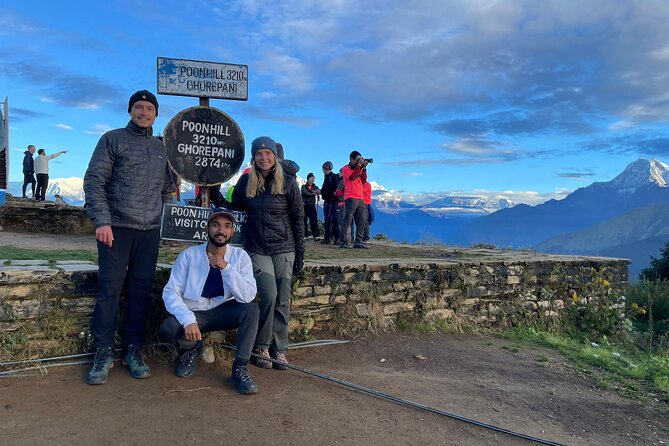
Poon Hill is one of the main rewards of the first half of the trek. You walk for about 50 minutes to reach the viewpoint at roughly 3,200 meters, where you can watch sunrise over the Himalayas. The route description notes views of around 15 peaks, depending on weather and visibility.
This early start is worth planning for. Bring warm layers, because you will be outside before the day warms up. After the sunrise, you return for breakfast and continue toward Tadapani, passing through mountain scenery and forest.
Poon Hill is also a useful feature for anyone who wants a major Himalayan view without waiting until the final days. You get a memorable viewpoint early, then have the rest of the trek to enjoy the approach to base camp.
Day 6: Down to the river, up to Chhomrong
From Tadapani, the route drops about 900 meters toward the Gurjung River valley. Then the trail climbs again along a ridge to Chhomrong, a large Gurung village in the Annapurna corridor.
The up-and-down profile can surprise you. A descent is not always an easy day, because losing height means you may need to regain it later. Trekking poles could be useful, though the tour does not list them as included equipment.
Chhomrong is more than a place to sleep. It is one of the best points on the trip for seeing how mountain communities fit into the trekking route. The tour places value on contact with Gurung and Magar communities, and this is where the cultural side of the journey feels most relevant.
Day 7: Into the Annapurna Sanctuary
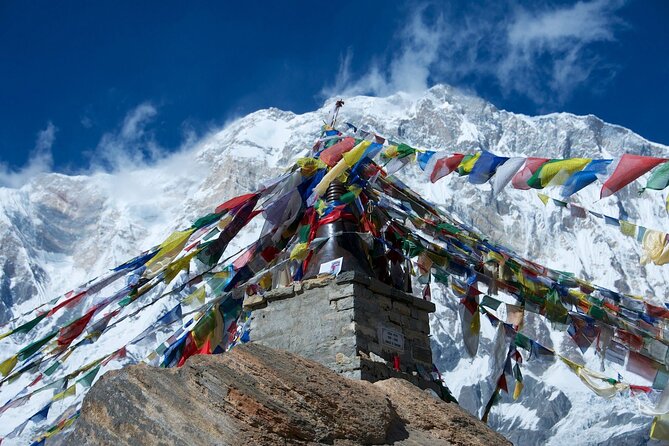
You descend along the Chhomrong Khola, then climb toward Sinuwa for about three hours. From Sinuwa, the trail enters a steep valley leading toward the Annapurna Sanctuary, below Annapurna South and Machhapuchhre, also known as Fishtail.
This is where the trek begins to feel more enclosed and more mountainous. The route follows water, forest, and steep valley walls rather than open village paths. Your guide’s pace matters here, especially because the itinerary begins to gain altitude and the walking becomes more demanding.
You continue to Dovan, a stopping point on the way toward the higher lodges. Dovan’s position near the river makes it a practical overnight stop, but do not expect city comforts. Lodge accommodation is included, yet facilities on a mountain route are basic by nature.
Day 8: Dovan to Deurali
Above Dovan, the effect of altitude becomes more noticeable. The walk to Deurali takes about two hours through peaceful green forest, with the trail continuing upward toward another Himalayan settlement.
This is a short day on paper, but the height changes the way you experience it. You may find yourself walking more slowly and taking more pauses. That is normal, and it is one reason the guide’s job is important.
Deurali sets up the final approach. Rest well, drink regularly, and keep your clothing ready for colder conditions. The route description does not promise a particular acclimatization schedule beyond the overnight stops, so you should tell your guide promptly if you feel unwell.
Day 9: The final approach to Annapurna Base Camp
The walk from Deurali passes toward Fishtail Base Camp and then Annapurna Base Camp. The section near Fishtail Base Camp is prone to avalanches, so the crossing near the Modi River may change with the season and current conditions.
This is one of the most important practical points in the whole trip. A fixed route is less important than a safe route. Your guide may alter the path depending on conditions, which can affect timing and the exact trail you take.
At Annapurna Base Camp, you reach the high point of the journey and spend time in the Annapurna Sanctuary. The setting is surrounded by major snow-covered peaks, and the sense of arrival comes from the whole approach: days of villages, steps, rivers, forest, and rising mountain walls.
Day 10: Sunrise and the return to Dovan
After sunrise over the Annapurnas, you begin walking back toward Dovan. The first part can be steep, then the trail becomes a more gradual descent. Dovan lies at a river junction where two streams meet.
The return is not simply a repeat of the ascent. Descending works different muscles, and steep downhill sections can be hard on knees. Take your time and use the guide’s advice on footing.
This overnight stop breaks up the return and keeps the route from becoming an exhausting single push. You have already reached base camp, but you still need to respect the trail.
Day 11: Forest paths toward Sinuwa
The route follows the river through peaceful forest, past waterfalls, birds, and the sound of moving water. You then climb easily toward Sinuwa Hill and spend the night at a trekking lodge in Sinuwa.
This is one of the gentler parts of the return. The water and forest provide a welcome change after the exposed high route around base camp. You may find this day especially pleasant if you prefer the quiet details of a trail to a list of viewpoints.
The itinerary names Hilltop Lodge and Restaurant as a stop, with the overnight at Sinuwa. Confirm the exact lodge at booking, since mountain accommodation can change with availability.
Day 12: Jhinu hot springs and Pokhara
The final trekking day takes you for about two hours toward Jhinu, where natural hot springs provide a chance to bathe. You have lunch there, then drive back to Pokhara, or continue walking farther before the drive.
This is a smart finish. After a demanding mountain route, time in a hot spring gives your legs a break before returning to city comforts. The exact walking and driving plan may depend on the group’s pace and the road connection from Jhinu.
Your trip finishes in Pokhara rather than Kathmandu. That matters when planning onward travel. The package includes ground transportation, but you should confirm the final drop-off and arrange any later hotel nights or transport yourself.
Guides, porters, and the human side of the trek
Past trips with this company have included guides named Arjun, Sudip, Ram, and Krishna. Their work has been praised for professionalism, politeness, flexibility, and practical help. When you book, ask who is assigned to your group and what support is included.
A guide is included, along with the guide’s expenses, insurance, and equipment. A porter is not included, so you need to decide whether to carry your own load or add porter service. If you are unsure, ask about the weight limits, the porter cost, and how bags are handled between lodges.
The company has been operating in Nepal tourism for about three decades, according to the information provided for the experience. That history alone does not guarantee a perfect trip, but the repeated praise for service, value, and staff gives you useful reassurance.
Who should book this trek?
I would recommend this route to you if you want a classic Nepal trek with a clear route, a base camp goal, village contact, and a manageable two-week time frame. It suits someone with moderate physical fitness who is comfortable walking uphill and downhill for several days.
It is also a good choice if you prefer to have permits, meals, transport, and a guide arranged together. The private format may appeal to friends or families who want some control over the pace.
I would think twice if you want luxury lodges, short walking days, or a fully flexible city-to-city itinerary. You also need to plan carefully if you have limited time after day 12, since the Kathmandu to Pokhara road trip and the mountain roads can be affected by conditions.
Free cancellation is available if you cancel at least 24 hours before the experience start time. Cancellations within 24 hours are not refunded, and late changes are not accepted.
Should you book the Annapurna Base Camp trek?
Book it if you want a well-priced, private Annapurna route with the major logistics handled and enough time for Poon Hill, the sanctuary, base camp, and Jhinu hot springs. The $799 price is appealing because it includes far more than guiding alone.
Before paying, confirm your Kathmandu hotel, Pokhara arrangements, porter needs, guide assignment, group size, insurance requirements, and the expected walking hours. If you are ready for long stone stairways, altitude, basic lodges, and changing trail conditions near Fishtail Base Camp, this trek offers a solid way to reach Annapurna Base Camp without arranging every detail yourself.
FAQ
Where does the Annapurna Base Camp trek begin?
The experience begins with airport pickup at Tribhuvan International Airport in Kathmandu, Nepal. The trekking portion begins after transport from Pokhara to Nayapul.
How long is the experience?
The trip lasts approximately 12 days. It includes Kathmandu, the journey to Pokhara, the trek to Annapurna Base Camp, the return through Jhinu, and transport back to Pokhara.
Is airport pickup included?
Yes. Airport pickup and drop-off are included, with the meeting point listed as Tribhuvan International Airport in Kathmandu.
Are meals included?
Three meals a day are included while you are trekking: breakfast, lunch, and dinner, with tea or coffee on the route. Meals in Kathmandu and Pokhara are not included except for daily breakfast as specified.
Is accommodation included?
Accommodation in trekking lodges along the route is included. Accommodation in Kathmandu is not included.
Is a porter included?
No. A trekking porter is available only if you arrange and pay for one separately.
Are permits included?
Yes. Applicable permits and fees, including the Annapurna Conservation Area Permit and local permits, are included.
What happens if the trail near Fishtail Base Camp is unsafe?
The route near Fishtail Base Camp can be affected by avalanches. The guide may change the route across the Modi River depending on the season and conditions.
Just added around Annapurna Region
- 4 Day Mardi Himal Base Camp Trek from Pokhara★ 5.0 · 18 reviews
- 7-Day Trek to Annapurna Base Camp from Pokhara★ 5.0 · 12 reviews
- Private 4 Day Poon Hill Trek from Pokhara★ 5.0 · 16 reviews
- Annapurna Base Camp Trek from Pokhara and Kathmandu★ 5.0 · 7 reviews
- 6 days Annapurna Basecamp Trek★ 5.0 · 16 reviews
- “Exclusive Round-Trip Transfer: Pokhara to Jomsom & Muktinath”★ 5.0 · 11 reviews
- Poon Hill Ghandruk Circuit Trek from Pokhara 4 Days★ 5.0 · 10 reviews
- Pokhara: Poon Hill Ghorepani Short Trek★ 5.0 · 6 reviews
Annapurna Base Camp Treks, compared.
Kathmandu to Annapurna Base Camp (ABC) 5-Day Trek
Read our review →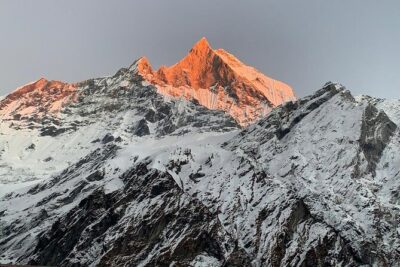
Kathmandu/Pokhara: 5-Day Annapurna Base Camp (ABC) Trek
Read our review →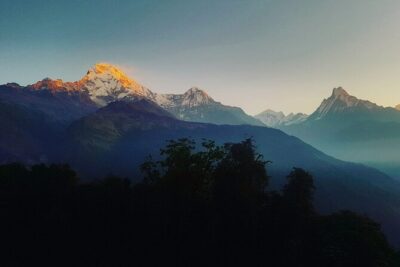
11-Day Hike Tour to Annapurna Base Camp Bliss in Kathmandu
Read our review →Browse the lists this tour appears in