
Reviewed · ANNAPURNA BASE CAMP TREKS
Private 7 – Day Annapurna Base Camp Trekking
Reaching Annapurna Base Camp in seven days gives you a real Himalayan trek without signing up for a large group. You walk through villages, bamboo forest, high mountain valleys, and snow country, with a private guide and porter handling the practical work. The payoff is a 360-degree mountain view at base camp.
I like the private format, which lets your group adjust its pace, and I like that meals, tea house lodging, permits, transport, a trekking map, water purification, and basic safety support are included. The main caution is the physical demand: six hours of walking is common, with steep stone steps, repeated climbs, and one especially long day.
Key points to know before you book
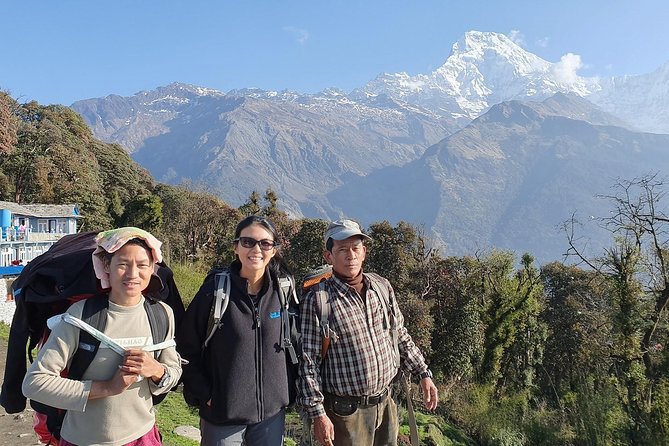
- Private group trekking: Only you and your party take part, with a guide assigned to your group.
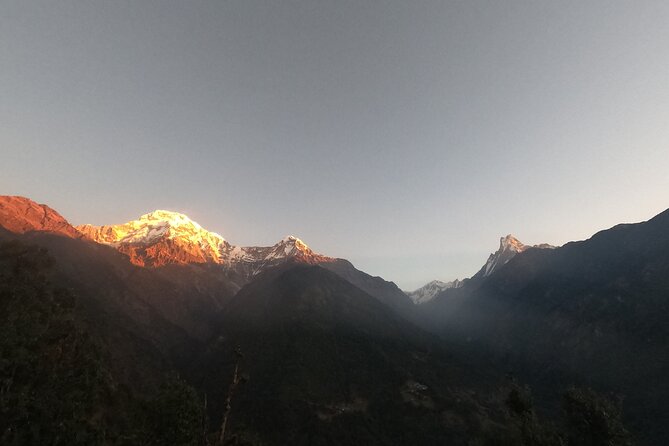
- Annapurna views from the start: Day one begins near Chhomrong with views toward Annapurna I and Machhapuchhre.
- A serious stair workout: The trail includes a descent of about 2,500 stone steps before climbing again toward Sinuwa.
- Tea house travel: Accommodation and meals are provided along the route, but hotel stays in Pokhara and Kathmandu are not included.
- Flexible local support: Guides such as Sanjay, Amar, Laxman, Ram, and Andrea have led different departures, so your assigned guide may vary.
- Built-in practical help: A porter, permits, oxygen saturation checks, water purification, a duffle bag, and emergency evacuation assistance are included.
Why this seven-day route works
This trek is a good fit if you want the Annapurna Base Camp experience but do not want to organize each detail yourself. The operator arranges the road transport, guide, porter, permits, meals, and mountain lodging. You still do the hard part, of course, but you do not need to spend your evenings sorting out the next bed or meal.
The private setup matters more than it might seem. You can walk at your group’s pace and discuss changes with your guide. Past departures have included flexible adjustments, including a custom six-day plan and trips using different guide and porter combinations. That does not mean every request is possible, but it gives you a better chance of adapting the schedule than you would have on a fixed large-group departure.
The route is not a gentle walk. You should be comfortable with a moderate level of physical effort and long uphill and downhill sections. The stone stairs near Chhomrong can be tiring, and the route has many ups and downs even on forest days. You should buy travel insurance before setting out, particularly because the package only offers assistance with emergency rescue evacuation rather than replacing your own insurance cover.
At $625 per person, the price represents solid value for a private Himalayan trek. It covers the guide, porter, permits, transport listed in the plan, meals, tea house lodging, government charges, and service costs. You still pay for your Pokhara and Kathmandu hotels, travel insurance, and tips, so the total trip cost will be higher. Still, arranging all those included pieces independently would take time and could cost more, especially for a small private party.
More Annapurna Base Camp treks:
- Annapurna base camp trek 5 Days
★ 5.0 · 252 reviews - Annapurna Base Camp Trek
★ 5.0 · 111 reviews - Kathmandu to Annapurna Base Camp (ABC) 5-Day Trek
★ 5.0 · 102 reviews
Day one: road transport and first views near Chhomrong
The trek starts at 8:15 a.m. from Lakeside, Pokhara. You travel by private jeep for roughly two and a half hours, then begin the walking section near Chhomrong.
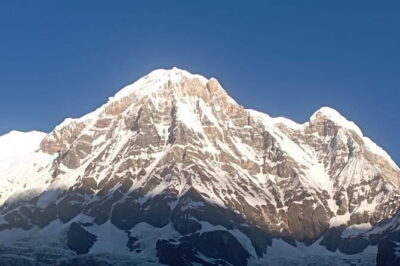
The day includes breakfast with views toward Annapurna I, rising to 8,091 meters, and Machhapuchhre, at 6,997 meters. That early mountain view gives you a strong first sense of where you are heading. Chhomrong is also an important point on the route, so this is a useful day for meeting your guide, checking your pack, and settling into the rhythm of walking and tea house stops.
The listed walking time is about three hours, making this one of the easier days on paper. Do not mistake that for a completely relaxed outing. The road transfer takes time, and mountain roads can make a short distance feel longer. Keep your day bag accessible rather than burying everything in the duffle.
Day two: 2,500 steps, Sinuwa, and Bamboo
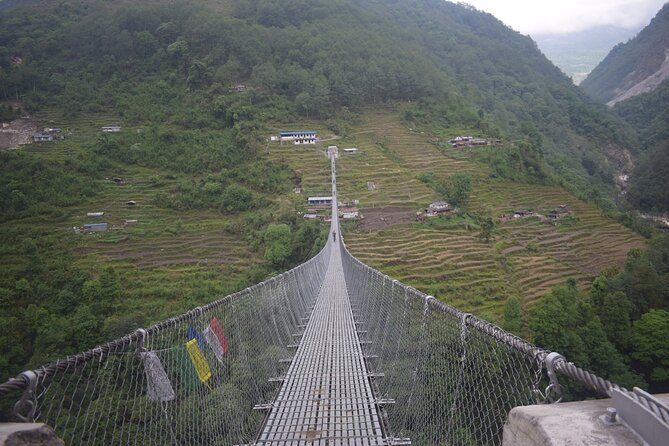
Day two begins with one of the route’s more memorable physical tests. You descend about 2,500 stone steps and cross the bridge above the Chhomrong Khola before climbing toward Sinuwa.
This is a useful reminder that a Himalayan trek is not simply a steady uphill walk. You lose height first, then regain it. The repeated steps can put more stress on your knees than a smooth trail, so take your time and use your walking poles if you carry them. Your private guide can help set a pace that suits the group instead of pushing everyone to match strangers.
You stop for lunch at Sinuwa, then continue to Bamboo for the night. The day lasts about six hours. Forest scenery and village life are the main rewards here, but the route can feel tiring because the trail keeps changing direction and height.
Bamboo is a practical overnight stop rather than a grand destination. The value is in breaking the route into manageable sections. Your accommodation is in a tea house, with meals included, so you can focus on rest rather than searching for food after a long day.
Day three: the Weeping Wall and Deurali
From Bamboo, the trail climbs toward the Himalaya Hotel area, passing Dovan and the feature known as the Weeping Wall. A local shrine and the forest trail add interest to what is otherwise a steady uphill day.
The walking time is about five hours. This section shows how the scenery changes as you gain height. The lower forest gives way to a more serious mountain setting, and the route follows the valley toward the higher reaches of the trek.
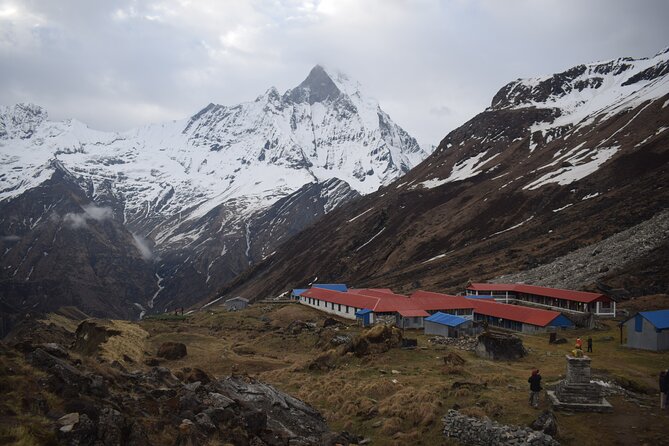
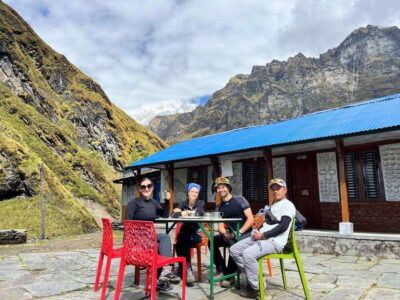
Deurali is the night’s destination in the stated plan. You should expect a simpler tea house stay as the route gets higher. Accommodation on this trek is functional rather than luxurious. Meals and a bed are provided, but you should be ready for basic facilities and a quieter evening built around eating, resting, and preparing for the next climb.
This is also a sensible point to pay attention to how you feel. Your package includes oxygen saturation checks and assistance with emergency rescue evacuation, which are useful safeguards, but they do not remove the need to tell your guide if you feel unwell.
More trekking days out of Annapurna Region:
- Annapurna Circuit Trek with Tilicho Lake
★ 5.0 · 368 reviews - Poon hill Trek 3 days
★ 5.0 · 176 reviews - Trekking in Annapurna/Langtang/Everest/Upper Mustang regions
★ 5.0 · 161 reviews - Pokhara: 4-Day Ghorepani, Poonhill & Ghandruk Mountain Trek
★ 5.0 · 132 reviews
Day four: following the Modi River to Annapurna Base Camp
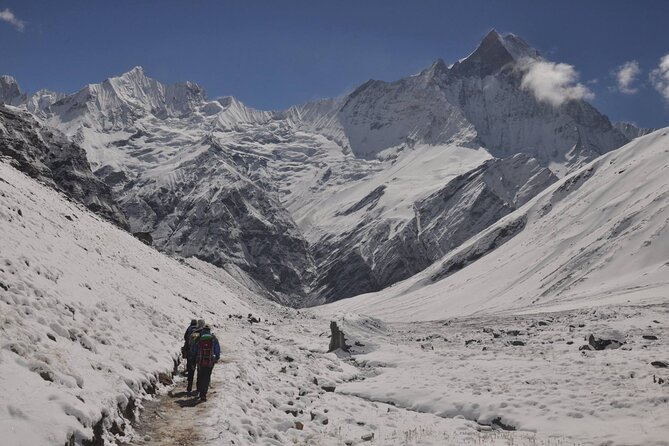
Leaving Deurali, the trail climbs alongside the Modi River and passes through alpine forest. You’ll see carefully stacked rocks along the route, then continue past an icy cave before reaching Machhapuchhre Base Camp and the approach to Annapurna Base Camp.
The listed walking time is about five hours, though the altitude and uphill terrain can make this feel like a full day. At this stage, the attraction is not one single viewpoint. It is the gradual change from forest and village paths to a high, open mountain valley.
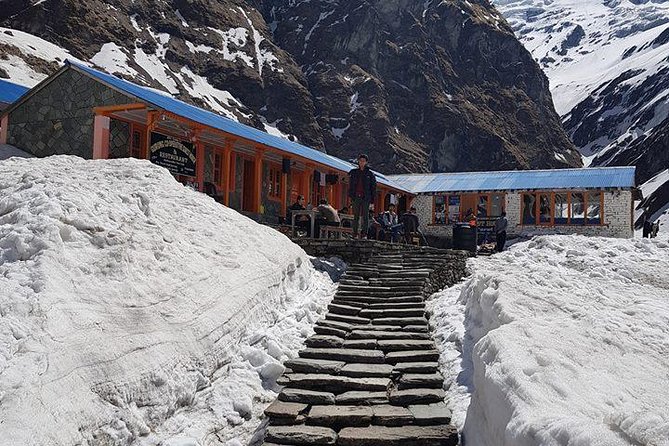
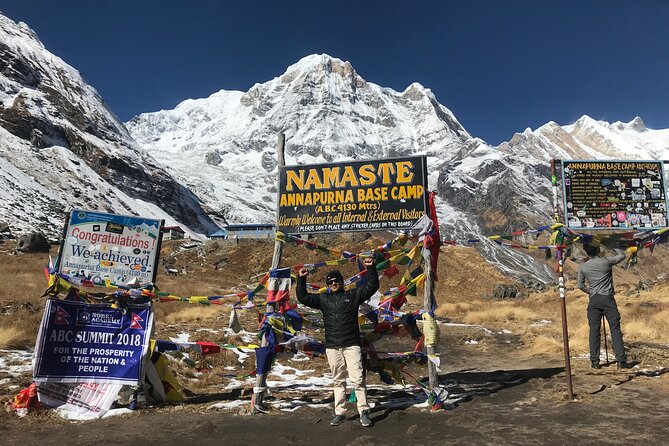
Annapurna Base Camp is the emotional center of the trek. Once you arrive, the high altitude setting gives you a broad view of the surrounding peaks. The exact visibility depends on weather, but the route is designed around the chance to see the Annapurna massif from a close and dramatic position.
Keep your expectations practical. A seven-day schedule is efficient, and reaching base camp requires steady effort. This is not a slow acclimatization program with extra rest days. If you know you need more time at altitude, ask about a custom plan before booking.
Day five: base camp views and a long return day
The fifth day begins with time to explore Annapurna Base Camp. The area provides a 360-degree mountain view, which is the best reason to protect some time for looking around rather than rushing straight back down.
The stated walking time is eight hours, making this the longest day. The plan then turns back toward the lower route. The published day descriptions refer to leaving Bamboo on the following day, so the exact overnight arrangement between base camp, Bamboo, and Jhinu Danda should be confirmed with the operator before departure. That detail matters because it affects how much walking you do after the base camp visit.
The return is not simply a repeat of the ascent. Going downhill saves effort in some places but can be hard on your knees, especially after the long climb to base camp. Keep water purification supplies available, follow your guide’s timing, and do not let the excitement of reaching the goal persuade you to walk too fast on the way down.
Day six: Bamboo, Sinuwa, and Jhinu Danda
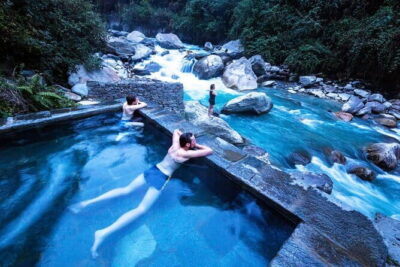
The plan describes leaving Bamboo through bamboo forest, following a narrow ridge toward Sinuwa, then descending toward the Chhomrong River. The route continues toward Jhinu Danda, known for its hot spring.
After several days of cold mountain air and long walks, the hot spring is a welcome change of pace. It gives you a chance to relax your legs before the final return to Pokhara. The day is listed at about six hours, so it remains an active trekking day rather than a short stroll to a spa.
This section also returns you to thicker forest and more settled village surroundings. You get a stronger sense of the route’s full range, from high mountain views to warm forest valleys. If your group has different fitness levels, the private format is helpful here because the guide can discuss pauses and timing directly with you.
Day seven: the private jeep back to Pokhara
The final morning begins with breakfast and another chance to look toward Annapurna I and Machhapuchhre. You then walk a short distance to Samrung and take a private jeep along the Baglung route back to Pokhara.
The walking time is about three hours, though the road trip is an important part of the day. The activity ends back at the Lakeside meeting point. Hotel accommodation in Pokhara is not included, so arrange your room separately if you want to rest immediately after arrival.
This last day is useful for groups with onward plans because the trek does not simply finish at a remote trailhead. Still, road conditions and transfer timing can affect your schedule, so I would avoid booking a tight same-day connection.
What the price includes, and what it leaves out
The $625 price includes a government-registered trekking guide and porter, with their expenses covered. It also includes lodge accommodation along the route, the Annapurna Conservation Area Permit and other necessary permits, and overland transport listed in the itinerary.
Your food allowance includes seven breakfasts, six lunches, and six dinners. That matches a trek that begins with breakfast on the first day and ends after breakfast on the seventh. Food is provided on the mountain, but drinks, snacks, and personal extras are not listed, so budget separately for them.
The practical equipment and support package is useful. You receive a trekking map, oxygen saturation checks, water purification, and a duffle bag. Emergency rescue evacuation assistance and public liability insurance are also listed, along with government tax and service charges.
You must arrange hotel accommodation in Kathmandu and Pokhara. Travel insurance is not included, and tips for the guide and porter are left to you. Those costs are easy to overlook when comparing prices, so add them before deciding how the trek fits your budget.
Guides, porters, and the private experience
The operator uses different guides and porters for different departures. Names connected with past trips include Sanjay, Amar, Laxman, Ram, Andrea, Kumar, Min, Ramesh, and Surya. Your booking should confirm who will lead your group, since the individual guide can shape the experience through pacing, communication, and local knowledge.
The strongest practical feature is the support system. You are not simply handed a route map and sent uphill. A guide travels with you, a porter carries designated equipment, and the operator handles permits and accommodation. That lets you pay closer attention to the trail, villages, and mountain views.
You should still pack responsibly. A porter does not mean you can bring everything from home. Keep your personal day bag light, carry items you need during the day, and ask what the duffle bag allowance is before departure if that information is important to you.
Who should book this trek?
I would recommend this trip to a private party that wants a guided route to Annapurna Base Camp with a clear seven-day structure. It suits people who value local assistance, included meals, and a porter, but who do not need luxury lodging or a large range of optional activities.
It is also a good option for a first Nepal trek if you have moderate fitness and accept that the route will be demanding. The private setup can be useful for couples, friends, and families who want to walk together rather than split up based on the pace of a larger group.
I would be more cautious if you dislike long stair sections, basic tea houses, or schedule changes caused by weather and mountain conditions. Anyone with medical concerns should discuss the route with a doctor and arrange suitable insurance before booking.
The tour has a 98 percent recommendation rate and an overall score of 4.8 from 50 published ratings, but those figures should not replace your own preparation. The route remains physically hard, and the high-altitude schedule is compact.
Final call: a strong value for a private Annapurna goal
Book this trek if your main goal is to reach Annapurna Base Camp with a private guide, porter, meals, permits, and mountain lodging already arranged. The price is reasonable for what it covers, and the route offers a satisfying mix of village paths, forest, stone steps, river valleys, hot springs, and high mountain views.
Before paying, confirm the exact overnight stops for days five and six, ask who your guide will be, and check what you must carry personally. If you are ready for a moderate physical challenge and basic tea house travel, this is a practical way to reach one of Nepal’s best-known base camps without organizing the whole trek yourself.
FAQ
Where does the trek start?
It starts at 8:15 a.m. from Lakeside Road in Pokhara, Nepal.
Where does the trek finish?
The activity ends back at the meeting point in Pokhara.
How long does the trek last?
The experience lasts approximately seven days.
Is this a private trek?
Yes. Only your group takes part in the activity.
Are a guide and porter included?
Yes. One government-registered trekking guide and porters are included, along with their expenses.
Are meals included?
Yes. The package includes seven breakfasts, six lunches, and six dinners.
Is accommodation included?
Tea house or lodge accommodation along the trek is included. Hotels in Kathmandu and Pokhara are not included.
Are permits included?
Yes. The Annapurna Conservation Area Permit and other necessary permits are included.
Is travel insurance included?
No. You must arrange your own travel insurance before the trek.
Can I cancel for a full refund?
You can cancel at least 24 hours before the start time for a full refund. Cancellations or changes made less than 24 hours before the start time are not accepted for a refund. If poor weather causes the activity to be canceled, you will be offered another date or a full refund.
Just added around Annapurna Region
- 4 Day Mardi Himal Base Camp Trek from Pokhara★ 5.0 · 18 reviews
- 7-Day Trek to Annapurna Base Camp from Pokhara★ 5.0 · 12 reviews
- Private 4 Day Poon Hill Trek from Pokhara★ 5.0 · 16 reviews
- Annapurna Base Camp Trek from Pokhara and Kathmandu★ 5.0 · 7 reviews
- 6 days Annapurna Basecamp Trek★ 5.0 · 16 reviews
- “Exclusive Round-Trip Transfer: Pokhara to Jomsom & Muktinath”★ 5.0 · 11 reviews
- Poon Hill Ghandruk Circuit Trek from Pokhara 4 Days★ 5.0 · 10 reviews
- Pokhara: Poon Hill Ghorepani Short Trek★ 5.0 · 6 reviews
Annapurna Base Camp Treks, compared.
Kathmandu to Annapurna Base Camp (ABC) 5-Day Trek
Read our review →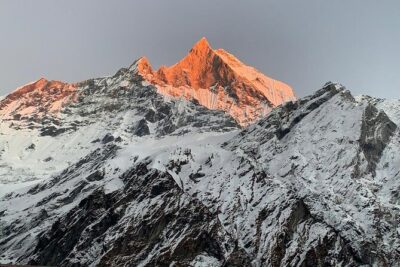
Kathmandu/Pokhara: 5-Day Annapurna Base Camp (ABC) Trek
Read our review →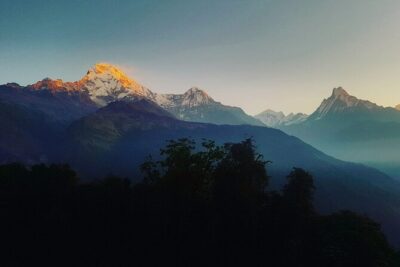
11-Day Hike Tour to Annapurna Base Camp Bliss in Kathmandu
Read our review →Browse the lists this tour appears in