
Reviewed · ANNAPURNA BASE CAMP TREKS
Annapurna Base Camp Trek
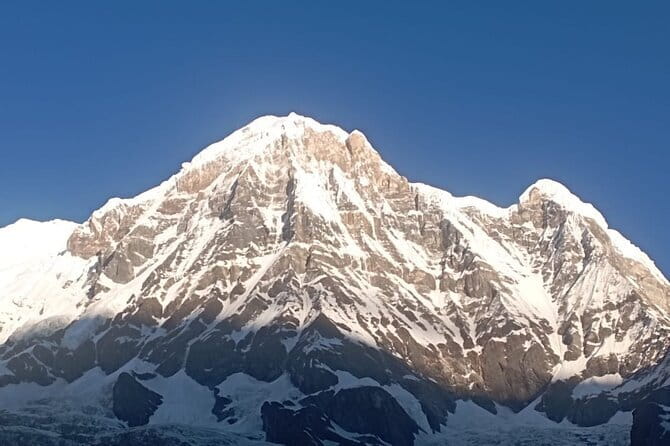
Annapurna Base Camp is the prize here: after days of stone steps, forest trails, waterfalls, and high mountain villages, you sleep at 4,130 meters in a natural bowl ringed by Himalayan peaks. The route also gives you a fine taste of Gurung village life and a welcome soak in Jhinu Danda’s hot springs.
I like the practical design of this trek. Permits, meals, lodges, a guide, and porter support are included, and the route builds from lower valleys toward the base camp rather than rushing straight uphill. I also like the return through bamboo and rhododendron forest, with another hot-spring stop before you leave the mountains.
The main caution is the pace. Several days run close to 12 hours on the published schedule, and the trail includes steep stone stairways, rough ground, and thinner air. The transport plan also needs clarification, since the overview describes a short flight to Pokhara while the detailed day plan describes a scenic drive.
Key points to know
- Annapurna Base Camp at 4,130 meters: Spend a night among Annapurna I, Annapurna South, Machhapuchhre, Hiunchuli, and other major peaks.
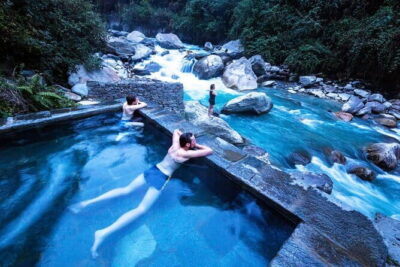
- Jhinu Danda hot springs: Soak near the Modi River at the beginning and again on the return route.
- Gurung villages and mountain scenery: Walk through Chhomrong, Landruk, Bamboo, Deurali, and other settlements.
- Porter and guide support included: One porter is assigned for every two trekkers, with a maximum load of 30 kilograms.
- Small group size: The group is limited to 15 people, with an English-speaking trekking guide and assistant guide.
- Strong reported service: The named guide Shiva, porter Bishal, and airport greeter Suman received especially warm praise for making the trek run smoothly.
Reaching Pokhara from Kathmandu
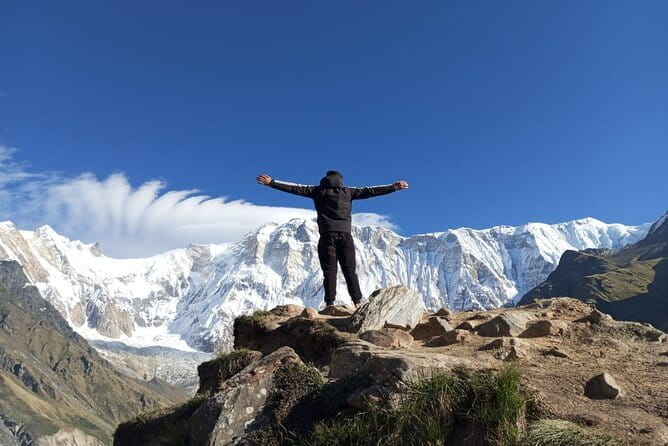
Your first day is gentle by trekking standards. After immigration at Tribhuvan International Airport, you are met and taken to Hotel Green Horizon in Thamel, Kathmandu. Thamel is the city’s main visitor district, so it is a handy place to settle in, meet the team, and pick up anything you forgot.
The next morning starts with a briefing and breakfast. Here the itinerary becomes unclear. The tour overview says you take a 30-minute flight to Pokhara, while the day-by-day plan describes a scenic drive with views of valleys, terraced fields, rivers, temples, and hill settlements. Ask the operator to confirm which transfer applies to your departure date. It makes a real difference to your comfort and available time.
Pokhara is the easygoing contrast to Kathmandu. You stay near Lakeside, where you can walk beside the lake, browse souvenirs, and enjoy a cooler setting beneath the hills. Two nights in Pokhara are included in the package, though food there is not included, so budget separately for city meals.
More Annapurna Base Camp treks:
- Annapurna base camp trek 5 Days
★ 5.0 · 252 reviews - Annapurna Base Camp Trek
★ 5.0 · 111 reviews - Kathmandu to Annapurna Base Camp (ABC) 5-Day Trek
★ 5.0 · 102 reviews
Day 3: Nayapul to Jhinu Danda
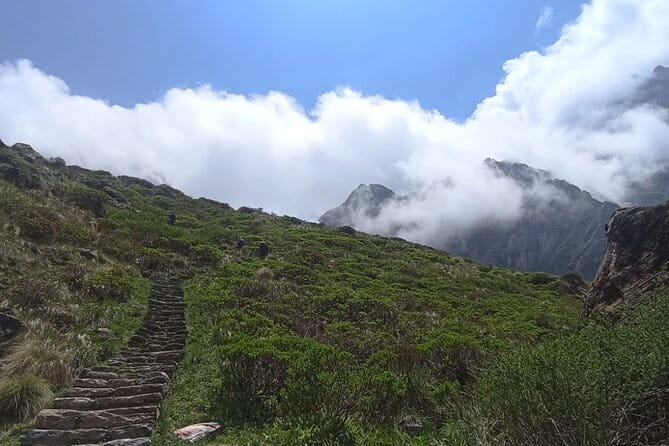
The walking begins after a drive of about an hour and a half to Nayapul, the usual starting point for this part of the Annapurna region. The road passes remote settlements, temples, rivers, and mountain views before the first footpath begins.
The route follows the Modi River and passes through small communities such as Chandrakot and Pritam Deurali. You cross bridges, climb and descend stone steps, pass religious monuments, and reach Landruk before continuing toward Jhinu Danda.
This is a full day, with many changes in grade. The final approach includes an uphill section near the meeting point of the Modi and Kimrong rivers. Jhinu Danda is worth the effort because of its natural hot springs at the foot of the ridge. They offer a soothing end to a demanding first day, though you should not expect a resort setting. This is a mountain stop, not a polished spa.
Day 4: Chhomrong, Sinuwa, and Bamboo
The trail from Jhinu Danda begins with terraces and a steep climb toward Chhomrong. You pass Nayagaon, cross the Chhomrong River, and tackle a long series of stone steps. This is one of the days when your legs learn that Himalayan trekking is often more about stairs than level walking.
Beyond Chhomrong, the route enters bamboo forest and passes terraced fields and smaller settlements. The trail continues toward Sinuwa and then through forest to Kuldighar, once linked with a sheep-breeding project. A long descent through rhododendron and bamboo brings you to Bamboo.
The name is literal enough: this is a forested mountain stop with basic lodge accommodation. The last section can feel steep and tiring, especially after the earlier climbs. Still, the changing vegetation keeps the walk interesting. Lower down, you get dense forest and cultivated land. Higher up, the trees begin to thin.
Day 5: Dovan and Deurali
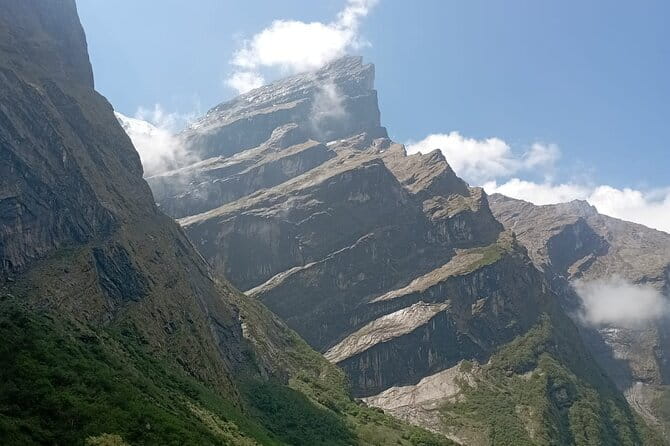
This is described as a shorter day, designed to prepare you for the higher route ahead. From Bamboo, you cross a stream and climb gradually through rhododendron and oak forest toward Dovan.
The trail then becomes more serious. You pass waterfalls and reach the Himalaya Hotel before following a steep section with views toward the Modi River. Hinku Cave is another notable point, followed by the final climb to Deurali.
Notice how the scenery changes as you gain height. Vegetation becomes sparser, the trail turns rockier, and the sense of exposure increases. This is a useful acclimatization day, but do not confuse shorter with easy. The schedule still allows up to 12 hours, and the repeated climbs can be hard on knees and lungs.
More trekking days out of Annapurna Region:
- Annapurna Circuit Trek with Tilicho Lake
★ 5.0 · 368 reviews - Poon hill Trek 3 days
★ 5.0 · 176 reviews - Trekking in Annapurna/Langtang/Everest/Upper Mustang regions
★ 5.0 · 161 reviews - Pokhara: 4-Day Ghorepani, Poonhill & Ghandruk Mountain Trek
★ 5.0 · 132 reviews
Day 6: Machhapuchhre Base Camp to Annapurna Base Camp
This is the central day of the trek. You leave Deurali and pass Bagar before continuing toward Machhapuchhre Base Camp, also known as the base camp beneath the distinctive Fishtail mountain.
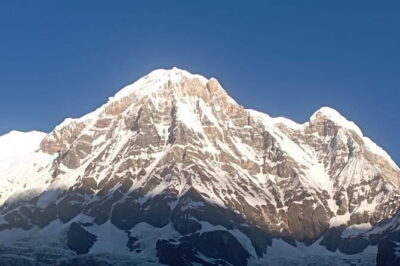
From this area, the views include Machhapuchhre, Hiunchuli, Annapurna South, Annapurna I, Annapurna III, and Gagapurna. The setting becomes increasingly bare and open. Forest gives way to rock, snow, and broad mountain views, depending on conditions.
The final route turns away from the Modi River and heads toward Annapurna Base Camp. The path widens, but the altitude makes every step count. At 4,130 meters, even a moderate incline can feel slow. Take the guide’s pace, drink water, and keep your expectations sensible.
The reward is the location itself. You spend the night surrounded by Himalayan peaks rather than simply stopping for a photograph and leaving. Sunrise is especially important here, and the following morning offers one of the strongest visual moments of the whole trip.
Day 7: Sunrise and the long return to Bamboo
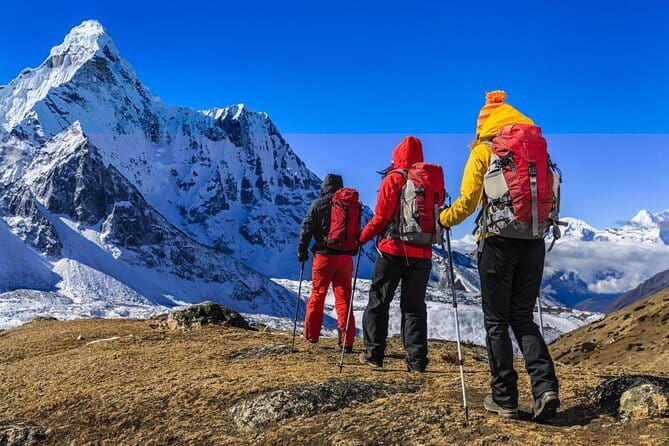
The return begins with an early look at the mountains in morning light. You then retrace the route through the upper valley, past an area prone to avalanches, and down through Deurali and Dovan.
Going downhill is faster in some places, but it is not effortless. Loose or uneven ground can punish tired legs, while stone steps put pressure on knees. The route eventually returns to rhododendron and bamboo forest, then crosses a wooden bridge before reaching Bamboo.
The seven-hour estimate is more manageable than the ascent days, but mountain conditions and group pace can change the timing. I like this section because it lets you notice details missed on the way up: river crossings, forest texture, and the way the valley opens as you lose height.
Day 8: Chhomrong and a second hot-spring stop
You climb again toward Kuldighar and continue along a twisting trail to Sinuwa. From there, the route passes Tilche and Chhomrong, crosses a bridge, and negotiates steep stone steps toward Taulung.
Taulung is a useful junction, with trails leading toward Landruk, Tadapani, and Kot Danda. You are not taking those longer routes on this trip. Instead, the path turns toward Jhinu Danda.
Arriving back at Jhinu Danda gives you another chance to use the hot springs. This is a smart feature of the route. You have completed the high section, and a warm soak can make the difference between a pleasant evening and a very stiff one. The published schedule again allows up to 12 hours, so do not treat the spring stop as guaranteed early in the afternoon.
Day 9: Nayapul and the return to Pokhara
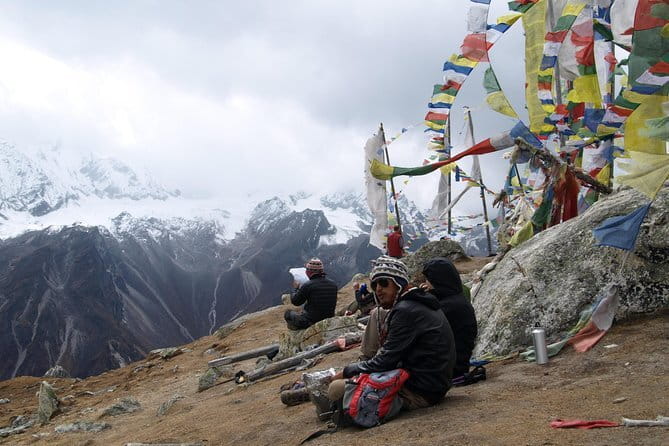
The final walking day follows the Modi Khola valley from Jhinu Danda toward New Bridge and Nayapul. You descend through farms, traditional houses, wider fields, and wooded hills, with rivers and bridges appearing along the way.
The scenery changes quickly as you lose elevation. The narrow upper valley gives way to a broader setting with more cultivation and larger settlements. This is a satisfying finish because the trail connects the high mountain world with the communities and farmland below.
Nayapul marks the end of the trekking portion. From there, you return to Pokhara and spend the night. Food in Pokhara is not included, so plan for your own evening meal and any extra spending around Lakeside.
Day 10: Back to Kathmandu and Durbar Square
The published plan calls for a five to six-hour scenic drive from Pokhara to Kathmandu. Expect hills, terraced fields, river valleys, and broad views along the road. It is a long transfer after several days of walking, but it gives you a final look at Nepal beyond the trekking trail.
After reaching Kathmandu, you have time for Kathmandu Durbar Square and souvenir shopping in the surrounding streets and Thamel. The square’s stone-paved courtyards and palace buildings offer a useful change of pace after mountain lodges.
Do not plan an ambitious city tour here. Road delays can affect arrival time, and the day is already long. Think of this as a short cultural finish rather than a full sightseeing day.
What the $906.67 price covers
At $906.67 per person, the package offers solid value if you want a managed trek rather than arranging each part yourself. It includes three nights in Kathmandu, two nights in Pokhara, mountain lodging, meals during the trek, transport, permits, a guide, an assistant guide, and porter service.
It also includes TIMS and Annapurna Conservation Area permits, a first-aid medical box, sleeping bags and down jackets available for rent, taxes, service charges, and a farewell dinner. One porter carries the combined load for two trekkers, with a stated maximum of 30 kilograms.
The value is strongest for first-time visitors who would rather not sort out permits, lodge bookings, airport transfers, and local transport. You still need to pay for your international flights, Nepal visa, insurance, rescue costs, meals in Kathmandu and Pokhara, personal items, extra nights caused by itinerary changes, and tips.
Travel insurance is especially important here. Rescue operations are excluded, and the route reaches 4,130 meters. The package provides a first-aid box, but that is not a substitute for insurance suited to high-altitude trekking.
How demanding is this trek?
The activity calls for moderate physical fitness, but the itinerary should not be mistaken for a casual walking holiday. You face steep stone stairways, rough trails, long downhill sections, waterfalls, bridges, and altitude.
The heaviest days are likely the route from Jhinu Danda to Bamboo, the climb through Deurali, and the push from Deurali to Annapurna Base Camp. The return is easier in terms of altitude but can still be tiring because of repeated descents and steps.
A group of up to 15 people is small enough for a personal feel, though pace differences may become noticeable. An English-speaking guide, assistant guide, and porter support are useful safeguards, especially when the route becomes rocky or visibility changes.
The team associated with this experience includes guide Shiva, porter Bishal, and airport greeter Suman. Their roles matter in practical ways: a good guide keeps the group moving sensibly, a porter reduces the load on your back, and a reliable airport pickup makes the first hours in Kathmandu less stressful.
Who should book this Annapurna route?
This trek suits you if you want a classic Himalayan goal within 11 days and prefer a package that handles the major arrangements. It is particularly useful for first-time trekkers who want support with permits, lodging, meals, transport, and baggage.
You should be comfortable with basic mountain accommodation and long walking days. If you want private rooms, luxury lodges, short daily walks, or a relaxed sightseeing schedule, this is not the right match.
The route is also a good choice if the hot springs, Gurung villages, forests, and changing scenery appeal to you as much as the final base camp. Annapurna Base Camp is the headline, but the best parts are spread across the whole route.
Should you book it?
Book this trek if you want a well-supported route to Annapurna Base Camp and you value having the logistics bundled into one price. The combination of permits, meals, guide service, porter support, Kathmandu and Pokhara hotels, and mountain gear rental makes the cost reasonable for a supported trip.
Before paying, confirm two things: the exact Kathmandu to Pokhara transport, and the expected daily walking times for your departure. If you are fit enough for steep steps and long days, and you accept simple lodges and high-altitude conditions, this is a strong choice. If you need a slower pace, ask for a customized itinerary instead.
Free cancellation is available up to 24 hours before the start time. The experience has a maximum group size of 15 and is recommended for people with moderate physical fitness.
FAQ
How long does the Annapurna Base Camp trek last?
The experience lasts approximately 11 days, including time in Kathmandu, Pokhara, the trek, and airport transfers.
Where does the tour start?
The stated meeting point is Nepal Mountain Trekkers at Pyramid Galli, Kathmandu 44600, Nepal. Airport pickup is included for your arrival in Nepal.
Where does the activity finish?
The activity ends back at the stated meeting point in Kathmandu after the airport transfer arrangements are completed.
Is transport from Kathmandu to Pokhara included?
Transportation costs are included. However, the detailed information describes a scenic drive, while the overview describes a 30-minute flight, so you should confirm the exact arrangement before departure.
What meals are included?
Breakfast, lunch, and dinner are included during the trek. Meals in Kathmandu and Pokhara are not included. The package lists nine breakfasts, seven lunches, and eight dinners.
Are trekking permits included?
Yes. The package includes the TIMS card and Annapurna Conservation Area fees.
Is porter support included?
Yes. One porter is provided for every two trekkers, with a maximum stated load of 30 kilograms.
Are sleeping bags and down jackets included?
Sleeping bags and down jackets are made available for rent as part of the trekking gear arrangements.
What happens if I need to cancel?
You can receive a full refund if you cancel at least 24 hours before the experience start time. Cancellations or changes made less than 24 hours beforehand are not accepted for a refund.
Just added around Annapurna Region
- 4 Day Mardi Himal Base Camp Trek from Pokhara★ 5.0 · 18 reviews
- 7-Day Trek to Annapurna Base Camp from Pokhara★ 5.0 · 12 reviews
- Private 4 Day Poon Hill Trek from Pokhara★ 5.0 · 16 reviews
- Annapurna Base Camp Trek from Pokhara and Kathmandu★ 5.0 · 7 reviews
- 6 days Annapurna Basecamp Trek★ 5.0 · 16 reviews
- “Exclusive Round-Trip Transfer: Pokhara to Jomsom & Muktinath”★ 5.0 · 11 reviews
- Poon Hill Ghandruk Circuit Trek from Pokhara 4 Days★ 5.0 · 10 reviews
- Pokhara: Poon Hill Ghorepani Short Trek★ 5.0 · 6 reviews
Annapurna Base Camp Treks, compared.
Kathmandu to Annapurna Base Camp (ABC) 5-Day Trek
Read our review →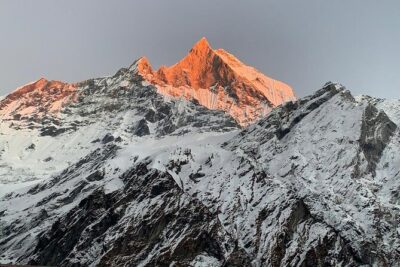
Kathmandu/Pokhara: 5-Day Annapurna Base Camp (ABC) Trek
Read our review →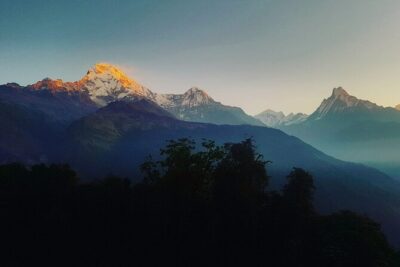
11-Day Hike Tour to Annapurna Base Camp Bliss in Kathmandu
Read our review →Browse the lists this tour appears in