
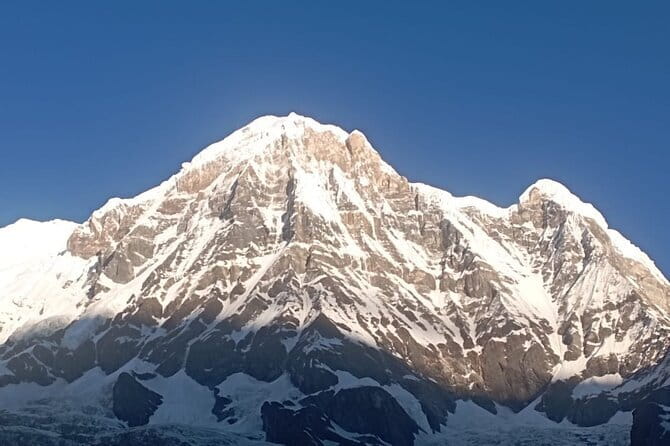
Reviewed · ANNAPURNA BASE CAMP TREKS
Annapurna Base Camp Trek
Annapurna Base Camp is a fine choice if you want a serious Himalayan trek without signing up for a month in the mountains. In ten days, you move from the busy streets of Kathmandu to Pokhara, then walk through villages, forests, high mountain country, and the great bowl of peaks around base camp. The early morning at Poon Hill is a major bonus, not just a warm-up.
I like two things here. First, the company handles the unglamorous work: permits, food, porters, transport, airport transfers, and two Kathmandu hotel nights. Second, you get a private trek, so your guide can focus on your group rather than a large mixed crowd. The main caution is the pace. Six to seven hours of walking on several days, with steep steps and high altitude, calls for moderate fitness and a willingness to keep moving.
Key points to know before booking
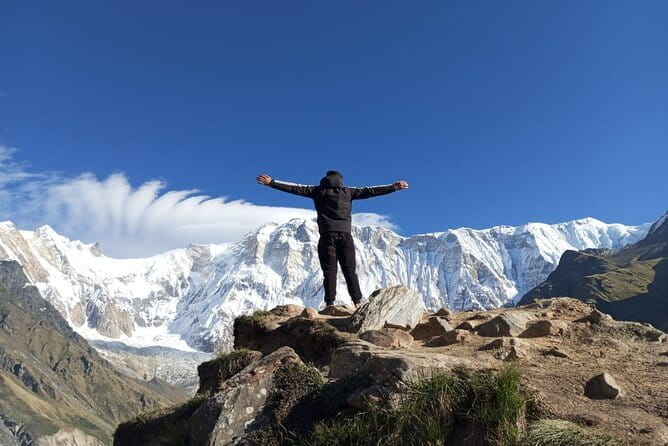
- Poon Hill sunrise is built into the route: You climb early from Ghorepani for wide views of Annapurna and Dhaulagiri.
- The trek reaches Annapurna Base Camp in ten days: It is a compact schedule with long walking days and little spare time.
- Local guide and porter support are included: English, Hindi, and Chinese-speaking, government-licensed guides are available.
- Meals and permits are covered: Breakfast, lunch, dinner, trekking fees, equipment, and guide and porter costs are included.
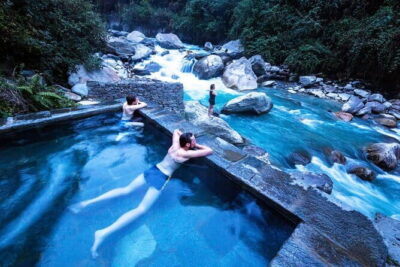
- You return through hot springs at Jhinu: The natural pools offer a welcome rest near the end of the trek.
- Transport is part of the plan: Kathmandu, Pokhara, Nayapul, and the return journey are arranged, with a bus, car, or flight option on some legs.
Why this Annapurna route works in ten days
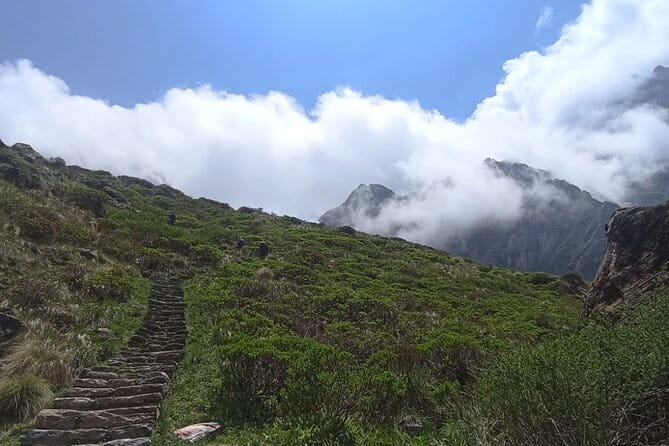
This itinerary links two appealing sections of the Annapurna region. The first leads through the classic villages and forests near Ghorepani and Poon Hill. The second turns toward the Modi Khola valley and Annapurna Base Camp.
That mix gives you more variety than a short out-and-back walk. You get sunrise views, village life, rhododendron and forest paths, steep stone steps, high mountain scenery, and a close look at the peaks around the sanctuary. You also avoid spending every night at the same elevation.
Still, ten days is a tight plan. You will not have much room for a rest day or a weather-related delay. The listed walking times are often around five to seven hours, and the route includes ascents, descents, and many stone steps. I would choose this version only if you are comfortable with steady physical effort.
More Annapurna Base Camp treks:
- Annapurna base camp trek 5 Days
★ 5.0 · 252 reviews - Annapurna Base Camp Trek
★ 5.0 · 111 reviews - Kathmandu to Annapurna Base Camp (ABC) 5-Day Trek
★ 5.0 · 102 reviews
Day 1: Kathmandu to Pokhara by road or air
The first day moves you from Kathmandu to Pokhara. By tourist bus, the journey takes about seven hours and follows the Trishuli River, with views of hills, villages, and changing countryside. A car or flight may also be available, depending on the arrangement you choose.
Pokhara is a useful base before the trek. It is calmer than Kathmandu and puts you closer to the walking route. The road option takes most of the day, so do not treat this as a sightseeing day. If you are prone to motion sickness, carry water and light snacks, and keep expectations realistic about the journey.
The tour begins from Thamel in Kathmandu at about 6:15 a.m. Airport pickup and drop-off are included, along with two nights of Kathmandu accommodation before and after the trek. That makes the start easier if you are arriving from abroad or leaving Nepal soon after the walk.
Day 2: Nayapul, village paths, and Ulleri
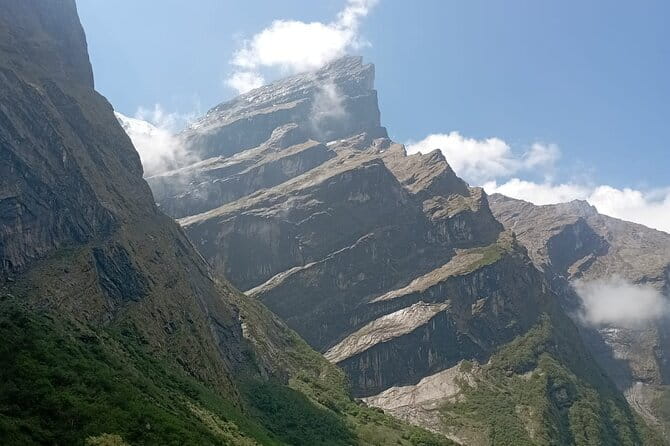
After breakfast, you drive for about an hour to Nayapul. From there, the trek begins beside the Modi Khola River and continues through local villages toward Ulleri.
This is where the trip changes from transport to foot travel. The village sections give you a first look at daily life in the hills, while the river helps mark the route. Ulleri is not simply a place to sleep. It is your first real test of the trail, and the walking time is listed at about five hours.
Expect the day to feel more demanding than the distance suggests. Uphill paths and stone steps can slow you down. Your guide can help manage the pace, while the porter service means you should only carry a daypack with personal essentials.
Day 3: Ulleri to Ghorepani through the forest
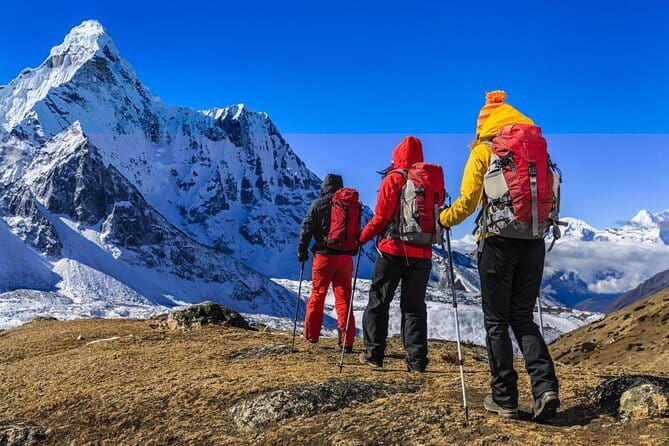
The walk from Ulleri to Ghorepani takes roughly five to seven hours. Forest paths and mountain views replace the lower river valley, and the Annapurna range begins to feel much closer.
Ghorepani matters because it sets up the next morning’s Poon Hill sunrise. You will want to reach your tea house, eat, prepare warm layers, and get to bed at a sensible hour. The early start the next day is one of the defining moments of the route.
Accommodation is in tea houses, and meals during the trek are included. The information also says you can buy meals at tea houses, so you may have some choice beyond the planned food. Carrying small snacks and chocolate is sensible for the long uphill stretches.
More trekking days out of Annapurna Region:
- Annapurna Circuit Trek with Tilicho Lake
★ 5.0 · 368 reviews - Poon hill Trek 3 days
★ 5.0 · 176 reviews - Trekking in Annapurna/Langtang/Everest/Upper Mustang regions
★ 5.0 · 161 reviews - Pokhara: 4-Day Ghorepani, Poonhill & Ghandruk Mountain Trek
★ 5.0 · 132 reviews
Day 4: Poon Hill sunrise and Tadapani
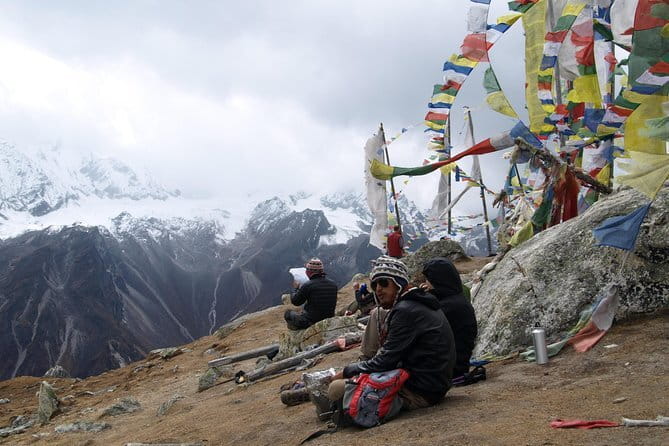
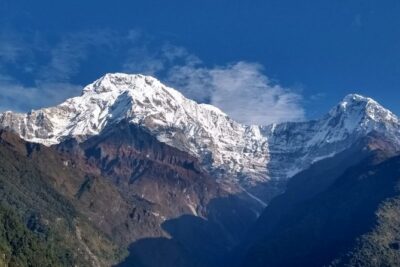
The day starts before breakfast with a climb to Poon Hill. From the viewpoint, you can watch the sun reach the Annapurna and Dhaulagiri ranges. After returning to Ghorepani for breakfast, you continue toward Tadapani.
This is one of the best-designed days in the itinerary. Poon Hill gives you a major mountain view without requiring a separate excursion, and the later walk keeps the route moving toward base camp. The walking time is listed at about four hours, though the early climb and return add effort.
Tadapani offers a quieter forest setting before the trail turns toward the base camp section. Bring a headlamp or confirm that your guide provides one, since the early start is essential. Sunglasses and water bottles are specifically recommended, and both are useful from the first morning onward.
Day 5: Tadapani to Sinuwa

You walk from Tadapani to Sinuwa in about six to seven hours. The route descends through forest and passes small villages, with occasional views toward the Annapurna range.
This day can be deceptive. A descent may sound easy after the climb to Poon Hill, but long downhill sections can tire your knees. Afterward, the route begins to work upward again, so pace yourself rather than spending all your energy early.
Sinuwa is an important point on the route because it brings you into the valley leading toward Annapurna Base Camp. The forest remains part of the experience, but the sense of being in a more remote mountain corridor becomes stronger.
Day 6: Sinuwa to Deurali
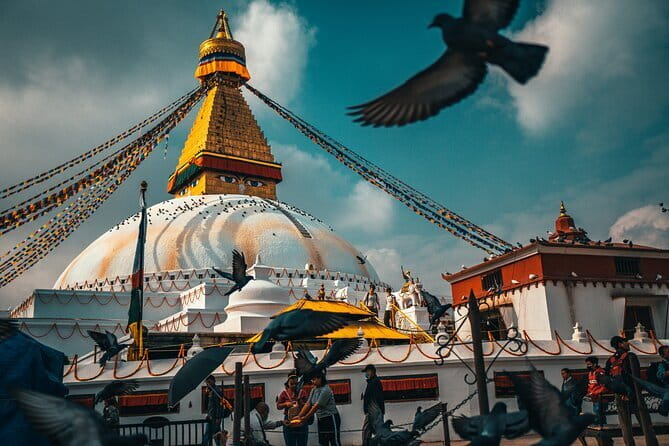
The walk to Deurali takes about five to six hours. The trail climbs through forest, then becomes more rugged as you gain height.
The supplied itinerary refers to crossing the Khumbu Glacier on this day. Khumbu Glacier is normally associated with the Everest region, not the Annapurna Base Camp route, so you should ask the operator to clarify this point before departure. The broader description still makes clear that the route becomes rougher and more alpine as you approach Deurali.
This is a good day to pay attention to your body. The guide is trained in first aid and altitude care, and a basic first-aid kit is carried on the trek. Tell your guide early if you have a headache, unusual tiredness, or trouble eating and drinking. Waiting until you feel very ill is poor mountain practice.
Day 7: Deurali to Annapurna Base Camp
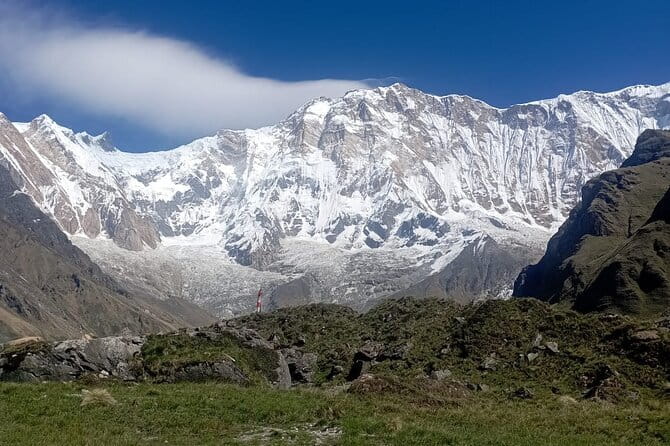
This is the central day of the trek. You leave Deurali, pass Machapuchare Base Camp, and continue to Annapurna Base Camp. The walking time is about six to seven hours.
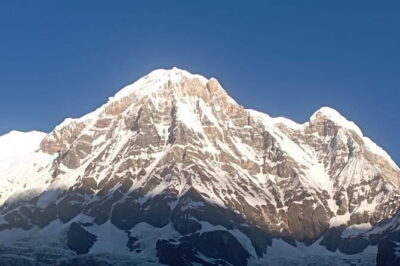
The trail grows more exposed and the surroundings more dramatic as you approach the high basin. At Annapurna Base Camp, the mountains surround the route in a way that makes the earlier village walking feel like part of a much larger journey.
The guide and porter arrangement has real value here. You can concentrate on footing, breathing, water, and the views instead of carrying a full load. The pace may be slower at altitude, and that is normal. A good guide should keep the group together and make sensible decisions about rest and progress.
This is also the point where the ten-day schedule feels most compressed. You reach base camp and then begin descending the following day, rather than taking a long rest at altitude. That keeps the itinerary short, but it leaves little flexibility.
Day 8: Annapurna Base Camp to Sinuwa
After time at base camp, you retrace the route toward Sinuwa. The walk takes approximately six to seven hours.
The return is not just a repeat. Descending brings different views, and familiar paths often feel easier once the highest point is behind you. On the other hand, tired legs can make downhill steps uncomfortable, especially after the previous day’s climb.
Keep some dry clothing accessible rather than buried in your duffel bag. The porters carry the main luggage, but you should have your own water, snacks, sun protection, charger, and warm layer close at hand.
Day 9: Sinuwa to Jhinu, then Pokhara
The final walking section goes from Sinuwa to Jhinu, taking about five to six hours. From Jhinu, you can rest at the nearby natural hot springs before driving to Pokhara for the night.
Jhinu is a smart final stop. The hot springs provide a chance to loosen stiff legs before the road journey, and the return to Pokhara marks a clear shift from mountain routine back to town comforts.
The drive takes about one to two hours. This day combines a substantial walk, bathing time, and transport, so it is not a lazy finish. Still, the hot springs give the route a pleasant closing note.
Day 10: Pokhara back to Kathmandu
You return to Kathmandu by scenic drive, taking around seven to eight hours, or by a short flight. Once back in the capital, you have free time for shopping or exploring before departure.
The flight saves time, while the road offers another look at the countryside. Ask about the transport choice when you book, since the difference affects how much time you have in Kathmandu and how tired you feel at the end.
What the $700 price covers
At $700, the value depends on how much support you would otherwise arrange yourself. This package includes airport transfers, two Kathmandu hotel nights, meals during the trek, permits, a licensed guide, porter costs, trekking equipment, transport, food, accommodation, a duffel bag, a map, and a first-aid kit.
That is a broad package. Paying separately for a guide, porter, permits, meals, tea house rooms, transport, and Kathmandu lodging can become complicated, especially on a short schedule. The included duffel bag is returned after the trek, which is useful if you arrive with luggage that is not suited to mountain walking.
Tips for the guide and porter are not included. Set aside money for that, since their work covers carrying equipment, helping with logistics, and supporting your safety on long days.
The price does not make this a luxury trip. Tea houses are practical mountain accommodation, and the route is physically demanding. You are paying for organization and support, not private comfort at every stop.
Who should book this trek
I would recommend it to a first-time Himalayan trekker who has moderate fitness, wants a private group, and prefers having the major logistics arranged. The company has used guides including Rishi, Roshan Pandey, Moti, Madan Neupane, Arjun, and Ganesh on different trips, with particular praise for careful organization, friendly support, and help with baggage.
Solo trekkers can also find reassurance in the private format and guide service. One past solo itinerary was handled with frequent communication from Madan and close care from guide Rishi. That does not remove the need to prepare, but it shows why a local guide can matter when you are walking alone.
I would hesitate if you dislike early starts, long walks, basic accommodation, or fixed schedules. The route is not presented as an easy hike, and ten days leaves little spare time if transport or weather causes trouble.
The cancellation terms are simple: cancel at least three full days before the local start time for a full refund. Later cancellations and changes are not accepted.
FAQ
Where does the trek start?
The meeting point is in Thamel, Kathmandu, Nepal. The listed start time is 6:15 a.m.
How long does the Annapurna Base Camp trek take?
The full itinerary takes approximately ten days, including travel between Kathmandu, Pokhara, the trailhead, and the return to Kathmandu.
Is transport from Kathmandu to Pokhara included?
The itinerary includes travel between Kathmandu and Pokhara. You may use a tourist bus, car, or flight going to Pokhara, and a scenic drive or short flight returning to Kathmandu.
Are meals included during the trek?
Breakfast, lunch, and dinner during the trek are included. You can also buy meals at tea houses, and carrying light snacks and chocolate is recommended.
Is a guide provided?
Yes. The tour includes a government-licensed guide who speaks English, Hindi, or Chinese and has first-aid training. Guide and porter costs, food, accommodation, transport, equipment, and insurance are included.
Do I need to carry my own trekking bag?
A duffel bag is provided and carried as part of the porter service, though it must be returned after the trip. You should still carry a small daypack with water, snacks, sunglasses, a charger, and personal essentials.
What happens if I cancel?
You receive a full refund if you cancel at least three full days before the experience start time. Cancellations or changes made less than three full days in advance are not refunded or accepted.
Should you book it?
Book this trek if you want Annapurna Base Camp, Poon Hill sunrise, local guide support, and a large amount of practical planning included for one price. The strongest reasons are the private format, porter support, included meals and permits, and a route that gives you both village scenery and high mountain views.
Before paying, confirm the transport choices, the exact accommodation plan, and the itinerary wording about the Khumbu Glacier. If you are fit enough for repeated six-hour walking days and accept tea house conditions, this is a well-organized way to reach Annapurna Base Camp without arranging every detail yourself.
Just added around Annapurna Region
- 4 Day Mardi Himal Base Camp Trek from Pokhara★ 5.0 · 18 reviews
- 7-Day Trek to Annapurna Base Camp from Pokhara★ 5.0 · 12 reviews
- Private 4 Day Poon Hill Trek from Pokhara★ 5.0 · 16 reviews
- Annapurna Base Camp Trek from Pokhara and Kathmandu★ 5.0 · 7 reviews
- 6 days Annapurna Basecamp Trek★ 5.0 · 16 reviews
- “Exclusive Round-Trip Transfer: Pokhara to Jomsom & Muktinath”★ 5.0 · 11 reviews
- Poon Hill Ghandruk Circuit Trek from Pokhara 4 Days★ 5.0 · 10 reviews
- Pokhara: Poon Hill Ghorepani Short Trek★ 5.0 · 6 reviews
Annapurna Base Camp Treks, compared.
Kathmandu to Annapurna Base Camp (ABC) 5-Day Trek
Read our review →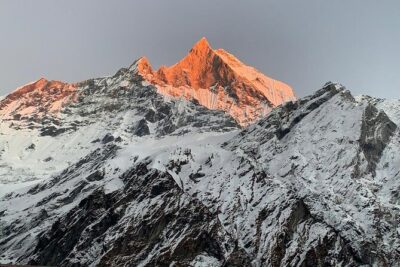
Kathmandu/Pokhara: 5-Day Annapurna Base Camp (ABC) Trek
Read our review →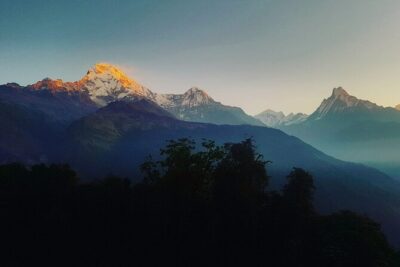
11-Day Hike Tour to Annapurna Base Camp Bliss in Kathmandu
Read our review →Browse the lists this tour appears in