
Reviewed · ANNAPURNA BASE CAMP TREKS
Annapurna Base Camp Trek (8 days)
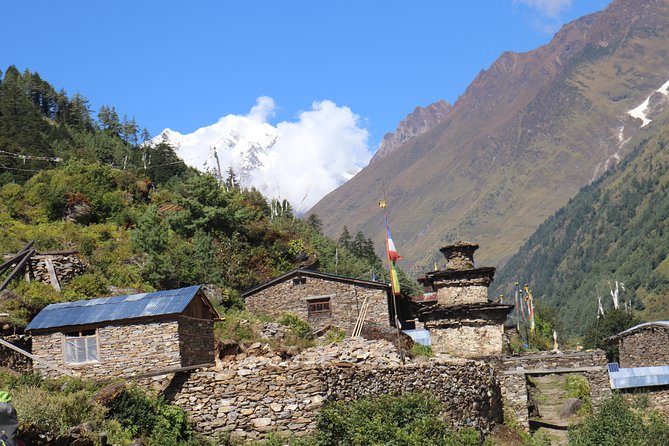
Annapurna Base Camp is the main event here: an alpine goal reached on foot, with forests below and Annapurna South and Machapuchare rising above you. The trek also gives you time in local tea houses, meals along the trail, and a closer look at Gurung culture.
I like two things right away. First, Madu, also called Madhav, is a local Pokhara guide with more than 10 years of trekking experience. Second, the private format lets you discuss a shorter or longer plan, or add Poon Hill, the Annapurna Circuit, or Mardi Himal.
The main caution is the flexible schedule. One person booked eight days but finished in five, with no price adjustment. You’ll also need your own trekking gear, and porter service costs extra.
Key points at a glance
- Sunrise at Annapurna Base Camp: The trek is built around reaching the high sanctuary and seeing morning light on the Himalayan peaks.
- A private trek with local guidance: Only your group participates, with Madu handling permits, transport, lodging, and trail logistics.
- Tea house nights and local meals: Accommodation and meals are included, giving you a simple way to experience mountain life.
- Machapuchare views: The distinctive Fishtail peak is one of the route’s most memorable sights.
- Flexible route planning: You can ask about a shorter or longer trek, or additions such as Poon Hill, the Annapurna Circuit, or Mardi Himal.
- Bring equipment and budget for extras: Trekking gear, porter services, personal spending, fees, and taxes are not included.
Reaching Annapurna Base Camp from Pokhara
This is an eight-day mountain trek in and around the Annapurna Sanctuary, beginning with private transportation from Pokhara. The route moves through forest and mountain trails toward Annapurna Base Camp, with Machapuchare as a major visual landmark along the way.
The exact walking schedule is not fixed in the information provided, and that matters. Mountain treks are affected by fitness, weather, trail conditions, and how long you want to spend at each stop. You should ask for the planned walking hours and overnight villages before paying, especially if you are comparing this trek with a fixed group departure.
The central reward is the changing scenery. Lower sections pass through jungle and forest, while higher sections open toward the Annapurna range. You are not simply being driven to a viewpoint, then returned to town. You earn the base camp by walking there, sleeping in basic mountain lodges, and adjusting to the rhythm of the trail.
That effort is also the main challenge. The operator describes the trek as suitable for people with a moderate level of physical fitness. You should be comfortable walking for several days on mountain paths and handling a high-altitude environment. No claim is made that the route is easy, so do not treat the eight-day duration as a casual sightseeing holiday.
More Annapurna Base Camp treks:
- Annapurna base camp trek 5 Days
★ 5.0 · 252 reviews - Annapurna Base Camp Trek
★ 5.0 · 111 reviews - Kathmandu to Annapurna Base Camp (ABC) 5-Day Trek
★ 5.0 · 102 reviews
Machapuchare and the Annapurna Sanctuary
Machapuchare, often called Fishtail, is one of the peaks associated with this trek. Its unusual shape gives you a clear visual marker as the route heads toward the sanctuary. You may see it from different parts of the trail, depending on weather and visibility.
Annapurna Base Camp is the high point of the experience. The aim is to reach the base camp in time for sunrise, when light begins to crest over the surrounding Himalayan peaks. That early mountain view is the moment most people will plan their days around.
Weather can change the quality of that moment. One December departure had cold conditions but sunny weather, while another spring trip had fog that limited the views. This is useful advice: the trek can still be worthwhile in cloud, but you should not assume the famous peaks will always be visible.
The route also has a cultural side. Madu introduces you to the lifestyle, food, and culture of the Gurung people. That can make the trek feel less like a physical challenge with scenery attached and more like time spent moving through communities connected to the mountains.
Tea houses, meals, and the rhythm of the trail
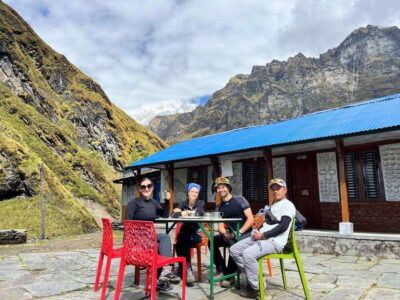
Tea house lodging is included each night during the trek. These are practical mountain accommodations rather than full-service hotels. The value is that you do not have to arrange each night yourself, and you get to stay close to the walking route.
All meals during the trek are included. That keeps daily spending simpler and gives you the chance to eat local food along the way. Personal expenses remain your responsibility, so you should still carry money for anything outside the included meals and lodging.
The tea house setup is also part of the experience. You are likely to meet other people walking in the Annapurna region, while still having the privacy of a private tour group during the trek itself. The two features work well together: your guide and group set the pace, but the mountain lodges provide contact with the wider trekking community.
Do not expect the same comfort level you would have in Pokhara. The supplied details do not promise private rooms, heating, hot showers, or internet access, so ask what is included in the specific tea houses being used. That simple question can prevent a mismatch between expectations and reality.
What Madu adds to the experience
The trip is led by Madu, also identified as Madhav, a local professional guide from Pokhara with more than a decade of trekking and guiding experience. His role is broader than walking ahead and pointing out the trail. He handles permits and logistics while explaining local nature, food, and Gurung culture.
That practical support can be especially useful in the Himalayas. The included permits are the Trekkers’ Information Management Systems permit and the Annapurna Conservation Area Project permit. Having those arranged for you removes a layer of preparation, though the price does not include all fees and taxes.
The information also names Shreedhar and Shree in connection with other departures. That suggests the operator may use more than one guide, so confirm who will lead your group before booking. If having Madu specifically is important to you, request him directly rather than assuming every departure has the same guide.
The strongest benefit of a local guide is not just route knowledge. It is the help with everyday decisions: how to pace the walk, where to stop, and how to adjust if someone is tired. One account describes a guide who encouraged the group to take its time instead of pushing for the finish. That is the right attitude for a mountain trek.
More trekking days out of Annapurna Region:
- Annapurna Circuit Trek with Tilicho Lake
★ 5.0 · 368 reviews - Poon hill Trek 3 days
★ 5.0 · 176 reviews - Trekking in Annapurna/Langtang/Everest/Upper Mustang regions
★ 5.0 · 161 reviews - Pokhara: 4-Day Ghorepani, Poonhill & Ghandruk Mountain Trek
★ 5.0 · 132 reviews
How flexible is the eight-day plan?
The advertised duration is approximately eight days, not a guaranteed eight-day walking schedule. The route can be customized, and you can ask about trekking for fewer or more days.
That flexibility is useful if you want to add Poon Hill, Mardi Himal, or part of the Annapurna Circuit. It may also help if your group has different fitness levels. But flexibility needs clear limits. Ask these questions before departure:
- How many walking days are planned?
- What happens if you reach base camp early?
- Can the route be shortened without changing the price?
- Which villages are planned for overnight stops?
- How many hours of walking are expected on the hardest day?
- What transport is used at the beginning and end?
One person booked the eight-day version and completed the trek in five days. There was no compensation for the unused days. That does not make the trip poor value, but it does mean you should treat the advertised price as a package price, not a daily rate.
If you want a slower pace, say so clearly. The private format gives you a better chance of shaping the trek around your group than a large fixed departure would, but the provider still needs to agree to the plan in advance.
Is $650 a fair price?
At $650 per person, the package includes private transportation, both listed permits, tea house lodging, and all meals during the trek. For an eight-day experience, that is a useful bundle because the major route costs are grouped together.
The price becomes less attractive if you finish much earlier than expected. An eight-day trek completed in five days gives you less time in the mountains without an automatic reduction. It is worth asking how the cost changes for a shorter version before booking.
You must also budget for items outside the package. Trekking gear is not included, and you are expected to have your own equipment. Porter services are separate, although the operator can help you find a porter. Personal expenses, fees, and taxes are also excluded.
In practical terms, $650 can be good value for someone who already owns suitable gear, wants a private trek, and values having permits, food, lodging, and transport arranged. It is less straightforward for a first-time trekker who needs to rent or buy equipment and wants porter support.
Who should book this trek?
I would look closely at this trip if you want a private Himalayan trek with a local guide and do not want to organize every permit, meal, and tea house yourself. It suits people who are comfortable with a moderate physical challenge and who care about reaching a major mountain goal rather than simply collecting viewpoints.
It is also a good fit for friends or couples who want to set their own pace. A private group can make the walking day more personal, and the route can be discussed in advance.
You may want another option if you need a rigid day-by-day plan, guaranteed eight full days, or a package that includes equipment and porter services. You should also think carefully about the season. December can be cold, even with clear sunshine, and spring fog can reduce visibility.
Service animals are allowed, and confirmation is provided at booking. The experience requires good weather. If poor weather causes cancellation, you can choose another date or receive a full refund. You can cancel for a full refund up to 24 hours before the start time, while later cancellations and changes are not accepted.
What to pack and clarify before departure
The provider expects you to bring your own trekking gear. The exact gear list is not supplied, so ask for one before you travel. At minimum, you should get clear advice on clothing, footwear, sleeping arrangements, and protection from cold and wet conditions.
Ask about porter availability early if you do not want to carry everything yourself. Porter services are not included, but the operator says it can help arrange them.
You should also confirm the practical details of the private transportation. The package includes transport, but the available information does not specify where pickup occurs, what vehicles are used, or how long the transfers take.
A few other questions are worth settling in writing:
- Is Madu the guide for your dates?
- What is the revised plan if you need a rest day?
- Are all tea house rooms and meals covered for the full agreed duration?
- Which fees and taxes remain payable?
- What happens if weather blocks the view at base camp?
- Can you add Poon Hill, Mardi Himal, or the Annapurna Circuit?
These are not fussy questions. They tell you what kind of trip you are buying.
The final call
I like this Annapurna Base Camp trek for its mix of mountain walking, local support, tea house life, and practical inclusions. Madu’s local experience and the private format are the strongest reasons to consider it, especially if you want a guide who can explain more than the trail itself.
Book it if you have moderate fitness, your own gear, and a flexible attitude toward the number of days. Before you commit, confirm the guide, walking plan, extra charges, and porter arrangements. If those details suit you, $650 gives you a direct and well-supported route into the Annapurna Sanctuary, with sunrise at base camp as the big prize.
FAQ
How long does the Annapurna Base Camp trek take?
The advertised duration is approximately eight days. The route is customizable, and one departure finished in five days, so confirm the expected schedule before booking.
Where does the trek take place?
The trek is based around Pokhara, Nepal, and travels through the Annapurna Sanctuary to Annapurna Base Camp. Machapuchare is one of the main mountain areas included.
Is transportation included?
Yes. Private transportation is included, and pickup is offered.
Are permits included?
Yes. The package includes the TIMS permit and the Annapurna Conservation Area Project permit.
Are lodging and meals included?
Yes. Tea house lodging and all meals during the trek are included.
Is trekking gear included?
No. You are expected to bring your own trekking gear.
Are porter services included?
No. Porter services cost extra, but the provider can help you find porter support.
Can the trek be customized?
Yes. You can ask about a shorter or longer trek, or about adding Poon Hill, the Annapurna Circuit, or Mardi Himal.
Just added around Annapurna Region
- Private 4 Day Poon Hill Trek from Pokhara★ 5.0 · 16 reviews
- 4 Day Mardi Himal Base Camp Trek from Pokhara★ 5.0 · 18 reviews
- 7-Day Trek to Annapurna Base Camp from Pokhara★ 5.0 · 12 reviews
- Annapurna Base Camp Trek from Pokhara and Kathmandu★ 5.0 · 7 reviews
- 6 days Annapurna Basecamp Trek★ 5.0 · 16 reviews
- “Exclusive Round-Trip Transfer: Pokhara to Jomsom & Muktinath”★ 5.0 · 11 reviews
- Poon Hill Ghandruk Circuit Trek from Pokhara 4 Days★ 5.0 · 10 reviews
- Pokhara: Poon Hill Ghorepani Short Trek★ 5.0 · 6 reviews
Annapurna Base Camp Treks, compared.
Kathmandu to Annapurna Base Camp (ABC) 5-Day Trek
Read our review →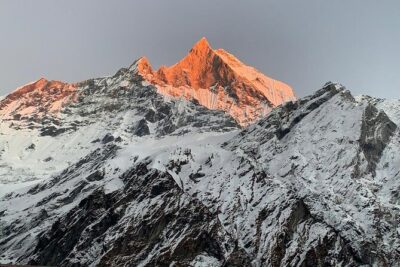
Kathmandu/Pokhara: 5-Day Annapurna Base Camp (ABC) Trek
Read our review →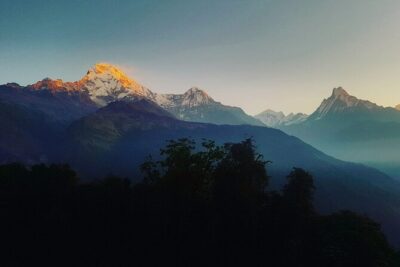
11-Day Hike Tour to Annapurna Base Camp Bliss in Kathmandu
Read our review →Browse the lists this tour appears in