
Reviewed · ANNAPURNA BASE CAMP TREKS
Annapurna Base Camp Trekking
The big draw here is the route itself: you get Poon Hill sunrise and Annapurna Base Camp in one trek, with rhododendron forest, mountain villages, stone steps, and high Himalayan views along the way. The trip begins with a long bus ride from Kathmandu, then follows the classic path through Ghorepani, Tadapani, Sinuwa, Deurali, and Machhapuchhre Base Camp.
I like the practical setup. A licensed guide, one porter for every two trekkers, tea house lodging, permits, and trekking gear are handled for you. I also like the small private-group format, which gives you more control over walking speed and daily breaks. The main drawback is that meals and city hotels are not included, and the 12 days involve several long, demanding walking days.
Key points to know before booking
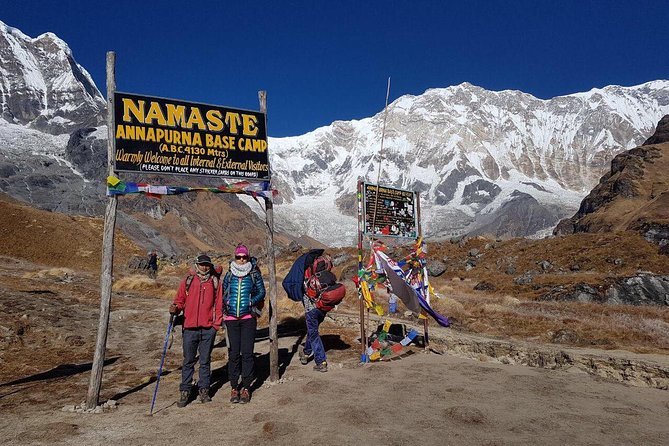
- Two major mountain highlights: You reach Poon Hill at 3,210 meters for sunrise, then continue to Annapurna Base Camp at 4,130 meters.
- Useful gear is supplied: You can use a duffle bag, sleeping bag, down jacket, first aid kit, map, and trekking shirt.
- A porter carries shared loads: One porter is provided for every two trekkers, but solo participants must pay separately for a porter.
- Transport is arranged: Tourist buses connect Kathmandu and Pokhara, with private transfers at the trekking trailhead.
- Food is your responsibility: Breakfast, lunch, dinner, bottled drinks, and water during the trek are not included.
- The trek requires real fitness: The route includes steep stone steps, high altitude, and walking days of up to seven hours.
What this Annapurna trek is really like
This is a mountain trek with a fair amount of logistics removed. You do not need to arrange your own Kathmandu to Pokhara bus, permits, tea house rooms, or trailhead transfers. Your guide organizes the route, while a porter carries part of the load.
That convenience matters in Nepal. The trek passes through several villages and changes altitude quickly. Having someone manage permits, local transport, and lodging lets you focus on walking and keeping your energy for the higher sections.
The tour costs $749.90 per person. For a 12-day trip, that is a useful value if you need the included guide, porter arrangement, permits, gear, and transport. It is not an all-inclusive price. You still pay for food during the trek, drinks, and hotels in Kathmandu and Pokhara.
You should also budget for the porter if you are traveling alone. The included porter arrangement covers one porter for two trekkers, not one porter for every individual participant.
More Annapurna Base Camp treks:
- Annapurna base camp trek 5 Days
★ 5.0 · 252 reviews - Annapurna Base Camp Trek
★ 5.0 · 111 reviews - Kathmandu to Annapurna Base Camp (ABC) 5-Day Trek
★ 5.0 · 102 reviews
Day 1: Kathmandu arrival and trek briefing
Your first day is simple but important. A representative meets you at Tribhuvan International Airport and takes you to your hotel. Later, you meet the trek leader for a pre-trip briefing.
Use this time to check your equipment and ask direct questions. You will want to confirm the walking plan, how your duffle bag will be handled, where to meet in the morning, and what personal items you should carry each day.
The listed start time is 6:00 a.m., so do not treat arrival day as a full sightseeing day. The briefing is your chance to get organized before the early start.
Day 2: The long road from Kathmandu to Pokhara
The bus ride to Pokhara takes about seven hours. It follows a scenic river route and ends near Pokhara Lakeside, the city’s main base for trekkers.
This is a beautiful but tiring travel day. You are not walking yet, but sitting on a bus for seven hours can wear you down. Keep water and simple snacks close, even though food and drinks are not supplied as part of the trek package.
Pokhara Lakeside gives you a change of pace from Kathmandu. It is the staging point for the Annapurna route, and you may spend the night there before the trail begins. Accommodation in Pokhara is not included, so check exactly where you will stay and what the hotel cost covers.
Day 3: Birethanti, Tikhedhunga, Ulleri, and Ghorepani
A private transfer takes you from Pokhara toward the trailhead near Birethanti. The drive begins around 827 meters, then the walking starts in the lower foothills.
The early route leads toward Tikhedhunga and Ulleri. From Tikhedhunga, the trail climbs to Ulleri at about 1,480 meters. This is a proper first walking day, with roughly four hours on foot after the drive.
The route continues through Nangethanti, a small settlement at around 2,460 meters, before reaching Ghorepani at 2,874 meters. You can expect a noticeable increase in effort here. The stone steps are not a minor detail, and the gain in height makes this day feel harder than the walking time alone suggests.
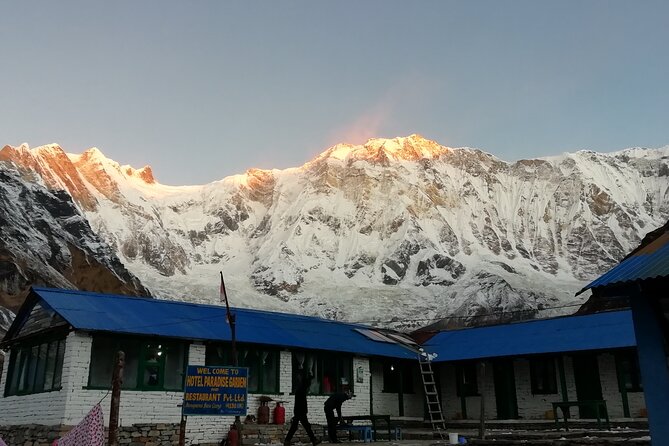
Ghorepani is a popular stop because it sets you up for the early climb to Poon Hill. Tea house accommodation is included, but meals are not, so you pay for your food as you go.
More trekking days out of Annapurna Region:
- Annapurna Circuit Trek with Tilicho Lake
★ 5.0 · 368 reviews - Poon hill Trek 3 days
★ 5.0 · 176 reviews - Trekking in Annapurna/Langtang/Everest/Upper Mustang regions
★ 5.0 · 161 reviews - Pokhara: 4-Day Ghorepani, Poonhill & Ghandruk Mountain Trek
★ 5.0 · 132 reviews
Day 4: Poon Hill sunrise and the trail to Tadapani
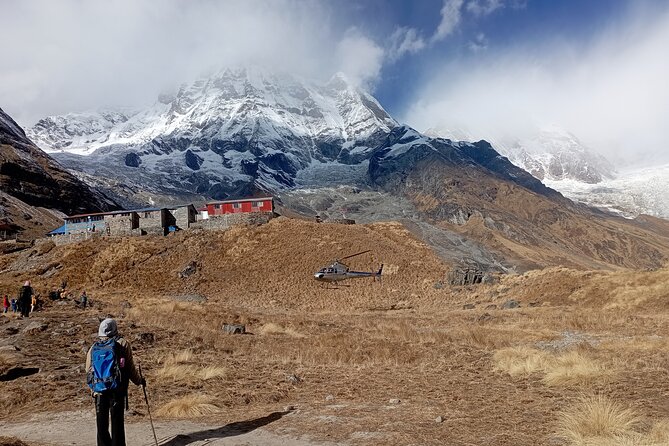
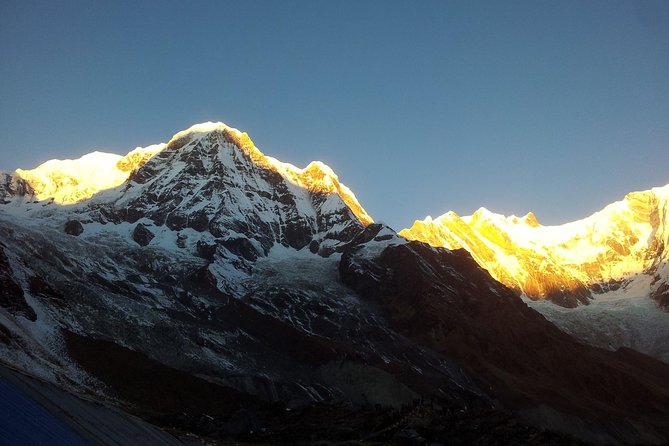
The morning begins before sunrise with a roughly 45-minute climb from Ghorepani to Poon Hill. At 3,210 meters, the viewpoint offers wide views toward Annapurna, Dhaulagiri, and Machhapuchhre.
This is one of the trip’s best features. Poon Hill gives you a major Himalayan viewpoint without requiring a separate multi-day detour. The early start is tough, but the timing helps you see the mountains in the morning light.
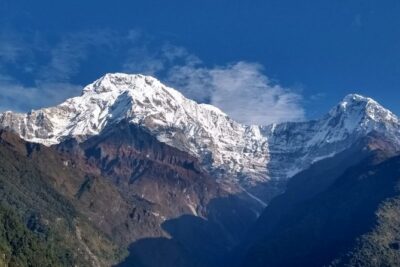
After returning to Ghorepani, you continue toward Tadapani at about 2,630 meters. The full walking day can take around seven hours. The trail passes through forest and mountain villages, with views toward Annapurna South and Hiunchuli.
Tadapani is more than a sleeping stop. It is one of the points where the route feels distinctly alpine, while still passing through settled villages and forested slopes. If you prefer a relaxed pace, ask your guide how the walking time will be handled before you start.
Day 5: Chuile and Sinuwa
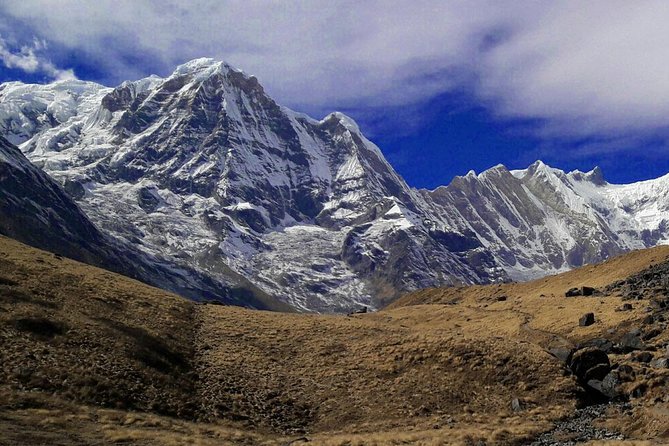
The route continues through Chuile, a quiet village at about 2,300 meters, and on toward Sinuwa. This section brings a mix of forest, terraces, and mountain views.
Sinuwa is divided into Lower Sinuwa and Upper Sinuwa, at roughly 2,340 and 2,360 meters. The walking time is listed at about seven hours, so you should expect a full day rather than a gentle transfer between villages.
This part of the trek is valuable because the route becomes less about reaching a single viewpoint and more about moving steadily into the Annapurna Sanctuary. You pass through small settlements where tea house lodging makes it possible to travel with a lighter pack.
Day 6: Sinuwa to Deurali
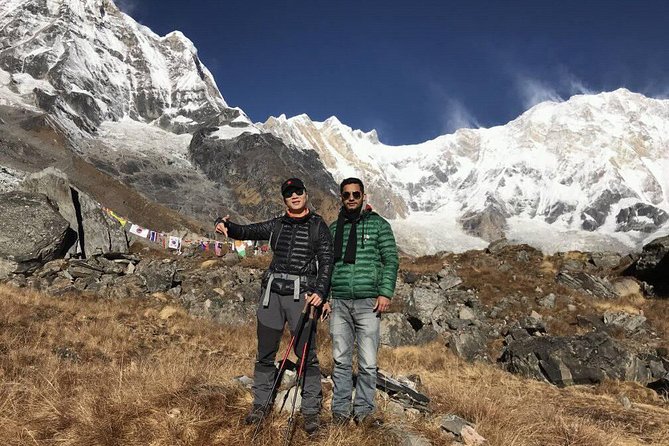
From Sinuwa, the trail heads higher toward Himalaya and Deurali. The walking is split into roughly six and five-hour sections in the schedule, making this another long day.
Deurali is listed at about 3,174 meters. The higher you go, the more important it becomes to walk steadily rather than race ahead. Your guide is there to help manage the pace and watch for signs that the altitude is affecting you.
The route also passes near Chhomrong and the settlement known as Himalaya. Place names can be confusing here, since more than one location in the region is called Deurali. Keep your attention on the route instructions from your guide rather than relying only on a map label.
Day 7: Machhapuchhre Base Camp and Annapurna Base Camp
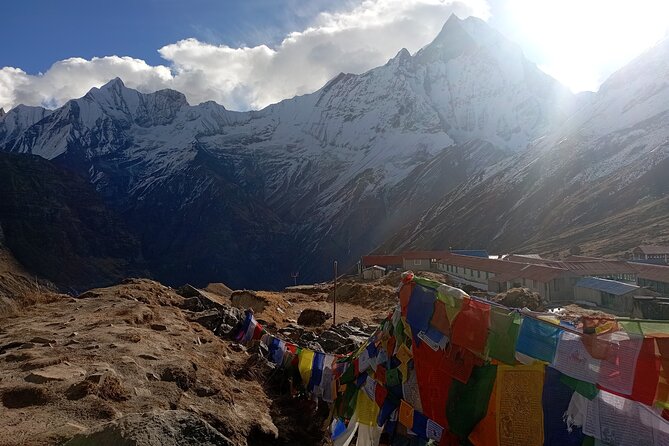
This is the main goal of the trek. From Deurali or the Himalaya area, you continue through the Annapurna Sanctuary toward Machhapuchhre Base Camp, also called MBC, at about 3,700 meters.
From MBC, the trail rises to Annapurna Base Camp at 4,130 meters, or about 13,550 feet. The walking time is listed at roughly six hours. At this height, the cold and thin air can make a moderate distance feel demanding.
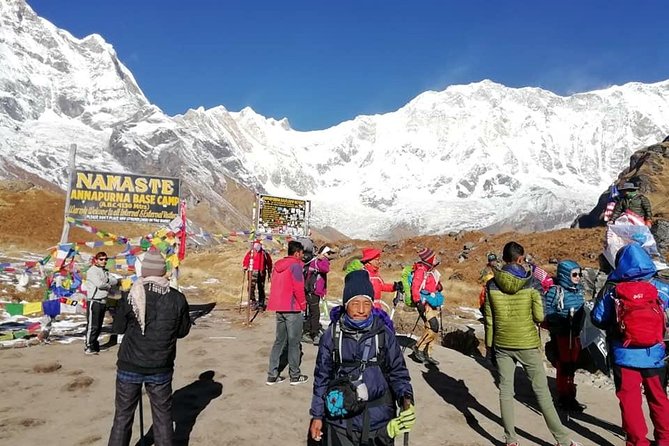
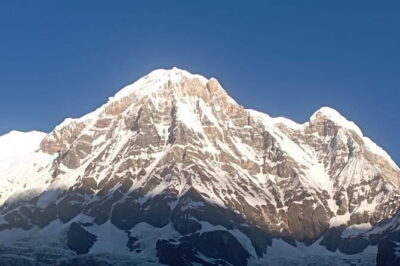
Annapurna Base Camp is surrounded by high peaks, including the distinctive Machhapuchhre and the Annapurna range. The reward is not just reaching a sign or a camp. You are inside a broad mountain amphitheater, with peaks rising around the route.
This is the day when the included down jacket and sleeping bag become especially useful. You should still bring suitable personal layers and footwear, since provided equipment does not replace your own clothing and rain protection.
Day 8: The long descent to Bamboo
After reaching ABC, you descend toward Bamboo at about 2,350 meters. The walking time is around seven hours, and the drop in height is substantial.
A descent can be harder on your legs than the climb, especially after the high point of the trek. Take care on stone steps and wet sections, and do not let the downhill direction fool you into rushing.
Bamboo is a useful overnight stop because it breaks up the return route. You are still in the Annapurna Sanctuary, but the lower altitude should feel more comfortable than the ABC area.
Day 9: Bamboo to Jhinu Danda
The trail continues down from Bamboo to Jhinu Danda at about 1,780 meters. This section takes around five hours and brings you back into warmer, lower country.
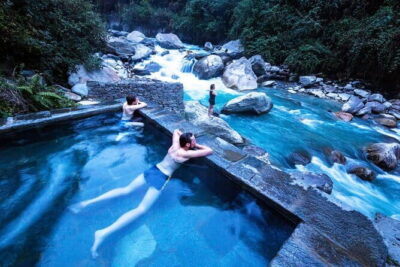
Jhinu Danda is best known for its natural hot springs. The springs are not included in the tour price, so you should expect a separate admission charge. Still, this is a well-timed stop after the long climb to base camp and the return descent.
The village offers a clear change in mood from the high mountains. You trade cold, sparse surroundings for a lower hillside setting and the chance to rest before the final trail transfer.
Day 10: Hot springs, trail end, and Pokhara
You have about an hour scheduled for the Jhinu Danda hot springs. If you want to use them, bring whatever small items you need for that stop and confirm the details with your guide.
The final walk leads from Jhinu Danda toward Siwa or Ghandruk Phedi, depending on the route used. The walking time is about five hours, followed by transport back to Pokhara Lakeside.
This day combines a final trek with a return to city comforts. The included transfer is helpful because you do not need to arrange your own ride from the trail end. Pokhara is also where you can recover after the walking days, but your hotel there is not included.
Day 11: The return bus to Kathmandu
The bus from Pokhara to Kathmandu takes about eight hours and covers roughly 200 kilometers. It is another long road day, but the scheduled transfer keeps the trip connected from start to finish.
I would not plan a demanding evening activity after arrival. The journey is long, and traffic can affect road travel in Nepal. The tour allows the final night in Kathmandu before your departure, giving you a little breathing room.
What is included, and what you still pay for
The package includes:
- Tourist bus transfers between Kathmandu and Pokhara
- Private transfers to and from the trekking route
- Tea house accommodation during the trek
- TIMS and Annapurna Conservation Area permits
- A licensed English-speaking guide
- One porter for every two trekkers
- Staff wages, food, equipment, insurance, and transport
- Duffle bag, sleeping bag, and down jacket
- First aid kit, trekking shirt, map, and achievement certificate
- Government taxes and agency service charges
The important exclusions are food and drinks during the trek, plus hotels in Kathmandu and Pokhara. Water, soft drinks, juice, and similar purchases are also separate.
That split is common for organized treks, but it affects the true cost. The advertised price covers the costly structure of the trek, while your daily food and hotel choices remain flexible. Ask for a clear estimate of those extras before you commit.
Guide support, porter use, and walking ability
The tour provides a licensed English-speaking guide and a porter for every two trekkers. That setup is useful on a route with changing altitude and several confusing junctions.
Your porter is not a personal daypack carrier for every small item. Pack carefully and keep your daily essentials with you. The duffle bag is intended for the gear carried by the porter, while you should carry water, layers, documents, medication, and anything needed during the day.
The tour calls for moderate physical fitness. That means you should be comfortable with repeated uphill and downhill walking, long days, and steep steps. No technical climbing is described, but reaching 4,130 meters is still a serious physical task.
If your guide team includes Avi and Robin, ask about their roles at the opening briefing. They have been praised for patience, safety, and support, which are exactly the qualities I want on a trek where the pace may need to change from day to day.
Is $749.90 a good value?
For 12 days, the price is attractive if you want a guided trek with transport, permits, tea houses, and loaner gear arranged in advance. The guide and porter structure alone can make the trip easier to manage, especially if this is your first Himalayan trek.
The value is weaker if you expect a fully covered holiday. You must still pay for three daily meals on the trail, drinks, city accommodation, and a solo porter if needed. Add those costs before comparing this trip with other Annapurna packages.
The private format is another plus. Your group is the only group participating, so you are not locked into the pace of a large mixed party. That matters on long days and gives you a better chance to pause when you need to.
Who should book this trek?
I would recommend it to you if you want the classic Annapurna Base Camp route but do not want to arrange permits, trail transfers, porters, and mountain lodging yourself. It also suits small groups that value a private guide and a built-in route plan.
It is a good match for people who want both Poon Hill and ABC in one trip. Poon Hill offers a strong early viewpoint, while ABC provides the main high-altitude goal.
I would think twice if you want relaxed sightseeing, included meals, or short walking days. The route is active, the bus journeys are long, and several days run for six or seven hours.
FAQ
How long is the Annapurna Base Camp trek?
The tour lasts approximately 12 days, including arrival in Kathmandu, bus travel to and from Pokhara, the trek, and departure.
What is the highest point reached?
Annapurna Base Camp is reached at approximately 4,130 meters, or 13,550 feet. Machhapuchhre Base Camp is around 3,700 meters.
Is transportation from Kathmandu to Pokhara included?
Yes. Tourist bus transfers from Kathmandu to Pokhara and from Pokhara back to Kathmandu are included.
Are meals included during the trek?
No. Breakfast, lunch, dinner, water, soft drinks, juice, and other drinks are not included.
Is accommodation included?
Tea house accommodation during the trek is included. Accommodation in Kathmandu and Pokhara is not included.
Is a porter provided?
Yes. One porter is provided for every two trekkers. A solo participant must pay separately for a porter.
Can I cancel for a full refund?
Yes, if you cancel at least 24 hours before the experience start time. Cancellations made less than 24 hours before the start time are not refunded.
Should you book it?
Book this trek if you want a well-organized route to Annapurna Base Camp, with Poon Hill added, and you value having a guide, porter, permits, tea houses, and transfers handled for you. The private format and supplied cold-weather gear add real convenience.
Before paying, confirm the Kathmandu and Pokhara hotel arrangements, estimate your food budget, and ask whether Avi and Robin will be your guide and porter team. If you are fit for long mountain days and comfortable paying for meals separately, this package offers a practical way to reach one of Nepal’s most rewarding high mountain viewpoints.
Just added around Annapurna Region
- 4 Day Mardi Himal Base Camp Trek from Pokhara★ 5.0 · 18 reviews
- 7-Day Trek to Annapurna Base Camp from Pokhara★ 5.0 · 12 reviews
- Private 4 Day Poon Hill Trek from Pokhara★ 5.0 · 16 reviews
- Annapurna Base Camp Trek from Pokhara and Kathmandu★ 5.0 · 7 reviews
- 6 days Annapurna Basecamp Trek★ 5.0 · 16 reviews
- “Exclusive Round-Trip Transfer: Pokhara to Jomsom & Muktinath”★ 5.0 · 11 reviews
- Poon Hill Ghandruk Circuit Trek from Pokhara 4 Days★ 5.0 · 10 reviews
- Pokhara: Poon Hill Ghorepani Short Trek★ 5.0 · 6 reviews
Annapurna Base Camp Treks, compared.
Kathmandu to Annapurna Base Camp (ABC) 5-Day Trek
Read our review →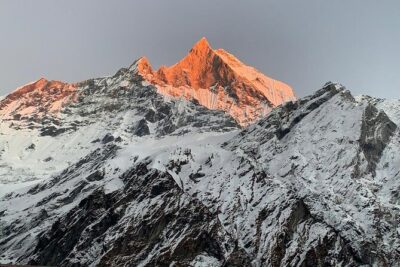
Kathmandu/Pokhara: 5-Day Annapurna Base Camp (ABC) Trek
Read our review →
11-Day Hike Tour to Annapurna Base Camp Bliss in Kathmandu
Read our review →Browse the lists this tour appears in