
Reviewed · HIKING & TREKKING
Island Peak Climbing | Summit 6,189m with Expert Guides
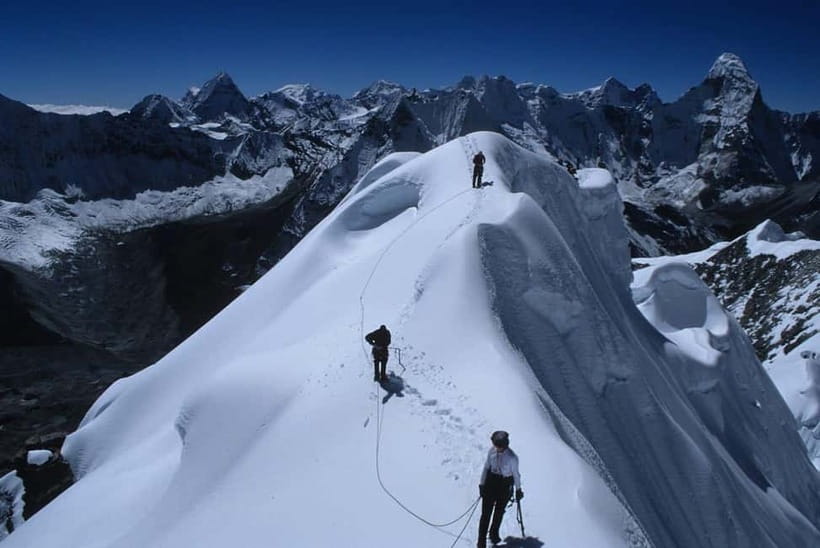
Island Peak is a serious Himalayan climb wrapped inside one of Nepal’s finest treks. You walk from Lukla through Sherpa villages and high valleys, then trade the teahouse trail for glacier training, ropes, and a summit push at 6,189 meters. From the top, you may look across to Everest, Lhotse, Ama Dablam, and Makalu.
I like the careful acclimatization plan, especially the rest day in Namche and the gradual move through Dingboche and Chhukung. I also like the practical support: a guide with at least 20 Island Peak summits, one porter for every two clients, climbing equipment, meals, and a spare summit day.
The main catch is cost clarity. The advertised price is $1,699, but Lukla flights, the climbing permit, guide insurance, and personal expenses are extra. You also need real fitness and a good travel insurance policy that covers high-altitude climbing, not just ordinary trekking.
Key points to know before you book
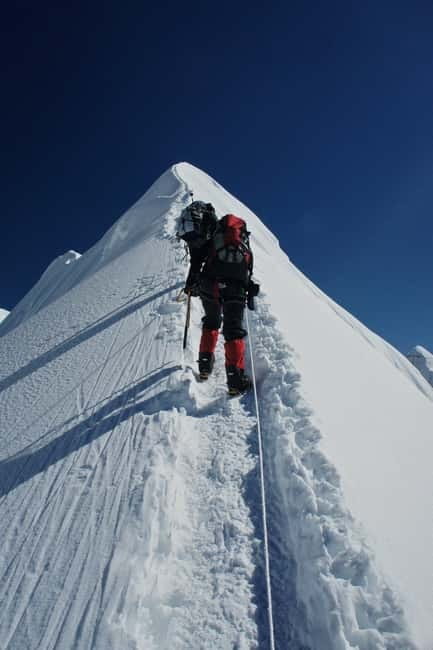
- The summit day reaches 6,189 meters: Expect an 8 to 10-hour climb and descent, with a gain of nearly 1,000 meters from base camp.
- The route uses a sensible acclimatization rhythm: You spend nights in Namche, Dingboche, Chhukung, and base camp before the summit attempt.
- Training is included at 5,200 meters: You receive glacier-walking and pre-climb instruction before summit day.
- The support system is substantial: One porter is provided for every two clients, with food, accommodation, salary, equipment, and insurance included.
- A contingency day protects your summit chance: Day 10 can be used if wind, snow, or poor visibility disrupts the first attempt.
- The price is not all-inclusive: Add Lukla flights, the Island Peak permit, guide insurance, tips, and personal costs to the headline rate.
Why Island Peak is a useful first Himalayan climb
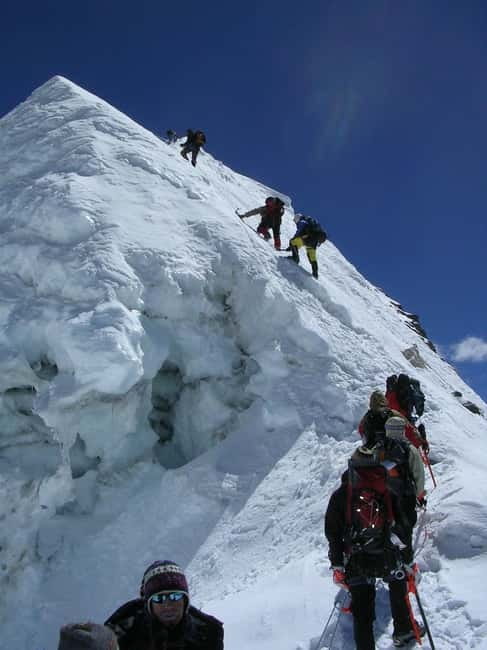
Island Peak, also called Imja Tse, is not a casual walk with a high viewpoint. At 6,189 meters, it brings altitude, cold, glacier travel, steep ground, and a long summit day into one package. That makes it a strong choice for someone who wants a first serious Himalayan climbing experience without committing to a much longer expedition.
The route gives you time to get used to the altitude. You do not fly straight to a high camp and start climbing. Instead, the trip rises from Kathmandu to Lukla, then moves through Phakding, Namche Bazaar, Tengboche, Dingboche, and Chhukung.
I like that structure. It gives your body several nights to adjust and gives you time to learn how the team works. Still, acclimatization is not a guarantee against altitude sickness. You must be ready to slow down, report symptoms, and accept a changed plan if conditions are unsafe.
The private-group format is another useful feature. It should make communication easier than on a large mixed group, particularly during training and on summit day. The supplied information does not give a maximum group size, so ask the operator how many climbers will be in your group and how many guides will join the summit attempt.
More trekking days out of Everest Region:
- Everest Base Camp Trek – 14 Days
★ 5.0 · 1,499 reviews - Everest Base Camp Trekking
★ 5.0 · 485 reviews - Everest Base Camp Trekking – 13 Day
★ 5.0 · 365 reviews
Kathmandu to Lukla: the trip starts with logistics
Day 1 is a soft landing in Kathmandu at 1,338 meters. Airport and hotel transfers are arranged in a private vehicle, and two nights in a deluxe Kathmandu hotel are included. This first day is useful for meeting the team, checking equipment, and handling last-minute purchases or cash.
The flight to Lukla takes about 35 minutes. It is a short flight, but it is an important part of the trip because mountain weather can affect the schedule. During the busiest periods, flights may operate from Ramechhap Airport instead of Kathmandu. That can mean extra road travel, so keep your first and last days flexible.
From Lukla, you walk about 8 kilometers to Phakding, taking three to four hours. The route drops to 2,800 meters, which makes this a gentle first walking day. You get your first taste of the trail without being asked to make a major altitude gain.
The next day is harder. You walk about 10 kilometers to Namche Bazaar, cross suspension bridges, and gain around 600 meters. The route takes five to six hours, and Thamserku and Everest begin to appear. This is often the first day when the combination of uphill walking and altitude feels real.
Namche to Tengboche: the cultural heart of the route
Namche Bazaar sits at 3,438 meters and serves as the main trading and rest center for the upper Khumbu. Day 4 is set aside for acclimatization, with an optional two to three-hour hike and a modest gain of about 100 meters.
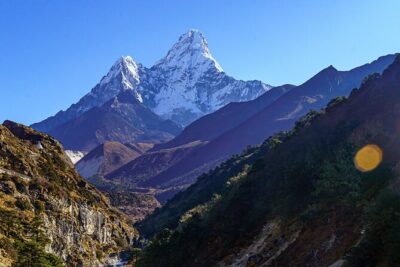
Do not treat this as a wasted day. I consider it one of the most important parts of the program. You can walk high and sleep lower, take in views of Everest and Ama Dablam, and learn how your body reacts before the route becomes more demanding.
Day 5 leads to Tengboche at 3,870 meters. The walk covers about 9 kilometers and takes five to six hours. The big draw is Tengboche Monastery, along with broad mountain views toward Everest, Lhotse, and Ama Dablam.
The scenery is impressive, but the altitude is beginning to matter more than the distance. You may feel that a 430-meter gain is modest. At nearly 4,000 meters, it can make a normal walking day feel slow. Keep your pace steady and resist the urge to race ahead.
Dingboche and Chhukung: where the climb becomes real
Day 6 takes you to Dingboche at 4,360 meters. The 10-kilometer walk passes through open high valleys, with Lhotse and Ama Dablam in view. It takes five to six hours, and the nearly 500-meter gain is enough to test your breathing.
Dingboche is a key transition point. You are no longer simply trekking toward a famous mountain. You are preparing for a climb above 6,000 meters. The next day is shorter, with a three to four-hour walk covering about 6 kilometers to Chhukung at 4,730 meters.
Chhukung gives you a closer look at Island Peak and the surrounding high ground. The route crosses alpine pasture, but do not confuse the shorter schedule with an easy day. Your body is working at altitude, and sleep can become less restful as you climb higher.
I like the way the program uses Chhukung before base camp. It avoids making the base-camp day an enormous push from Dingboche. You arrive at 5,200 meters with a little more time to adjust before the technical part begins.
More to do in the Everest Region:
- Everest Base Camp Helicopter Tour landing at Everest View Hotel
★ 5.0 · 668 reviews - Everest Base Camp Trek -14 Days
★ 5.0 · 321 reviews - Everest Base Camp Helicopter Tour landing at Hotel Everest View
★ 5.0 · 218 reviews - Everest Base Camp Trekking – 2025/2026
★ 5.0 · 199 reviews
Base camp training at 5,200 meters
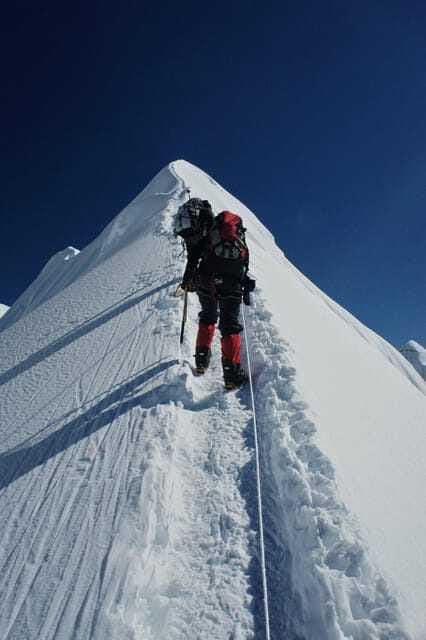
The walk from Chhukung to Island Peak Base Camp takes three to four hours and covers about 5 kilometers. You gain roughly 470 meters, with Island Peak and Lhotse filling the view.
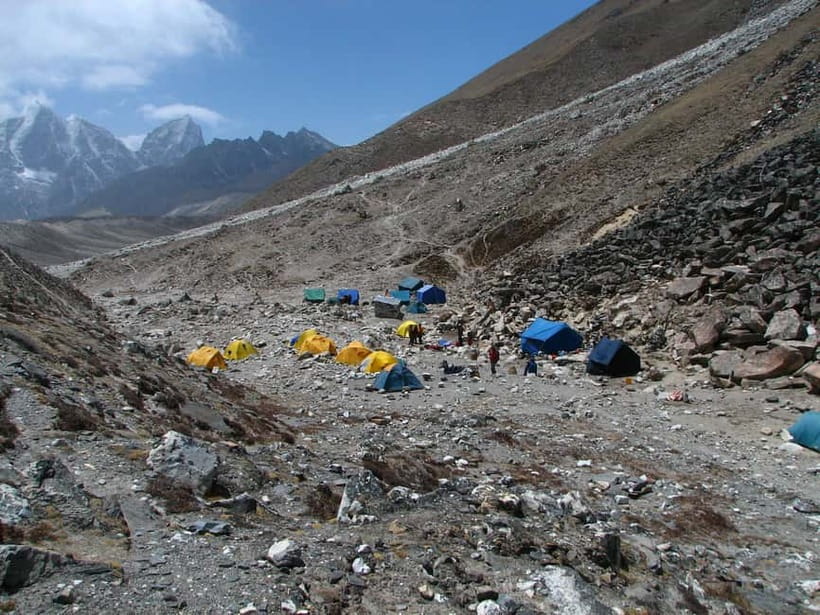
The valuable part of this day is the pre-climb training. You are expected to practice glacier walking and prepare for the climbing section. Group equipment includes ropes, ice screws, snow bars, ice hammers, tents, and kitchen equipment.
The exact technical content of your training is not specified, so ask in advance what personal equipment you must bring and what the operator will provide. The package says essential items such as a duffle bag, sleeping bag, and down jacket will be provided, but you are still expected to bring personal trekking and climbing gear.
This is also the point where the trip becomes less comfortable. You stay in tented accommodation rather than relying only on local lodges. Hot water, showers, drinks, Wi-Fi, charging, and phone calls cost extra where available. Carry cash, a flashlight, and the personal items you need for a cold night at altitude.
Summit day: 8 to 10 hours above the tree line
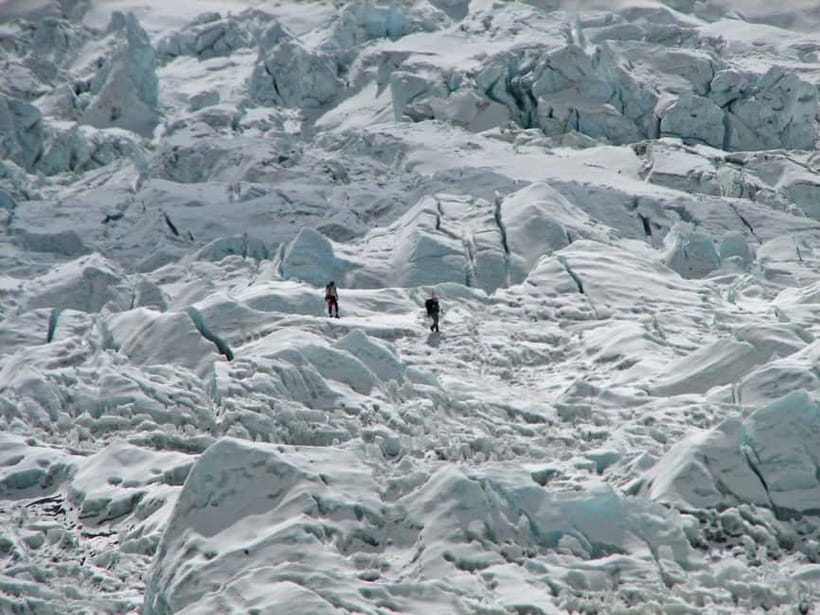
The summit attempt begins early, though an exact start time is not provided. You climb from 5,200 meters to 6,189 meters, gaining almost 1,000 meters before returning to base camp. The full day is expected to take eight to ten hours and cover about 10 kilometers.
The physical challenge is not just the steepness. At this height, every step costs more effort. Cold, wind, snow, and visibility can change the feel of the route. A good guide will manage the pace and make decisions about safety, but you still need to be honest about your condition.
The summit views are the payoff: Everest, Makalu, Lhotse, and Island Peak itself are listed from the high point. Ama Dablam and Everest have already been part of the approach, so the summit day gives the whole route a satisfying visual thread.
The climbing guide is required to have at least 20 Island Peak summits. That is a useful standard, especially for route judgment and changing mountain conditions. The staff also includes a licensed English-speaking trekking guide and porters at a ratio of one for every two clients.
One personal detail worth noting is the positive mention of a porter named Mijan, whose help went beyond basic baggage carrying. That fits the wider strength of this operation: the support team is not an afterthought. Friendly, professional Sherpa and porter service can make a major difference when you are tired, cold, or dealing with a sudden change at the airport or on the trail.
The buffer day is worth more than a packed schedule
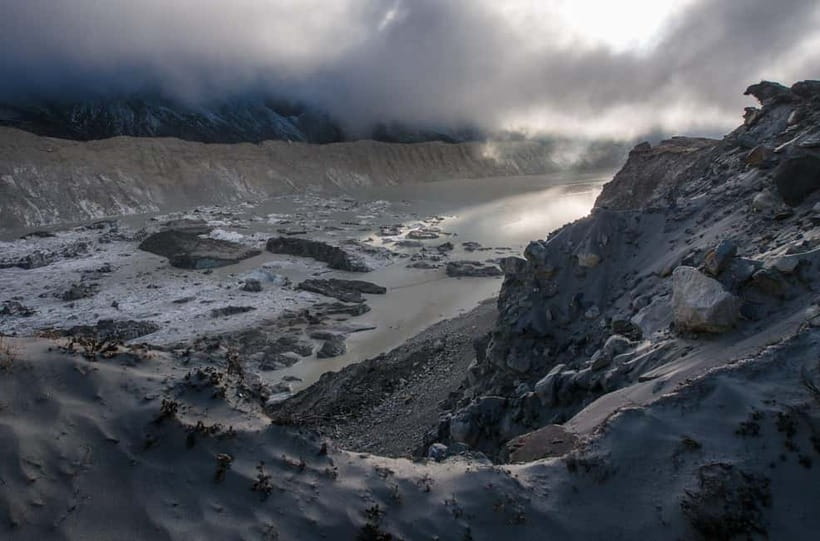
Day 10 is held open as a contingency day. This is one of the strongest features of the schedule. High mountains do not follow a timetable, and a spare day gives the team another chance if wind, snow, poor visibility, or a delayed Lukla flight affects the plan.
Some operators pack every day tightly to make the trip look shorter. Here, the buffer day acknowledges reality. You may not need it, but you should consider it part of the value of the trip rather than an empty day.
If you reach the summit on the planned day, the extra day can support a safer descent or cover another delay. Ask the company how unused contingency time is handled, since no special activity is specified.
Returning through Namche and Lukla
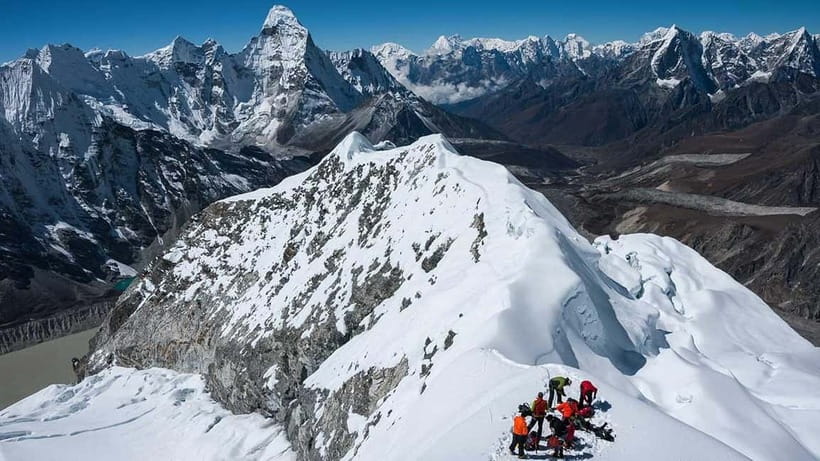
After the climb, you retrace the route from Chhukung to Namche. The stated walking time is five to six hours, but the distance is listed as 18 kilometers, so this will be a long descent. You drop roughly 1,292 meters and see Ama Dablam and Everest from a new angle.
The route to Lukla the next day covers about 19 kilometers and takes six to seven hours. The elevation drops another 638 meters to 2,800 meters. This is a demanding finish, particularly after summit day, so use trekking poles if you normally rely on them and keep your pack light.
The final flight to Kathmandu takes about 35 minutes. The itinerary includes hotel and airport transfers, and the plan ends with departure on Day 14. Again, leave room for changes. Lukla flights are sensitive to mountain weather, and a late return can affect onward connections.
What the $1,699 price really covers
At $1,699 per person, the package includes a useful amount of infrastructure. You receive Kathmandu accommodation, airport and hotel transfers, three meals a day during the trek, local lodge and tented accommodation, climbing equipment for the group, permits and local fees listed in the package, a free duffle bag, a guide, porters, training, and 24-hour company support.
The package also includes the Sagarmatha National Park entry permit, the Khumbu Pasang Lhamu Rural Municipality fee, the NMA service charge, the SPCC fee, and a $500 garbage deposit. Those charges can add up on a climb, so including them improves the value.
But the headline price is not your final cost. Round-trip Kathmandu to Lukla flights are listed at $440 per person. The Island Peak climbing permit is listed separately as $350, with $175 also shown, so you should ask which amount applies to your nationality, season, or booking arrangement.
You also need to budget for the guide’s climbing insurance, listed at $100, plus tips, drinks, hot water, showers, Wi-Fi, laundry, phone calls, and other personal costs. A solo client must also pay for a porter separately.
Before booking, ask for a written cost breakdown. With flights and the applicable permit added, the trip can move well above $2,000 per person before insurance and personal spending. That is still a fair price for a supported climbing trip, but only if you compare the full figure with similar programs.
Who should book this climb
You should consider this trip if you already enjoy long mountain days and want structured support for your first high-altitude peak. It suits adults over 14 who are physically fit, comfortable with basic outdoor hardship, and willing to train for glacier travel and climbing movement.
You should not book it as a scenic trek with an optional photo stop at the summit. The altitude is serious, the summit day is long, and the itinerary includes technical training. A good level of fitness is required, and valid travel insurance must cover high-altitude trekking and climbing.
The program is not suitable for children under 14, pregnant women, wheelchair users, or people over 95. The age limits are blunt, but the main point is simple: this is a demanding mountain trip, not a standard guided walk.
Cancellation is free up to 24 hours before the activity, and you can reserve now and pay later. Those terms help with planning, but they do not remove the need to prepare properly.
FAQ
How high is Island Peak?
Island Peak reaches 6,189 meters, or 20,306 feet. The summit day begins from base camp at about 5,200 meters.
How long is the full trip?
The program lasts 14 days, including arrival in Kathmandu, the trek and climb, the return to Kathmandu, and departure.
Are Lukla flights included?
No. Round-trip flights between Kathmandu and Lukla are listed as an extra cost of $440 per person.
Is the Island Peak climbing permit included?
No. The permit is listed separately. The supplied cost information shows both $350 and $175, so confirm the correct amount before paying.
What climbing support is provided?
A climbing guide with at least 20 Island Peak summits is provided, along with group ropes, ice screws, snow bars, ice hammers, tents, and kitchen equipment. Pre-climb training and glacier-walking instruction are also included.
Do I need special travel insurance?
Yes. You need valid insurance that covers high-altitude trekking and climbing. The package also lists separate climbing insurance for the guide at $100.
Should you book Island Peak with Accessible Adventure?
I would book this trip if I wanted a structured first Himalayan climb and valued strong logistical support over the lowest possible price. The gradual acclimatization, base-camp training, experienced climbing guide requirement, porter ratio, and contingency day are all sensible features.
I would pause before booking if you are new to long mountain days, dislike cold tented nights, or want a simple all-inclusive price. Confirm the permit charge, group size, personal gear list, and insurance details in writing.
For a fit and prepared climber, this offers a solid route into Nepal’s high mountains. You get Sherpa villages, Tengboche Monastery, Everest-region scenery, and a real summit attempt, with a support system designed to help you handle the hard parts safely.
Just added around Everest Region
- Day Tour to Everest Base Camp By Helicopter★ 5.0 · 16 reviews
- Kathmandu To Lukla By Helicopter Flight★ 5.0 · 6 reviews
- Luxury Everest Base Camp Trek – 11 Days★ 5.0 · 9 reviews
- Everest Base Camp Tour & View Point by Helicopter from Katmandu★ 5.0 · 3 reviews
- Everest base camp helicopter tour with Guarenteed Landing★ 4.0 · 7 reviews
- Everest base camp flight over by Helicopter from Kathmandu★ 5.0 · 10 reviews
- Everest Base Camp Helicopter Tour Stop at Hotel Everest View.★ 5.0 · 17 reviews
- Everest Base Camp Helicopter Tour★ 5.0 · 24 reviews
Hiking & Trekking, compared.
Nagarkot Sunrise View and Day Hiking from Kathmandu
Read our review →
Browse the lists this tour appears in