
Reviewed · EVEREST BASE CAMP TREKS
Luxury Everest Base Camp Trek – 11 Days
The great hook here is simple: you walk to Everest Base Camp, then use helicopters to cut out the long return trek. That leaves more energy for the Sherpa villages, monasteries, and mountain views, while luxury lodging softens some of the hard edges of high-altitude travel.
I like the helicopter from Kathmandu to Lukla, which saves time and gives you a dramatic start. I also like the built-in acclimatization days around Namche and Dingboche. The main concern is the price, $4,070 per person, plus the physical demands of reaching 5,164 meters at Gorak Shep.
- Helicopter access: Fly from Kathmandu to Lukla and from Gorak Shep back toward Kathmandu.
- Classic route: Walk through Phakding, Namche Bazaar, Tengboche, Dingboche, Lobuche, and Everest Base Camp.
- Acclimatization built in: Rest around Namche and Dingboche before the highest stages.
- Kala Patthar sunrise: Take an early hike and helicopter landing near one of the best Everest viewpoints.
- Small group size: The maximum is 15 people, with guides and porters included.
- Luxury at altitude: Lodging, meals, crew costs, and key transport are covered, though personal costs remain.
Why This Everest Trek Feels Different
Most Everest Base Camp trips ask you to walk both ways from Lukla. This 11-day plan changes the rhythm. You fly into Lukla, trek uphill through the Khumbu region, reach Base Camp and Kala Patthar, then return by helicopter from Gorak Shep.
That shortcut matters. The route still demands serious walking at high altitude, but you avoid several days of retracing your steps. You also spend less time descending on tired legs. For a costly trip, that is one of the clearest benefits.
The word luxury needs a little context. You are not getting a five-star city hotel in every village. Remote mountain accommodation has limits. Here, luxury means a more comfortable organized package, with upgraded lodging during the trek, a support crew, meals, private transport by helicopter at key points, and a company handling the moving parts.
The group limit of 15 is another practical plus. That is large enough to share the experience but small enough for a guide to keep track of the group. Past trips connected with this company have included guides named Prakash, Keshab, Babu, and Ram, along with porters who helped carry equipment and support people at altitude.
Day 1: A Soft Landing in Kathmandu
Your guide meets you at the airport and takes you to your hotel in Thamel. This first day is less about sightseeing and more about getting settled before an early start.
Thamel is a useful base for a Nepal trip because it is close to shops, restaurants, and transport. The tour covers the airport pickup and hotel transfer, but extra nights in Kathmandu are not included. Breakfast is included, while most meals in Kathmandu are your responsibility.
This is also the moment to confirm the next morning’s plan. The stated meeting time is 5:15 a.m., so keep your bags organized and your morning simple. International flights, extra hotel nights, and personal purchases are outside the tour price.
More Everest Base Camp treks:
- Everest Base Camp Trek – 14 Days
★ 5.0 · 1,499 reviews - Everest Base Camp Trekking
★ 5.0 · 485 reviews - Everest Base Camp Trekking – 13 Day
★ 5.0 · 365 reviews
Day 2: Helicopter to Lukla, Then Four Hours to Phakding
The adventure begins with a transfer to Kathmandu Airport and a helicopter flight to Lukla. That saves the usual airport routine and gives you a memorable arrival in one of Nepal’s best-known mountain gateways.
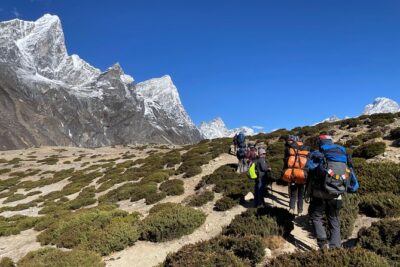
At Lukla, you meet the rest of the trekking crew and start walking toward Phakding. The first trek takes about four hours. It is an important adjustment day because you are moving from city travel to mountain travel without immediately attempting the hardest sections.
Phakding is not the main prize of the trip, but it sets the pattern. You walk at a steady pace, stay with the group, and begin learning how your body responds to the climb. Your guide and porters are included, with their daily pay, meals, and insurance covered.
Day 3: Pine Forests and the Climb to Namche Bazaar
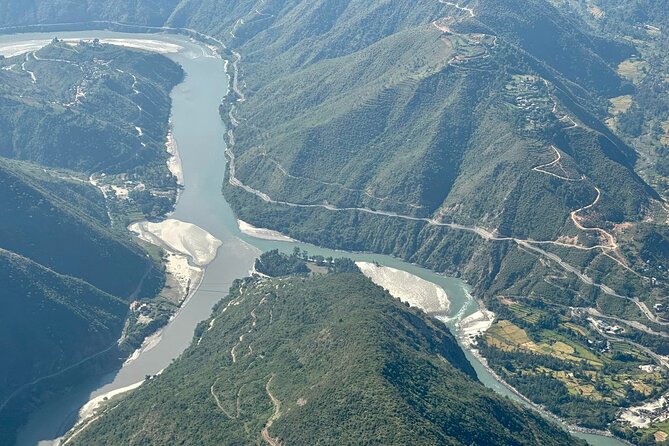
The route toward Namche begins with a gentler trail before becoming more demanding. You pass through pine forests and continue uphill toward Monjo and the entrance to the higher Khumbu region.
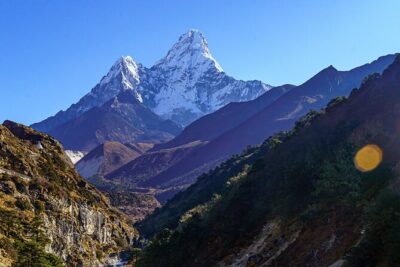
Namche Bazaar is one of the most memorable settlements on the route. It is a Sherpa trading center with mountain views and a lively feel, especially after the quieter trail from Phakding. The climb is challenging, but it also gives you the first strong sense that this is a real high-altitude expedition.
The itinerary information gives only a short stated stop time for this section, so do not read that as the total walking time. Daily trekking distances can feel very different at altitude. The useful question is not simply how many hours you walk, but how steadily you can walk, eat, drink, and rest.
Day 4: Acclimatization and Everest View Point
The next day is designed as a rest and acclimatization day around Namche, with a visit to Everest View Point. You do not simply lie in bed all day. The idea is to make a controlled outing, see the surrounding peaks, and return to Namche before pushing higher.
This pause is one of the strongest parts of the schedule. Altitude is not solved by fitness alone. Your body needs time to adjust, and a slower itinerary gives your guide more room to watch how you are coping.
Namche also gives you time to explore a Sherpa town rather than treating it as just a place to sleep. You can walk through its market area and take in the mountain setting. The tour does not list separate entrance charges for the stops, and admission is shown as free in the itinerary.
More trekking days out of Everest Region:
- Everest Base Camp Trek -14 Days
★ 5.0 · 321 reviews - Everest Base Camp Trekking – 2025/2026
★ 5.0 · 199 reviews - Everest Base Camp Trek
★ 5.0 · 193 reviews - Everest Base Camp Trek with Helicopter Return from Gorakshep to Lukla
★ 5.0 · 161 reviews
Day 5: Rhododendron Forests and Tengboche Monastery
The trek to Tengboche takes you through dense rhododendron forest and toward one of the route’s key cultural stops. Tengboche is known for its monastery, and the setting gives the day more meaning than a simple march from one lodge to another.
This is where the tour’s cultural side becomes important. Everest travel is not only about standing near the world’s highest mountain. The route passes through Sherpa communities and Buddhist places of worship, and Tengboche offers a chance to slow down and notice that connection.
The itinerary numbering is slightly inconsistent, calling this the sixth day in its description even though the schedule lists it as Day 5. The practical point is clear: Tengboche follows the Namche acclimatization stop and comes before Dingboche.
Day 6: Dingboche at 4,410 Meters
From Tengboche, you continue toward Dingboche, usually a five to six-hour trek. At 4,410 meters, Dingboche is high enough for altitude to become a central concern, not a minor inconvenience.
Dingboche sits in the Imja Valley and serves as another important rest point. The schedule allows your body to adjust before the route climbs toward Lobuche and Gorak Shep. You should expect the pace to feel slower here, even if the walking distance does not look alarming on paper.
This is also a day when a good guide matters. The company’s listed guides include Prakash, Keshab, Babu, and Ram, and past organized trips have praised the crew for helping people through mountain sickness, weather trouble, and changing flight plans. That does not remove the risks, but it gives you a support structure.
Day 7: Chukhung and the Second Acclimatization Focus
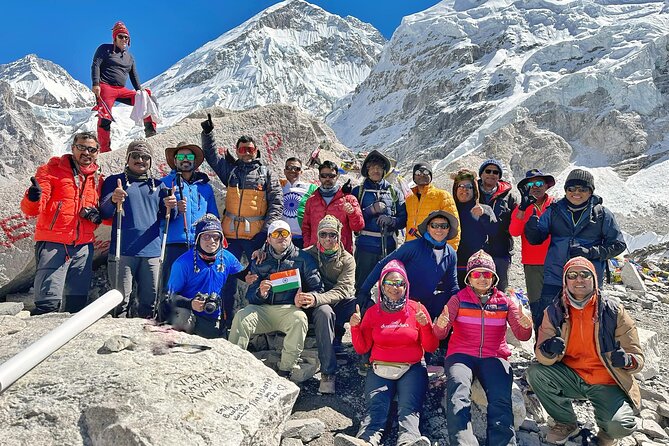
The Chukhung section brings another high-altitude outing near Dingboche. The purpose is not just to add another name to your route. It helps you spend time at elevation before going higher.
The schedule describes this as a useful acclimatization day. That makes sense in a trek where the final walking stages take you above 5,000 meters. You will need patience here. A short walk at high altitude can feel harder than a longer walk at home.
The tour calls for a moderate level of physical fitness, but that phrase should not be misunderstood. You need to be comfortable walking for several hours on mountain trails and handling steep uphill sections. If you have asthma or another medical concern, ask a medical professional about your suitability before booking.
Day 8: The Khumbu Glacier Route to Lobuche
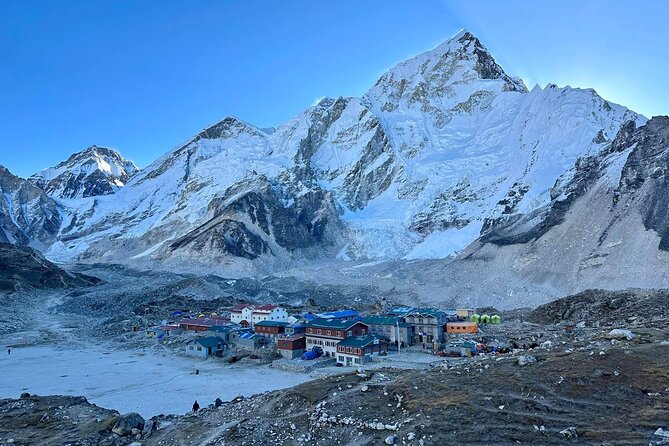
The trek toward Lobuche takes you along the terminal moraine of the Khumbu Glacier. The scenery becomes more severe and open as you leave the lower forests behind. The air is colder and thinner, and the route feels increasingly focused on the high mountain environment.
Lobuche is a key staging point before Gorak Shep and Base Camp. You are now close enough to the main goal that the excitement rises, but this is not a day to rush. Staying with the guide, keeping your pace controlled, and following the acclimatization plan matter more than arriving early.
The itinerary does not provide a full walking-time estimate for this day. That is worth noting when comparing the trip with other packages. Ask for expected daily distances and lodge details before you pay if that information will affect your decision.
Day 9: Gorak Shep and Everest Base Camp
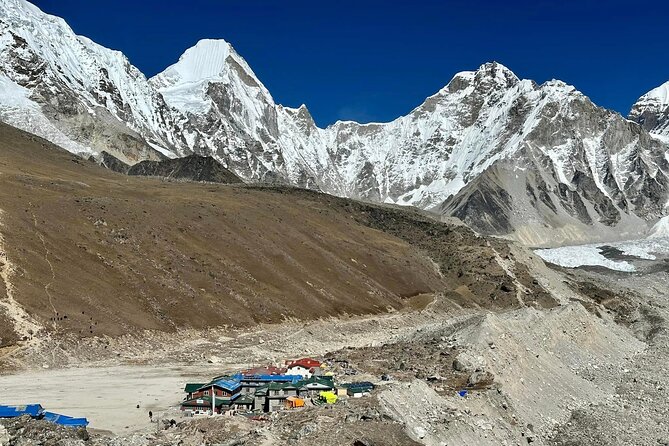
The route reaches Gorak Shep, at about 5,164 meters. This small settlement is the final overnight point before the Base Camp section and one of the highest places you visit on foot.
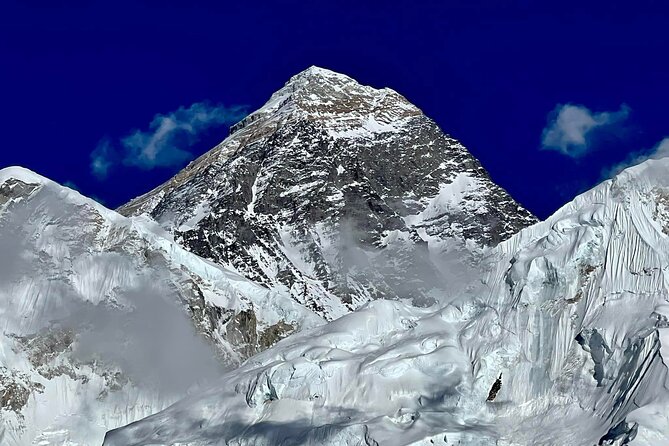
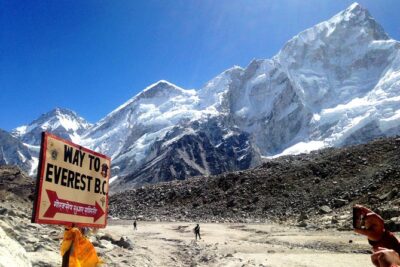
From there, you continue toward Everest Base Camp. Reaching Base Camp is a major achievement, but it is important to understand the view. You are looking at the base area used by mountaineering teams, not standing on the summit or seeing the entire mountain from the most famous angle.
The appeal is the setting: the Khumbu Glacier, the high peaks, and the knowledge that this is where major Everest expeditions begin. The walk can be demanding because of the altitude, even though the distance may seem manageable.
The package includes lunch and dinner on eight days and breakfast on nine days. That covers the trekking portion well, but you should budget for drinks, bottled water, snacks, and personal items because those are excluded.
Day 10: Kala Patthar at First Light
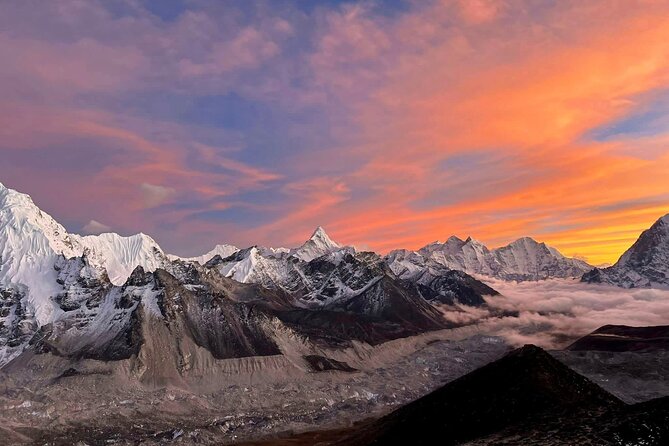
The final major morning starts early with a hike to Kala Patthar. The route description also includes a helicopter landing at Kala Patthar, giving the day a distinctive finish.
Kala Patthar sits on the south ridge of Pumori above Gorak Shep. It is prized for its views toward Everest and the surrounding peaks, especially in the early light. This is often the visual high point of the trip, even though Base Camp carries the emotional weight.
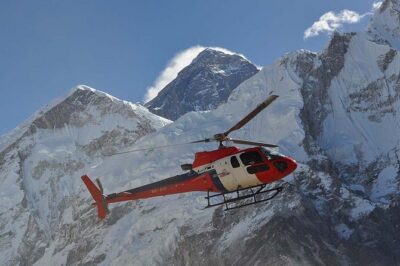
After the morning outing, you return for the helicopter transfer from Gorak Shep toward Kathmandu. Weather can affect mountain flights, so flexibility matters. The company has handled canceled flights and changing conditions on past trips, but no operator can control Himalayan weather.
Day 11: Airport Transfer and the Trip Home
The final day is a transfer to the airport and your flight home. The schedule is compact, which works well if you are fitting the trek into a larger Nepal holiday.
You may want extra time in Kathmandu before or after the trek. It is not included, so plan those nights separately. The same applies to international airfare, personal laundry, internet use, phone calls, shopping, cold drinks, and crew tips.
What the $4,070 Price Really Covers
At $4,070 per person, this is not a budget Everest Base Camp trek. The value comes from bundling expensive and useful services into one organized trip.
Included costs cover:
- Helicopter travel from Kathmandu to Lukla
- Helicopter travel from Gorak Shep toward Kathmandu
- Luxury accommodation during the trek
- Guides and porters
- Crew wages, insurance, and meals
- Breakfast for nine days
- Lunch and dinner for eight days
- Fees and taxes
The helicopter flights are especially important when judging the price. They save time and avoid a long return route, but they also make the package more expensive than a standard trekking plan. If you want the shortest route to Base Camp with support at altitude, the cost may make sense.
If your priority is low price, this is probably not the right fit. You will still pay for your own international flights, travel insurance, most Kathmandu meals, extra hotel nights, drinks, water, internet, laundry, shopping, and tips.
The People Who Make the Route Work
A high-altitude trek depends heavily on the crew. Names connected with this company include Surya, Prakash, Keshab, Babu, and Ram, along with porters such as Govinda, Kumar, and Partap.
Prakash has been praised for guiding both Kathmandu arrangements and the EBC route. Keshab is described as especially good with culture and group morale. Babu has helped groups dealing with mountain sickness, while Ram has supported solo trekkers reaching the high points safely.
Those details matter because you are not buying scenery alone. You are buying planning, judgment, airport transfers, food arrangements, and help when weather disrupts flights. The company has also organized bespoke itineraries and managed canceled flights, which is useful in a region where schedules can change.
Who Should Book This Trek
You should consider this experience if you want:
- Everest Base Camp in a shorter 11-day format
- Helicopter transport at the beginning and end
- A group capped at 15 people
- Guides and porters included
- More comfortable lodging than a basic trekking package
- Structured acclimatization around Namche and Dingboche
- A strong focus on Kala Patthar and Base Camp
You should think twice if you want a cheap trek, a relaxed walking holiday, or a trip with no early mornings and no altitude risk. The route reaches 5,164 meters, and the moderate fitness requirement should be taken seriously.
Free cancellation is available up to 24 hours before the start time. Poor weather or failure to meet the minimum group size can also lead to a new date, another experience, or a full refund. Still, buy travel insurance. It is not included.
Should You Book It?
I would book this trek if your budget allows and your main goal is to reach Everest Base Camp without spending days walking back to Lukla. The helicopter transfers, small group size, crew support, and planned acclimatization give the itinerary real practical value.
I would not book it without asking for clearer details about the exact luxury accommodation, daily walking distances, and the helicopter plan. Those points matter at $4,070. If the answers suit you, this is a well-supported, high-comfort way to experience the Khumbu region, with enough time for Namche, Tengboche, Dingboche, Base Camp, and Kala Patthar.
FAQ
How long is the Luxury Everest Base Camp Trek?
The experience lasts approximately 11 days, including airport transfers, the trek, helicopter flights, and the return journey.
What is the price of the trek?
The listed price is $4,070 per person.
Is helicopter transport included?
Yes. The package includes a helicopter from Kathmandu to Lukla and a helicopter from Gorak Shep toward Kathmandu. It also includes a helicopter landing at Kala Patthar in the itinerary.
What places does the trek visit?
The route includes Lukla, Phakding, Monjo, Namche Bazaar, Everest View Point, Tengboche, Dingboche, Chukhung, Lobuche, Gorak Shep, Everest Base Camp, and Kala Patthar.
Are guides and porters included?
Yes. Guides and porters are included, along with their daily wages, insurance, and meals.
Are meals included?
Breakfast is included for nine days. Lunch and dinner are included for eight days. Meals in Kathmandu, except breakfast and the farewell dinner, are not included.
What fitness level is required?
The tour states that you should have a moderate level of physical fitness. The route reaches Gorak Shep at approximately 5,164 meters, so you should also consider the effects of high altitude.
Is travel insurance included?
No. Travel insurance is not included in the price.
What is the cancellation policy?
You can cancel at least 24 hours before the experience start time for a full refund. Cancellations or changes made less than 24 hours before the start time are not accepted for a refund. Poor weather or insufficient group size may lead to a new date, another experience, or a full refund.
Just added around Everest Region
- Day Tour to Everest Base Camp By Helicopter★ 5.0 · 16 reviews
- Kathmandu To Lukla By Helicopter Flight★ 5.0 · 6 reviews
- Everest Base Camp Tour & View Point by Helicopter from Katmandu★ 5.0 · 3 reviews
- Everest base camp helicopter tour with Guarenteed Landing★ 4.0 · 7 reviews
- Everest base camp flight over by Helicopter from Kathmandu★ 5.0 · 10 reviews
- Everest Base Camp Helicopter Tour Stop at Hotel Everest View.★ 5.0 · 17 reviews
- Everest Base Camp Helicopter Tour★ 5.0 · 24 reviews
- Everest Panorama Helicopter Tour★ 5.0 · 16 reviews
Everest Base Camp Treks, compared.
Everest Base Camp Trek with Helicopter Return from Gorakshep to Lukla
Read our review →Browse the lists this tour appears in